My Sister Hid Me From Her Engagement Party—Then I Found My Name on the Venue Contract
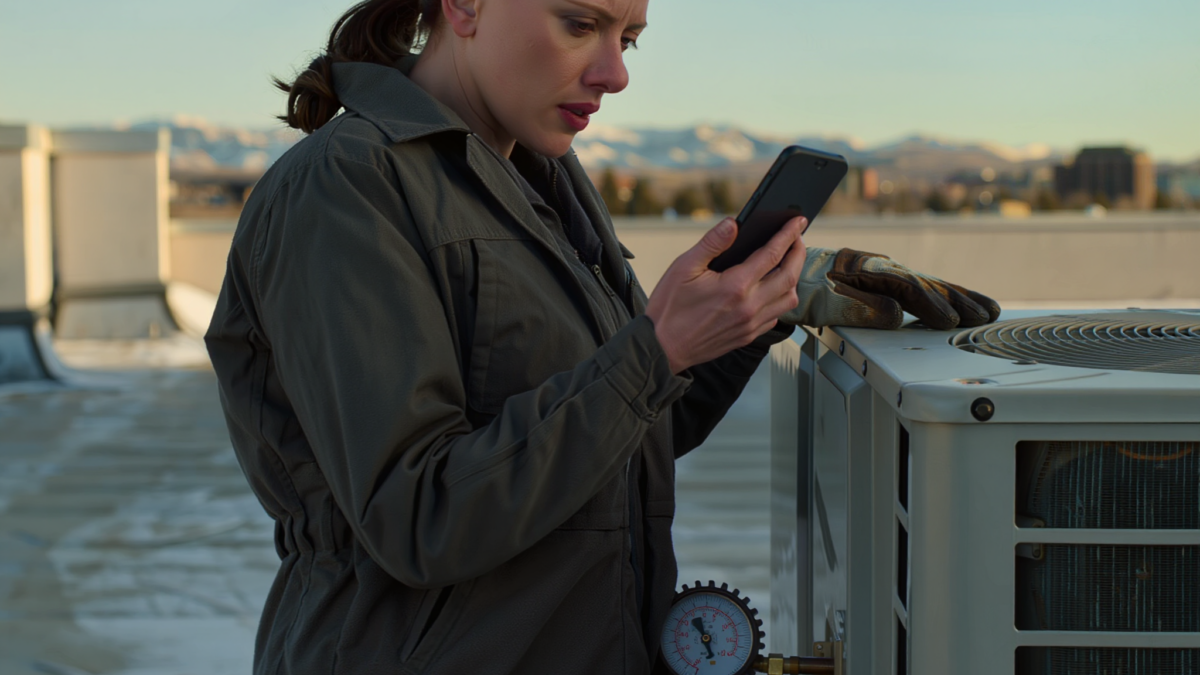
My mother texted me while I was servicing a rooftop HVAC unit in Denver: “Don’t come to Claire’s engagement dinner. She doesn’t want to explain what you do to Zach’s family.” Claire is my younger half sister, and over the years I had paid nearly $100,000 toward her college, MBA, rent, insurance, and emergencies. I stared at that message with grease on my gloves and cold air cutting through my jacket, then canceled the $18,600 tuition payment scheduled for the following month. I thought that would be the end of it. The next morning, an event coordinator called about a payment guarantee for Claire’s wedding venue. My name was listed as the guarantor. I had never agreed to pay for her wedding. When she emailed me the signed contract, I recognized the signature immediately. It was mine—but I had never put it there.
My name is Scarlett Callahan. I’m 34, and I own Callahan Mechanical, a commercial heating and air-conditioning company in Denver.
I started it when I was 23 with a used pickup truck, secondhand tools, and a rented storage bay that leaked whenever it snowed.
Today I employ twenty-six people.
We install and maintain HVAC systems for offices, restaurants, apartment buildings, medical clinics, and warehouses across the Denver metro area.
It is not glamorous work.
Some days I’m reviewing contracts in my office.
Other days I’m on a roof at six in the morning wearing insulated coveralls and checking a compressor while the temperature sits below freezing.
I have never been embarrassed by that.
Apparently my family was.
Claire was nine years younger than me.
We shared a mother, Denise, but had different fathers.
My mom married Claire’s dad, Richard, when I was fourteen.
Richard earned good money in commercial insurance, and our family’s life changed quickly after that.
We moved into a better neighborhood.
Mom stopped working nights.
Claire grew up with piano lessons, summer camps, tutoring, and parents who attended every school event.
I did not resent her for any of it.
I loved her.
When she was little, she used to tell people I could fix anything.
When she went to college, I wanted her to have the opportunities I had fought for.
So when tuition was higher than Mom and Richard expected, I offered to help.
Then I helped with rent.
Then books.
Then a laptop.
Then health insurance.
By the time she entered an MBA program, helping had become automatic.
Nobody discussed it anymore.
A bill arrived.
I paid it.
Claire thanked me occasionally, usually with a heart emoji or a promise that one day she would return the favor.
I never expected repayment.
What I did expect was to remain her sister.
That was why my mother’s message hit harder than any invoice ever had.
I was on the roof of a new medical office building in Centennial when it arrived.
Don’t come to Claire’s engagement dinner Saturday.
A second message followed.
Zach’s parents are traditional. Claire doesn’t want an awkward conversation about your work. Please understand.
I read both messages twice.
Then I called Mom.
She declined the call.
A minute later she texted:
Please don’t make this harder for her.
That sentence did something to me.
Not because I suddenly hated Claire.
Because I realized how completely everyone expected me to cooperate with my own exclusion.
I could pay for the polished version of Claire’s life.
I just was not polished enough to appear in it.
I finished the service check, drove back to the office, and opened my personal banking dashboard.
The next MBA installment was scheduled for the following month.
$18,600.
I canceled it.
Then I removed the recurring payment for Claire’s apartment.
I did not send a dramatic message.
I did not threaten her.
I simply stopped volunteering to finance someone who was ashamed to introduce me.
At 8:12 the next morning, my office phone rang.
Melissa, my operations manager, transferred the call.
“Scarlett, there’s a woman from an event venue asking for you.”
I picked up.
“This is Scarlett.”
“Hi, Ms. Callahan. This is Jenna Park from Willow Ridge House. I’m calling regarding Claire Whitmore and Zach Cavanaugh’s wedding reservation.”
I almost told her she had the wrong person.
Then she said:
“We’re confirming the financial guarantor before the next deposit becomes due.”
My stomach tightened.
“I’m not their guarantor.”
There was silence.
“I’m sorry?”
“I’m Claire’s sister. I am not paying for her wedding.”
Jenna’s voice became careful.
“Our contract lists you as the secondary financial guarantor.”
“I never signed a contract with you.”
Another pause.
“I think I should send you a copy.”
She emailed it while we were still on the phone.
The document was thirty-two pages.
Claire’s name appeared throughout it.
So did Zach’s.
On page twenty-nine was a guarantee covering unpaid venue charges up to $28,400.
My legal name was typed beneath it.
Scarlett M. Callahan.
And underneath that was a signature that looked almost exactly like mine.
Almost.
I knew where she had gotten it.
Three years earlier, I had signed a housing verification form when Claire moved into her graduate-school apartment.
The capital S had the same long downward stroke.
The double L connected the same way.
Someone had copied it.
I stopped scrolling.
Then Jenna said quietly:
“Ms. Callahan, there’s another document attached to the file that you should probably see.”
“What document?” “A personal financial authorization submitted with the guarantee.” Jenna emailed it separately. The form listed my home address, approximate annual income, and the estimated value of Callahan Mechanical. None of those details belonged on Claire’s wedding paperwork.
Then I saw the source listed at the bottom. Financial sponsor documentation supplied by Claire Whitmore. I asked Jenna when the file had been submitted. “About four months ago.”
Four months earlier, Claire had still been texting me apartment listings for her wedding guests and telling me she hoped I would help with “a few little things.” I had never agreed to fund the venue.
“Please freeze anything connected to my name,” I said. “We will.”
After hanging up, I searched my email for every document Claire had ever asked me to sign. One message from the previous year caught my attention. She had called it a routine tuition verification. The attachment was no longer available through the school portal, so I called the lender listed in the email.
Twenty minutes later, a representative confirmed there was an active $38,000 education line with Claire as borrower. I was listed as guarantor.
“I never guaranteed that loan.”
The representative went silent.
Then she asked me to verify my date of birth.
When she returned, her voice had changed.
“Ms. Callahan, we have a signed authorization in the file.”
She sent it to me.
The signature was the same copied signature from the wedding contract.
And the authorization had been submitted eleven months before Claire ever told me she was engaged.
I sat in my office staring at the two documents side by side.
Wedding guarantee.
Education guarantee.
Same signature.
Same old address.
Same outdated estimate of my company’s value.
That was when the hurt from the engagement dinner became something else.
If Claire had only excluded me because she was embarrassed by my occupation, I could have walked away angry and eventually decided what kind of relationship I wanted with her.
But this was not simply disrespect.
She had been using my identity.
I called my business attorney, Andrew Mercer.
Everyone called him Andy.
He had represented Callahan Mechanical since the company was four years old, when one of my first commercial clients tried to avoid paying a $76,000 installation invoice.
Andy was 56, wore the same three gray suits on rotation, and had the unnerving habit of becoming quieter when a situation became serious.
I emailed him both documents.
He called six minutes later.
“Scarlett, tell me you haven’t called Claire.”
“I haven’t.”
“Good.”
“That sounded ominous.”
“It’s not ominous. It’s useful.”
“What do I do?”
“First, dispute both guarantees in writing. Second, freeze your credit. Third, pull a complete report so we know whether there are more.”
My stomach turned.
“You think there are more?”
“I think we don’t know.”
That distinction became important.
For most of my life, I had responded to family problems emotionally first and practically second.
Mom called.
Claire needed something.
I fixed it.
There was rarely documentation because documentation implied mistrust, and mistrust was treated as an insult.
Now I needed facts before feelings.
I froze my credit.
Then I pulled all three reports.
Most of what I saw was normal.
Mortgage.
Truck financing from years earlier.
Two company-related credit inquiries.
A personal card I had used since I was twenty-five.
Then I found a revolving account opened seventeen months earlier.
Credit limit: $12,000.
Authorized user: Claire Whitmore.
Primary responsible party: Scarlett Callahan.
I had never opened it.
The balance was $7,840.
Charges included furniture stores, travel bookings, restaurants, and a luxury clothing retailer in Cherry Creek.
I called the bank.
They locked the card immediately.
The woman in the fraud department asked whether I knew the authorized user.
“Yes.”
“Relationship?”
“My sister.”
There was a short silence.
I knew what she was thinking.
Family cases were complicated.
People changed their minds.
People gave permission verbally.
People used cards interchangeably and later called it fraud.
So I gave her the cleanest answer possible.
“I never opened the account. I never requested a card. I never authorized my sister to use my identity.”
She created a fraud case.
Then I sat back and looked through the glass wall of my office.
Melissa was laughing with two technicians near the dispatch board.
A delivery driver wheeled filters past reception.
One of our apprentices was labeling refrigerant cylinders.
This was the life my mother thought needed explaining.
Twenty-six paychecks.
Health insurance.
Retirement contributions.
Equipment loans I had personally guaranteed when no bank believed a twenty-four-year-old woman could run a mechanical company.
Thousands of hours.
And my sister had used the financial strength created by that work while treating the work itself as embarrassing.
The contradiction was almost elegant.
My phone rang.
Mom.
I declined it.
Claire called thirty seconds later.
I declined that too.
Then came a text.
Why did you cancel tuition?
Another.
The school emailed me. What is happening?
Then:
Mom said you’re upset about the party. Can we please not be dramatic?
That one nearly made me laugh.
I forwarded the messages to Andy.
He replied:
Do not discuss the fraud by text yet. We’ll send formal disputes today.
I followed his advice.
For the first time in my family, I let procedure move faster than guilt.
That afternoon, I met Andy in his office.
I brought old tax documents, Claire’s housing verification, bank statements, the venue contract, and the education-line guarantee.
He compared the signatures.
“You’re right,” he said. “These appear to originate from the same source.”
“What happens to Claire?”
“That depends on the institutions and on what the evidence shows.”
“I don’t want her arrested.”
Andy folded his hands.
“Scarlett, your first job is not deciding consequences for Claire.”
That irritated me.
“She’s my sister.”
“Yes.”
“I practically raised her.”
“That is exactly why I’m telling you this.”
I looked at him.
He continued.
“You’re trying to manage the outcome before you’ve even protected yourself.”
He was right.
I hated that he was right.
We spent the next hour building a list.
Wedding venue.
Education lender.
Credit-card issuer.
University sponsor records.
My own bank.
Personal credit.
Company credit.
The last one frightened me most.
“What if she used Callahan Mechanical?”
“We check.”
My CFO, Naomi Chen, joined us by video.
Naomi had worked for me for six years.
She did not know the family history and did not need to.
I told her someone had used my personal information without authorization and asked her to review every request for verification tied to me or Claire.
She called the next morning.
“There’s something weird.”
I closed my office door.
“What?”
“Last year we received an employment-verification email for Claire.”
“But she doesn’t work here.”
“I know.”
“Who responded?”
“No one internally. The email was sent to a misspelled version of our HR address.”
My stomach dropped.
“Can you trace it?”
“The lender forwarded their copy after I called.”
A fake employment letter had been submitted stating Claire worked part-time for Callahan Mechanical as a “business development consultant” earning $42,000 per year.
The letter carried our logo.
My name appeared at the bottom.
Again, the signature was copied.
Naomi sounded furious.
“That’s company fraud, Scarlett.”
I stared at the wall.
“What was it used for?”
“Apartment qualification and the education line.”
Suddenly the whole structure made sense.
Claire had not just used me as guarantor.
She had manufactured a cleaner financial story for herself.
Independent professional.
Stable employment.
Family support available if needed.
No messy dependence on the sister in work boots.
I asked Naomi to preserve everything.
Then I called Andy.
By lunchtime, his office had sent preservation notices to the lender, card issuer, university, and venue.
That was the first practical turning point.
For years, family conflict disappeared into telephone calls.
This one could not.
There were timestamps.
Applications.
IP records.
Copies.
Amounts.
Claire could explain her intentions later.
First, the records would stay intact.
Mom appeared at my office around three.
Melissa called from reception.
“Your mother is here.”
I almost told her I was unavailable.
Then I changed my mind.
“Send her in.”
Mom entered wearing a camel-colored coat, pearl earrings, and the expression she used when she believed I was being unreasonable but wanted to begin gently.
She sat without taking off her coat.
“Claire is beside herself.”
I said nothing.
“The school says there’s an investigation into her financing.”
“Yes.”
“You reported her.”
“I disputed documents signed in my name.”
Mom sighed.
“Scarlett, you know she would never intentionally hurt you.”
“Did she put my name on the venue contract?”
“She thought you were helping with the wedding.”
“That wasn’t my question.”
Mom looked away.
“Did she?”
“She may have assumed—”
“Mom.”
Her shoulders lowered.
“Yes.”
“Did she sign my name?”
“I don’t know exactly what happened.”
I slid the two guarantees across my desk.
Mom looked at them.
Her face changed.
Not shock.
Recognition.
That hurt more.
“You’ve seen these.”
“No.”
“You know something.”
She started twisting the strap of her handbag.
“Claire told me she used one of your old authorizations because she needed paperwork quickly.”
I felt the room narrow around me.
“When?”
“Last year.”
“Before the education loan?”
Mom said nothing.
“You knew.”
“She said you had already agreed to support school.”
“I agreed to pay tuition. I did not agree to guarantee debt.”
“You were already paying everything.”
The sentence hung between us.
“So the permission didn’t matter?”
“That isn’t what I meant.”
“It is exactly what you meant.”
Mom started crying.
I did not rush around the desk.
That was new.
“She was scared,” Mom said. “Richard’s business had a bad year. We couldn’t keep helping. Claire had worked so hard. We didn’t want her education interrupted.”
“You could have called me.”
“You were already doing so much.”
“That makes this worse.”
“How?”
“Because instead of asking the person doing so much, you decided it was easier to use her name.”
Mom wiped her face.
“The wedding contract was different. I didn’t know about that.”
“Did you tell me not to come to the engagement party?”
She closed her eyes.
“Yes.”
“Was Claire embarrassed by my job?”
“She was nervous about Zach’s family.”
“That is another yes.”
“Scarlett—”
“I paid for the education she was using to impress them.”
“I know.”
“I helped pay the apartment she brought Zach home to.”
“I know.”
“I bought the laptop she used for the MBA she brags about.”
“Please stop listing everything.”
I leaned back.
“Why?”
“Because it makes it sound horrible.”
“It sounds horrible because it happened.”
She started to speak.
I held up my hand.
“I need you to leave.”
Her eyes widened.
“I came here to fix this.”
“No. You came here to make me stop.”
“That’s not fair.”
“Maybe not. Leave anyway.”
She stood slowly.
At the door she turned.
“Family will remember how you handle this.”
I looked at her.
“So will I.”
After she left, Melissa appeared with two coffees.
She set one down.
“I’m not asking.”
“Thank you.”
She glanced toward the door.
“For what it’s worth, anybody embarrassed by this place is an idiot.”
I laughed.
“What a beautiful employee-retention strategy.”
“I’m serious.”
“I know.”
She walked out.
I stared at the company floor again.
My family treated trade work like evidence I had failed to become sophisticated.
The people working for me knew better.
They knew exactly what competence looked like.
Two days later, Zach called.
I had met him only three times.
He was thirty, worked in corporate finance, and had always been polite in a distant way.
I expected him to defend Claire.
Instead he said:
“Can I ask you something uncomfortable?”
“You can ask.”
“Did you pay Claire’s MBA tuition?”
“Yes.”
“All of it?”
“Most of it.”
“What about undergrad?”
“A large part.”
Silence.
“Why?”
“Why did I pay?”
“No. Why did Claire tell me her parents had education accounts for her?”
I closed my eyes.
“I can’t answer that.”
He exhaled.
“She told me you helped occasionally.”
“I didn’t need credit.”
“That’s not the issue.”
“I know.”
He asked whether we could meet.
I almost declined.
Then I decided facts were better exchanged face to face.
We met at a coffee shop near my office.
Zach looked exhausted.
He opened a notebook.
Not a dramatic file.
A normal notebook with questions written on one page.
“I’m not here to interrogate you.”
“Good.”
“I’m trying to understand what is true.”
“That makes two of us.”
He asked about tuition.
Rent.
The credit account.
The wedding venue.
I answered only what I could document.
When we reached the engagement party, he stopped writing.
“Claire told me you couldn’t attend because you had an emergency job.”
I laughed softly.
“What?”
“She said you were on call.”
“My mother told me not to come.”
His face went blank.
“Why?”
“Because Claire didn’t want to explain that I work in HVAC.”
“That doesn’t make sense.”
“To you?”
“To anyone.”
I studied him.
“Did she tell your family what I do?”
“She said you own a contracting company.”
“That’s true.”
“She made it sound like you were an investor.”
That almost impressed me.
Claire had not technically lied about ownership.
She had simply removed every piece of reality she found unattractive.
Zach closed the notebook.
“My dad started as an electrician.”
I blinked.
“He paid for college doing commercial electrical work,” Zach said. “If Claire thought my parents would look down on you, she invented that fear.”
That changed the emotional shape of the exclusion.
Claire had not been protecting herself from Zach’s family.
She had been protecting an image inside her own head.
“What are you going to do?” I asked.
“I don’t know.”
“Whatever you do, don’t do it because of me.”
He looked at me.
“I’m not.”
We left separately.
I did not tell Claire we had met.
Zach apparently did.
That evening, she called twelve times.
Then she sent:
You had no right to discuss our finances with my fiancé.
I stared at the message.
Then replied once.
You used my identity in those finances.
Nothing else.
The family campaign started the next day.
Aunt Linda called.
Then Uncle Peter.
Then two cousins I barely spoke to.
They all had slightly different versions.
Claire made a paperwork mistake.
Scarlett cut her off over an engagement-party misunderstanding.
Zach’s family was causing trouble.
The university was threatening Claire’s future.
I had forgotten where I came from.
Nobody mentioned the forged signature.
That omission told me exactly how the story was being managed.
I stopped taking calls.
Then Claire posted online.
She did not name me.
She wrote about how painful it was when “people use financial help as leverage and withdraw love the moment you disappoint them.”
The comments filled with sympathy.
I read three.
Then closed the page.
Years earlier, that would have destroyed me.
I would have written a long defense.
Screenshots.
Amounts.
Explanations.
Instead, I sent the post to Andy.
“Do I need to respond?”
“No.”
“Excellent.”
That became one of my favorite legal consultations.
The institutions moved slower than social media.
The venue removed me from the guarantee and required Claire and Zach to provide another guarantor or larger deposit.
The education lender suspended future draws while investigating the authorization.
The card issuer closed the account and provisionally removed the balance from my report.
The university opened a review because the fake Callahan Mechanical employment verification had been used in Claire’s financial file.
None of those things ended Claire’s life.
She was not expelled.
She was not arrested.
She was given deadlines.
Provide accurate information.
Arrange legitimate financing.
Pay balances.
Explain discrepancies.
For the first time, she had administrative problems nobody could solve simply by entering my name.
Mom called it punishment.
I called it reality.
The main confrontation happened three weeks later.
Claire came to Callahan Mechanical without an appointment.
I was in our training bay reviewing installation diagrams with two apprentices when reception called.
“Your sister is here.”
I walked to the lobby.
Claire stood near the front desk wearing a wool coat and carrying the same expensive leather tote I had bought her for graduation.
Her eyes were red.
“I need to talk to you.”
“We can use the conference room.”
“No.”
She looked around.
Employees were working within earshot.
“I want you to see what you’ve done.”
I stayed still.
“What have I done?”
“Zach postponed the wedding.”
“I didn’t know that.”
“The venue canceled our date.”
“They gave you an option to replace the guarantee.”
“I can’t afford the deposit.”
“That’s not the same as them canceling because of me.”
Her face tightened.
“The lender froze my school line. The university wants documents. Mom is losing her mind. Zach thinks I lied about everything.”
“Did you?”
“That’s not fair.”
“It’s very specific.”
She started crying.
“I was trying to keep up.”
“With what?”
“Everyone.”
I waited.
She looked toward the polished concrete floor.
“Zach’s friends have careers. They travel. His parents know people. Everyone around me seemed established.”
“You’re in graduate school.”
“That didn’t feel like enough.”
“So you lied.”
“I made things look cleaner.”
The phrase chilled me.
“Cleaner.”
“You don’t understand.”
“I’d like to.”
Her voice rose.
“I didn’t want to be the girl whose older sister paid for everything.”
I stared at her.
“But you wanted the everything.”
She flinched.
“That isn’t what I meant.”
“You wanted my tuition payments without anyone knowing they came from me.”
“I was embarrassed.”
“By needing help?”
“By how it looked.”
“And my job?”
She wiped her face.
“I knew you would come straight from work.”
“You could have asked me to change clothes.”
“I know.”
“But you told Mom not to invite me.”
“I panicked.”
I nodded.
“Fine.”
She looked confused.
“Fine?”
“Now explain the signatures.”
Her face changed completely.
That was the moment I stopped wondering whether there might be another explanation.
She knew exactly what I meant.
“The school one was just because the paperwork was due.”
“You copied my signature.”
“You were already paying.”
“The wedding?”
She started crying harder.
“I thought you would help eventually.”
“I had never agreed.”
“You always help.”
There it was.
The sentence underneath the entire relationship.
You always help.
As if repetition created permanent consent.
As if ten years of generosity had converted me into a standing financial authorization.
I lowered my voice.
“Claire, look at me.”
She did.
“I love you.”
Her face crumpled.
“But you cannot use my name anymore.”
“I said I’m sorry.”
“I hear you.”
“Then fix it.”
“I am fixing my part.”
“What does that mean?”
“It means I disputed accounts that aren’t mine. I removed myself from contracts I didn’t sign. I stopped payments I am not obligated to make.”
“You know I can’t finish the semester without help.”
“You can speak to financial aid.”
“They won’t cover everything.”
“You can work.”
She looked shocked.
That reaction told me how far we had drifted.
“You want me to get a job while I’m doing an MBA?”
“Yes.”
“I won’t have time.”
“Then take fewer classes.”
“That could delay graduation.”
“Yes.”
She stared at me as though I had suggested something cruel.
In my world, schedules changed when money changed.
Projects slowed.
Owners reduced scope.
Companies delayed purchases.
Adults adjusted.
Claire had rarely needed to.
“Zach might leave,” she whispered.
“That is between you and Zach.”
“Mom says you’re destroying the family.”
“Mom knew about the education signature.”
Claire looked away.
“She was trying to help me.”
“So was I.”
That silenced her.
We stood there for several seconds.
Then she said:
“I used to be proud of you.”
My throat tightened.
“Used to?”
“When I was little.”
“What changed?”
She shook her head.
“I don’t know.”
I believed her.
That might have been the saddest part.
There had not been one moment when she decided I was embarrassing.
There had been years of small corrections.
Mom describing my work as dirty.
Richard introducing me as “self-employed” instead of telling people what I built.
Family events where I was told not to come straight from a job.
Claire learning that success only counted if it looked polished.
She had absorbed it so completely she did not recognize contempt when she directed it at me.
I opened the conference-room door.
“You need to go.”
“Scarlett—”
“I’m not discussing money again.”
“What about us?”
I looked at her.
“I don’t know yet.”
She nodded slowly.
Then she left.
Melissa was standing by the dispatch desk.
She did not pretend she had heard nothing.
“You okay?”
“No.”
“Do you need me to cancel the four o’clock?”
I thought about it.
“No. I need something normal.”
So at four, I met with a property-management company about replacing twelve rooftop units across three apartment buildings.
It was one of the best meetings of my month.
That evening, Zach emailed me.
He had ended the engagement.
Not because Claire’s sister owned an HVAC company.
Not because I stopped paying.
Because Claire eventually admitted she had lied about her finances, my role in her education, and the signatures.
He wrote:
I realized I couldn’t tell which version of her life was real and which version was designed for me.
I did not feel vindicated.
I felt sad.
I replied:
I’m sorry. I hope both of you find a healthier way forward.
Nothing more.
Claire blamed me for several weeks.
Then she stopped contacting me.
Mom did not.
She sent messages about forgiveness.
About family.
About Claire crying.
About how much pressure graduate school creates.
I responded once.
I love Claire. I am not restoring financial support or allowing my identity to be used. Those are separate questions.
Mom replied:
You’re so cold now.
I did not answer.
The fraud investigations eventually resolved without the dramatic ending my relatives seemed to expect.
The wedding guarantee disappeared once the venue confirmed I had not signed it.
The credit-card issuer concluded the account had been opened without my authorization and removed it from my credit.
Claire entered a repayment arrangement for the balance after admitting she had used the card.
The education lender removed me as guarantor.
Claire refinanced part of the balance with Richard as a legitimate co-signer.
The university required corrected financial information and withdrew one small need-based award she should not have received.
She remained enrolled.
She switched from full-time to part-time classes.
And she got a job.
That last detail came from Mom.
Claire took an analyst position at a regional logistics company.
Twenty-five hours a week.
Nothing glamorous.
Apparently she hated it at first.
Then she discovered she was good at it.
I did not call to congratulate her.
Our relationship was not ready for celebration.
Andy helped me tighten everything on my side.
I closed old accounts Claire knew about.
Changed passwords.
Added identity-monitoring alerts.
Separated personal guarantees from every company system that did not require them.
Naomi created a policy requiring verbal confirmation from me before anyone could release owner financial information.
I also stopped paying expenses that had quietly become family habits.
Mom’s streaming subscriptions.
Claire’s insurance.
A credit card Richard occasionally used for “shared emergencies.”
None of those amounts threatened me financially.
That was not the point.
The point was learning that boundaries become real through systems, not speeches.
I could tell my family no ten times.
If the automatic payment stayed active, the old pattern stayed active too.
The first month after everything was strangely quiet.
For years, my phone had been a family emergency device.
Claire needs this.
Mom needs that.
Richard forgot a deadline.
A relative needs a recommendation.
Suddenly, most of those calls stopped.
I expected to feel lonely.
Instead, I slept.
Really slept.
I started leaving the office by six twice a week.
I returned to a climbing gym I had not visited in three years.
I took Milo, my golden retriever, on long Saturday walks instead of checking invoices from the kitchen table.
And I finally reopened the Colorado Springs expansion plan that had been sitting in my desk for eighteen months.
Every time I had been close to moving forward, another family expense appeared.
Claire’s tuition.
A rent increase.
A “temporary” medical bill.
Wedding planning had been the latest expected contribution.
Without those commitments, the numbers worked.
Callahan Mechanical could open a second branch.
Melissa helped me build the staffing model.
Naomi ran cash-flow projections.
We signed a lease on an industrial unit near Colorado Springs in March.
Standing in that empty warehouse felt familiar.
Concrete floor.
Bare walls.
One ugly fluorescent light buzzing near the loading door.
It reminded me of the storage bay where I started.
I smiled.
Melissa looked around.
“You know normal people see an empty building.”
“What do you see?”
“Knowing you? A reason to buy fifteen thousand dollars of shelving.”
I laughed.
“Accurate.”
We opened six months later.
The branch created nine jobs in its first year.
Three of those hires were women entering the trades.
One was a 28-year-old single mother named Alyssa who had completed an HVAC certification program but could not get a commercial contractor to take her seriously.
During her interview, she apologized for not having enough field experience.
I remembered being twenty-three and hearing the same concern from clients.
I hired her as an apprentice.
By winter, she was one of our strongest junior technicians.
That gave me another idea.
Instead of paying Claire’s next tuition installment, I put the equivalent amount—$18,600—into a training fund for women entering mechanical trades.
Not as revenge.
Claire never even knew initially.
It simply felt right to use money in a way that reflected the life I had built rather than the image my family preferred.
We partnered with a local technical college.
The first year, the fund paid exam fees, tools, work boots, and partial childcare support for six apprentices.
I attended the first orientation wearing my normal work jacket.
Nobody asked me to change.
That mattered more than I expected.
My mother and I stayed distant for almost a year.
Then one Saturday she asked if I would meet for breakfast.
I agreed because the message contained no mention of Claire.
Mom arrived before me.
She looked nervous.
For once, she did not start with family unity.
She said:
“I owe you an apology.”
I waited.
“For what?”
Her eyes filled.
“More things than I can fit into one breakfast.”
That was not enough by itself.
But it was more honest than anything she had said before.
She told me she had spent years believing she was helping Claire because Claire was younger and “more sensitive.”
Meanwhile, she assumed I could withstand anything.
“I thought telling you that you were strong was a compliment,” she said.
“Sometimes it was.”
“And sometimes it was an excuse.”
“Yes.”
She nodded.
“I see that.”
Then she told me something I had not expected.
After the engagement ended, Claire moved back in with Mom and Richard for two months.
For the first time, Mom watched her handle her own bills.
Student loan.
Insurance.
Phone.
Groceries.
Claire had been shocked by how much life cost.
Mom almost laughed when she told me.
“I realized we had protected her from adulthood and called it love.”
I stirred my coffee.
“That wasn’t only you.”
“No.”
She looked at me.
“You helped too.”
That hurt because it was true.
I had not created Claire’s entitlement.
But every time I paid without requiring a conversation, I reinforced it.
I had wanted to give her freedom.
Instead, I sometimes gave her insulation from consequences.
Mom continued.
“She is embarrassed about what she did.”
“Good.”
My mother flinched.
“I don’t mean I want her humiliated.”
I leaned forward.
“I mean embarrassment is appropriate when you do something wrong. It doesn’t have to destroy you. Sometimes it tells you where you need to change.”
Mom nodded slowly.
“Would you ever talk to her?”
“Maybe.”
“When?”
“When I want to.”
For the first time, Mom accepted that answer.
No pressure.
No speech.
She paid for breakfast.
We hugged outside.
It was not reconciliation.
It was a beginning.
Claire contacted me three months later.
Not with a call.
A letter.
Actual paper.
The envelope sat on my kitchen counter for two days before I opened it.
She wrote that she had spent months trying to explain her behavior to herself in ways that made her less responsible.
Pressure.
School.
Zach.
Mom.
Money.
Fear.
Then her therapist asked her a question:
If Scarlett had done the same thing to you, what would you call it?
Claire wrote:
I knew the answer immediately. I would call it stealing your choice.
That sentence made me sit down.
She apologized for the signatures.
For the credit card.
For lying to Zach.
For the engagement dinner.
She did not ask me to pay anything.
She did not ask me to forgive her.
At the end she wrote:
I’m learning that being ashamed of needing help was never the same thing as having a right to hide the person helping me. I made your generosity invisible because I wanted to look independent. That was dishonest and cruel.
I read the letter twice.
Then I put it in a drawer.
I did not respond that day.
A month later, I sent one text.
I received your letter. Thank you for taking responsibility. I’m not ready to go back to how things were. Maybe we can get coffee sometime.
She replied:
Whenever you’re ready.
No heart emoji.
No guilt.
No emergency.
Six weeks later, we met.
Claire looked different.
Not physically.
She still dressed better than I did.
She probably always would.
But there was no performance.
She told me about her job.
She had been promoted from part-time analyst to a full-time operations role after finishing the semester.
She reduced her MBA course load and expected graduation to take an extra year.
“I thought that would feel like failure,” she said.
“Does it?”
“No.”
She looked embarrassed.
“I actually like earning my own money.”
I smiled.
“Dangerous habit.”
She laughed.
It was the first time we had laughed together since before the engagement.
Then she looked serious.
“Do you want me to repay you?”
“The old tuition?”
“Yes.”
“No.”
Her face tightened.
“Why?”
“Because those payments were gifts when I made them.”
“But I took advantage.”
“You did.”
“Then why not let me repay it?”
“Because I’m not rewriting every generous thing I ever did into a mistake.”
She stared at me.
That answer surprised both of us.
I continued.
“The unauthorized balances are different. You’re responsible for those. But the money I chose to give you was mine to give.”
Her eyes filled.
“Thank you.”
“I’m also never paying your tuition again.”
She laughed through tears.
“I assumed.”
“Good.”
We did not become best friends.
Not immediately.
Trust returned slowly.
She visited the Colorado Springs branch once.
She wore jeans and work boots because she thought that was what people did at an HVAC company.
Melissa later asked why Claire looked like she was dressed for a catalog called Woman Discovers Screwdriver.
I laughed for five straight minutes.
But Claire stayed.
She toured the training area.
Talked with Alyssa.
Asked real questions.
When we reached the equipment bay, she ran her hand along one of the duct sections.
“I had no idea how much goes into this.”
“No.”
“That’s embarrassing.”
“It’s okay not to know.”
She looked at me.
“I don’t mean the equipment.”
I understood.
A year and a half after the text that started everything, Claire graduated.
She paid her final year herself with income, legitimate loans, and a small contribution from Mom and Richard.
I received an invitation.
My name was handwritten on the envelope.
Inside was a note.
I would really like my sister there. Work clothes included.
I went.
I wore a navy dress because I wanted to.
Not because anyone asked me to hide.
Mom cried when Claire walked across the stage.
Richard took photos.
Then Claire found me outside the auditorium.
“Picture?”
I hesitated.
She raised both hands.
“Only if you want.”
I stepped beside her.
The photo ended up framed in my office.
Not because it proved the family was fixed.
It wasn’t.
Families do not become healthy because of one apology or one graduation picture.
The photo mattered because this time I was there without paying for the right to be there.
That distinction changed everything.
Claire never married Zach.
From what I heard, he eventually moved to Seattle.
I never spoke with him again.
I was grateful he asked questions instead of accepting a convenient story.
But he was not part of my resolution.
Neither was the wedding venue.
Neither was social media.
The real change was quieter.
I stopped making myself useful in exchange for belonging.
Mom learned not to volunteer my resources.
Claire learned that asking is different from assuming.
And I learned that generosity without boundaries eventually stops feeling generous.
Callahan Mechanical now has two branches and forty-one employees.
The apprenticeship fund continues.
We expanded it to include people changing careers later in life, not just women entering the trades.
Every December, I still spend at least one day in the field.
Melissa says the owner climbing onto rooftops makes everyone nervous.
I tell her it reminds me where the company came from.
Last winter, I was inspecting an air handler at a hotel outside Colorado Springs when my phone buzzed.
It was Claire.
For half a second, my body remembered the old pattern.
What happened?
How much?
What does she need?
Then I read the message.
Passed my final certification exam today. Paid the fee myself. Thought you’d appreciate that part.
I smiled.
Then typed:
I appreciate all of it.
That was enough.
I put the phone away and went back to work.
There was snow on the mountains beyond the rooftop.
My gloves were dirty.
My boots were scratched.
The company logo on my jacket was faded from years of washing.
Once, those were the exact details my sister wanted hidden.
Now they felt like evidence.
Evidence of every bill I had paid.
Every risk I had taken.
Every employee whose family depended on the company surviving.
Every time I had walked into a room where someone underestimated me and completed the job anyway.
For years, I wanted my family to understand that.
I thought if I paid enough, showed up enough, rescued enough, eventually they would recognize my value.
I had the equation backward.
My value was never waiting for their recognition.
And I did not need a seat at somebody else’s polished table to prove I belonged somewhere.
I had built something sturdier.
A company.
A life.
A set of relationships where help could be offered without becoming an obligation.
And a table where nobody had to hide what they did for a living before they were allowed to sit down.







