My Family Voted Me Out of Grandpa’s Trust—Then the Bank Asked About a Loan I Never Approved
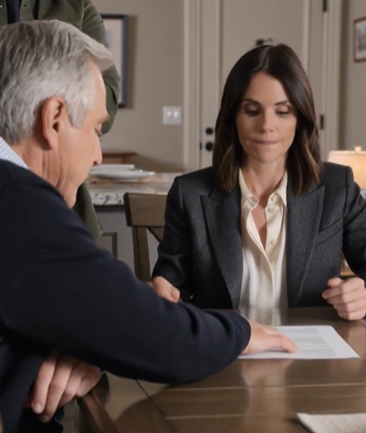
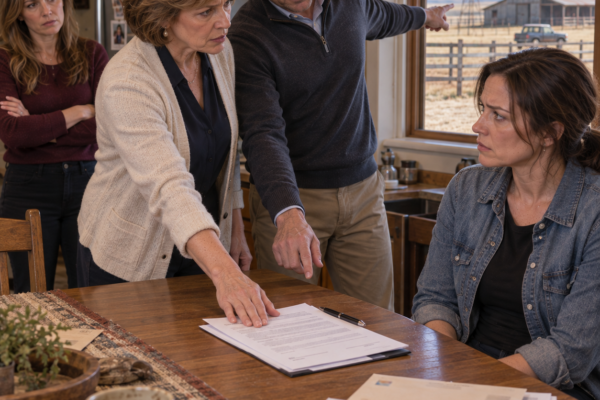
My father slid a one-page “family resolution” across his dining-room table and said, “We voted. You’re out of Grandpa’s trust effective immediately.”
My brother Mark had already signed it.
So had my sisters, Julia and Megan.
Dad’s signature was at the bottom in blue ink.
Mine was the only one missing.
I was thirty-nine years old and had practiced trusts and estates law in Portland for fourteen years.
Nobody at that table seemed to find it strange that the one person they were supposedly removing from an $8.6 million trust was also the only person who had actually brought a copy of the trust agreement.
Dad folded his hands.
“We didn’t want this to be ugly, Rachel.”
“Then what is it?”
“A consequence.”
Mark leaned back.
“You haven’t acted like part of this family for a long time.”
I looked around the table.
Apparently my crimes included missing Easter because I had a probate hearing Monday morning, leaving the family cabin a day early in July, and refusing to support an $780,000 trust distribution for Mark’s wedding venue.
That last one was the real issue.
Mark owned Cedar Ridge Events, a vineyard and wedding property outside Newberg.
He had expanded too quickly.
Construction costs rose.
A lender renewal was coming due.
And three months earlier, he had asked the family trust to put $780,000 into his company.
I had said I wanted an independent appraisal, current debt schedule, and a clear explanation of where the money would go.
Dad called that “lawyer behavior.”
Mark called it disloyal.
Now apparently it had become grounds for removal.
Julia stared at her legal pad.
Megan kept twisting her wedding ring.
Dad continued.
“Grandpa created this for the family. He never intended one person to block everyone else.”
“The corporate trustee makes distributions.”
“The family council guides the trustee.”
“Advises.”
“Same difference.”
“No.”
Mark laughed.
“There it is.”
“What?”
“The technicality.”
I looked at him.
“The difference between authority and advice is not a technicality when you’re moving three-quarters of a million dollars.”
Dad tapped the resolution.
“We’ve spoken to counsel.”
“Which counsel?”
“That’s not relevant.”
“It becomes relevant if they told you four signatures can erase a beneficiary.”
Nobody answered.
The paper said the family council had voted to suspend my distributions, remove me from the advisory committee, and redistribute my future share equally among the remaining beneficiaries because I had “withdrawn from meaningful family participation.”
It cited no section of the trust.
No trustee approval.
No amendment.
No resignation from me.
Just four signatures and a sentence about family unity.
I put the page into my folder.
Dad looked surprised.
“That’s it?”
“What did you expect?”
“I expected you to argue.”
“I’m going to read it first.”
Mark shook his head.
“You already know what it says.”
“I know what this page says. I’d like to know what the trust says.”
“You always do this,” Julia said quietly.
I turned toward her.
“Do what?”
“Make everybody feel stupid.”
That one landed.
Because she wasn’t entirely wrong.
I was good at documents.
Too good sometimes.
Family arguments that should have sounded like conversations often became cross-examinations when I was involved.
“I’m not trying to make anybody feel stupid.”
Mark snorted.
“Could’ve fooled me.”
Dad softened his voice.
“Rachel, nobody is taking away your relationship with Grandpa. This is about fairness.”
“My relationship with Grandpa isn’t what’s being voted on.”
“Then don’t make it emotional.”
I almost laughed.
Instead I picked up my bag.
Dad called after me.
“If you want to be part of this family again, that door is open.”
I stopped.
“I didn’t know it had closed.”
Then I left.
At 8:42 that night, an email arrived from Cascade Trust Company, the corporate trustee Grandpa appointed years before he died.
Subject:
Urgent Beneficiary Confirmation — Cedar Ridge Distribution Request.
The message said Cascade had received documents claiming the family council had changed membership and that I had agreed to relinquish my objection to Mark’s business distribution.
I had agreed to neither.
There was an attachment.
Not the resolution Dad gave me.
A different document.
This one was called:
Beneficiary Waiver and Advisory Committee Resignation.
My name was typed beneath the signature line.
And in the upper-right corner was a Pacific Crest Bank loan number.
The waiver had been prepared twelve days before my family supposedly held its vote.
I called Cascade Trust Company before I called my father. Their senior trust officer, Elena Park, pulled the complete request while I stayed on the line. The family resolution had arrived that afternoon. The waiver had arrived almost two weeks earlier from an attorney representing Mark’s lender.
“Did anyone tell the bank I agreed to resign?” I asked.
Elena paused.
“The bank’s cover letter says the family expects unanimous committee approval after your removal.”
“My removal by whom?”
“That’s one of the problems.”
Grandpa’s trust had four adult beneficiaries: Mark, Julia, Megan, and me. Each of us had an equal twenty-five-percent beneficial interest. The trust also had a family advisory committee. But committee members could not remove one another. Only Cascade could remove a member for incapacity, resignation, or documented breach of fiduciary duty. Skipping Easter was not listed.
Then Elena emailed me the bank’s capital schedule. Mark’s $780,000 request wasn’t described as money for a new tasting room or wedding pavilion. The largest line item said:
Bridge Loan Payoff — $462,000.
Below it:
Release of Personal Guaranty.
The guarantor’s name was my father’s.
The family meeting had never been only about Mark’s business.
Dad had personally put his own house behind Mark’s loan.
And somebody had already promised the bank that getting rid of my vote would unlock Grandpa’s trust.
I stayed on the phone with Elena for almost an hour.
She was sixty-one, had been with Cascade long enough to remember Grandpa before he needed a cane, and had no patience for family mythology.
“Before you ask,” she said, “the resolution does not alter your beneficial interest.”
“I wasn’t going to ask.”
“You were.”
“Eventually.”
“Your twenty-five percent remains exactly what the trust says it is.”
“And the advisory committee?”
“Also unchanged.”
“Can Dad remove me?”
“He isn’t on the committee.”
“I know.”
“I wanted to enjoy saying it.”
That was Elena.
I rubbed my forehead.
“What exactly does Mark need my consent for?”
“Article Nine.”
I knew Article Nine.
I had reviewed it when Grandpa died.
Still, I opened the trust on my laptop.
Article Nine governed transactions where trust assets would directly benefit a beneficiary-controlled business.
Grandpa had hated family loans.
Not because he never made them.
Because he made too many when his children were young and spent decades regretting the resentment they created.
His solution was clumsy but clear.
Cascade could consider an investment or extraordinary principal distribution involving a beneficiary’s business only after an independent valuation and unanimous written consent from the other adult members of the advisory committee.
Mark could not vote on money for Mark.
That left Julia.
Megan.
Me.
Julia and Megan had already agreed.
I had not.
Therefore there was no unanimous recommendation.
The trustee could still theoretically reject a unanimous request.
It could not approve one without satisfying the conflict procedure.
“Why didn’t Mark just bring me the bank package?” I asked.
“I can’t answer intent.”
“You know what I mean.”
“I know what you’re asking. I’m choosing not to speculate.”
I smiled despite myself.
“Fair.”
Elena continued.
“We would not have processed the request even with your consent yet.”
“Why?”
“No current independent appraisal. No complete debt schedule. No updated operating statements.”
“Exactly what I asked for three months ago.”
“Yes.”
“So everybody decided I was the problem instead.”
“Families prefer a person to a spreadsheet.”
That sentence belonged on a plaque.
I looked again at the bank schedule.
$462,000 bridge payoff.
$78,000 accrued interest and fees.
$140,000 operating reserve.
$100,000 building improvements.
Total:
$780,000.
The original presentation Mark showed us had emphasized the last two categories.
He wanted to expand the outdoor ceremony area.
Improve drainage.
Replace part of the tasting-room roof.
Build a prep kitchen.
Those were real needs.
They were not most of the money.
Most of the money was old debt.
“Why is Dad’s name on the guaranty?”
“Elena.”
“I only know what was submitted. He guaranteed the bridge facility.”
“With his house?”
“That would be a question for him or the lender.”
I already knew the answer.
Dad had lived in the same Lake Oswego house for twenty-seven years.
He had paid off the mortgage after Mom died.
If he had pledged it, fear explained a lot.
Not dishonesty.
But a lot.
I did not call him that night.
I called my own lawyer.
Yes, I was a lawyer.
No, I was not stupid enough to think that meant I should represent myself in a family dispute involving my own inheritance.
My partner, Sonia Patel, had spent twenty years handling fiduciary litigation.
When I told her what happened, she listened without interrupting.
Then she said, “Do you want a legal answer or a sister answer?”
“Legal.”
“The resolution is theater.”
“I know.”
“The waiver is more interesting.”
“I know.”
“The lender representation is the part I dislike.”
“Same.”
“Now sister answer?”
“Fine.”
“Your family is scared.”
I leaned back.
“That doesn’t excuse this.”
“I didn’t say it did.”
“Mark called me selfish.”
“Scared people are often very creative with vocabulary.”
I sent her everything.
She told me to do nothing publicly.
No threatening letters.
No angry family email.
No demand that Cascade suspend everybody’s distributions.
That last one irritated me because I had not suggested it.
“You thought it,” she said.
“I did not.”
“You’re offended I thought you thought it. Different problem.”
Sonia knew me too well.
The next morning, Mark called.
I let it ring twice.
Then answered.
“You went to Cascade.”
“They came to me.”
“Same thing.”
“No.”
“You’re really going to hide behind wording?”
“I’m going to keep correcting inaccurate statements until everybody gets tired of making them.”
He exhaled.
“Dad told me you took the resolution without signing anything.”
“You didn’t ask me to sign it.”
“Because you were already removed.”
“Mark.”
“What?”
“You cannot remove a beneficiary from Grandpa’s trust by family vote.”
Silence.
Then:
“Our attorney says the council can change its membership.”
“Who is your attorney?”
“Why does that matter?”
“Because I’d like to know who gave you that advice.”
Another pause.
“Peter Harlan.”
I knew Peter.
Not well.
A general business attorney in Beaverton.
Competent in commercial contracts.
Not a trust specialist.
“Did Peter review the full trust?”
“He reviewed what Dad gave him.”
That was an answer.
“What did Dad give him?”
“The council provisions.”
“Not the entire document.”
“How would I know?”
“You should.”
His voice sharpened.
“This is what Julia meant. You talk like everybody is on the witness stand.”
I stopped.
He was right again.
That did not make his position correct.
But he was right about me.
So I tried something harder.
“Mark, are you about to lose Cedar Ridge?”
The silence changed.
Less anger.
More air.
“What did Cascade tell you?”
“I saw the loan schedule.”
He swore quietly.
“Dad wasn’t supposed to be on that copy.”
“That’s your concern?”
“No.”
He sounded exhausted.
“God, Rachel. No.”
“Is Dad’s house collateral?”
“He signed a guaranty.”
“That isn’t what I asked.”
“Yes.”
There it was.
I closed my eyes.
“How much exposure?”
“Up to four-fifty plus enforcement costs.”
“Does he understand that?”
“He’s not an idiot.”
“I didn’t say he was.”
“It’s his decision.”
“So is mine.”
“That’s different.”
“How?”
“Because you’re not risking anything.”
I almost responded with the obvious answer.
My trust interest.
My consent.
My relationship with all of you.
Instead I asked, “How bad is the business?”
Mark became quiet again.
“Bad enough.”
“Why?”
“Construction.”
“Specific.”
“We added the event barn two years ago. Budget was one-point-one. Finished at one-point-eight.”
“Debt?”
“Bridge money covered the overrun.”
“Then weddings slowed.”
“They didn’t slow. Margins did. Labor, food, insurance, everything.”
“And you borrowed again.”
“Yes.”
“How much total debt?”
“About four-point-two.”
I sat up.
“What’s the property worth?”
“Last appraisal said five-six.”
“When?”
“Eighteen months ago.”
Before rates moved.
Before another wedding venue opened twelve miles away.
Before the drainage problem Mark mentioned in summer.
“Get a new appraisal.”
“The bank is already doing one.”
“Send it to Cascade.”
“They’re waiting on the family consent first.”
“No. They aren’t.”
“What?”
“Elena said Cascade doesn’t have enough diligence to approve anything even if I consent.”
Mark became silent.
“Dad told you otherwise?”
“He said you were the holdout.”
There it was.
The family had turned a complicated financial problem into Rachel says no.
Simple.
Personal.
Useful.
“Talk to Cascade directly.”
“They won’t talk to me without counsel now.”
“Then use counsel.”
“Will you consent if the appraisal works?”
“I’ll review it.”
“Rachel.”
“That is the answer.”
“I need yes or no.”
“You need a lender. I need facts.”
He hung up.
Dad called that afternoon.
No greeting.
“You’re making this harder.”
“Hi, Dad.”
“Mark says you sent him back to the trust company.”
“Yes.”
“We already did all that.”
“No. You sent a family resolution.”
“We sent what counsel prepared.”
“Peter Harlan didn’t have the full trust.”
A pause.
“Did you call him?”
“No.”
“Then how do you know?”
“Mark told me.”
Dad sighed.
“Everyone is treating this like we’re trying to steal your money.”
“I haven’t said that.”
“You don’t have to.”
“Then stop arguing with sentences I haven’t spoken.”
He went quiet.
I softened my voice.
“Did you guarantee Mark’s bridge loan with your house?”
Dad’s tone changed instantly.
“Who told you that?”
“The bank schedule names you.”
“That is private.”
“Not once it’s submitted to the trust to justify a distribution.”
He swore.
My father almost never swore.
Not even when Mom was dying.
“That should never have been included.”
“It matters.”
“No, it doesn’t.”
“It explains why you’re scared.”
“I’m not scared.”
“Dad.”
“I’m trying to protect this family.”
“By voting me out of it?”
“That is not what I meant.”
“But it’s what the paper says.”
He went silent.
Then he said something that sounded older than he usually did.
“If Cedar Ridge defaults, they can come after me.”
“I know.”
“I signed because Mark needed another six months.”
“How much did you guarantee?”
“Four hundred fifty.”
“How much is the house worth?”
“That’s irrelevant.”
“It’s relevant to you.”
He did not answer.
The house was worth around $900,000.
Maybe a little more.
Fully paid off.
It was the single largest asset he controlled outside his retirement accounts.
“Why didn’t you tell me?”
“I knew what you’d say.”
That sentence again.
The sentence everybody uses when they want your consent without your reaction.
“What would I say?”
“That Mark should sell.”
“Should he?”
Dad’s breath came through the phone.
“You don’t understand what Cedar Ridge means to him.”
“I understand.”
“No, you understand documents.”
That hurt.
Because Grandpa used to say the opposite.
Rachel reads the papers because she wants to understand what happens to people after the signatures.
I could hear his voice in my head.
I did not use it against Dad.
Instead I said, “Send me the full lender file.”
“Why?”
“Because you asked me for consent.”
“We didn’t ask.”
“You tried to remove the person whose consent you needed.”
“That’s not—”
He stopped.
We both heard it.
Dad changed direction.
“Come over Sunday.”
“No family meeting.”
“Just me.”
I agreed.
His dining room looked normal again Sunday.
No legal pads.
No folding chairs.
Just coffee and a plate of grocery-store cookies he bought because Mom used to buy the same brand.
Dad had printed the lender documents.
All of them.
That was progress.
We spent two hours on the numbers.
Cedar Ridge had not been a foolish business.
Mark and his wife, Nina, bought the original vineyard property nine years earlier for $1.3 million.
They improved it carefully.
Weddings became the real business.
By year five, Cedar Ridge was profitable enough that Mark left his marketing job.
Then they got ambitious.
The event barn.
Larger kitchen.
More parking.
A second ceremony lawn.
A small guest lodge.
The expansion was supposed to cost $1.9 million in total.
It ended above $3 million.
Some of that came from ordinary construction inflation.
Some came from bad project management.
Some came from Mark changing the design halfway through.
The bridge lender stepped in after their main bank refused further draws.
Dad guaranteed the bridge.
The plan was to refinance once the expansion stabilized.
It never stabilized enough.
Now the bridge was coming due.
Pacific Crest would refinance if Mark reduced leverage with $780,000 of new equity.
The family trust was the intended equity.
Except Grandpa had written Article Nine specifically to make that difficult.
“Did you know about Article Nine?” I asked.
Dad looked at his coffee.
“I knew there was a related-party provision.”
“That is not an answer.”
He looked up.
“No.”
“Did Mark?”
“No.”
“Julia?”
“No.”
“Megan?”
“No.”
“Did anybody read the whole trust before the meeting?”
Dad’s jaw tightened.
“No.”
I sat back.
The source of my anger shifted.
It did not disappear.
But it shifted.
“You thought the family council controlled distributions.”
“Yes.”
“Why?”
“Because that’s how Grandpa talked about it.”
Grandpa had liked informal language.
Family decides together.
Keep each other honest.
Don’t let the bank run the family.
Then he hired a bank to run the trust.
Contradictory people create very detailed estate plans.
“Did you really think the vote could take my beneficial interest?”
Dad hesitated.
“Peter thought we could suspend distributions while council membership was reviewed.”
“Peter was wrong.”
“I know that now.”
“You told me I was out of the trust.”
“I was angry.”
“That paper was prepared twelve days before the vote.”
He looked away.
There.
We had reached the part he did not want to discuss.
“Whose idea was the waiver?”
“Pacific Crest’s counsel.”
“No. Whose idea was telling them I’d resign?”
Dad pressed his lips together.
“Mark’s.”
I did not believe him.
Not entirely.
“Who told the bank the family expected me to be removed?”
Dad stood and walked toward the window.
For the first time in my life, he looked uncomfortable in his own dining room.
“I did.”
That was the significant reveal.
Not the final one.
But enough to rearrange the meeting.
Dad had called Mark’s lender weeks before.
He told them the family supported the Cedar Ridge rescue.
He told them one beneficiary had concerns but the council expected to resolve them internally.
When the lender said related-party approval had to be unanimous, Dad suggested I could be removed from the advisory committee for nonparticipation.
Their counsel drafted the waiver as the cleaner option.
Family meeting.
Pressure.
Resolution.
Then ideally my signature.
Except I never signed.
“So the vote wasn’t about Easter.”
Dad turned.
“You have been distant.”
“That wasn’t my question.”
“You leave every family dinner early.”
“I work.”
“So does everyone.”
“You could have told me your house was on the line.”
“I didn’t want you using that against Mark.”
I stood.
“That is what you think of me?”
He looked exhausted.
“I think you like being right.”
That one was harder to dismiss.
Because sometimes I did.
When your work is built around reading what other people missed, being right becomes a kind of armor.
I had worn it at home too.
I sat again.
“Maybe I do.”
Dad looked surprised.
“I also think you lied about why you were asking.”
He nodded once.
Not agreement.
Recognition.
“Send everything to Cascade,” I said.
“What are you going to do?”
“Let the trustee evaluate the business.”
“That means you still have to consent.”
“If it gets that far.”
“And if it does?”
“I’ll decide.”
Dad laughed bitterly.
“You really can’t just say yes.”
“No.”
“Grandpa trusted you because you were careful.”
“I think so.”
“Sometimes careful is just another word for afraid.”
That one stayed with me after I left.
Cascade commissioned an independent appraisal.
They hired a hospitality accountant.
They requested three years of Cedar Ridge financials, construction contracts, debt schedules, bookings, deposits, cancellation history, and insurance claims.
Mark cooperated.
At first angrily.
Then completely.
The new appraisal came in at $4.25 million.
Not disastrous.
But below the old $5.6 million number.
Total debt was $4.18 million.
On paper, Mark and Nina had almost no equity left.
The venue itself was operationally profitable before debt service.
That distinction mattered.
The business was not worthless.
The capital structure was the problem.
Cascade’s consultant estimated Cedar Ridge could support around $3.1 million of long-term debt under realistic cash flow.
It had more than a million too much.
The requested $780,000 distribution would help.
It would not solve the entire problem.
Worse, the Pacific Crest refinance had a five-year balloon.
Mark could be back in the same situation later.
Elena called a formal advisory meeting.
No parents.
No spouses.
Only the four beneficiaries, Cascade, and counsel.
Mark sat across from me.
Julia beside him.
Megan beside me.
Elena started.
“This is not a vote on whether we love Mark.”
Mark gave a tired smile.
“Good start.”
“It is an evaluation of whether trust assets should be put into a beneficiary-controlled business.”
She walked through the appraisal.
Debt.
Cash flow.
Refinance terms.
Risks.
Then the consultant said something Mark did not like.
“Cedar Ridge is a viable operating business sitting under an unsustainable capital stack.”
“What does that mean in English?” Julia asked.
“It means weddings aren’t the problem. The debt is.”
Mark stared at the table.
The consultant continued.
“A $780,000 equity injection may postpone failure. It does not create enough cushion for the proposed refinance to be prudent from the trust’s perspective.”
Mark looked at me.
“So that’s it.”
I said nothing.
Elena did.
“No. There are alternatives.”
Sell.
Bring in outside equity.
Sell the guest lodge parcel separately.
Negotiate a discounted bridge payoff.
Find an investor willing to accept business risk in exchange for ownership.
Every alternative meant Mark losing something.
Control.
Land.
Future upside.
Pride.
Trust money was attractive because family capital often expects emotional returns instead of economic ones.
Grandpa had understood that.
That was why Article Nine existed.
After the meeting, Mark followed me into the parking garage.
“You got what you wanted.”
“No.”
“Come on.”
“I didn’t write the appraisal.”
“You knew this would happen.”
“I suspected.”
“Same thing.”
“No.”
He kicked lightly at the concrete wheel stop.
“You always hated Cedar Ridge.”
“I went to your opening weekend.”
“You said the parking plan was bad.”
“It was.”
He laughed despite himself.
Then he looked angry again.
“Do you know what it feels like to spend nine years building something and have your sister decide whether it lives?”
“I don’t decide.”
“You can kill the trust option.”
“Yes.”
“That’s enough.”
He was right.
Power does not stop being power because a document gives it to you.
“What would you do?” he asked.
“If it were mine?”
“Yes.”
“Sell equity.”
“To strangers.”
“To investors.”
“Same thing.”
“No. Strangers don’t have to pretend a business deal is love.”
He looked at me.
That was crueler than I intended.
“I’m sorry.”
“You should be.”
“I mean it.”
He took a breath.
“Dad could lose his house.”
“I know.”
“Does that change anything?”
“It changes how much I want this solved. It doesn’t make the trust investment safer.”
He shook his head.
“I don’t know how you do that.”
“Do what?”
“Separate everything.”
“I don’t.”
It came out before I thought about it.
“I just look like I do.”
Mark stared at me.
For a second, the argument dropped.
We were just siblings in a parking garage.
“I’m terrified,” he said.
Finally.
Not angry.
Not entitled.
Terrified.
I nodded.
“I know.”
“No, you don’t.”
“My brother could lose his business. My father could lose his house. My sisters think I’m the reason. I’m not exactly sleeping peacefully.”
His eyes filled.
He looked away.
“I don’t want the money because I think I deserve Grandpa’s money.”
“Then why?”
“Because I don’t know how to tell Nina we might have to sell.”
That was the first conversation where Mark asked me for help instead of consent.
I offered to review investor proposals.
Not as his lawyer.
Not as trustee counsel.
As his sister who knew how to read contracts.
He almost refused.
Then said yes.
Two investors emerged.
One was a regional hospitality group.
They offered $1.15 million for forty percent of Cedar Ridge plus preferred returns and certain approval rights.
Mark hated the dilution.
Nina liked the certainty.
The second investor offered more money but wanted majority control.
Mark rejected it immediately.
The hospitality deal could clear the bridge loan, release Dad’s guaranty, fund a modest reserve, and leave Mark and Nina with operational control.
Not absolute control.
Enough.
Pacific Crest agreed to extend the bridge deadline while documents were finalized.
Dad’s house stopped being a countdown clock.
Then we found the Main Reveal.
It came from Pacific Crest’s original underwriting file.
Once the trust formally withdrew from the refinance discussion, the bank returned its due-diligence materials.
Cascade received copies of documents specifically referencing trust participation.
Elena called me.
“I need you to see something before the family does.”
That sentence tightened every muscle in my shoulders.
She sent one email chain.
Three months old.
Participants:
Mark.
Dad.
Pacific Crest’s loan officer.
Mark’s outside business lawyer.
The subject was:
Family capital backup.
At first it was ordinary.
Bank needed evidence of new equity.
Mark said trust approval was in process.
Loan officer asked about unanimity under the family trust.
Then Dad wrote:
Rachel is the only obstacle. We have grounds to remove her from the advisory group because she has disengaged from family affairs and no longer participates consistently. Once removed, the remaining members will approve.
Twelve minutes later, Mark replied:
Dad, don’t put that in writing until Peter confirms.
Dad answered:
We need the bank to understand this is solvable.
That was bad.
The next message was worse.
The loan officer asked whether trust counsel had confirmed removal authority.
Dad replied:
Family counsel believes the council can manage its own membership. Rachel is an estate lawyer, so if we approach her as a fait accompli she may complain, but she will not want public litigation against her own family.
I read the sentence twice.
Fait accompli.
A completed thing.
Make it appear settled.
Count on me not to fight publicly.
My profession was not merely something they dismissed.
It was part of their strategy.
They believed I would know they were wrong and stay quiet anyway because exposing it would embarrass the family.
Then Mark wrote:
I don’t like framing it that way. She’ll eventually find out.
Dad responded:
After the refinance, it won’t matter.
There it was.
The family vote had never been intended to decide the issue fairly.
It was meant to create enough apparent certainty to get money out before the challenge caught up.
Mark had objected.
Not enough to stop it.
But he had objected.
That mattered.
Julia and Megan knew nothing about the bank emails.
That mattered too.
I closed my laptop.
For several minutes, I sat in my office without moving.
Sonia came in.
She knew from my face.
“Bad?”
“Yes.”
She read the chain.
Then put it down.
“What do you want?”
I knew what she meant.
Not what remedy.
What outcome.
For the first time since the dining-room meeting, the answer was clear.
“I want out of the advisory committee.”
She frowned.
“Now?”
“After Cedar Ridge is resolved.”
“You realize what that means.”
“Yes.”
“Your grandfather appointed you personally.”
“I know.”
“He trusted you.”
“I know.”
“And?”
“And I don’t want every future family financial problem to turn into whether Rachel is loyal enough to say yes.”
Sonia sat down.
“Who replaces you?”
“Cascade appoints a qualified successor.”
“Independent?”
“That’s what I want.”
She nodded slowly.
“That costs you influence.”
“Yes.”
“Potentially a lot.”
“Yes.”
“Good.”
I stared at her.
“Good?”
“A decision with no cost is usually just a preference.”
I hated when lawyers sounded like greeting cards.
Still, she was right.
Grandpa had given me a role because he trusted my judgment.
Giving it up felt like abandoning him.
Keeping it forever because he chose me also felt like turning his trust into my identity.
I called Elena.
She listened.
Then said, “I think Henry would be furious.”
My grandfather’s name hit me harder than Grandpa.
“Probably.”
“He would also understand.”
“Probably.”
“You’re sure?”
“No.”
“Better answer.”
Before resigning, I voted on Cedar Ridge.
No.
Not because I wanted Mark to fail.
Because the proposed trust investment did not satisfy the standard Grandpa wrote.
Julia voted no after reading the consultant report.
Megan abstained at first, then changed to no.
The unanimous consent requirement never became relevant.
Even if I had said yes, the other beneficiaries no longer supported the deal.
Mark did not speak to any of us for two weeks.
Then he signed the hospitality investment.
The new investor contributed $1.15 million.
The bridge lender was paid.
Dad’s guaranty was released.
Cedar Ridge lost forty percent of its upside.
It also survived.
The guest lodge project was postponed.
The tasting room remained.
Weddings continued.
Mark had a partner who asked unpleasant questions about every budget.
He later admitted that was probably useful.
Dad’s reaction to my resignation was worse than I expected.
We met at his house.
Same dining table.
No audience.
I handed him the notice.
He read it.
“What is this?”
“I’m resigning from the family advisory committee effective after Cascade appoints a successor.”
“Why?”
“You know why.”
“You’re punishing us.”
“No.”
“Then stay.”
“I’m still a beneficiary.”
“That’s not what I mean.”
“I know.”
He put the page down.
“Your grandfather chose you.”
“Yes.”
“He trusted you more than the rest of us.”
“I don’t think that’s what it meant.”
“Don’t.”
“What?”
“Don’t make him sound neutral now.”
I waited.
Dad’s eyes were red.
“He talked to you about everything.”
“He talked to you too.”
“Not the same way.”
There it was.
A wound older than Cedar Ridge.
Grandpa and Dad had never been easy together.
Dad spent his life trying to prove he could handle family matters.
Grandpa responded by hiring professional trustees and drafting safeguards.
I had been placed between two men who were still arguing after one of them was dead.
“I can’t fix what happened between you and Grandpa.”
“You benefited from it.”
“I inherited the same twenty-five percent Mark, Julia, and Megan did.”
“That’s not what I mean.”
“The committee?”
“Yes.”
Dad looked at the notice.
“You got to be the responsible one.”
That sentence explained more than he intended.
He had always hated when Grandpa called me for legal questions.
Hated when Elena copied me on documents.
Hated that the family lawyer daughter knew where the bodies were buried, even when there were no bodies.
“I don’t want to be the responsible one if responsible means everyone gets to resent me for asking questions.”
Dad stood.
“You think the rest of us are irresponsible.”
“Sometimes.”
His face tightened.
“You asked for honesty.”
“I didn’t.”
“Then I’m giving it anyway.”
For a second, I thought he would throw me out.
Instead he sat again.
“I was afraid of losing the house.”
“I know.”
“I couldn’t sleep.”
“I know.”
“Every morning I pictured somebody telling me I had thirty days to come up with four hundred fifty thousand dollars.”
“You should have told me.”
“I was ashamed.”
That was new.
Dad had called himself scared only indirectly.
Never ashamed.
“Why?”
“Because your mother and I paid that house off together.”
His voice broke slightly.
“After she died, it was the one thing I thought nobody could touch.”
I sat across from him.
“Then Mark needed the guaranty.”
“He didn’t ask at first.”
“What happened?”
“I offered.”
Of course he did.
Family patterns rarely begin with the generation you are mad at.
“I thought it was six months.”
He rubbed his face.
“Then construction ran late. Then rates moved. Every solution needed another solution.”
“That doesn’t justify the vote.”
“I know.”
“Or the lender emails.”
“I know.”
“Or telling them I’d stay quiet because I wouldn’t embarrass the family.”
He looked down.
“I know.”
It was not an apology yet.
But it was close enough to hear.
My replacement on the advisory committee was a retired CPA named Denise Holloway.
No relation.
No childhood memories.
No seat at Thanksgiving.
Cascade selected her from its fiduciary-adviser list.
Mark hated that Grandpa’s “family” committee now included a stranger.
I loved it.
The first time Denise attended a meeting, she asked Mark why Cedar Ridge’s insurance expense had increased eighteen percent.
He looked at me automatically.
I raised both hands.
“Not me.”
Megan laughed.
Mark did too.
That was the first normal moment we had shared in months.
My beneficial interest remained twenty-five percent.
So did everyone else’s.
Nobody lost an inheritance.
Nobody secretly controlled eighty-four percent.
Nobody got disinherited for being rude.
Grandpa’s actual structure was simpler and, in my opinion, smarter.
Equal economic interests.
Professional trustee.
Independent safeguards when family money met family business.
The dramatic part came from us, not the document.
Julia apologized first.
We met for coffee.
“I signed the resolution because Dad told me it had been reviewed.”
“You could have asked me.”
“I know.”
“You could have asked Cascade.”
“I know.”
She stirred her coffee.
“I was mad at you too.”
“For missing Easter?”
“For everything.”
“Specific.”
She rolled her eyes.
“You disappear into work.”
“That is true.”
“You show up late and leave early.”
“Also true.”
“You correct people when they tell stories wrong.”
“That depends on how wrong.”
“Rachel.”
“Fine.”
She smiled reluctantly.
“And you act like because you don’t need anything from us, you don’t need us.”
That one made me quiet.
I had spent months focusing on what my family did wrong.
The vote.
The lender.
The trust.
I had not spent much time asking why “distant” worked as an accusation.
Because some of it was true.
After Grandpa died, family gatherings became harder.
Everyone talked about him differently.
Dad talked about the business advice Grandpa gave.
Mark talked about vineyard loans.
Julia remembered vacations.
Megan remembered Christmas.
I remembered pill organizers.
Hospital discharge notes.
The night he asked whether he had been a good father to Dad.
I did not know how to sit at Easter brunch while everybody made Grandpa into a simpler man.
So I skipped more events.
Then work became the excuse.
“I should have told you why,” I said.
Julia nodded.
“You also could have just come for dessert.”
“Fair.”
We both laughed.
Megan’s apology was shorter.
A card.
Three sentences.
I signed something I did not understand because everyone else had already signed it. That was cowardly. I’m sorry.
I kept the card.
Mark took longer.
Cedar Ridge’s new investor forced monthly reporting.
That meant Mark had less time to be angry at me.
Six months after the deal closed, he invited me to the venue.
Not for a wedding.
Tuesday morning.
Rain.
He walked me through the event barn.
The investor had killed his guest-lodge expansion.
Approved drainage.
Approved roof replacement.
Cut the tasting-room remodel in half.
“They’re ruining my vision,” Mark said.
“Are they?”
“No.”
We stood near the ceremony lawn.
Rows of empty white chairs were stacked under a canopy.
“They’re making me prove everything.”
“Terrible.”
“Shut up.”
I smiled.
Then he became serious.
“Dad showed me the lender emails.”
“All of them?”
“Yes.”
“I’m sorry.”
He looked at me.
“For what?”
“For reading your message where you told him not to put the removal plan in writing.”
Mark looked toward the vineyard.
“I should have stopped it.”
“Yes.”
“I told myself Dad was panicking.”
“He was.”
“I told myself the vote would just scare you into signing.”
“That is not better.”
“I know.”
We stood there.
Then he said, “I thought you’d rather be right than help me.”
I considered it.
“Sometimes I probably have.”
“That’s not an apology.”
“No.”
I took a breath.
“I’m sorry for every time I made you feel like asking a question was the same thing as being irresponsible.”
Mark nodded.
“I’m sorry I tried to remove you from a committee because you asked too many.”
“Strong symmetry.”
He laughed.
Then he asked if I wanted to see the new drainage plan.
I did.
Dad’s apology happened almost a year after the dining-room vote.
He did not call it an apology.
He invited me to Hood River.
Grandpa’s old house had been sold after his death, but the new owners had agreed to let family retrieve a few boxes from an outbuilding before renovations.
Dad and I drove together.
Two hours.
Long enough for silence to become embarrassing.
Halfway there, he said, “I spoke to Peter.”
“Harlan?”
“Yes.”
“He feels terrible.”
“He shouldn’t.”
Dad looked at me.
“He gave us bad advice.”
“He gave you advice based on incomplete documents.”
Dad looked back at the road.
“That sounds like something Peter said.”
“It sounds like something lawyers say when clients leave out half the facts.”
Another mile.
Then Dad said, “I left out the full trust on purpose.”
I turned.
“I know.”
“You knew?”
“Mark told me you only gave Peter the council provisions.”
“That isn’t the same as knowing why.”
“Why?”
“Because I thought if he read the whole trust he’d tell me the plan wouldn’t work.”
There it was.
Plain.
No fear.
No justification.
“I’m sorry, Rachel.”
Finally.
“I was trying to make the answer come out the way I needed it to.”
I looked out the window.
Fields.
Low clouds.
Bare vines.
“You taught me not to do that.”
He almost smiled.
“I taught you a lot of things I’m bad at.”
“That is parenting.”
We found three boxes in Grandpa’s outbuilding.
Tax receipts.
Boat manuals.
Photographs.
A rusted tin full of keys nobody could identify.
Dad found an old ledger.
Grandpa had written family loans in it decades earlier.
Dad’s name appeared several times.
So did my aunt’s.
Amounts.
Repayment notes.
Comments.
Beside one old loan to Dad, Grandpa had written:
Peter hates asking for help. Makes him promise too much before he admits he needs it.
Dad read the line.
Then sat down on an overturned bucket.
“That sounds like him.”
“It sounds like you.”
“Unfortunately.”
He ran his thumb over the page.
“Did he ever talk to you about me?”
“Yes.”
Dad looked up.
I could have used that moment to hurt him.
Tell him Grandpa thought he was careless.
Proud.
Too focused on money.
Some of those things had been said.
They had also been said by an old man in pain, irritated with his son, speaking privately to a granddaughter who happened to be there.
Truth can be accurate and still not belong to every audience.
“He worried you thought he didn’t trust you,” I said.
Dad swallowed.
“He didn’t.”
“I think he did. Just not with everything.”
“That’s not trust.”
“It’s human.”
Dad closed the ledger.
For once, he did not argue.
Two years have passed since my family voted me out of a trust they did not have authority to change.
Cedar Ridge still operates.
Mark owns sixty percent.
The hospitality group owns forty.
Dad still lives in his house.
The bridge guaranty release is framed in Mark’s office as a joke.
Julia hosts Easter now.
I go.
Usually late.
Sometimes only for dessert.
Nobody votes on my attendance.
Megan became the family member most interested in trust administration after the whole mess.
She asks Denise so many questions that Mark says we created a second Rachel.
I consider that progress.
I remain a beneficiary.
Quarterly distributions still arrive exactly as Grandpa directed.
I use some.
Invest most.
I stopped treating them like proof of who Grandpa loved most.
That was never what equal shares meant.
The trust does not measure love.
It moves money.
We were the ones who kept trying to make it do both.
I still practice trusts and estates law.
The dining-room resolution is in a file at my office.
Not because it has legal significance.
It doesn’t.
I keep it because it reminds me of something I tell clients now.
A document can be signed by every person in a room and still fail to create authority nobody had.
Families forget that all the time.
So do boards.
So do business partners.
So do lawyers when we are too confident.
The last time Dad visited my office, he saw the resolution in the file.
“You kept that?”
“Yes.”
“Why?”
“Professional education.”
He gave me a look.
“Can I have it?”
“No.”
“Why not?”
“I may frame it.”
He groaned.
I laughed.
Then he asked whether I wanted lunch.
We went.
No trust discussion.
No Cedar Ridge.
No signatures.
He told me about a neighbor who keeps parking a boat where the HOA says he shouldn’t.
I told him absolutely nothing about the legal implications.
That might be the strongest evidence our family has changed.
Grandpa once told me that money is very good at revealing the argument people were already having.
I thought he meant greed.
Now I think he meant something broader.
Mark’s business revealed Dad’s fear.
Dad’s guaranty revealed Mark’s dependence.
The trust revealed my need to be the person who had read the fine print.
And the family vote revealed how easy it was for all of us to call control “fairness” when we were scared of someone else’s answer.
I did not win because the resolution was invalid.
I did not win because I knew the trust better.
Nobody wins a family conflict that leaves everyone afraid to sit at the same table.
The useful part came later.
Mark found capital that required honesty.
Dad kept his house.
My sisters learned to ask what they were signing.
And I finally gave up a role that let my family confuse my judgment with my love.
The money stayed where Grandpa put it.
What changed was who we expected to control one another.
That was worth more.