My Wife Asked Me to Fund Her New Business—Then Her Boss’s Name Appeared on the Loan
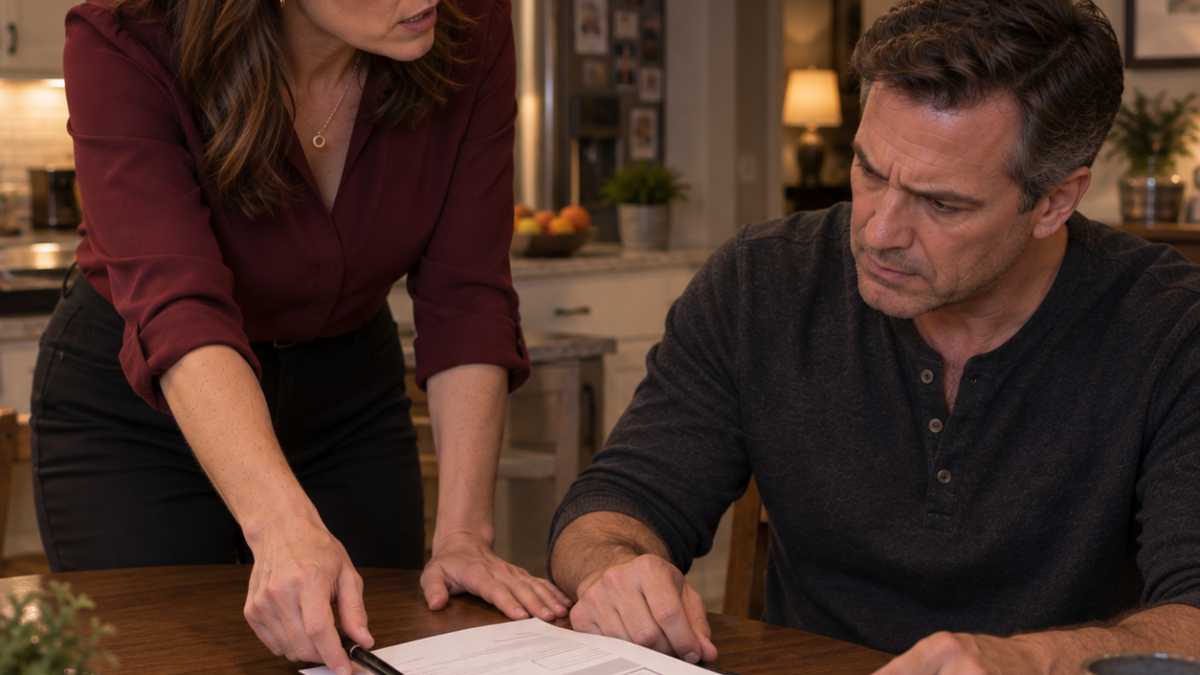
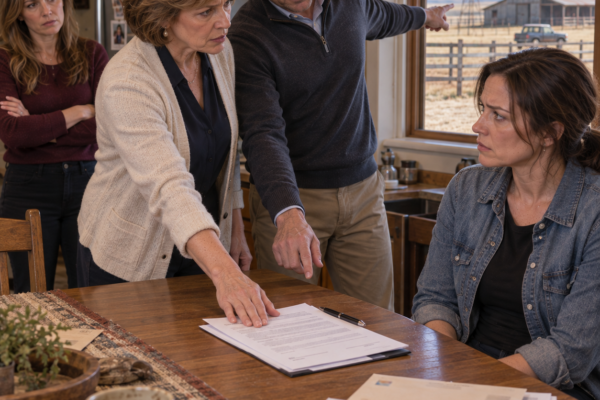
My wife pushed a $68,000 home-equity loan across our kitchen table and said, “Sign it tonight, Daniel. I leave for Baltimore Friday.”
I didn’t touch the pen.
Marissa had spent eight months working later, taking weekend calls, and telling me her new regional director was finally giving her the opportunities she deserved.
Now she wanted to borrow against our house to invest in what she called “a small claims-consulting company with some people from work.”
We had two sons upstairs.
A mortgage.
College accounts that were nowhere near finished.
And a little over $94,000 of equity we had spent fourteen years building.
“What company?”
She exhaled.
“Harbor Claims Solutions.”
“Who owns it?”
“It’s being formed by a group.”
“Which group?”
“Daniel, can you not turn this into an interrogation?”
I was forty-three.
I managed dispatch and operations for a fuel-distribution company outside Allentown, Pennsylvania.
My job was not glamorous.
Trucks had to arrive.
Drivers had to stay within hours-of-service rules.
Winter deliveries had to happen before somebody’s furnace stopped working.
When numbers did not match, I asked why.
That apparently made me exhausting at home.
Marissa tapped the loan packet.
“This is my chance to build something instead of spending the next twenty years processing everyone else’s claims.”
“I’m not against you building something.”
“It feels like it.”
“I’m against borrowing sixty-eight thousand dollars before I know what we’re buying.”
She looked toward the stairs.
“Keep your voice down.”
“I’m not the one raising it.”
She lowered hers anyway.
“The investment buys me equity. We’ve discussed this.”
“No. You told me you were considering consulting someday.”
“This is someday.”
I opened the packet.
The loan itself was straightforward.
Variable home-equity line.
Both owners required to sign.
Maximum initial draw: $68,000.
Then I reached the use-of-proceeds section.
Business investment.
Harbor Claims Solutions LLC.
The beneficiary instructions listed a commercial account.
Below that was the name of the authorized business contact.
Evan Rourke.
I looked up.
Marissa was already watching me.
Evan was her boss.
Forty-six.
Regional claims director at Keystone Mutual.
The man whose name had been attached to most of her late nights for almost a year.
The same man attending the three-day Baltimore “leadership seminar” she was leaving for Friday.
“Evan owns Harbor?”
“He’s one of the founders.”
“You left that part out.”
“I knew you’d do this.”
“Do what?”
“Make it about him.”
“You’re asking me to put our house behind a company owned by your boss.”
“He won’t be my boss once we launch.”
That sentence was new.
I put the packet flat on the table.
“You’re leaving Keystone?”
“Eventually.”
“When?”
“We’re still deciding.”
“Who’s we?”
She looked away.
I waited.
“Me, Evan, and two adjusters.”
“Names.”
“Why?”
“Because you want my signature.”
She folded her arms.
“You don’t trust me.”
“That isn’t an answer.”
Marissa had always hated silence when she was angry.
She filled it.
“There are six people from the department going to Baltimore. Evan is presenting. I’m attending workshops. Nothing about that is inappropriate.”
“I didn’t say anything about the seminar.”
“You were about to.”
Actually, I was.
For months she had explained every late night with Evan’s name.
Evan needed a report.
Evan moved the deadline.
Evan wanted her on a call.
Evan thought she should apply for management.
I had disliked how often one man appeared in our marriage, but disliking something was not evidence.
So I stayed with the loan.
“How much of Harbor do you get for sixty-eight thousand?”
“Thirty-five percent.”
“And Evan?”
“Fifty.”
“What is he putting in?”
“Clients. Industry relationships. Systems. Startup work.”
“How much cash?”
Her face tightened.
“I don’t know the final amount.”
“You want me to risk our house and you don’t know how much the majority owner is investing?”
“He built the opportunity.”
“And we provide the money?”
“You always make everything sound ugly.”
“No. I make it sound specific.”
She pushed the pen toward me again.
“The lender needs this before I leave.”
“Then the answer is no tonight.”
Her hand stopped.
“Daniel.”
“I’ll review the operating agreement, budget, lease, startup costs, and ownership terms. If it makes sense, we can discuss it.”
“You have no idea how humiliating it is having to ask my husband’s permission to use my own equity.”
“It isn’t your equity.”
Her eyes went cold.
“What?”
“It’s ours.”
For several seconds, neither of us spoke.
Then Marissa gathered the packet.
“You know what? Forget it.”
She walked upstairs.
Ten minutes later, my phone buzzed.
It was an automated message from Valley Home Lending.
Because I was a required co-borrower, the lender had sent me access to the full application package.
I opened it.
Harbor Claims Solutions had attached an operating agreement.
Marissa was not a prospective owner.
She had already signed it.
Seven months earlier.
And beside her signature was Evan Rourke’s.
I kept reading after Marissa went upstairs. The operating agreement showed Harbor Claims Solutions had been formed seven months earlier. Evan owned fifty percent. Marissa owned thirty-five. Two other employees split the remaining fifteen. The next attachment was a startup budget. Marissa’s proposed $68,000 contribution was the largest cash contribution by far. Evan was contributing $12,000 in cash plus what the document called industry relationships, intellectual property, and business-development value.
Then I reached the company address. It was not an office. It was a furnished townhouse outside Baltimore. The lease had started four months earlier. Harbor was already paying $3,400 a month for it. I checked the seminar itinerary Marissa had left on the counter. Same neighborhood.
Then I noticed the lease guarantors. Evan Rourke. Marissa Moretti. My wife had personally guaranteed a business lease with her boss months before she ever told me the company existed.
One final attachment was labeled Capital Timing. The first line said:
Home-equity funding expected before leadership weekend.
Friday was the leadership weekend.
The loan wasn’t something Marissa had suddenly decided to discuss with me.
Someone had built the entire business schedule around the assumption that I would sign.
I sat at the table until almost midnight.
The house was quiet except for the furnace kicking on every twenty minutes.
That sound had been part of my life for so long I usually didn’t hear it.
That night I heard every cycle.
Heat on.
Heat off.
Heat on again.
My phone sat beside the loan packet.
I could have gone upstairs.
I could have demanded an explanation.
Instead I opened a yellow legal pad.
That was how I worked when a dispatch problem got complicated.
Facts first.
Assumptions second.
Questions last.
Fact:
Harbor Claims Solutions existed.
Fact:
Marissa had owned thirty-five percent for seven months.
Fact:
She had personally guaranteed a lease with Evan.
Fact:
She wanted $68,000 secured by our home.
Fact:
The business timeline expected that money before Friday.
Assumption:
The Baltimore seminar had something to do with Harbor.
Assumption:
Marissa had hidden this because she knew I would object.
Assumption:
Something personal might be happening between her and Evan.
I drew a line through the last one.
I did not know that yet.
That distinction saved me from several stupid decisions.
At 6:15 the next morning, I called our bank.
Not Valley Home Lending.
Our actual mortgage lender.
I asked what would happen if one spouse tried to open a home-equity line without the other.
The banker said nothing would happen because both owners had to execute the documents.
Good.
I asked them to place a note on the file requiring in-person verification from me before any new lien documents were processed.
They agreed.
Then I called an attorney.
Her name was Rachel Kim.
She had represented one of our drivers during a divorce and had the reputation of explaining bad news without making it sound like the world was ending.
I told her about Harbor.
The loan.
The lease.
The fact that I was not yet alleging an affair.
“Good,” she said.
“Good?”
“People destroy their own credibility by turning suspicion into fact.”
“I manage drivers for a living. Suspicion is how you find out why a truck is three hours late.”
“And facts are how you keep your job after accusing the driver.”
Fair.
She told me not to move marital money.
Not to shut Marissa out of accounts.
Not to call Evan.
Not to contact Keystone.
Not to read private devices or guess passwords.
“Preserve anything you already lawfully receive,” she said.
“The lender packet?”
“Yes.”
“Joint accounts?”
“Yes.”
“Her work email?”
“No.”
“I wasn’t going to.”
“Everyone says that.”
Apparently lawyers use the same joke.
When I got upstairs, Marissa was packing.
Not a suitcase.
Two.
“You’re leaving early?”
She zipped one.
“I’m staying near the airport tonight.”
“The seminar starts Friday.”
“I have meetings tomorrow.”
“Harbor meetings?”
Her hands stopped.
So did mine.
For a few seconds we looked at each other.
Then she straightened.
“You opened the lender package.”
“It was sent to me.”
“That wasn’t meant to be a surprise.”
“You signed the operating agreement seven months ago.”
“I told you I was exploring consulting.”
“You did not tell me you owned a company.”
“Because nothing was final.”
“You guaranteed a lease.”
“Daniel.”
“Is that not final enough?”
She pushed a sweater into the suitcase.
“You don’t understand how startups work.”
“Then explain.”
“We needed the entity in place. We needed space. We needed a business plan before anybody could lend.”
“Why Baltimore?”
“Central location. Lower costs. Access to Maryland, Pennsylvania, D.C.”
“Why a furnished townhouse?”
“It has office space.”
“Does it have bedrooms?”
Marissa froze.
There it was.
The question I had not wanted to ask.
“Of course it has bedrooms. It’s a townhouse.”
“Have you stayed there?”
She looked directly at me.
“Yes.”
“With Evan?”
“Other people have stayed there too.”
“That wasn’t my question.”
She picked up the suitcase.
“I am not doing this before a work trip.”
“Is Harbor paying for the work trip?”
“No.”
“Is Keystone?”
“Yes.”
“Does Keystone know you formed a competing company with your boss?”
Her expression changed.
“Harbor is not operating yet.”
“That also wasn’t my question.”
She stared at me.
“No.”
One clean answer.
Finally.
“Why not?”
“Because we haven’t launched.”
“Does Keystone require disclosure?”
“I don’t know.”
I did not believe that.
Marissa had worked in insurance for twelve years.
Insurance companies enjoy disclosure almost as much as they enjoy forms.
She knew whether outside business interests mattered.
“Are you sleeping with Evan?”
The room went completely still.
She did not explode.
She did not slap me.
She did not cry.
She looked tired.
“That’s what this is really about.”
“No. The loan is really about sixty-eight thousand dollars. The marriage question is separate.”
“You’ve been suspicious of him for months.”
“Yes.”
“And now you’re using the company as proof.”
“No. I’m asking.”
She lifted her suitcase.
“I’ll talk to you when I get back.”
“Marissa.”
“What?”
“I’m not signing the loan.”
Her face hardened.
“You don’t get to decide my future.”
“No.”
I stepped aside so she could pass.
“But I do get to decide whether my house finances it.”
She left.
The boys came downstairs twenty minutes later.
Noah was thirteen.
Eli was ten.
They knew Mom was traveling.
They did not know their parents had just discussed whether Mom was sleeping with her boss.
I intended to keep it that way.
“Mom already left?” Noah asked.
“Yeah.”
“She didn’t say bye.”
“She had an early meeting.”
He shrugged.
Eli wanted waffles.
Children can save you by needing breakfast.
For the next three days, I went to work.
I did not drive to Baltimore.
I did not hire anyone to follow Marissa.
I did not sit outside the townhouse.
I dispatched heating oil.
A cold front moved through eastern Pennsylvania and everybody who had ignored their tank gauge called us at once.
One driver got sick.
A truck developed a hydraulic leak.
An elderly customer outside Quakertown insisted she had enough fuel until Monday.
She did not.
Real problems kept arriving.
At night, I reviewed our finances.
We had less cash than I thought.
Not because money was missing in some dramatic way.
Because our life had become more expensive.
The boys.
Repairs.
Insurance.
Groceries.
Marissa’s income was higher than mine, but she had reduced her transfers to our joint savings over the previous year.
I had noticed.
I had not asked.
That was my part.
Silence had felt easier than another conversation where she told me I worried too much.
Then I found $18,600 in transfers from our joint savings to Harbor Claims Solutions.
Four transfers over five months.
I had approved none of them.
I did not need to approve them.
The account allowed either of us to transfer.
That made them legal.
It did not make them honest.
The first transfer happened one week after Harbor was formed.
The second paid the townhouse security deposit.
The third was labeled software.
The fourth said professional services.
I forwarded the statements to Rachel.
She replied:
Documented. Do not touch the account.
Marissa returned Sunday night.
She kissed the boys.
She did not kiss me.
We waited until they were asleep.
Then I placed the statements on the kitchen table.
“Eighteen thousand six hundred.”
She looked at them.
“You went through our account.”
“Our account.”
“I was going to replace it.”
“When?”
“When Harbor funded.”
“With the HELOC?”
“Eventually.”
“So we already invested.”
“Startup costs.”
“You told me sixty-eight thousand would buy your equity.”
“It does.”
“And the eighteen-six?”
“Expenses.”
“Then our total exposure is more than sixty-eight.”
“Technically.”
There are words that announce a problem all by themselves.
Technically is one of them.
“How much have you personally guaranteed?”
“The lease.”
“Anything else?”
“No.”
“Are you sure?”
“Yes.”
“Credit cards?”
“No.”
“Vendor contracts?”
“No.”
“Software?”
“Company obligation.”
“Did you tell Evan you had authority to use the house equity?”
Her eyes narrowed.
“He knows we own the house.”
“That isn’t what I asked.”
“He knows I expected you to support me.”
I leaned back.
“Why?”
“Because you’re my husband.”
That sentence should have sounded loving.
It did not.
“What does husband mean here?”
“What?”
“Someone who supports you? Someone who signs? Someone who provides collateral?”
“Don’t be ridiculous.”
“I’m asking because you planned around my signature before asking me.”
She pushed away from the table.
“You want the truth? Fine. I knew you would be difficult.”
“Then why assume yes?”
“Because every time you’ve wanted something for this family, I supported it.”
“Name one thing that put sixty-eight thousand dollars of home equity behind my job.”
“That’s not the point.”
“It is exactly the point.”
She stood.
“You never believed in my career.”
I almost laughed.
I had rearranged work schedules for her training.
Stayed home when the boys were sick.
Moved my vacation so she could attend a claims conference.
Paid half the bills while she finished a certification program.
But underneath my anger, I heard something else.
Maybe support had never felt like belief to her.
Maybe I had treated her career as the flexible one because mine involved trucks that physically had to move.
That still did not justify the secrecy.
“I believe you’re good at your job,” I said.
“You think my job is paperwork.”
“I think claims work matters.”
“You make jokes about insurance people.”
“I make jokes about everyone.”
“That’s not better.”
Fair again.
Marriage is inconvenient when both people can be wrong in different directions.
I asked the affair question once more.
“Are you sleeping with Evan?”
Marissa closed her eyes.
“No.”
I did not know whether to believe her.
So I said, “Okay.”
That surprised her.
“That’s it?”
“For now.”
“What does that mean?”
“It means I don’t have proof you are.”
Her expression changed from defensive to offended.
“You need proof?”
“I need truth.”
She left the kitchen.
Two days later, Keystone’s compliance department emailed Marissa.
I did not cause it.
I learned about it because she came into the bedroom holding her phone.
“Did you report us?”
“No.”
“Don’t lie.”
“I didn’t.”
“Somebody reported Harbor.”
“Who?”
“I don’t know.”
Keystone had an annual conflict-of-interest certification.
Managers had to disclose outside businesses involving insurance services.
Harbor qualified.
Evan had not disclosed it.
Neither had Marissa.
The two minority members had.
One of them had apparently asked compliance whether the activity was allowed.
That was enough.
Keystone began a review.
Marissa blamed me anyway.
“You asked too many questions at the lender. Somebody talked.”
“A mortgage lender did not call your employer.”
“You don’t know that.”
“No. I don’t.”
For three weeks, our house became a waiting room.
Marissa slept in the guest room.
Harbor’s loan paused because I would not sign.
Keystone restricted Evan from supervising employees involved in the review.
Marissa remained at work but was moved temporarily under another manager.
Nothing exploded.
Nobody was marched out by security.
That almost made things worse.
Every day we went to work, made lunches, answered the boys, and waited for the next fact.
Rachel advised me to consider filing for separation.
I hesitated.
Not because the marriage was good.
Because filing made the problem real to the children.
“That is not a legal reason,” she said.
“I know.”
“It is a human reason.”
“Better.”
“What do you want?”
I stared at the papers.
“I want to know if she’s having an affair.”
“Then you’re letting that answer decide a much larger question.”
She was right.
Even if Evan and Marissa had never touched each other, I had a wife who formed a business, moved joint savings, guaranteed a lease, planned a home-equity loan, and hid all of it.
The marriage already had a trust problem.
An affair would change the color.
Not the structure.
I filed.
Not for emergency sole custody.
Not for a restraining order.
A standard divorce complaint and request for temporary financial rules.
No new secured debt without mutual consent.
No extraordinary transfer of marital funds.
Routine household spending continued.
The boys stayed in the house.
Marissa stayed too for another two weeks.
Then she rented an apartment six minutes away.
We told Noah and Eli together.
Marissa cried.
I did not.
Not because I was stronger.
Because if I started, I was not sure I would stop.
“We both love you,” she told them.
Noah asked, “Did somebody cheat?”
I looked at Marissa.
She looked at me.
“Noah,” I said, “there are adult problems in our marriage that you do not need to carry.”
“That means yes.”
“It means your job is being thirteen.”
He hated that answer.
Years later, he told me it was still the right one.
Divorce discovery turned Harbor from a vague business dream into numbers.
The company had signed a three-year lease on the Baltimore townhouse.
Technically mixed commercial-residential use under a flexible-work agreement.
It had purchased claims-management software.
Paid for a website.
Engaged a lawyer.
Reserved booth space at two insurance conferences.
The business had not yet billed a client.
There was no revenue.
Marissa’s thirty-five percent ownership looked impressive until the accountant Rachel hired compared contributions.
Marissa:
$18,600 already transferred from marital funds.
$68,000 proposed new contribution.
Lease guaranty.
Part-time labor.
Evan:
$12,000 cash.
Business-development services.
Industry contacts.
Proprietary process material.
Fifty percent ownership.
The other two employees each contributed $7,500 and received smaller stakes.
I asked the accountant whether that was normal.
“Normal is not a useful word.”
“Fair?”
“That depends on how valuable Mr. Rourke’s relationships actually are.”
“What if he has no clients yet?”
“Then Mrs. Moretti is providing a disproportionate amount of hard capital.”
Marissa hated that report.
“You hired someone to make Harbor look bad.”
“The accountant used your documents.”
“Evan has twenty years of industry relationships.”
“Then have them valued.”
“We don’t need a valuation for every human contribution.”
“You do when you mortgage a house for it.”
That was the last financial argument we had face-to-face before mediation.
The first personal evidence arrived a month later.
Not from a private investigator.
Not from me checking her phone.
From Harbor’s own business records.
Because Marissa’s ownership interest was marital property subject to valuation, both sides requested company financial documents.
Harbor produced hotel invoices.
Mileage.
Meeting expenses.
Conference receipts.
Most were boring.
Then Rachel called.
“You should come in.”
That is rarely a good sentence from a divorce lawyer.
I sat across from her.
She had three hotel statements.
Baltimore.
Newark.
Harrisburg.
Each trip matched a weekend Marissa had described as a Keystone work event.
Harbor had reimbursed part of the lodging.
One room per trip.
Booked under Evan.
Two guests.
I looked at Rachel.
“That still doesn’t prove anything.”
“No.”
“Thank you.”
“But Marissa’s card paid restaurant charges to the room.”
“Could be business.”
“Yes.”
“And two guests could be colleagues.”
“Yes.”
She slid another page over.
It was a statement from one of Harbor’s minority members taken during business valuation.
Rachel had asked who attended each planning weekend.
His answer:
Baltimore — Evan and Marissa.
Newark — Evan and Marissa.
Harrisburg — Evan and Marissa.
The witness had not attended because, according to Evan, those weekends were “founder strategy sessions.”
I sat there.
Rachel did not ask whether I was okay.
I appreciated that.
“Do we confront her?”
“That’s your decision.”
“What would you do?”
“Charge you for legal advice instead of life advice.”
“Helpful.”
“I try.”
I asked Marissa that evening.
We met at a coffee shop because the boys were with me.
I put the three invoices between us.
She looked at them.
Then at me.
“How long?”
She closed her eyes.
That was enough.
“How long, Marissa?”
“Six months.”
The answer was quieter than the espresso machine.
“Before Harbor?”
“No.”
“After?”
“About a month after.”
“So while you were forming a company together.”
“Yes.”
“The Baltimore townhouse?”
She nodded.
I looked out the window.
People were walking past with umbrellas.
A man held a bakery box over his head because he had forgotten one.
Normal life.
“You told me nothing happened.”
“I know.”
“Why?”
“I was scared.”
“Of losing me?”
She did not answer quickly enough.
“Of losing the house loan?”
Her face folded.
Not dramatically.
Just enough.
“Both.”
That hurt.
There are betrayals that arrive as one clean break.
This one had layers.
Affair.
Business.
Money.
Planning.
Each made the others harder to excuse.
“Do you love him?”
“I thought I did.”
“Past tense?”
“We’re not together now.”
“Because of the divorce?”
“Because everything became impossible.”
That was not my problem.
I asked one more question.
“Were you planning to leave me before you asked for the HELOC?”
Marissa stared at the invoices.
“I don’t know.”
That answer stayed with me.
I believed she did know.
Discovery eventually proved it.
Not through romantic text messages.
Through business email.
Harbor’s lawyer produced company emails involving financing, ownership, and startup timing.
Most had nothing to do with me.
Then Rachel found a chain dated six weeks before Marissa put the loan packet on our kitchen table.
Subject:
Funding sequence.
Evan wrote:
Need Moretti capital completed before Baltimore or we delay launch.
Marissa replied:
I know. Dan will want details.
Evan:
Give him the business case. You said he always wants the house because of the boys. If you two separate later, that can work in your favor.
Marissa:
He’ll fight the line if he knows I’m leaving.
Evan:
Then don’t make it two decisions at once.
My hands went cold.
There was more.
Marissa:
If the HELOC funds first, I can offer him the house and keep my retirement mostly intact. He’ll probably take the house to keep Noah and Eli stable.
Evan:
Exactly. Get the capital done. Sort the marriage after Baltimore.
I stopped reading.
Rachel reached across and turned the page face down.
“That is enough for today.”
“No.”
“Daniel.”
“Turn it back.”
She did.
The next email was from Marissa.
I hate doing it this way.
Evan answered:
You’re not stealing anything. It’s marital equity and you own half.
Marissa:
I know. I just know he wouldn’t sign if I told him everything.
There it was.
The Main Reveal was not that my wife had an affair.
By then, I already knew that.
It was that the HELOC deception and the planned divorce were connected.
They had discussed the part of me they expected to use.
My attachment to the boys’ home.
My preference for stability.
My likely willingness to take the house in a settlement.
The plan was not legally guaranteed to work.
No divorce court had promised Marissa I would be assigned the debt.
They simply hoped to create the debt first, fund Harbor, and negotiate the consequences later.
I had been treated as financing.
That was the point where my anger became clear enough to use.
I called Rachel.
“I want the house sold.”
She paused.
“You have told me for four months you want to keep it.”
“I know.”
“Why the change?”
“Because if I keep it, every discussion becomes whether I assumed the HELOC they wanted me to create.”
“The HELOC never funded.”
“I know.”
“So why sell?”
“Because I want clean numbers.”
That was not the whole truth.
The whole truth was I no longer wanted the symbol they had counted on.
I loved the house.
The boys loved it.
But I did not want to spend years proving I had protected it from their mother.
We could make a new home.
The boys needed parents who were functional more than they needed the same staircase.
At mediation, Marissa sat across from me with her attorney.
Evan was not there.
This was not about him.
Rachel placed the funding-sequence emails on the table.
Marissa’s attorney had already seen them.
Nobody acted surprised.
That was useful.
The mediator asked whether I wanted to discuss fault.
“No.”
Marissa looked at me.
The mediator continued.
“Then what is the issue?”
“The eighteen-six already moved from joint savings.”
Marissa’s attorney nodded.
“We can account for it.”
“Harbor’s value.”
“Minimal at present.”
“The lease guarantee.”
“Assigned to Ms. Moretti.”
“The house.”
I took a breath.
“Sell it.”
Marissa looked shocked.
“What?”
“We sell.”
“The boys—”
“Will have two homes.”
“You said you wanted it.”
“I changed my mind.”
Her face flushed.
“You’re doing this because of the email.”
“I’m doing it because I don’t want either of us using the house as leverage.”
She stared at me.
The mediator asked us to keep moving.
The marital savings were divided after crediting the money Marissa had already put into Harbor to her side.
Her Harbor membership went to her.
I made no claim to operate or control it beyond whatever value the accountant assigned for division.
Our retirement accounts were equalized according to the actual marital values.
No imaginary punishment.
No revenge percentage.
The home was listed.
Custody was shared.
The boys remained in the same school district.
Then the mediator asked whether either of us wanted to speak directly before the session ended.
Usually, Rachel would have hated that.
She didn’t stop me.
I looked at Marissa.
“You were allowed to leave me.”
She started crying.
I continued.
“You were allowed to fall in love with somebody else. You were allowed to decide the marriage was over. You were even allowed to make a bad business decision.”
“Daniel—”
“But you were not allowed to make me finance the exit without telling me.”
She covered her mouth.
“I know.”
“No. I need you to hear the exact part.”
She nodded.
“You knew I would say no if I knew you planned to leave. So you tried to get the debt created first.”
“Yes.”
It was the first time she admitted it without qualification.
“Why?”
She looked down.
“Because I felt like if I waited until after I left, Harbor would disappear.”
“And?”
“And I wanted both.”
That answer, painful as it was, finally made sense.
Not a mastermind.
Not a monster.
A person who wanted a new business, a new relationship, and the security of an old marriage long enough to get the first two started.
People do enormous damage trying to avoid choosing.
“I’m sorry,” she said.
I nodded.
“I know.”
That did not mean forgiveness.
It meant I believed she was sorry.
The house sold in November.
I moved into a three-bedroom rental ten minutes away.
Noah hated it for six weeks.
Eli loved that his room had a weird sloped ceiling.
Marissa rented a townhouse in the same school district.
The first Christmas was awkward.
We split the day.
I had morning.
She had afternoon.
Nobody died.
That sounds sarcastic.
It isn’t.
When you are in the middle of divorce, every new arrangement feels like evidence that the family is breaking permanently.
Then you survive the first birthday.
The first parent-teacher conference.
The first holiday.
The family is different.
Different is not the same as gone.
Keystone finished its internal review around the same time.
I learned only what Marissa chose to tell me and what later became public in professional circles.
The company found that Evan and Marissa should have disclosed Harbor earlier because it planned to operate in the same industry.
There was also concern that some planning had happened using company time and resources.
Evan resigned.
Marissa received a formal warning and later left voluntarily for another insurer.
One of Harbor’s minority members withdrew.
The Baltimore lease became too expensive.
Harbor did not launch on the original schedule.
For a while, Marissa blamed me.
Then she stopped.
Evan and Marissa did not stay together.
I did not ask for details.
I knew enough.
The divorce became final fourteen months after the loan packet landed on our kitchen table.
At the courthouse, nothing dramatic happened.
No speech.
No judge calling anyone immoral.
The decree reflected the settlement.
Property.
Custody.
Support.
Retirement.
Done.
Outside, Marissa stood beside me while our lawyers talked near the elevators.
She said, “I thought I would feel relieved.”
“Do you?”
“No.”
“Me neither.”
She looked at me.
“I meant what I said at mediation.”
“I know.”
“About being sorry.”
“I know.”
“Do you hate me?”
I thought about it.
“No.”
She looked surprised.
“I don’t trust you the way I did.”
Her eyes dropped.
“That’s worse.”
“Maybe.”
We rode separate elevators down.
Two years later, Noah turned fifteen.
By then, both boys had figured out more than we had told them.
Teenagers do that.
He asked me while we were driving.
“Was Mom cheating?”
I kept my eyes on the road.
“Yes.”
He became very still.
“With Evan?”
“Yes.”
“How long?”
“Long enough.”
“Why didn’t you tell me?”
“Because you were thirteen.”
“I had a right to know.”
“You had a right to be a kid.”
“She lied to us too.”
“No. She lied to me.”
“She said she was working.”
“That was between adults.”
He looked out the window.
“Why are you defending her?”
“I’m not.”
“It sounds like it.”
“I can tell you she hurt me without asking you to hate your mother.”
He did not speak for the rest of the drive.
Three days later, he apologized.
He did not need to.
Marissa later told me he had confronted her too.
She answered him.
I did not ask what she said.
Their relationship had to become theirs.
That was something I learned slowly.
Harbor Claims Solutions eventually became a real business.
Not with Evan.
Marissa dissolved the original company and started again almost three years later with one former coworker.
No house collateral.
No secret partner.
A small business loan in her own name.
A rented office near Bethlehem.
She told me because the business affected her custody schedule during launch.
“I know this is going to sound weird,” she said.
“What?”
“I wanted you to know I did it properly.”
I looked at her.
“You don’t need my approval.”
“I know.”
That was the important part.
The business survived.
Then grew.
Not dramatically.
Three employees.
Then five.
I was glad for her.
That surprised me too.
For a long time, I thought healing meant eventually not caring what happened to someone.
It didn’t.
Sometimes healing meant caring without feeling responsible.
My own life became quieter.
I stayed at the fuel company.
People asked why I did not leave after the divorce and start something of my own.
I had no answer more interesting than this:
I liked my job.
I liked the drivers.
I liked winter mornings when everything was organized and every truck rolled out on time.
I liked solving problems that ended when the delivery was made.
Not every person needs to turn ambition into ownership.
That was something Marissa and I had misunderstood about each other.
She had started seeing my contentment as fear.
I had started seeing her restlessness as ingratitude.
Neither interpretation was completely fair.
We just stopped talking before those beliefs hardened.
The strangest closure came from the original Harbor loan packet.
I found it years later while cleaning a file cabinet.
The signature page still had the yellow tab:
BORROWER 2 — SIGN HERE.
The line beneath it was empty.
I remembered Marissa pushing the pen toward me.
The argument.
The lender notification.
The seven-month-old operating agreement.
All the damage that followed.
For a long time, I thought my refusal to sign had saved me.
That wasn’t quite right.
The lender’s requirement for two signatures had created a moment where secrecy could no longer move forward without my participation.
But a blank signature line does not save a marriage.
It only gives someone a choice.
Marissa had wanted me to choose without knowing the facts.
I refused.
That was all.
I shredded the loan packet.
Not the divorce decree.
Not the business records.
Those stayed with the legal file.
Just the unsigned loan application.
A few months later, Noah graduated from high school.
Marissa and I sat three seats apart because Eli and my mother were between us.
When Noah crossed the stage, Marissa cried.
So did I.
Afterward, we took photographs.
One with me.
One with her.
Then Noah said, “Can we get one with everybody?”
So we did.
Marissa stood on one side.
I stood on the other.
No tension worth photographing.
No reunion.
No hidden message.
Just two people who had once built a family badly enough to break the marriage and carefully enough to keep being parents afterward.
As we were leaving, Marissa stopped me.
“Daniel.”
“Yeah?”
“You were right about one thing.”
I laughed.
“This should be framed.”
“The house.”
I waited.
“If you had kept it, I think we would still be arguing about what it meant.”
“Probably.”
“I hated you for selling it.”
“I know.”
“Now I’m glad.”
I nodded.
Then she smiled.
“Don’t get used to me saying you were right.”
“Too late.”
She walked toward her car.
I walked toward mine.
For years, I thought the worst part of betrayal was discovering that somebody had chosen someone else.
It wasn’t.
The worst part was realizing they had made plans around you while denying you the information needed to make your own.
Once I understood that, the rest became simpler.
Not easy.
Simpler.
You can survive somebody leaving.
You can survive a bad investment.
You can survive a divorce.
What you cannot build anything healthy on is consent that was engineered through missing facts.
The signature line in that loan packet stayed blank.
It was the first honest decision either of us had made in months.