My Stepmother Removed My Name From Dad’s Obituary—Then the Funeral Home Sent Me Her Edit
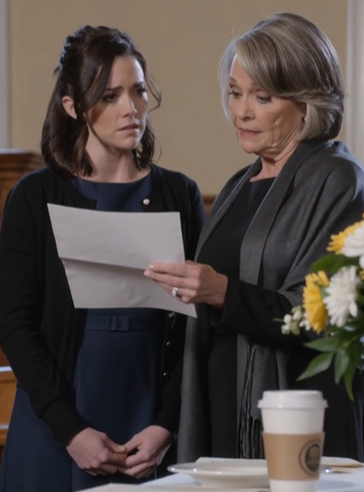
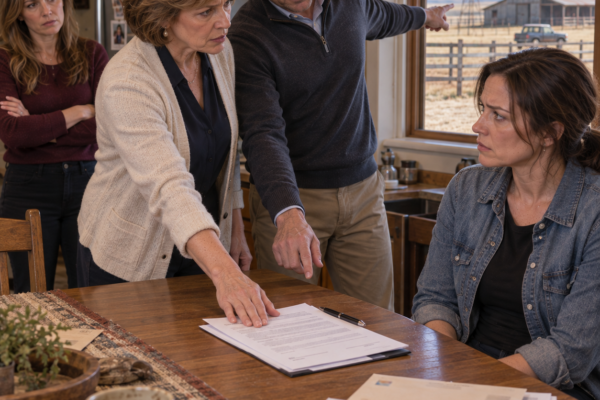
At my father’s memorial luncheon, my stepmother slid the folded obituary toward me and said, “It’s already printed. Please don’t make today about your name.”
I looked down at the last line.
Thomas Benton is survived by his beloved wife, Vivian, and one daughter.
One daughter.
No name.
I was the daughter.
I’m Claire Benton, thirty-five, an oncology nurse in Madison, Wisconsin, and for the final eight months of my father’s life, I had been at his house almost every day.
I drove him to appointments.
I reorganized medications when his hands became unreliable.
I slept on a folding cot in the den after he started falling at night.
I traded weekend shifts so I could be there when the home-care nurse came.
I kept a spiral notebook with his weight, symptoms, meals, medications, and every question he wanted me to ask his doctor.
Vivian was his wife.
She loved him.
I want that stated clearly.
She cooked for him, handled insurance calls, washed bedding, and lived with the fear of losing him every day.
But when things became medically difficult, Dad usually called me.
I knew what to do.
Apparently that had become a problem neither of us named while he was alive.
Now we were in the church fellowship hall after his funeral, surrounded by casseroles, coffee, and people telling stories about him.
Three different people had already hugged me and said some version of:
“Your dad talked about you constantly.”
Then I opened the obituary.
“Was this a mistake?” I asked.
Vivian’s mouth tightened.
“Everybody knows who you are.”
“That wasn’t my question.”
“It was a terrible week, Claire.”
“I know.”
“I had forms, flowers, the cemetery, the church, all of it.”
“So the funeral home shortened it?”
She looked at me.
“The newspaper charges by the line.”
I glanced at the paragraph again.
There were two full sentences about the neighborhood repair shop Dad had operated behind his garage for thirty-eight years.
Vivian’s name appeared twice.
Mine appeared zero times.
“You found room for the snowblowers.”
“Please.”
“I’m asking whether you intentionally left out my name.”
Vivian lowered her voice.
“This is your father’s memorial. Not a debate about recognition.”
That answer hurt more than if she had simply said yes.
I folded the obituary and put it in my purse.
Then I stayed another hour.
I thanked people for coming.
I packed leftover sandwiches into foil with two women from Dad’s church.
I hugged Vivian before I left because grief is complicated and because, even then, part of me still wanted to believe there was an innocent explanation.
The next morning, I called the funeral home.
The director remembered me.
I asked whether the newspaper ever condensed survivor names.
“No,” he said. “We print the approved family copy.”
“Who approved this one?”
A pause.
“Mrs. Benton.”
He offered to email me the final proof.
Ten minutes later, it arrived.
The PDF had revision marks from the earlier draft.
The original survivor line read:
He is survived by his wife, Vivian Benton, and his daughter, Claire Benton.
Vivian’s correction removed two words.
Claire Benton.
In their place she had typed:
one daughter.
At the bottom of the page was the approval timestamp.
Sunday.
The day after a hundred people had stood in line at Dad’s funeral and told me how often he talked about me.
I didn’t call Vivian. I printed the proof and put it beside the spiral notebook I had kept during Dad’s illness.
That afternoon, an unfamiliar number called.
The woman introduced herself as Lena Ortiz from the Madison Public Library.
She said my father had participated in a local oral-history project about neighborhood tradespeople.
I knew about the first interview.
Dad had spent forty years repairing lawnmowers, outboard motors, snowblowers, and anything else people dragged into his garage.
What I didn’t know was that he had recorded a second session six weeks before he died.
“He asked us to hold part of it until after his funeral,” Lena said.
“Why?”
“He didn’t explain.”
Then she read the release note he had signed.
After my obituary is published, give Claire Benton the private access code. She’ll know what should become public.
My hand tightened around the phone.
“Did Vivian know about this?”
Another pause.
“She knew he had done the interview.”
“But not what he said?”
“I can’t answer that.”
Lena emailed me a secure link.
The file was six minutes and forty-one seconds long.
I stared at the play button.
Then I closed my laptop.
Whatever Dad had recorded was the last thing he had left that I hadn’t heard yet.
And I suddenly wasn’t ready to find out why he had made sure it reached me only after the obituary.
My father’s name was Thomas Benton, but almost nobody called him Thomas.
To the neighborhood, he was Tom.
To the guys who brought broken boat motors into the garage, he was Benton.
To me, he was Dad.
My mother died when I was twenty.
Dad was fifty-seven.
For almost a decade after that, neither of us was especially good at talking about loneliness.
We developed routines instead.
Dinner on Sunday.
Phone call Wednesday evening.
Coffee every other Saturday morning unless I worked.
If my car made a strange sound, he insisted on hearing it.
If his blood pressure medication changed, I insisted on seeing the bottle.
That was our language.
Maintenance.
He repaired things.
I monitored things.
He believed nearly every mechanical failure could be traced to one of three problems: bad fuel, loose connections, or somebody ignoring a noise for too long.
I used to tell him human bodies were more complicated.
He would say, “That’s because nobody labels the wires.”
Vivian entered our lives five years before Dad died.
She was sixty when they met.
A retired middle-school secretary.
Widowed.
Organized.
The first time I had dinner with her, she brought lemon bars in a glass container and left with every dish washed even though I told her twice not to touch them.
I liked her.
Not immediately in the intimate, family way.
But I liked what happened to Dad around her.
He went to movies again.
He traveled.
He bought shirts that were not navy work shirts.
They married two years later at the county courthouse with twelve people watching.
I was genuinely happy.
That matters.
There was no wicked-stepmother origin story.
No fight over Dad.
No inheritance tension.
No secret campaign.
Vivian and I simply never developed much of a relationship independent of him.
We were pleasant.
Christmas cards.
Birthday texts.
Coffee if Dad happened to be there.
If you had asked either of us before his illness whether we got along, both of us would have said yes.
Then Dad got sick.
He had been losing weight.
Not dramatically.
Enough that I noticed when he tucked in his shirt.
He blamed summer heat.
Then fatigue.
Then a cough.
He finally went to the doctor after I threatened to schedule the appointment myself.
The tests took weeks.
Then came the appointment nobody forgets.
Dad asked if I could go.
Vivian said hospitals made her anxious.
At the time, that seemed reasonable.
Everybody has something.
I sat beside him when the specialist explained that treatment might slow the disease but was unlikely to stop it.
The doctor spoke in ranges.
Months.
Maybe a year.
Dad nodded like he was getting an estimate for transmission work.
In the parking garage, he looked at me and said:
“That was rude.”
“What?”
“I had plans.”
I laughed.
Then we both cried.
That was February.
By March, I had started the notebook.
Blue spiral cover.
Three dollars at a drugstore.
It began because Dad lied.
Not maliciously.
Patient lying.
The kind where every symptom becomes “fine” five minutes after the appointment ends.
So I wrote things down.
March 11.
Weight 184.
Appetite down.
Two episodes dizziness.
Ask whether nighttime cough matters.
March 18.
New medication.
Dad insists nausea is “barely anything.”
It is not barely anything.
Vivian hates the pill organizer.
Those first months, I went over two or three times a week.
I was still working full-time.
Dad was still driving.
Vivian handled most meals.
She argued with insurance companies.
She picked up prescriptions.
She changed the sheets when night sweats started.
I never thought she wasn’t caring for him.
She cared differently.
Then the disease progressed.
I had spent eleven years in oncology.
I knew what decline looked like before either of them wanted to call it decline.
Dad started catching himself on furniture.
His hands trembled.
He stopped going into the workshop alone.
One April afternoon, I found him sitting on the garage step staring at a lawnmower carburetor he had disassembled.
“What’s wrong?”
“My fingers.”
He held up his right hand.
“They’re not doing what I told them.”
I sat beside him.
“We can finish it tomorrow.”
He looked offended.
“The grass doesn’t know that.”
The owner came for the mower the next day.
Dad had me finish it.
He stood beside me explaining things I already understood.
That was how frightened he was.
If he could remain the person giving instructions, maybe less had changed.
Vivian watched from the garage door.
I remember her expression.
Not anger.
Something closer to displacement.
Dad had spent years being the competent person in their marriage.
Now when competence mattered most, he leaned toward me.
I did not understand then how visible that must have been.
In May, his oncologist recommended home-support services.
Vivian said it was too soon.
Dad said it sounded like surrender.
I said neither of them understood what the service actually did.
That conversation ended badly.
Not screaming.
My family almost never screamed.
Dad stared at the television.
Vivian wiped the same section of counter three times.
I gave a ten-minute explanation of symptom management while sounding exactly like a nurse instead of a daughter.
At the end, Vivian said:
“You’re very good at this.”
It sounded like praise.
Maybe it was.
It also sounded like something else.
We arranged the services.
By June, Dad had fallen twice.
The second fall happened at two in the morning.
Vivian called me.
She was trying not to cry.
“I can’t get him up.”
I drove over in sweatpants.
He was sitting on the bedroom carpet with a pillow behind him.
Embarrassed.
Angry.
Alive.
I assessed him, called the after-hours number, and helped get him back into bed after we knew there was no obvious injury.
At four in the morning, all three of us stood in the kitchen.
Dad said:
“I suppose the cot comes next.”
Nobody asked which cot.
The old folding bed from the basement went into the den.
I started sleeping there three or four nights a week.
Then five.
My supervisor rearranged my shifts.
I burned vacation hours.
My apartment became somewhere I went for clean clothes.
The notebook changed.
June 12.
First night on cot.
Dad awake twice.
Vivian says I should sleep.
She also wakes me at 2:40 because he’s short of breath.
June 17.
Dad asked me not to leave before morning.
June 23.
Vivian cried in laundry room.
Pretended she had detergent in eye.
I wrote everything.
Not as evidence.
As memory support.
Caregiving compresses days.
Tuesday becomes Thursday.
One medication becomes another.
You begin measuring time by bowel movements, refills, meals completed, and the distance someone can walk before needing a chair.
The notebook kept me accurate.
By July, Vivian and I had fallen into roles.
I handled medical communication.
She handled the house.
I called the clinic.
She called insurance.
I measured symptoms.
She made soup.
I slept in the den.
She slept beside him until the hospital bed replaced their bed and then slept in the bedroom down the hall because the oxygen equipment kept her awake.
She hated herself for that.
I know because one night she told me.
“I should be able to stay in there.”
“You need sleep.”
“You do.”
“I’m used to shifts.”
“There. That.”
“What?”
“You always have an answer.”
I looked at her.
She immediately shook her head.
“I’m sorry.”
“It’s okay.”
“No. I’m tired.”
“So am I.”
For one second, we were simply two exhausted women in a kitchen.
Then Dad coughed from the living room and both of us moved.
I got there first.
That happened a lot.
In August, Dad stopped treatment.
The goals changed.
Comfort.
Breathing.
Pain.
Food if he wanted it.
No food battles if he didn’t.
I had had these conversations professionally hundreds of times.
Having them with Dad was like speaking a familiar language while drowning.
He watched me organize his medication tray one afternoon.
“You’re fast.”
“I do this all day.”
“Not for me.”
I stopped.
He looked out the window.
“Different when it’s yours.”
“Yes.”
He nodded.
Then:
“Write that down.”
“What?”
“That I said something wise.”
I wrote:
August 8.
Dad remains annoying.
He saw it later and laughed hard enough to cough.
Those were good hours.
There were still good hours.
That is important.
Terminal illness does not erase ordinary life on schedule.
Dad watched baseball.
He complained about city snow-removal budgets before any snow existed.
He ate an entire brat one Sunday and acted like he had personally defeated medicine.
Vivian and I played cards with him.
He cheated.
Badly.
Then came the library interview.
Dad’s workshop had been part of the neighborhood almost forty years.
A librarian named Lena Ortiz was recording oral histories from tradespeople whose small businesses had shaped older Madison neighborhoods.
She interviewed him in May.
He talked about two-stroke engines, changing technology, customers who ignored maintenance, and how people increasingly threw things away instead of fixing them.
He loved it.
A week later he told me:
“I’m in the library now.”
“Congratulations.”
“Very prestigious.”
“I’m sure scholars will study your carburetor opinions.”
He told everyone.
What he did not tell me was that Lena returned in September.
The second interview happened on a Tuesday afternoon while I was there.
I remember because Dad told me he needed the living room for “official business.”
I assumed it was follow-up material.
I helped him into his chair.
Lena arrived with a small recorder.
Then Dad asked if I could give them twenty minutes.
I went into the kitchen.
Vivian was there.
She looked irritated.
“Another interview?”
“Apparently.”
“He has more energy for strangers than he had at breakfast.”
I didn’t know what to say.
So I made coffee.
About fifteen minutes later, Lena came into the kitchen and asked for me.
Dad wanted me back.
When I entered, the recorder had been turned off.
Dad looked tired but satisfied.
“What did you tell her?”
“Secrets.”
“Great.”
Lena smiled.
“He did ask for one unusual release condition.”
“What?”
Dad waved his hand.
“Later.”
Vivian entered behind us.
“Release condition?”
Dad looked at her.
“Nothing dramatic.”
Then he asked for toast.
The moment passed.
Six weeks later he was dead.
I did not think about the interview again until Lena called after the obituary.
Before listening to it, I went through the last weeks in the notebook.
That is what I did instead.
September 9.
Library woman came.
Dad good words today.
Vivian irritated about interview.
Dad asked for Claire afterward.
I stared at my own handwriting.
I had noticed the tension.
I had simply been too busy to interpret it.
Then another entry.
September 17.
Bad morning.
Vivian said, “He only settles when you’re here.”
Not compliment.
Talk tomorrow?
We never talked.
September 18 had been worse medically.
September 19 had been paperwork.
Then groceries.
Then medication changes.
A difficult night.
The conversation disappeared.
In October, Dad began needing help with everything.
I don’t mean most things.
Everything.
Getting from bed to chair.
Washing.
Medication.
Food.
Sometimes drinking.
There is nothing glamorous about that part of caregiving.
It is intimate in ways families rarely discuss afterward.
I protected his dignity.
Vivian did too.
She just had trouble being in the room during some of it.
She would say:
“I’ll give you two privacy.”
Sometimes Dad asked her to stay.
Sometimes he did not.
One night after I had helped him back into bed, Vivian was standing in the hallway.
She said:
“I feel like a visitor in my own marriage.”
I stopped.
“What?”
She shook her head.
“Forget it.”
“No.”
“I said forget it.”
“Vivian.”
She looked exhausted.
“I know you’re his daughter. I know you’re a nurse. I know he needs you.”
I waited.
“But every hard thing happens between the two of you now.”
“That isn’t intentional.”
“I know.”
“You can be there.”
“I don’t know how.”
That sentence changed something for me.
At work, I had seen spouses become helpless at the edge of death.
Not because they loved less.
Because the person they knew as a partner had become someone needing care they could barely recognize.
I knew procedures.
Vivian knew Dad before he needed procedures.
Neither position was superior.
But the illness rewarded mine.
Competence gained power.
Without anyone choosing it.
I told her:
“You can ask me what to do.”
“That’s exactly it.”
“What?”
“I don’t want to ask you how to be his wife.”
I had no answer.
The next morning, we made eggs.
Nothing was resolved.
By the final week, Dad spoke very little.
I was there nearly full-time.
Vivian was there too.
That matters.
She held his hand.
She washed his face.
She played the old radio station.
When he died a little before five on a Thursday morning, I was on one side of the bed.
Vivian was on the other.
Nobody was erased from that room.
The funeral arrangements began six hours later.
I had watched families make post-death decisions for years.
I still became useless.
Casket.
Cremation questions.
Church.
Flowers.
Food.
Death certificates.
Obituary.
Every ordinary administrative thing felt obscene.
Vivian took control.
I let her.
At the funeral home, the director slid the obituary worksheet toward us.
Vivian said:
“I’ll do this.”
I felt relief.
That is important too.
I did not submit my name and watch her delete it in front of me.
I handed her the job.
I had been carrying medical decisions for months.
She carried the paragraph.
The funeral was Saturday.
Dad’s repair customers came.
Neighbors.
Former coworkers.
People I had never met.
One man shook my hand and said:
“You must be Claire. He never shut up about you.”
Another woman told me Dad once delayed repairing her snowblower because I had a college graduation event and “family outranked snow.”
A retired mechanic told me:
“He was proud you became a nurse.”
Vivian stood near me for some of those conversations.
I saw her hear them.
At the time I thought nothing of it.
The obituary went online Tuesday.
You know the rest.
After the funeral-home email and Lena’s call, I still did not play the recording.
Instead, I worked.
That is what I do when overwhelmed.
I went back to the hospital for three shifts in four days.
My patients did not know my name was missing from an obituary.
They needed anti-nausea medication.
Discharge teaching.
A warm blanket.
One older man asked me whether his daughter should fly in.
“How far away?”
“Arizona.”
“What do you want?”
He stared at the blanket.
“I don’t want to make her come.”
“That isn’t what I asked.”
He looked at me.
“I want her here.”
“Then tell her.”
Afterward I went into the supply room and cried.
Not because of him.
Because Dad had asked for me.
Over and over.
He had never treated my presence like an imposition.
And somehow I was letting one line printed after his death make me question whether I had mattered.
That evening I opened the spiral notebook.
I read from February forward.
I had never read the whole thing continuously.
The entries were not emotional most of the time.
Numbers.
Symptoms.
Appointments.
But together they formed a record no obituary could compete with.
March 3.
First appointment after diagnosis.
Dad made joke about parking fee.
March 28.
Vivian made chicken soup.
Dad ate half.
April 19.
Workshop closed for good.
Dad cried after customer left.
June 12.
Cot moved in.
July 4.
Watched fireworks from window.
Dad said loud neighbors finally useful.
August 8.
Dad remains annoying.
September 9.
Library woman came.
October 16.
Dad asked whether Claire was staying.
November 2.
Very little talking.
Held my hand.
November 6.
5:02 a.m.
Gone.
I closed the notebook.
For several days, I had been asking why Vivian erased my name.
Reading the notebook gave me a second question.
What had it felt like to watch me become indispensable in the final chapter of her marriage?
That did not excuse the edit.
But it changed the shape of the problem.
I finally called her.
Not to confront.
To test.
“I read the funeral-home proof.”
Silence.
Then:
“Claire.”
“You changed my name to ‘one daughter.’”
She exhaled.
“I explained that.”
“No. You explained the newspaper.”
“What do you want me to say?”
“The truth would be useful.”
Her voice sharpened.
“I buried my husband nine days ago.”
“I buried my father.”
“That’s exactly what I mean.”
I stopped.
“What does that mean?”
Another silence.
Then she retreated.
“Nothing.”
“Vivian.”
“I’m tired.”
“So am I.”
“I cannot have this conversation right now.”
She hung up.
That was the first direct sign that the obituary was attached to something larger.
The following day, Lena Ortiz called again.
“You haven’t accessed the recording.”
“No.”
“I can see whether the link was opened.”
“I’m not ready.”
“That’s fine.”
“Why did he make the release dependent on the obituary?”
“I don’t know.”
“Did he say my obituary specifically?”
“He said his.”
I stared at my kitchen table.
“Did he give you anything besides the recording?”
A pause.
“Yes.”
“What?”
“A one-page draft of personal information for the archive file.”
“Can I see it?”
“The restricted release covers both.”
My pulse changed.
“What kind of personal information?”
“Family names. Work history. Dates.”
Family names.
I finally opened the link.
Then I closed it again before pressing play.
Cowardice is sometimes very organized.
I made tea.
I turned off my phone.
I sat in Dad’s old workshop chair, the only substantial thing Vivian had offered me after the funeral.
Then I pressed play.
There was room noise first.
The soft buzz of Dad’s oxygen concentrator.
A chair shifting.
Lena asking him to state his full name.
Thomas Edward Benton.
Age seventy-two.
Retired small-engine repairman.
Then Lena asked whether he wanted to identify immediate family for the archive.
Dad answered without hesitation.
“My wife is Vivian Benton.”
Pause.
“My daughter is Claire Benton. She’s an oncology nurse over at St. Catherine’s.”
My entire body went still.
Not because I doubted I was his daughter.
Because the exact thing missing from the obituary existed here in his own voice.
Name.
Relationship.
Identity.
He continued.
“Claire’s the one who keeps the notebook.”
I heard Lena ask:
“What notebook?”
Dad laughed weakly.
“She tracks everything. Probably knows how many crackers I ate last Thursday.”
Then his voice changed.
Less joking.
“She’s been here through all of it.”
I stopped the recording.
One minute fourteen seconds.
That was all I could handle.
I cried harder than I had at the funeral.
Then I played the first minute again.
And again.
His wife, Vivian.
His daughter, Claire.
Not one replacing the other.
Both named.
Both real.
When I could breathe normally again, I continued.
Dad talked about my mother.
About the repair shop.
About Vivian making him less lonely.
Then about illness.
“I didn’t know dying was going to turn the house into a workplace.”
Lena asked what he meant.
“Machines everywhere. Charts. People coming in.”
Then:
“Vivian hates all of that.”
Not cruelly.
Factually.
“She likes a house to feel like a house.”
He paused to breathe.
“Claire knows what all the machines mean. That’s been hard on both of them.”
My stomach tightened.
He had noticed.
Lena asked:
“In what way?”
Dad was quiet almost ten seconds.
“Claire became necessary.”
Another breath.
“Vivian was already necessary. Different thing.”
That sentence landed harder than anything else.
Different thing.
He understood the distinction we had failed to articulate.
Then he said:
“People notice necessary because it’s visible.”
A medication tray.
An appointment.
A daughter lifting him.
“Being someone’s wife when the dying part starts—that gets quieter. Nobody applauds you for sitting in the other room being scared.”
I covered my mouth.
He was defending her.
On the recording meant for me.
Then:
“But I want the record right.”
Lena asked:
“What record?”
Dad answered:
“Whatever comes after.”
A chair creaked.
“If somebody writes about me, don’t make it wife versus daughter. That’s stupid.”
Despite everything, I laughed.
Very Dad.
“I had both.”
He coughed.
“Vivian gave me years I wasn’t lonely.”
Pause.
“Claire gave me these months without being afraid.”
Then the line that became the center of everything:
“Put their names down. Both of them. People shouldn’t disappear because somebody else was important too.”
I stopped the recording again.
There were still almost three minutes left.
I already knew why the obituary condition existed.
Maybe not the full reason.
But Dad had anticipated the exact competition Vivian and I had never admitted existed.
He had recorded a version in which neither of us needed to lose.
I kept listening.
The rest was practical.
His workshop tools were going to the Madison Repair Collective, except for one red metal toolbox he wanted me to have.
He wanted a small annual tool scholarship established from the proceeds of selling two restored outboard motors.
Nothing enormous.
Then he returned to family once.
“Claire will know what to make public.”
Lena asked:
“Why Claire?”
Dad responded:
“Because she understands records.”
I laughed again.
Of course.
Then:
“And because Vivian may be too close to it.”
I stopped smiling.
Lena asked what he meant.
Dad took a long breath.
“She thinks people see Claire and not her.”
There it was.
The Main Reveal.
Not simply that Vivian had been jealous.
Dad knew.
He had known before he died.
And instead of confronting her or choosing a side, he had created a second record that named both of us accurately.
His final safeguard was not money.
Not a will.
Not revenge.
A record.
The last thirty seconds were quieter.
“I love my wife.”
Breath.
“I love my daughter.”
Another breath.
“That’s not a competition unless somebody makes it one.”
The recording ended.
I sat in the chair another hour.
Then I opened the archive document Lena had included.
Dad’s own typed biographical sheet.
Immediate family:
Wife: Vivian Benton.
Daughter: Claire Benton.
Under “people involved in current care,” he had written my name again.
Primary family caregiver: Claire Benton.
Spouse and household support: Vivian Benton.
Precise.
Almost painfully so.
He had categorized us like parts in one of his repair manuals.
Both necessary.
Different functions.
I emailed Lena.
I want the full interview made public according to his release.
She replied:
Are you sure?
I wrote:
Yes.
Then I added:
Please keep the family section exactly as he recorded it.
That was my decision.
I did not call the newspaper.
I did not demand a corrected obituary.
I did not post the funeral-home edit online.
I did not send Vivian the recording with a sentence designed to hurt her.
I made Dad’s own account public.
There was a cost.
The library archive page would be searchable.
People in the neighborhood might notice the discrepancy.
Vivian might feel exposed.
I understood that.
But I was not publishing an accusation.
I was releasing Dad’s own oral history under the terms he had chosen.
Three days later, the page went live.
Thomas Benton — Madison Trades Oral History Collection.
Photo.
Transcript.
Audio.
Family names.
Repair history.
His jokes.
His comments about Vivian.
His comments about me.
All of it.
Not one paragraph.
His voice.
Vivian called that evening.
“You published it.”
“Dad did.”
“You authorized it.”
“Yes.”
“You knew what people would think.”
“What do you think they’ll think?”
“That I deliberately erased you.”
I waited.
“Did you?”
She became silent.
“Claire.”
“I already know you changed the proof.”
“That is not the same as what the recording makes it sound like.”
“What does it make it sound like?”
She did not answer.
I realized then we could continue circling for months.
So I said:
“I’m coming over tomorrow.”
“No.”
“I’m not asking permission to fight.”
“What are you asking?”
“One conversation.”
She was silent.
Then:
“Fine.”
Dad’s house looked smaller without medical equipment.
The hospital bed was gone.
The oxygen concentrator was gone.
The box of supplies had disappeared.
The living room had been restored.
Dad’s recliner remained by the window.
That hurt more than the empty space where the bed had been.
Vivian made coffee.
We sat at the kitchen table.
I brought three things.
The obituary.
The spiral notebook.
My phone.
She looked at them.
Then at me.
“You planned this.”
“I planned to ask one question.”
“What?”
“Why?”
She folded her hands.
I waited.
Silence is part of nursing.
If you fill every pause, people rarely say the thing beneath the first thing.
Eventually Vivian said:
“I was jealous.”
There it was.
No funeral-cost explanation.
No newspaper policy.
No accident.
“I know.”
Her face changed.
“From the recording?”
“Partly.”
She looked toward the living room.
“I hated that he needed you.”
Not me.
You.
The sentence was ugly.
It was also honest.
“I hated myself for hating it.”
I said nothing.
“He would be hurting and I would be standing there and then you’d walk in and his face changed.”
My throat tightened.
“You knew what every machine did. You knew when to call somebody. You knew what was normal. You knew what wasn’t.”
“I’m a nurse.”
“I know.”
“That wasn’t something I did to you.”
“I know.”
She started crying.
Quietly.
“I was his wife and by the end I felt like the person who knew where the clean towels were.”
That hurt to hear.
Because I could see it.
I remembered the insurance calls.
The soup.
The laundry.
Her sitting awake in the bedroom while I was in the living room adjusting medication.
Invisible work beside visible care.
“You could’ve told me.”
“I could barely admit it to myself.”
“Then you left my name out.”
She nodded.
“Why that?”
Vivian wiped her cheek.
“The funeral.”
“What about it?”
“Everyone kept coming to you.”
I remembered.
“You’re Claire.”
“The nurse.”
“He talked about you.”
“He was proud of you.”
Vivian continued.
“People came to me and said they were sorry.”
A widow receives condolences.
A daughter who had provided care received stories.
I finally understood the emotional arithmetic.
“At his own funeral,” she said, “I felt like the supporting character in the story of you taking care of him.”
“That wasn’t my intention.”
“I know.”
“Dad loved you.”
“I know.”
“Do you?”
Her eyes lifted.
“That’s the worst part. Yes.”
She looked ashamed.
“I knew he loved me. I still wanted one place where I was first.”
The obituary.
One wife named.
One daughter counted.
I asked:
“When you deleted my name, did you know it would hurt me?”
She thought.
“Yes.”
That answer changed everything.
Not because it made her worse.
Because it ended the explanations.
“You knew.”
“Yes.”
“Then why did you tell me it was about line charges?”
“Because the real answer made me look small.”
I almost smiled.
“That’s usually what real answers do.”
She nodded.
We sat there.
Then she asked:
“Did he really say I gave him years he wasn’t lonely?”
“Yes.”
She started crying again.
I could have played it.
I did not.
The phone stayed facedown.
The version of me who had spent three days imagining confrontation wanted to press play and let Dad’s voice prove everything.
But there was nothing left to prove.
Vivian had admitted the edit.
Dad had already named us both.
Using his dying voice as a weapon after that would have changed the purpose of the recording.
So I told her instead.
“He said people notice necessary because it’s visible.”
She looked at me.
“He said being his wife became quieter.”
Her face broke.
“He noticed?”
“Yes.”
“He never said anything.”
“He recorded it.”
Vivian covered her mouth.
For the first time since Dad died, my anger changed temperature.
Not disappeared.
Changed.
I understood why Dad had made the recording conditional on the obituary.
He did not know exactly what Vivian would write.
But he knew tension existed.
He knew grief might compress the family story into winners and losers.
So he left a record independent of whichever one of us controlled the funeral paperwork.
That was very Dad.
Redundancy.
If one connection failed, another held.
“What do you want from me?” Vivian asked.
“I wanted the truth.”
“Do you want a correction?”
I thought about it.
“No.”
She looked surprised.
“You don’t?”
“The obituary is wrong.”
“I can call them.”
“You can if you need to.”
“But you don’t want me to?”
“I don’t need it.”
That was the first moment I realized it was true.
A week earlier, I had wanted my name inserted so badly it felt physical.
Now Dad’s own voice existed publicly in the library archive.
Not because it overruled the obituary.
Because it made clear the obituary had never been the authority I imagined.
He had lived the final months.
I had lived them.
Vivian had lived them.
The record could not undo that.
“I do want one thing,” I said.
“What?”
“Don’t tell people it was a mistake.”
She nodded.
“If anybody asks, tell them you removed it.”
“That’s humiliating.”
“Yes.”
She sat with that.
Then:
“Okay.”
That was the immediate consequence.
Not public punishment.
Accuracy.
Two days later, a woman from Dad’s church called me.
She had noticed the oral-history page and the obituary.
She asked gently whether the paper had made an error.
I told her:
“Vivian chose the wording.”
That was all.
The woman said:
“Oh.”
I did not elaborate.
Vivian later told me two friends asked her directly.
She told them the truth.
That mattered more to me than a printed correction.
The workshop transfer happened the following month.
Dad had left nearly everything in the garage to the Madison Repair Collective.
Bench grinder.
Tool cabinets.
Diagnostic equipment.
Parts bins.
Three unfinished motors.
And one red steel toolbox to me.
Marcus Lee, who ran the collective, arrived with four volunteers and a box truck.
Vivian stood in the driveway.
So did I.
For several hours we labeled equipment.
The old tension was there.
But so was cooperation.
At one point, Vivian found a baby-food jar full of screws.
The lid was still screwed into the underside of a shelf, Dad’s favorite storage method.
She started laughing.
“He refused to buy organizers.”
“He called them expensive empty boxes.”
“He had fourteen thousand jars.”
“Approximately.”
We laughed together.
Then stopped because laughing without him still felt like trespassing.
Marcus found an envelope taped inside the red toolbox.
My name was on it.
Of course.
Dad had apparently decided one recording and one archive sheet were insufficient redundancy.
Inside was a single index card.
Claire—
You’ll overthink what to keep.
Keep the red box.
Give away the rest.
Nothing in here is as useful as knowing how to fix something.
Love,
Dad
I cried in the garage.
Vivian put one hand on my back.
I let her.
That was not forgiveness.
It was a hand.
The obituary remained online.
His wife Vivian and one daughter.
For several months, I checked it more often than I want to admit.
Almost testing whether the words had changed by themselves.
They never did.
Eventually I stopped.
The library interview became more important.
Students from a local technical high school listened to clips when the Repair Collective created a small training exhibit.
Dad talked about maintenance.
Waste.
Learning slowly.
Near the end, the exhibit included the line:
People shouldn’t disappear because somebody else was important too.
They did not frame it as family drama.
It was simply part of his interview.
I liked that.
The tool scholarship started in spring.
Dad’s two restored outboard motors sold for more than expected.
Combined with a small donation from Vivian and one from me, the fund covered basic tools for six students entering automotive, marine, and small-engine programs.
We named it the Thomas Benton Tool Grant.
Not the Claire Benton Caregiver Memorial Anything.
Dad would have hated that.
Vivian attended the first presentation.
We sat two chairs apart.
Afterward she asked if I wanted coffee.
We went.
Our relationship did not transform.
That is important.
Some injuries do not disappear because the motive becomes understandable.
I trusted her less.
She knew that.
I stopped pretending we were closer than we were.
She stopped using exhaustion as an explanation for the obituary.
Those changes made our conversations more honest.
Sometimes we did not speak for two weeks.
Sometimes she called because she found another object of Dad’s and could not decide what to do with it.
One afternoon:
“Claire, there are seven belts hanging in the workshop.”
“For machines?”
“No. Pants.”
“Oh.”
“Did your father need seven nearly identical brown belts?”
“No human does.”
“Can I donate them?”
“Yes.”
“Are you sure?”
“Vivian.”
“Right.”
She donated the belts.
Another month, she found Dad’s coffee can full of bent keys.
Nobody knew what they opened.
She kept them.
I understood.
Grief does not distribute sentiment rationally.
I kept a red toolbox.
She kept useless keys.
Both made sense.
I returned to full-time shifts.
Something changed in how I worked with families.
Not dramatically.
I did not start giving speeches about obituaries.
But I began asking dying patients a question I had not always asked before.
“Who needs to be named?”
Not only legal next of kin.
Who do you want people to know was here?
Sometimes the answer was obvious.
Wife.
Children.
Sometimes it wasn’t.
A neighbor.
An ex-husband who became a friend.
A niece who handled every appointment.
A church member who came every afternoon.
A son they had not spoken to in ten years but still wanted listed.
People near death understand relationships differently from forms.
Forms have boxes.
Lives do not.
One patient, a seventy-six-year-old woman named Gloria, asked why I was writing down everybody’s full name.
“So nobody has to guess later.”
She nodded.
“Smart.”
I did not tell her Dad had taught me.
The spiral notebook is still in my apartment.
I thought I would throw it away after a year.
I haven’t.
It is not evidence anymore.
For a while, that is what I made it.
Proof that I had been there.
Proof the obituary was wrong.
Now it is just the record of eight months with my father.
Some pages hurt.
Some make me laugh.
September 2:
Dad insists tomato soup is not food.
Ate entire grilled cheese.
September 9:
Library interview.
Dad suspiciously pleased with himself.
October 4:
Good afternoon.
Radio.
Cards.
Vivian won twice.
Dad accused her of cheating.
October 28:
Asked me whether I was scared.
I said yes.
He said good.
Only idiots aren’t.
November 6:
Gone.
That last word used to feel like a hole.
Now it feels like a date.
A fact.
Nothing more needs to fit inside it.
The recording is backed up in three places.
Again, nurse.
Also Dad’s daughter.
Redundancy.
I no longer listen to all six minutes.
There is one section I return to.
Not the part where he says I was there.
I know that now.
The part I keep is later.
He says:
“Vivian and Claire are different kinds of stubborn.”
Then he laughs.
“Probably why I love both of them.”
It is not profound.
That is why I like it.
He sounds amused.
Alive.
Not a patient.
Not a man making a final statement.
Just Dad.
Vivian called on the first anniversary of his death.
“I’m going to the cemetery at four.”
“Okay.”
“You want to come?”
I almost said no automatically.
Then:
“Yes.”
We met there.
She brought yellow flowers.
I brought nothing because I forgot.
Dad would have approved.
We stood beside the marker.
After a few minutes Vivian said:
“I still hate the archive sometimes.”
I looked at her.
“Why?”
“Because I hear him talking about you.”
“That seems fair.”
She smiled slightly.
“Then I hear him talking about me.”
“And?”
“That part helps.”
We stood another minute.
“I’m glad you released it,” she said.
That surprised me.
“Really?”
“No.”
I laughed.
She laughed too.
Then:
“But I’m glad he made it.”
That I believed.
Before we left, she said something else.
“I almost called the paper this morning.”
“For what?”
“The obituary.”
“Why?”
“I thought maybe I should finally correct it.”
I looked at Dad’s name on the stone.
“Do you want to?”
“I don’t know.”
“Then don’t do it for me.”
She nodded.
We left it.
As far as I know, the obituary still says:
His wife Vivian and one daughter.
It is still wrong.
I am still okay.
That took me longer to understand than anything else.
For most of my life, I assumed official records carried more authority than memory.
Medical charts.
Medication lists.
Death certificates.
Forms.
Documentation matters.
I still believe that.
But documentation can only record what the person writing it is willing or able to see.
Vivian’s obituary recorded her grief.
Her fear of disappearing.
Her resentment.
Her need, for one small public paragraph, to make the family look like husband and wife with an unnamed daughter somewhere at the edge.
Dad’s archive recorded something else.
A wife who made his later years less lonely.
A daughter who helped him through the end.
Both named.
Neither reduced so the other could matter.
The notebook recorded something else again.
Who ate.
Who fell.
Who called.
Who stayed awake.
Who cried in the laundry room.
Who shuffled cards.
Who held hands.
All three records exist.
Only one of them tried to erase somebody.
I used to think the solution was correcting that one.
Now I think the better solution was refusing to let it become the only record.
Dad understood that before I did.
Of course he did.
The man had spent forty years building backup systems into machines other people brought him after ignoring noises for months.
He heard a noise in his own family.
He did not know exactly which part would fail.
So he created redundancy.
A library recording.
A release instruction.
A typed family sheet.
A daughter with a notebook.
It was probably the most Thomas Benton solution imaginable.
The last time I visited Vivian, she was sorting Dad’s workshop photographs.
One showed him at about forty-five, standing beside a snowblower with grease across his cheek.
Another showed him and me when I was maybe twelve.
I was holding a socket wrench incorrectly.
Dad was pointing.
Vivian handed me the photo.
“Take that one.”
“You want it?”
“No.”
“Why?”
“Because he’s looking at you.”
I studied it.
He was.
Not at the camera.
At me.
I put it in my purse.
Before leaving, I asked Vivian whether she wanted dinner the following week.
She said yes.
We have not become mother and daughter.
We may never become anything with a clean family label.
But we can eat dinner.
We can say Dad’s name without competing over who misses him correctly.
We can disagree.
We can remember different parts of the same man.
And when the subject of his final months comes up, Vivian no longer says:
“Claire handled it because she was better at that stuff.”
Now she says:
“Claire was there.”
Sometimes that is enough.
My name is still missing from my father’s obituary.
It is in his oral history.
It is on the archive page.
It is written hundreds of times in my own notebook.
It is on the index card inside the red toolbox.
Most importantly, it was in his mouth while he was alive.
Claire.
My daughter.
She was here.
A public record can omit a name.
It cannot erase a life that actually happened.