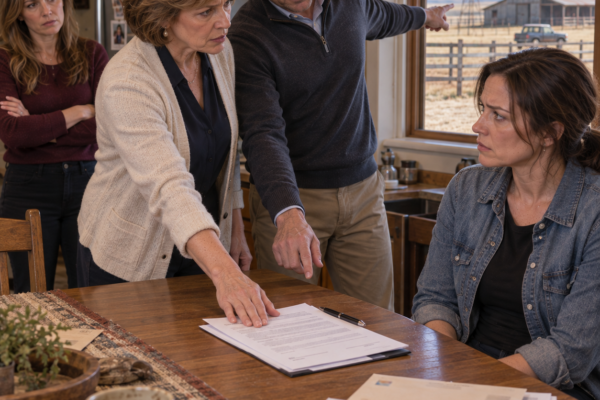
My Sister Mocked My Daughter’s $14 Christmas Dress—Then Asked Mom to Mortgage the Winery
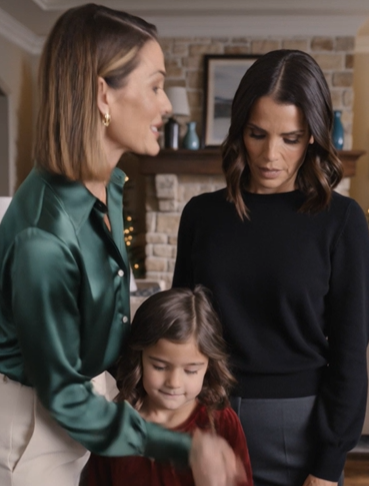
My Sister Mocked My Daughter’s $14 Christmas Dress—Then Asked Mom to Mortgage the Winery
My sister looked at my nine-year-old daughter’s Christmas dress, pinched the sleeve between two fingers, and asked whether thrift stores had started gift-wrapping clothes.
Emma looked down at the deep red velvet dress she had picked out herself for fourteen dollars.
“It has pockets,” she said quietly.
Serena laughed.
“Of course it does.”
My mother, Diane, heard the entire exchange from three feet away.
She rearranged a tray of champagne glasses and said, “Serena, be nice.”
That was all.
Not stop.
Not apologize.
Just be nice, in the same tone you’d use when someone reached for dessert before dinner.
I was thirty-seven years old.
Serena was forty.
And somehow Christmas at Bellweather Ridge still had the power to make me feel sixteen.
The difference was that Serena was no longer only insulting me.
She was doing it to my daughter.
Bellweather Ridge was a forty-six-acre winery outside Charlottesville, Virginia, where my sister and I grew up.
My father had spent twenty-seven years turning neglected farmland into a respected regional vineyard.
After he died six years ago, Mom tried to keep it running.
Everyone in the family believed she still owned it.
That was not exactly true.
Three years earlier, Bellweather Ridge came within weeks of foreclosure.
The winery had a bad loan, two weak harvests, overdue property taxes, and almost no working capital.
Serena said she couldn’t help because her money was “tied up in investments.”
Her husband, Caleb, suggested Mom sell.
I did something different.
Through a private company called Sage Creek Capital, I purchased the bank’s senior loan, paid the delinquent taxes, funded critical repairs, and restructured the debt so Mom could continue operating the winery.
Only three people knew I controlled Sage Creek.
My attorney.
My asset manager.
And Mom.
Serena did not.
Neither did Caleb.
To them, I was still Rachel Foster, the younger sister who had left Virginia, worked in software, drove a six-year-old Honda, bought secondhand clothes when she found something she liked, and supposedly never learned how to “enjoy success.”
They knew I had sold a technology company.
They did not know for how much.
I preferred it that way.
Serena preferred believing I was merely comfortable.
It gave her something to rank herself above.
Christmas dinner started at six.
By seven-thirty, Serena had offered Emma three bags of her daughter’s designer hand-me-downs, Caleb had explained cryptocurrency to me without being asked, and my mother had thanked Serena for arranging the floral centerpieces that Sage Creek had actually paid for through the winery’s operating budget.
I said nothing.
Then Caleb tapped his wineglass.
“I actually have some good news for the family.”
He was forty-two, handsome in a highly maintained way, and ran a real-estate investment company called Marlowe Property Partners.
Lately, every conversation with Caleb eventually became a presentation.
He opened a folder.
“We have an opportunity to unlock some of the dead equity sitting in Bellweather Ridge.”
My fork stopped halfway to my plate.
Mom did not look at me.
Serena smiled.
Caleb continued.
“A regional lender is prepared to provide up to $3.2 million secured against the property.”
I set my fork down.
“What for?”
Serena answered.
“Expansion.”
“Whose?”
“Everybody’s.”
That meant nothing.
Caleb started explaining.
Part of the money would renovate the winery’s event hall.
Part would refinance “legacy obligations.”
And part would go into a new real-estate fund he was launching around hospitality properties.
Mom would supposedly receive investment income.
Serena’s event company would get a renovated venue.
Caleb would get capital.
Everybody won.
Except Bellweather Ridge already had a senior secured lender.
Me.
Under the restructuring agreement, Mom could not place another lien on the property without Sage Creek’s written approval.
I looked at her.
“Has your lender approved this?”
She took a long drink of wine.
“Caleb has been handling the financing.”
That was not an answer.
Serena rolled her eyes.
“Rachel, please don’t start auditing Christmas.”
Emma’s hand slipped into mine under the table.
That was when my phone vibrated.
The message came from Anthony Moore, the asset manager who handled Sage Creek’s Virginia holdings.
Rachel, sorry to bother you tonight.
Did you authorize Bellweather Ridge to subordinate our first-position lien?
I read the message twice.
Then another appeared.
Closing counsel just sent me a consent document bearing my signature.
I haven’t signed anything.
I looked across the table.
Caleb was still explaining how the refinance would “protect the family legacy.”
Serena was sipping champagne beneath a chandelier paid for out of a reserve account I controlled.
Mom was staring at her plate.
And my daughter was sitting beside me in the fourteen-dollar dress Serena had spent the evening mocking.
I typed one sentence to Anthony.
Do not approve anything. Send me the entire closing package.
The documents reached my phone nine minutes later. The proposed loan was not $3.2 million for winery renovations. Only $740,000 was allocated to Bellweather Ridge. Another $460,000 would pay existing obligations. The remaining $2 million was scheduled to move into Caleb’s new hospitality investment fund as an “owner-directed capital placement.”
Then I reached the lien section.
The lender knew Sage Creek Capital held the first mortgage.
Attached was a signed consent stating Sage Creek had agreed to move into second position behind the new loan.
The signature belonged to Anthony Moore.
Except Anthony was texting me from his home in Richmond telling me he had never signed it.
I called him from the upstairs hallway.
“Where would they even get your signature?”
He was quiet.
Then he said, “Rachel, I think I know.”
Eight months earlier, Anthony had signed an insurance and property-access certificate for Bellweather Ridge.
The signature on the new subordination form looked identical.
Not similar.
Identical.
Then Anthony opened the document metadata.
The consent PDF had been created two days earlier.
The author field contained a name we both recognized.
Caleb Marlowe.
I stood in the upstairs hallway staring at the screen.
Downstairs, someone laughed.
A cork popped.
Christmas music drifted up from the living room.
Anthony kept talking.
“Rachel?”
“I’m here.”
“I’m sending this to Helen.”
Helen Price was Sage Creek’s outside attorney.
She handled commercial real estate and lender enforcement.
“Do that.”
“Do you want me to notify the proposed lender tonight?”
“Yes.”
“That will probably stop the closing.”
“That’s the point.”
He hesitated.
“Does Diane know you’re doing this?”
I looked toward the staircase.
“I don’t know what Diane knows.”
That was the problem.
Three years earlier, when I bought the Bellweather Ridge loan, Mom had been terrified.
Not of losing the business exactly.
Of Serena finding out she had lost financial control.
My mother came from a generation and a social circle where failure became real only when other people knew about it.
Dad had been the practical one.
He grew grapes.
Fixed irrigation.
Negotiated distributor contracts.
Mom handled events and hospitality.
Serena inherited her taste for presentation.
I inherited Dad’s suspicion of any plan containing the phrase “everyone does it.”
When Dad died of pancreatic cancer, the winery was already carrying too much debt.
He had borrowed heavily to expand the tasting room and build a wedding pavilion.
Then two poor harvests hit.
Insurance increased.
A distributor failed.
The numbers stopped working.
Mom hid how bad things had become.
By the time I learned, the bank had already moved the loan into special assets.
Serena’s solution was simple.
Sell Bellweather Ridge.
Mom refused.
She said selling would mean Dad had built everything for nothing.
That wasn’t true.
But grief doesn’t negotiate well with accounting.
I had money by then.
More than my family realized.
Seven years earlier, I started a software company called VectorLine with two former colleagues.
We built supply-chain risk software for manufacturers.
Nothing glamorous.
No consumer app.
No magazine covers.
For almost five years, I paid myself less than some of our senior engineers.
Then a larger industrial technology company acquired us.
My proceeds, after taxes and obligations, changed my life permanently.
I did not tell my family the number.
I told Mom I could help with the winery.
She assumed that meant a loan.
In a way, it did.
I formed Sage Creek Capital and bought the bank’s note at a discount.
The structure protected me.
It also protected Bellweather Ridge from more desperate borrowing.
Mom retained ownership of the property.
Sage Creek held the senior mortgage.
We reduced the interest rate.
Extended maturity.
Created a reserve account for taxes and capital repairs.
And added one rule I insisted on personally.
No additional liens.
No new mortgages.
No transfer of ownership interests.
Not without Sage Creek’s written approval.
Mom signed.
She knew exactly who owned Sage Creek.
Then she asked me not to tell Serena.
I should have recognized the warning in that request.
At the time, I understood it.
Serena had always treated family money as a shared ecosystem where the person with the most should naturally fund the person with the newest emergency.
She and Caleb lived beautifully.
Luxury SUV.
Private school.
Country-club membership.
Vacations photographed from angles that made every hotel look like it belonged to them.
I had no idea what they actually had.
I only knew Serena asked intrusive questions whenever anyone else appeared successful.
So I agreed to privacy.
The arrangement worked.
For a while.
Bellweather Ridge stabilized.
Wine sales improved.
Weddings returned after the pandemic disruptions.
Sage Creek funded a roof replacement and new refrigeration equipment from reserves.
Mom kept living in the main house.
Then Serena started Arbor Lane Events.
She used Bellweather Ridge as her primary venue.
At first, that seemed good for everyone.
More events meant wine sales.
Venue fees.
Catering income.
Traffic.
I later learned Serena paid almost none of the venue fees other event planners paid.
Mom called that “family marketing.”
I did not challenge it.
That was my mistake.
Not because I should have charged my sister every dollar possible.
Because every exception teaches people what they can expect next.
By Christmas night, I was learning how many exceptions had accumulated.
I went back downstairs.
Serena was opening another bottle of wine.
Emma sat on the carpet with her cousins.
Her dress still had pockets.
That seemed important for reasons I could not explain.
Caleb looked up.
“Everything okay?”
“Fine.”
I sat down.
Mom glanced at me.
She knew me too well.
“What happened?”
“Nothing we need to discuss in front of the kids.”
Her face tightened.
Serena sighed.
“Oh, great.”
“What?”
“Nothing. You just get that face.”
“What face?”
“The one where you think you discovered a problem nobody else understands.”
Caleb laughed.
I looked at him.
“What lender are you using for the Bellweather refinance?”
His smile slowed.
“Why?”
“Curious.”
“Blue Ridge Commercial.”
“And when is it closing?”
“Tuesday.”
Three days away.
“Fast.”
“Opportunity moves fast.”
“So does fraud.”
The word left my mouth before I decided whether to use it.
The table went silent.
Mom put down her glass.
“Rachel.”
Caleb stared at me.
“What exactly are you implying?”
“I’m not implying anything.”
Serena’s voice sharpened.
“Then don’t throw words like fraud around at Christmas.”
“You’re right.”
I stood.
“Emma and I are leaving in the morning.”
Mom looked relieved.
Serena looked victorious.
They both misunderstood.
I was not surrendering the conversation.
I just had no intention of having it without documents.
That night, Emma slept beside me in the guest room.
She asked whether Aunt Serena thought we were poor.
I hated how carefully she asked.
“What do you think poor means?”
She thought.
“Not having enough.”
“Do you have enough?”
“Yes.”
“Then there’s your answer.”
“But why did she laugh at my dress?”
Because your aunt needs other people beneath her.
Because adults can be insecure and expensive at the same time.
Because money can turn into theater if you’re not careful.
I said none of those things.
“Some people think price tells them what something is worth.”
Emma looked down at the velvet skirt spread over the blanket.
“I like my dress.”
“So do I.”
“It has pockets.”
“I’ve heard.”
She smiled.
Then she fell asleep.
I did not.
At 12:17 a.m., Helen Price called.
She had reviewed the forged subordination agreement.
“Do not confront Caleb about the document yet.”
“I already used the word fraud at dinner.”
Helen sighed.
“Of course you did.”
“I didn’t accuse him directly.”
“Excellent restraint.”
“What happens now?”
“Sage Creek is sending written notice to Blue Ridge Commercial that no subordination has been authorized and the attached consent is invalid.”
“Will they cancel the loan?”
“At minimum, they will stop closing.”
“And Bellweather?”
“We need to investigate what representations Diane and Caleb made.”
I looked toward the bedroom door.
“Can you do that without declaring default?”
“For now.”
“Good.”
“Rachel.”
“Yes?”
“If there is an attempted unauthorized lien and a forged lender consent, Sage Creek has default rights.”
“I know.”
“I’m telling you because when this becomes a family conversation, you need to remember it is also a lender matter.”
Helen knew my weakness.
I could become astonishingly firm when protecting a company.
Much less so when the person across from me was my mother.
The next morning, Christmas was quieter.
Serena’s children opened enough gifts to stock a small store.
Emma opened a watercolor set, a science kit, and a pair of roller skates from me.
Mom gave her an envelope.
Inside was a $50 gift card to a department store.
Serena saw it.
“Oh good. Now you can get a proper dress.”
Emma looked at me.
I stood.
“That’s enough.”
Serena blinked.
“What?”
“You don’t comment on my daughter’s clothes again.”
“Oh my God, Rachel.”
“I mean it.”
“She’s nine. She doesn’t care.”
“She cared enough to ask me about it last night.”
Mom intervened.
“Girls.”
I turned to her.
“No.”
She stopped.
“I’m not sixteen. Do not call us girls when you want everyone to stop reacting to Serena.”
Serena’s face reddened.
Caleb walked in from the kitchen.
“What did I miss?”
“Nothing,” Mom said quickly.
“There is something.”
I looked at Caleb.
“Your refinance isn’t closing Tuesday.”
He froze.
Serena frowned.
“What are you talking about?”
“The senior lender declined to subordinate.”
Mom went pale.
Caleb recovered first.
“That’s temporary.”
“No.”
“You don’t know that.”
“I know enough.”
He stared at me for several seconds.
Then something changed behind his eyes.
“You spoke to Sage Creek?”
“Yes.”
“How?”
“I called them.”
Mom stood.
“Rachel, can we speak privately?”
Serena looked between us.
“Why does Rachel have a direct line to Mom’s lender?”
Mom said nothing.
I could have told her.
I did not.
Not yet.
“I know people.”
Serena laughed.
“Of course you do.”
We packed after breakfast.
Mom followed me upstairs.
“Please don’t do anything drastic.”
I folded Emma’s pajamas into her suitcase.
“Did you know Caleb submitted a subordination agreement?”
“He said the lender was cooperating.”
“Did you see it?”
“No.”
“Did you give him any documents from Sage Creek?”
She looked away.
“Mom.”
“He asked for proof that the lender had worked cooperatively with us.”
“What did you give him?”
“The insurance certificate from last spring.”
Anthony’s signature.
I stopped folding.
“You gave Caleb a document with Anthony Moore’s signature.”
“I didn’t know he would—”
She stopped.
I turned toward her.
“You didn’t know he would what?”
Her eyes filled.
“I didn’t know.”
That answer scared me more than an argument.
“Did you sign the new loan application?”
“Yes.”
“What does it say about the use of proceeds?”
“Renovations. Debt. Investment.”
“Two million dollars goes into Caleb’s fund.”
“It’s an investment for the winery.”
“Who decided that?”
“Serena and Caleb presented it.”
“Did you have independent counsel?”
“Caleb’s lawyer reviewed everything.”
I stared at her.
“You used Caleb’s lawyer.”
“He represents the transaction.”
“He represents Caleb.”
“Rachel, you don’t understand how difficult things have been.”
There it was.
The sentence that always arrived when somebody wanted the rules to bend.
“What is difficult?”
“The winery needs cash.”
“Sage Creek has reserves.”
“Not enough for everything Serena wants to do.”
“Serena is not the winery.”
Mom looked hurt.
To her, those categories had begun blending.
That was another warning.
I closed Emma’s suitcase.
“Do not sign anything else.”
“You do not get to order me around in my own house.”
I looked at her.
Technically, she was right.
It was her house.
Sage Creek held the debt.
That distinction mattered.
“I’m not ordering you around as your daughter.”
“Then what are you doing?”
“Giving you advice you should follow until your lender’s attorney contacts you.”
Her face changed.
She finally understood this was larger than a family argument.
Emma and I drove back to Richmond that afternoon.
My husband, Daniel, had stayed home because he was on call at the hospital over Christmas weekend.
He was an anesthesiologist.
Serena knew that.
She still talked to me as if my entire household operated on coupons.
It had become almost funny before Emma got involved.
Daniel was in the kitchen when we arrived.
Emma ran to him.
He looked at me over her shoulder.
“That bad?”
“Worse.”
After Emma went upstairs, I told him everything.
He listened.
When I finished, he said, “What do you want to happen?”
Not what are you going to do to them.
What do you want to happen?
“I want Bellweather protected.”
“Okay.”
“I want Mom housed.”
“Okay.”
“I want Serena and Caleb away from the finances.”
He nodded.
“And?”
“I don’t want to foreclose.”
“Then don’t, unless the numbers force you.”
“I may not get to choose.”
“You own the note.”
“Through Sage Creek.”
“You still control it.”
“Control isn’t the same as having a consequence-free option.”
Daniel leaned against the counter.
“Good. Then you already understand this better than they do.”
The investigation started Monday.
Sage Creek’s loan agreement gave it information rights after an attempted unauthorized lien.
Anthony requested bank statements, leases, management contracts, and related-party agreements.
Mom objected at first.
Helen sent the relevant covenant sections.
Mom complied.
The first surprise involved Serena’s event company.
Arbor Lane Events was supposed to pay Bellweather Ridge a facility fee for each wedding.
The standard fee charged to outside planners averaged $8,500.
Serena paid $1,500.
Sometimes nothing.
Over two years, the difference exceeded $310,000.
Mom had approved every waiver.
That was frustrating.
Not fatal.
Then Anthony found direct payments from Bellweather to Arbor Lane.
Marketing retainers.
Design services.
Preferred planner incentives.
Another $228,000.
“What services?” I asked.
Anthony said, “We’re requesting invoices.”
Most invoices contained one or two lines.
Event promotion.
Brand strategy.
Client development.
No detailed work.
The winery had effectively been subsidizing Serena’s company.
I called Mom.
She sounded exhausted.
“Serena brings weddings.”
“So do three other planners.”
“She is family.”
“That does not explain why Bellweather pays her.”
“She does marketing work.”
“Then show Sage Creek the work.”
“You’re enjoying this.”
That stopped me.
“What?”
“You always resented Serena.”
There are accusations that hurt because they are false.
Others hurt because they contain a piece of truth.
I had resented Serena.
Sometimes deeply.
Growing up, she got a horse.
I got riding lessons.
She got a new car at sixteen after wrecking the first one.
I drove Dad’s pickup.
She had a wedding at Bellweather Ridge with 220 guests.
Daniel and I married at a small inn with forty people because I wanted something simple.
Mom interpreted my simplicity as evidence that I wanted less.
I had resented that too.
But resentment did not create $538,000 in related-party payments.
I said, “Maybe I have resented her.”
Mom went silent.
“That doesn’t make the bank statements imaginary.”
She hung up.
Two days later, Caleb called me.
Not Serena.
Caleb.
His voice was smooth.
“Rachel, I think this has gotten unnecessarily adversarial.”
“The subordination consent was forged.”
“That’s a serious accusation.”
“Anthony says he didn’t sign it.”
“There may have been an administrative misunderstanding.”
“The PDF metadata lists you as the author.”
Silence.
Then:
“I assembled the closing package.”
“That isn’t the same as Anthony signing it.”
“The document came through a broker.”
“Which broker?”
“We don’t need to litigate this over the phone.”
“No.”
I agreed.
“We don’t.”
He sounded relieved.
Then I added, “Sage Creek’s attorney will handle it.”
“You’re very invested in Sage Creek.”
“Apparently.”
“Can we meet?”
“No.”
“Rachel, this loan helps your mother.”
“Then explain it to her lender.”
He changed tactics.
“This is bigger than family.”
“I agree.”
“Marlowe Property Partners has investors relying on this transaction.”
There it was.
Not Bellweather.
His investors.
“Then you should have structured your fund without mortgaging my mother’s winery.”
He hung up.
The next escalation came from a source I did not expect.
Serena.
She drove to my house.
No call.
No warning.
Daniel answered the door.
He looked at me.
I nodded.
She came inside wearing sunglasses even though it was cloudy.
She did not sit.
“What did you tell Sage Creek?”
“The truth.”
“You don’t know the truth.”
“Then tell me.”
She pulled off the sunglasses.
Her eyes were swollen.
“Caleb’s fund has a bridge facility coming due.”
“How much?”
“Rachel.”
“How much?”
“About one-point-eight.”
“Million?”
“Yes.”
“And your plan was to use money borrowed against Bellweather.”
“As an investment.”
“Into his fund.”
“Yes.”
“So he could repay his existing lender.”
“It’s temporary.”
That word again.
Temporary.
The most expensive word in family finance.
“What happens if his fund can’t repay Bellweather?”
“It will.”
“That is not an answer.”
“He has projects.”
“Profitable ones?”
She hesitated.
I sat down.
Serena remained standing.
“What happened?”
“A development in Nashville stalled.”
“How badly?”
“Permitting.”
“That does not answer the question.”
She looked furious.
Then frightened.
“Caleb has investor redemptions he has to meet.”
“How much do you know about his finances?”
“Enough.”
“Do you?”
She slapped her sunglasses onto my kitchen island.
“Why are you enjoying this?”
Mom’s exact accusation.
I almost laughed.
Instead I said, “Because you need me to be enjoying it.”
“What?”
“If I’m jealous, you don’t have to ask whether the loan is bad.”
She stared at me.
Then sat down.
For the first time, my sister looked less like the woman who mocked Emma’s dress and more like someone whose marriage had become a financial fog.
“What happens if the loan doesn’t close?” I asked.
“Caleb may lose the fund.”
“And you?”
“My event company has a credit line he guaranteed.”
Of course.
Their finances were tied together.
“How much?”
“Four hundred thousand.”
I closed my eyes.
“Serena.”
“I know.”
“No. I don’t think you do.”
She leaned forward.
“You have no idea what it’s like to keep up with all of this.”
“All of what?”
“The school. The house. Caleb’s investors. Mom. Events. Everybody expects things.”
I looked around my kitchen.
Nothing in the room was impressive.
I liked it that way.
“Then stop.”
She laughed bitterly.
“You can say that because nobody expects anything from you.”
That was one of the cruelest things she had ever said to me.
Not because she meant it cruelly.
Because she believed it.
She had no idea how many people depended on my company before the sale.
How many employees.
How many nights.
How much risk.
She looked at my quiet life and saw absence of pressure.
Just like Mom looked at competence and saw absence of need.
I said, “You need your own attorney.”
“I have Caleb’s.”
“No. You have Caleb’s attorney.”
She understood.
I could see it.
She did not thank me.
She left.
The investigation widened.
Anthony found a side letter.
That document changed the stakes.
Six months earlier, Mom had signed an agreement granting Arbor Lane Events a ten-year exclusive right to manage all weddings at Bellweather Ridge.
The initial fee was almost nothing.
The agreement also gave Serena an option to purchase the event pavilion and twelve surrounding acres if the winery refinanced its senior debt.
Purchase price:
$850,000.
Independent appraisal value:
$3.6 million.
Sage Creek had never been told.
The option violated the loan covenants.
I called Mom.
This time Helen was on the line.
“Did you sign the Arbor Lane purchase option?”
Mom was quiet.
“Yes.”
“Why?”
“Serena has built that side of the business.”
“On Bellweather’s property.”
“She brought value.”
“The option is for less than one-quarter of appraised value.”
“She’s my daughter.”
Helen stepped in.
“Mrs. Whitmore, did Caleb’s attorney advise you regarding the option?”
“Yes.”
“Did you have separate counsel?”
“No.”
“Did you disclose the agreement to Sage Creek?”
“No.”
Mom began crying.
Not loudly.
“I was trying to make sure Serena had something.”
I closed my eyes.
“What about me?”
“You have plenty.”
There it was.
The family equation in its purest form.
Serena needed.
I had.
Therefore the difference could be moved.
I said, “That isn’t your decision.”
“I know that now.”
I wasn’t sure she did.
Sage Creek issued a formal default notice.
Not foreclosure.
Notice.
Mom had thirty days to cure specified violations.
The cure required cancellation or lender-approved restructuring of the insider purchase option.
Full disclosure of related-party payments.
No new borrowing.
No transfer of property.
Independent financial review.
And replacement of Caleb’s transaction counsel.
Mom called it humiliating.
Helen called it basic lender protection.
I agreed with Helen.
Then came the main reveal.
It started with the refinancing lender’s underwriting file.
Blue Ridge Commercial provided it after its counsel received notice of the forged consent.
The file contained emails.
Caleb to the broker.
Serena to Caleb.
Mom to Serena.
One email chain was dated August.
Four months before Christmas.
Serena wrote:
Once the refinance closes, Mom can exercise the land transfer and we control the event side permanently.
Caleb replied:
Correct. The new lender won’t care once Sage Creek is subordinated.
Mom answered:
Rachel cannot know any of this. She will overcomplicate it.
I read the sentence several times.
Not Sage Creek cannot know.
Rachel cannot know.
Then there was another attachment.
A presentation Caleb had prepared for investors.
Marlowe Hospitality Fund I.
One of the proposed anchor assets was described as:
Bellweather Ridge Event District — controlled affiliate property, Charlottesville, Virginia.
Controlled.
Not future possibility.
Not tentative option.
Controlled.
Caleb was already using land he did not own to market his fund.
The presentation assigned the event district a projected value of $7.5 million after renovation.
Investor capital had already been accepted.
This was no longer a desperate refinance.
The family property had become part of Caleb’s fundraising narrative.
And the $2 million from the Bellweather loan was supposed to stabilize his fund long enough to keep that narrative alive.
Anthony called me.
“Rachel, there’s one more attachment.”
I opened it.
A draft ownership diagram.
At the top:
Bellweather Ridge Holdings.
Below it, after refinance:
Diane Whitmore — 40%.
Arbor Lane Events — 30%.
Marlowe Hospitality Fund — 30%.
I stared at it.
“What am I looking at?”
“A proposed post-closing structure.”
“But Mom owns Bellweather.”
“Currently.”
“Where is Sage Creek?”
“Paid off or subordinated, depending on the version.”
“And Mom agreed?”
“We don’t know.”
Then we found the letter.
Diane Whitmore, signed.
She had agreed in principle to transfer thirty percent of the winery’s operating company to Serena and thirty percent to Caleb’s fund after the refinance.
She would retain forty.
No cash purchase price for the operating interests.
They were described as compensation for recapitalization, development, and future management.
Mom was giving away control.
I called Helen.
“What happens if we foreclose?”
“We can.”
“What happens to the winery?”
“Sage Creek can take the collateral subject to the process, operate it, or sell.”
“And employees?”
“Depends what you choose.”
I hated the answer.
Control is easiest when you want revenge.
Harder when you want something to survive.
Daniel found me sitting in our home office after midnight.
“What did you find?”
I showed him.
He read quietly.
Then said, “Your mother was giving them the company.”
“Yes.”
“Why?”
“I think she thought she was preserving it.”
“That doesn’t answer why.”
“No.”
I knew why.
Mom trusted Serena’s performance.
Serena looked like succession.
Events.
Luxury branding.
Caleb talked about growth.
I looked like restraint.
Debt limits.
Reserve accounts.
Contracts.
No.
No is not visually impressive.
But no is often what keeps the roof attached to the house.
The confrontation happened in Helen’s office.
This time I invited everyone.
Mom.
Serena.
Caleb.
Separate lawyers.
Anthony.
No children.
No Christmas.
No wine.
Helen began with the forged subordination.
Caleb’s attorney said his client denied creating a false signature and believed the consent had been provided by a broker.
Helen showed the metadata.
Then the earlier insurance certificate.
Then the signature comparison.
Caleb’s attorney requested a break.
Helen said no.
“We are not taking testimony. Sage Creek is explaining why it will not consent to refinancing.”
Caleb looked at me.
“You keep saying Sage Creek like you work there.”
I said nothing.
Helen continued.
Related-party payments.
Purchase option.
Investor presentation.
Proposed operating-company transfer.
Mom’s face got paler with each document.
Serena stared at Caleb.
Then Helen reached the ownership question.
“The lender also needs to address continued misrepresentation regarding the identity of Sage Creek’s controlling member.”
Caleb frowned.
“What does that have to do with anything?”
Helen looked at me.
My turn.
“Sage Creek is mine.”
Nobody spoke.
Serena blinked.
“What?”
“I control Sage Creek Capital.”
Caleb laughed.
A real laugh.
Not because it was funny.
Because the alternative was accepting the sentence.
“No, you don’t.”
Anthony slid a corporate certificate across the table.
Sage Creek Capital LLC.
Managing member:
Rachel Foster.
Serena picked it up.
Her face changed.
Mom closed her eyes.
Caleb stopped laughing.
I continued.
“Three years ago, when Bellweather was headed into foreclosure, I bought the senior loan from the bank.”
Serena looked at Mom.
“You knew?”
Mom nodded.
“All this time?”
“Yes.”
“You told me Sage Creek was an investor from Richmond.”
“I said it was privately held.”
“You lied.”
Mom looked at me.
“You asked me not to tell her.”
That was true.
I owned that.
Serena turned toward me.
“You let me think you were broke.”
“I never told you I was broke.”
“You drive a Honda.”
“Yes.”
“You buy used clothes.”
“Sometimes.”
“You let me offer Emma old clothes.”
“I told you we didn’t need them.”
“You let me sit in that house—”
“Mom’s house.”
“You own the mortgage.”
“Yes.”
Caleb finally spoke.
“How much are you worth?”
Helen actually laughed.
Not loudly.
I looked at him.
“That is not relevant to the loan default.”
He leaned back.
“You planned this.”
“No.”
“You kept the ownership secret so you could control everyone.”
“I kept it private because the only thing my family does faster than spend money is assign it.”
Serena started crying.
“You could have helped us.”
“I have been helping.”
“How?”
I looked at the documents.
“By keeping Bellweather open.”
She shook her head.
“No. Us.”
There it was.
Bellweather did not count.
Mom’s home did not count.
The taxes did not count.
The repairs did not count.
The only help Serena recognized was help transferred directly into her life.
I said, “Your company has received more than half a million dollars from Bellweather in below-market fees and direct payments.”
“That isn’t from you.”
“Some of those payments came from reserve funds Sage Creek contributed.”
She went silent.
Then Caleb spoke.
“If you control the lender, you can still approve the refinance.”
“Yes.”
“So approve it.”
“No.”
“You would rather destroy your own mother’s winery than help your sister?”
“No.”
I slid another document across the table.
“What is that?” Mom asked.
“A restructuring proposal.”
I had spent three days working on it with Anthony and Helen.
No foreclosure.
No refinance.
No $3.2 million loan.
No $2 million transfer to Caleb.
Sage Creek would extend the existing loan for seven years.
It would fund a limited capital-improvement budget for winery operations.
Bellweather would sell eight acres of unused non-vineyard land along the back road.
The estimated proceeds would create a cash reserve.
An independent general manager would replace Mom’s day-to-day financial control.
Mom could remain president of hospitality for two years during transition.
Serena’s purchase option would be canceled.
Arbor Lane could continue booking events only under the same market-rate contract offered to other planners.
All related-party transactions would require approval.
Caleb and Marlowe Property Partners would have no role.
Mom read it.
“You’re taking the winery away from me.”
“No.”
“It feels like it.”
“You keep ownership.”
“But I lose control.”
“Yes.”
That was the cost.
Not homelessness.
Not humiliation.
Control.
Mom cried.
I let her.
For years, I had confused preventing her discomfort with being a good daughter.
I no longer did.
Caleb rejected the proposal immediately.
Nobody cared.
He was not a party to the Sage Creek loan.
Serena said canceling the purchase option would destroy Arbor Lane.
I asked why a successful event company required property worth millions to be transferred below market.
She had no answer.
Her attorney did.
“It doesn’t.”
That was probably the moment Serena understood she needed legal advice independent of her husband too.
The meeting ended after three hours.
Nobody hugged.
Nobody apologized.
Mom took the restructuring documents home.
She signed eleven days later.
Serena signed a cancellation of the purchase option.
Caleb did not sign anything.
He did not need to.
Blue Ridge Commercial terminated the refinancing process.
Its counsel referred the forged subordination consent to the appropriate parties.
Sage Creek chose not to turn the matter into a public spectacle.
That did not mean nothing happened.
Caleb’s proposed lender reported the document problem through its fraud process.
Several investors in Marlowe Hospitality Fund requested withdrawals after learning the Bellweather asset was not controlled by the fund.
Caleb could not meet all of them.
His Nashville project lender declared a covenant breach.
Marlowe Property Partners entered litigation with two investor groups.
The fund did not collapse overnight.
Real financial problems rarely do.
It shrank.
Projects were sold.
Employees left.
Caleb spent the next year negotiating rather than presenting.
Serena and he separated six months after Christmas.
I don’t know whether money caused the marriage to fail.
I doubt anything that simple explains a marriage.
I do know Serena discovered debts and guarantees she had not understood.
Arbor Lane Events survived.
That surprised me.
Without free Bellweather access, Serena cut staff, moved out of an expensive office, and started competing for venue bookings like everyone else.
She was angry for months.
Then something happened.
She got better at her job.
Not nicer immediately.
Better.
She learned what clients actually paid for.
She stopped building events around appearances and started watching margins.
She booked smaller weddings.
Corporate retreats.
University events.
She complained constantly.
Then complained less.
A year later, Bellweather’s independent manager told me Arbor Lane had become one of the winery’s three most reliable outside planners.
Market-rate fees.
Paid on time.
I did not know whether to laugh or cry.
Mom struggled more.
The independent general manager was named Julia Chen.
She had managed two wineries and a resort property.
Mom hated her for the first six weeks.
Julia wanted purchase orders.
Budgets.
Written approvals.
Mom called those things “corporate bureaucracy.”
I called them Tuesday.
Then the winery began generating stable cash again.
Julia canceled unnecessary vendor contracts.
Raised venue pricing.
Reduced complimentary events.
Negotiated new distribution agreements.
Sold the eight acres.
Built reserves.
For the first time since Dad died, Bellweather could cover normal capital repairs without calling Sage Creek.
Mom eventually stopped fighting her.
Mostly.
My relationship with Mom changed.
Not improved exactly.
Changed.
She no longer called me when she needed money.
That was part of the restructuring.
All financial requests went through Julia and Anthony.
At first, Mom interpreted that as cold.
Maybe it was.
It was also healthy.
When she called me, the conversation had to be about something else.
Emma.
Weather.
A book.
A doctor’s appointment.
Sometimes Serena.
For the first time, money could not be the hidden reason Mom had dialed.
That exposed how little practice we had simply talking.
We learned slowly.
Serena did not speak to me for eight months.
Then I received a message.
Emma left something at Mom’s after Thanksgiving.
I can drop it off.
That was it.
I said okay.
She arrived with a canvas tote.
Inside was Emma’s red velvet Christmas dress.
I had forgotten we left it at Bellweather after she changed into pajamas the previous year.
Serena held it up.
“The famous dress.”
I looked at her.
She smiled slightly.
Not kindly.
Not cruelly.
Just tired.
“I was awful to her.”
“Yes.”
She folded the dress again.
“I’m sorry.”
I waited.
No explanation followed.
That made the apology better.
“I’ll tell her.”
“No.”
Serena looked at me.
“I want to tell her if you’ll let me.”
That surprised me.
Emma was ten by then.
Old enough to remember.
Young enough that I wanted to protect her from adult guilt.
I said, “You can apologize. Do not explain your finances to her.”
“I won’t.”
She did.
It lasted about thirty seconds.
“I said something mean about your dress last Christmas. It wasn’t true, and it wasn’t okay.”
Emma looked at her.
“I still like the dress.”
“I know.”
“It has pockets.”
Serena laughed.
So did I.
Then Emma ran outside.
No cinematic reunion.
No collapse into tears.
Just a corrected sentence.
Sometimes that is enough for one day.
I never told Emma exactly how much money I have.
She knows we are comfortable.
She knows VectorLine was sold.
She knows Sage Creek exists now because secrecy stopped being useful after the refinance fight.
She does not know my net worth.
I hope she never measures safety that way.
The most important consequence of that Christmas had nothing to do with Caleb.
Or Serena.
Or even Bellweather.
It was realizing that I had used secrecy as a substitute for boundaries.
I told myself I was hiding my money because I was private.
Partly true.
I was also afraid.
If Serena knew, she would ask.
If Mom knew I had more, she might expect more.
If everyone thought I was merely doing fine, I did not have to say no as often.
So instead of teaching my family what access they did not have, I hid the size of the thing they might want.
That worked until it didn’t.
Money was never the real boundary.
Consent was.
The year after the refinancing fight, Bellweather hosted Christmas again.
Emma wanted to go.
I asked whether she was sure.
“Grandma has the good hot chocolate.”
Reason enough.
Daniel came too.
Serena arrived alone with her children.
Mom looked older.
Maybe she was.
Maybe I finally saw it because I was no longer looking at her as the authority in the room.
Julia had limited the holiday budget.
No private catering team.
No extravagant floral installation.
Mom complained.
Then spent the afternoon cooking with Serena.
The result was slightly chaotic and much better.
Emma wore jeans and a sweater.
Nobody commented.
Caleb was not there.
Nobody discussed investments.
At dinner, Mom raised a glass.
I tensed automatically.
She said, “To making fewer expensive mistakes next year.”
Serena nearly choked laughing.
I laughed too.
It wasn’t forgiveness.
Not fully.
It was acknowledgment.
After dinner, I walked outside.
The vineyard was bare under the winter sky.
Rows of vines disappeared into the dark.
Dad used to say grapes looked dead in January to people who did not understand vineyards.
The plant wasn’t dead.
It was dormant.
Pruned back.
Storing energy.
I thought about families.
Then I stopped because the metaphor was becoming too obvious even for me.
Daniel came outside carrying my coat.
“You okay?”
“Yes.”
“Actually?”
“Yes.”
He handed it to me.
Through the window, I could see Emma showing her cousins something on her phone.
Serena was drying dishes.
Mom was pretending not to supervise.
Bellweather was still there.
Nobody had been evicted.
Nobody had been thrown into poverty.
Nobody had been publicly destroyed.
The family survived the truth.
It simply became more expensive to lie.
That seemed fair.
I still drive the Honda.
It is eight years old now.
Serena once asked whether I keep it to make some philosophical point.
I told her no.
It starts every morning.
Emma still likes thrift stores.
Not because she has to shop there.
Because she likes finding things nobody else has.
Last month she bought another velvet dress.
Blue this time.
Nine dollars.
She walked out of the fitting room and spun around.
“Guess what?”
“What?”
“Pockets.”
I told her to get it.
Some things are worth exactly what they cost.
Others are worth much more.
The important thing is knowing the difference.