My Family Called Writing a Hobby—Then My Brother’s Fiancée Recognized My Name
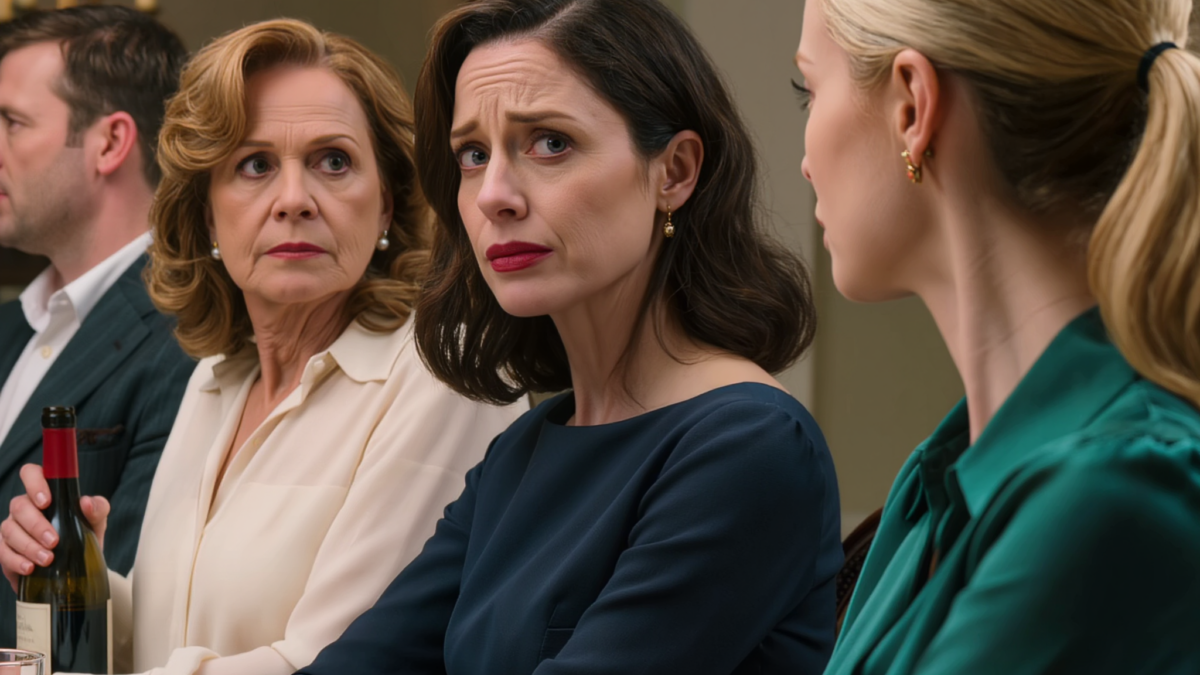
At my brother Liam’s engagement dinner, my mother interrupted his fiancée before she could ask what I did for a living. “Natalie works around books in New York,” she said, waving her hand. “It’s more of a hobby than a career.” I was thirty-one, sitting at the far end of the same dining table where my school writing awards had once been treated like refrigerator clutter. Nobody there knew my second novel had spent fourteen weeks on a national bestseller list, or that a studio had just optioned it for television. I planned to let the comment pass like I always did. Then Claire, Liam’s fiancée, stared at me across the candles, slowly reached for her phone, and whispered, “Wait. Natalie Monroe? You wrote Rooms Between Us?”
My mother laughed before I could answer.
“No, honey. Different Natalie Monroe.”
Claire did not laugh.
She looked from my mother to me.
Then back to her phone.
My father, Richard, was carving roast beef at the other end of the table.
Liam was telling Claire’s parents about a commercial property deal he had just closed outside St. Louis.
Everyone seemed determined to continue the evening as though nothing unusual had happened.
I had spent most of my life helping them do exactly that.
My name is Natalie Monroe.
I grew up in Carbondale, Illinois, four years younger than Liam and roughly four decades younger than the family mythology surrounding him.
Liam was not cruel when we were children.
That almost made the difference in how we were treated harder to explain.
He simply entered every room already expected to matter.
When he won the county spelling championship at nine, my mother ordered a custom cake.
When he was selected for a statewide debate tournament, my father closed the bank branch early enough to drive three hours to watch him.
When he got accepted into college, my parents mailed announcements to relatives who already knew.
When I won a statewide student-writing award at seventeen, my parents missed the ceremony because Mom had a charity luncheon and Dad said quarter-end reporting made leaving work difficult.
I stood onstage holding a certificate and looked at two empty chairs.
Afterward, my English teacher, Mrs. Decker, bought me pie at a diner.
She said, “Your parents must be proud.”
I said, “They are.”
At seventeen, lying was sometimes easier than explaining.
Writing became the place where I stopped doing that.
I wrote through college.
I wrote during lunch breaks.
I wrote after midnight.
After graduation, I moved to New York with two suitcases and enough savings for three months in a room in Bushwick with a radiator that sounded like someone throwing rocks inside a metal pipe.
My mother called it my “city phase.”
My father asked every few months whether I had started looking for something stable.
Liam once sent me a listing for an administrative job at a regional bank.
I was already working as an editorial assistant at a respected literary magazine.
They did not know because every attempt to explain my work lasted about thirty seconds before the conversation moved back to Liam.
Eventually, I stopped trying.
That did not stop my career.
At twenty-six, I published my first short-story collection, The Quiet Seat.
At twenty-eight, I sold my first novel, Rooms Between Us.
At thirty, the paperback unexpectedly took off after several independent book clubs started recommending it.
Fourteen weeks on a bestseller list followed.
Then foreign editions.
Then speaking invitations.
Then an adaptation option.
My parents knew I had “published some things.”
That was the phrase my mother used.
Some things.
I had mailed her a signed first edition of The Quiet Seat.
Months later, during Christmas, I found it underneath old catalogs on a shelf in the laundry room.
I never mentioned it.
By the time Liam got engaged to Claire Bennett, I had stopped expecting my family to understand my life.
I came home because Liam asked.
Claire was smart, warm, and noticeably interested in people even when they were not talking about themselves.
Within ten minutes of meeting me, she asked what part of New York I lived in.
Within twenty, she asked what I liked reading.
Nobody in my family had asked me that in years.
At dinner, Claire finally said, “Liam told me you’re in publishing. What do you actually do?”
I opened my mouth.
Mom answered for me.
“Natalie works around books in New York. It’s more of a hobby than a career.”
There was a tiny pause.
I knew it well.
The pause where I could either correct her and make dinner uncomfortable or smile and keep everyone else comfortable.
I reached for my water.
Claire frowned.
“What kind of books?”
Mom smiled.
“Little literary things.”
That was when Claire looked at me differently.
Not with pity.
Recognition.
She reached slowly for her phone.
“Your last name is Monroe.”
“Yes.”
“And Natalie is your full first name?”
“Yes.”
She typed something.
Mom laughed.
“Oh, Claire, please don’t make this into an interview.”
Claire ignored her.
Her eyes widened.
Then she turned the phone slightly toward herself, comparing something on the screen to my face.
“Wait.”
Nobody spoke.
“Natalie Monroe?”
I felt Liam looking at me now.
Claire lowered the phone.
“You wrote Rooms Between Us?”
I nodded.
Claire stared at me for another second.
Then she laughed once in disbelief.
“We read your book in my graduate book club.”
Liam stopped chewing.
Dad lowered the carving knife.
Mom’s smile disappeared.
Claire turned her phone toward Liam.
A publicity photo filled the screen beside the covers of my two books.
“That’s Natalie,” she said.
Liam looked from the screen to me.
“You never told me you were doing all this.”
“I told you I published a book.”
“One book.”
“Two, actually.”
Mom reached for her wine.
“This is getting ridiculous. Natalie always makes things sound bigger than they are.”
Claire’s expression changed.
She looked at my mother carefully.
Then she said, “Her second novel sold television rights last month.”
Mom’s hand stopped halfway to her glass.
“How would you know that?”
“It was in the trade announcement.”
Claire scrolled again.
Then she smiled faintly.
“I loved the dedication in The Quiet Seat.”
My stomach tightened.
Mom immediately said, “That line was unnecessarily dramatic.”
Nobody else reacted.
I did.
The dedication had never appeared in reviews or publicity material.
It was printed only inside the hardcover.
I looked directly at my mother.
“You said you never read it.”
She froze.
I set down my fork.
“How do you know what the dedication says?”
The room went so quiet I heard the refrigerator motor turn on in the kitchen.
Mom looked at Claire.
Then Liam.
Then Dad.
Finally, she looked at me.
“I read enough.”
Three words.
That was all.
But the floor under seventeen years of assumptions shifted.
“You read it?”
“I looked through it.”
“When?”
She tightened her fingers around the stem of her wineglass.
“When you sent it.”
I stared at her.
The copy I found in the laundry room had not been overlooked.
It had not been buried under catalogs by accident.
She had opened it.
Read at least part of it.
Then put it away and continued telling everyone I had a hobby.
Liam leaned forward.
“Mom?”
She gave him a look.
“Not now.”
“No. Actually, now.”
His voice surprised all of us.
Claire had gone still beside him.
Dad put the carving knife down completely.
I asked the question I already knew I would regret.
“How much did you read?”
Mom exhaled through her nose.
“Several stories.”
“Which ones?”
“Natalie.”
“Which ones?”
Her eyes sharpened.
“The Fourth Place Setting.”
My chest tightened.
That story was about a girl whose family assigned seats at dinner according to an unspoken hierarchy.
The successful older child near the parents.
The youngest where everyone fussed over him.
The quiet daughter at the corner, useful when plates needed clearing.
It was fiction.
But the emotional architecture had come directly from home.
Mom continued.
“The one about the awards ceremony.”
“The Empty Row.”
“Yes.”
Dad turned toward her.
“You read these?”
She ignored him.
“And the one where the mother throws away the daughter’s newspaper clipping.”
My hands went cold.
That story had been the closest I came to writing directly about her.
“You read almost the entire book.”
“I did not.”
“You just named three stories.”
“I skimmed.”
Claire looked down.
Liam said, “Why did you tell us she was writing blog posts?”
Mom’s face flushed.
“Because I didn’t think we needed to turn family dinner into a literary review.”
“That isn’t what he asked.”
The words left my mouth before I could stop them.
Mom glared.
“Do you want the truth?”
“Yes.”
“I thought the book was cruel.”
Nobody spoke.
She continued.
“You took ordinary family moments and made them ugly.”
I felt something unexpected.
Not shame.
Relief.
For years I had wondered whether my writing was invisible to her because I was invisible.
The truth was more complicated.
She had seen it.
She simply disliked what being seen by me reflected back.
“You recognized us.”
“Of course I recognized us.”
Dad sat back slowly.
“So that is why you put the book in the laundry room.”
Mom looked at him.
“What was I supposed to do? Display it?”
“Yes,” he said.
The answer surprised me.
It seemed to surprise him too.
Mom’s expression hardened.
“She made us look neglectful.”
“I never used your names.”
“You didn’t need to.”
Claire finally spoke.
“With respect, Elaine, I read that book before I knew any of you.”
My mother turned toward her.
Claire continued carefully.
“I didn’t think, What terrible parents Natalie must have had. I thought, I know what it feels like when the people who love you don’t know how to see you.”
Mom looked away.
Claire was not attacking her.
That made it harder to dismiss.
Liam rubbed both hands over his face.
“Why didn’t you tell me?”
I looked at him.
“I sent you the launch link.”
“When?”
“The week it came out.”
He frowned.
Then I watched him remember.
“You sent some event.”
“Yes.”
“I thought it was your magazine.”
“You didn’t open it.”
He looked down.
“No.”
I could have enjoyed that moment.
I didn’t.
His embarrassment looked real.
Dad asked quietly, “How successful are the books?”
Mom immediately said, “Richard.”
“What? I’m asking.”
I gave him the simplest answer.
“The first collection did well for literary fiction. The novel did better.”
Claire said, “A lot better.”
I almost smiled.
Liam looked at her.
“How much better?”
She hesitated.
I answered.
“Enough that I write full-time now.”
Dad blinked.
“You left the magazine?”
“Four years ago.”
That landed harder than the bestseller list.
Four years.
Four years of phone calls in which my father asked whether “the magazine” was still keeping me busy.
Four Christmases when Mom told relatives I worked “in editing.”
Four years of them not noticing that the job they believed defined me no longer existed.
Dad leaned back.
“I really didn’t know.”
“I know.”
There was no accusation in my voice.
That seemed to hurt him more.
Dinner ended early.
Claire’s parents were kind enough not to turn the evening into an interrogation.
They thanked my parents.
Claire hugged me at the door.
“I’m sorry.”
“You didn’t do anything.”
“I mean for putting you on the spot.”
“You asked what I did.”
She gave me a sad little smile.
“Apparently that was revolutionary.”
Liam walked her to the car.
Dad disappeared into his study.
Mom began clearing plates aggressively.
I stayed seated.
For once, I did not automatically help.
She noticed.
“Aren’t you going to take those?”
“No.”
Her hands stopped.
“You always help after dinner.”
“I know.”
She set two plates down.
“Are you punishing me now?”
“No.”
“What do you call this?”
“Sitting.”
She looked at me like the concept offended her.
Then she picked up the plates herself.
I went upstairs.
My childhood room had been converted into a guest room years earlier, but one drawer still contained old school papers.
I found a yellowed certificate from a regional writing competition.
Second place.
Age fifteen.
Dad’s signature appeared at the bottom because a parent had been required to sign the permission form.
I stared at it for several seconds.
He had known enough to sign.
Mom had known enough to read.
Liam had known enough to receive links.
Nobody had lacked information.
Attention had been the scarce resource.
The next morning, Liam knocked on my bedroom door at eight.
I was awake.
“Come in.”
He entered holding two mugs of coffee.
“That feels dangerous.”
He gave me one.
“I made yours black.”
“You remember?”
“You’ve drunk it black since college.”
That small detail mattered.
He sat on the desk chair.
“I Googled you.”
“Claire already handled that.”
“I mean I actually read.”
I waited.
“I read three interviews.”
“Okay.”
“And half of The Quiet Seat.”
“Half?”
“I started at midnight.”
I smiled despite myself.
“That’s fair.”
He stared into his coffee.
“There’s a brother in one story.”
“There are several brothers.”
“The debate kid.”
I knew which one.
“He’s not you.”
“He sounds like me.”
“He’s made from several people.”
“Did I make you feel like that?”
This was harder than anger.
“Yes.”
He nodded slowly.
“I don’t remember doing anything.”
“That’s part of it.”
His eyes lifted.
“You didn’t have to do something every time.”
“What do you mean?”
“The house revolved around you. You didn’t build the system.”
“But I benefited from it.”
“Yes.”
He sat quietly.
“I’m sorry.”
It was not a dramatic apology.
That made it useful.
“Thank you.”
He rubbed his thumb along the mug.
“Claire thinks I’m an idiot.”
“She likes you enough to marry you.”
“That is not a denial.”
I laughed.
He smiled faintly.
Then he said, “Mom is furious.”
“I know.”
“She thinks the books are revenge.”
“They aren’t.”
“I know that now.”
“Do you?”
“I think so.”
He hesitated.
“Did you ever write because you wanted us to recognize ourselves?”
I thought about it.
“When I was younger? Maybe.”
“And now?”
“Now I write because other people recognize themselves.”
That answer seemed to stay with him.
After breakfast, I packed.
Mom watched from the hallway.
“You’re leaving early?”
“Yes.”
“You said Monday.”
“I changed my flight.”
She crossed her arms.
“So you get to expose us in books and then leave when the conversation gets uncomfortable.”
I zipped my suitcase.
“I’ve been having this conversation alone for twenty years.”
“That is melodramatic.”
“Maybe.”
She stared at me.
Then said, “Do you know what people will think if they realize those stories came from this family?”
That was the sentence that clarified everything.
Not:
Did I hurt you?
Not:
Was your childhood really that lonely?
What will people think?
Her oldest compass.
Reputation.
“You’re worried about being recognized.”
“Of course I am.”
“No one recognized you until you did.”
She looked confused.
“I never named you.”
“That doesn’t matter.”
“It matters to me.”
Her face tightened.
“You don’t understand what it’s like to build a reputation in a small town.”
I almost laughed.
“I built a reputation too.”
She went quiet.
For the first time, she could not dismiss that fact.
I picked up my suitcase.
At the bottom of the stairs, Dad was waiting.
“Can I drive you?”
“I’ll get a car.”
“Natalie.”
Something in his voice stopped me.
He held a book.
My book.
The Quiet Seat.
Not the laundry-room copy.
A newer paperback.
“I ordered this last night.”
I stared at him.
“That was fast.”
“Bookstore in town had one.”
That surprised me.
He looked embarrassed.
“I didn’t know.”
“I know.”
“I want to.”
Mom stood behind us.
Dad glanced at her.
Then back at me.
“I want to know now.”
I nodded.
“Okay.”
He drove me to the airport.
We talked mostly about nothing.
Traffic.
Weather.
My apartment.
Then, ten minutes before we arrived, he said:
“I remember your award ceremony.”
I looked at him.
“The one I missed.”
“Which one?”
His expression changed.
That answer said too much.
“The state journalism award. Senior year.”
“Oh.”
“I told myself budget season meant I couldn’t leave.”
I waited.
“I left early the next week for Liam’s debate dinner.”
“Yes.”
He gripped the steering wheel.
“I don’t have a defense for that.”
I stared out the window.
“I stopped needing one.”
“That doesn’t make me feel better.”
“It wasn’t supposed to.”
At the terminal, he hugged me longer than usual.
“I’ll read it.”
“You don’t have to like it.”
“I know.”
“Don’t call Mom for explanations every time something feels familiar.”
That almost made him smile.
“Fair.”
I flew home.
By Monday morning, reality had followed me to Brooklyn in a different form.
My agent, Caleb, forwarded me a screenshot.
My mother had posted a photograph of my books on her public social page.
The caption read:
So proud of our Natalie. We always knew her imagination would take her somewhere special.
I stared at it until the words blurred.
Always knew.
The phrase hurt more than her calling writing a hobby.
At least that had been honest.
This was revision.
She was not apologizing.
She was editing the family story now that the original version embarrassed her.
Caleb called.
“You okay?”
“No.”
“Want me to ignore it with you?”
“Yes.”
We ignored it for almost an hour.
Then Liam texted.
I saw Mom’s post.
I’m sorry.
I typed:
Did she show you before posting?
No.
Thirty seconds later:
Do you want me to tell her to remove it?
I stared at the question.
Old Natalie would have said no.
Do not cause trouble.
Do not make this bigger.
Let it go.
I called my mother myself.
She answered cheerfully.
“Did you see my post?”
“Yes.”
“Everyone is commenting. Mrs. Halloran already ordered both books.”
“Please take it down.”
Silence.
“What?”
“I want you to remove it.”
“Why?”
“Because ‘we always knew’ is not true.”
Her tone chilled.
“Must you make everything into a grievance?”
“You told Claire my career was a hobby two nights ago.”
“I was trying to explain it simply.”
“You told people for years I worked at a magazine after I had left.”
“You never corrected me.”
“I did.”
“Not clearly.”
There it was again.
My invisibility becoming a communication problem I had created.
“Mom, I’m not arguing about history.”
“You are literally making me delete a post because of history.”
“I’m asking you not to publicly claim support you didn’t give.”
“I am your mother. Am I not allowed to be proud?”
“You are.”
“Then what do you want?”
“The truth.”
She laughed without humor.
“And what version is that?”
I thought about it.
Try honesty.
My daughter became a writer even though I did not understand or support that choice for a long time. I’m learning more about her work now.
Mom was silent.
“You want me to humiliate myself.”
“No.”
“You want people to think I was a bad mother.”
“I want you to stop using me to prove you were a good one.”
She hung up.
The post disappeared twenty minutes later.
We did not speak for almost three weeks.
Dad did.
Every few nights, he texted a short observation from my book.
Page 42. The father standing in the driveway and not knowing whether to wave. That one hurt.
Then:
Finished story five. I think I understand the empty chair now.
He never asked whether a scene was “really him.”
That helped.
Liam called once a week.
Sometimes to talk about the books.
Sometimes about work.
Sometimes nothing important.
Claire added The Quiet Seat to her book club.
She asked permission first.
“You do understand it’s already published.”
“I know. But this feels weirdly personal now.”
“Use it.”
At their next meeting, Claire called me for ten minutes as a surprise guest.
The women asked questions about point of view and memory.
Nobody asked which characters were my relatives.
I appreciated that.
Meanwhile, Mom remained silent.
Then an envelope arrived.
Inside was the same hardcover copy I had found in the laundry room years earlier.
The corners were bent.
Several pages contained small pencil marks.
Mom had read more than she admitted.
A note was tucked inside.
Natalie,
I’ve been angry at this book for five years.
I told myself it was because it was unfair.
After dinner, I read it again.
I think I was angry because I recognized things I did not want to remember.
I still believe memory can be different for different people.
But I also know I used that idea to avoid yours.
I don’t know how to fix that.
Mom.
No apology.
Not exactly.
But no performance either.
I sat at my desk for a long time.
Then I wrote back.
You don’t have to agree with every memory.
You do have to stop telling me mine didn’t happen.
She replied two days later.
I can try.
That became the beginning.
Not the engagement dinner.
Not Claire’s Google search.
Trying.
Mom read Rooms Between Us next.
Slowly.
She sent no commentary for the first hundred pages.
Then:
The mother in chapter eight is exhausting.
I wrote:
Correct.
Five minutes later:
I see what you did there.
We were not healed.
We were learning how to speak without immediately protecting ourselves.
There is a difference.
Two months before Liam and Claire’s engagement party, Claire called.
“I have a request.”
“That sounds dangerous.”
“I want you to read something.”
“At the party?”
“Yes.”
“No.”
She laughed.
“You didn’t even hear what.”
“I know what public readings do to family events.”
“Fair.”
Then she became serious.
“I’m not asking you because you’re famous.”
“Thank you for saying famous like it caused you pain.”
“It did.”
I smiled.
She continued.
“I’m asking because your work is part of how Liam and I started talking differently after that dinner.”
That surprised me.
“How?”
“He read Rooms Between Us.”
“Oh no.”
“He hated one character.”
“Which one?”
“The older brother.”
“Of course.”
“Then he realized why.”
I sat quietly.
Claire continued.
“We’ve had better conversations about family in the last two months than we had in the previous two years.”
“That’s not because of me.”
“No. But your book opened a door.”
I thought about it.
“What do you want me to read?”
“Something unpublished.”
“Why?”
“Because I don’t want the evening to become a celebration of your success. I want it to be a moment where somebody in this family actually listens while you’re speaking.”
I could not answer immediately.
That was too close to the thing I had wanted at seventeen.
“I’ll think about it.”
I did.
For three weeks.
Then I wrote something new.
Not about being ignored.
Not exactly.
It was a six-page story called What We Hear After the Music Stops.
A woman returns to a house where everyone talks loudly because nobody knows how to ask difficult questions.
At first, she thinks she needs them to admit every old injury.
Then she realizes what she actually wants is for someone to ask one present-tense question and wait long enough for the answer.
The story ended with the mother asking:
What are you working on now?
And the daughter answering.
That was it.
No confrontation.
No apology.
No dramatic embrace.
A question.
An answer.
Attention.
I sent it to Eleanor, the critic who had become an informal mentor early in my career.
She replied:
This one is quieter.
I wrote:
Bad quieter?
She answered:
No. Older quieter.
I knew what she meant.
At Liam and Claire’s engagement party, Mom met me at the gate.
She wore navy.
No perfect white blouse.
No charity-event smile.
“You came.”
“I said I would.”
“I know.”
She looked at the pages in my hand.
“Is that what you’re reading?”
“Yes.”
“Am I going to hate it?”
“Possibly.”
She laughed.
Actually laughed.
“That was honest.”
“You asked.”
She reached for my overnight bag.
Then stopped.
“Do you want help?”
Another small change.
A question instead of assumption.
“Yes.”
She carried it inside.
Dad had placed my books on the living-room shelf beside Liam’s framed college diploma.
Not above it.
Not in a special display.
Beside it.
I stood there longer than I intended.
Dad noticed.
“I thought that was where family things went.”
Family things.
Not achievements.
That distinction mattered.
“Looks good.”
At the party, Claire introduced me simply.
“This is Natalie, Liam’s sister. She wrote something for us.”
No list of awards.
No bestseller mention.
No adaptation deal.
I walked to the microphone.
My mother sat in the front row.
Dad beside her.
Liam and Claire in the center.
I began reading.
Halfway through, I looked up.
Mom was listening.
Not scanning the crowd.
Not checking whether anyone looked impressed.
Listening.
I finished.
The applause was warm.
I stepped away from the microphone.
Mom found me ten minutes later.
“The last question.”
“What about it?”
“The mother asking what she’s working on.”
“Yes.”
She swallowed.
Then she looked at me.
“What are you working on now?”
I almost laughed.
Not because it was funny.
Because sometimes the thing you wanted for twenty years arrives so simply you do not know where to put all the old grief.
“A novel.”
“What’s it about?”
“You really want to know?”
“Yes.”
We stood beside a table covered in engagement photographs while people moved around us.
I told her.
Not everything.
Five minutes.
She asked two follow-up questions.
Neither involved sales.
Neither involved awards.
That was more meaningful than the public pride she had tried to post months earlier.
Dad came over later.
“I finished Rooms Between Us.”
“And?”
“I liked The Quiet Seat more.”
I stared at him.
“That is an aggressively literary opinion.”
“I have notes.”
“Please don’t.”
He smiled.
Then he became serious.
“I owe you an apology.”
“You already wrote one.”
“No. I explained.”
That was true.
He looked toward Liam.
“When your brother succeeded, I understood the path. Debate. College. Real estate. Promotion. Every step looked familiar.”
I waited.
“Your path frightened me because I couldn’t tell whether it was working.”
“So you assumed it wasn’t.”
“Yes.”
“That doesn’t explain missing my school ceremonies.”
“No.”
He looked ashamed.
“That part is simpler. We treated the child who complained less like she needed less.”
My chest tightened.
“I did need less eventually.”
“I know.”
“Because I stopped asking.”
He nodded.
“I’m sorry.”
There it was.
No qualification.
No explanation.
I hugged him.
Not because thirty-one years had been repaired.
Because one honest moment deserved an honest response.
Liam and I talked after most guests left.
We sat on the back steps with our shoes off.
He handed me a beer.
“You know Claire now thinks you’re the interesting sibling.”
“Finally.”
“Terrible development for me.”
“You’ll survive.”
He looked out at the yard.
“I really didn’t know.”
“I know.”
“I keep wanting to say you should’ve told me.”
“But?”
“But that makes me sound like an idiot because you did.”
I smiled.
“Growth.”
“Don’t put me in a book.”
“No promises.”
He bumped my shoulder.
Then said quietly, “I’m sorry I never noticed the difference.”
“What difference?”
“Between you being quiet and you being okay.”
That sentence stayed with me.
The next morning, I woke before everyone else.
I went downstairs and found Mom in the kitchen making coffee.
She poured me a cup.
Black.
No cream.
She had remembered.
“I read your new story again.”
“You had a copy?”
“Claire gave me one.”
“Traitor.”
Mom smiled.
Then she said, “I think I understand something.”
I waited.
“I always thought you were trying to embarrass me by writing about mothers who failed.”
“I wasn’t.”
“I know.”
She looked down.
“You were trying to understand why it hurt.”
“Yes.”
“I wish you had told me.”
I did not let that sentence pass.
“I did tell you.”
She looked at me.
“When I was twelve, I asked you to read my story.”
Her eyes closed briefly.
“When I was seventeen, I asked you to come to the ceremony.”
She nodded.
“When I published my first book, I mailed it here.”
“I know.”
“I did tell you.”
She took a breath.
“You’re right.”
No defense.
Just that.
You’re right.
I took a sip of coffee.
“Thank you.”
We were quiet for a moment.
Then she said, “I don’t know if I’ll ever like that mother in The Fourth Place Setting.”
“She isn’t you.”
“She has my casserole dish.”
I nearly choked on my coffee.
“That was theft.”
Mom laughed so hard she had to put down her mug.
It was the first time we had ever joked about the similarity between my fiction and our family without someone becoming defensive.
That did not erase anything.
But it made the room feel different.
I returned to Brooklyn the next day.
The third novel took another eighteen months.
It was not about my family.
At least not in any direct way.
It was about a woman who restores old houses and keeps discovering doors that previous owners had sealed behind drywall.
My editor said the metaphor was obvious.
I told him life was short.
When the book launched, my parents came to New York.
Both of them.
They sat in the second row.
Liam and Claire came too.
Before the event, Mom asked whether she should tell people she was my mother.
“If they ask.”
That answer would have offended her years earlier.
This time she nodded.
At the signing table, I watched my father buy a copy.
“You get one free.”
“I want a receipt.”
“Why?”
“I missed enough chances to support the operation.”
It was corny.
I let him have it.
Later that night, the five of us ate at a small Italian restaurant.
Nobody made a speech.
Nobody discussed sales numbers.
Claire talked about wedding planning.
Liam complained about a difficult client.
Dad asked about my next deadline.
Mom asked whether I still wrote at night.
I answered.
The conversation moved naturally.
That normality might sound anticlimactic.
It was the payoff.
For years, I thought recognition would feel like a room finally realizing I had become impressive.
People going silent.
Someone Googling my name.
My parents discovering awards.
My brother seeing reviews.
That happened.
It mattered less than I expected.
Being recognized was not the same as being known.
The engagement dinner forced my family to acknowledge the external facts of my life.
The months afterward were when they started learning the internal ones.
Why I stopped sharing.
Why I wrote.
What I remembered.
What they remembered differently.
What could be apologized for.
What could not be repaired.
What did not need to become a permanent war.
Mom never became the perfectly supportive parent she probably wished she could retroactively claim to be.
She still occasionally said things like:
“I always knew you were creative.”
And I would answer:
“Creative is doing a lot of work in that sentence.”
Then she would roll her eyes and correct herself.
“I underestimated it.”
Better.
Dad became my most inconsistent reader.
He loved some stories.
He called others “too open-ended.”
Once he mailed me seven pages of handwritten notes.
I told him he had become the exact kind of reader every writer fears.
He framed that email.
Liam read all three books.
Slowly.
He texted whenever he thought he recognized himself.
Usually he was wrong.
Once he was right.
I refused to confirm which time.
Claire and I became close.
Not because she revealed my career at dinner.
Because she understood something my family had not.
Curiosity is a form of care.
She asked questions.
Then listened to the answer.
Two years after that dinner, I visited Carbondale for Thanksgiving.
The house looked almost unchanged.
Same pale-blue exterior.
Same curved fence.
Same refrigerator covered in photographs.
But there was a new frame.
One photograph of Liam and Claire’s wedding.
One of my parents.
One of me at a book event.
Nothing oversized.
Nothing arranged like a trophy case.
I stood in front of it.
Mom noticed.
“I thought you should be up there.”
“Because of the bestseller?”
“No.”
She pointed at a photo of me laughing with Claire outside the wedding venue.
“Because you’re part of the family.”
I swallowed.
“That was suspiciously healthy.”
“I’ve been practicing.”
At dinner, Liam sat near Dad.
Claire beside him.
I took my old corner chair automatically.
Mom looked at me.
“Why are you sitting there?”
I shrugged.
“Habit.”
She pulled out the chair beside her.
“Sit here.”
I did.
No one applauded.
No one noticed except us.
That was enough.
Halfway through dinner, Mom asked:
“How’s the new book?”
I answered.
Dad disagreed with my working title.
Liam suggested an objectively terrible alternative.
Claire defended mine.
We argued for ten minutes.
Then Mom asked whether anyone wanted pie.
Ordinary.
Again.
Beautifully ordinary.
I used to believe my success would eventually force my family to see me.
It did not.
Success forced them to confront how little they knew.
Seeing me required something else.
Attention.
Humility.
Repeated choices.
And, on my side, boundaries strong enough that I no longer accepted being dismissed merely to preserve peace.
I also had to release one fantasy.
There was never going to be a perfect moment where every old wound was acknowledged exactly the way I remembered it.
Dad remembered some things differently.
Mom still believed she had encouraged me more than she actually had.
Liam had entire childhood scenes stored differently in his mind.
Memory is not a courtroom transcript.
I learned to stop demanding identical memories.
What I required was respect for mine.
That changed everything.
A month before I turned thirty-four, Mrs. Decker—the high school teacher who had bought me pie after my parents missed my award ceremony—emailed me.
She had retired.
She wanted to know whether I would speak to the student writing club.
I said yes.
I returned to my old high school on a rainy Thursday.
Twenty-three students sat in the journalism room.
Some wanted to become writers.
Some simply liked reading.
One girl waited until everyone else left.
“My parents think writing is pointless,” she said.
I looked at her.
“That hurts.”
She nodded.
“What did you do?”
The younger version of me would have given her a speech about persistence.
Work hard.
Believe in yourself.
Prove them wrong.
I no longer believed that was the whole answer.
“I found people who took the work seriously before my family did.”
“Like who?”
“Teachers. Editors. Friends. Other writers.”
I paused.
“Don’t make one person’s inability to see you the measurement of whether you’re visible.”
She looked down at the notebook in her hands.
Then she smiled.
Mrs. Decker hugged me after the event.
“Your parents finally reading your books?”
“Yes.”
“Took them long enough.”
“You could’ve said that seventeen years ago.”
“I was your teacher. I was trying to be professional.”
We laughed.
Outside, Dad was waiting in the parking lot.
He had offered to drive me back to the house.
He leaned against the car holding two paper coffee cups.
“You still take it black?”
“Yes.”
He handed me one.
We drove home.
At a red light, he said:
“I wish I had come to that ceremony.”
I looked at him.
“I know.”
“I can’t redo it.”
“No.”
“I’m glad I came today.”
“Me too.”
The light changed.
He drove on.
There was nothing more to say.
That evening, I opened my laptop in the guest room.
Mom knocked.
Actually knocked.
Another small miracle.
“Come in.”
She opened the door.
“You working?”
“Yes.”
“What are you writing?”
I looked at her.
For years, I had imagined answering that question.
I thought I would feel vindicated.
Instead, I felt calm.
“A story about a family that keeps repairing the same porch.”
“What happens?”
“I don’t know yet.”
She leaned against the doorway.
“Will you let me read it when you do?”
“Maybe.”
She smiled.
“I’ll take maybe.”
Then she closed the door.
I turned back to the page.
The cursor blinked.
Behind me, the house settled into evening noises I had known since childhood.
Cabinet doors.
Running water.
My father laughing at something on television.
Liam calling from the kitchen.
For years, I had written because the page was the only place where nobody interrupted me.
I still loved that privacy.
But it was no longer the only place my voice existed.
That was the difference.
My family did not make me a writer.
Their neglect did not deserve credit for my career.
Pain can become material, but it is not a gift simply because someone eventually makes art from it.
What built my life were choices.
Submitting the twenty-eighth story after twenty-seven rejections.
Going to work exhausted.
Listening when Bianca said I had a voice.
Letting Eleanor tear apart drafts.
Writing again.
Showing up again.
Choosing people who asked questions.
Learning to stop calling indifference “love expressed differently.”
And later, choosing not to turn success into a weapon when the people who underestimated me finally understood.
That last choice mattered.
I could have humiliated my mother at Liam’s dinner.
I could have listed sales numbers.
Awards.
Reviews.
Adaptation rights.
I could have watched her shrink under the same feeling she had given me.
For about thirty seconds, I wanted to.
Then I understood something.
Being visible did not require making someone else small.
I had already learned that lesson by watching my family do the opposite.
So I did not take revenge.
I told the truth.
Then I required them to live beside it.
Some did better than others.
Some days Mom still became defensive.
Some days I became impatient.
Dad sometimes apologized for things I had already told him I was finished discussing.
Liam occasionally overcorrected and introduced me as “my famous author sister,” which annoyed me almost as much as “she does something with books.”
I finally told him:
“Just say sister.”
He did.
That may be my favorite change.
Three years after Claire first Googled my name at the dinner table, Liam and I attended a fundraiser together in St. Louis.
A woman beside him asked what I did.
He said:
“My sister Natalie is a novelist.”
Then he changed the subject.
No sales history.
No awards.
No proof.
He did not need my success to elevate himself.
He simply knew me.
At the end of the evening, Mom sent me a text.
How did the fundraiser go?
I replied:
Fine.
Then another message appeared.
How is the book going?
I smiled.
Three years earlier, she would have asked about Liam first.
I typed:
Chapter nine is trying to ruin my life.
Her reply came immediately.
Then maybe chapter nine takes after your mother.
I laughed alone in the hotel elevator.
There are still moments when I remember the old house exactly as it was.
The award certificate carried home to no reaction.
The published poem dismissed because it appeared in the children’s section.
The empty chairs at the ceremony.
The first hardcover under old laundry-room catalogs.
Those memories did not vanish because my family eventually learned better.
Healing, for me, was not rewriting the past into something kinder.
It was refusing to let the past dictate every future scene.
The old version of me believed recognition was something other people handed you.
My parents would finally approve.
My brother would finally notice.
A critic would finally praise me.
Readers would finally understand.
I know differently now.
Recognition from others matters.
We are human.
Being seen matters.
But before any of them caught up, I had to become willing to believe my own life was real without witnesses.
That happened in a tiny Brooklyn room with peeling paint.
At a magazine desk after everyone went home.
In rejected drafts.
In notes from friends.
In readers’ letters.
Long before my mother ever opened the book she had hidden from herself.
A few months ago, she asked whether I wanted that original hardcover back.
The one from the laundry room.
I said no.
She seemed surprised.
“Why?”
“Keep it.”
“You signed it to me.”
“Exactly.”
She looked at the book.
“I wasn’t very good at receiving it.”
“No.”
“I’m better now.”
“Yes.”
She placed it on the shelf.
Not as a trophy.
As a book she had finally read.
That is where I want it.
And if there is one image I think about when I look back on all of this, it is not Claire holding up her phone.
It is not my family staring at search results.
It is not my name on a bestseller list.
It is my mother, years later, standing in my bedroom doorway and asking:
“What are you writing?”
Then waiting.
For someone who spent childhood believing she had to become impossible to ignore, the most meaningful thing turned out to be much smaller.
Someone asked.
I answered.
And nobody talked over me.







