My Mom Sold Our House for My Sister—Then Told Everyone I Was an Addict
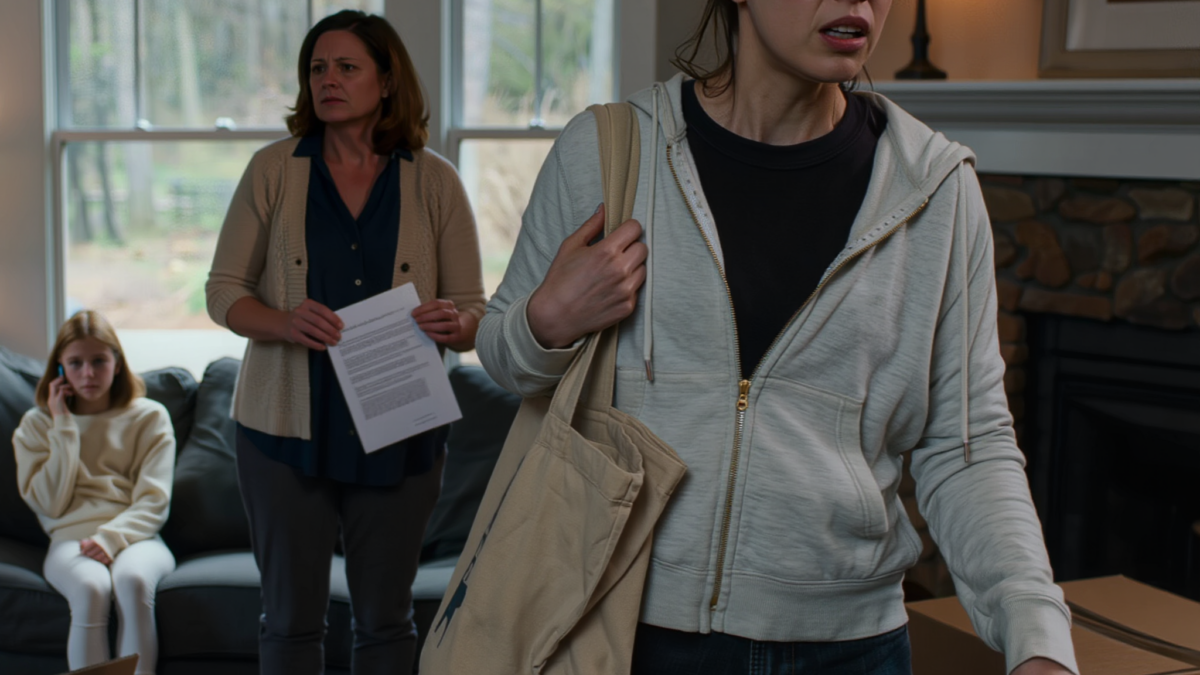
One week before my mother moved to California with my younger sister, she told me our Portland house had already been sold and I needed to find somewhere else to live. I was 18, worked bakery shifts before school, gave her half my paycheck, and was still waiting on college decisions. Elise, the daughter my mother had always favored, already knew about the sale and would receive the money for tuition and moving expenses. When I asked what I was supposed to do, Mom said, “You’re eighteen. Figure it out.” I called Aunt Nora, expecting embarrassment and maybe a couch for a few nights. Instead, she asked me a question that made my stomach drop: “Bernadette, are you using drugs?” That was when I learned my mother had prepared a story about me before throwing me out.
My name is Bernadette Collins.
I grew up in Portland, Oregon, in a small three-bedroom house my mother treated like proof that our family was doing fine.
From the outside, maybe we were.
The lawn was kept short.
The porch was repainted every few years.
My mother, Denise, never missed a neighborhood Christmas party.
Inside, things were different.
My younger sister, Elise, was the child Mom understood.
Elise was outgoing, funny, pretty, and somehow always forgiven before she even apologized.
I was quieter.
I liked school.
I worked.
I followed rules because rules made life predictable.
When my father left when I was eight, Mom started telling me I was exactly like him whenever she was angry.
“You have his attitude.”
“You shut people out like he did.”
“You think you’re smarter than everyone, just like your father.”
I did not remember my father that way.
Mostly, I remembered him making pancakes and showing me how to change a bicycle tire.
But he was gone, so Mom’s version became the version I had to live with.
At sixteen, I started working at a bakery four mornings a week.
I woke at 4:45, helped prepare trays before school, attended classes, then sometimes returned for an afternoon shift.
Half of every paycheck went into the household account because Mom said money was tight.
I bought most of my clothes myself.
I paid for my own college application fees.
I never complained because I thought being useful might finally make me easier to love.
Elise did not work.
Mom said she needed time for extracurricular activities and friends because “those things matter for college too.”
Then, two months after my eighteenth birthday, I came home from the bakery and found several cardboard boxes in the living room.
Mom was standing beside the fireplace.
Elise was on the couch looking at her phone.
“Pack your things,” Mom said.
I thought she meant we were repainting.
“What?”
“I sold the house.”
She said it with the same tone she used to tell me garbage pickup had moved to Tuesday.
I waited for the rest.
It did not come.
“Where are we going?”
Mom glanced at Elise.
“We’re moving to California next week.”
My chest tightened.
“What about my college applications?”
“You can handle them yourself.”
“What about me?”
That was when she finally looked directly at me.
“You’re eighteen now, Bernadette. Figure it out.”
Elise kept scrolling.
I asked whether she had known.
She gave me a small shrug.
“For a while.”
Mom explained that the proceeds from the house would help cover Elise’s school expenses and their move.
I asked about the money I had contributed for two years.
She actually laughed.
“Those few dollars? That barely covered utilities.”
I remember looking at the kitchen behind her.
I had cleaned it that morning before school.
My work shoes were still by the back door.
My textbooks were spread across the table.
Everything looked normal.
But apparently my place there had already been sold with the house.
“So where am I supposed to go?”
Mom sighed as though I were making the conversation difficult.
“Call Nora. She’s your father’s sister. Or rent a room.”
“You planned all of this without telling me.”
“You’re being dramatic.”
I looked at Elise.
“Do you think this is okay?”
She finally lifted her eyes.
“It’s not really my business.”
That hurt more than I expected.
I went upstairs.
Everything I owned fit into two suitcases and a canvas duffel.
At 7:20 that evening, I found Aunt Nora’s number in an old Christmas card and called.
She sounded surprised but warm.
Then I told her Mom had sold the house.
There was a long silence.
“She didn’t arrange anything for you?”
“No.”
“Bernadette…”
“I just need somewhere to stay until I figure something out.”
“You can stay here.”
I closed my eyes.
“Thank you.”
Then her voice changed.
“Honey, I need to ask you something uncomfortable.”
“Okay.”
“Are you using drugs?”
For several seconds, I thought I had misunderstood her.
“What?”
“Your mother called me last month.”
My hand tightened around the phone.
“She said you were stealing things from the house and selling them to buy drugs.”
I sat down on the edge of my bed. “That isn’t true.” “I didn’t think it sounded like you,” Aunt Nora said. “She told me the television disappeared. The microwave. A fan from the garage.” “The microwave broke. Mom said the fan was being repaired.” “What about the television?” “I don’t know. She told me it stopped working.” Aunt Nora was quiet. “Come here tomorrow,” she said. “Bring whatever documents you have for school and work. Something about this doesn’t make sense.” The next afternoon, I arrived at her house with two suitcases. Nora listened while I explained the bakery shifts, the money I sent home, and the weeks leading up to the sale. Five days later, Mom called her. Nora put the phone on speaker. She asked whether anything else had disappeared from the house since I left. Mom immediately changed the subject. That evening, my cousin Camille called. She had heard the accusations and wanted to tell me about something she had noticed at Christmas. “Elise kept disappearing into the bathroom,” Camille said. “Her pupils looked wrong, and she couldn’t sit still.” Then Camille paused. “Bernadette, there’s something else. My mom just got a call from California. Elise was picked up by police last night, and they found drugs in her car.”
I did not feel vindicated.
That surprised me.
For weeks, I had imagined what it would feel like if somebody proved I was innocent.
I thought there would be relief.
Instead, I felt sick.
“Elise is sixteen,” I said.
“I know.”
“What happened?”
“Your mom and Elise were already in Sacramento. Apparently Elise went out with some older kids. Police stopped the car after the driver ran a red light.”
“Was she driving?”
“No.”
“Is she still in custody?”
“I don’t know. Aunt Martha only heard part of it.”
I sat on Nora’s couch, staring at the small framed photograph above her television.
My father and Nora as teenagers.
He looked like me.
Same dark eyes.
Same narrow chin.
Nora sat beside me.
“This does not mean we know what was happening in Portland.”
“She had drugs.”
“Yes.”
“And things were disappearing.”
“Yes.”
“But that doesn’t prove she took them.”
“No.”
Nora was careful that way.
She never gave me a conclusion because it would make me feel better.
She waited for facts.
That was new for me.
My mother had always started with whatever conclusion protected Elise and worked backward from there.
The following morning, Nora called my aunt Martha.
I sat at the kitchen table while they spoke.
Martha had talked directly to Mom.
Elise had been released to her custody.
The police had found several pills and a small amount of a controlled substance in the car.
Because Elise was a minor and it was her first arrest, the case was being handled through juvenile court.
Mom insisted the drugs belonged to somebody else.
Then Martha asked the obvious question.
“Why did you tell us Bernadette was the one using?”
Mom became defensive.
She said I had been “showing the same behaviors.”
Martha asked what behaviors.
Mom said I was secretive.
Nora looked at me across the table.
I almost laughed.
I worked before sunrise, attended school all day, and spent most evenings studying in the kitchen.
Apparently exhaustion was evidence now.
Martha pushed harder.
Had Mom ever found drugs in my room?
No.
Had she ever seen me intoxicated?
No.
Had I been arrested?
No.
Had the bakery complained about me?
No.
Then why had she told half the family I was an addict?
According to Nora, there was a long silence.
Then Mom said, “Bernadette has always been difficult.”
That answer changed something.
Not because it was cruel.
Because it was irrelevant.
Aunt Martha began calling relatives herself.
Not to defend me blindly.
To ask what they had actually seen.
Nobody had seen me use drugs.
Nobody had seen me steal.
Several relatives remembered Mom mentioning missing household items but had never witnessed anything.
My cousin Camille remembered Elise acting strangely at Christmas.
A younger cousin remembered Elise offering to sell him an old gaming console around the same time Mom claimed I had sold our television.
The console belonged to our family.
That detail mattered.
Nora encouraged him to tell his mother, not me.
Within two days, another piece surfaced.
The pawn shop two neighborhoods from our old house had a record of Elise selling a television under Mom’s identification.
Because Elise was a minor, Mom had signed the transaction.
I stared at the photograph Martha sent Nora.
The date was five weeks before Mom called Nora claiming I had stolen the television.
That was the moment the whole story changed.
Mom had not merely suspected the wrong daughter.
She knew.
She had physically participated in the sale.
Maybe she told herself she was helping Elise clean up a mistake.
Maybe she believed selling the television legally and replacing it later would prevent questions.
Whatever explanation she used, one fact remained.
She signed the pawn record.
Then she told relatives I had stolen the television to buy drugs.
Nora wanted to call her immediately.
I stopped her.
“Why?”
“Because I want her to explain herself.”
“She won’t.”
“I know.”
That was exactly why I did not want the confrontation.
For eighteen years, I had kept believing that if I assembled the right facts, said the right sentence, or remained calm enough, my mother would suddenly become fair.
The pawn record told me fairness had never been the missing ingredient.
Truth was available to her.
She had simply chosen something else.
I saved the photograph and went to work.
Mr. Mark, the bakery owner, noticed immediately that something was wrong.
He was a large man in his fifties who could decorate a wedding cake with one hand while lecturing teenagers about retirement accounts.
“You look terrible,” he said.
“Thank you.”
“I mean emotionally.”
“That’s better.”
He handed me a tray.
“Talk or work?”
“Work.”
He nodded.
I spent four hours shaping dough.
It was the most useful thing I could have done.
Bread responds to what you actually do.
Too much flour changes it.
Too little time changes it.
You cannot shame dough into pretending.
By the end of my shift, my head felt clearer.
I had three immediate problems.
Housing.
College.
Money.
Nora had solved the first temporarily.
The bakery helped with the third.
College was more complicated.
Mom had taken the financial information I needed for aid forms to California.
When I asked for copies, she did not respond.
I called the community college financial-aid office and explained that my parent had moved out of state and I was living with a relative after being told to leave the family home.
The woman on the phone did not promise anything.
She told me to document the circumstances.
Nora wrote a statement.
Mr. Mark wrote another confirming my employment history and the abrupt address change.
My high-school counselor provided records showing I had been working while enrolled.
The college reviewed my situation and helped me apply for a dependency override for aid purposes based on parental abandonment and unusual circumstances.
It took weeks.
There were forms.
Interviews.
Requests for more documents.
Nothing happened because a magical administrator felt sorry for me.
It happened because people followed procedures designed for situations like mine.
I registered for classes at Portland Community College.
Business administration was not the path I had imagined.
I had originally applied to several four-year schools.
But community college let me stay close to work, reduce costs, and start without waiting for my mother to cooperate.
For the first time, I chose a plan based on what served me rather than what would impress someone else.
Elise’s case continued in California.
I heard fragments through relatives.
Mom stopped calling Nora.
She also stopped posting cheerful moving photographs online.
Then, about two months after I left the house, Nora’s phone rang on a Saturday morning.
I was making coffee.
Nora answered.
Her expression changed almost immediately.
“No,” she said.
A pause.
“No, Denise. I am not sending you ten thousand dollars.”
My stomach tightened.
Nora listened.
Then her face hardened.
“You spent weeks telling everyone Bernadette was an addict. Now you want her help because Elise was arrested?”
She held out the phone.
“You do not have to take this.”
I did.
“Hello.”
My mother exhaled.
“Bernadette. Thank God.”
It had been more than two months since she called me by anything affectionate.
“What do you want?”
“It’s Elise.”
“I know.”
“She’s in serious trouble.”
“What happened?”
Mom told me the juvenile court had ordered treatment and supervision.
There were legal fees.
Treatment expenses.
A private attorney wanted a $10,000 retainer.
“I don’t have ten thousand dollars.”
“You could borrow it.”
I almost thought she was joking.
“From whom?”
“You’ve always been good with money.”
“I work at a bakery.”
“You save.”
“Because I work at a bakery.”
She started crying.
“Bernadette, please. She’s your sister.”
I gripped the counter.
“You told everyone I was the drug addict.”
“This is not the time.”
“It is exactly the time.”
“Elise is sick.”
“And what was I?”
Mom went quiet.
“When you told Nora I stole the television, what was I?”
“I was scared.”
“Did you sign for that television at the pawn shop?”
Silence.
That was the answer.
“You knew.”
“Bernadette—”
“You knew Elise sold it.”
“She needed money.”
“So you helped her sell it.”
“I was trying to keep the situation under control.”
“Then why did you tell people I stole it?”
Her crying stopped.
Not gradually.
Immediately.
“You don’t understand what it was like living with her.”
That sentence almost made me lose my temper.
“I lived with her too.”
“She was fragile.”
“I was eighteen.”
“You were always stronger.”
There it was.
The family rule.
Elise received protection because she needed it.
I received pain because I could survive it.
“You called me a drug addict because I was stronger?”
“I panicked.”
“No. You planned it. You called Nora a month before you sold the house.”
Mom said nothing.
“Were you afraid Nora would take me in?”
“I was afraid people would start asking questions.”
“About Elise.”
“Yes.”
The word was barely audible.
But she said it.
I closed my eyes.
For years, I had wanted my mother to admit the favoritism.
I never imagined the admission would sound so ordinary.
“You sacrificed my reputation so people wouldn’t look at her.”
“I was protecting my daughter.”
The sentence left her mouth before she could correct it.
My daughter.
Singular.
I waited.
Mom realized what she had said.
“I didn’t mean—”
“Yes, you did.”
“You’re twisting everything.”
“No. I finally stopped twisting it for you.”
Her voice hardened.
“If you refuse to help, don’t expect us to be there when you need family.”
I looked across the kitchen at Nora.
She was pretending not to listen while standing three feet away.
I thought about my small bedroom.
The patchwork quilt.
Coffee waiting for me every morning.
Mr. Mark moving my shifts around so I could register for classes.
My counselor answering emails.
Cousins correcting the rumors my mother spread.
“I already found family.”
Mom inhaled sharply.
“Bernadette.”
“Goodbye.”
I hung up.
My hands shook so hard I almost dropped the phone.
Nora took it gently.
“How do you feel?”
I waited for anger.
Grief.
Guilt.
What came instead was relief.
“Free.”
Nora hugged me.
My mother called repeatedly over the next three days.
I did not answer.
Then other relatives started calling.
At first, I assumed she had resumed the smear campaign.
She had.
But this time, the story did not travel cleanly.
Mom told people I had abandoned Elise during a medical crisis.
Aunt Martha asked whether the “medical crisis” was treatment after a drug arrest.
Mom told another uncle I had refused to help after receiving years of support.
He asked what support she meant if I had worked since sixteen and been left behind when the house was sold.
Cousin Camille sent him the photograph of the pawn record.
The narrative collapsed because too many people now had facts.
Mom tried to say I had left voluntarily.
Nora responded with the message Mom had sent me after the house sale:
Buyer takes possession Friday. Have everything out by Thursday night.
I had saved it because Nora told me to save everything.
Not for revenge.
For clarity.
For several weeks, family conversations became ugly.
I stayed out of most of them.
That was another lesson.
Being proven right does not obligate you to attend every argument about why you were right.
I had classes.
Work.
A life.
My first semester was harder than high school.
I had underestimated how exhausting it would be to work early mornings and take college classes.
Accounting nearly destroyed me.
I failed my first exam with a 62.
The old voice in my head immediately sounded like Mom.
Maybe you aren’t as smart as you think.
I considered dropping the course.
Instead, I went to office hours.
Professor Patel looked at my exam.
“You understand the concepts.”
“The grade disagrees.”
“You’re making arithmetic errors because you’re rushing.”
“I work before class.”
“That explains fatigue. It doesn’t excuse the errors.”
Fair.
She helped me build a better study schedule.
Nora insisted I stop giving her rent until after midterms.
I protested.
She ignored me.
Mr. Mark promoted me to shift lead and moved me from four early mornings to three so I could sleep.
I passed accounting with a B.
That B meant more to me than every easy A I had earned in high school.
It belonged entirely to me.
No family comparison.
No performance.
Just work.
Six months after my mother’s first call, Camille contacted me.
“Your mom is back in Oregon.”
I paused.
“What about Elise?”
“She’s still in California in a treatment program.”
Apparently Mom had run through most of the house-sale money.
California rent was expensive.
Legal and treatment costs added up.
The “prestigious school” Elise was supposed to attend never happened.
Mom moved into a small apartment in Portland and took a retail sales job.
The woman who once mocked my bakery shifts now spent eight hours a day on her feet dealing with customers.
I did not enjoy that.
I also did not rescue her.
Another four months passed before she asked to speak with me.
By then, I was nineteen.
I had completed two terms of college.
I had saved enough for a used car.
Not a beautiful one.
A fifteen-year-old Honda that made a clicking noise whenever I turned left too sharply.
Mr. Mark said it gave the car personality.
Nora said it gave her anxiety.
Mom called from Camille’s phone because I still had her number blocked.
“She wants to apologize,” Camille said.
“Did she tell you that?”
“Yes.”
“Does she need money?”
“I asked. She said no.”
I thought about it overnight.
Then agreed to a phone call.
Mom sounded different.
Not transformed.
Tired.
“Thank you for talking to me.”
“What do you want to say?”
“I was wrong.”
I sat very still.
She continued.
“Elise has been in treatment for five months. Her counselor asked me to attend family sessions.”
I waited.
“He said something I didn’t want to hear.”
“What?”
“That every time I protected her from consequences, I made it easier for her addiction to continue.”
That was obvious to everyone else.
It had not been obvious to Mom because accepting it required her to see herself differently.
“She told them she started using at fifteen,” Mom said.
Three years.
The missing items had started around the same time.
“I knew something was wrong,” Mom continued. “I just kept telling myself it wasn’t drugs.”
“And when you knew?”
“I covered things.”
“Yes.”
“I paid for the television after she sold it. I told people you had taken it because…”
She stopped.
“Because what?”
“Because everyone already believed you were angry with me.”
I laughed once.
“Everyone believed that because you told them.”
“I know.”
Her voice broke.
“I kept thinking if Elise could start over in California, everything would reset.”
“So you sold the house.”
“Yes.”
“And left me.”
Silence.
“I told myself you could handle it.”
“Because I was stronger.”
“Yes.”
“You understand that isn’t a compliment anymore, right?”
“I do now.”
That mattered.
Not enough to restore anything.
But it mattered.
“Why are you apologizing?”
“Because you deserved the truth before I needed anything from you.”
I had expected a request.
There wasn’t one.
At least not that day.
“I’m not ready to have you back in my life the way you want.”
“I know.”
“I might never be.”
“I know.”
“If we talk, I decide how often.”
“Okay.”
“If you start blaming me for Elise or asking me to fix things, I end the call.”
“Okay.”
“And you don’t contact Nora about me unless there’s an emergency.”
Mom hesitated.
Then said, “Okay.”
That was how our relationship restarted.
Not with forgiveness.
With rules.
For several months, she called roughly twice a month.
Ten minutes.
Sometimes less.
She asked about college.
I told her about work.
She told me Elise was progressing in treatment.
We did not discuss the past every time.
That would have made the relationship about damage forever.
But we also did not pretend it had not happened.
Once, Mom said, “I miss having you at home.”
I replied, “I never felt at home there.”
She cried.
I let the sentence stand.
Elise sent me a letter from treatment.
It was handwritten.
I recognized the rounded handwriting immediately.
Bernadette,
I don’t know whether you’ll read this.
Mom told me you know everything.
I knew she blamed you.
I never asked her to stop.
That makes me responsible too.
I was scared that if she focused on me, I would have to quit using.
When things disappeared and you got blamed, I let it happen.
I am sorry.
I read it twice.
Then put it in my desk.
I did not answer.
Not because I wanted to punish Elise.
Because every apology does not require immediate access.
She needed recovery.
I needed distance.
Both could be true.
My second year at community college changed everything financially.
I received a transfer scholarship.
Professor Patel recommended me for a paid internship with a local small-business development nonprofit.
For the first time, I worked somewhere that involved spreadsheets instead of bread.
I missed the bakery more than I expected.
Mr. Mark pretended to be offended.
“You’re leaving me for Excel?”
“Only three days a week.”
“Betrayal.”
Then he packed me a box of cinnamon rolls for my first day.
The internship taught me something I had never seen growing up.
Money did not have to be mysterious.
Budgets were choices written down.
Emergency funds were not proof of selfishness.
Boundaries were not cruelty.
Planning did not make someone cold.
My mother had often treated money emotionally.
Elise needed something, so money appeared.
I needed something, so the absence of money became a lesson.
Learning actual financial management helped me understand that neither pattern was healthy.
At twenty, I completed my associate degree in business administration.
The graduation was held in a large auditorium.
I had not expected to care about the ceremony.
Then I saw Nora in the front row.
She was crying before my name was called.
Mr. Mark sat beside her holding flowers he claimed the bakery staff had forced him to buy.
Professor Patel was several rows back with faculty.
Camille came too.
Mom asked to attend.
I said no.
That decision took me three days.
Not because I wanted to punish her.
Because I wanted one milestone untouched by the question of whether my mother approved.
She accepted the answer.
That was evidence she had changed at least a little.
The old Mom would have called me cruel.
This version simply said, “I understand.”
After the ceremony, Nora wrapped her arms around me.
“Your father would have been proud.”
I smiled.
“I think I’m proud enough for both of us.”
She pulled back and looked at me.
“That’s even better.”
We took photographs outside.
No matching outfits.
No perfect family arrangement.
Mr. Mark’s tie was crooked.
Camille blinked in half the pictures.
Nora kept crying.
They were my favorite photographs I had ever taken.
Later that evening, I opened the old suitcase I had carried to Nora’s house two years earlier.
At the bottom was the gray sweater I wore the day Mom sold the house.
I had kept it even though one sleeve was frayed.
Beside it was Elise’s letter.
Mom’s first real apology was saved on my phone.
I realized none of those things hurt the way they once had.
The memories had not disappeared.
Their authority had.
That was freedom.
People sometimes ask whether I forgave my mother.
Yes.
Eventually.
But forgiveness did not restore the old relationship.
I would never send half my income to her again.
I would never accept being blamed because I was “strong enough” to survive it.
I would never confuse being needed with being loved.
Mom and I speak now.
We have coffee occasionally.
She has met some of my college friends.
She once visited the bakery and thanked Mr. Mark for looking out for me.
He told her, “She mostly looked out for herself.”
I loved him for that.
Elise finished treatment and remained in California with a structured recovery program.
We still do not have a relationship.
Maybe someday.
Maybe not.
Her recovery does not require my participation.
My healing does not require hers.
That is something I wish I had understood at eighteen.
My mother did not throw me out because I was worthless.
She threw me out because she had built a family system where one daughter absorbed consequences and the other absorbed protection.
When that system became impossible to maintain, she chose the child whose problems frightened her most.
It was wrong.
It was damaging.
It also was not a measurement of my value.
The house in Portland belongs to another family now.
I drove past it once.
A little boy was riding a scooter in the driveway.
Someone had painted the front door blue.
For a moment, I expected grief.
Instead, I felt nothing dramatic.
It was just a house.
Home turned out to be somewhere else.
Home was Nora yelling from the kitchen because I forgot to buy milk.
Home was Mr. Mark leaving pastries on the break-room table before my exams.
Home was Professor Patel circling the arithmetic errors on my first terrible accounting test.
Home was Camille calling before sharing my phone number with anyone.
Home was being allowed to take up space without proving I deserved the square footage.
I used to think being rejected by my mother was the worst thing that could happen to me.
At eighteen, it probably felt that way.
Now I understand something else.
The worst thing would have been spending the next twenty years believing I had to earn the love she withheld.
Getting pushed out hurt.
Finding out she lied about me hurt more.
Learning she knowingly protected Elise at my expense hurt most of all.
But leaving that house forced one truth into the open.
I could survive without being the family scapegoat.
More importantly, I could build a life where nobody needed one.
I did not become strong because my mother hurt me.
I was already strong.
That was why I survived her choices.
There is a difference.
And I no longer thank people for wounds simply because I learned how to heal them.
I thank Nora for opening her door.
I thank Mr. Mark for treating work like work instead of charity.
I thank the relatives who corrected lies when they learned the truth.
I thank myself for making the call I was embarrassed to make.
That phone call saved more than my housing.
It gave me my first honest witness.
Two years earlier, I arrived at Nora’s house carrying two suitcases because I thought my family had thrown me away.
Now those same suitcases sit in her attic.
I have my own apartment a few blocks from campus.
A desk.
A cheap couch.
A kitchen where nobody counts how much food I eat.
On the wall above my desk hangs my diploma.
Next to it is a photograph of Nora and me from graduation.
Sometimes Mom calls while I am sitting there.
Sometimes I answer.
Sometimes I do not.
Both choices belong to me.
That might sound small.
It does not feel small.
For eighteen years, every important decision in our house revolved around what Elise needed, what Mom feared, or what kept everybody calm.
Now my life contains a question I was never taught to ask.
What do I need?
The answer changes.
Rest.
Work.
Distance.
Connection.
A quiet night.
A difficult conversation.
The right to say no.
The right to change my mind.
None of those things makes me selfish.
They make me a person.
And that is what I finally became after my mother told me I was old enough to figure everything out.
She was wrong about almost every part of that day.
But accidentally, she was right about one thing.
I did figure it out.
Just not the way she expected.







