My Parents Left Me Their “Helpless” Son—Then He Showed Me $146,700 Missing
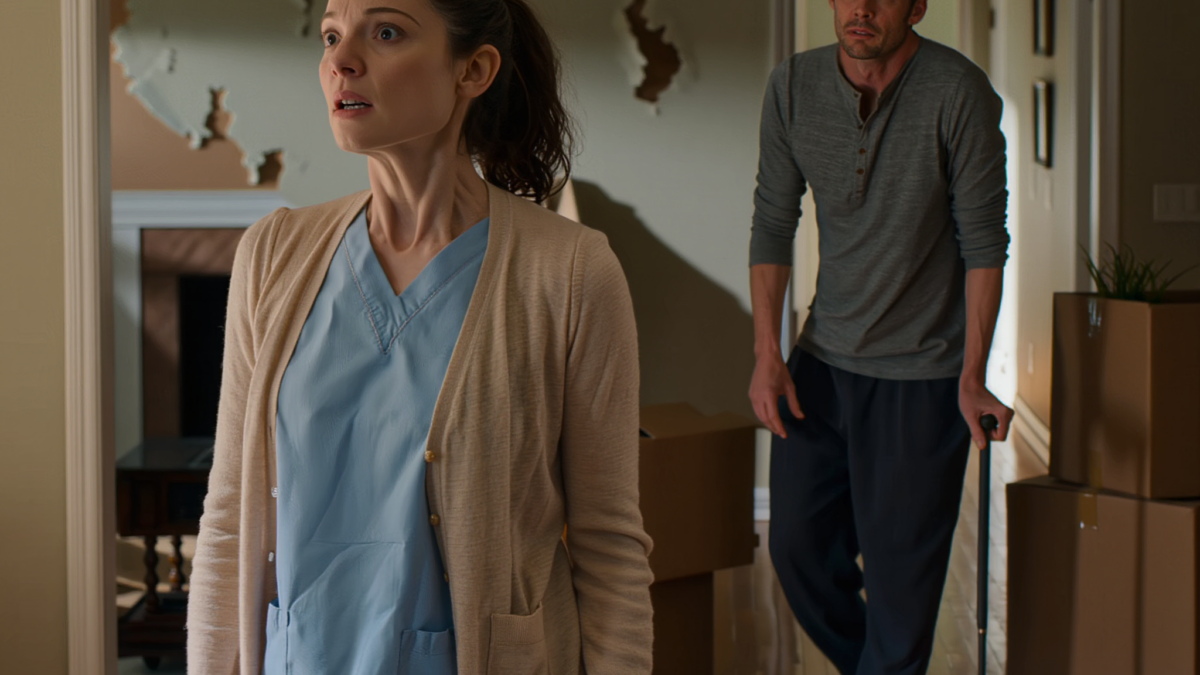
My parents left for Florida and told me their severely brain-injured son was my responsibility now, as if I were picking up a dog from a kennel instead of caring for my older brother. I was 29, sharing a two-bedroom apartment in Raleigh and barely covering my own bills, while Owen supposedly needed help with almost everything after a cycling accident fourteen months earlier. What they didn’t tell me was that the house had been half emptied, several of his financial records were missing, and they had already started planning a permanent move south. Then I heard footsteps behind me. Owen walked into the living room with a cane, looked directly at me, and said the first complete sentence I’d heard from him since the accident: “Maya, don’t call them back. They think I still can’t understand what they’ve done.”
I had arrived at my parents’ house forty-five minutes earlier than planned.
Mom had asked me to stop by before the family’s “short break” because she wanted to explain Owen’s medication schedule and home-care routine.
The front door was locked.
Inside, the place felt wrong immediately.
The television was gone.
Two framed prints had disappeared from the hallway.
Most of the plants Mom had kept for years were missing.
The refrigerator held bottled water, mustard, and half a carton of eggs.
Upstairs, my parents’ closet was nearly empty.
So was my younger sister Kelsey’s room.
Owen’s bedroom looked occupied, but his bed was empty.
I panicked.
I called Mom.
She answered by video.
Behind her were palm trees, a blue pool, and rows of white lounge chairs.
She wore oversized sunglasses.
Dad was somewhere behind her.
Kelsey was stretched across a chair with a drink beside her.
“Where is Owen?” I asked.
Mom barely reacted.
“He’s there.”
“He isn’t in his room.”
“He probably has an aide with him.”
“Probably?”
Dad leaned into the frame.
“Maya, relax.”
“Where are you?”
“Naples.”
“You said you were taking a weekend trip.”
He shrugged.
“Plans changed.”
Then he told me they were considering staying in Florida.
Not for a week.
Possibly for good.
They had already been looking at rentals.
He said the North Carolina house would “be dealt with.”
Then came the part they apparently believed was perfectly reasonable.
“You’re going to need to take over with Owen,” Dad said.
I stared at him.
“My apartment isn’t accessible.”
“You’ll figure something out.”
“I work full-time.”
“So did your mother before all this.”
Mom hadn’t worked outside the home in fifteen years.
But there was no point correcting him.
Kelsey finally leaned toward the phone.
“You’ve always been better with him anyway.”
I asked when they were coming back.
Nobody answered directly.
Dad simply said, “We can’t put our lives on hold forever.”
Then the call ended.
I stood in the empty living room trying to understand how four adults had somehow decided that my life was the only one available to sacrifice.
That was when I heard a slow tap behind me.
Then another.
Cane against hardwood.
I turned.
Owen stood in the hallway.
He was thinner than before the accident.
His right shoulder sat slightly lower than his left, and one hand trembled against the cane.
But he was standing.
His eyes were clear.
“Maya,” he said slowly.
I couldn’t move.
The last time I’d visited, he had spoken only two words before becoming exhausted.
Mom had told me the therapists said meaningful improvement had stopped.
Owen took another careful step.
“Sit.”
I started crying before I reached the sofa.
Not because I was afraid.
Because my brother was looking at me again.
Really looking.
“How long?” I asked.
“Better?” he said.
I nodded.
“Months.”
My stomach dropped.
“Do Mom and Dad know?”
His expression changed.
“They know enough.”
He reached into the canvas bag hanging from his walker and placed three bank statements on the coffee table.
Several transactions had been circled in red.
$8,400.
$12,000.
$6,750.
$19,500.
More followed.
I looked at the total Owen had written on a yellow note.
$146,700.
“What is this?”
“My money.”
Then he placed a thick court packet beside the statements.
On the first page was his name.
On the second was mine.
Owen tapped the document with one finger.
“They were going to make you responsible for me.”
He turned to the final page.
A signature appeared above my printed name.
I had never signed it.
The document said I had agreed to become Owen’s successor personal guardian. I hadn’t even known anyone was filing a petition. Owen explained that our parents wanted to step away from his daily care while keeping control of his finances. That was why my name mattered. If the court believed I had volunteered to handle his medical appointments, housing, transportation, and daily support, Mom and Dad could argue that they no longer needed to remain responsible for his care. But another page still listed Dad as the person requesting continued authority over Owen’s financial accounts.
I looked back at the bank statements.
“Where did the money go?”
Owen pointed to several transfers.
Some went directly to Mom and Dad.
One went to Kelsey.
Others were labeled as reimbursement for caregiving expenses.
Then he showed me an email from a title company.
Our grandmother had left the house to Owen years before his accident.
Dad had been negotiating its sale.
The proposed closing date was nine days away.
The seller’s expected proceeds were more than $600,000.
I asked Owen whether the court had approved any sale.
He shook his head.
Then he pulled out one final page.
It was a letter Dad had sent to the realtor explaining why the house would soon be vacant.
One sentence was highlighted.
“Owen will permanently reside with his sister Maya after the transfer.”
I read that sentence until the words stopped looking like English.
They had made a housing plan for me.
A caregiving plan for me.
A financial plan for Owen.
A retirement plan for themselves.
Nobody had asked either of us.
“Who found this?” I asked.
Owen pointed toward the kitchen.
“Monica.”
As if summoned by her name, the side door opened.
A woman in navy scrubs stepped inside carrying two grocery bags.
I recognized her.
Monica Reyes had been one of Owen’s home-health nurses after he came back from rehabilitation.
I had met her twice.
Mom told me the agency eventually reduced Owen’s visits because “there wasn’t much more anyone could do.”
Apparently that hadn’t been true either.
Monica set the bags down.
“You made it,” she said.
I looked from her to Owen.
“How much do you know?”
“Enough that I documented everything I personally witnessed.”
That sentence sounded clinical.
Deliberately so.
She explained that four months earlier Owen had begun showing much stronger signs of recovery.
He could answer complex yes-or-no questions consistently.
Then short verbal questions.
Then he started forming sentences.
His physical therapist noted improvement in standing balance.
His occupational therapist recommended a new cognitive evaluation.
A neurologist wanted to reassess his decision-making capacity.
My parents canceled the appointment.
Twice.
“Why?” I asked.
Monica didn’t speculate.
“Owen can tell you what they said.”
He took his time.
Speech still cost him effort.
“Dad said evaluation would cause paperwork.”
“What kind of paperwork?”
Owen tapped the bank statements.
“Control.”
I looked at Monica.
She nodded.
“His parents had temporary financial authority after the injury. A formal capacity review could have changed that arrangement.”
My mouth went dry.
Mom had spent months telling me Owen’s condition was unchanged.
She had told relatives not to visit for long because stimulation exhausted him.
She complained constantly about how difficult caring for him had become.
Whenever I offered to take a weekend shift, she accepted immediately.
But she never once told me he was improving enough to ask questions about his own finances.
I turned back to Owen.
“Did you know they were taking money?”
“Not at first.”
He had regained enough concentration to use a tablet about five months earlier.
His speech therapist had helped configure accessibility settings.
Mom thought he used it only for rehabilitation exercises and streaming movies.
One afternoon, Owen opened an old email account.
A bank alert was waiting.
Then another.
He began checking.
Because his parents had court-approved temporary authority, some transfers were visible as caregiver reimbursements.
Others were transfers between accounts.
Owen couldn’t tell which were legitimate.
So Monica helped him contact Sarah Kim, an attorney with a disability-rights organization.
Not secretly.
Not through an elaborate undercover plan.
Monica simply sat beside him while he dictated an email one painful sentence at a time.
Sarah met with him twice.
The second time, Owen demonstrated that he understood his property, his accounts, the purpose of legal representation, and what he wanted investigated.
She became his attorney.
“Where is she now?” I asked.
“Coming,” Owen said.
I sat back.
My entire understanding of the previous six months rearranged itself.
Every Sunday phone call with Mom.
Every complaint that Owen was “the same.”
Every time Dad mentioned how expensive caregiving had become.
Every time Kelsey posted from a new restaurant or showed off something I wondered how she afforded.
I had treated those things as separate.
They weren’t.
Sarah arrived forty minutes later.
She was younger than I expected, maybe late thirties, with a leather portfolio tucked under one arm and absolutely no interest in dramatics.
She shook my hand.
“I need to start by saying something important,” she said. “Owen is my client. Not you. Not your parents.”
“Okay.”
“He asked me to speak openly in front of you today.”
Owen nodded.
Sarah sat at the dining table and spread out the documents.
The first thing she corrected was my assumption that every transfer was automatically theft.
Some expenses might have been legitimate.
My parents had provided real care.
They had paid for equipment.
They had managed appointments.
They had modified part of the house.
“We need records before labeling anything,” Sarah said.
I appreciated that.
The truth did not need exaggeration.
The problem was that several transactions had no obvious connection to Owen.
A $17,800 transfer coincided with Kelsey’s graduate-school tuition payment.
Another $24,000 had gone toward a deposit on something called Gulf Vista Holdings.
A $9,200 withdrawal appeared two days before my parents bought a new SUV.
There were repeated “caregiver reimbursements” far above the amounts documented in their reports to the court.
And then there was the house.
Grandma Evelyn had left it to Owen because he was the oldest grandchild and had lived with her during college.
When our parents sold their old place after Dad lost his job, Owen let them move in.
After the accident, the arrangement reversed.
They became his caregivers.
The property remained his.
Its value had increased sharply.
Dad had started talking to a realtor six weeks earlier.
He had represented himself as having authority to pursue a sale because the house was supposedly no longer suitable for Owen.
That was not entirely absurd.
The stairs were difficult.
The bathrooms needed changes.
An accessible condo might genuinely have been better.
The problem was what happened next.
The proposed sale documents indicated that after paying closing costs, more than $600,000 would remain.
But there was no corresponding plan showing those funds being reserved for Owen’s care.
Instead, Sarah had found emails referencing a Florida property.
Gulf Vista Holdings.
The same name attached to the $24,000 transfer.
My parents had put a deposit on a two-bedroom condo outside Naples.
The purchasers listed on the reservation were Dean and Carol Bennett.
Not Owen.
I looked at my brother.
“They were using your money to buy their retirement place?”
Sarah answered carefully.
“That is one possibility we’re investigating.”
Then she showed me something worse.
The Florida condo application stated that Dean and Carol expected to receive “family real-estate proceeds” before closing.
Expected amount:
$575,000.
That number was almost identical to the projected net proceeds from Owen’s house after expenses.
I felt something cold spread through my chest.
“They were going to sell his house and buy theirs.”
“We don’t know whether the Florida purchase was ultimately intended to use those exact proceeds,” Sarah said.
I understood why she was being precise.
But the numbers were screaming.
Then came my forged signature.
The petition naming me as successor personal guardian had not yet been filed.
Sarah had obtained it because a paralegal from my parents’ lawyer contacted Owen directly to verify information.
That call was one of the reasons everything moved faster.
The draft claimed I had agreed to provide housing and day-to-day support.
My parents would ask to end their responsibilities for Owen’s personal care.
Dad would request continued authority to “wind down” Owen’s property and financial affairs.
I would get the work.
Dad would keep the money.
“They didn’t even ask me,” I said.
Owen looked at me.
“Would you have said yes?”
I thought about it.
If they had called me six months earlier and said Owen needed me, I probably would have destroyed my own life trying.
I would have moved apartments.
Cut my hours.
Used my savings.
Figured it out.
That realization made me feel worse, not better.
“They didn’t need to forge anything,” I said. “I probably would’ve helped.”
Owen’s expression softened.
“I know.”
That was exactly why they expected it to work.
For most of my life, I had been the child who handled whatever nobody else wanted.
When Kelsey needed dance competition fees in high school, I contributed money from my summer job.
When Dad was unemployed for four months, I postponed replacing my dying car and gave my parents most of my emergency fund.
When Mom had surgery, I used vacation days to manage appointments.
Nobody ordered me at gunpoint.
I volunteered because I loved them.
Over time, volunteering became expectation.
Expectation became entitlement.
And now entitlement had become paperwork.
Sarah asked Owen what he wanted.
He answered without hesitation.
“Stop sale.”
“Anything else?”
“Stop Dad.”
She nodded.
That meant emergency legal action.
Not police breaking down resort doors.
Not instant arrests.
Paperwork.
Calls.
Court filings.
Notifications.
The kind of process that feels painfully ordinary while your entire family is collapsing.
Sarah contacted the title company and sent notice that Owen disputed any authority to sell the property.
Ben Caldwell, a court-appointed attorney already connected to the original conservatorship case, was notified of Owen’s recovery and the questioned transfers.
The brokerage holding most of Owen’s investments placed temporary restrictions on outgoing transfers pending review.
Sarah requested an emergency court hearing concerning my parents’ financial authority.
She also requested an independent capacity evaluation.
I signed a sworn statement saying I had never agreed to become Owen’s guardian.
That was the first document in the entire mess carrying my real signature.
Before I signed, I read every word twice.
Sarah noticed.
“Good habit,” she said.
I almost laughed.
By 8:00 that evening, I was exhausted.
Owen looked worse.
His speech slowed when he tired.
His right hand shook more.
Monica reminded him to rest.
That grounded me.
He was recovering.
He was not magically healed.
He still needed therapy.
He still needed help with transportation.
He still became confused when overwhelmed.
The difference was that needing support did not make him incapable of having a voice.
My parents had blurred those two things because silence benefited them.
I stayed at the house that night.
Not because I had suddenly become his permanent caregiver.
Because he was my brother and the day had been brutal.
Monica’s agency had coverage arranged for the next morning.
Sarah had already started discussing longer-term support options.
For the first time, care was being planned around what Owen wanted.
At 11:26 p.m., my mother called.
I watched the phone ring.
Owen looked at it.
“Answer.”
I put it on speaker.
Mom didn’t say hello.
“What did you do?”
“I’m not sure what you’re asking about.”
“Our cards aren’t working.”
I looked at Sarah’s folder on the table.
“I didn’t touch your cards.”
“Your brother’s accounts are frozen.”
“Restricted.”
“How would you know?”
I stared at Owen.
He nodded.
“Because he’s sitting beside me.”
Silence.
Mom’s breathing changed.
“What?”
Owen leaned toward the phone.
“Hi, Mom.”
Nothing.
Then a small sound.
Not a word.
A gasp.
“How are you—”
“Better?”
Her voice trembled.
“Why didn’t you tell us?”
Owen gave a tired smile.
“You knew.”
“No, sweetheart. We knew you were improving. We didn’t know you were this well.”
“You canceled doctor.”
“That wasn’t—”
“You canceled twice.”
She began crying.
I had heard my mother cry many times.
Some tears were grief.
Some were fear.
Some were the sound she made when she realized control had left the room.
“Maya,” she said, “your brother doesn’t understand everything that’s happening.”
I looked at him.
He looked back.
“I think he understands enough to hire an attorney.”
Another silence.
Dad took the phone.
“What attorney?”
His voice was sharp.
Familiar.
The tone that had made me obey instantly when I was sixteen.
It didn’t work the same anymore.
“Dad, did you put my name on a guardianship petition?”
“We were trying to create a practical solution.”
“Did you sign my name?”
“I didn’t sign anything.”
“Someone did.”
“That draft wasn’t final.”
“Did you tell a realtor Owen would live with me?”
“Maya, your brother cannot live alone.”
“That is not what I asked.”
Dad exhaled hard.
“You have no idea what the last year has been like.”
That was probably true.
I had not provided daily care.
They had.
I had not lost sleep every night worrying about seizures, falls, therapy appointments, or whether Owen would wake up fully.
They had.
Their exhaustion was real.
It also did not turn Owen’s money into theirs.
“I know it was hard,” I said.
“Then stop judging us from the outside.”
Owen spoke.
“Where’s my money?”
Dad went silent.
Owen repeated it.
Slowly.
“Where. Is. My. Money?”
Dad’s answer came softer.
“We used some of it for your care.”
“All?”
“No.”
“Florida?”
Another silence.
That was enough.
Dad changed tactics.
“We were going to straighten everything out.”
“When?”
“After the house closed.”
Owen leaned back.
His face went blank.
The sentence had answered more than Dad intended.
I asked one question.
“Were you coming back?”
Dad didn’t answer.
Mom could be heard in the background telling him to stop talking.
Then the call ended.
The next morning, Kelsey sent me seventeen text messages.
The first blamed me for terrifying Mom.
The second said Owen was confused.
By number six, she accused me of trying to steal his estate.
By number eleven, she said I had always resented the family because I “never built a real life.”
I stopped reading.
Then one preview caught my attention.
You know Mom and Dad paid for Owen for a year. That money wasn’t just his.
I opened it.
I typed:
Did you receive $17,800 from Owen’s account?
The typing indicator appeared.
Stopped.
Appeared again.
Then disappeared.
She never answered.
Sarah told me not to continue.
So I didn’t.
Two days later, the court held an emergency remote hearing.
Owen sat at the dining table with Sarah beside him.
I sat farther down.
My parents joined from Florida with their attorney.
Seeing them on the screen was surreal.
Mom looked exhausted.
Dad looked furious.
Kelsey was not a party to the guardianship case, so she wasn’t present.
The judge did not decide everything.
That surprised me.
Some part of me wanted a single dramatic ruling.
Instead, the judge did something more reasonable.
She temporarily suspended my parents’ authority to make large financial transactions.
She appointed an independent fiduciary to review Owen’s accounts.
She halted any property sale pending further order.
She scheduled a capacity evaluation.
And she ordered everyone to preserve financial records.
Then she addressed Owen.
Not Dad.
Not Mom.
Owen.
“Mr. Bennett, I understand communicating is tiring for you.”
“Yes.”
“If you need a break, say so.”
“Thank you.”
I saw tears in his eyes.
Later, he told me that was the first time anyone in authority had spoken directly to him in nearly a year instead of asking someone else what he wanted.
The evaluation happened the following week.
It lasted across two days because Owen fatigued quickly.
He did not pass some magical test declaring him completely independent.
The report was nuanced.
He had limitations in processing speed.
He needed support organizing complex tasks.
He was not ready to drive.
Long conversations exhausted him.
But he understood his assets.
He understood contracts.
He understood that money removed from his accounts reduced what was available for his future care.
He could identify the people involved.
He could express stable preferences.
Most importantly, the evaluator found that he could participate meaningfully in financial decisions with appropriate support.
My parents’ story—that he was functionally unaware of what happened around him—collapsed.
The independent fiduciary’s audit took longer.
Weeks.
Those weeks were ugly.
My parents returned to North Carolina.
They did not come to the house.
Their attorney advised them not to.
They rented a furnished apartment.
Kelsey stayed with them.
Relatives started calling.
Some asked if Owen was really awake.
Others asked whether I had “turned him against” our parents.
Aunt Marlene told me Mom had sacrificed everything for us.
I agreed.
“She did sacrifice a lot.”
My aunt sounded surprised.
Then I added, “That doesn’t answer where Owen’s money went.”
The conversation ended quickly.
I learned to ask that question whenever someone tried to change the subject.
Where did the money go?
Not:
Is Mom a good person?
Not:
Did Dad love us?
Not:
Does family deserve forgiveness?
Where did the money go?
Facts have a way of making vague guilt uncomfortable.
The audit found $146,700 in questionable withdrawals and transfers during the previous nine months.
Not all of it became part of the final claim.
About $31,000 could be connected to Owen’s legitimate care, household modifications, transportation, and expenses that had been poorly documented.
That still left more than $115,000 needing explanation.
The $17,800 transfer to Kelsey had paid part of her graduate-school balance.
The $24,000 transfer funded the Florida condo deposit.
Another $12,600 had paid down my parents’ credit cards.
The SUV down payment came from an account containing Owen’s money.
There were restaurant charges.
Furniture purchases.
Travel.
A beach-club membership fee.
Dad called them family expenses.
The fiduciary did not.
Then came the house.
Dad had signed a listing agreement under his authority as temporary conservator.
The realtor had been told court approval was routine.
The buyers had made an offer.
The sale contract included a contingency requiring legal authority before closing.
That contingency was the only reason the house had not already been transferred.
The title company had requested the guardianship documents.
That was when Dad started preparing the petition shifting personal responsibility to me.
The timing was not accidental.
If Owen permanently moved in with me, Dad could argue the house was no longer needed for Owen’s residence.
If the sale was approved, the proceeds should still have remained Owen’s.
But the Florida condo documents showed my parents expecting to use nearly the same amount for their relocation.
Sarah called it what it was.
“A plan that only works if nobody asks the next question.”
The next question was:
Why would Owen’s home become Mom and Dad’s retirement money?
Nobody had a defensible answer.
Kelsey eventually agreed to speak with the fiduciary.
That was when we learned she knew more than I wanted to believe.
Dad had told her Owen would “never manage money again.”
Mom had said whatever remained after his long-term care was “basically family inheritance.”
Kelsey accepted the tuition payment knowing the money originated from Owen.
She claimed she thought our parents were legally allowed to use it.
Maybe she did.
But she had never asked Owen.
Nobody asked Owen anything.
That became the theme of the entire case.
The person whose life had supposedly justified every decision had been excluded from every decision.
Three months after the Florida trip, the court removed my parents from Owen’s financial management permanently.
An independent professional conservator was appointed for complex transactions while Owen continued rehabilitation.
Owen retained direct control over ordinary personal spending and participated in all major decisions.
The house remained his.
The Florida condo contract fell apart when my parents could not complete financing.
Their deposit became part of the restitution dispute.
The civil side could have ended there.
It didn’t.
The forged signature under my name created a separate problem.
So did altered reimbursement forms found during the audit.
The fiduciary referred those records to investigators.
I did not make that decision.
Owen didn’t either.
That mattered to me.
For months, relatives said we were “trying to put our parents in jail.”
We weren’t prosecutors.
We provided documents when asked.
What authorities did with those documents was not something we controlled.
The investigation moved slowly.
Much more slowly than television teaches you to expect.
There were interviews.
Requests for records.
Handwriting comparisons.
Bank subpoenas.
Questions about who completed which forms.
Dad’s lawyer argued that many transactions had been family reimbursements.
Mom’s lawyer said she relied on Dad for financial paperwork.
Kelsey’s lawyer said she had been a recipient, not an organizer.
Some of those arguments had merit.
Life remained inconveniently complicated.
My parents had genuinely spent a year caring for Owen.
Mom had slept in a chair beside his hospital bed during the worst week after the accident.
Dad built the temporary ramp himself.
Kelsey visited rehabilitation.
People can do loving things and still later do harmful ones.
Accepting that was harder than simply turning them into monsters.
Owen struggled with it too.
One evening, I found him staring at an old photograph.
All four of us kids and parents at a lake.
Kelsey was maybe eleven.
I was fourteen.
Owen was seventeen.
Dad still had dark hair.
“You okay?” I asked.
Owen nodded.
Then shook his head.
“Both.”
I understood.
He missed people who still existed.
That is a particular kind of grief.
I sat beside him.
After a while he said, “Mom stayed hospital.”
“I know.”
“Doesn’t erase.”
“No.”
“But real.”
“Yes.”
We did not have to choose between those truths.
That became part of our recovery too.
Six months after the emergency hearing, my father and mother reached agreements resolving both civil claims and the criminal investigation.
The exact terms were less dramatic than strangers online would have wanted.
There were restitution requirements.
They lost all authority over Owen’s assets permanently.
Several transferred assets were sold or surrendered to repay him.
The Florida deposit was recovered in part.
Dad accepted responsibility for false financial documents and unauthorized use of conservatorship funds.
Mom accepted responsibility for participating in improper transfers and signing reimbursement records that did not accurately describe expenses.
Neither walked away untouched.
Neither disappeared into prison for decades.
There were court-supervised consequences, probationary terms, repayment obligations, and restrictions that lasted years.
Kelsey returned the tuition money through a structured repayment agreement.
She avoided criminal charges after cooperating and providing records.
When she heard the result, she called me.
I nearly didn’t answer.
Then I did.
“Are you happy now?” she asked.
“No.”
That seemed to surprise her.
“Well, you won.”
“Won what?”
“Everything.”
I looked across the living room.
Owen was doing hand exercises with a therapist.
His house needed bathroom renovations.
His recovery remained uncertain.
Our parents lived in a rental apartment and communicated through lawyers.
“What exactly do you think I won?”
She had no answer.
Then she started crying.
“They’re broke, Maya.”
“No. They have less money.”
“They lost the Florida place.”
“It wasn’t theirs yet.”
“They lost the house.”
“It was never theirs.”
“You know what I mean.”
“I do. That’s the problem.”
She accused me of talking like a lawyer.
I told her I had learned the value of precise nouns.
Her voice softened.
“I didn’t know Dad was trying to make you Owen’s guardian.”
“Would it have changed anything?”
She hesitated.
“I don’t know.”
At least she was honest.
Then she said, “Mom thought you’d do it.”
“I probably would have.”
“Exactly.”
“No, Kelsey. Not exactly.”
She went quiet.
“If they’d asked me, I might have helped. They didn’t ask because they wanted my labor without giving me a choice.”
“I never thought of it like that.”
“I know.”
That sentence ended most conversations in our family.
I know.
I know you didn’t notice.
I know you assumed.
I know nobody meant to ask.
Eventually I stopped accepting lack of thought as an excuse.
Owen’s recovery continued in uneven pieces.
He never returned to the person he had been before the accident.
That wasn’t the ending.
The ending was learning that he didn’t have to.
He walked without the cane inside the house after another eight months, but used it when he was tired or outdoors.
He spoke clearly most mornings.
By late afternoon, words sometimes slowed.
He regained enough executive function to work a few hours a week doing code review for his former employer.
The first payment deposited directly into an account only he controlled.
He printed the statement.
Held it up.
“Mine.”
I laughed.
“Very impressive.”
He grinned.
“Tiny.”
“Still yours.”
“Exactly.”
He decided to sell the house almost a year after everything began.
That surprised me.
For months, protecting the house had felt like the center of the fight.
But once it was truly his decision again, he admitted he didn’t want to live there.
Too many stairs.
Too many memories.
Too much maintenance.
The difference was that this time nobody had decided for him.
He chose the realtor.
He attended meetings.
Sarah reviewed documents with him.
The conservator approved the transaction.
The proceeds went into an account structured around his long-term needs.
He bought an accessible two-bedroom condo ten minutes from my apartment.
Not Florida.
Not because I demanded he stay near me.
Because he liked the neighborhood and could reach rehabilitation by bus.
At closing, he signed slowly.
His hand still cramped.
Nobody rushed him.
When he finished, he stared at the page.
Then at me.
“Real signature.”
I swallowed hard.
“Yeah.”
That moment affected me more than any court ruling.
After the house sold, I expected to feel relieved.
Instead I sat in my car and cried.
That house had never belonged to me.
Still, I had spent fourteen months believing I might become responsible for preserving it, maintaining it, and caring for Owen inside it.
I had built entire disaster plans in my head before anyone asked whether I wanted the job.
Letting the house go felt like letting go of that imaginary future too.
I kept my clinic job.
That sounds ordinary.
It was important.
The old Maya would have quit immediately to make herself available to Owen.
I almost did.
Three separate times.
Each time Owen stopped me.
“No.”
“What if you need me?”
“I have help.”
“What if something happens?”
“Then call.”
“What if—”
“Maya.”
He would wait until I looked at him.
“Your life.”
Those two words became his favorite argument.
My life.
I had one.
It was allowed to continue even when somebody I loved needed help.
That was new.
I moved out of my shared apartment eventually, but not to become Owen’s live-in caregiver.
I rented a small one-bedroom twelve minutes from his condo.
We had dinner twice a week.
Monica stayed part of his care team for months before moving to another job.
Sarah remained his attorney for the property transition, then gradually stepped back.
The professional conservator’s role narrowed as Owen demonstrated more capacity.
Independence arrived in increments.
So did mine.
The hardest boundary was with Mom.
She wrote me a letter nine months after the court case.
Not an email.
A real envelope.
I left it unopened for four days.
Then I read it at my kitchen table.
She wrote about the hospital.
About fear.
About exhaustion.
About watching her son breathe through machines and wondering if she would ever hear his voice again.
She said that when Owen came home, she felt trapped inside a life of appointments and alarms.
Dad became obsessed with money.
Bills accumulated.
They argued constantly.
Then Owen’s accounts began to look less like his future and more like the answer to every problem in front of them.
That sentence stayed with me.
She did not say the money became theirs.
She said it began to look like an answer.
I could understand how someone reached that thought.
Understanding did not make the withdrawals acceptable.
She apologized for not telling the court Owen was improving.
She apologized for the petition involving me.
She claimed she had not forged my signature herself.
I believed her.
I also believed she knew the document existed.
Her final paragraph was the hardest.
I convinced myself you were the strong one, Maya. I thought asking you to carry one more thing was different from asking Kelsey because you always managed. I see now that I treated your strength like permission.
I cried.
Then I folded the letter.
I did not call her.
Not yet.
Forgiveness, if it came, did not need to operate on her deadline.
Dad never wrote anything comparable.
His first message after the case ended was practical.
Need address to send remaining family documents.
I sent Owen’s attorney’s address.
Months later he texted:
Hope you’re doing well.
I replied:
You too.
That was all.
Kelsey tried harder.
At first badly.
She invited me to coffee and spent twenty minutes explaining how stressful the entire scandal had been for her.
I got up to leave.
She stopped me.
“Wait.”
I did.
She looked embarrassed.
“I did it again, didn’t I?”
“Yes.”
She stared at her cup.
“Can I try over?”
I sat back down.
That was the beginning.
Not reconciliation.
Not closeness.
Practice.
She admitted she had known the tuition money came from Owen.
She said Mom told her the court allowed family expenses.
Kelsey wanted to believe it.
So she didn’t ask.
“I thought there would always be enough,” she said.
“For Owen?”
“For everyone.”
There it was.
Our family had treated Owen’s assets the same way they had treated my reliability.
As a pool.
Something available because it existed.
We had all grown up with terrible boundaries.
Some of us just paid different prices for them.
Kelsey spent two years repaying the settlement amount.
She moved into a cheaper apartment.
Finished school later than planned.
Got a job.
The world did not end.
That was useful for both of us to see.
Sometimes rescuing people prevents them from discovering that consequences are survivable.
A year and a half after the day I walked into the empty house, Owen invited me to lunch at his condo.
He cooked.
Technically.
He burned one grilled-cheese sandwich and undercooked another.
I ate mine anyway.
“You’re terrible at this,” I said.
“Independent.”
“Independently terrible.”
He laughed.
Speech still hitched when he laughed too hard.
On the counter sat a small stack of mail.
One envelope had Mom’s handwriting.
I looked away.
“Read?” I asked.
“Later.”
That answer made me smile.
Not never.
Not immediately.
Later.
His choice.
After lunch, we sat on his balcony.
Cars moved below us.
A dog barked somewhere across the courtyard.
Life sounded ordinary.
Owen leaned back.
“You know what I remember?”
“From before the accident?”
“After.”
I waited.
“You reading.”
My throat tightened.
During the months when doctors didn’t know how much he could process, I visited every Sunday.
Sometimes I read essays.
Sometimes newspaper pieces.
Once an entire terrible mystery novel.
“You heard that?”
“Some.”
“Why didn’t you tell me?”
He gave me a look.
“I was busy.”
I laughed.
Then he said, “You talked too.”
That embarrassed me.
I had told him things I didn’t tell anyone else because I thought he couldn’t respond.
Work frustrations.
Money worries.
Loneliness.
How angry I was at Kelsey.
How tired I was of being everybody’s backup plan.
“I probably complained a lot.”
“Yes.”
“Great.”
“Helped.”
“How?”
He took time finding the words.
“I knew… if I got voice… you would listen.”
I looked down at my hands.
That was the real relationship between us.
Not that I would save him.
That I would listen when he could finally speak.
There is a difference.
Our parents had spent months speaking around him.
About him.
For him.
I had done some of that too without realizing it.
Recovery taught me something uncomfortable.
Even helping can become controlling if you stop asking the person what they want.
After that, I changed the way I spoke to him.
Not:
Do you need me to come?
Instead:
Do you want company?
Not:
I’ll call the doctor.
Instead:
Do you want help making the call?
Not:
You should sell the house.
Instead:
What do you want to do with it?
Those small changes returned pieces of his adulthood.
They returned pieces of mine too.
I stopped automatically volunteering for every family problem.
Aunt Marlene needed help moving.
I told her I couldn’t.
She found someone else.
Kelsey needed a ride from the airport.
I was working.
She took a rideshare.
Mom asked if I could help organize insurance paperwork.
I gave her the number of a counselor who specialized in it.
Nobody died.
The family did not collapse because I said no.
The world had trained me badly on that point.
For years, I believed usefulness protected relationships.
It doesn’t.
Sometimes usefulness simply teaches people where to place the next burden.
Two years after Owen’s accident, Mom and I met for lunch.
It was our first face-to-face meeting since the court hearings.
She looked older.
So did I.
She asked about Owen.
I told her he was doing well, but if she wanted details she needed to ask him.
She nodded.
“I don’t know if he’ll answer.”
“That’s his choice.”
“I know.”
She said it differently now.
Not defensively.
Carefully.
We talked about ordinary things for a while.
Then she reached across the table.
I moved my hand before she touched it.
She noticed.
I almost apologized.
Then I didn’t.
“I’m not ready for that,” I said.
Her eyes filled.
But she nodded.
“Okay.”
It was one of the healthiest moments we’d ever had.
Not because there was no pain.
Because pain was allowed to exist without becoming an instruction.
We finished lunch.
She paid for her meal.
I paid for mine.
That detail sounds ridiculous.
It mattered to me.
No invisible debt.
No sacrifice.
No one keeping score.
Just two adults deciding whether a relationship could exist in a smaller, more honest form.
Dad took longer.
He and Owen spoke once after the house sale.
I wasn’t there.
Owen told me only one sentence afterward.
“He said sorry.”
I waited for more.
Owen shrugged.
“Bad sorry.”
I laughed.
“What does that mean?”
“Too much explanation.”
That sounded like Dad.
“Did you forgive him?”
Owen looked annoyed.
“Why everyone ask that?”
Fair question.
We treat forgiveness like the final administrative box after harm.
Incident.
Evidence.
Consequences.
Apology.
Forgiveness.
Closed.
Real life is not a form.
Owen did not owe anyone a clean ending.
Neither did I.
A few months later, Dad began sending him occasional messages.
Owen answered some.
Ignored others.
That was where things remained.
There was no family reunion.
No holiday where everyone cried and promised to start over.
There was also no dramatic permanent severing.
There were boundaries.
Uneven contact.
Careful experiments with trust.
And the freedom to stop an experiment if it hurt.
On the second anniversary of the day my parents left for Florida, I found the old forged guardianship page in a box of documents Owen had asked me to store temporarily.
My name was still printed at the bottom.
Maya Bennett.
Above the fake signature was language stating I accepted responsibility for Owen’s personal care.
I stared at it.
Two years earlier, that page terrified me because it represented the life everyone had chosen for me.
Now it looked almost small.
One sheet of paper.
A false signature.
An assumption dressed up as consent.
I took it to Owen’s condo.
“Keep?” I asked.
He looked at the page.
“Why?”
“Evidence?”
“Case done.”
“Memory?”
He made a face.
“Bad memory.”
“So shred?”
He held out his hand.
I gave him the page.
We fed it into his little home-office shredder.
The machine struggled because we put too many pages through at once.
Owen started laughing.
Then I did.
“Independent,” I said.
He pointed at the machine.
“Also terrible.”
That night I drove home thinking about the day everything began.
The empty closets.
The stripped walls.
Mom by a Florida pool.
Dad telling me I would figure it out.
Kelsey saying I was better with Owen anyway.
They had already written the ending in their heads.
Owen would remain incapable.
His house would be sold.
His money would become family money.
My parents would start over somewhere sunny.
Kelsey would keep benefiting.
And I would step into the role left behind because Maya always handled things.
None of it happened.
Not because Owen secretly became some invincible mastermind.
Not because I finally discovered a talent for revenge.
It changed because he regained enough of a voice to use it.
Because Monica listened.
Because Sarah treated him like a client instead of a diagnosis.
Because a title company asked for paperwork.
Because a judge slowed things down.
Because records existed.
Because I finally understood that being reliable did not require making myself available for every burden somebody else assigned me.
My parents thought the problem was that Owen had woken up.
It wasn’t.
The real problem was that both of us stopped letting them speak for us.
Owen learned to say:
My house.
My money.
My decision.
I learned to say:
My time.
My work.
My life.
For years, I thought family loyalty meant being the person who stayed after everyone else walked away.
Now I think loyalty without consent is just another word people use when they need something from you.
I still show up for Owen.
Often.
I drive him to appointments when he asks.
We eat dinner together.
I proofread emails when his concentration is bad.
He listens when work makes me want to scream.
But he is not my responsibility in the way Dad meant it that afternoon from Florida.
He’s my brother.
Those are different things.
One is a sentence handed down to you.
The other is a relationship you continue choosing.
And after everything that happened, choice is the one thing neither of us is willing to give away again.







