My Parents Took My College Fund—Then I Walked Into My Sister’s Wedding
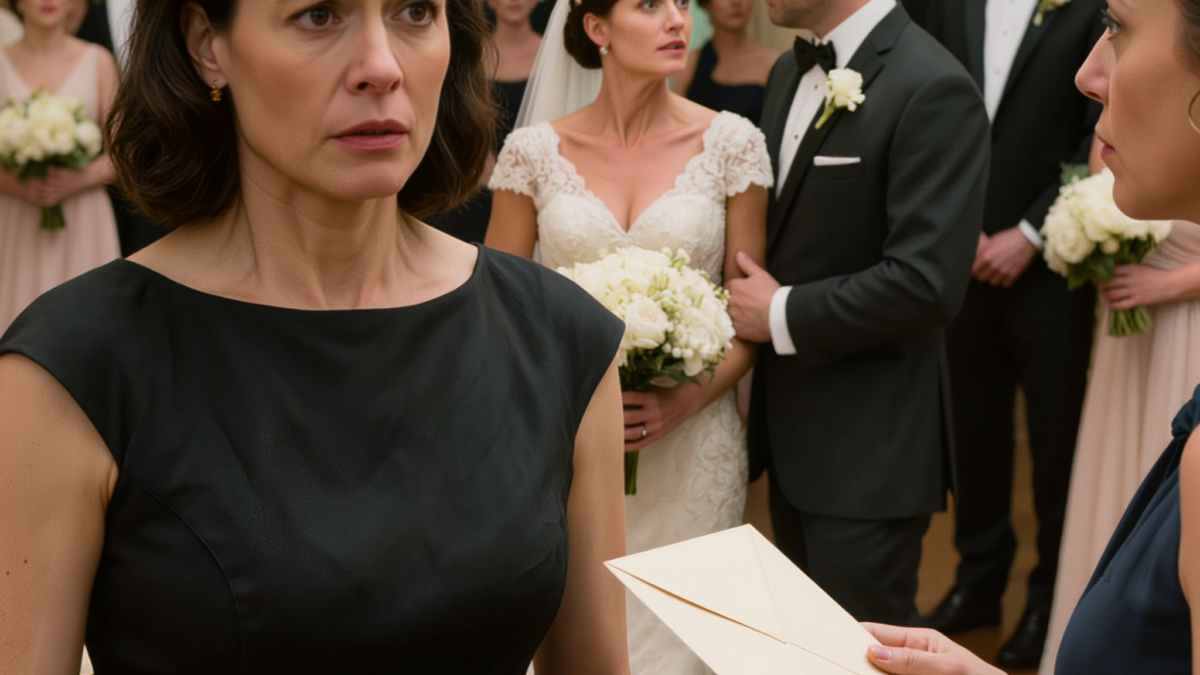
Twelve years after my parents took the $48,000 education trust my grandparents left me and told our Ohio hometown that I had abandoned the family, I walked into my younger sister Clare’s wedding as someone none of them expected to see. I was 36 now, married, a mother, and the founder of a Chicago medical-technology company. The groom knew me through work, but he had no idea I was related to the woman he was marrying. Neither did most of the guests. I had planned to sit quietly, congratulate them, and leave. Then Clare’s future husband mentioned the story he had been told about me—that I had taken money from my grandparents and disappeared. Before I could answer, my cousin Sophie touched my arm and whispered, “There’s something from the trust you need to see.”
My name is Riley Bennett now.
For the first eighteen years of my life, it was Riley Carter.
I had not used that name socially in more than a decade.
That was why Daniel Mercer never made the connection.
Daniel was a rehabilitation physician at Lakeshore Medical Center outside Cleveland, and for nine months he had served as a clinical adviser to Meridian Neurotech, the company I founded with my husband, Evan.
Most of our meetings happened over video.
He knew I lived in Chicago.
He knew I had a six-year-old son named Noah.
He knew I had grown up somewhere in Ohio.
He did not know the name of the town.
He definitely did not know that his fiancée, Clare Carter, was my younger sister.
I found that out when the wedding invitation arrived.
Daniel Mercer and Clare Carter.
Saturday, October 18.
The Lakeview Grand Resort.
I sat at my kitchen island staring at the card while Evan stood beside the stove making pasta.
“You okay?” he asked.
I turned the invitation toward him.
He read it.
Then read it again.
“That Clare?”
“Yes.”
“The Clare?”
“There’s only one.”
Evan lowered the heat under the sauce.
“Daniel knows?”
“No.”
“Does she?”
“That he works with Meridian? Probably.”
“That you own Meridian?”
“Maybe not.”
I rarely appeared in consumer advertising.
Our company sold rehabilitation technology to clinics and hospital systems.
My name appeared in business publications and conference programs, but I was not famous.
To my family, I had disappeared long before Meridian existed.
For twelve years, they had made no attempt to find out what became of me.
I almost declined the invitation.
Then I noticed Daniel had written a note at the bottom.
Riley and Evan—your work changed the way our rehab team thinks about recovery. It would mean a lot to have you both there.
I stared at that sentence for a long time.
Evan finally said, “You don’t owe anybody an appearance.”
“I know.”
“You also don’t owe anybody your absence.”
That was harder.
So we went.
The resort sat above the lake about forty minutes outside Cleveland.
By the time Evan and I entered the ballroom, cocktail hour had already begun.
I recognized my mother first.
Diane Carter.
Sixty-one now.
Her hair was shorter and almost completely silver.
She stood beside a tall floral arrangement speaking to an older couple.
My father, Martin, was a few feet away.
He had aged more than I expected.
For one second, I felt eighteen again.
Then Clare turned around.
She was wearing a fitted ivory gown with narrow lace sleeves.
Her smile disappeared.
She stared at me.
Not confusion.
Recognition.
My mother followed her gaze.
The glass in her hand stopped halfway to her mouth.
Dad turned next.
His expression hardened almost immediately.
Evan leaned slightly closer.
“You want to leave?”
I shook my head.
“No.”
Daniel saw us before anyone from my family moved.
“Riley!”
He crossed the room smiling and shook Evan’s hand.
“You made it.”
“We did.”
Then he looked toward Clare.
“Come here. There’s someone I want you to meet.”
Clare did not move.
Daniel laughed, assuming she was distracted.
“Clare, this is Riley Bennett from Meridian.”
Her voice was barely audible.
“I know.”
Daniel looked between us.
“You two have met?”
I answered before Clare could.
“A long time ago.”
My mother approached.
“Riley.”
There was no hug.
No smile.
Just my old name spoken like something misplaced had suddenly turned up.
“Hi, Mom.”
Daniel froze.
“Mom?”
Clare closed her eyes.
And that was when I understood something Daniel did not.
They had never told him I existed.
He looked at Clare.
“You said you had one brother.”
Clare’s face flushed.
“It’s complicated.”
Daniel turned back to me.
“Riley, I’m sorry. I had no idea.”
“You don’t need to apologize.”
Dad stepped closer.
“This is Clare’s wedding.”
“I know.”
“You shouldn’t have come here to create a problem.”
“I was invited.”
Daniel immediately said, “By me.”
Dad looked at him.
Daniel continued.
“Riley’s company works with Lakeshore.”
That changed the expression on my father’s face.
Not warmth.
Calculation.
“What company?”
“Meridian Neurotech.”
Dad stared at me.
He had heard the name.
Almost everyone in rehabilitation medicine had.
Before he could say anything else, an older surgeon approached Daniel and congratulated Evan and me on Meridian’s newest hospital contract.
My parents stood there listening.
Clare looked like she wanted the floor to open.
I felt no satisfaction.
Mostly, I felt tired.
Then Daniel said something casually.
Something he had no way of knowing would split the room open.
“I have to admit, Riley, I’m even more confused now.”
“About what?”
He looked toward Clare.
“She told me you left Ohio after taking money from a family trust.”
Every sound near me seemed to disappear.
I looked at my sister.
Clare’s eyes dropped.
Daniel continued carefully.
“She said that was why the family stopped speaking to you.”
I had spent twelve years believing my parents had simply erased me.
Now I realized they had replaced me with a story.
Before I could answer, someone touched my arm.
My cousin Sophie.
She looked terrified.
“Riley.”
I turned.
She held a cream-colored envelope against her chest.
“There’s something from the trust you need to see.”
Sophie asked me to follow her into the quiet hallway outside the ballroom. She handed me the envelope. Inside was a photocopy of a document dated twelve years earlier. It was titled Beneficiary Consent and Reallocation Authorization. My name appeared at the top. The document authorized $48,000 from my grandparents’ education trust to be transferred for Clare’s tuition. At the bottom was a signature. Riley Carter. It looked close enough to mine that a stranger might accept it. I knew immediately that I had never written it. “Where did you get this?” I asked. Sophie swallowed. “Aunt Diane asked me to help organize old paperwork for the wedding.” She explained that my mother had wanted childhood photographs and family documents for a display. The trust file had been mixed into one of the boxes. “There’s more,” Sophie said. She showed me another page. It was a letter from the attorney who had administered my grandparents’ estate. The letter said the money could not be redirected without my written consent. I looked again at the signature. Then at the witness section. The form listed my father as the person who had verified that I signed voluntarily. Sophie lowered her voice. “I thought you should see it before they put that box away again.” I took a photograph and sent it to my attorney in Chicago. Less than five minutes later, she replied. Do not confront anyone yet. Send me every page. I looked back toward the ballroom doors. My family had spent twelve years saying I took the money. The document in my hand suggested someone had needed the world to believe exactly that.
I sent the remaining pages to my attorney, Monica Patel.
Then I stood in the hallway with Sophie and tried to breathe normally.
Evan had followed us out.
He looked at my face before he looked at the papers.
“What happened?”
I handed him the copy.
He read the first page.
Then the second.
His jaw tightened.
“You didn’t sign this.”
“No.”
Sophie said, “I’m sorry.”
I looked at her.
“You didn’t do it.”
“I knew there had been some argument about money when you left, but I was fifteen. I believed what everybody said.”
“What did they say?”
She hesitated.
“That you withdrew the trust yourself.”
I felt something inside me go very still.
“They said you took the money and then blamed Uncle Martin when it was gone.”
“Who said that?”
“Your parents. Mostly.”
I looked toward the ballroom.
For years I had wondered why nobody from home had tried to contact me.
Former teachers.
Neighbors.
Family friends.
Even relatives who had once sent birthday cards.
I assumed my parents had told them I wanted no contact.
The truth was worse.
They had made me the thief.
It was almost elegant.
If anyone asked why their eighteen-year-old daughter had vanished, they did not have to explain that they had redirected her education money and thrown her out after she objected.
They only had to say Riley took the fund and ran.
My absence became proof.
“How many people believed it?” I asked.
Sophie looked miserable.
“Most of us.”
I leaned against the wall.
Evan stepped closer but did not touch me until I reached for his hand.
“I need five minutes,” I said.
He nodded.
“No problem.”
Sophie started to leave.
I stopped her.
“Thank you.”
Her eyes filled.
“I should have questioned it.”
“You were fifteen.”
“So was Clare.”
That sentence stayed with me.
Clare had been seventeen.
Two years younger than me.
Old enough to understand more than a child.
Young enough to be manipulated.
I did not yet know where her responsibility began.
That was one reason I followed Monica’s advice.
Do not confront anyone yet.
I returned to the ballroom.
People were being called toward dinner.
Daniel looked concerned.
“Everything okay?”
“Not exactly.”
His eyes moved to the envelope in my hand.
“Do you need to leave?”
“No.”
That answer surprised me.
But it was true.
I had spent twelve years leaving.
I was tired of letting other people’s dishonesty determine where I could stand.
“We’ll stay.”
Daniel looked at Clare.
She avoided my eyes.
Dinner began.
Our table included two Lakeshore physicians, a hospital administrator, Evan, me, and several friends of the groom.
My parents were across the room at the family table.
Clare sat beside Daniel.
Nothing dramatic happened for the first twenty minutes.
Salad.
Wine.
Small talk.
A physician named Marissa asked about Meridian’s new home-rehabilitation platform.
I answered.
Another guest asked Evan how we had met.
He grinned.
“She rejected my first three product ideas.”
“They were terrible.”
“One was merely premature.”
“It was a sensor glued to a gardening glove.”
“It had vision.”
People laughed.
For a few minutes, I felt normal.
Then Daniel stood for a short welcome.
He thanked everyone for coming.
He thanked his parents.
He thanked Clare’s family.
Then he mentioned several colleagues from Lakeshore.
Finally, he said, “And I want to acknowledge Riley and Evan Bennett from Meridian Neurotech.”
My mother looked up.
Daniel continued.
“Meridian has become one of Lakeshore’s most important rehabilitation partners, and Riley has been one of the clearest voices I know when it comes to designing technology around patients instead of around sales presentations.”
People at our table applauded.
Others joined.
I did not look at my parents.
I looked at Evan.
He squeezed my fingers under the table.
Daniel had no idea he was doing anything significant.
That made it more significant.
He was simply describing me as he knew me.
Not as a scandal.
Not as a disappointment.
Not as a thief.
As a colleague.
As a founder.
As someone whose work mattered.
After dinner, while guests moved toward the dance floor, my mother approached.
“Riley.”
I turned.
“We need to talk.”
Evan began to stand.
I touched his wrist.
“I’m okay.”
Mom led me toward a sitting area near the windows.
Dad followed.
Clare did not.
Mom spoke first.
“What did Sophie give you?”
No greeting.
No question about my life.
Straight to the evidence.
“A document.”
“What document?”
“You know.”
Dad’s expression hardened.
“Sophie had no right to go through private files.”
“That is what concerns you?”
“This is not the place.”
“You’re right.”
I started to leave.
Dad stepped slightly in front of me.
“Don’t make a scene.”
I looked at him.
“I haven’t.”
“You showed up here knowing exactly what would happen.”
“I was invited by Daniel.”
“You could have declined.”
“So could you have when you were asked to sign my name.”
Mom’s face drained of color.
Dad said nothing.
It was small.
A fraction of a second.
But I saw it.
Recognition.
Not confusion.
He knew exactly which document I meant.
I could have confronted him then.
I wanted to.
Instead I remembered Monica’s message.
Do not confront anyone yet.
So I said, “My attorney has the file now.”
Dad’s face changed.
“Your attorney?”
“Yes.”
“This is ridiculous.”
“Maybe.”
“You were eighteen.”
“Yes.”
“That money was family money.”
“No.”
“You had a scholarship opportunity.”
“I had an education trust.”
“You weren’t even sure what you wanted to study.”
“That didn’t make it yours.”
Mom said quietly, “Martin.”
He looked at her.
“What?”
“Stop.”
That was the first time I had ever heard her stop him on my behalf.
Twelve years too late.
Still noticeable.
Dad turned back to me.
“You have obviously done well. Why are you digging up something from twelve years ago?”
There it was.
The argument people make when time benefited them.
I stared at him.
“Because you spent those twelve years telling people I stole it.”
His face became unreadable.
Mom looked away.
That was confirmation too.
I had not imagined it.
“You did tell people that.”
Dad lowered his voice.
“You left.”
“You put my suitcase outside.”
“You were impossible.”
“I asked where my money went.”
“Your sister had an opportunity.”
“So did I.”
“You always had ways to survive.”
I almost laughed.
At eighteen, that sentence might have destroyed me.
At thirty-six, it simply exposed him.
“You knew I would survive, so you decided I needed less.”
He did not answer.
That had been the logic of my entire childhood.
Clare needed encouragement.
Riley was independent.
Clare needed tuition.
Riley could figure something out.
Clare needed protecting.
Riley could handle the truth.
I walked away.
Mom did not stop me.
Neither did Dad.
The dance floor opened.
Evan and I did not dance immediately.
We stood near the terrace doors.
“You want to go?” he asked.
“Soon.”
“You sure?”
“Yes.”
Then I saw Clare approaching.
She had removed her veil.
Without it, she looked younger.
More like the sister I remembered.
“Can we talk?”
I looked at Evan.
He gave me the choice with his eyes.
I nodded.
Clare led me into the bridal suite.
For a few seconds, neither of us spoke.
She closed the door.
Then she said, “I didn’t know they forged it.”
I studied her.
“What did you know?”
“That the money came from your trust.”
At least she did not deny that.
“When?”
“When I started college.”
“You were seventeen.”
“Almost eighteen.”
“What did Mom tell you?”
“That you had decided not to use it.”
I laughed once.
Not because anything was funny.
“I had already been accepted to school.”
“I know that now.”
“Did you know it then?”
Clare looked down.
“I knew you wanted to go.”
“Did you ask me?”
“No.”
“Why?”
Her answer took too long.
“Because I wanted the money.”
Simple.
Ugly.
Honest.
“I had lost my scholarship.”
That was new.
“What scholarship?”
“The arts scholarship.”
I stared at her.
Our parents had always told everyone Clare chose healthcare because she was ambitious and practical.
Apparently that came later.
“I had been accepted into a private conservatory program,” she continued. “Then my scholarship was reduced after the first semester review.”
“So Mom and Dad moved my trust.”
“Yes.”
“And you knew.”
“I knew they were using money that had originally been meant for you.”
My throat tightened.
“But they told me you had agreed.”
“Did you believe them?”
“At first.”
“At first.”
She started crying.
I did not move toward her.
“When did you stop believing them?”
“After you disappeared.”
“I did not disappear.”
“I know.”
“When?”
“Mom said you left because you were angry.”
“And later?”
Clare wiped her face.
“When I was twenty-two, I found a letter from Grandpa’s attorney.”
My entire body went cold.
“What letter?”
“It said the transfer required your consent.”
“So you knew there was a problem.”
“Yes.”
“And you said nothing.”
“Yes.”
Twelve years condensed into one word.
I sat down.
Clare remained standing.
“Why?”
“I was scared.”
“Of what?”
“That if the truth came out, everything my life was built on would become contaminated by it.”
I looked at her.
“That is exactly what happened to me.”
“I know.”
“No. You don’t.”
My voice stayed quiet.
“I slept on a friend’s living-room floor for four months.”
Clare closed her eyes.
“I worked at a grocery pharmacy in the mornings and attended community college at night.”
She cried silently.
“I skipped a semester because I couldn’t afford tuition.”
“I’m sorry.”
“I had professors let me borrow textbooks because I couldn’t buy them.”
“Riley—”
“And all those years, you knew there had been a letter.”
“I didn’t know they forged your signature.”
“That distinction matters legally.”
She flinched.
“Emotionally, you knew enough to ask.”
“I know.”
For a long time, we sat in silence.
Then Clare said something I did not expect.
“I don’t want to marry Daniel tonight.”
I looked at her.
“What?”
“He doesn’t know any of this.”
“This isn’t about me.”
“It is about lying.”
She sat across from me.
“I told him you stole from the trust because that was the family story.”
“You were twenty-nine when you met him.”
“I know.”
“You weren’t seventeen anymore.”
“I know.”
That was the second time she said it without defending herself.
“Why did you keep repeating it?”
“Because if you were the one who did something wrong, then I didn’t have to think about what I accepted.”
There it was.
The real architecture of the lie.
My parents built it.
Clare maintained it.
The extended family repeated it.
And I was not there to interrupt any of them.
I asked, “What do you want from me?”
“Nothing.”
“Then why are we here?”
“Because Daniel deserves to know before we finish this wedding.”
I looked at the closed door.
“Then tell him.”
“I’m terrified.”
“That doesn’t change what you need to do.”
She nodded.
I stood.
Before I reached the door, she said, “Riley.”
I turned.
“I am sorry.”
I believed she meant it.
That did not make me ready to forgive her.
“Tell Daniel the truth.”
Then I left.
Evan was waiting outside with Noah.
Our son had spent most of the evening with a hotel sitter Daniel had arranged for several children attending the reception.
Now Noah held a small box of wedding candy.
“Mom.”
He hugged my waist.
“You were gone forever.”
“Seven minutes.”
“That’s forever.”
I kissed his head.
Evan studied my face.
“You okay?”
“No.”
He nodded.
“Want to leave?”
“Not yet.”
I was not waiting for spectacle.
I wanted to know what Clare would choose.
Ten minutes later, Daniel and Clare disappeared from the ballroom.
Twenty minutes passed.
Then thirty.
The band played.
Guests grew restless.
Finally Daniel returned alone.
He took the microphone.
His face was pale but composed.
“Everyone, I’m sorry for the delay.”
The room quieted.
“Clare and I need some private time before we continue with anything tonight.”
A murmur moved through the room.
Daniel lifted one hand.
“I know many of you traveled a long way. Food and music will continue. Please enjoy the evening.”
He did not humiliate her.
He did not expose the family.
He did not explain.
I respected him for that.
My mother rushed toward the hallway.
Dad followed.
I stayed where I was.
Sophie joined us.
“Did you tell Clare?”
“She knew more than I expected.”
Sophie looked crushed.
“I’m sorry.”
“You need to stop apologizing for other people.”
She gave me a weak smile.
“That sounds like something you had to learn the hard way.”
“It was.”
Evan looked toward the ballroom doors.
“I think we should go.”
This time I agreed.
We said goodbye to Daniel’s parents.
I left him a short message.
I’m sorry tonight became complicated. You deserved the truth before today. Call when you’re ready.
Then we left.
No confrontation under chandeliers.
No public revenge.
No applause.
Just three people walking through a hotel lobby.
Me.
My husband.
My son.
That felt better.
In the car, Noah fell asleep almost immediately.
Evan drove.
I watched dark trees move beyond the highway.
After twenty minutes he said, “You haven’t asked the question yet.”
“What question?”
“What happens now?”
I knew.
“Monica handles the document.”
“And your family?”
“I don’t know.”
“That’s allowed.”
I leaned my head against the seat.
“I spent years imagining what I would say if I ever saw them again.”
“Did you say it?”
“No.”
“Good.”
I looked at him.
“Good?”
“You shouldn’t have to carry a twelve-year speech around for people who weren’t listening.”
I took his hand.
Back at the hotel, I barely slept.
Monica called at eight the next morning.
“I reviewed what you sent.”
“And?”
“This is potentially serious.”
I sat near the window.
“How serious?”
“The trust instrument is straightforward. You were the beneficiary. Funds could be used only for your education until you turned twenty-five, unless you personally authorized a transfer.”
“I didn’t.”
“I know.”
“Can we prove the signature isn’t mine?”
“Probably. But there’s more.”
I waited.
“The administrator who processed the transfer is retired, but the firm still exists.”
“Okay.”
“I contacted their records counsel last night.”
“You work too much.”
“So do you.”
“Fair.”
“They have the original file in storage.”
My heart beat faster.
“Including the consent?”
“Yes.”
“And?”
“There is an internal note indicating the administrator requested in-person verification because the reallocation was unusual.”
“What happened?”
“The note says Martin Carter confirmed you were away at a summer program and could not appear.”
“I was working at the library that summer.”
“I know.”
“How?”
“You told me last night.”
Right.
“The administrator then accepted a notarized consent.”
“Who notarized it?”
“That information is in the archived original. They’re retrieving it.”
I closed my eyes.
“So Dad knew exactly what he was doing.”
“It appears he knew the administrator needed your consent.”
I thought of his wedding-night argument.
That money was family money.
Not denial.
Just justification.
“What can I do?”
Monica’s answer surprised me.
“First, decide what you want.”
“I want the truth.”
“That’s broad.”
“I don’t care about getting forty-eight thousand dollars back.”
“You may care after we calculate what happened.”
“I don’t need the money.”
“That isn’t the point.”
I knew.
“What are the options?”
“We can pursue a civil claim depending on limitations, discovery rules, concealment, and the exact documents.”
“Criminal?”
“That is not a decision you make.”
“Right.”
“But before anything, we gather facts.”
I agreed.
For the first time in twelve years, I did not need to react immediately.
I could investigate.
That was new.
By Tuesday, Daniel called.
I was at Meridian’s Chicago office.
“Do you have a minute?”
“For you, yes.”
“I owe you an apology.”
“No, you don’t.”
“I repeated something about you at my own wedding without knowing whether it was true.”
“You thought Clare had told you the truth.”
“I should have asked why someone supposedly stole their own trust.”
I smiled slightly.
“Doctors make terrible auditors.”
“That is why we hire you people.”
“I’m not an auditor.”
“Close enough.”
There was a pause.
Then he said, “We didn’t finish the wedding.”
I waited.
“Clare told me everything she told you.”
“How is she?”
“Not good.”
“Are you still together?”
“I don’t know.”
That sounded honest.
“I love her.”
“I know.”
“But I realized I knew a version of her that had been edited for me.”
“That’s hard to unsee.”
“Yes.”
He took a breath.
“She wants to talk to you again.”
“I’m not ready.”
“I told her that might be the answer.”
“Thank you.”
Then Daniel said, “Riley, there’s another reason I called.”
“What?”
“My hospital is still moving ahead with Meridian’s contract.”
I laughed softly.
“You thought I’d punish Lakeshore because of your wedding?”
“No.”
“Good.”
“I just wanted you to hear it from me.”
“Daniel.”
“Yes?”
“Your personal life is not a condition of our business relationship.”
“Thank you.”
That distinction mattered to both of us.
At thirty-six, I had spent enough time being judged through family relationships.
I was not going to do it to somebody else.
The original trust file arrived from storage three days later.
Monica asked me to come to her office.
Evan came too.
The file was thin.
That made me angry in a strange way.
Something that had altered my entire life fit inside a folder less than half an inch thick.
The consent form was there.
My forged signature.
Dad’s witness statement.
And the notary page.
Monica placed it in front of me.
The notary had been a woman named Janet Bloom.
I remembered her.
Dad’s longtime office administrator.
“She notarized it?”
“Yes.”
“Without me there?”
“That’s what the record suggests.”
“Is she alive?”
“Yes.”
“Did you contact her?”
“Her attorney contacted me first.”
I looked up.
“What?”
Monica slid another document across the table.
A signed statement.
Janet admitted that Dad brought her the form already signed.
He told her I had signed it at home.
She notarized it improperly as a favor.
My mother had been present.
Janet said she regretted it almost immediately.
She had kept a copy of Dad’s email requesting the favor.
Monica gave me that next.
I read the email.
Janet—
Riley has agreed that the education funds should go where they can do the most good. She is emotional about the process and I would rather not involve her in another office visit. Please notarize the attached signature so we can move forward before Clare’s tuition deadline.
Martin
I read it twice.
Emotional.
That was how he had explained me.
Not absent.
Not unreachable.
Emotional.
He knew I had not consented.
He simply believed my objection should not matter.
Then came the second email.
Janet had replied:
I am uncomfortable notarizing without Riley present.
Dad answered:
I am her father and witness. I will take responsibility.
Three sentences.
That was all.
I looked at Evan.
He looked furious.
Monica said, “There is one more item.”
I almost laughed.
“Of course there is.”
The transfer record showed $48,000 leaving my trust.
But Clare’s school had received only $31,500 that year.
I looked at Monica.
“Where did the rest go?”
“That is the Main Reveal.”
She showed me a bank record obtained from the archived estate file.
Sixteen thousand five hundred dollars had been transferred to an account controlled by my parents.
The memo referenced household reimbursement.
I stared at it.
“They didn’t even give all of it to Clare.”
“No.”
“What was the reimbursement?”
“We don’t know yet.”
I did.
Or at least I suspected.
That same year, my parents remodeled the kitchen.
Granite counters.
New cabinets.
Stainless-steel appliances.
I remembered coming home from school one afternoon and seeing boxes everywhere.
Mom had said they refinanced.
Maybe they had.
Maybe part of my education trust had paid for the kitchen where Dad later told me I had no future.
I started laughing.
Not because it was funny.
Because the betrayal had become so ordinary.
Tuition.
Cabinets.
A forged signature.
A daughter expected to absorb it.
Evan reached for my hand.
“What do you want to do?”
This time I knew.
“I want a complete accounting.”
Monica nodded.
“And then?”
“I want them to correct the story.”
“How?”
“Everyone they told I stole the trust.”
“That may be difficult to quantify.”
“I don’t care how many people.”
I looked at the file.
“I lived twelve years under a lie because they needed to protect themselves.”
“I want that part fixed.”
“And financially?”
“I want the trust accounted for.”
“If the evidence supports repayment?”
“Yes.”
Not because I needed $48,000.
Because I had finally stopped treating accountability like revenge.
Monica sent formal letters.
Dad called the same day.
I did not answer.
He left a voicemail.
“Riley, this is getting absurd. You have money. You have a company. You have a family. Why are you trying to destroy ours over something that happened when you were eighteen?”
I saved it.
Then Mom called.
I answered.
“Hi.”
She was crying.
“Your father received a letter.”
“I know.”
“Can we please handle this as a family?”
“We had twelve years.”
“I know.”
“Did you know my signature was forged?”
Silence.
“Mom?”
“Yes.”
That hurt even after all the evidence.
“You knew.”
“Yes.”
“Were you there when Janet notarized it?”
“I was in the office.”
I closed my eyes.
“Why?”
“Clare’s tuition deadline was coming.”
“And the other sixteen-five?”
Mom began crying harder.
“Your father said we would replace it.”
“What did you spend it on?”
More silence.
“The kitchen.”
There it was.
I sat down.
“Was I supposed to go to college?”
“Of course.”
“With what?”
“You had good grades. We thought you would find scholarships.”
“I had a trust.”
“I know.”
“No. You knew I had a trust and you spent it.”
“I’m sorry.”
“Then you told people I stole it.”
“Your father said we had to explain why you left.”
“You could have told them you threw me out.”
She sobbed.
“I was ashamed.”
“So you gave the shame to me.”
She went quiet.
That sentence stayed between us.
Finally she said, “Yes.”
I did not scream.
I did not insult her.
I said, “I need space.”
“Riley.”
“I mean it.”
“Will I ever see you again?”
“I don’t know.”
That was the most honest answer I had.
The legal process took months.
Not days.
Real accountability usually does.
Dad initially denied intentional wrongdoing.
Then Monica produced Janet’s emails.
He changed his position.
His attorney called it a family misunderstanding.
Monica called it an unauthorized transfer.
Eventually, no one needed dramatic language.
The documents were enough.
My parents agreed to a settlement.
The $48,000 principal was repaid.
Additional money covered a negotiated portion of lost growth and legal costs.
More important to me, they signed a written statement acknowledging that I had not withdrawn, stolen, or voluntarily surrendered the trust.
They also agreed to send corrected letters to relatives and several longtime family friends who had been told otherwise.
Dad hated that condition.
I knew because his attorney tried three times to remove it.
I refused.
Money had not followed me for twelve years.
The lie had.
That was what I wanted corrected.
Clare gave a separate written statement.
She admitted she learned in her early twenties that the transfer had not been voluntary and chose not to challenge our parents.
She also wrote me a letter.
I did not open it for two weeks.
When I finally did, the first sentence was:
I benefited from what happened to you, and for years I confused being young at the beginning with being innocent forever.
That sentence got my attention.
She did not ask me to forgive her.
She did not say Mom made her do it.
She explained.
But she did not excuse.
Daniel and Clare postponed the wedding indefinitely.
Six months later, they separated.
That was not because I walked into the ballroom.
Daniel told me later that the trust story forced them to confront several other things they had both avoided.
He did not give details.
I did not ask.
Their relationship belonged to them.
Clare left the nonprofit where she had worked in development and moved to Columbus.
For the first time in her adult life, she rented an apartment without our parents’ help.
She started therapy.
Mom told me that only because I asked her not to send updates unless Clare had given permission.
Apparently Clare had.
We did not become sisters again overnight.
We exchanged emails.
Short ones.
Then longer ones.
She apologized to Evan for the way our family had treated me.
She mailed Noah a birthday book.
I almost sent it back.
Evan said, “What does Noah want?”
He liked the book.
So we kept it.
That was another lesson.
A boundary did not require rejecting every future gesture.
It required deciding instead of reacting.
My relationship with Mom was harder.
She had participated.
Not passively.
She had watched Janet notarize my signature.
She had spent the money.
She had repeated the lie.
There was no version where she was merely frightened by Dad.
So when she asked to visit Chicago, I said no.
Three months later, she asked again.
I said not yet.
Six months after the settlement, I agreed to meet her in Cleveland while I was there for work.
Public place.
One hour.
She arrived early.
Her hands shook when she picked up her coffee.
“I thought you wouldn’t come.”
“I almost didn’t.”
“I understand.”
We sat quietly.
Then Mom said, “I used to think protecting the family meant preventing people from knowing when we had failed.”
I waited.
“So every time we failed you, I hid the failure instead of fixing it.”
“That sounds accurate.”
She looked down.
“I don’t know how to be your mother now.”
“You could start by not trying to be.”
She looked hurt.
I continued.
“I’m thirty-six.”
“I know.”
“I needed a mother when I was eighteen.”
Her eyes filled.
“Now I need someone who can tell me the truth.”
She nodded.
“I can try.”
“That’s all I’m offering right now.”
“Noah?”
“No.”
She closed her eyes briefly.
“I understand.”
I was not ready to introduce my son to her.
Children should not be used as proof of reconciliation.
She accepted it.
That mattered.
Dad did not.
He sent two letters.
The first defended himself.
I did not answer.
The second was shorter.
Riley,
I believed being your father gave me authority over decisions that were never mine to make.
I also believed that because you were capable, hurting you carried less consequence than disappointing Clare.
Both beliefs were wrong.
I do not expect you to answer.
Martin
I did not.
But I kept the letter.
A year after the wedding, Meridian opened a new research and training center in Chicago.
The event was small by corporate standards.
Employees.
Clinicians.
Patients who had volunteered to advise us on product design.
No politicians.
No spectacle.
Our technology was not miraculous.
I had learned to hate stories that turned medicine into miracles.
What we built helped therapists measure movement more consistently and helped patients practice rehabilitation exercises at home with better feedback.
Useful.
Evidence-based.
Human.
That was enough.
During the opening, Evan asked me to speak.
I stood in front of about two hundred people.
No dramatic speech.
I talked about the first rehabilitation clinic that took a chance on us.
About our first failed prototype.
About the patient adviser who told our engineering team that a technically perfect device was worthless if an exhausted person could not use it alone at home.
Then I announced the Bennett Access Scholarship.
Not named after Carter.
Not named after my parents.
Bennett was the name I had built with Evan and Noah.
The scholarship would support students entering biomedical engineering, rehabilitation science, health technology, or technical apprenticeships who had lost family financial support.
No essay asking applicants to describe trauma.
No requirement to expose the worst moment of their lives to strangers.
Applicants showed us what they wanted to build or learn.
That was enough.
Afterward, a nineteen-year-old woman named Tessa approached me.
She had been accepted into a biomedical equipment technician program.
Her parents refused to help because they wanted her to attend a four-year university.
She said, “They think anything else is failure.”
I laughed softly.
“I’ve heard that before.”
“Did they ever change their minds?”
I considered lying.
“No.”
Her face fell.
“Not quickly.”
Then I added, “But their opinion stopped controlling what I did before they changed anything.”
She nodded.
That was the truth I wished someone had given me at eighteen.
A year and a half after Clare’s wedding, she asked if we could meet.
Just the two of us.
We chose a diner outside Columbus.
Neutral.
Cheap.
The kind of place where nobody cared who either of us was.
Clare looked different.
Shorter hair.
No expensive makeup.
She looked tired and real.
“I almost canceled,” she said.
“So did I.”
“That makes me feel better.”
“Good.”
We ordered coffee.
For ten minutes, we talked about nothing important.
Traffic.
Weather.
Noah.
Then Clare reached into her bag.
She pulled out my grandparents’ original trust brochure.
“I found this in Mom’s things.”
I recognized my grandmother’s handwriting on the front.
For Riley—use this to build your own life.
My throat tightened.
Clare pushed it toward me.
“You should have it.”
I touched the cover.
“Thank you.”
She looked at her coffee.
“I used to hate you.”
That surprised me.
“When?”
“After you left.”
“Why?”
“Because everybody compared me to the version of you they invented.”
I frowned.
“What version?”
“The brilliant daughter who betrayed everyone.”
I stared at her.
“That doesn’t make sense.”
“I know.”
She smiled sadly.
“Families are good at contradictions.”
She explained that after I disappeared, Dad constantly warned her not to become selfish like Riley.
Mom reminded her how much had been sacrificed for her education.
Every mistake became dangerous.
Every decision had to justify what they had done.
“I thought I had won,” Clare said.
“The favorite daughter.”
She shook her head.
“I was terrified all the time.”
I did not absolve her.
But for the first time, I understood the cage on the other side of the door.
“You still had choices.”
“I know.”
“And eventually you knew enough.”
“I know.”
“I need you to understand that.”
“I do.”
We sat quietly.
Then she said, “I’m not asking to go back.”
“Good.”
“There is no back.”
That was the first moment I thought we might someday become sisters again.
Not because she wanted the old relationship restored.
Because she understood it had never been healthy enough to restore.
We started something new.
Slowly.
A text every few weeks.
Then phone calls.
She came to Chicago once.
Not to my house.
We met at a museum with Noah.
I introduced her as Aunt Clare.
Nothing more.
Noah accepted this as children accept most adult complexity.
He asked whether she liked dinosaurs.
She said yes.
That was apparently sufficient.
My mother eventually met Noah too.
Two years after the wedding.
In a park.
One hour.
She did not cry dramatically.
She did not tell him she had missed years she had not earned.
She brought a kite.
They flew it.
When the string tangled, she asked him if he wanted help.
He said no.
She waited.
I noticed that.
Small things matter.
Dad has never met Noah.
That remains my choice.
Maybe someday.
Maybe not.
Forgiveness and access are different decisions.
I wish someone had told me that when I was younger.
People often imagine healing as a scene.
A hug.
An apology.
A family reunited around a table.
Mine did not look like that.
It looked like Monica’s conference room.
A settlement agreement.
A corrected letter mailed to people who had believed I was a thief.
A diner with Clare.
A park with Mom.
A trust brochure returned to my hands.
No single moment fixed everything.
But each honest act replaced one dishonest one.
That was enough.
The funniest part is that I never received the dramatic apology I once imagined from the whole family.
I stopped wanting it.
After the settlement, several relatives contacted me.
Some apologized.
Some explained that they had simply believed my parents.
One uncle wrote:
We should have asked why an eighteen-year-old girl disappeared instead of accepting the easiest story.
That was the most meaningful apology I received.
Because it named the failure.
Nobody asked.
I built an entire adult life in the space created by that silence.
Chicago became home.
Evan became my family.
Noah became the person who taught me love could be ordinary and safe.
Meridian became work I was proud of, but I stopped using achievement as evidence that my parents had been wrong.
They were wrong when I was eighteen and had nothing.
My later success did not retroactively make me worthy.
That distinction changed me.
For years, I imagined returning as someone undeniable.
Successful.
Respected.
Impossible to dismiss.
Then I actually returned.
And the most important thing I carried into Clare’s wedding was not a title.
It was the ability to leave without begging anyone to believe me.
I did not need the ballroom to choose me.
I did not need Daniel’s colleagues to admire me.
I did not need Clare’s wedding to collapse.
I needed the truth documented.
I needed my name cleared.
I needed the people responsible to carry the part of the story they had placed on me.
Once that happened, the rest became choice.
Last October, almost exactly three years after the wedding, Sophie visited Chicago.
She still had the same anxious habit of holding her coffee with both hands.
We were sitting in my kitchen when she said, “Do you ever wish I had given you the envelope somewhere else?”
I laughed.
“All the time.”
“I mean it.”
“I know.”
“I ruined a wedding.”
“No.”
She looked skeptical.
“You gave me a document.”
“That led to everything.”
“No.”
I shook my head.
“The document existed before you showed it to me.”
“The lie existed.”
“The choices existed.”
“You didn’t create any of them.”
She looked relieved.
I recognized that expression.
The desire to take responsibility for conflict simply because you revealed it.
I had done that for years.
“Truth doesn’t become cruel because somebody wanted it hidden,” I told her.
She smiled.
“That sounds like something your lawyer says.”
“It probably is.”
That evening, after Sophie left, I opened the small fireproof box in my office.
Inside were the documents I had kept.
My grandparents’ trust brochure.
The forged consent.
The corrected family statement.
Dad’s second letter.
Clare’s first apology.
I do not look at them often.
I do not need reminders to stay angry.
I am not angry most days.
I keep them because for twelve years I had no evidence except memory.
And when enough people repeat a different version of your life, memory can begin to feel fragile.
Those papers remind me that I was not confused.
I was not selfish for asking where my education fund went.
I did not abandon my family.
I did not steal anything.
I was eighteen.
I asked a reasonable question.
The adults around me answered by making me the problem.
That is the part I will never rewrite again.
Noah is nine now.
A few months ago, he found the old trust brochure while I was reorganizing the box.
“What’s this?”
“Something my grandparents gave me.”
“Did you use it?”
I thought about the question.
“Not the way they intended.”
He frowned.
I smiled.
“It’s complicated.”
He considered that.
Then said, “Adults say that when they don’t want kids to know stuff.”
Evan laughed from the doorway.
“Caught you.”
So I gave Noah an age-appropriate version.
I told him Grandma and Grandpa Carter made a bad money decision when I was young.
I told him people sometimes hurt each other because they are afraid or because they convince themselves one person’s needs matter more.
I told him we do not take what belongs to someone else just because we think we know better.
He listened.
Then he asked, “Is Aunt Clare the sister from the story?”
“Yes.”
“Do you like her now?”
Children are ruthless.
“I’m learning to.”
He nodded.
“Okay.”
Then he went back to his Lego set.
That was healing too.
The family secret becoming a lesson instead of a weapon.
Meridian is larger now than I ever imagined when Evan and I started it.
But I still remember our first rented office.
One room.
Two desks.
A coffee machine that leaked.
We were not trying to build an empire.
We were trying to solve one frustrating problem therapists kept describing to us.
That is still how I prefer to think about the company.
One problem.
Then another.
Evidence.
Iteration.
No mythology.
I wish families worked that way more often.
Identify the problem.
Tell the truth about it.
Stop defending the broken process.
Make a change.
Measure whether it helped.
Instead, my family spent twelve years protecting a story because admitting the first mistake felt too painful.
The lie grew until my future brother-in-law could casually tell me at a wedding that I had stolen my own college money.
That was the moment I understood silence does not keep conflict small.
It gives conflict time to become history.
I do not stay silent anymore.
That does not mean I confront everyone.
Sometimes speaking means saying no.
Sometimes it means sending a document to a lawyer instead of starting a screaming match.
Sometimes it means telling your mother she cannot meet your child yet.
Sometimes it means sitting across from your sister and refusing to make her apology easier.
And sometimes it means walking into a wedding because you were invited and deciding that the room does not belong more to the people who hurt you than it does to you.
I used to think returning to my family would be the end of my story.
It was not.
It was one difficult weekend in the middle of a life I had already built.
That perspective may be the greatest thing I gained.
They were once my entire world.
Now they are people I may or may not have relationships with, depending on how we treat one another.
Love is part of that.
History is part of that.
Blood is part of that.
None of them cancels accountability.
Last Christmas, Clare came to Chicago.
Mom came the day after.
Not Dad.
We did not create a perfect family photograph.
We did not talk about the trust.
Clare helped Noah decorate cookies.
Mom complained that Evan’s stuffing needed more sage.
Evan added too much just to annoy her.
I watched them from the kitchen doorway.
For a second, I remembered another doorway.
Rain outside.
A suitcase beside me.
Dad saying I was on my own.
I expected the memory to hurt.
It did.
Just less.
Then Noah ran over holding a cookie covered in an unreasonable amount of frosting.
“Mom, look.”
I looked.
“That is terrible.”
“It’s a neuron.”
“It looks like an octopus.”
“It’s a neuron.”
“Okay.”
He handed it to me.
I took a bite.
Clare laughed from across the room.
Mom did too.
No one pretended the past had disappeared.
That was why the moment worked.
I no longer needed them to say Riley Carter had always mattered.
She did.
Even when they failed to see it.
Even when she had no company.
No husband.
No son.
No title.
No proof except the certainty that taking her future and calling her selfish was wrong.
Everything I built afterward belongs to Riley Bennett.
But I protect the eighteen-year-old Riley too.
Not by making everyone bow to what she became.
By refusing ever again to let anyone lie about who she was.







