My Mother-in-Law Sent Me to the Kitchen Staff—Then Her Gala Invoice Landed on My Company
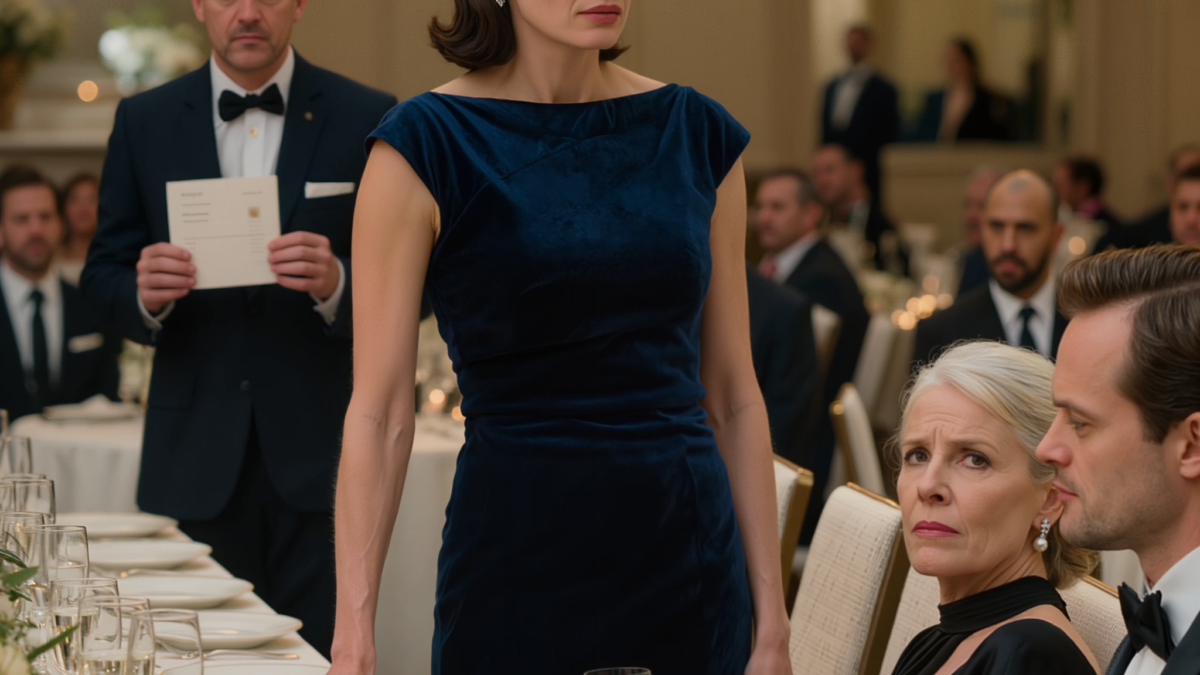
At my mother-in-law Linda Carter’s retirement gala in Manhattan, I arrived in the navy velvet dress she had approved and discovered my chair at the head table had been removed. Linda smiled and said, “The kitchen staff has room. You’ll be more comfortable with people who understand your kind of work.” My husband Ethan stayed seated beside her. I had spent four years helping Carter Foods negotiate vendors, stabilize supplier contracts, and quietly cover shortfalls through my own restaurant company, Harvest & Hearth. I thought the insult was the worst part of the night. Then the hotel manager followed me into the lobby with a $186,400 unpaid event balance. Carter Foods’ payment had failed, and the contract listed my company as primary guarantor. Before I could call my CFO, he texted: Don’t approve anything. I found your signature on another guarantee.
My name is Olivia Matthews. I was thirty-four, founder and CEO of Harvest & Hearth, a seven-location restaurant group based in Denver.
I did not marry into the Carter family because I needed their money.
That was something Linda never quite believed.
I met Ethan four years earlier at a sustainable-food conference in Chicago. He was thirty-three then, working in strategy for Carter Foods, the privately held hospitality and food-distribution company his parents had built over three decades.
I had two restaurants.
He had a famous last name.
The first thing I liked about him was that he seemed unimpressed by both facts.
Our first dinner lasted three hours.
He asked about the farmers I worked with, why I kept purchasing contracts short enough to let small growers renegotiate, and how I had persuaded investors to let chefs control seasonal menus.
He understood margins.
He also understood food.
I thought that meant he understood me.
Linda made it clear during our first meeting that she did not.
She invited me to the Carter townhouse on the Upper East Side and spent dinner asking questions that sounded polite until you listened carefully.
“Did you actually attend culinary school?”
“No. I studied finance and worked kitchens while building the company.”
“So you were a line cook?”
“Among other things.”
“And now you call yourself a CEO?”
“I am one.”
Ethan squeezed my hand under the table.
Linda smiled.
“How modern.”
That became her style with me.
Never enough hostility to justify a scene.
Just a thousand small reminders that the Carter name had existed before I arrived and, in her mind, would always outrank anything I built myself.
When Ethan and I married, Linda chose most of the wedding.
When I objected, Ethan asked me to let her have the experience.
“She only has one son,” he said.
I remember staring at him.
“You only have one wife.”
He laughed because he thought I was joking.
I let too many moments end that way.
The financial relationship between our companies began eighteen months after the wedding.
Carter Foods had acquired a regional specialty-food distributor and underestimated how much cash the integration would require.
Harvest & Hearth had strong reserves after a successful expansion into Austin and Chicago.
Linda asked whether my company would participate in a short-term bridge facility.
It was not a favor.
Our lawyers negotiated a $3.2 million secured note with interest, financial covenants, and limited governance protections if Carter Foods defaulted.
The note was supposed to mature in eighteen months.
Ethan told me the arrangement proved our families could build something together.
I wanted to believe him.
By Linda’s retirement year, the note had already been extended once.
Carter Foods paid the interest, so I did not panic.
I should have asked harder questions.
Instead, I was busy opening our seventh restaurant and preparing a new employee profit-sharing plan.
Linda’s retirement gala was supposed to mark Ethan’s transition into a larger executive role.
She asked Harvest & Hearth’s events division to coordinate the hotel, catering consultants, wine vendors, and several specialty suppliers.
Our team did the work.
Carter Foods was supposed to pay.
That was the arrangement.
Then I walked into the ballroom and discovered everyone had a place except me.
Ethan sat at Linda’s right hand.
His sister Melissa sat across from him.
Longtime investors filled the remaining seats.
And beside Ethan was Veronica Hughes, Carter Foods’ newly appointed senior vice president of strategy.
She had also dated Ethan in college.
I knew that.
I had never cared.
What bothered me was that Linda had placed Veronica where a spouse would normally sit.
The event manager apologized and offered to find another table.
Linda overheard.
She lifted her wineglass.
“No need to rearrange anything.”
Then she looked directly at me.
“The kitchen staff has room.”
A few people stared at their plates.
Ethan did not stand.
That was the part I remembered later.
Not Linda’s sentence.
His silence.
I took a slow breath.
“Enjoy your evening.”
I turned around and walked out before my anger became entertainment.
The hotel manager caught up with me near the elevators.
“Ms. Matthews, I’m sorry, but there’s also a payment problem.”
He handed me a plain invoice packet.
The remaining balance was $186,400.
Carter Foods’ payment authorization had been rejected that afternoon.
Harvest Events, my subsidiary, was listed as primary guarantor.
“I never agreed to guarantee the final balance.”
His expression changed.
“You signed the master event agreement.”
“I signed as coordinating vendor.”
He pointed to an attached amendment.
My signature appeared beneath a guarantee clause.
I stared at it.
The signature looked right.
The clause did not.
Then my phone vibrated.
It was Daniel Cho, my CFO.
Don’t approve anything.
I found your signature on another guarantee.
I called Daniel from the hotel lobby. “What guarantee?” “A $4.8 million revolving facility for Carter Foods.” “I never signed that.” “I know.” The document was dated six weeks earlier, while I was in Denver negotiating our Austin lease renewal. It listed Harvest & Hearth as secondary guarantor if Carter Foods missed two consecutive liquidity tests. Daniel had compared the signature page with an old supplier agreement I had legitimately signed the previous year. “The page is identical,” he said. “Not similar. Identical.” Someone had reused my signature.
I looked through the ballroom doors. Ethan was still beside Linda. Veronica leaned toward him and whispered something that made him check his phone. “Has Carter Foods missed the tests?” I asked. Daniel went quiet. “That’s why I’m calling.” My stomach tightened. “How bad?” “I need another hour before I give you a number.”
The hotel manager was still standing beside me with the gala invoice. I asked him not to process anything new until my legal team reviewed the amendment. Then I took the elevator downstairs. As the doors opened, Daniel sent a second message. One attachment. An internal lender notice addressed to Ethan. COVENANT DEFAULT — SECOND CONSECUTIVE QUARTER. At the bottom was another line. Secondary guarantor activation scheduled Monday. It was Friday night.
I did not go back to the penthouse Ethan and I shared in Manhattan.
I booked a room at a different hotel and called three people.
Daniel.
My corporate attorney, Courtney Shaw.
And Harvest & Hearth’s board chair, Maria Velasquez.
I told each of them the same thing.
“No one contacts Carter Foods tonight unless it is necessary to preserve our rights. No accusations. No threats. We verify first.”
Courtney arrived at my hotel shortly after midnight.
She had represented Harvest & Hearth from the year we opened our second location and knew every major financing document we had signed since.
Daniel joined by video from Denver.
Maria called in from Phoenix.
We started with the $4.8 million guarantee.
Courtney pulled the lender’s filed copy.
The signature page was mine.
The board authorization was not.
Harvest & Hearth required two approvals for any guarantee above $500,000.
Mine as CEO.
Maria’s as board chair.
The document included a supposed written consent from Maria.
She had never signed it.
“That ends the question,” Maria said.
“Not quite,” Courtney replied. “We still need to know how the lender received it and who represented that it was valid.”
Daniel opened another file.
Six weeks earlier, Ethan had emailed Carter Foods’ treasury director:
Harvest authorization attached. Olivia is traveling, but she signed before leaving. Move this before her team complicates it.
My throat tightened.
There was an attachment.
The forged consent.
Maria swore softly.
I said nothing.
Courtney looked directly at me through the screen.
“Olivia, did Ethan ever have authority to sign or transmit Harvest documents?”
“No.”
“Access to your electronic signature?”
“No.”
“Access to old contracts containing your signature?”
“Yes. We shared transaction files during the Fieldstone joint venture.”
Fieldstone Kitchens was the name of our joint purchasing and distribution venture with Carter Foods.
It had been created two years earlier because Harvest & Hearth needed greater volume guarantees from suppliers and Carter Foods wanted access to the independent-farm network we had built.
The venture itself had worked well.
What I did not understand that night was how heavily the Carter side had begun leaning on it.
Daniel shared his screen.
“Our accounts receivable from Carter entities is $3.86 million.”
I sat straighter.
“That includes the bridge note?”
“No. Separate.”
I stared at him.
Harvest & Hearth was owed almost $4 million in operating invoices on top of the $3.2 million loan.
“How old?”
“About $1.7 million is past sixty days.”
“Why am I hearing this now?”
Daniel did not flinch.
“Because Ethan’s team kept paying enough to stay below our escalation threshold. This week two scheduled transfers failed.”
That was escalation number two.
The Carter family had not simply used my signature.
Their companies were already leaning on mine for cash.
Courtney opened the bridge-note agreement.
“If Carter Foods misses two liquidity covenants, the note allows Harvest to demand enhanced reporting.”
“I remember.”
“If they also default on an unrelated senior facility?”
I looked at her.
She pointed to Section 11.4.
Cross-default.
Our note could be declared due.
The contract also gave Harvest the right to appoint two observers to Carter Foods’ finance committee until the default was cured.
Not directors.
Not control.
Visibility.
Exactly the thing Linda and Ethan had spent months avoiding.
Maria said, “Invoke the reporting rights Monday.”
Courtney shook her head.
“Not until we notify the senior lender that the guarantee may be fraudulent.”
“What happens then?”
“The lender will likely suspend activation and investigate.”
That was what we did.
At 8:00 Saturday morning, Courtney sent formal notice to the bank disputing the $4.8 million guarantee and requesting preservation of all communications connected to it.
We did the same with the hotel contract amendment.
By noon, the bank froze any attempt to collect from Harvest & Hearth pending review.
The hotel agreed to hold the final charge while determining which Carter entity remained responsible.
I should have felt relieved.
Instead, I thought about Ethan sitting beside his mother while I stood in the ballroom doorway without a chair.
He had known their financing was unstable.
He had known our company might be called on Monday.
And he had still let Linda humiliate me publicly.
I called him Saturday afternoon.
He answered immediately.
“Where are you?”
“That is not the first question you should ask.”
Silence.
Then:
“You talked to the bank.”
“Yes.”
“Olivia, you have no idea what you’ve done.”
“I’m fairly sure I stopped someone from collecting $4.8 million from my company using a guarantee I didn’t sign.”
“It was temporary.”
I closed my eyes.
That word.
Temporary.
The word people use when they want to borrow consent from the future.
“Did you attach my signature?”
“No.”
“Did you send the document?”
“I sent what treasury gave me.”
“The email says you told them I signed it.”
He went quiet.
“Ethan.”
“Mom said the board had already approved the structure.”
“My board?”
“No. Carter’s.”
I actually laughed.
“Your board cannot authorize my company.”
“You know what I mean.”
“No, I don’t.”
His voice hardened.
“We were trying to protect both companies.”
“You did not tell me.”
“You would have overreacted.”
That was the moment I understood the marriage had a problem larger than Linda.
Ethan did not believe I was his equal in a crisis.
He believed I was a variable to manage.
“I’m invoking Harvest’s reporting rights under the bridge note Monday.”
“Don’t.”
“Why?”
“Because it will trigger questions.”
“That is the point.”
“You’ll embarrass Mom.”
I looked out the hotel window.
There it was.
Not employees.
Not lenders.
Not suppliers.
Mom.
“I’m going to hang up now.”
“Olivia.”
“If you need to communicate about Carter Foods financing, copy Courtney.”
“I’m your husband.”
“And you’re an officer of a company that just sent a bank a document with my signature on it.”
I disconnected.
Monday produced more information than the previous four years combined.
Carter Foods delivered the required financial reports under protest.
Daniel, Courtney, and an outside restructuring accountant spent two days reviewing them.
The situation was not catastrophic.
That distinction mattered.
The company had assets.
Carter Foods owned distribution facilities, several profitable prepared-food brands, and a valuable portfolio of event-service contracts.
But Linda’s expansion strategy had loaded the parent company with debt.
She had acquired three businesses in four years.
Two underperformed.
One had never reached projected volume.
Cash generated by profitable operations was being used to cover acquisition debt and maintain image-heavy foundation projects.
The Carter Foundation was legally separate, but administrative costs had been allocated back to Carter Foods through management agreements.
Not illegal by itself.
Expensive.
Messy.
And increasingly difficult to explain to lenders.
Then Daniel found the Harbor House project.
“What am I looking at?” I asked.
“A proposed hotel-and-food hall redevelopment in Lower Manhattan.”
“I’ve never heard of it.”
“Carter committed $11 million.”
“Funded?”
“Partially.”
The remaining capital was supposed to come from a refinancing that included the disputed $4.8 million Harvest guarantee.
The business case assumed Harvest & Hearth would become the food-and-beverage operator.
I stared at the deck.
My company logo appeared on page seven.
No one at Harvest had approved its use.
The next slide described “anticipated operational integration following executive alignment.”
Executive alignment.
I knew corporate language.
That meant they expected Harvest and Carter to combine somehow.
Courtney found the answer in a draft term sheet.
Carter Foods proposed acquiring 51% of Harvest & Hearth through a stock-for-assets transaction after the Harbor House financing closed.
The document had never been presented to me.
It listed Ethan as executive chair of the combined group.
Veronica Hughes as chief strategy officer.
Me?
Chief culinary officer.
I read the title twice.
I was the founder and CEO of my company.
In their future plan, I would become the person who handled menus.
Maria stared at the draft.
“Did your husband discuss this with you?”
“No.”
“Ever?”
“No.”
Courtney turned the page.
There was a handwritten comment scanned into the file.
LM: Olivia may resist governance shift. Frame as growth opportunity after transition.
Linda.
Another note beneath it.
EC: Once Harbor closes, leverage changes. Easier conversation then.
Ethan.
I had spent years wondering whether Linda saw me as beneath her.
The document answered a more important question.
She saw my company as useful.
My authority was the inconvenient part.
The draft did not mean they could simply take Harvest.
We had independent shareholders.
A board.
Contracts.
Corporate law.
They would have needed my approval and others’.
But the strategy was obvious.
Use Harvest’s financial strength to secure Carter’s redevelopment.
Increase the companies’ entanglement.
Then present the merger as the only rational next step.
Courtney asked me to step outside.
We stood in the hallway.
“What do you want to do personally?”
“I don’t know.”
“Corporate answer first.”
“Protect Harvest.”
“Good.”
“Marriage answer?”
I stared at the carpet.
“I don’t know.”
“Then don’t decide it today.”
That advice saved me from turning a business crisis into a revenge story.
I returned to the conference room.
“We do three things.”
Everyone looked at me.
“First, separate every shared operating function that isn’t contractually necessary.”
Daniel nodded.
“Second, notify our insurers and minority shareholders about the disputed guarantee and the Carter default.”
Maria wrote it down.
“Third, offer Carter Foods a structured cure.”
Courtney raised an eyebrow.
“You want to help them?”
“I want our money repaid, our vendors protected, and no one using my company as collateral again.”
“What cure?”
I had spent the previous hour thinking about it.
Carter Foods could sell one underperforming acquisition and pause Harbor House.
That would generate enough liquidity to cure our bridge note and most overdue payables.
In exchange, Harvest would not accelerate the $3.2 million note immediately.
We would require independent financial oversight and direct payment schedules.
No Linda-controlled reporting.
No Ethan-only treasury approvals.
No merger discussions.
No Harvest guarantee.
Maria smiled.
“That sounds like a lender.”
“I am one.”
We sent the proposal.
Linda rejected it within two hours.
Not through counsel.
Through Ethan.
His email said:
My mother will not dismantle thirty years of work because your team got nervous over a temporary liquidity problem.
I forwarded it to Courtney.
Her reply contained four words.
Then enforce the contract.
The senior lender reached a similar conclusion.
Its independent investigation confirmed that the Harvest guarantee package had not come directly from Harvest & Hearth.
Carter treasury had transmitted it.
The lender rescinded the guarantee and reserved rights against Carter Foods.
That meant Carter needed another source of liquidity immediately.
The company missed an interest payment on our bridge note three days later.
Cross-default became official.
Harvest could accelerate the note.
I did not.
Not yet.
Instead, we exercised our right to appoint two finance-committee observers.
Daniel took one seat.
Maria took the other.
Linda called me personally.
Her first sentence was:
“You have embarrassed my son.”
Not:
We have a problem.
Not:
Your signature was misused.
My son.
“Linda, Ethan sent a lender a false authorization.”
“You are implying criminal intent where there was a paperwork shortcut.”
“I’m not implying anything. Counsel is investigating.”
“You were family.”
I almost smiled.
“Last Friday I was told to sit with the kitchen staff.”
“That was a social misunderstanding.”
“No. It was very clear.”
Her voice became colder.
“You have been waiting for an excuse to prove you are better than us.”
“I’m trying to keep your debt off my balance sheet.”
“Same thing with you.”
That conversation ended any illusion that Linda would solve the problem voluntarily.
The following week, Daniel and Maria attended their first finance-committee meeting.
They came back with another concern.
Carter Foods’ board had never seen the full Harbor House exposure.
Linda and Ethan had presented portions through separate subsidiaries.
Each piece had been approved within delegated thresholds.
Together, the commitments were far larger than individual directors understood.
Again, not a magic hidden crime.
A governance failure.
A serious one.
One independent director, Thomas Bell, requested a special board session.
Another director joined him.
Then a third.
For the first time, Linda did not control the agenda.
That was when Ethan came to Denver.
He arrived at Harvest & Hearth’s flagship office on a Thursday morning.
No warning.
My assistant asked if I wanted security to turn him away.
“No.”
I met him in a small conference room.
He looked exhausted.
I probably did too.
For several seconds, neither of us spoke.
Then Ethan said, “Mom is willing to sell the Vermont distribution business.”
“That was in our proposal.”
“She wants Harvest to extend the note for another year.”
“No.”
“Six months.”
“Not without independent oversight.”
“You’re treating us like strangers.”
“Your mother told me I was one.”
He rubbed his forehead.
“Can we please stop using that night as the answer to everything?”
“I’m not.”
“It sounds like you are.”
I opened the Harbor House merger draft on my tablet and slid it toward him.
His face changed.
“Where did you get this?”
“Your finance room.”
“It was preliminary.”
“It makes you executive chair.”
He said nothing.
“It makes Veronica chief strategy officer.”
Still nothing.
“It makes me chief culinary officer of the company I founded.”
“Olivia.”
“Did you know?”
He looked toward the window.
That was my answer.
“How long?”
“It was one option.”
“How long?”
“Three months.”
My hands went cold.
“Were you ever going to tell me before Harbor House closed?”
“Yes.”
“When?”
“When there was something real to discuss.”
“There was enough to use my logo in investor materials.”
“That was marketing.”
“There was enough to use my forged signature on a guarantee.”
“I did not forge your signature.”
“You represented that it was mine.”
He looked at me.
“I thought Mom had handled the approval.”
“You knew I hadn’t.”
Silence.
“Why?”
His voice dropped.
“Because every time Carter and Harvest overlap, you act like I’m trying to take something from you.”
I stared.
“You were planning to take control of my company.”
“I was trying to create one larger company.”
“With you above me.”
“Someone has to lead.”
There are sentences that do not sound cruel until you understand what they reveal.
Someone has to lead.
Ethan had never truly accepted that, in the company I built, that person was already me.
I stood.
“This marriage needs separate counsel.”
His face went pale.
“Don’t do that.”
“I’m not filing anything today.”
“Then don’t say it.”
“I am saying it because we now have a business conflict and a marriage conflict. I’m not going to let one manipulate the other.”
He stepped toward me.
“I love you.”
“I believe you.”
That hurt him more than if I had said I did not.
“Then why?”
“Because love did not stop you from deciding my authority was negotiable.”
He left Denver that afternoon.
Two days later, Veronica emailed me directly.
I expected hostility.
Instead, she requested a confidential conversation with counsel present.
Courtney joined.
Veronica brought her own lawyer.
She looked nothing like the glamorous rival Linda had staged beside Ethan at the gala.
She looked frightened.
“I need to correct something,” she said.
“Go ahead.”
“The merger draft was Linda’s initiative.”
“Ethan knew.”
“Yes.”
“And you?”
“I helped model it.”
I nodded.
That was not new.
Then she continued.
“I did not know your authorization on the bank guarantee was invalid.”
Courtney asked, “When did you learn?”
“The morning after the gala.”
“From whom?”
“Ethan.”
I looked at her.
“What did he say?”
“That his mother’s office had reused a signature page because you were traveling and the approval was ‘understood.’”
Courtney’s expression did not change.
“Anything else?”
Veronica placed a printed email on the table.
Linda to Ethan.
If Olivia sees the guarantee language, she’ll make this about control. Get the facility closed first. We can paper the family side later.
My stomach turned.
Veronica said, “I’m giving this to Carter’s special committee too.”
“Why?”
“Because Linda asked me yesterday to delete old strategy drafts.”
That changed the room.
Courtney immediately instructed everyone to preserve the request.
The independent directors retained outside counsel.
A formal internal investigation began.
I stayed out of it except when asked for documents.
That mattered.
I had no interest in becoming the person secretly feeding reporters or arranging public humiliation.
My goal remained boring.
Protect Harvest.
Recover what we were owed.
End unauthorized use of my company.
Decide what remained of my marriage after the facts were clear.
The Carter special committee delivered preliminary findings six weeks after the gala.
It concluded that Linda had repeatedly bypassed full board review by dividing related transactions among subsidiaries.
Ethan had allowed treasury to submit the invalid Harvest guarantee despite knowing I had not personally approved it.
The committee did not find evidence that Veronica created the false document.
It found she had participated in merger planning but later preserved records when instructed to delete them.
The board placed Linda on immediate leave from all executive authority.
Ethan was suspended from treasury and strategic transactions pending final review.
Thomas Bell became interim chair.
The company accepted most of the restructuring plan we had proposed at the beginning.
Vermont distribution would be sold.
Harbor House was canceled.
A non-core real-estate portfolio would be marketed.
Harvest’s overdue invoices would be paid from sale proceeds.
The bridge note would be reduced and refinanced through an independent lender.
And Harvest & Hearth would receive no equity in Carter Foods.
That last part surprised people.
Several advisers asked why I did not convert our leverage into ownership.
Because I did not want it.
Carter Foods was their company.
I wanted my company back outside its gravity.
The Vermont sale closed three months later.
Harvest received $2.4 million toward overdue payables immediately.
The rest followed on a schedule.
Our $3.2 million bridge note was refinanced and repaid at closing.
The hotel gala balance was paid by Carter Foods from an escrow account.
Harvest Events never paid the $186,400.
The forged guarantee matter settled separately between the lender and Carter entities after the document review.
My lawyers advised me not to discuss its confidential terms publicly.
I was comfortable with that.
Accountability did not require a press conference.
My marriage ended more quietly.
Ethan and I tried counseling.
For six sessions, we talked around Linda.
The counselor kept bringing us back to the same question.
“When did you stop treating each other as partners?”
My answer was not the gala.
It was earlier.
The wedding planning.
The unsolicited advice about my expansion.
The bridge note.
Every time Ethan translated Linda’s pressure into something I should simply tolerate.
His answer surprised me.
“When Olivia stopped telling me things.”
He was right too.
I had hidden business plans because I no longer trusted him to hear them without filtering them through his family.
I had opened new locations without sharing the excitement with my husband.
I had created emotional distance long before the forged guarantee.
The difference was that my secrecy protected autonomy.
His secrecy attempted to change it.
We could understand each other without being able to repair that distinction.
Six months after the gala, I filed for divorce.
Our finances were easier than outsiders expected because Harvest & Hearth predated the marriage and our marital agreement clearly separated company ownership.
We divided shared property through counsel.
No dramatic courtroom fight.
No attempt to ruin one another.
Ethan kept his personal Carter holdings.
I kept Harvest.
We sold the Manhattan apartment Linda and John had given us at marriage because neither of us wanted to live there.
Ethan apologized at our final mediation.
Not for everything.
For one thing specifically.
“I should have gotten up from the table.”
I looked at him.
“Yes.”
He swallowed.
“I knew Mom was humiliating you.”
“I know.”
“I thought if I challenged her there, it would destroy her retirement night.”
“So you let it destroy mine.”
He closed his eyes.
“Yes.”
That apology mattered because he finally named the choice correctly.
I forgave him for the chair.
I did not remarry him.
Linda’s retirement became permanent after the special committee completed its work.
She retained her family shares but lost management authority.
Carter Foods survived.
That was another outcome people found less satisfying than destruction.
I did not.
Thousands of people had jobs tied to that business.
Longtime suppliers depended on it.
The independent board sold weak divisions, reduced debt, and kept the profitable food-distribution operation.
Thomas Bell remained chair for two years.
Then the board hired an outside CEO with no Carter surname.
Linda hated that more than she hated me.
A year after the gala, she sent me a handwritten letter.
I recognized her sharp, narrow script immediately.
Olivia,
I have spent a year deciding whether to apologize for the way I treated you or defend why I believed I was protecting my family.
I can no longer do both.
You were my son’s wife, and I made you prove repeatedly that you deserved a place I gave others automatically.
At the gala, I intended to put you in your place.
I see now that sentence contains the entire problem.
I am sorry.
There was more.
I read it once.
Then again a week later.
I never wrote a response.
Not because I wanted to punish her.
Because the apology did not create an obligation.
That was one of the most important things I learned.
Harvest & Hearth changed after the divorce.
So did I.
I had spent years proving our restaurants could compete in the upscale market.
Eventually I stopped caring about being called upscale.
We kept the food excellent.
We kept beautiful rooms.
But our identity moved toward something simpler.
Traceable sourcing.
Fair supplier terms.
Employee ownership.
Regional menus shaped by people who actually lived in those regions.
We opened a Portland location.
Then Nashville.
Then a smaller training kitchen in Denver that was not a restaurant at all.
It became the Harvest Fellowship.
We paid adults from low-income backgrounds to train in kitchen operations, purchasing, food safety, and restaurant finance.
Not everyone became a chef.
Some became bookkeepers.
Some became buyers.
Some became managers.
One woman named Rosa Martinez entered at forty-two after working dish stations for twenty years.
She was brilliant with inventory.
Within eighteen months, she was assistant purchasing director for three Harvest locations.
At her promotion dinner, she pulled me aside.
“You know what the best part is?”
“What?”
“Nobody acts surprised when I understand numbers anymore.”
I knew exactly what she meant.
The fellowship became more important to me than opening another flagship.
We financed it partly from company profits and partly through outside donors.
I refused to name it after myself.
The team named the building The Long Table.
That name came from something Rosa said during planning.
“If the old table doesn’t have a seat, make the table longer.”
I laughed when I heard it.
Then I went into my office and cried.
Three years after Linda’s gala, Harvest & Hearth held its annual leadership dinner at The Long Table.
There was no head table.
That was deliberate.
We used round tables of eight.
Dishwashers sat beside directors.
Farmers sat beside investors.
Fellows sat beside executive chefs.
Not because hierarchy had disappeared.
It had not.
I was still the CEO.
People still had different responsibilities.
But dignity did not need to be rationed to preserve authority.
During dinner, my assistant handed me an envelope.
I almost laughed at the symbolism.
Inside was a card from the hotel manager who had stopped me in the Manhattan lobby years earlier.
He had moved to Denver and now managed events for a nonprofit arts center.
The card said:
I never forgot how calmly you handled that night.
I hope you found a better table.
I looked around the room.
Rosa was arguing with Daniel about tomato contracts.
Two fellows were laughing with Maria.
A farmer from Pueblo was teaching one of our investors how to pronounce the name of a chile correctly.
I wrote back one sentence.
We built one.
My career continued to grow.
Magazine profiles came.
Industry awards.
Television interviews.
I accepted some and declined others.
I learned that public recognition can become another head table if you are not careful.
People start deciding who matters based on who is seated under the lights.
I had already spent enough of my life believing that.
The moment I think about most from Linda’s retirement night is not actually her insult.
It is the second before I reached for my purse when the hotel manager handed me the invoice.
My body had already learned the role.
Fix it.
Cover it.
Keep everyone comfortable.
Do not make a scene.
The old Olivia would have paid $186,400 before asking why.
Not because she was weak.
Because competence can become a trap when everyone around you learns that you will clean up whatever they break.
The woman I became that night did something much smaller.
She stopped.
She read the paper.
She asked a question.
Then another.
That was enough to uncover a forged guarantee, millions in unpaid exposure, a merger plan designed around her cooperation, and a marriage that had stopped treating her authority as real.
I used to tell young founders that courage meant taking risks.
Now I tell them something less glamorous.
Read what you sign.
Separate love from governance.
Never let family language replace corporate controls.
And if someone tells you that setting a boundary is the same as betrayal, ask who benefits from you having none.
I am forty now.
Harvest & Hearth has eleven restaurants.
We could have more.
I do not want more simply because growth is available.
That is another lesson I learned from watching Carter Foods nearly borrow itself into a crisis.
Expansion is not success if the structure underneath cannot carry it.
Linda lives mostly outside New York now.
We do not speak.
Ethan left Carter Foods after the restructuring and eventually joined a smaller food-service company in Boston.
We exchange birthday texts.
Occasionally he sends me an article about regenerative agriculture or a restaurant he thinks I would like.
There is no hidden reconciliation.
No bitterness either.
Just distance with manners.
Veronica stayed through the Carter restructuring for another year, then joined a nonprofit food-access organization.
People once assumed she and I were enemies because of where Linda seated us.
We were not.
Linda had used proximity as a message.
That did not require me to accept the message.
Veronica and I spoke once after everything ended.
She said, “I should have refused that seat.”
I said, “Ethan should have.”
She considered that.
“You’re right.”
That was enough.
The navy velvet dress from the gala is still in my closet.
For years, I almost donated it.
Then I changed my mind.
There was nothing wrong with the dress.
It had simply been present on a bad night.
Not everything connected to pain needs to be destroyed.
Sometimes reclaiming something means allowing it to become ordinary again.
I wore it once more to Rosa’s promotion dinner.
No one knew.
That made me smile.
At the end of that evening, one of the new fellows approached me.
She was nineteen and visibly nervous.
“Ms. Matthews?”
“Olivia is fine.”
She nodded.
“I heard somebody say you started this place because your husband’s family didn’t let you sit at a dinner.”
I laughed.
“That is a very compressed version.”
“Is it true?”
“Partly.”
She looked around the room.
“So you built all this because they were mean to you?”
“No.”
That answer came easily.
“I built this because I finally understood I had spent too much energy trying to earn a place in rooms that were never designed with me in mind.”
She frowned slightly.
“What’s the difference?”
“Revenge keeps the old room important.”
I pointed toward the tables.
“This doesn’t.”
She thought about that.
Then she smiled.
I watched her return to her friends.
Years earlier, Linda had told me the kitchen staff were the people I belonged with.
At the time, she meant it as an insult.
She was wrong about almost everything surrounding that sentence.
But not one part.
I do belong with the people in kitchens.
With dishwashers.
With line cooks.
With farmers.
With buyers.
With servers.
With owners who still remember what it feels like to close at midnight and open again before sunrise.
The mistake was believing that belonging there made me unworthy of any other room.
I know better now.
I never needed Linda’s chair.
I needed to stop letting her decide what sitting there would have meant.







