My Family Asked Me to Defend My Sister—Then I Found My Name in Her Evidence File
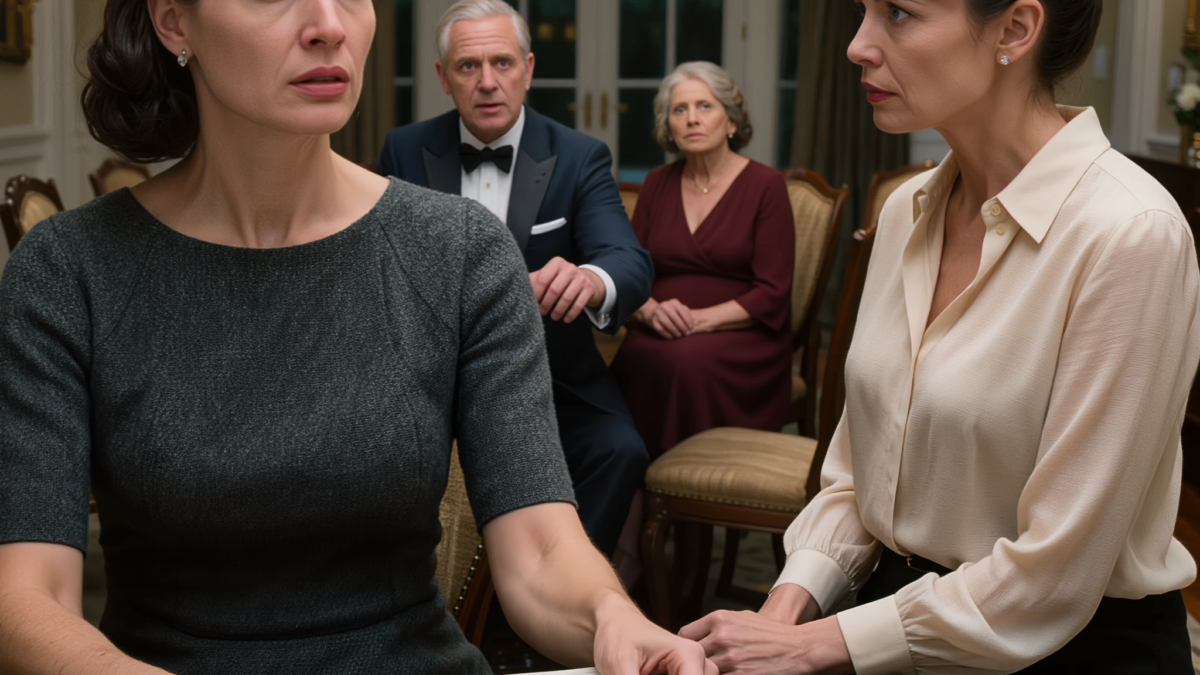
Fifteen years after my family threw me out over a private recording shared without my consent, they invited me back to Philadelphia for one reason: they wanted me to defend my older sister Emily before her federal obstruction trial in Boston. I was 35 now, running a Detroit nonprofit that helped people rebuild after financial, family, and privacy abuse. Emily’s attorney had drafted a character statement saying she had “protected me during a difficult college incident.” I almost laughed when I read it. Then I reached the exhibit list attached to her case file and saw a familiar number beside my initials. It belonged to the university complaint I had filed after that recording spread. According to my family, that complaint had failed. According to the document in front of me, someone had withdrawn it.
The dinner was at my parents’ house outside Philadelphia.
Same long walnut table.
Same silver candlesticks.
Same seat near the doorway where I used to sit when I was younger because Emily preferred the chair beside our father.
My mother, Donna, had cooked roast chicken even though nobody seemed hungry.
Richard, my father, still wore a jacket to dinner at seventy-one.
Emily sat across from me in a cream blouse with her dark hair pulled into the precise knot she had worn through law school, corporate meetings, and every family photograph where she wanted to look composed.
She was 39 now.
For most of her career, people described her as brilliant.
Until six months earlier, she had served as senior compliance counsel for Arcadia Diagnostics, a Boston medical-testing company.
Then an internal investigation found altered audit attachments, rewritten witness summaries, and missing records connected to a federal inquiry.
Emily was charged with obstruction and evidence tampering.
She denied intentionally falsifying anything.
My parents believed her.
Or perhaps they had simply returned to the family role they understood best.
Emily was the daughter worth protecting.
I was the daughter expected to help.
Richard slid a folder toward me after dinner.
“We need one thing from you.”
I did not touch it.
“What?”
“A character statement.”
Emily looked down.
Donna answered for her.
“You run an organization devoted to vulnerable people. Your support would carry weight.”
I almost admired the logic.
Fifteen years earlier, they had called me a disgrace.
Now my credibility was apparently a family asset.
“I don’t know anything about Arcadia’s records.”
“You’re not being asked to discuss the case,” Richard said. “Only Emily’s character.”
I opened the folder.
The draft was three pages long.
It described Emily as principled, careful, compassionate, and committed to protecting people under pressure.
Then I reached a paragraph about me.
During a difficult family crisis in 2011, Emily acted as a stabilizing advocate for her younger sister Chloe and helped protect her privacy while the family navigated a distressing university matter.
I read it twice.
“Protect my privacy?”
Donna shifted in her chair.
“That was a terrible period.”
“For me.”
“For everyone.”
I looked at Emily.
She finally met my eyes.
“We were young.”
“You were twenty-four and in law school.”
She swallowed.
Richard tapped the folder.
“No one is asking you to relitigate fifteen years ago.”
“No. You’re asking me to sign a version of it.”
His expression hardened.
“Chloe.”
I kept reading.
Behind the draft statement was an index of potential exhibits Emily’s attorney had reviewed while preparing for trial.
Most meant nothing to me.
Corporate audit schedules.
Email retention reports.
Witness interview summaries.
Then I saw:
C.M. University Conduct Matter — File 11-4472.
My hands stopped.
I knew that number.
I had written it on the inside cover of the red notebook I carried when I left college.
It was the complaint number I received after reporting that my former boyfriend had recorded and distributed a private video without my consent.
Emily had told me the university closed the case because there was not enough evidence.
I pointed to the page.
“Why is my old complaint in your trial file?”
Emily’s face changed.
Only slightly.
But I had spent years working with frightened people who tried to hide what they knew.
I recognized the pause.
“It isn’t evidence,” she said.
“Then why do your attorneys have it?”
“Background.”
“Background on what?”
Donna spoke quickly.
“Chloe, please.”
I looked at my mother.
“Did my complaint get dismissed?”
Nobody answered.
That silence felt familiar.
Fifteen years earlier, I had sat in the same house begging them to believe I had not shared the recording myself.
They answered with silence then too.
I closed the folder.
“I’m not signing this.”
Richard pushed his chair back.
“You haven’t even heard Emily’s explanation.”
“No.”
I stood.
“I’ve heard enough explanations in this room.”
As I reached the foyer, Emily followed me.
“Chloe.”
I turned.
Her voice was quieter.
“If you start digging into that file, you may not like what you find.”
I looked at her.
“That sounds like a reason to dig.”
The next morning, back in my hotel room, I searched the name of the university investigator assigned to my complaint fifteen years earlier.
Sarah Levin.
She had retired and now worked as a consultant.
I sent one email.
My name is Chloe Monroe. In 2011, you handled university conduct file 11-4472. I was told the matter was closed for insufficient evidence. I need to know whether that is accurate.
Her reply arrived forty-three minutes later.
Chloe, I remember your case.
It was not closed for insufficient evidence.
It was withdrawn.
And I have wondered for fifteen years whether you knew.
I called Sarah before I could talk myself out of it. She answered on the second ring.
“I’m sorry,” she said immediately.
“For what?”
“For assuming the withdrawal came from you.”
My hand tightened around the phone.
“I never withdrew anything.”
“I know that now.”
Sarah told me my original complaint had included two witness statements and technical information linking the upload to a device used by my former boyfriend, Alex Ward. Three days after I went home to face my family, the university received a written withdrawal.
“Signed by me?”
“Yes.”
“It wasn’t.”
“I believe you.”
Sarah paused.
“There was also a cover letter.”
“From whom?”
“Your sister.”
I stopped breathing for a second.
Sarah continued carefully.
“Emily identified herself as a family representative assisting you through an emotional crisis. She stated that you no longer wished to pursue formal action and wanted the material sealed.”
I sat on the edge of the hotel bed.
“Did she have authority to do that?”
“That question bothered me afterward.”
“Why?”
“Because your signature on the withdrawal never matched the signature on the original complaint.”
I stared at the carpet.
“Do you still have it?”
“I kept my archived case notes.”
Another pause.
“And Chloe?”
“Yes?”
“The withdrawal wasn’t the only document Emily submitted.”
Sarah asked if I had an attorney.
That was not the next question I expected.
“I run a nonprofit. I know several.”
“Call one before I send you anything.”
“What else is in the file?”
“I would rather you review it with counsel.”
“Sarah.”
Her voice softened.
“Your sister submitted a statement saying you had told your family the recording was consensual and that you regretted involving the university.”
I stood so quickly the edge of the bed struck the back of my knees.
“I never said that.”
“I understand.”
“Who signed that statement?”
“Emily did.”
“For herself?”
“Yes.”
I walked to the hotel window.
Philadelphia moved normally below me.
Cars.
Pedestrians.
Delivery trucks.
People carrying coffee.
The world had always been offensively good at continuing while mine stopped.
“When I met with you,” Sarah said, “you were very clear. You said you did not know you were being recorded and did not consent to distribution.”
“I remember.”
“So do I.”
“Then why did you accept the withdrawal?”
“Because you were twenty. Your family had become involved. The withdrawal carried what appeared to be your signature, and Emily was a law student representing that she was helping you.”
Sarah paused.
“It was a procedural failure. I should have insisted on speaking to you directly.”
I closed my eyes.
“Did Alex face anything?”
“The informal no-contact directive remained for a short period. The formal conduct matter ended.”
That explained something I had never understood.
After I left Philadelphia, Alex stayed at the university.
He graduated.
His life went on.
Mine fractured.
I had spent fifteen years believing the institution decided there was not enough evidence.
Now I knew the institution never reached that decision.
Someone had stopped it from deciding.
I called Rachel Donovan, general counsel for Second Window.
Rachel was not a personal attorney, but she had spent eight years telling me when I was blurring the line between Chloe the executive director and Chloe the person.
When I finished explaining, she said, “I’m finding you independent counsel.”
“I can call someone.”
“No. I’m finding someone who does not report to you.”
That was why I trusted her.
By noon, I was sitting across from Amanda Price, a Philadelphia attorney who handled privacy and professional-misconduct matters.
She listened without interrupting.
Then she said, “Your first problem is not Emily’s current trial.”
“I know.”
“Good. Because I don’t want you making decisions about a federal case based on fifteen-year-old family anger.”
“I’m not.”
“What do you want?”
The answer surprised me by coming quickly.
“I want the university record corrected.”
“Anything else?”
“I want to know who knew.”
That part took longer.
Sarah sent her archived notes to Amanda with appropriate consent.
The original withdrawal letter was there.
The signature was close to mine.
But it was not mine.
I had always written the final e in Chloe with a narrow upward stroke.
The withdrawal ended with a round loop.
Small detail.
Massive consequence.
Emily’s cover letter was attached.
She wrote that the family had “resolved the misunderstanding privately.”
Misunderstanding.
That word made my stomach turn.
Then came the statement.
I read it once.
Could not finish.
Tried again.
The relevant paragraph said that after returning home, I had acknowledged knowing Alex sometimes recorded private moments and had become upset only after the recording circulated beyond the intended recipient.
None of that was true.
Not one sentence.
Emily had taken the central fact of what happened to me and reversed it.
I was no longer the person recorded without consent.
I became the person embarrassed by a consensual act.
That distinction had protected someone.
I wanted to know who.
Amanda found the first answer in Sarah’s notes.
The day after my family meeting, Richard called the university’s general counsel.
Not as my father.
As a partner at Monroe & Keating, the firm representing a company owned by Alex Ward’s father.
I had forgotten that connection.
Or perhaps I had never known the extent of it.
Alex’s father, Samuel Ward, owned a regional development company.
Richard’s firm represented them on property and financing matters.
The private recording was not only a family embarrassment.
A formal finding against Alex could create a problem between my father and an important client.
Suddenly, the dinner fifteen years ago looked different.
The suits.
The careful language.
Emily sitting like a junior prosecutor.
Richard talking about the Monroe name.
Donna discussing her foundation board.
They were not simply ashamed of me.
They were managing exposure.
The realization hurt in a way the old insults no longer could.
I had spent years believing they chose reputation over me.
The truth was more specific.
They chose relationships, careers, and institutional convenience over the possibility that I deserved protection.
Amanda asked whether I wanted to contact my parents.
“Not yet.”
Instead, I returned to Detroit.
I had built Second Window there over the previous nine years.
It occupied the ground floor of a renovated brick building near Midtown.
Twenty-seven employees.
Three case managers.
Two housing specialists.
A financial counselor.
A privacy-abuse referral program.
We did not provide every service ourselves.
We helped people find the right door.
That idea came from my first months in Detroit.
After my family cut off tuition support, I left Philadelphia with one backpack and $143 in cash.
I stayed with my college friend Rachel for three nights.
Then a church volunteer connected me with Fort Street Women’s Center.
The shelter gave me a bed.
A locker.
A bus pass.
A place to receive mail.
Nobody asked whether the worst thing on the internet defined me.
That alone felt revolutionary.
My first job was cleaning a municipal records building at night.
I hated the smell of industrial floor cleaner.
I loved the records room.
Rows of boxes.
Case numbers.
Old permits.
Minutes from meetings nobody remembered.
I started helping the records clerk reorganize mislabeled files during breaks.
Her name was Martha Langston.
She was sixty-three and had spent most of her career working in civil legal services before taking an administrative job.
One night she found me reading a public-benefits manual while eating a vending-machine dinner.
“You planning to sue somebody?”
“No.”
“Then why are you reading that?”
“I like knowing what paperwork means.”
She laughed.
“That may be the saddest hobby I’ve ever heard.”
Martha helped me enroll in community college.
I finished the credits I lost when I left Penn.
Then I transferred.
Eventually I completed a degree in public administration and later a master’s in nonprofit management at the University of Michigan.
Nothing happened quickly.
There was no montage.
I worked.
Studied.
Missed rent once.
Caught up.
Bought my first used car.
Lost a grant.
Applied for another.
Second Window began as a weekly clinic in the basement of a neighborhood center.
The first person we helped was a woman whose former partner had opened utility accounts in her name.
The second needed emergency housing.
The third had private photographs used to threaten her after a breakup.
That case stayed with me.
I did not tell her my story.
I did not need to.
When she said, “Everyone keeps asking why I let him take the pictures,” I knew exactly what question she should have been asked instead.
Did you consent to what happened afterward?
By 35, Second Window had a $3.8 million annual budget funded through private foundations, health systems, local grants, and individual donors.
I became known in a very specific circle.
Not famous.
Useful.
That suited me.
My family knew almost none of it until Emily’s lawyers researched me for the character statement.
Then suddenly Donna called my work “remarkable.”
Richard said he was “proud of the impact.”
I had learned enough about language to notice when admiration arrived attached to a request.
Two days after I returned to Detroit, Emily called.
I almost let it go to voicemail.
Then I answered.
“Hi.”
“Chloe.”
She sounded exhausted.
“I assume you spoke to Sarah.”
“Yes.”
Silence.
“How much do you know?”
“Enough to ask you questions.”
“Can we meet?”
“Why?”
“Because this cannot happen over the phone.”
That was rich.
Fifteen years earlier, my life had been dismantled around a dinner table.
Apparently truth still required formal seating.
I agreed to meet in Philadelphia with Amanda present.
Emily objected to the lawyer.
I refused to meet without her.
That was our first boundary.
A week later, we sat in a conference room at Amanda’s office.
Emily came alone.
No Richard.
No Donna.
No defense attorney.
Amanda began.
“This meeting is about Chloe’s university record, not your pending federal case.”
Emily nodded.
“I understand.”
I placed copies of the withdrawal and her statement on the table.
“Did you write these?”
Emily looked at them for a long time.
“Yes.”
“Did I ask you to?”
“No.”
“Did I tell you the recording was consensual?”
“No.”
“Did I ask you to withdraw my complaint?”
“No.”
Amanda glanced at me but did not intervene.
“Whose idea was it?”
Emily’s eyes filled.
That surprised me.
“Dad’s initially.”
“Initially?”
“He wanted the complaint gone.”
“Because of Samuel Ward?”
“Yes.”
I looked down.
Hearing it confirmed still hurt.
“What did Mom want?”
“She wanted the video to stop circulating.”
“So did I.”
“I know.”
“No. You don’t get to say that yet.”
Emily nodded.
“You’re right.”
“What did you want?”
That question took longer.
Finally, she said, “I wanted the crisis over.”
I stared at her.
“The crisis was happening to me.”
“At the time, I thought the crisis was happening to all of us.”
“Because people knew your sister was in a private recording?”
“Because Dad’s firm was getting calls. Mom’s foundation board was asking questions. My summer position was with a prosecutor’s office that had relationships with Dad’s clients.”
I felt something cold settle in me.
“So you needed me to become the problem.”
Her face crumpled.
“Yes.”
It was the first honest answer I had ever received from her.
Not a good answer.
An honest one.
“How did you get my signature?”
Emily looked toward Amanda.
Amanda said nothing.
“Our mother had access to the paperwork in your room.”
“My complaint paperwork?”
“You left it at the house after dinner.”
I remembered.
I had carried a red folder home.
I left without it.
Donna mailed some belongings to my dorm after they cut me off.
The folder was not among them.
Emily continued.
“I traced it.”
“You forged it.”
“Yes.”
The word sat between us.
“Did Dad know?”
“Yes.”
“Mom?”
“Yes.”
“Did Alex know?”
“Not exactly.”
“What does that mean?”
“His father knew the complaint was withdrawn. I don’t know what Alex was told.”
I sat back.
For fifteen years, I imagined Emily as the sister who failed to defend me.
That was painful enough.
Now I understood she had actively rewritten the record.
Amanda asked a question.
“Why is Chloe’s university matter referenced in materials related to your current defense?”
Emily closed her eyes.
“My attorneys were preparing character evidence and looking at old matters where I had handled document disputes.”
I almost laughed.
“They thought this demonstrated good judgment?”
“No. I gave them a sanitized description.”
“Like the statement you wanted me to sign.”
“Yes.”
That answer ended the meeting for me.
I stood.
Emily looked up.
“Chloe.”
“I’m not signing anything.”
“I understand.”
“No. I don’t think you do.”
I put my hand on the copied withdrawal.
“For fifteen years, I thought you abandoned me.”
My voice shook for the first time.
“You didn’t abandon me. You altered the record so everyone else could.”
Emily cried then.
Quietly.
I did not comfort her.
Amanda gathered the papers.
We left.
The university responded to our formal request six weeks later.
They conducted an internal review.
Sarah cooperated.
So did the retired administrator who processed the withdrawal.
The university could not recreate every decision from fifteen years earlier, and I did not ask them to pretend they could.
But they confirmed something important.
There was no record of anyone independently verifying my withdrawal with me.
They also concluded that the signature on the withdrawal materially differed from the signature on my original complaint.
The university amended the archived file.
It added a memorandum stating that the formal complaint had been closed after a withdrawal later disputed by the complainant and that the institution could not establish that I authorized it.
The conduct case against Alex was not reopened.
Too much time had passed.
People had moved.
Records were incomplete.
I expected that.
What I wanted was the record to stop saying I chose silence.
That happened.
I received the corrected copy on a Tuesday morning.
I read the memorandum alone in my office.
Then I cried harder than I had at any point since reopening the matter.
Not because it punished Emily.
Because somewhere in an archive that would probably never matter to anybody else, the truth finally said:
Chloe did not withdraw.
That was enough.
Emily’s trial began in Boston two months later.
I had no role in the prosecution.
I was not a witness.
My university complaint did not become some dramatic surprise exhibit.
Real cases do not rearrange themselves to satisfy family symbolism.
The government’s case concerned Arcadia Diagnostics.
Internal audit files.
Compliance emails.
Employee testimony.
Document histories.
The allegation was that Emily had instructed staff to replace attachments and revise summaries after investigators requested records.
Emily’s defense argued that changes reflected ordinary document cleanup and that subordinates misunderstood her instructions.
I followed the trial through public reporting.
Then Maya Torres called Second Window.
Maya had worked in Arcadia’s compliance department.
She was one of the former employees expected to testify.
Months earlier, after losing her job and receiving threats online, another organization referred her to us for temporary-housing support and counseling resources.
I had never handled her case personally.
Now she asked whether someone from Second Window could sit with her family during trial.
Our case manager was unavailable.
I volunteered.
That was why I went to Boston.
Not for Emily.
For Maya.
I bought my own ticket.
No announcement.
No press.
I sat in the back row beside Maya’s older brother.
Emily saw me before court began.
Her face froze.
Donna and Richard sat behind the defense table.
My mother’s hand moved to her chest.
My father stared at me for several seconds.
Nobody spoke.
I did not feel powerful.
I felt sad.
Fifteen years earlier, their ability to look at me with disappointment could rearrange my entire sense of self.
Now their expressions belonged to them.
Court started.
The first witness was a forensic records specialist.
He explained document histories in language so boring half the gallery nearly fell asleep.
I listened to every word.
Version dates.
Attachments.
User accounts.
Changed summaries.
The dry details mattered.
They usually do.
Maya testified on the third day.
She described receiving instructions to “clean up” an internal witness summary after a regulator requested underlying files.
Emily’s attorney challenged her memory.
Maya stayed calm.
Then the government showed an email.
I could not read it from the gallery.
But I saw Emily look down.
At lunch recess, she found me near a vending area.
“Are you here because of me?”
“No.”
“Then why?”
“Maya Torres is connected to Second Window.”
Emily stared.
“Of course she is.”
I frowned.
“What does that mean?”
“Your entire life has become collecting people who think they were wronged.”
I almost responded angrily.
Then I realized something.
Emily still needed injury to be a personality flaw.
If harmed people were merely angry, she never had to ask whether they were right.
“I’m not involved in your case,” I said.
“You reopened mine.”
“I corrected my record.”
“You gave Sarah a reason to talk.”
“She already wanted to.”
Emily’s jaw tightened.
“Dad says you’re destroying the family.”
“No.”
I shook my head.
“I stopped doing the family’s document control.”
She looked at me.
For one second, I saw the older sister who used to braid my hair before school.
Then the expression disappeared.
Court resumed.
I returned to the back row.
The trial lasted three weeks.
I attended four days.
Maya finished her testimony.
Other witnesses followed.
The government presented internal messages and audit trails.
The defense presented its own experts.
Nothing depended on me.
That mattered.
Emily’s consequences were connected to Emily’s choices.
Not mine.
The jury eventually found her guilty on two obstruction-related counts and not guilty on one additional charge.
Sentencing would come later.
Her law license was placed under temporary suspension while professional proceedings continued.
When the verdict was read, Donna began crying.
Richard remained still.
Emily closed her eyes.
I felt no satisfaction.
I had imagined, years earlier, that one day my family would experience the humiliation they handed me and I would finally feel balanced.
Balance does not work that way.
Pain does not become lighter because someone else receives an equal amount.
After court, Richard approached me.
“Chloe.”
I waited.
“You got what you wanted.”
I looked at him.
“What do you think I wanted?”
He gestured vaguely toward the courtroom.
“This.”
“No.”
“Then why reopen the university file now?”
“Because you asked me to sign a statement saying Emily protected me.”
He looked away.
I continued.
“If you had left my name out of her defense, I might never have known.”
That landed.
He had no answer.
Donna joined us.
Her face looked smaller without makeup.
“Can we talk somewhere private?”
“Not today.”
“Please.”
“I said not today.”
She nodded.
That was new.
Fifteen years earlier, no had not been recognized as a complete sentence in our house.
Now it was.
I went back to Detroit.
For almost a month, I heard nothing from my family.
Then a package arrived at Second Window.
No return address.
Inside was the red notebook I carried at twenty.
I had assumed it was lost.
On the inside cover, in my own handwriting:
11-4472.
My complaint number.
A yellow sticky note sat on the first page.
I should have returned this years ago.
Mom.
I held the notebook for a long time.
Then I opened it.
Most pages were ordinary.
Class notes.
Bus schedules.
A grocery list.
A quote from a sociology lecture.
Near the back, I found a page written the night after my family dinner.
I had forgotten it completely.
I wrote:
They keep talking as if the video is the thing I did. No one will say the thing that was done to me.
I sat at my desk and stared at that sentence.
At twenty, I already knew the truth.
I just lacked anyone willing to confirm it.
I called Donna.
She answered immediately.
“Chloe?”
“I got the notebook.”
Silence.
“I found it when we cleaned Emily’s old storage room.”
“Why was it there?”
Donna began crying.
“Because I gave her your folder.”
I closed my eyes.
“You knew.”
“Yes.”
“Everything?”
“I knew Richard wanted the complaint withdrawn.”
“And you gave Emily my paperwork.”
“Yes.”
“Why?”
Her voice shook.
“I thought if the case disappeared, the recording would disappear with it.”
“Did it?”
“No.”
“Did I?”
Silence.
That was the question.
They had eliminated the paperwork and the daughter attached to it.
The internet stayed exactly where it was.
Donna said, “I was afraid.”
“So was I.”
“I know.”
“No. You know now.”
She did not argue.
That helped.
“I want to apologize.”
“You can.”
“I am so sorry.”
I let her say it.
I did not tell her I forgave her.
I did not tell her I never would.
I simply listened.
Then I said, “I need distance.”
“How much?”
“I don’t know.”
“Will you tell me when you do?”
“Yes.”
She accepted that too.
Richard was harder.
He sent a letter.
Not emotional.
Four pages.
Structured like a legal memorandum even in retirement.
He acknowledged contacting the university counsel.
He acknowledged the Ward family relationship with his firm.
He said he had believed his responsibility was to “contain collateral harm.”
I hated that phrase.
Collateral harm.
As though I were a problem outside the main event.
Then near the end he wrote something less polished.
I was so concerned with protecting the life I had built that I failed to protect the person I was responsible for before any client, firm, or reputation.
I read that line several times.
It did not repair fifteen years.
It was still the first time Richard had described his duty correctly.
I placed the letter beside Donna’s note.
I did not answer either parent for six months.
During those six months, Second Window launched a new program.
Not because I wanted to turn my personal life into branding.
I refused to call it the Chloe Monroe Initiative.
We named it Clear Record.
The program helped people dealing with image-based abuse, impersonation, falsified digital records, account misuse, and coercive family paperwork.
We partnered with a privacy clinic at a Michigan law school, a counseling center, and several technology volunteers.
Our first client was nineteen.
Her ex had threatened to send private photographs to her employer.
She arrived convinced the first thing she needed to do was explain herself to everyone.
Our attorney said, “Not yet.”
Our counselor said, “First, we make sure you are safe.”
Our technology volunteer said, “Then we preserve what exists.”
I sat in the meeting only because the team invited me.
The young woman looked at me.
“Should I tell my parents?”
“I don’t know your parents.”
“What would you do?”
Fifteen years earlier, I would have given her a speech about courage.
Now I knew better.
“You don’t have to decide your whole future today.”
She stared at me.
“What do I do first?”
“Keep the facts intact.”
That became the unofficial philosophy of Clear Record.
Keep the facts intact.
People can interpret later.
People can apologize later.
Relationships can be decided later.
First, do not let someone erase the record of what happened.
Emily was sentenced the following spring.
I did not attend.
The court imposed a custodial sentence followed by supervised release.
Professional consequences continued separately.
I read one news article.
Then stopped.
She wrote me from the facility three months later.
The envelope sat on my kitchen table for two days before I opened it.
Chloe,
I keep thinking about the sentence you said in Amanda’s office.
You said I altered the record so everyone else could abandon you.
I wanted to tell you that was unfair.
Then I realized I was still doing exactly what I did fifteen years ago—editing the sentence until it became easier for me to live with.
I did alter the record.
I did it because Dad asked, Mom cooperated, and I wanted the crisis gone.
But I was the one who wrote the letter.
I was the one who signed my name beneath the lie about what you told us.
I was the one who watched you leave.
I cannot ask you to forgive that.
I am trying to understand why I spent my entire life thinking control was the same thing as competence.
Emily
I folded the letter.
For the first time, I cried for my sister.
Not for the attorney.
Not for the defendant.
For the girl who had been taught that being the family’s smartest child meant keeping disorder out of view at any cost.
Understanding that did not excuse her.
It gave the damage a shape.
That was enough.
I wrote back once.
I received your letter. Thank you for telling the truth without asking me to change what it means.
Nothing more.
A year after Emily’s trial, I traveled to Philadelphia for a conference.
I stayed in a hotel.
Donna asked if I would meet her for coffee.
I agreed.
She was seventy by then.
Her hair had gone almost completely silver.
We met in a quiet café near Rittenhouse Square.
For the first ten minutes, we talked about neutral things.
Detroit winters.
Second Window.
A neighbor’s dog.
Then Donna said, “I used to think I lost you because you left.”
I looked at her.
“I know.”
“I understand now that we pushed you out before you packed the bag.”
That was the most accurate thing she had ever said about it.
I nodded.
She did not ask me to come home.
She did not say family should stay together.
She did not tell me Emily needed me.
We finished coffee.
At the door, she asked, “Can I hug you?”
I thought about it.
“Yes.”
The hug was brief.
I did not become her daughter in the old way again.
I became an adult deciding what access felt safe.
Richard died two years later after a short illness.
I visited once before the end.
Not because anybody pressured me.
Because I wanted the choice to belong to me.
He was weaker than I had ever seen him.
The intimidating voice was gone.
He asked whether I still had his letter.
“Yes.”
“I meant it.”
“I know.”
“I should have chosen you.”
I looked at him.
“You should have chosen the truth.”
He nodded.
“Yes.”
Those were our last words about the past.
I was sad when he died.
Grief is allowed to be complicated.
I mourned the father who failed me and the father who taught me to ride a bicycle.
Both had existed.
One did not erase the other.
Donna and I speak a few times a year now.
Emily and I exchange letters.
She completed her sentence and now works in a legal research role that does not require a license.
She has never asked me to restore the relationship we had before.
That helps.
We did not have a healthy relationship before.
There is nothing useful to restore.
If anything grows between us, it will have to be new.
Second Window is still in Detroit.
I am still its executive director.
We now have thirty-nine employees and partner agencies in three states.
I still avoid cameras when I can.
Not because I am hiding.
Because I do not need my face attached to every useful thing we build.
On the wall outside our intake rooms is a framed sentence.
Not my name.
Not my biography.
Just six words:
You are allowed to keep the record.
People interpret that in different ways.
Some think it means screenshots.
Some think it means documents.
Some think it means memory.
For me, it means something larger.
At twenty, I lost more than tuition and housing.
I lost confidence in my right to describe what happened to me.
My family gave me a replacement story.
Chloe made a bad choice.
Chloe embarrassed everyone.
Chloe’s complaint failed.
Chloe left because she was unstable.
For years, I carried that story even while pretending I had escaped it.
The corrected university memorandum was only one page.
It did not punish Alex.
It did not restore my twenties.
It did not undo my family’s decision.
But the page mattered because it returned one sentence to me.
I did not withdraw.
Sometimes healing is not getting the perfect ending.
Sometimes it is putting one accurate sentence back where someone removed it.
Last winter, a college student came into Second Window carrying a red backpack.
That detail almost knocked the air out of me.
She was twenty.
Exactly the age I had been.
She sat across from one of our intake specialists and kept apologizing.
“I should have known.”
“I shouldn’t have trusted him.”
“I should have been more careful.”
I heard the words through the open office door.
The intake specialist interrupted gently.
“You can talk about what you would do differently later. Right now, tell me what he did.”
The student became quiet.
Then she started again.
This time with a different subject in the sentence.
He recorded.
He threatened.
He sent.
Not:
I was stupid.
I trusted.
I ruined.
I closed my office door because suddenly I was crying.
Not from pain.
From recognition.
Fifteen years earlier, nobody in my family let me build a sentence where I was the person something had happened to.
Now an entire organization existed to make sure other people could.
That is not the life I planned at twenty.
It is mine anyway.
And no one else gets to edit it.







