I Paid $84,000 Toward My Brother’s Wedding—Then They Left Me Off the Guest List
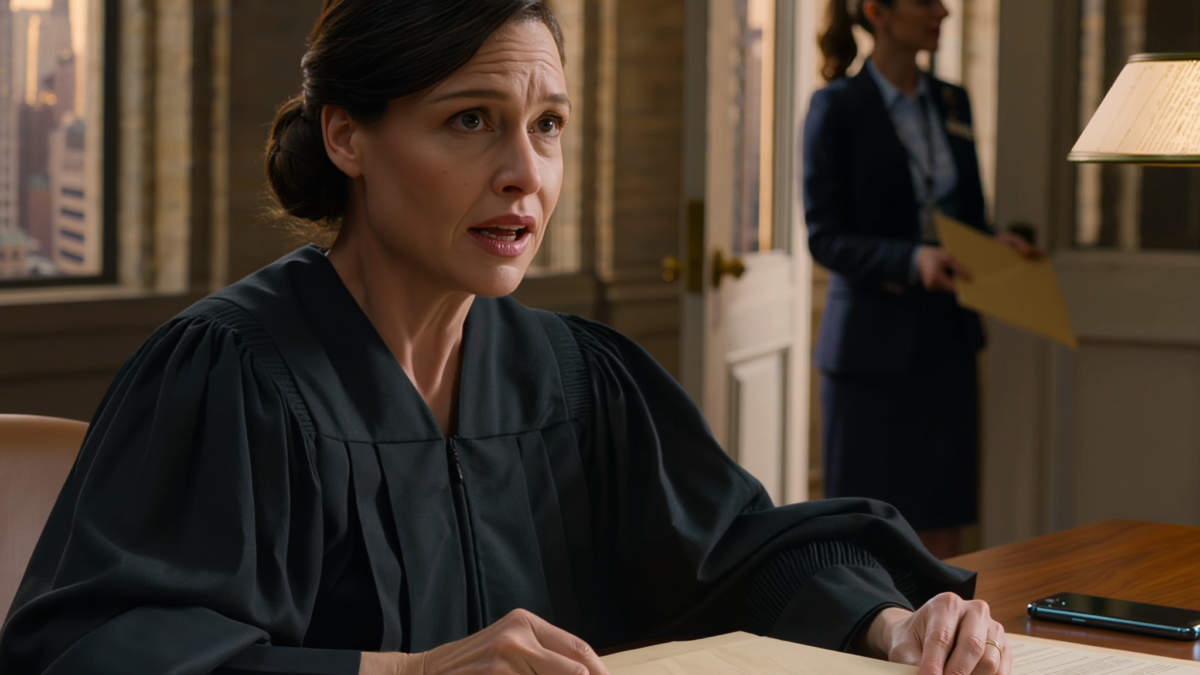
Three weeks before my brother Grant’s wedding in Westchester County, I learned my name was missing from the guest list even though I had quietly approved $84,000 from our grandfather’s legacy trust to cover the venue and catering deposits. My parents said the omission was “for everyone’s comfort.” Grant had spent twelve years as the celebrated cardiac surgeon in our family while I carried the blame for a hospital incident that ended my medical career before it began. I had stopped arguing about the past. Then a retired records manager mailed an old patient-transfer sheet to my chambers with one handwritten line: I found the copy they told us to destroy. The signature at the bottom belonged to Grant. The timestamp did not match the version used to blame me.
My name is Claire Whitman. I was thirty-nine that fall, and I served as a New York State Supreme Court judge in Manhattan.
People who met me in court usually assumed I had always been certain about my life.
I had not.
At twenty-four, I was in medical school and expected to become the third physician in a family that treated medicine almost like a hereditary title.
My grandfather Henry founded Whitman Surgical Institute in Westchester after spending decades as a general surgeon.
My father, Robert, expanded it.
Grant, my older brother, became its brightest public face.
I was supposed to follow them.
Instead, I left medicine with a disciplinary finding attached to my name.
The incident involved a fifty-two-year-old patient named Daniel Mercer.
I was a medical student rotating through quality review when I noticed that his post-operative notes did not match what I had seen on the floor.
He had developed a fever and drainage around the incision.
A nurse documented both.
The next morning, the chart showed him transferred out of monitored care earlier than expected.
Two days later, he deteriorated badly from an infection and died.
I wrote a report questioning the transfer and the missing follow-up.
The hospital’s internal review concluded that I had misunderstood the attending team’s instructions and entered concerns outside my student authority.
My father called it an embarrassing lesson.
Grant said almost nothing.
My mother, Helen, asked me not to “turn one tragedy into two.”
I left the program three weeks later.
Nobody in my family attended my law-school graduation four years after that.
Grandpa Henry did.
He sat in the second row with a cane across his knees and cried so openly that the woman beside him handed him tissues.
He died seven years later.
His estate included a legacy trust for education, family milestones, and patient assistance.
He named me the sole trustee.
Grant’s wedding was the first major family request that reached me.
The trust had a standing provision allowing up to $90,000 for one wedding per grandchild if the payments went directly to vendors.
Grant never called me.
His wedding planner sent the invoices through the trust attorney.
I approved them because Grandpa had promised equal access under those terms.
I did not confuse honoring his instructions with repairing my relationship with my brother.
Then, three weeks before the wedding, my mother called.
Her voice had the careful softness she used when delivering a decision she wanted me to accept without discussion.
“Claire, I need you not to be hurt.”
“That sentence usually means I’m about to be hurt.”
She exhaled.
“Grant and Natalie decided the wedding should be small emotionally, even if the guest count isn’t.”
“What does that mean?”
“They don’t think your presence would be comfortable.”
I looked at the vendor approval sitting on my desk.
The trust had paid the country-club deposit that morning.
“Am I invited?”
A pause.
“No.”
“Does Grant know?”
“Of course he knows.”
I waited for anger.
What came instead was embarrassment that I had once again allowed money to cross a bridge nobody intended to walk back toward me.
Mom continued.
“He doesn’t want old hospital issues resurfacing. Natalie’s family is in healthcare law. You understand.”
“I understand exactly.”
After we hung up, I emailed the trust administrator and confirmed that all existing contractual commitments would be honored, but no discretionary additions should be approved without my signature.
Then I went back to work.
At 4:20 that afternoon, my clerk knocked on my office door.
“There’s a personal envelope downstairs that security cleared.”
“No return address?”
“Just your name.”
Inside was a photocopy of a hospital transfer sheet dated twelve years earlier.
Daniel Mercer’s name was at the top.
At the bottom, beside an order moving him out of monitored care, was Grant’s signature.
Under it was a timestamp.
6:42 p.m.
The version in the disciplinary file I had lived with for twelve years showed the order entered the following morning.
Someone had changed the timeline.
A yellow sticky note was attached to the copy.
I found the archive box they told us was gone.
Call me before the merger closes.
Below it was a phone number and one name.
Simone Alvarez.
The name pulled me back to the old records department at Whitman Surgical Institute. Simone had been the senior records manager when Daniel Mercer died. I called from my personal phone after chambers closed. She answered on the first ring. “I was hoping you still used that number,” she said. “Did you send the transfer sheet?” “Yes.” “Where did you get it?” “An off-site archive your father’s office ordered us to clear before the hospital merger.” My throat tightened. “What else was in the box?” “Enough that I refused to put it through the shredder.”
I stood and closed my office door. Simone lowered her voice. “There are two versions of Mercer’s chart.” “I already knew that.” “No, Claire. You knew your report changed.” She paused. “You did not know the transfer order changed too.” I looked again at Grant’s signature. “What are you asking me to do?” “Nothing yet. I’m asking you to see it before someone else decides what you’re allowed to know.”
The next evening, we met in a quiet diner near White Plains. Simone arrived carrying a narrow gray document case. She did not open it immediately. Instead, she placed an old hospital access log between us. My name appeared once. Grant’s appeared four times after midnight on the same weekend Daniel Mercer deteriorated. Then she showed me a line I had never seen. ADMIN OVERRIDE — R. WHITMAN. My father had entered the record system himself. Simone touched the closed gray case. “The paper trail gets worse after this,” she said.
I had imagined finding proof for twelve years.
In those imagined scenes, proof felt clean.
A page appeared.
Someone admitted the truth.
The past rearranged itself.
What sat between Simone and me at that diner felt nothing like relief.
It felt heavy.
“Why now?” I asked.
“Because the institute is being merged into North River Health next month. Off-site records are being cataloged, digitized, or destroyed under retention rules. I was brought back as a consultant because I know the old system.”
“You retired three years ago.”
“I did.”
She gave me a tired smile.
“Apparently institutional memory becomes valuable right before people erase it.”
I looked at the gray case.
“Did you make copies illegally?”
“No.”
That answer mattered to me more than she probably realized.
“The duplicate chart set was part of a quality-assurance archive. Your grandfather required paper backups for serious adverse events. Most were later destroyed on schedule. Mercer’s wasn’t.”
“Why?”
“Because Henry Whitman marked the box hold.”
I stared at her.
“My grandfather?”
“He came to records about six months after you left medicine. He asked me whether the electronic audit trail could be changed without leaving evidence. I told him ordinary users couldn’t do it. Administrators could amend fields, but the audit logs would still show access.”
“What did he say?”
“He said, ‘Then keep the logs where administrators can’t revise them.’”
Simone finally opened the case.
The first packet contained nursing notes.
At 4:15 p.m. on the second day after surgery, Nurse Maya Desai had documented a fever, increased heart rate, and drainage at the incision.
At 5:03, she paged the surgical resident.
At 5:21, Grant entered an order to continue monitoring.
At 6:42, he changed it.
Transfer to standard recovery.
The second version—the one in the investigation file—showed only the next morning’s transfer order, entered after Daniel Mercer was already deteriorating.
I kept reading.
A bed-allocation sheet showed why.
A private donor had been admitted unexpectedly for a procedure the following morning.
The monitored bed assigned to Mercer was needed.
There was no smoking gun sentence saying move Mercer for the donor.
There did not need to be.
The timing was enough to demand questions.
The next packet hurt more.
It was the internal review chronology.
My name appeared under “trainee documentation concerns.”
Beside it was a memorandum drafted two days before the review meeting.
The author field read:
Grant Whitman, M.D.
I stopped breathing normally.
“What is this?”
Simone looked at her hands.
“Read it.”
The memo described my infection report as “retrospective speculation created after adverse outcome awareness.”
It recommended the committee treat my notes as unreliable because I was “emotionally invested in disproving the attending team.”
I read that sentence three times.
Grant had not merely stayed silent while Dad blamed me.
He had written the language used to discredit me.
The brother who would not look at me during the review had prepared the script beforehand.
I put the page down.
“Did he know my original note existed?”
Simone slid another page across the table.
An email printout.
From Grant to Robert.
Subject: Mercer review.
Dad, Claire’s earlier note is still showing in the export archive. If legal sees both versions, they’ll ask why the timestamp changed. We need records to confirm which entry controls before the committee meets.
Robert’s reply was shorter.
I’ll handle records. Keep your statement narrow.
I felt something inside me go very quiet.
For years, I had protected one small possibility.
Maybe Grant was afraid.
Maybe Dad had acted alone.
Maybe Mom knew less than I thought.
We do that when the truth is too painful.
We leave doors open for people who never tried to walk back through them.
Simone continued.
The audit log showed my father’s administrator credentials accessing the chart at 12:17 a.m. the night before the internal review.
A metadata export completed at 12:22.
The original trainee note was marked superseded at 12:31.
Then came the settlement ledger.
Daniel Mercer’s widow received a confidential payment through the hospital’s insurer several months later.
The payment itself was not suspicious.
Hospitals settle claims.
What mattered was an internal notation attached to the reserve.
Credentialing exposure — protect attending pathway / resident advancement.
Grant was the resident.
My father chaired the credentials committee.
I closed the packet.
“Does Daniel Mercer’s family know any of this?”
“I don’t know.”
“Does North River?”
“Not yet.”
“Does anyone else?”
“Your grandfather knew enough to be suspicious. I know. Maya knows pieces. Now you know.”
I sat back.
“Why didn’t you come forward before?”
Simone did not defend herself.
“I was afraid.”
The answer was so ordinary it made me angrier than a complicated excuse would have.
“I had two kids in college. Your father controlled staffing. Grant was becoming powerful. Henry was sick. You had already left.”
She swallowed.
“I told myself preserving the box was courage.”
“It wasn’t.”
“No.”
She met my eyes.
“It was the most courage I had then.”
I looked at the closed case.
“What changed?”
“My daughter became a nurse.”
That was all.
She did not need to explain.
I paid for our coffee and took no documents with me.
Instead, I photographed the outside of the case and wrote down its archive number.
As a judge, I had spent years telling litigants that process mattered most when emotions made shortcuts tempting.
I could not abandon that principle just because the evidence concerned my own family.
The next morning, I called Judith Klein, an ethics counsel I trusted.
I told her enough to explain the conflict without dramatizing it.
She was blunt.
“You do not investigate this yourself.”
“I know.”
“You do not use court staff.”
“I haven’t.”
“You do not contact anyone under color of your office.”
“I won’t.”
“And if any matter involving Whitman Surgical Institute, North River Health, your father, or your brother appears before you, you disclose and recuse.”
“Yes.”
“What do you want to do personally?”
That question was harder.
“I want the records preserved.”
“Then retain private counsel and let counsel communicate with the appropriate authorities.”
“I also need to tell Grant’s fiancée something.”
Judith was silent.
“That is not a judicial function.”
“I know.”
“It is a family decision.”
“I know.”
“Then do it as Claire, not Judge Whitman.”
That distinction stayed with me.
Claire.
Not Your Honor.
Not the scapegoated medical student.
Not Henry’s trustee.
Just a woman deciding what another woman deserved to know before marrying into a lie.
I retained outside counsel that afternoon.
Her name was Priya Shah.
Priya had handled healthcare compliance investigations and knew how to preserve evidence without turning it into spectacle.
She arranged for Simone’s archive box to be copied by an independent forensic vendor and placed under a documented chain of custody.
She notified North River’s merger counsel that material relevant to historical quality-review records existed and should not be destroyed.
She advised me not to contact Grant or my parents.
Then she asked about Natalie.
“Does she know you?”
“Only by name, probably.”
“Has she contacted you?”
“No.”
“Why tell her before the review is complete?”
“Because she is getting married in nineteen days.”
“That is emotionally compelling, not necessarily legally relevant.”
“I know.”
Priya studied me.
“You have spent years being angry that people decided what you were allowed to know.”
“Yes.”
“So you don’t want to repeat that.”
“No.”
She nodded.
“Then tell her only what you personally know. Don’t accuse beyond the documents. Don’t give her confidential material you aren’t entitled to distribute. Give her my contact information if she wants verification.”
That was the first plan that felt like mine.
The harder question was the wedding money.
The legacy trust had already paid $84,000.
Another $6,000 remained available under Grandpa’s wedding provision.
The planner had submitted requests for upgraded flowers, late-night food, and additional transportation.
None were contractual obligations yet.
I denied them.
Not because Grant had excluded me.
Because discretionary trust money should not continue moving while the trustee had discovered information that could materially affect whether the event even occurred.
I documented the reason.
Then I asked the trust attorney to review it independently.
He agreed.
That evening, Mom called.
“The planner says the trust won’t pay the shuttle upgrade.”
“That’s correct.”
“Why?”
“It wasn’t part of the approved contract.”
“It’s only six thousand dollars.”
“Then Grant can pay it.”
A pause.
“This is because of the invitation.”
“No.”
“Claire.”
“The existing eighty-four thousand remains paid.”
“You’re keeping score.”
“I am keeping records. There’s a difference.”
She became cold.
“Your grandfather would hate what this family has become.”
I almost answered.
Instead, I said, “I agree.”
For once, she had nothing else to say.
I contacted Natalie the following day from my personal email.
The subject line was simple.
Before the wedding.
I wrote only that I was Grant’s sister, that we had not had a relationship for years, and that I had recently received preserved hospital records connected to the event that caused my departure from medicine.
I told her I was not asking her to believe me.
I was asking whether she wanted to hear what I knew before she married him.
She replied two hours later.
Tomorrow. 7:30 a.m. Somewhere private.
We met at a bakery in Scarsdale before the morning rush.
Natalie Brooks was thirty-seven, a healthcare compliance attorney for a nonprofit network of community clinics.
That fact made the conversation both easier and worse.
She understood words like audit trail.
Credentialing.
Adverse event.
Metadata.
Chain of custody.
She also understood exactly why a family might hide a history that threatened a surgeon’s reputation.
She arrived in jeans, a camel coat, and no makeup.
She looked exhausted.
“I almost didn’t come,” she said.
“I would have understood.”
“I didn’t tell Grant.”
I nodded.
“That is your choice.”
She watched me carefully.
“Why did your family tell me you refused the invitation?”
I felt a strange pressure behind my ribs.
“I didn’t.”
Natalie’s face changed.
“Grant said you declined.”
“My mother told me three days ago that I wasn’t invited.”
She sat back.
For a moment, neither of us spoke.
That was the first lie I could prove to her without touching a medical record.
She took out her phone.
“I have the message.”
It was from Grant.
Claire won’t come. She still resents the hospital and doesn’t want to be around Dad.
Natalie stared at the screen.
“This was two weeks ago.”
“My mother didn’t tell me I was excluded until three days ago.”
She put the phone face down.
“Tell me the rest.”
I did.
I described Daniel Mercer.
I described my report.
The review.
Grant’s silence.
My exit from medicine.
Then I described what Simone had shown me.
I did not show Natalie the archive packet.
I showed her my own copy of the disciplinary finding and the contemporaneous note I had legally retained from my student file.
Then I gave her Priya’s card.
“The rest is being preserved independently.”
Natalie’s voice was almost a whisper.
“Are you saying Grant caused a patient’s death?”
“No.”
That answer surprised her.
“I’m saying there is evidence the transfer timeline was altered, that Grant signed an order earlier than the version used in my review showed, that my father accessed the record before the committee met, and that Grant wrote a memo attacking my credibility.”
“That’s not the same thing.”
“No.”
“Why are you being so careful?”
“Because accuracy is not optional just because I’m angry.”
She looked down.
Then she asked the question I had expected.
“Why now?”
“Because someone preserved the records. Because the hospital is merging. Because your wedding is in eighteen days.”
“That still doesn’t answer why you care what happens to me.”
I thought about that.
“I don’t know you well enough to say I care about you personally.”
She gave a short, startled laugh.
“But I know what it is like to enter a room after everyone else already agreed which version of the truth you’re allowed to hear.”
Her eyes filled.
I looked away to give her privacy.
After several minutes, Natalie asked for Priya’s contact information.
Then she stood.
“I’m not canceling anything today.”
“I didn’t ask you to.”
“I need to talk to Grant.”
“Yes.”
“I need to see whatever can legally be verified.”
“Yes.”
At the door, she turned.
“Did you really approve the wedding trust money?”
“Yes.”
“Even after they excluded you?”
“I approved it before I knew.”
“Would you have approved it if you knew?”
That question stayed with me.
“I would have honored Grandpa’s written terms.”
Natalie nodded slowly.
“That’s not what I asked.”
“No.”
She left.
Grant called me at 10:12 that morning.
I let it ring.
At 10:14, he called again.
Then Dad.
Then Mom.
At 10:26, Grant sent a text.
What did you tell Natalie?
I forwarded it to Priya.
She told me not to answer.
By noon, Mom was in the lobby of my apartment building.
I had moved out of Queens years earlier, but I still lived in a modest two-bedroom on the Upper West Side. Mom had visited only twice.
She arrived wearing a navy coat and the expression of someone entering a negotiation she expected to control.
“You contacted Natalie.”
“Yes.”
“Why would you do that?”
“She asked to hear what I knew.”
“You sought her out.”
“I gave her a choice.”
Mom took off her gloves.
“Grant says you showed her confidential hospital records.”
“I didn’t.”
“He says you accused him of killing a patient.”
“I didn’t.”
Her certainty flickered.
“What did you say?”
“The truth, carefully.”
She sat down on my sofa.
“Claire, the wedding is in less than three weeks.”
“I know.”
“Guests are flying in.”
“I know.”
“The venue is paid.”
“I know that too.”
She looked at me sharply.
For the first time, I wondered whether she knew the trust money came through me.
“Your grandfather set that aside for family.”
“Yes.”
“Then act like family.”
I stayed standing.
“What does that mean?”
“It means you do not drop a twelve-year-old scandal into your brother’s marriage because you’re still hurt.”
“It means I should have let Natalie marry him without information that could change her decision?”
“It means you should let Grant handle his relationship.”
“He handled it by telling her I declined the invitation.”
Mom’s face went still.
“He told her what?”
I watched her.
“You didn’t know?”
She stood.
“Claire.”
“Did you know he told her I refused to come?”
“No.”
For once, I believed her immediately.
Mom walked toward the window.
“He said he didn’t want you there because you might make a scene. I told him it was cruel, but your father said it was better.”
“You called me to deliver their decision.”
“I was trying to prevent a bigger fight.”
“That has been your job for twenty years.”
She turned.
“What is that supposed to mean?”
“You prevent fights by asking the person with less power to absorb the damage.”
Her eyes filled.
“That is not fair.”
“It is exactly fair.”
She sat again.
The silence stretched.
Then she asked something I did not expect.
“Are the records real?”
“I believe they are. Independent counsel is verifying them.”
Mom stared at her hands.
“Your father told me your report was wrong.”
“I know.”
“He said Grant had nothing to do with it.”
“I know.”
She began crying.
I did not comfort her.
That felt cruel.
It also felt necessary.
For most of my life, Mom’s tears ended difficult conversations.
This time, they did not.
She left after twenty minutes.
That night, Natalie called.
“I confronted him.”
I sat down at the kitchen table.
“What happened?”
“He admitted writing the memo.”
My chest tightened.
“He said your father asked him to prepare an objective summary because you were emotional.”
Of course he did.
“He also admitted he signed an earlier transfer order.”
“Did he explain why the chart showed a different time?”
“He says he didn’t change the chart.”
“That may be true.”
Natalie was quiet.
“He keeps saying the patient was already stable enough to transfer.”
“That is a medical question for independent reviewers.”
“He says you’re using legal language to make him look guilty.”
“I’m using careful language because I don’t know everything.”
She exhaled.
“I asked him why he told me you declined the wedding.”
I waited.
“He said he was trying to protect me from family conflict.”
That sentence sounded exactly like Dad.
“What are you going to do?”
“I postponed the wedding.”
I closed my eyes.
Not canceled.
Postponed.
“The venue is going to lose money,” she continued. “The planners are furious. My mother thinks I’m panicking.”
“You don’t owe me an explanation.”
“I know.”
Then she said, “Grant told me the trust will sue us if I cancel.”
“No.”
“What?”
“The trust has cancellation terms with vendors. It will follow the contracts. It is not going to sue you for choosing not to marry on schedule.”
“He said your grandfather’s estate requires the wedding to happen.”
“That is false.”
She laughed once, without humor.
“I’m beginning to hate that word.”
“What word?”
“False.”
The next morning, the wedding planner notified guests that the ceremony had been postponed due to “unexpected family circumstances.”
By lunch, half my extended family had decided those circumstances were me.
A cousin I had not spoken to in four years emailed:
I hope this was worth humiliating your brother.
An aunt left a voicemail saying Grandpa Henry would be ashamed.
Dad did not call.
That worried me more than the others.
At 5:30, Priya called.
“North River’s merger counsel has responded.”
I put down my pen.
“And?”
“They opened an independent preservation review.”
“What does that mean?”
“It means no relevant historical files are to be destroyed, altered, or moved outside ordinary custody.”
“And Grant?”
“Nothing yet.”
She paused.
“Claire, there’s another issue.”
I waited.
“Simone’s archive box contains a sealed envelope addressed to you in Henry’s handwriting.”
My grandfather had been dead five years.
For the second time in two weeks, a message from him was about to arrive exactly when my family’s version of history was becoming impossible to maintain.
Priya had the envelope couriered to her office rather than mine.
That was her idea.
“Your family has already accused you of manipulating evidence,” she said. “Let’s not give anyone a reason to say you opened or altered something privately.”
When I arrived, she had Simone there too.
The envelope sat inside a clear evidence sleeve.
My name was written across the front.
Claire.
Nothing else.
Priya photographed it before I opened it.
Inside was a four-page letter and a copy of a handwritten board memorandum.
Grandpa Henry’s letter began without sentiment.
If this has reached you, it means I was not brave enough to finish what I started while I was alive.
I stopped reading.
Simone looked away.
Priya waited.
I continued.
Henry wrote that he learned about the Mercer case six months after I left medicine.
A retired nurse had approached him because she believed the internal review omitted key notes.
He asked Dad privately.
Dad told him the hospital had resolved the issue and that I had “chosen law because medicine was never a fit.”
Grandpa did not believe him.
He asked Simone to preserve the paper archive while he tried to persuade the board to commission an outside review.
Then Henry suffered a stroke.
His influence over the hospital decreased quickly.
Dad became board chair.
Grant’s career accelerated.
Henry wrote:
I told myself I would recover enough to fight them properly.
Then months became years.
Silence has a way of teaching itself to feel responsible.
I hated that sentence because it sounded like Simone.
It sounded like Mom.
It sounded like every adult who had known something was wrong and found a reason to wait.
Then came the part about the trust.
The legacy trust was not simply a tax-planning vehicle.
Grandpa had amended it after the Mercer incident.
He left equal educational and milestone benefits for all grandchildren because he refused to use money as punishment.
But he made me sole trustee because he no longer trusted Dad or Grant to distinguish family loyalty from control.
He wrote:
You may never use this trust to avenge yourself.
You may use it to keep promises clean.
Do not reward deception.
Do not punish blood.
Follow the terms.
That was why the wedding money existed.
And that was why I controlled it.
Not because Grandpa wanted me to rescue Grant.
Because he wanted at least one family system where rules were not rewritten depending on who needed protection.
I covered my mouth.
For years, I thought Grandpa named me trustee because he felt sorry for me.
He had named me because he trusted my judgment.
That distinction mattered more than the money.
The attached memorandum was the document Henry had prepared for the hospital board.
It requested an external review of the Mercer adverse event, including Grant’s transfer order, Robert’s administrative access, the altered trainee note, and credentialing conflicts.
It had never been formally presented.
Henry wrote at the bottom:
Deferred after stroke. Revisit when independent quorum possible.
He never got the chance.
I sat there for a long time.
Then Priya said, “This letter is emotionally important. The memorandum is substantively important. Neither proves criminal conduct by itself.”
“I know.”
“What do you want now?”
I looked at her.
“For twelve years, I wanted somebody to clear my name.”
“And now?”
“I want the process Henry asked for.”
That became my decision.
Not expose Grant at the wedding.
Not punish Dad through the trust.
Not use my position.
An independent review.
Priya transmitted copies of the relevant material to North River’s outside counsel and to the state medical licensing authorities through proper channels.
I signed a statement describing my role in the original incident and disclosed my family relationship.
Then I stopped.
That was harder than it sounds.
When you have lived inside a false story for twelve years, evidence creates an almost physical urge to control the correction.
I wanted dates.
Updates.
Names.
I wanted somebody to call and say, You were right.
Priya refused to feed that impulse.
“You made the referral,” she said. “Now let independent people do independent work.”
So I returned to court.
I recused from one civil matter when I learned a North River affiliate was involved.
I disclosed the family connection on the record.
Counsel agreed reassignment was appropriate.
The case moved to another judge.
My life did not collapse.
The judicial system did not require me to pretend I had no family.
It required me to handle the conflict honestly.
That lesson should not have felt revolutionary.
At home, things became uglier before they became clearer.
Dad finally came to see me.
He did not call first.
He stood outside my apartment in a camel overcoat, looking older than I remembered.
I opened the door but did not invite him in.
“Are you going to make me stand in the hallway?”
“Yes.”
His jaw tightened.
“Very well.”
For a few seconds we simply looked at each other.
Then he said, “You found Henry’s file.”
“Yes.”
“Simone had no right to keep those records.”
“That question is being handled by counsel.”
His mouth twisted.
“You sound like a judge.”
“I am a judge.”
“You are my daughter first.”
“No.”
He looked stunned.
“I am your daughter. I am not your daughter first in every room.”
He lowered his voice.
“You have no idea what it takes to run a hospital.”
“That was your argument twelve years ago.”
“It remains true.”
“Then explain it.”
He stared at me.
“Explain why my note was altered.”
“I did not alter your note.”
“Your credentials accessed the system.”
“I authorized records staff to correct an inaccurate entry.”
“Mine?”
“Yes.”
“Without asking me?”
“You were a student.”
“And Grant?”
“He was a resident under pressure.”
“So was Daniel Mercer.”
Dad’s face changed.
That name still had power.
“His death was tragic.”
“Was the early transfer appropriate?”
“I am not going to retry a medical decision in your hallway.”
“Good. Independent reviewers can do it.”
He stepped closer.
“You think institutions survive if every judgment call becomes a public morality play?”
“No. I think institutions survive when people can question a judgment call without becoming disposable.”
He looked at me for a long time.
Then he said the thing I had always suspected.
“Grant had a fellowship pending.”
I did not move.
“The committee had already raised concerns about his judgment. Another adverse event could have ended his placement.”
“And my career?”
“You had options.”
The cruelty was not in his volume.
It was in how practical he thought the answer was.
I laughed once.
“I had options.”
“You did. Look at you.”
That nearly undid me.
He was pointing to my success as evidence that what he did had not harmed me.
As though surviving an injury made the injury reasonable.
“You don’t get credit because I rebuilt.”
His face hardened.
“I protected the hospital.”
“You protected Grant.”
“They were connected.”
“That was the problem.”
He left without saying goodbye.
Three days later, North River placed Dad on temporary leave from all merger-transition duties.
Grant voluntarily stepped back from clinical practice pending review.
The hospital announced the measures in a short statement that named no findings.
My extended family called it a witch hunt.
I called it process.
Natalie ended the engagement two weeks after postponing the wedding.
She told me herself.
We met once more at the same bakery.
“I’m not leaving because you told me to,” she said.
“I know.”
“I’m leaving because every time I ask him a direct question, he tells me why the question is unfair.”
I understood that sentence immediately.
“Did he admit the memo?”
“Yes.”
“Anything else?”
“He admitted asking your father to keep your original note out of the credentialing discussion because he thought you were trying to destroy him.”
I looked down at my coffee.
“There it is.”
Natalie nodded.
“He still believes intent matters more than effect.”
“Sometimes it does.”
“Not enough.”
She slid a small envelope toward me.
Inside was the wedding invitation.
My name had been added by hand.
“I found this in his desk,” she said. “I think he planned to send it after the ceremony. Maybe as proof he had considered reconciliation.”
I almost laughed.
Even inclusion had been scheduled for after it no longer cost him anything.
Natalie stood.
“For what it’s worth, I’m sorry you were excluded.”
“Thank you.”
“What happens to the wedding trust money?”
“Whatever the contracts require. Anything unused stays in the trust.”
“For Grant?”
“For the purposes Grandpa wrote.”
She smiled faintly.
“Clean promises.”
I looked at her.
“You read the letter?”
“No. You used that phrase last time.”
I had not realized.
After she left, I sat with the invitation for several minutes.
Then I put it in my bag.
Not as a trophy.
As evidence of how little symbolic gestures matter when they arrive after the decision that mattered.
The independent review lasted eight months.
It did not produce the dramatic conclusions my younger self once imagined.
That was another lesson.
Reality rarely sorts people into innocent and guilty with the clarity of a verdict form.
The external medical reviewers found that Daniel Mercer had significant risk factors for infection and that his outcome could not be attributed to one decision alone.
They also found that the transfer to lower-acuity care occurred despite documented warning signs that warranted continued observation.
Grant’s order fell below the institute’s current standards and raised serious questions under the standards then in place.
The record review confirmed that the timestamp and status of my original note had been modified after the event.
Dad’s administrative credentials were used.
The hospital could not establish who physically made every keystroke.
It did establish that the internal review failed to disclose the alterations and that Grant’s memo created an unresolved conflict because he was both involved in the care and shaping the committee’s view of my credibility.
North River issued a corrective report.
My old disciplinary finding was formally withdrawn from the institutional record.
A copy came by certified mail.
I opened it alone at my kitchen table.
One paragraph.
That was all.
The finding concerning Ms. Claire Whitman’s alleged improper retrospective documentation is vacated in light of newly verified contemporaneous records.
I expected to cry.
I didn’t.
I made tea.
Then I called Maya.
She answered and said, “Tell me.”
“It’s gone.”
There was silence.
“Liz?”
She had called me that since medical school.
“It’s gone.”
Maya started crying hard enough that I had to wait for her to breathe.
“You kept telling me one day,” she said.
“I stopped believing one day would come.”
“Still came.”
“Yes.”
It did.
Grant’s licensing matter continued separately.
He entered a monitored remediation agreement, stepped away from surgery for a period, completed ethics and patient-safety requirements, and later returned to limited clinical work under a different institution.
Dad resigned as chair before the merger closed.
North River restructured the quality committee so no member could oversee an adverse-event review involving an immediate relative.
Historical adverse-event files received new retention protections.
The institute funded an independent patient-safety liaison position.
Daniel Mercer’s widow, Elaine, was contacted by counsel.
I did not contact her myself.
She deserved information without being made responsible for my healing.
Months later, Priya told me Elaine had received the corrected review findings and reached a new confidential resolution with the hospital.
That was all I needed to know.
Mom asked to see me after Dad resigned.
We met in a public garden because neither of us wanted the symbolism of home.
She looked smaller.
Not physically.
In the way people do after a family mythology stops protecting them.
“I should have called you after the review,” she said.
“Twelve years ago?”
“Yes.”
“You had my number.”
“I was afraid of your father.”
“I know.”
“I was afraid Grant would lose everything.”
“I know.”
She looked at me.
“You always say that.”
“Because I understood the reasons years ago. Understanding them didn’t make them acceptable.”
She nodded.
“I told myself you were stronger.”
I almost smiled.
“Everyone does.”
“I thought you would build another life.”
“I did.”
She began to cry.
“And Grant?”
“He had more to lose.”
There it was.
The family math.
Protect the person with the more fragile position.
Except Grant’s position had been fragile because it was valuable.
Mine was treated as expendable because I could survive.
“I forgive you for being afraid,” I said.
Her head lifted.
“I don’t forgive what you asked me to carry because of it.”
She accepted that.
It was the beginning of our new relationship.
Not close.
Not easy.
Honest enough to continue.
The legacy trust remained intact.
The canceled wedding contracts returned about $31,000 after cancellation fees.
Under Grandpa’s terms, unused wedding funds reverted to the trust’s general family-and-patient-assistance pool.
I could have left them there indefinitely.
Instead, after independent trust counsel approved the use, I allocated that returned amount to a scholarship for nurses pursuing patient-safety certification.
I named it for no Whitman.
No Mercer.
No one in the family.
The scholarship did not need to carry our conflict into someone else’s education.
Simone attended the first award dinner.
Maya did too.
Natalie sent a card but did not come.
Grant did not attend.
That was fine.
My life did not become centered on whether he approved of what I built from the wreckage.
Two years later, I was invited to speak at a law-and-medicine symposium about institutional conflicts.
I almost declined because I did not want my family story turned into professional branding.
Then the organizer said, “You don’t have to discuss your family. Talk about systems.”
So I did.
I spoke about how organizations fail when loyalty becomes more important than documentation.
How junior people become easy repositories for blame.
How conflicts of interest do not disappear because everyone involved believes they are good people.
How process protects both the accused and the accuser.
Afterward, a medical resident approached me.
She was twenty-seven, exhausted, and trying not to cry.
“My attending changed a note I wrote,” she said.
“Do you still have your original?”
“Yes.”
“Then talk to your institution’s compliance office and get independent advice before you confront anyone.”
She nodded.
“I’m scared.”
“I know.”
For the first time, that phrase meant something useful.
Not I understand why you stayed quiet.
I know fear is real, and you still deserve a process.
I left the symposium and walked alone for several blocks.
Years earlier, I had believed becoming a judge would prove my family wrong.
Then I believed clearing my medical record would.
Neither did exactly what I imagined.
My life became easier when I stopped building it as an argument addressed to people who had already chosen their conclusions.
The appointment mattered.
The corrected record mattered.
Grandpa’s trust mattered.
But none of those things gave me back the girl who left the hospital carrying two suitcases because nobody said stay.
What they gave me was a choice about what happened next.
I could keep living as the excluded daughter.
Or I could become someone whose family history was information, not identity.
I chose the second.
The invitation to Grant’s wedding is still in my desk.
Not the envelope Natalie later found.
The original one Simone mailed with the evidence.
Gold lettering.
Expensive paper.
My name printed formally across the inner card.
It had been created as part of the wedding stationery but never sent by my family.
Simone found it clipped to the archive packet because Grandpa’s old trust attorney had apparently requested a sample invitation for vendor verification.
A ridiculous coincidence of paperwork.
The thing that told me I was excluded arrived attached to the thing that proved I had been scapegoated.
For a while, I thought that was poetic.
Now I think it is simply what records do.
They sit quietly until someone looks at them in the right order.
Three weeks before the wedding, I thought the central question was whether I belonged at Grant’s ceremony.
I was wrong.
The real question was whether I still needed people who erased me to certify that I belonged anywhere.
I didn’t.
I had a courtroom where my job was to listen.
Friends who knew the worst version of the story and never asked me to soften it.
A mother learning, imperfectly, to speak without protecting someone first.
A father who had finally discovered that reputation could not substitute for character.
A brother living with consequences that were neither destruction nor absolution.
And a grandfather whose last act of trust had been to give me responsibility without telling me what conclusion to reach.
That was the inheritance I valued most.
Not the wedding money.
Not the family name.
Not the hospital.
A rule simple enough to fit on one line.
Keep promises clean.
For most of my childhood, the Whitmans believed legacy meant preserving what the family had built.
I understand legacy differently now.
Sometimes preserving a family requires protecting it from the stories it tells about itself.
Sometimes love means refusing to help someone hide.
And sometimes the person standing outside the wedding is not the one who was cast out.
She is simply the first one who stopped asking to be let back in.







