He Put Three House Listings on My Table and Asked for the Company
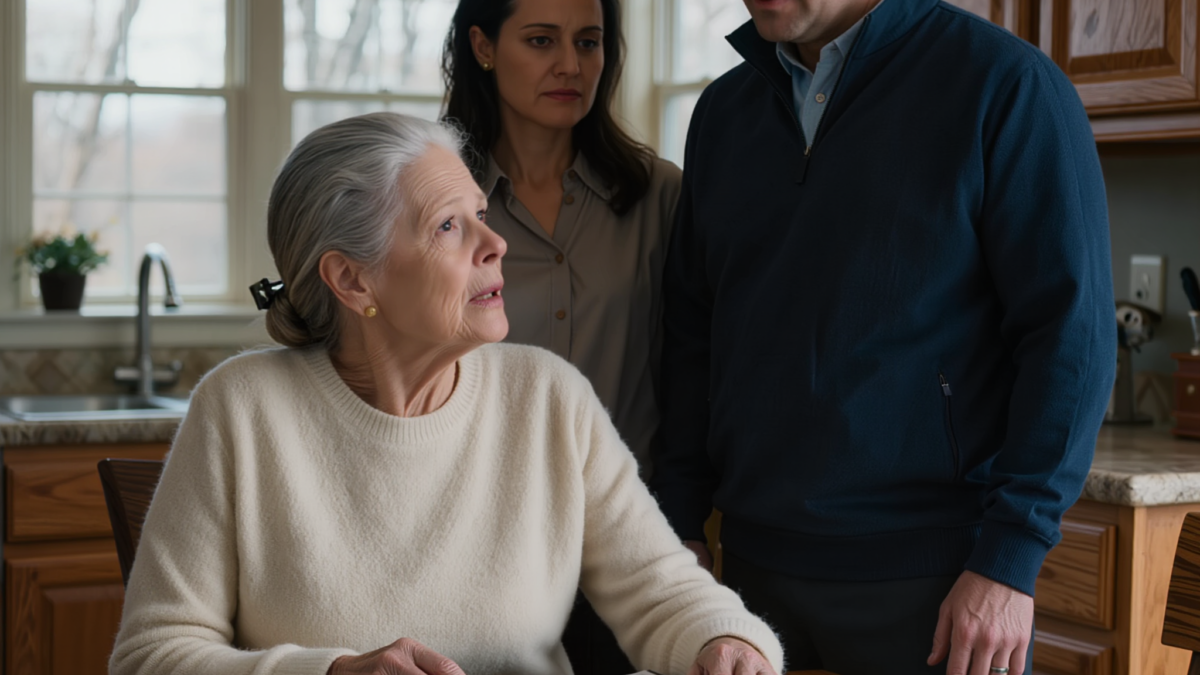
My son put three one-level listings and a transfer packet on my kitchen table three months after we buried Raymond and told me a smaller house was enough. Trevor said I was sixty-eight and the company did not need me on every major vote. Corinne had already toured the properties. The black binder used words like voting rights and managerial authority. I pushed the pages back. He left the binder on the table as if leaving paper made it kind. The next morning Lila Brennan asked me to read one paragraph out loud, then said Trevor was not asking to run Northline. He was asking me to give up the power to stop him. She also said there was a decision inside the plant he had not mentioned.
I am sixty-eight. I live in the two-story we bought in Fort Wayne when the shop still fit in a rented bay. Raymond and I were married forty-two years. He built Northline Components the way some men build a second spine. I did payroll at the dining table before we could afford a bookkeeper. We refinanced this house to buy the second machine. I have not walked the floor every week in years. That is true. It is not the same as being finished.
They arrived on a Sunday in March with baked pasta and a grocery salad. Trevor kissed my cheek and asked how I was sleeping. Corinne opened the refrigerator like she still had a key. For fifteen minutes it almost felt like a regular visit. Then the binder came out.
We need to talk about what happens next, he said.
Next with what.
Everything.
I sat across from him. Corinne took the chair beside him, not the one beside me. He said I did not need all this responsibility. The house. The trust. The company. They had found three places near them. One level. No stairs. Less upkeep.
I asked if they had found me a house. Corinne said three, actually.
Nothing inside me shouted. Something went still.
He slid pages. Voting rights. Family trust. Managerial authority. Transfer of control. Raymond used to keep the legal language. I kept which grandchild hated peas and which press operator’s wife had finished chemo. Trevor tapped a paragraph. This would let him handle the company without coming back to me on every major decision.
What would I have.
Income. Savings. This house if I wanted it.
If I wanted it.
Corinne said nobody was taking anything. I asked why I had to sign, then. Neither of them answered at once. He said the company needed one person making decisions. He meant him. He had been doing more than operations since Raymond got sick. That part was true. I had been proud of him for it.
Then he said Raymond always intended for him to take over.
Eventually, I said.
He asked what difference that made. A great deal, I said.
He told me I should enjoy my life. I asked whether that meant moving into a house they picked. I pushed the papers back and asked when I had requested a plan for the rest of my years.
That ended the visit. He gathered the pages sharper than he needed to. He left the binder. You do not have to decide tonight.
After the car left I sat until the kitchen went dark. I wondered, against my will, whether holding authority because Raymond left it to me was selfish. Then I remembered a sentence from one of his last good weeks. He was in the recliner with a blanket on his knees.
If Trevor ever tells you I already gave him the company, call Lila.
I thought he meant a filing. I am less sure now.
I called her in the morning and read the paragraph she named. She went quiet. Then she said the line about giving up the power to stop him. Then she said there was something he had neglected to mention. It concerned a decision he had already made inside Northline.
The binder was still on my table. I stopped asking whether my son thought I was too old to understand. I started asking what he was afraid I might.
Lila asked me to come to her office that afternoon. The brick building near downtown still smelled like old paper and strong coffee. She closed the door before she used any legal words.
Raymond’s voting interest did not pass to Trevor when he died. It stayed in trust for my benefit. I received income. Major decisions on the family shares still needed my approval. An independent co-trustee handled administration. Trevor was a future beneficiary. That was all.
He does not own those votes now, she said. Running the plant and controlling the family shares are not the same thing. Raymond separated those on purpose.
Then she told me what he had not put in the binder. Months before Raymond died, Trevor had pushed a second production line. Two large machines. More warehouse. About two point four million if you stacked the quotes. He had started talking to lenders before the ownership was settled. He discussed financing as if family voting control would transfer to him soon. Raymond found out and confronted him about four months before he died. Trevor apologized. Raymond accepted the apology. He did not accept the assumption.
That week Natalie drove in from Indianapolis with two coffees. She said Trevor had given the company twenty years and maybe he thought he earned the table. I said earning a seat is not owning the table.
That evening Warren Hale spread a box of records across my dining room. A lender packet sat at the bottom. Trevor’s signature was on the last page. The date was nine days after the funeral. One sentence sat above the line. Anticipated assignment of family voting rights. Warren said he needed my signature more badly than he wanted me to know.
I closed the packet and left it on the table beside the binder. I had not called Trevor yet. I had not agreed to any house. I had only learned what he had already spent against a future that still required my name.
I kept the lender packet on the dining table for two days. Every time I passed it I saw the same careful sentence. Anticipated assignment. The kind of wording that lets a man say that is not exactly what I meant. Raymond and I had sat through enough bank meetings to know careful is not the same as clean.
Warren called the next morning. Trevor had not forged anything. He had not taken money. The expansion was not reckless on its face. What bothered Warren was the assumption under it. That bothered me too. Trevor had built a plan around control he did not have and then treated my signature as the last inconvenience.
I asked him to meet me at Hale’s Diner. Not the plant. Not with Corinne. Hale’s was where Raymond used to take him before little league, then later when they needed to talk without an audience. He arrived ten minutes late in a navy quarter-zip with the shop name on the chest. For a second I saw the boy. Then he sat down and said he did not have much time.
I slid the packet across. His face changed only a little.
Where did you get this.
Does it matter.
Warren gave you company documents.
He gave me documents I am entitled to review.
So now Warren is involved.
Warren is not the subject.
He asked what I thought I had found. I said I thought he had told a lender that family voting control was expected to move to him.
It was expected, he said.
By whom.
Dad.
I kept my voice level. Did your father tell you that.
He spent twenty years preparing me.
That was not my question.
He pushed the paper back. What did you promise them.
I did not promise anybody anything.
Then why do you need me to sign control now.
Because the company cannot operate with every major decision hanging on a family trust.
That trust existed while Raymond was alive. Now I am.
He looked away. Then he said the sentence I still hear. He was the one keeping his father’s company alive while I sat at home remembering what it used to be.
For a second I forgot to breathe. His eyes flickered. He doubled down instead of taking it back. I had not worked there in years. I did not know what it took anymore.
I nodded. That is true. Before you were born I did payroll at the dining table because we could not afford a bookkeeper. We refinanced the house for the second machine. I drove invoices across town when a customer would not cut a check unless a person showed up. I know the story, he said. Knowing the story is not the same as owning the ending.
I left the diner first. I paid for the coffee he had not touched.
Lila said if he filed to force a transfer we would answer in court, not in my kitchen. Two weeks later his attorney did file. Not a theft case. A petition asking the court to recognize that operational leadership and present voting control should sit with the same person. The papers used words like efficiency and continuity. They did not use the word mother.
I wore the gray dress Raymond liked and sat with Lila. Trevor sat with counsel. Corinne sat behind him. Natalie drove over and sat behind me. The judge asked whether I understood what my son wanted the court to recognize. I said yes. She asked if I agreed to the proposed transfer of control.
That was the moment he had been waiting weeks to hear.
I said of course, if that was truly what my husband intended. Then I asked the court to consider something Raymond had said himself.
Trevor lost color. Not a collapse. Just the blood leaving his face.
Lila told the judge the recording was already in the file. A succession meeting at her office several months before Raymond died. Everyone present knew it was being recorded. Trevor knew the file existed. He did not know which minutes I had watched.
The screen came up. Seeing Raymond again was harder than the legal argument. He sat at Lila’s table, tired, voice steady. Trevor beside him. Warren across.
Raymond said he wanted Trevor running operations if he kept earning the board’s confidence. Then he said I kept authority over the family shares. He turned to our son. You do not pressure your mother to give that up because I am gone.
On the recording Trevor said he understood.
Raymond did not move on. He wanted it clear.
Trevor, uncomfortable, said I kept control of the family shares. He did not get them just because his father died.
No one in the courtroom spoke. I watched Raymond, not Trevor.
The recording continued. If you ever lead this company, Raymond said, I want it to be because people trust you with it. Not because your mother got tired of fighting you.
That line did not break me because it was cruel. It broke something because he had seen the shape of this before I had language for it.
The screen went black. Counsel asked for a recess. When we came back the questions were the same and Trevor’s credibility was not. The court refused his reading of the trust. It rejected present transfer. The structure stayed. He remained a future beneficiary. That did not give him votes now.
No lecture from the bench. No applause. A quiet ruling can be louder than a speech.
Outside, Corinne came first. She said I had made him look like a liar. I said I had given him the chance not to be one. Trevor looked as if he might apologize. He walked past me instead.
I did not feel victorious. I felt tired. Natalie hugged me in the hallway. Trevor was already gone.
The next morning he drove to Northline. Warren was in the conference room with three directors. There was an empty chair at the head of the table. Warren told him they needed to talk about what he had told the bank.
I learned about the board meeting later. That afternoon Warren only called to say they had opened a formal review of the expansion decisions. I asked if Trevor was in trouble. Warren said it depended on what I meant by trouble.
They hired an outside accounting firm and an independent corporate attorney. Lender communications. Purchase commitments. Projections. Authority he had used while Raymond was sick. For nearly three weeks I did not call every day. Hovering does not make hard news arrive faster. I learned that beside hospital beds.
When the review finished, Warren put the report on my kitchen table. No embezzlement. No missing money. No secret account. I let out a breath I had been holding without knowing it. I did not want my son turned into a criminal because I was angry.
He had overstepped. He had let personal expectations about the trust steer corporate promises. He had represented the ownership change as more certain than it was. He had committed the company to a timeline that needed authority he did not have.
The board voted that morning. They were not firing him. They were changing the rules. No member of the Ellis family could make major capital commitments alone. Not Trevor. Not Natalie. Not me. Large transactions would need independent directors. He also lost the thing he had treated as weather. He was no longer the automatic successor to the presidency. When that chair opened he would be considered with other qualified people. Experience would count. The last name would not decide it.
I sat with that. Could he earn respect back. Yes. The old arrangement. No.
That was the difference I needed in my own mouth. Revenge would have been stripping him of work he had actually done. Consequence was letting him keep what he had earned and removing the privilege he had mistaken for a birthright.
He was furious. Natalie heard it before I did. He almost quit. He packed a box. What stopped him was the floor. An older machinist named Frank stopped him by line three and asked if he was staying for the afternoon meeting. Trevor asked if it mattered. Frank looked at him as if the question were strange. Of course it mattered. Trevor was the one who knew why that line ran hot. He wanted someone to name what he had lost. Frank named what he still knew. He stayed.
A month passed before he came to the house. Alone. No Corinne. No binder. No lawyer. He stood in the kitchen looking at the same table. Then he sat.
I owe you an apology.
I did not help him fill the silence.
When Dad got sick I thought everything was slipping. I had spent my whole adult life in that building. I kept thinking if I could hold the company I was not losing him too.
You were not losing everything, I said.
I know that now.
So you tried to take control from me.
Yes.
He apologized for the court, for the lender language, for saying Raymond wanted him to have the company. Then he said the part I had been waiting for. He was sorry about the house. The little places they had picked. He had talked about my life as if it were square footage.
Something in me loosened. Not vanished. Loosened.
I believe you are sorry, I said. That is not the same as trusting you again.
He did not argue. That mattered more than the speech.
On his way out he saw the original binder on the shelf. You kept that. Yes. Why. To remember how easy it is for love to start sounding like paperwork. He nodded once and left.
That evening an email arrived with no paragraph attached. Only a file. The revised expansion. Assumptions about future family control were gone. The schedule was slower. Independent approval sat inside every major step. On the first page, where the old version had treated his authority as nearly certain, there were four words. Subject to board approval.
I read them twice. Then I closed the laptop. I wondered whether he might become the man Raymond believed he could be. I did not call Lila to change the trust. Some lessons need time before they need a signature that looks like forgiveness.
A year passed. Not cleanly. Northline survived a smaller version of the plan, phased instead of forced. New equipment came in pieces. The debt stayed inside a number Warren could defend. Trevor stayed. He sat in rooms where people who once assumed he would inherit the presidency now asked him questions like any other executive. The governance rules stayed. His name later appeared on a succession list. Only on the list. He learned to live with only.
Corinne took longer. For months she was polite in the way people are polite when they do not have another temperature. Then she came for coffee and sat at the same table where the listings had been. We talked about the grandchildren. She looked at the window and said she still thought about those houses. I said I did too. She said she thought she had been helping. I did not tell her it was fine. I poured more coffee. That was the size of that day.
Natalie started sitting in the quarterly meetings with Lila. Not because she wanted a piece. Because she wanted the sentences said in a room instead of guessed in a car. When I updated my own papers I asked Lila if there was anything left my children could honestly misunderstand. She said not anymore.
The second anniversary of Raymond’s death was a cold Sunday. I made the pot roast he liked. Natalie brought pie. Corinne brought green beans. Trevor came last carrying sparkling cider. For forty-two years Raymond sat at the head of the table. After he died I left the chair empty. At first I could not bear another body in it. Later I simply stopped moving it.
Trevor set the bottle down and stopped beside that chair. A year earlier he might have pulled it out without asking. Families get into trouble that way. Not always with one terrible act. With a hundred small assumptions nobody stops.
He looked at me. He pulled out the chair beside mine. Is this okay.
I looked at the empty chair, then at my son. Yes.
Dinner was ordinary. That is what made it good. Traffic. A grandchild faking a stomachache before a spelling test. Potatoes and salt. Nobody mentioned the trust. Nobody mentioned the courtroom. Afterward he carried plates. I lifted Raymond’s placemat and found a folded scrap I had forgotten. Machine measurements in his hand on one side. My grocery list on the other. Milk. Coffee. Potatoes. Dish soap. I laughed before I could stop. Trevor read both sides and laughed too. That was him. That was us. A shop on one side of the paper and a kitchen on the other.
He started to put it back. You can keep it, I said. He asked if I was sure. He asked. He put it in his wallet.
When he left he kissed my cheek. See you Tuesday, Mom. Not at the plant. Not about the estate. Tuesday.
I watched him walk to the car. I went back to the dining room. Raymond’s chair was still empty. For once it did not feel like a missing person. It felt like a life we had already finished living. I left it. I turned out the light.
Before the binder there was a shop that smelled like hot metal and coffee that had sat too long. Northline started as a rented bay off Coliseum. Raymond ran the first manual mill. I invoiced on Tuesdays and delivered parts in the wagon when a buyer in Auburn would not release payment without seeing a face. Trevor swept chips after school. Natalie learned to stay off the yellow line. The family joke was that the company ate dinners. The true sentence is that the company paid for dinners we would not have had.
When the work outgrew the bay we bought the current building. The loan closing was in a windowless room. Raymond signed. I signed. The banker called us both owners without making a speech about it. Years later the trust was built because growth makes strangers of families if nobody writes the rules down. Lila drafted. An independent co-trustee named Paul Voss held administrative keys. Raymond’s voting block sat in the marital trust. I had income and approval on major moves. Trevor had a future interest and a job he had actually done. That structure was not a slight. It was a fence.
Corinne’s three listings were real addresses. I drove past them once and only once. A ranch in Aboite with a HOA packet in a plastic sleeve. A patio home near a golf course with a kitchen that looked like a showroom and no basement. A one-level in Huntertown with a ramp already poured. All three were fine houses for someone who had asked. I had not asked. The folders in her bag had printed color photos and monthly estimates that assumed I would sell the two-story and fold the difference into something quieter. Quieter for whom was the question nobody wrote on the flyer.
Paul Voss came to Lila’s office the week after the diner. He is sixty-one and speaks like a man who bills by the word and therefore uses fewer. He confirmed what Lila had said. No vote had moved. No secret amendment existed. Trevor had asked him, informally, whether a widow’s approval could be treated as routine if the operating team was aligned. Paul had said no. Informal is how people test a door. Paul had written a memo to the file the same afternoon. I asked to see it. He showed me. Dated two months before the Sunday pasta. So the binder was not a sudden kindness. It was the second try.
I slept in the two-story every night of that March. The stairs did not become a moral argument. I took them slower. That is aging. It is not a petition.
Natalie stayed three nights. She is forty-four, a school administrator, allergic to being drafted as a referee and worse at refusing when I ask her to sit and hear a document read aloud. We sat with the trust summary and a yellow pad. She said she had always assumed Trevor would run the place and that assumption had lived in her rent-free. Assumptions are cheap until someone bills them.
The grandchildren are Tess, eleven, and Ben, eight. Tess sent a drawing of the two-story with too many windows. Ben asked if Grandma was moving to a house with a pool. I said Grandma was staying where the maple is. He accepted that the way children accept weather.
After court I did not go to the plant for eleven days. On the twelfth Warren asked if I would walk line three with him because a customer from Warsaw wanted to see the family still attached to the work. I went. I did not sit in the head chair. I stood where Raymond used to stand when a job was running hot. Frank nodded once. Trevor was on the floor with a tablet. He did not come over. I did not call him over. The customer signed a release. That was the whole visit.
The revised proposal that arrived by email had a cover page without family prophecy. Phase one was one machine, not two. Warehouse steel was pushed to a second vote. A side letter required independent director sign-off before any personal guarantee. I forwarded it to Lila and Paul without commentary. Lila wrote back, this is how an adult writes a plan. I printed the cover and put it in a plain folder, not the black binder. The binder stayed on the shelf as a warning, not a shrine.
Winter came early again. The two-story furnace sounded like a truck. I called the same company Raymond used. I did not call Trevor. The technician left a sticker on the panel. I can afford a furnace. That sentence would have sounded like pride two years ago. Now it just sounds like a bill I can pay.
Corinne texted in January to ask if Tess could sleep over on a Friday I already had a library board meeting. I said no and offered Saturday. She said Saturday worked. No essay. I noticed the missing essay more than I noticed the yes.
In February the board posted the succession criteria in the break room. Years of service. Safety record. Customer retention. Capital discipline. Family membership was not on the list. Trevor stood under the paper with two younger supervisors. Warren told me later that Trevor read it twice and then went back to line three. That is not redemption. It is literacy.
I still keep Raymond’s recliner. I do not keep it as a museum. I keep it because it is a good chair. On bad evenings I sit in it and tell him the payments posted and the stairs still work and our son asked before he took a scrap of paper. I do not wait for an answer. I already have the recording.
Paul asked at the year-end review whether I wanted to add Natalie as a second family voice on major votes. I said no. Two family voices can become a new kind of assumption. One approval right, written, boring, hard to misunderstand. Natalie understood. She said she would rather have clarity than a title that made Trevor look surrounded.
The empty chair at Sunday dinner is not a punishment. People from outside the family want it to be symbolism. It is only a chair Raymond sat in. Trevor sitting beside me is not a coronation. It is manners. Manners were the first thing the binder forgot.
I have not signed a transfer. I have not listed the two-story. I have not moved into Huntertown. I walk the upstairs hall at night and hear the house settle the way old houses do. That sound used to make me reach for a phone. Now it just means wood.
If Trevor becomes president someday it will be because a room of people who do not share our last name said yes. If he does not, the machines will still run. That is the sentence Raymond was trying to leave me. I needed a courtroom and a screen to hear it in his voice. I do not need the screen again. I need the paper to stay where it is and the listings to stay in someone else’s glove box.
See you Tuesday, he said. I put Tuesday on the calendar in ink. Not because I trust the whole road. Because a calendar is how a careful woman agrees to a smaller unit of time.
Lila kept a copy of the succession recording in a sealed envelope labeled only with a date. After court I asked her not to send me another disc. Hearing him once was the point. Hearing him weekly would have become a weapon. She agreed. The envelope stayed in her fire cabinet.
Trevor’s attorney sent a letter three days after the ruling asking whether I would consider a limited proxy for equipment purchases under a dollar threshold. Lila answered with one paragraph. No proxy. Thresholds already existed inside the board policy. A widow’s tiredness was not a governance tool. The letter did not come back.
I cooked less that spring. Natalie accused me, gently, of living on toast. I said toast was a decision. She brought soup anyway. I ate the soup. I did not pretend the soup meant I had asked to be managed.
Warren retired a set of prints from the old manual mill and had them framed for the lobby. He asked if I wanted Raymond’s name on the plaque. I said Raymond’s name was already on the building paperwork and the trust and my mouth. A plaque was fine if the board wanted history. History is not control.
Ben lost a tooth at my house on a Saturday. I did the envelope on the counter the way I always had. Corinne picked him up and paused at the door as if she might apologize for the listings again. I told her the tooth was the only business of the afternoon. She almost smiled. Almost is a temperature I can stand.
The black binder collected dust. I did not label it. I did not throw it away. Objects like that are better slightly ugly. Pretty storage would have turned it into a souvenir.
On a Thursday in May I drove to the cemetery with scissors and trimmed grass Raymond would have trimmed himself. I told him the second machine was still running and the first one had been rebuilt and our son had learned to ask before taking paper. I told him I had not moved. The wind did not answer. I did not need it to.
Tuesday dinners started as leftovers and turned into a habit with edges. Trevor brings cider. I make a roast or I do not. We talk about Tess’s science fair and a late shipment from a coating vendor. We do not audition for forgiveness. If the conversation leans toward the trust I say the trust is at Lila’s and pass the salt.
That is the whole remaining architecture. A house I did not sell. Shares I did not surrender. A son who still has a badge and no longer has a script that says the badge includes my voice. A recording I will not play for company. A chair no one sits in because the man who earned it is gone, not because I am making a point.
I am sixty-eight. A smaller house might be enough someday. Someday is not a packet on a Sunday table. Someday is a sentence I get to write.







