My Wife Gave My Vacation Room to the Father Who Had Signed Away His Rights
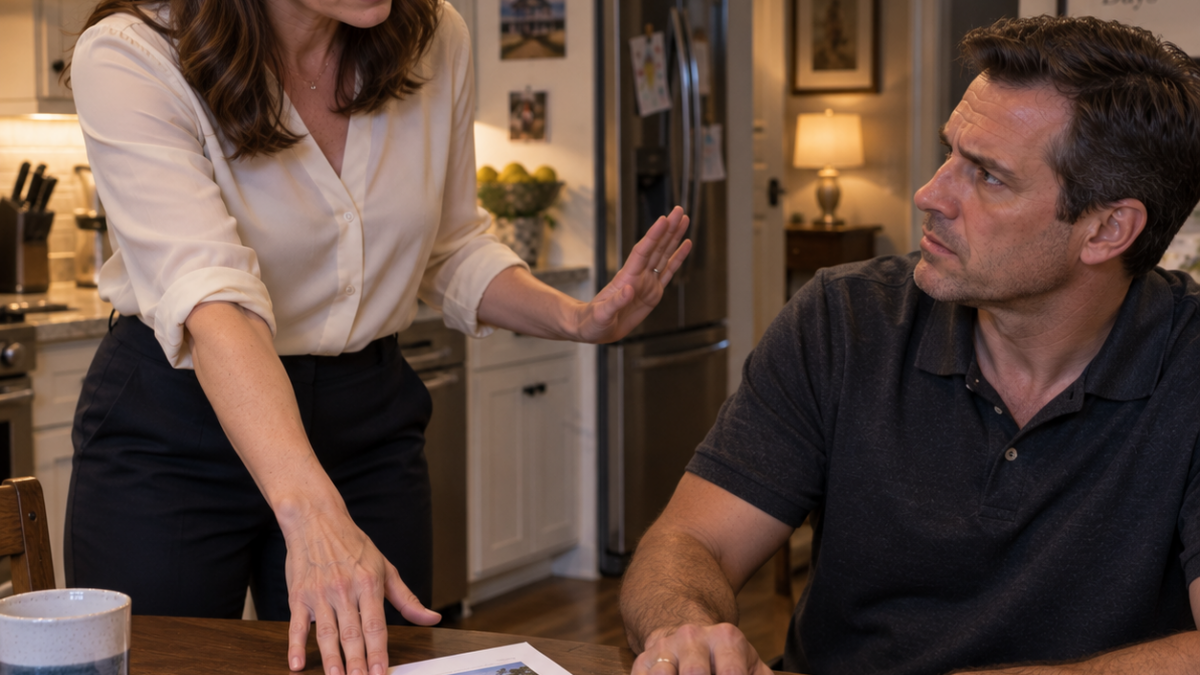
My wife slid our revised beach-house reservation across the kitchen table and said, “You’re not coming. Lucas is taking your room.”
I had already paid the $7,600 deposit for eight days in the Outer Banks.
Lucas was my kids’ biological father.
I was the man who had raised them for twelve years and legally adopted them nine years earlier after Lucas voluntarily gave up his parental rights.
Then Marissa said, “Owen and Sophie asked for this.”
That was the part that hurt more than losing the trip.
Owen was sixteen. Sophie was thirteen. Both called me Dad. I had coached Owen’s baseball team, sat through Sophie’s orthodontist appointments, signed report cards, packed lunches, handled fevers, and learned exactly how long to leave Sophie alone after a bad day before knocking on her door.
Lucas had been mostly absent since they were little.
Eight months earlier, he moved back to Columbus.
Marissa asked whether I would be comfortable letting the kids see him.
I said yes.
I wasn’t threatened by biology. If Owen and Sophie wanted to know Lucas, I thought they deserved that opportunity.
At first, it seemed healthy.
Lucas came to one baseball game.
Then another.
He took the kids to lunch twice.
Marissa started joining them because, according to her, “It makes things less awkward.”
I didn’t love that, but I understood it.
What I didn’t understand was why our family vacation suddenly required me to disappear.
“Did they tell you that directly?” I asked.
Marissa’s expression hardened.
“Don’t make them choose between you.”
“That wasn’t my question.”
“They want time with their father.”
“I am their father.”
“You know what I mean.”
I looked down at the reservation.
The cottage slept six. We had booked three bedrooms: one for us, one for Owen, one for Sophie.
Someone had changed the guest list.
My name was gone.
Lucas Grant had been added.
And in the corner of the confirmation was the date the change had been requested.
Three weeks earlier.
Marissa had not made this decision after some emotional conversation with the kids the night before.
She had planned it.
I pushed the paper back toward her.
“When were you going to tell me?”
“I’m telling you now.”
“Four days before we leave.”
“I knew you’d turn it into a fight.”
“No. You knew I’d say no.”
She stood and picked up her purse.
“Sometimes being a parent means not making everything about yourself.”
Then she left to pick Sophie up from volleyball.
I stayed at the table.
For the first time since Lucas came back, I stopped asking myself whether I was being insecure.
Twenty minutes later, Sophie texted me.
Dad, why is Mom telling Grandma you agreed not to come with us?
I stared at the message.
I typed back:
I didn’t agree to that.
Three dots appeared immediately.
Then:
I knew it. Mom told us work came up and you said Lucas could take your spot.
I didn’t answer right away.
I wasn’t going to use my thirteen-year-old daughter as an investigator in my marriage.
I told her we would talk later and that none of this was her responsibility.
Then I opened our shared credit-card account.
Not because I planned to retaliate.
Because if Marissa had been arranging things for weeks, I wanted to know what else I had missed.
Most of the charges were normal.
Groceries.
Gas.
Sophie’s volleyball registration.
A dentist bill.
Then I found a $4,620 charge from a furniture store on the east side of Columbus.
We had not bought furniture.
I opened the digital receipt.
Dining table.
Sectional sofa.
Two bedroom sets.
Delivery included.
The address was not ours.
The customer name on the order was Lucas Grant.
Marissa came home forty minutes later. I put the furniture receipt on the counter. She looked at it and barely reacted.
“That’s for Lucas’s place.”
“You spent $4,620 from our card furnishing your ex-husband’s house?”
“It’s where the kids will stay sometimes.”
“He has no legal parenting rights.”
“He’s still their biological father.”
“That doesn’t explain why I’m paying for his couch.”
She folded her arms.
“You make everything sound ugly when you want to.”
I asked whether there was any other money I needed to know about.
She said no.
That answer lasted until I checked the statement for our home-equity line.
Five days earlier, there had been an $18,000 draw.
I had not authorized it personally, but the account allowed either borrower to request funds.
The transfer went into our joint checking account.
The next morning, most of it moved out again.
Before I could trace where, my phone rang.
The caller introduced herself as a real-estate agent named Kendra Mills.
She said she was trying to finish a file before closing.
Then she asked when I planned to send the signed gift letter.
“What gift letter?”
There was a pause.
“The one for the eighteen-thousand-dollar contribution toward Lucas Grant’s townhouse.”
I didn’t speak.
Kendra lowered her voice.
“Marissa told us you approved it.”
I stepped into my home office and closed the door.
“I didn’t approve any gift.”
The agent became very careful.
“Then I think we need to stop here.”
“Yes.”
“I’m going to contact the lender.”
“Please do.”
She asked whether I wanted to speak to the loan officer.
I told her no.
Not yet.
I hung up and sat at my desk.
The first thing I wanted to do was walk downstairs, put the phone in front of Marissa, and demand an explanation.
The second thing I wanted to do was call the bank and move every dollar I could reach.
I did neither.
I manage large commercial construction projects for a living.
Most of my job is solving problems that get more expensive when someone reacts before understanding what actually happened.
A bad steel delivery can be fixed.
A bad decision made in panic usually creates three more problems.
So I called an attorney.
Her name was Rachel Kim.
A friend from work had used her during a divorce two years earlier and described her as “the person you hire when you need someone to keep you from doing something stupid because you’re angry.”
That recommendation suddenly seemed very relevant.
Rachel called me back that afternoon.
I gave her the short version.
Married twelve years.
Two adopted children.
Biological father recently back in the picture.
Vacation exclusion.
Furniture.
Eighteen-thousand-dollar home-equity draw.
Possible gift toward biological father’s house.
She interrupted only once.
“You adopted both children legally?”
“Yes.”
“How long ago?”
“Nine years.”
“Then stop letting anyone use the phrase ‘real father’ as though it changes your legal status. It doesn’t.”
I did not realize how much I needed somebody to say that plainly.
Rachel asked me to send statements I already had access to, the reservation, the furniture receipt, and Sophie’s message.
Then she gave me rules.
Do not empty accounts.
Do not cancel household services.
Do not remove Marissa from insurance.
Do not confront Lucas.
Do not interrogate the kids.
Do not access Marissa’s private email or phone.
Do not announce divorce until we understand the money.
“Can I ask my wife where eighteen thousand dollars went?”
“You can.”
“Should I?”
Rachel paused.
“Not tonight.”
I agreed.
That evening, Owen came home from baseball practice and found me grilling burgers.
He dropped his bag by the mudroom door.
“Mom says you’re not going to the beach.”
I turned one burger.
“That’s what she told me.”
He looked confused.
“I thought you had work.”
“I don’t.”
He stared at me.
“Then why aren’t you coming?”
There are moments when being a parent means giving the truth in the smallest container your child can safely carry.
“Your mom and I are having a disagreement about the trip.”
“About Lucas?”
“Yes.”
Owen shoved his hands into his shorts pockets.
“I didn’t ask for him to replace you.”
“I know.”
“Did Sophie tell you?”
“She asked me about something. That’s all.”
He looked toward the house.
“Mom said we should give Lucas one trip where he gets to feel like our dad.”
That sentence hurt.
Not because Owen said it.
Because I could hear Marissa inside it.
“What did you say?”
“I said I don’t care what he feels like.”
I almost smiled.
“Owen.”
“What?”
“He is allowed to care about having a relationship with you.”
“That’s not what I said.”
“I know.”
He kicked at a crack in the patio.
Then he said, “He’s fine. I don’t hate him.”
“You don’t have to.”
“But you’re my dad.”
I looked back at the grill because there are some sentences you do not need to improve by answering too quickly.
“I know,” I said.
The legal adoption had happened when Owen was seven and Sophie was four.
Lucas had not been a monster.
That would have made everything simpler.
He had been unreliable.
Marissa got pregnant with Owen when she and Lucas were twenty-six. By the time Sophie was born, they had separated twice.
Lucas moved between jobs, missed rent, disappeared for weeks, and eventually relocated to Arizona for what he called a fresh start.
For a while, he called.
Then the calls became birthdays.
Then some birthdays.
I met Marissa when Owen was four and Sophie had just turned two.
I did not enter the relationship planning to become anyone’s father.
That part happened by repetition.
I made breakfast.
I drove to preschool.
I learned the songs Owen liked in the car.
I sat on the floor outside Sophie’s room one night during a thunderstorm because she refused to let me come inside but also refused to let me go downstairs.
Two years after Marissa and I married, Lucas contacted us.
He was behind on child support and wanted to sign away his parental rights if I intended to adopt the kids.
I disliked the transactional feeling of the conversation.
Rachel later told me that memory mattered emotionally more than legally.
Lucas consented.
The court approved the adoption.
I became Owen and Sophie’s father on paper because I had already become their father in every practical way.
Lucas sent one email afterward.
Take care of them.
I replied:
I will.
For nine years, there was almost nothing.
Then his mother became sick.
Lucas moved back to Ohio to help her.
He contacted Marissa first.
She told me over dinner.
“I think the kids should decide whether they want to see him.”
I agreed.
Owen wanted to.
Sophie was cautious.
Lucas did not push.
That helped.
He had a steady job selling commercial insurance. He lived in a rented apartment. He apologized to the kids without turning the apology into an excuse.
I respected that.
What I did not know was that Marissa and Lucas had begun having conversations that had nothing to do with repairing his relationship with the kids.
Rachel found the first financial answer before I found the personal one.
The $18,000 had gone from our home-equity line into joint checking, then into Marissa’s individual account, then to the title company handling Lucas’s townhouse purchase.
The money was described to the lender as a gift.
Marissa had told Kendra the gift came from both of us.
No document carried my signature.
That mattered.
Rachel explained that Marissa had legal access to the home-equity line under our existing agreement, which made the situation very different from someone forging a loan.
But using marital debt to fund a large gift to a third party during a collapsing marriage was still going to matter in property division.
“Do not turn ‘this is bad for her divorce position’ into ‘she committed a crime,’” Rachel told me.
“I wasn’t planning to.”
“Good. Angry clients sometimes start writing their own criminal statutes.”
The furniture charge was simpler.
Marital credit card.
Purchase for Lucas.
Also relevant.
Rachel sent a preservation request through Marissa’s attorney two days later.
That was how Marissa learned I had hired counsel.
She waited until the kids were upstairs.
Then she walked into the kitchen holding Rachel’s letter.
“You hired a divorce lawyer?”
“I hired a lawyer.”
“That’s not an answer.”
“It’s the answer I have.”
Her face went red.
“You’re seriously going to blow up our marriage because I helped Lucas get a place near the kids?”
“You used eighteen thousand dollars of our home equity.”
“We have plenty of equity.”
“That isn’t the point.”
“The kids deserve to have somewhere decent when they visit him.”
“He has no parenting schedule.”
“We were working toward one.”
“We?”
She stopped.
I heard it.
She heard it too.
“You and Lucas were working toward one?”
“I mean all of us.”
“No, you didn’t.”
She set Rachel’s letter on the counter.
“You’re jealous.”
“I supported them seeing him.”
“You supported it when you thought you controlled it.”
“I don’t control their relationship with Lucas.”
“You control everything.”
That accusation surprised me.
“What do I control?”
“The house. The money. The schedules. Vacations. Everything has to happen through one of your project plans.”
I stared at her.
There was some truth in it.
I like plans.
I like reservations made early.
I like budgets.
I had probably said “let’s look at the calendar” more times during our marriage than any human being should.
But planning our family vacation was not the same as secretly replacing one parent on it.
“If you felt controlled by me,” I said, “we should have talked about that.”
“I tried.”
“When?”
“Every time I told you Lucas needed space with the kids and you had an opinion.”
“He signed away his rights.”
“There. That.”
“What?”
“You always say it like it’s a verdict.”
“It is a legal fact.”
“He regrets it.”
“I can believe that.”
“He was young.”
“He was thirty-one.”
She looked away.
That was the first time I understood we were no longer arguing about the vacation.
Marissa had started rewriting the past so Lucas could fit into the present.
The Outer Banks trip still happened.
Just not the way she planned.
I did not cancel the reservation.
Rachel told me not to touch it until we sorted out whose money had paid what.
Marissa ended up booking a different rental because she did not want to stay in one reserved under my account.
She took Owen and Sophie.
Lucas went too.
I stayed in Columbus.
That was one of the worst weeks of my life.
Not because I imagined them becoming a perfect family without me.
Because I had no idea what version of me Marissa was giving the kids while I was gone.
I called both children once a day.
Not more.
I did not ask where Lucas slept.
I did not ask what Marissa and Lucas did after dinner.
I asked what they ate.
Whether the water was cold.
Whether Owen had finally learned to surf.
Whether Sophie remembered sunscreen.
On the third night, Sophie asked, “Are you mad at us?”
“No.”
“Promise?”
“Absolutely.”
“She says this is hard for you.”
“It is.”
“Because Lucas is here?”
“Partly.”
She went quiet.
Then she whispered, “They act different when they think we’re not looking.”
My entire body tightened.
But I did not ask a thirteen-year-old what that meant.
“You don’t need to watch anybody for me.”
“I know.”
“This trip is not your job to figure out.”
“I know.”
When they came home, Sophie hugged me in the driveway.
Owen carried his bag inside without speaking.
Marissa barely looked at me.
Lucas unloaded luggage from the back of his SUV.
He saw me standing by the garage.
For a second, neither of us moved.
Then he walked over.
“Can we talk sometime?”
Marissa turned sharply.
“Lucas.”
He ignored her.
I said, “Not without my attorney knowing.”
His eyebrows rose.
“I’m not trying to start anything.”
“Neither am I.”
He nodded.
“Fair.”
Two days later, Rachel received a call from Lucas’s lawyer.
That was when the next layer opened.
Lucas had not hired an attorney because of me.
He had hired one because of the townhouse.
The lender had frozen the closing after Kendra learned the gift had not been approved by both spouses as represented.
Lucas had already put $31,000 of his own money into the purchase.
The missing $18,000 threatened the financing.
He wanted to know whether I intended to challenge the funds.
Rachel’s answer was simple.
“Yes.”
His lawyer asked whether a repayment would resolve that issue.
Rachel told him to submit a proposal.
That was the first time Lucas did something Marissa had not expected.
He offered to repay the entire $18,000 to the marital estate over six months whether the townhouse closed or not.
I asked Rachel why.
“Maybe he wants the townhouse.”
“That much?”
“Or maybe he just discovered your wife told him something that wasn’t true.”
That possibility stayed with me.
Discovery began after I filed for divorce.
I did not file because Lucas went on vacation.
I filed because Marissa had lied about the kids, hidden financial decisions, and used my relationship with Owen and Sophie as leverage in a choice she had already made.
The decision cost me.
Divorce meant telling the kids our house might be sold.
It meant legal fees.
It meant destroying the hope that whatever was happening could somehow be walked backward.
There were nights I wanted to postpone it until Owen graduated.
Then I remembered the reservation.
My name removed three weeks before Marissa told me.
That small date kept me honest.
By late August, Rachel had bank records, card statements, closing documents, and messages produced through the normal legal process.
Most of them were boring.
That is the truth about evidence.
The important thing is usually buried among hundreds of ordinary things.
Then Rachel called me into her office.
“There are messages between Marissa and Lucas you need to read.”
“How bad?”
“I don’t grade betrayal.”
I sat across from her.
She turned a binder toward me.
The messages started five months before the vacation.
At first, they were about Owen and Sophie.
Lucas asking what food they liked.
Marissa telling him not to push.
Lucas thanking her for letting him try again.
Then the tone changed.
One evening after a baseball game, Lucas wrote that it felt strange seeing Marissa again after so many years.
She responded that strange was not necessarily bad.
Two weeks later, they were talking every night.
A month later, they kissed in his car.
That was the significant reveal.
The biological-father reunion had become an affair.
Not after the vacation.
Before it.
The trip had not created the problem.
It had been designed around it.
Lucas’s messages were not flattering to him.
He knew I existed.
He knew we were married.
But there was another detail that mattered.
Marissa repeatedly told him our marriage was already effectively over.
She told him we slept in separate rooms.
We did not.
She told him I had discussed moving closer to a job site after Owen graduated.
I had never discussed that.
She told him I agreed that he should begin acting more like a parent again because “Ethan knows biology matters.”
I had never said that either.
Lucas was still responsible for choosing to participate.
But Marissa had sold him a version of our marriage that made his choices easier to justify.
The furniture appeared in their messages.
Marissa told him she could help furnish the townhouse because I would understand it was for the kids.
Lucas asked directly whether I was okay with the money.
Her answer was:
He knows we’re helping you get established.
I did not know any such thing.
Then came the $18,000.
Lucas told her he was short at closing.
Marissa offered the money.
He asked whether I had agreed.
She said yes.
I closed the binder.
Rachel asked whether I wanted a minute.
“No.”
“There’s more.”
Of course there was.
The vacation messages began three months before Marissa put the revised reservation on our kitchen table.
Lucas worried that the kids would feel guilty if I did not go.
Marissa told him I had plenty of work and could handle one vacation without them.
Then she wrote that the week would be useful because they needed to know whether being together as a family actually worked outside short dinners and baseball games.
A trial week.
That was what the Outer Banks had been.
Not a reunion for the children.
A test for Marissa and Lucas.
A test of whether they could rebuild the family they had failed to hold together fifteen years earlier.
I thought that was the worst line.
It wasn’t.
The next message came two days later.
Lucas asked what happened if the trip was a disaster.
Marissa replied that there was no reason to force a decision immediately.
Ethan is stable. He’s not going anywhere because of one rough summer.
I stopped reading.
Rachel waited.
“Are you okay?”
“No.”
“Do you want to stop?”
“No.”
The final message in that chain was shorter.
Lucas asked whether that was fair to me.
Marissa wrote:
He’ll be hurt, but he’ll get over it if we don’t work.
I had spent twelve years building a family with someone who had reduced my role in it to insurance.
Lucas was the experiment.
I was the backup plan.
That was the part I could not forgive.
Not the affair by itself.
Not even the money.
Marissa had believed she could remove me from one family vacation, test another version of the family, and return me to my place if the experiment failed.
And she had used our children to justify it.
Rachel closed the binder.
“What do you want?”
For months, every question had been about what Marissa wanted.
What Lucas wanted.
What the kids wanted.
What would preserve the house.
What would minimize disruption.
That afternoon, I finally answered for myself.
“I want the divorce finished.”
Rachel nodded.
“And the financial issues?”
“I want the eighteen thousand returned. I want the furniture charge accounted for. I want everything else divided fairly.”
“The house?”
“If she can buy me out, she can keep it. If not, sell it.”
“And the kids?”
“Equal parenting time if it works for school.”
Rachel looked at me over the top of her glasses.
“You’re not asking to punish her.”
“She’s still their mother.”
“That doesn’t always stop people.”
“I know.”
The mediation took place in October.
Marissa sat across from me with her lawyer.
Lucas was not part of our divorce, but his repayment proposal was one of the financial issues being resolved.
By then, he had already repaid $9,000.
He and Marissa were no longer together.
I did not know why until mediation.
We started with money.
The $18,000 would be restored in full.
The furniture charge would be assigned to Marissa’s side of the marital balance.
The house would be appraised.
Neither of us could afford to buy out the other without taking on debt we did not want, so we agreed to sell after the school year.
Retirement accounts would be divided.
Each of us would keep our individual vehicles.
Normal divorce paperwork.
Then we reached parenting.
The mediator asked whether both of us understood that I was Owen and Sophie’s legal father.
Marissa said yes.
The mediator asked whether there was any dispute about that status.
“No.”
I watched her.
Months earlier, she had told me not to make the kids choose between me and their father.
Now the law required her to say out loud what she had always known.
Lucas was their biological father.
I was their father.
Both truths could exist.
The mediator asked about the children’s current relationship with Lucas.
I said I supported continued contact if they wanted it.
Marissa looked at me.
“You do?”
“Yes.”
Her expression almost irritated me.
“What did you think I wanted?”
“I thought you wanted him gone.”
“I wanted you to stop using him to erase me.”
She looked down.
The mediator suggested a break.
I said no.
There was one question I had carried since the kitchen.
“Did Owen or Sophie ever ask you to remove me from the vacation?”
Marissa’s lawyer shifted in her chair.
Marissa did not answer.
The mediator repeated the question.
“No.”
The word barely came out.
I felt something inside me settle.
Not relief.
Confirmation.
“Why did you tell me they did?”
“Because you would have fought me.”
“Yes.”
“I wanted one week without every decision becoming an argument.”
“One week to do what?”
She looked toward her attorney.
Her attorney said, “You can answer if you’re comfortable.”
Marissa rubbed her hands together.
“To see if Lucas and I still worked.”
There it was.
The main reveal no longer lived in a binder.
She said it herself.
“You used the kids to test whether you wanted your old family back.”
“I didn’t think of it that way.”
“How did you think of it?”
“I thought they deserved a chance to know what it felt like having both biological parents there.”
“They already had both parents.”
“You know what I mean.”
I almost laughed because she had used the same sentence in our kitchen.
This time I refused to let it slide.
“No. Explain what you mean.”
Her eyes filled, but she did not cry.
“I felt guilty.”
“For what?”
“For choosing wrong when I was twenty-six. For having kids with someone who disappeared. For needing you to come in and fix everything.”
“I didn’t fix everything.”
“You did more than you understand.”
Her voice shook.
“You made their lives stable. You made my life stable. And when Lucas came back different, I started wondering whether I had given up on him too early.”
“He gave up his parental rights.”
“I know.”
“You asked me to adopt them.”
“I know.”
“You watched me become their father.”
“I know.”
“Then you told me I could sit out one summer while you tested whether I was still necessary.”
She looked at the table.
“I thought if it didn’t work with Lucas, we could repair us.”
That sentence was worse in person than it had been in the messages.
I sat back.
The mediator said my name softly.
I shook my head.
“I’m fine.”
Marissa whispered, “I know how terrible that sounds.”
“It sounds accurate.”
Her attorney looked uncomfortable.
I continued.
“Did Lucas know I was your backup plan?”
“No.”
That answered another question.
“What did he think?”
“He thought we were separating.”
“Before I knew we were separating.”
“Yes.”
“And the trip?”
“He thought you agreed.”
“And the money?”
“He thought you agreed.”
“Yes.”
I nodded.
“Is that why he ended things?”
Marissa looked away.
“Yes.”
Lucas had not suddenly developed a moral objection to sleeping with a married woman.
What ended the relationship was discovering he had been lied to about the structure around it.
After the lender froze the townhouse closing, he started asking questions.
When his attorney showed him the gift documents, he realized I had not approved the money.
Then Owen apparently told him during a lunch that I had been surprised by the vacation change.
Lucas confronted Marissa.
She admitted she had not told me about the affair.
She also admitted she had no immediate plan to leave me unless their trial week went well.
According to Marissa, Lucas said something simple.
“I’m not auditioning for your husband’s job while he’s still doing it.”
I did not admire him for that.
He had already done enough damage.
But I understood why the relationship ended.
The mediator asked whether we wanted to continue.
I said yes.
That was the day I stopped trying to understand enough to make staying possible.
Understanding had done the opposite.
It made leaving clearer.
We signed a temporary parenting plan that afternoon.
One week with me.
One week with Marissa.
Flexibility for Owen’s baseball schedule and Sophie’s volleyball.
Neither parent would use the children to communicate adult disputes.
Lucas could continue seeing them on Marissa’s time unless the children asked otherwise.
If I chose to include him in something on my time, that was my decision.
No one called it elegant.
It was workable.
That mattered more.
The house went on the market in May.
We accepted an offer three weeks later.
I bought a smaller place twelve minutes away, close enough that Sophie could keep the same bus route and Owen could still get to school without turning every morning into a highway commute.
Marissa rented a townhouse near the school.
Not Lucas’s townhouse.
Her own.
Lucas eventually closed on his place after replacing the disputed gift funds with legitimate financing.
He finished repaying the marital estate before our divorce was final.
I saw him for the first time after mediation at Owen’s spring baseball game.
He stood near the fence.
I stood six feet away.
For three innings, neither of us spoke.
Then he said, “I owe you an apology.”
I kept watching the field.
“You owe a lot of people apologies.”
“I know.”
“Owen and Sophie first.”
“I know.”
I glanced at him.
He looked older than he had the previous summer.
“I believed what I wanted to believe,” he said.
“That your ex-wife’s marriage was already over?”
“Yes.”
“That I was okay paying for your house?”
He winced.
“That too.”
“You asked her.”
“I did.”
“And you accepted her answer because it helped you.”
“Yes.”
There was no defense.
That made the conversation easier.
“I’m not going to tell the kids they can’t know you.”
“Thank you.”
“Don’t thank me. Their relationship with you belongs to them.”
He nodded.
Then he said, “You’re a good dad.”
I almost rejected the compliment simply because it came from him.
Instead I said, “I know.”
Owen hit a double in the sixth inning.
Both of us stood.
Both of us clapped.
That was the first time I understood something I wish Marissa had understood before any of this began.
Fatherhood was not a chair at a table with only one seat.
Lucas being biologically connected to Owen and Sophie did not require me to disappear.
My relationship with them was not made weaker by theirs with him.
The threat had never been Lucas existing.
The threat was Marissa deciding that one father could only return if another one was removed.
The divorce became final fourteen months after the reservation landed on our kitchen table.
There was no courthouse showdown.
No one lost everything.
Marissa kept her job.
I kept mine.
The house sold for slightly more than the appraisal.
We divided the equity.
The $18,000 was back in the marital estate before division.
The $4,620 furniture purchase went against Marissa’s share.
Legal fees hurt both of us.
That seemed appropriate.
Real consequences usually look less satisfying than revenge stories.
They arrive as invoices.
Owen turned seventeen that winter.
Sophie turned fourteen.
They were angry with Marissa for a while.
Especially Owen.
He hated that she had used his name in the vacation argument.
I refused to encourage that anger.
When he complained about her, I listened.
When he crossed from describing what happened into insulting her, I stopped him.
“She lied to you too,” he said once.
“Yes.”
“So why are you defending her?”
“I’m not.”
“Sounds like it.”
“I’m defending your right to have a relationship with your mother that isn’t built out of my anger.”
He looked at me like I had said something deeply annoying.
Which probably meant I had done my job.
Sophie handled it differently.
She asked questions.
A lot of them.
“Did Mom love Lucas when she married you?”
“I don’t know.”
“Did she always wish he would come back?”
“I don’t know.”
“Would you take her back if she asked?”
“No.”
That answer surprised her.
“Why not?”
“Because some things can be repaired and still not become what they were.”
She thought about that.
“Are you still mad?”
“Sometimes.”
“At Lucas?”
“Sometimes.”
“At Mom?”
“Sometimes.”
“At us?”
“Never.”
She nodded.
That was the only answer she had really needed.
Lucas stayed in their lives.
Slowly.
Owen saw him more than Sophie did.
That made sense.
Owen remembered more from before Lucas left.
They had things they needed to work out.
Sophie sometimes went to dinner with him and sometimes declined.
No one forced her.
Marissa and Lucas never got back together.
At least not during the period I knew about.
Eventually I stopped wondering.
That surprised me too.
For months, I had been obsessed with understanding whether Marissa had loved him more.
Then I realized the question gave the affair more importance than it deserved.
The marriage did not end because Lucas was extraordinary.
It ended because Marissa decided honesty could wait until after she tested her alternatives.
That was enough.
A year after the divorce, Owen was accepted to Ohio State.
On move-in weekend, he asked me to help.
Of course I said yes.
Then he stood in my kitchen looking unusually uncomfortable.
“Can I ask you something without you making it weird?”
“That depends entirely on the question.”
He rolled his eyes.
“Lucas wants to help too.”
I waited.
“Would that bother you?”
There had been a time when the question would have made my chest tighten.
Instead, I pictured Owen’s dorm room.
Three flights of stairs.
No elevator.
A minifridge.
Two dads.
Extra hands sounded useful.
“No.”
He studied me.
“You sure?”
“Completely.”
“You and him don’t have to talk.”
“I’m capable of carrying boxes near someone I don’t vacation with.”
Owen laughed.
That Saturday, Lucas arrived in a pickup at eight in the morning.
I brought mine too.
Marissa drove separately with Sophie.
For three hours, we carried storage bins, bedding, a desk lamp, shoes, books, and an unreasonable number of sweatshirts into a dorm room designed for half that amount of stuff.
Nobody performed a healed family.
Nobody pretended the past had disappeared.
Lucas assembled a shelf.
I mounted a small fan without putting holes in anything the housing office would charge Owen for later.
Marissa made the bed.
Sophie stole one of Owen’s snacks.
It was ordinary.
That was what made it matter.
When we were done, Owen walked us downstairs.
He hugged Marissa.
Then Lucas.
Then me.
“Thanks, Dad.”
There was no clarification.
No ranking.
No biology lesson.
Just Dad.
Lucas heard it.
He did not look offended.
He put his hands in his pockets and looked toward the parking lot.
I finally understood that the word had never needed defending as aggressively as Marissa had made me believe.
Years of showing up had already done the work.
On the drive home, Sophie sat beside me because she wanted to stop for coffee.
Halfway back to Columbus, she asked whether I remembered the Outer Banks trip.
“Yes.”
“Worst vacation ever.”
I laughed.
“I wasn’t even there.”
“Exactly.”
She stared out the window.
Then she said, “Mom says she’s sorry.”
“I know.”
“Do you believe her?”
“Yes.”
“Does that change anything?”
“No.”
She nodded as if that made sense.
It did to me.
An apology can be real and still arrive after the decision it might once have changed.
That evening, I got home to my smaller house.
The kitchen was quiet.
My work bag sat on a chair.
The original Outer Banks reservation was still saved in an old email folder because I had needed it during discovery.
For months, I could not look at it without seeing the sentence Marissa had used.
You’re not coming.
Lucas is taking your room.
I opened it once more.
My name was still missing from the revised guest list.
The date in the corner was still there.
Three weeks before she told me.
Then I closed the file.
The reservation had once felt like proof that somebody could remove me from my own family.
It did not feel that way anymore.
Marissa could remove my name from a vacation.
She could give my bedroom to somebody else for a week.
She could lie about what the kids wanted.
She could spend money trying to make another version of the family look ready before she admitted what she was doing.
What she could not do was transfer twelve years of breakfasts, fevers, ball games, school pickups, arguments, birthdays, homework, hospital waiting rooms, bad jokes, and ordinary Tuesdays to another man by typing his name into a reservation.
Lucas was Owen and Sophie’s biological father.
I was their father too.
Eventually even he understood that those facts were not enemies.
The marriage did not survive.
The family changed.
Those were consequences I had to live with.
But I no longer confused being excluded from one trip with being erased from the lives I had helped build.
Four days before that vacation, Marissa told me the kids wanted their real dad.
A year and a half later, I finally understood what was wrong with the sentence.
They already had one.







