My Sister Used Me as Free Childcare—Then Threatened Me With a False Abuse Claim
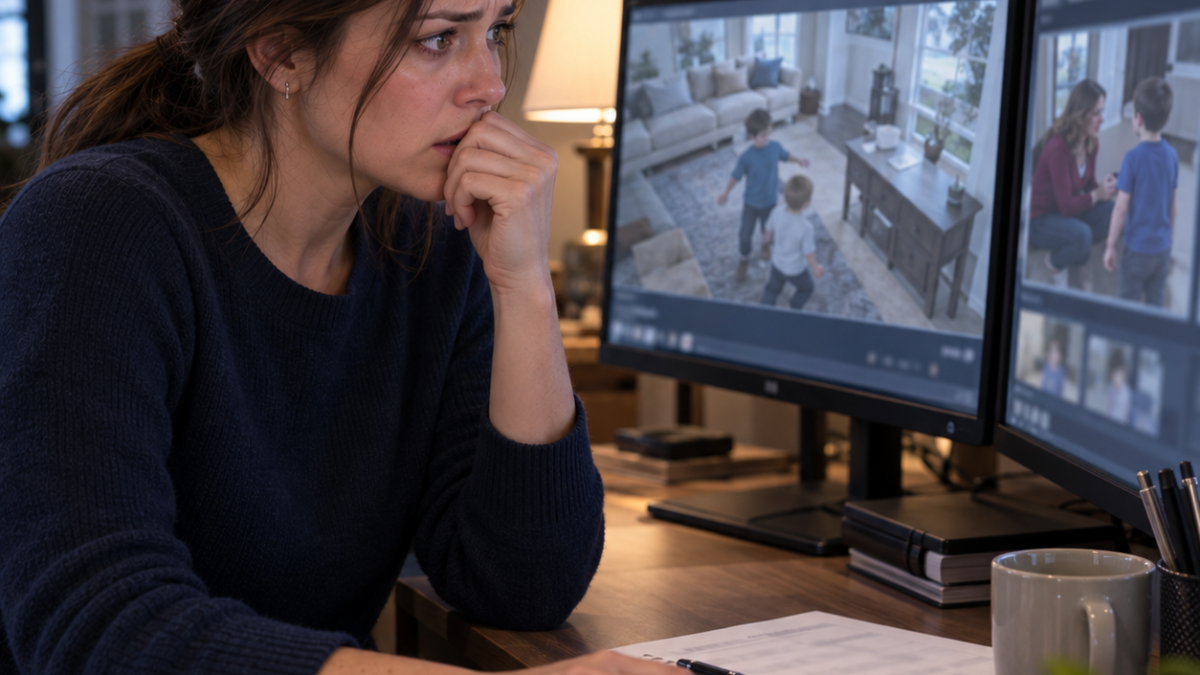
My sister threatened to tell police I had deliberately injured her seven-year-old son unless I gave her $40,000 and let her keep living in my house. By then Lauren and her two boys had been under my roof for five months, and I had gone from offering them a temporary landing place after her divorce to handling school pickup, homework, dinner, and most weekends while she supposedly worked late. I was 31, a software engineer for a smart-home security company in Minneapolis, and one allegation like that could have turned my career and reputation inside out. Lauren apparently forgot one detail about the four-bedroom house she had gradually started treating as hers: I used it to test my company’s security system. The living room camera had recorded exactly how Eli got hurt. It had also recorded what Lauren said afterward.
Lauren wasn’t supposed to move in.
She was supposed to visit for a weekend.
That was what she told me when she called on a Wednesday night.
Her divorce had been finalized eight months earlier. Her ex was inconsistent with child support, her apartment lease was ending, and she was struggling to find something affordable near the boys’ school.
I had helped with rent twice already.
When she asked whether she and the boys could come Saturday, I assumed she needed a break.
Then her SUV arrived with suitcases, storage bins, two desk chairs, and a disassembled twin bed strapped inside.
I stood on my driveway staring at it.
“Lauren?”
She shut the trunk.
“We need somewhere to stay for a little while.”
“You said weekend.”
“I knew you’d panic if I told you over the phone.”
That should have been enough for me to say no.
Instead, ten-year-old Mason hugged me around the waist while Eli proudly carried a box labeled DINOSAURS into my house.
Then Mom called.
Family helps family.
You have all those bedrooms.
You work from home.
The boys adore you.
Every sentence made refusing feel like I was throwing two children onto the street.
So I agreed to eight weeks.
We even wrote the date on the kitchen calendar.
For the first month, it almost worked.
Lauren worked at a department store.
She picked up the boys.
She bought groceries.
She cleaned.
Mason did homework at my kitchen island while I finished coding upstairs.
Eli knocked on my office door to show me Lego creations.
Then Lauren started getting “extra shifts.”
Could I do pickup Tuesday?
Then Thursday?
Could I make dinner because she’d be late?
Could I take Mason to soccer Saturday because she had mandatory inventory?
Eight weeks became twelve.
Twelve became sixteen.
By month five, I knew the school pickup staff better than Lauren did.
The boys’ teacher emailed me first because Lauren rarely answered.
My weekends disappeared.
Meanwhile, Lauren’s “work nights” began ending after midnight.
One Friday she came in unsteady, kicked off her shoes in the foyer, and nearly walked into a coat rack.
“You were working?” I asked.
She glared at me.
“I went out after.”
“You left at eleven this morning.”
“I’m divorced, Claire. I’m allowed to have a life.”
“So am I.”
She rolled her eyes and walked upstairs.
The breaking point came the following Wednesday.
I was on a client call in my office when something crashed downstairs.
Then Eli screamed.
I ran down.
He and Mason had been chasing each other through the living room. Eli had backed into a narrow console table, knocking over a heavy ceramic lamp.
The broken base cut his calf.
It wasn’t life-threatening, but it was deep enough for stitches.
I wrapped his leg, took both boys to urgent care, called Lauren six times, and got voicemail every time.
She finally came home after eight.
The moment she saw the bandage, she turned on me.
“You weren’t watching him.”
“I was working.”
“You were responsible for them.”
“No, Lauren. You are.”
The boys went silent.
Then she slapped me.
I told her she needed to move out.
Her expression changed completely.
The next morning she walked into the kitchen holding Eli’s discharge paperwork.
“If you force us out,” she said, “I’ll tell them you caused it.”
I stared at her.
“Tell who?”
“The police. Child protection. Your employer if I have to.”
She lowered her voice.
“You design security systems for families, Claire. How good does it look if people think you hurt a child in your own house?”
Then she gave me her price.
Forty thousand dollars.
And six more months in the house.
I didn’t argue.
I walked upstairs, locked my office door, and opened the security archive.
The first clip showed Mason and Eli running through the living room.
The second showed Eli hitting the console table by accident.
The third showed me running downstairs seconds later.
Then I opened the clip from after Lauren came home.
And heard my sister tell Mason something I hadn’t heard from the hallway.
Lauren was kneeling in front of Mason near the living room sofa. Her voice was low, but the camera microphone caught it clearly. “If anybody asks, Aunt Claire was angry before Eli got hurt.” Mason looked confused. “She wasn’t.” Lauren glanced toward the hallway. “I’m telling you what you need to remember.” He shook his head. “No.” Then Eli, still groggy from pain medication, said from the couch, “I fell by myself.” Lauren immediately told both boys to stop talking.
I watched the clip twice.
Then I exported the original files without editing them.
The cameras weren’t hidden.
They had been mounted in the common areas since I bought the house, and Lauren had complained about the little status lights the week she moved in.
Apparently she had forgotten they recorded event clips with audio.
I called an attorney instead of calling my parents.
She told me not to threaten Lauren with the footage and not to delete anything.
Then she asked whether Lauren had established residency at my address.
She had.
That meant I couldn’t simply throw her suitcases onto the lawn.
We would have to end the living arrangement properly.
Before we hung up, the attorney asked me to check whether Lauren had already made any accusation.
I opened my email.
There was a message from Mason’s school counselor sent that morning.
Lauren had contacted her first.
The subject line was:
Concern About Safety at Aunt’s Home.
For several seconds I just stared at the screen.
That was the moment the threat stopped feeling like something Lauren had said in anger.
She had already started creating a record.
I opened the email.
The counselor, Ms. Patel, had written carefully.
Lauren had contacted the school saying there had been a “concerning incident” involving Eli at my house and that she wanted staff to be alert for behavioral changes in either child.
She had not accused me of deliberately hurting him.
Not yet.
But she had put the word safety into writing.
My attorney’s name was Dana Wu.
I called her back.
“She contacted the school.”
“What exactly did she say?”
I read the message.
Dana went quiet for a moment.
“Forward it to me.”
“Is this enough for me to go to the police?”
“Maybe. But don’t get ahead of the facts. We have the threat you heard, the video clips, and now an email showing she began raising concerns. Preserve all of it.”
“What do I do about the boys?”
“For tonight?”
“Yes.”
“Are they safe with her?”
That question hit me harder than I expected.
I thought about Mason shaking his head when Lauren tried to give him a false version of the accident.
I thought about Eli saying, “I fell by myself.”
I thought about all the nights Lauren stumbled home while they slept upstairs.
“I don’t know,” I said.
Dana did not tell me what I wanted to hear.
She didn’t say I could simply take control.
She told me I was not their parent.
If I genuinely believed they were in immediate danger, call the appropriate authorities.
If not, do not turn a housing dispute into an improvised custody battle.
She was right.
I hated that she was right.
Part of me wanted to solve everything.
That was how I had ended up in this situation.
Lauren had problems.
I solved rent.
She needed temporary housing.
I solved housing.
She needed school pickup.
I solved transportation.
Dinner.
Homework.
Weekends.
Every time I solved one thing without requiring her to solve the next, I taught both of us the same lesson.
Claire will handle it.
I closed my laptop and went downstairs.
Lauren was in the kitchen scrolling on her phone.
The boys were at school.
She looked up.
“Well?”
“Well what?”
“Are you going to be reasonable?”
I poured coffee.
“My attorney will contact you about the house.”
Her face changed.
“Attorney?”
“Yes.”
“You called a lawyer on your own sister?”
“You threatened me with a false child-abuse report.”
“I said I might report what happened.”
“No. You told me what lie you would report and how much it would cost me to stop you.”
She rolled her eyes.
“You’re twisting my words.”
I looked directly at her.
This was the moment I could have told her about the camera.
I didn’t.
Dana had told me not to turn evidence into leverage.
So I said only:
“Don’t discuss the accident with me anymore.”
Lauren folded her arms.
“You think because you make more money you can scare me?”
“No.”
“You’ve always looked down on me.”
“No.”
“You have no idea what divorce does to someone.”
That part was true.
I had never been married.
I had never been abandoned with two children.
I had never watched a spouse start a new life while I calculated whether child support would arrive.
Lauren had been through something brutal.
That did not make me responsible for what she did afterward.
“I know the last two years have been awful,” I said.
Her expression softened for half a second.
Then I continued.
“But I am not paying you forty thousand dollars.”
The softness disappeared.
“You’ll regret making this ugly.”
“It already is.”
She walked out.
That afternoon I reviewed five months of home-security event logs.
Not because I wanted to build a case proving Lauren was a terrible mother.
Because Dana asked me to identify anything directly relevant to her threat or the housing situation.
My security setup was extensive because I worked for EmberHome Systems.
We developed cameras, door sensors, environmental monitors, and automation software.
My house was essentially a polite laboratory.
The exterior cameras recorded continuously.
Common-area indoor cameras recorded motion events.
No cameras were installed in bedrooms or bathrooms.
Everyone who entered regularly could see the devices.
Lauren knew they existed.
She just apparently hadn’t understood how long event history was retained on my development account.
I found clips of her arriving home at 12:47 a.m.
1:18 a.m.
11:56 p.m.
2:03 a.m.
Those clips proved when she came home.
They did not prove she was drunk.
Video can show someone stumbling.
It cannot measure blood alcohol.
Dana made me write that distinction down.
Facts.
Not conclusions.
Then I found a clip from three weeks earlier.
Lauren was leaving on a Saturday afternoon.
Mason asked when she would be back.
“Tomorrow.”
“But you said we were going to the science museum.”
“Aunt Claire can take you.”
“I didn’t ask Aunt Claire.”
Lauren stopped.
Then said:
“Your aunt doesn’t have kids. Weekends aren’t the same for her.”
I paused the clip.
There it was.
The family logic in one sentence.
My time was empty because it was not filled with children.
My house was available because it had spare bedrooms.
My income was flexible because I earned more.
My work was movable because it happened on a laptop.
Lauren had not invented that belief.
Our parents had.
Growing up, Lauren’s needs were always louder.
She was three years older.
She struggled in school.
She had anxiety.
Then a wedding.
Then pregnancy.
Then two children.
There was always a reason her life required reinforcement.
I was the easy one.
Good grades.
Scholarship.
Computer science degree.
Stable job.
No marriage.
No children.
I bought my house at twenty-eight.
Mom’s response was:
“Four bedrooms? That’s a lot for one person.”
I heard curiosity at the time.
Now I heard inventory.
Unused rooms.
Unused capacity.
Available.
That evening, Mom called.
Lauren had obviously reached her first.
“Claire, what is this about a lawyer?”
“Lauren threatened to file a false abuse report unless I gave her money.”
Mom sighed.
Actually sighed.
As if I had told her Lauren borrowed a sweater without asking.
“I’m sure she didn’t mean it.”
“She asked for forty thousand dollars.”
“She is scared.”
“She contacted Mason’s school.”
Silence.
“What?”
“She reported a safety concern before I had even responded to her demand.”
Mom’s tone sharpened.
“Are you saying Sarah—”
“Lauren.”
She was so rattled she used our cousin’s name.
“Are you saying Lauren is making up something about you hurting Eli?”
“Yes.”
“That doesn’t sound like her.”
I almost laughed.
“You haven’t lived with her for five months.”
“You agreed to help.”
“For eight weeks.”
“Things changed.”
“Yes. Without anyone asking me.”
Mom went quiet.
I continued.
“Do you know how often I pick them up from school?”
“No.”
“Four or five days most weeks.”
“That can’t be right.”
“It is.”
“She told me she got more hours.”
“Maybe she did for a while.”
I resisted the urge to claim I knew otherwise.
I did not have her payroll records.
I had only what she told me and when she came home.
“Mom, I’m not arguing about whether Lauren deserves a social life. I’m saying she made me responsible for two children without my consent and threatened me when I stopped.”
Mom finally said, “What are you going to do?”
“End the living arrangement legally.”
“And the boys?”
“They have a mother.”
That sentence hurt me.
Because I loved Mason and Eli.
I also knew exactly how my family would use that love if I let them.
Mom whispered, “They need stability.”
“So do I.”
That was the first time I had ever said it to her.
She had no answer.
Dana sent Lauren formal written notice the next day.
Because tenancy rules applied, there would be a process.
A deadline.
Documentation.
No dramatic midnight eviction.
No suitcase thrown onto a sidewalk.
Lauren read the notice and stormed into my office.
I had the door open.
She slapped the paper onto my desk.
“You’re seriously evicting children?”
“I am ending your residency here.”
“Same thing.”
“No.”
“Where are we supposed to go?”
“Mom already told me you can stay with them temporarily.”
Her face tightened.
“You called Mom?”
“She called me.”
“Their house is tiny.”
There it was.
Not nowhere.
Less convenient.
My parents had a three-bedroom house.
Lauren would have to share a room arrangement with the boys or use the finished basement.
It was not ideal.
Neither was turning my house into a permanent subsidy.
“You have a deadline,” I said.
“You really think that piece of paper protects you?”
“From what?”
Her eyes narrowed.
“You know.”
I looked at her.
“Say it.”
She didn’t.
Instead she walked out.
That evening, I sent Dana a note documenting the conversation.
She replied:
Good. Keep communication boring.
Possibly the best legal advice I had ever received.
Lauren did not keep things boring.
Two days later, a child-protection intake worker called me.
My stomach dropped when she introduced herself.
The report alleged that Eli had been injured during an argument in my home and that I had “thrown or knocked an object” which caused his wound.
Not quite the lie Lauren had threatened.
Close enough.
The worker’s tone was neutral.
She asked whether I would speak voluntarily.
I told her I had counsel and would cooperate through Dana.
Then I hung up and sat on the floor of my office.
My hands would not stop shaking.
This was what Lauren had understood when she chose the threat.
I worked in residential security.
Our largest enterprise customers included builders, childcare organizations, and assisted-living providers.
I was not a public figure.
I didn’t have a professional license at stake.
But an allegation involving child harm could still create an internal mess.
Background checks.
HR questions.
Customer concerns if it became public.
Lauren did not need the accusation to be proven.
She only needed me to be afraid of the process.
For ten minutes, I was.
Then I called Dana.
“We expected this possibility,” she said.
“I know.”
“That doesn’t make it pleasant.”
“No.”
“You have contemporaneous video of the accident?”
“Yes.”
“Original file?”
“Yes.”
“Metadata intact?”
“Yes.”
“Good.”
I almost laughed.
Of course the lawyer representing a software engineer would eventually ask about metadata.
Dana arranged the response.
The original event clip showed the accident clearly.
Mason and Eli were playing tag.
I was upstairs.
Neither adult was in the room.
Eli ran backward.
His hip struck the console.
The lamp fell.
The broken ceramic base cut his leg.
The next clip showed me entering immediately after the crash.
Another showed me applying pressure with a towel.
Exterior footage showed us leaving for urgent care.
The medical discharge time matched.
Then came the clip of Lauren coaching Mason.
Dana provided it through the proper channel.
I did not send a highlight reel to my parents.
I did not post anything online.
I did not confront Lauren with it.
The worker interviewed the boys separately.
That part frightened me most.
I didn’t want them feeling that they had to choose between their mother and me.
Mason apparently repeated what he had said on camera.
It was an accident.
Eli said the same.
The allegation against me was closed without action.
The process did not end there, however.
Lauren’s statements about supervision and the boys’ living arrangement raised questions about their actual routine.
That investigation was not mine to control.
I stayed out of it as much as I could.
I was interviewed about school pickup.
Meals.
How often Lauren was home.
I answered only what I personally knew.
No diagnosis.
No speeches about her character.
No “she always.”
Dates.
Events.
Who was there.
That discipline saved me from becoming the person Lauren said I was.
The hardest part came when Mason asked me one evening:
“Are we leaving because of me?”
I sat beside him on the back steps.
“No.”
“Because Eli got hurt?”
“No.”
“Mom said everybody is fighting because of the accident.”
I took a breath.
“You and Eli did nothing wrong.”
“Then why?”
Because your mother tried to blackmail me sounded accurate and completely inappropriate for a ten-year-old.
So I said:
“The adults made some agreements about living here, and the agreements aren’t working anymore.”
He stared at the grass.
“Can I still see you?”
That nearly broke me.
“Yes.”
“You promise?”
“I’ll do everything I reasonably can.”
He frowned.
“That’s not a normal promise.”
“I work with lawyers now.”
That made him smile.
The move-out date approached.
Lauren alternated between rage and charm.
One morning she made pancakes.
That evening she told me I had destroyed her life.
The following day she asked if I could lend her $6,000 for a security deposit.
“No.”
“You have it.”
“Yes.”
That seemed to confuse her.
For our entire adult relationship, having money had been treated as the same thing as owing money.
“I’ll pay you back.”
“You still owe me from the last apartment.”
“I have children.”
“I know.”
“Why do you keep saying that like it doesn’t matter?”
“It matters. It does not make every bill mine.”
She started crying.
Real tears this time.
“I don’t know how I’m supposed to do this.”
That was the closest she had come to saying what was actually underneath everything.
Not greed.
Not pure laziness.
Fear.
Her marriage had collapsed.
Her ex was unreliable.
She hated her retail job.
She was terrified of being poor.
Then she moved into my house and discovered a life where the rent was zero, childcare was free, food appeared, and somebody competent handled whatever she dropped.
At first she probably told herself it was temporary.
Then temporary became comfortable.
Comfort became entitlement.
When I threatened that arrangement, panic turned ugly.
I understood.
I still said no.
“You need a plan that doesn’t require me to surrender my life.”
She wiped her face.
“Easy for you to say.”
“Yes.”
She looked up angrily.
I continued.
“Because I built one.”
That silenced her.
I had not been handed my house.
I had spent years working.
I paid my student loans.
Saved a down payment.
Bought furniture slowly.
Worked weekends when product releases went wrong.
There was nothing effortless about my stability.
It only looked effortless from inside the guest room.
My parents came the final Saturday with their SUV.
Dad said little.
Mom cried while packing the boys’ clothes.
Lauren moved into their house.
Mason hugged me for so long my shoulder hurt.
Eli asked whether the cameras would miss him.
I told him cameras did not have feelings.
He said that sounded sad.
Then he waved directly at the living room camera before leaving.
The house became quiet.
For the first week, I hated it.
I had spent months fantasizing about silence.
Then I got it and found traces of them everywhere.
A plastic dinosaur under the sofa.
Mason’s multiplication worksheet beside the printer.
Blue toothpaste in the upstairs sink.
One tiny sock behind the dryer.
I sat on the laundry-room floor holding that sock and cried harder than I had during the investigation.
Boundaries can be necessary and still hurt.
That was something nobody in my family understood.
They treated no as proof that I did not love enough.
In reality, I had finally said no because love had become impossible inside the arrangement we built.
A week later, HR asked me to meet.
I almost threw up.
My manager, Priya, was there with our HR director.
Someone had emailed the company saying an employee had been investigated for harming a child.
Lauren denied later that she sent it.
I never proved who did.
By then, the distinction barely mattered.
I brought Dana.
The company already knew the allegation had been closed.
They asked whether any company systems had been involved.
That question mattered because I had used a development security account at my house.
I explained the setup.
Common-area test cameras.
Exterior devices.
Standard retention.
No private bedrooms.
No bathrooms.
No secret installation after Lauren moved in.
The legal team reviewed the issue.
Then Priya looked at me.
“Claire, you are not in trouble.”
I started crying in front of my boss.
Not elegantly.
She pushed a tissue box toward me.
“The security system did what it was supposed to do,” she said.
That sentence stayed with me.
The cameras had not solved my family.
They had preserved facts when somebody tried to rewrite them.
That was all.
And it was enough.
The boys’ situation stabilized gradually.
Child protection did not remove them from Lauren.
That outcome surprised some relatives who had decided the story required a villain and a dramatic ending.
Instead, Lauren entered a family-support plan.
She had to demonstrate reliable supervision.
Our parents agreed not to become unlimited backup childcare.
Her ex-husband’s support case was revisited through the proper process.
Lauren increased her work hours for real.
She stopped disappearing overnight.
At least, according to Mom.
I didn’t monitor her.
That was not my job.
For several months, the boys visited me only when Mom or Dad brought them.
I never discussed the case.
We built Lego.
Played games.
Mason started asking about coding.
I taught him how to make a tiny browser game where a frog jumped over obstacles.
Eli insisted the frog wear a cape.
Naturally.
Lauren and I did not speak beyond logistics.
Then five months after she moved out, she texted:
Would you meet me somewhere public?
Very reassuring phrasing.
I almost said no.
Then I agreed to coffee.
She was already seated when I arrived.
No makeup.
Hair pulled back.
She looked tired.
But healthier.
There was coffee in front of her and no dramatic stack of documents.
A promising start.
“I owe you an apology.”
I sat down.
She looked at her hands.
“I don’t know how to say it without making excuses.”
“Then don’t.”
She nodded.
“I used you.”
I said nothing.
“I told myself I needed help because the divorce wrecked everything.”
Still nothing.
“Then once I was living with you, I started treating your work like it wasn’t work.”
That one mattered.
“You were home,” she continued. “I thought that meant available.”
“It didn’t.”
“I know.”
She swallowed.
“I lied about the extra shifts.”
“I know some of them weren’t real.”
“I was dating someone.”
I didn’t ask who.
“He didn’t want to date a woman who always had her kids.”
The sentence made me sad in a way I hadn’t expected.
“So I made them your problem,” she said.
“Yes.”
“I hated myself for that.”
“Not enough to stop.”
“No.”
Another honest answer.
Then she looked at me.
“What I did after Eli got hurt was worse.”
“Yes.”
“I was scared you were going to make us leave.”
“Yes.”
“And I thought if I could make you afraid enough, you’d back down.”
There it was.
The whole blackmail attempt in one sentence.
“I contacted the school before I asked you for money.”
“I know.”
Her eyes widened slightly.
“Of course you do.”
“Yes.”
She almost smiled, then didn’t.
“I told the counselor I was worried about the house. I hadn’t decided exactly what I was going to claim yet.”
“That doesn’t make it better.”
“I know.”
“I need you to understand something.”
She looked up.
“If there hadn’t been video, you could have done serious damage to me.”
“I know.”
“My job.”
“I know.”
“My reputation.”
“I know.”
“Potentially my freedom.”
Her eyes filled.
“I know.”
“And you tried to involve Mason.”
She covered her mouth for a second.
That was the one she could barely face.
“He still brings it up.”
“What does he say?”
“That I told him to lie.”
I let the silence do the work.
Finally she whispered:
“I don’t think he’ll ever forget that.”
“No.”
“I don’t know how to fix it.”
“You don’t fix trust by asking the other person to forget.”
She nodded.
We sat quietly.
Then she said, “I’m sorry.”
No explanation afterward.
No but.
No request for money.
No request to move back.
I believed the apology.
I did not restore the old relationship.
Those are separate decisions.
We began with rules.
She could bring the boys over if we agreed in advance.
She did not have a house key.
No overnight stays for a while.
I would not be regular childcare.
If she needed help, she could ask.
I could say no.
The first test came two weeks later.
She called.
“My Saturday sitter canceled. Can you watch the boys from eleven to three?”
I checked my calendar.
I had nothing scheduled.
The old version of me would have said yes automatically.
I asked myself whether I actually wanted to.
I did.
“Yes.”
Lauren paused.
“Are you sure?”
That question mattered more than she knew.
“Yes.”
She dropped them off at eleven.
Picked them up at 2:52.
Brought pizza as thanks.
Nobody treated it as a new permanent arrangement.
That was how relationships changed.
Not through one giant confrontation.
Through repeated moments where the old pattern had an opportunity to return and didn’t.
My parents changed too.
Slowly.
Dad apologized first.
“I thought because you were successful, helping cost you less.”
We were sitting in my kitchen when he said it.
I looked at him.
“Money wasn’t the biggest cost.”
He nodded.
“Your time.”
“Yes.”
“And your house.”
“Yes.”
He looked embarrassed.
“I liked having the boys there.”
“So did I.”
“That made it easy to pretend the arrangement was good for everybody.”
Exactly.
Mom struggled longer.
She had spent decades believing family needs should override individual discomfort.
When I told her that was how resentment became infrastructure, she said I sounded like one of my software manuals.
I told her at least software manuals define ownership.
She did not appreciate the joke.
Later, she apologized anyway.
“I kept thinking Lauren’s crisis was more urgent than your peace.”
That was probably the most accurate sentence she ever said about our family.
Crisis always wins attention.
The person who plans, saves, and stays calm gets treated like infinite capacity.
Eventually the stable person becomes the family utility.
Electricity.
Water.
Claire.
Available when needed.
Nobody asks how much load the system can carry until something trips.
A year after Lauren moved out, Mason turned eleven.
His birthday party was at a community center.
Lauren invited me.
I went.
Her ex-husband was there too.
Awkward but sober.
Mom and Dad brought balloons.
Eli spent most of the party attempting to convince adults that cake counted as lunch.
Mason opened a small robotics kit I bought him.
He looked at me.
“Can we build it at your house?”
I smiled.
“If your mom says yes.”
He turned to Lauren.
She looked at me first.
Not suspiciously.
Checking.
I nodded.
“Sure,” she said.
That small exchange meant more than anyone else in the room understood.
Nobody assumed.
Everybody asked.
After the party, Lauren helped me carry gifts to my car.
“Can I ask you something weird?”
“That’s never stopped you.”
She rolled her eyes.
“Do you still have all those videos?”
“The ones related to the case?”
“Yes.”
“The originals are archived with my attorney. I don’t watch them.”
She nodded.
“Good.”
“Why?”
“I hate knowing that version of me exists.”
I leaned against my car.
“It happened whether the video exists or not.”
“I know.”
“But you aren’t required to be that person forever.”
Her eyes filled.
“Do you believe that?”
“Yes.”
I did.
Accountability without the possibility of change is just punishment with better vocabulary.
I did not want Lauren trapped forever in the worst thing she had done.
I also didn’t want her escaping it by pretending it hadn’t happened.
There was a middle path.
Remember.
Repair.
Behave differently.
Years later, that remains our relationship.
Not what we had as children.
Not what Mom wants when she says, “You’re sisters; you should be closer.”
We are close enough to be honest.
Distant enough to be safe.
The boys come over sometimes.
Mason is obsessed with programming now.
He says he wants my job.
I told him he first needs to develop a powerful emotional relationship with error messages.
Eli still remembers the lamp accident.
Not with fear anymore.
Mostly because the scar on his leg looks, according to him, “like a lightning bolt.”
The old console table is gone.
I replaced it with one that has rounded corners because apparently becoming a security engineer does not prevent you from learning basic furniture lessons the expensive way.
The cameras are still there.
I upgraded them twice.
Not because I expect another family member to blackmail me.
Because security systems are still my work.
When people hear a simplified version of what happened, they often say:
“Thank God you had cameras.”
They’re right.
But not for the reason they think.
The cameras protected me from one lie.
They did not protect me from the five months before it.
There was no technological solution for the moment Lauren arrived with suitcases after asking to visit for a weekend.
No sensor forced me to say eight weeks instead of “stay as long as you need.”
No smart lock stopped me from turning school pickup into a permanent responsibility.
No camera made me confront the first Saturday she disappeared.
The failure happened earlier.
I kept waiting for Lauren to violate a boundary clearly enough that I would feel morally permitted to enforce it.
That is a terrible way to have boundaries.
By the time you need courtroom-grade evidence that someone is taking advantage of you, you’ve already stayed too long.
I know that now.
My home is quiet again.
Not empty.
Quiet.
Those words used to feel like the same thing because my family treated solitude as a defect.
I don’t anymore.
I work upstairs.
Make coffee around nine.
Sometimes take meetings in sweatpants.
Sometimes work too late.
Sometimes shut my laptop at four and go walk around the lake because nobody’s school pickup is waiting for me.
My guest rooms are still guest rooms.
One became a gym.
One became an actual guest room again.
The third is full of half-finished electronics projects and one extremely ugly chair Mason refuses to let me throw away.
My life did not become smaller when Lauren left.
It became mine again.
That is the distinction I wish I had understood earlier.
Helping somebody is something you choose.
Being useful is something other people can start expecting.
Love does not turn one into the other.
The last time Lauren asked for a favor, she called on a Thursday.
“Can you pick up Eli tomorrow? I have a medical appointment at three.”
I checked my calendar.
I had a product review.
“No. I can’t tomorrow.”
There was a pause.
Years ago, that pause would have filled me with guilt.
Then Lauren said:
“Okay. I’ll ask Dad.”
That was all.
No lecture.
No children need you.
No family helps family.
No accusation that working from home wasn’t real work.
Just:
Okay.
I ended the call and stared at my phone for a second.
Then I went back to coding.
Sometimes the healthiest evidence of change is that nothing dramatic happens at all.







