My Sister Moved My Seat at Her Birthday—Then I Found the Plan Behind It
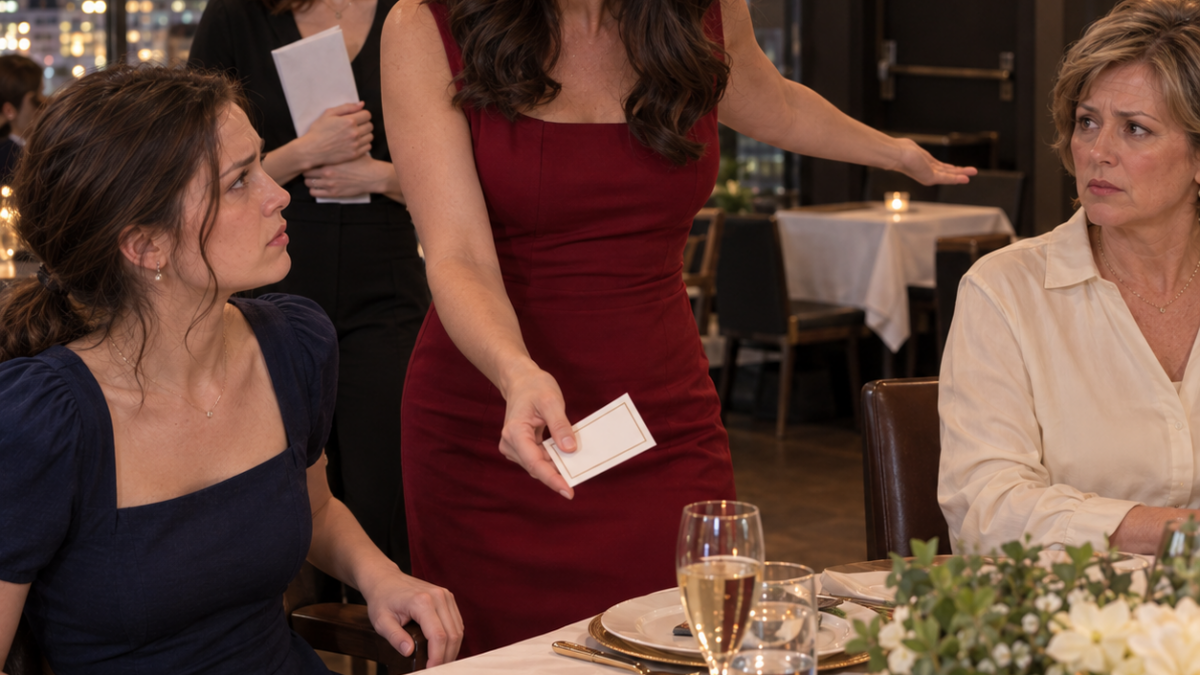
My older sister took my place card off the family table at her birthday dinner and told me to sit near the service door because “tonight isn’t another celebration for Hannah.” I was 24, had graduated from college six days earlier, and was starting my first full-time research job the following Monday. Samantha had spent the entire week complaining that relatives were still congratulating me. My mother watched her move my chair and told me not to make the evening uncomfortable. I almost left without saying anything. Then Samantha played a private voice message I had sent during a panic-filled job interview week, and half the room laughed. The next morning, one of her closest friends handed me the printed event timeline and said, “She planned more than you saw.”
My name is Hannah Miller.
My sister Samantha is four years older than me.
Growing up, people described us in a way that sounded harmless until you lived inside it.
Samantha was “the fun one.”
I was “the serious one.”
She could walk into a room, tell a story, and have six people leaning toward her within minutes.
I was better at listening.
That difference only became a problem when somebody paid attention to me.
If I won something at school, Samantha remembered an embarrassing childhood story.
If somebody complimented my clothes, she told them how long I had taken to choose the outfit.
If I mentioned a new friend, she joked that I was “finally becoming social.”
The remarks were small enough that objecting made me look humorless.
So I learned to laugh.
Our parents helped maintain that system.
My mother, Linda, usually said, “You know how your sister is.”
My father, Paul, preferred, “Don’t give her the reaction she wants.”
Both pieces of advice required the same person to adjust.
Me.
I graduated from the University of Wisconsin–Milwaukee in May with a degree in applied psychology.
The ceremony was not extravagant.
My parents came.
My friend Jenny Collins came.
Samantha arrived late, took several photographs, and spent most of lunch joking that she had survived “graduation week.”
Six days later, it was her twenty-eighth birthday.
She booked a private dining room at a rooftop restaurant overlooking downtown Milwaukee.
About twenty-four people attended.
Family.
Coworkers.
College friends.
Jenny had helped Samantha coordinate flowers and the slideshow because they had known each other since high school.
When I arrived, my place card was beside my parents at the main table.
I noticed because I was surprised.
Usually Samantha placed me wherever an extra chair fit.
I sat down.
Ten minutes later, she walked over.
She was wearing a dark-red dress and carrying a glass of sparkling wine.
Without saying hello, she picked up my place card.
“What are you doing?”
“Moving you.”
“Why?”
She pointed toward a small two-person table near the service door.
“You can sit with Jenny.”
Jenny was still helping the event coordinator near the projector.
I looked at Samantha.
“I’m sitting with Mom and Dad.”
“Not tonight.”
Linda heard us.
“Hannah.”
That single word carried the entire family instruction.
Do not react.
I looked at my mother.
“Did you know about this?”
She gave a tired smile.
“Samantha wants one night that isn’t connected to your graduation.”
“I haven’t mentioned graduation.”
“That isn’t the point.”
Samantha placed my card on the small table.
“Exactly.”
People nearby had started listening.
I could feel it.
That was Samantha’s favorite kind of room.
One where refusing her meant becoming part of the entertainment.
She leaned closer.
“Just let me have my birthday.”
For half a second, I almost apologized.
Then I remembered I had not done anything.
I picked up my purse and moved.
Dinner started.
I stayed.
That is the part people sometimes misunderstand when I tell them what happened later.
I did not immediately storm out.
I did what I had been trained to do.
I kept the evening comfortable.
I smiled when relatives asked about work but gave short answers.
I redirected compliments toward Samantha.
I even stood during the birthday toast.
Then the slideshow started.
Childhood photos.
College pictures.
Vacations.
Bad haircuts.
People laughed.
Then a photograph of me appeared.
It was from the week before graduation.
Underneath it, Samantha had placed an audio clip.
My own voice filled the room.
“I don’t know if I can do this. I feel like they’re going to realize they hired the wrong person.”
My stomach dropped.
I knew the recording immediately.
Three months earlier, before the final interview for my new job, I had sent Linda a private voice message while sitting in my car.
I had been scared.
Not unstable.
Not collapsing.
Scared.
I had never sent that recording to Samantha.
People laughed because they thought it was part of the joke.
Samantha raised her glass toward me.
“Our fearless graduate.”
I stood.
She smiled.
“Oh, Hannah. Don’t be dramatic.”
That sentence almost worked.
Almost.
Then I looked toward Jenny.
She was not laughing.
She was staring at Samantha with an expression I had never seen before.
I picked up my purse.
This time, I left.
Jenny followed me into the hallway a minute later.
“Hannah.”
“I’m going home.”
“I know.”
She held a folded sheet of paper against her chest.
“What is that?”
Her face had gone pale.
“The event timeline.”
“So?”
She looked through the open doorway toward Samantha’s party.
Then back at me.
“There are notes on it that you need to see.”
Jenny unfolded the timeline against the hallway wall. The first handwritten note was beside dinner seating. Move Hannah after first drinks. The second was beside the slideshow. Play interview audio after graduation photo. Then came another line. If she gets upset, keep cameras running.
I looked at Jenny.
“She wrote this?”
“I watched her write part of it yesterday.”
“Why didn’t you tell me?”
“I thought it was a stupid roast.”
Jenny swallowed.
“I didn’t know about the voice message.”
Neither did I.
Only my mother had received it.
Jenny turned the page. There was a shared-folder link printed at the bottom because she had been helping Samantha organize photographs and music.
“I still have access,” she said.
We opened it from Jenny’s laptop in the lobby. Most folders contained ordinary birthday material. Then we found one labeled backup.
Inside was a draft email addressed to the human-resources director at the company where I was supposed to start work on Monday. The subject accused me of lying during the hiring process. Attached were edited screenshots of private family messages and a transcript of the same voice recording Samantha had just played for twenty-four people.
I read the first paragraph twice.
It described me as emotionally unstable and dishonest.
At the bottom was a note Samantha had typed to herself.
Send if Hannah makes tonight about her again.
Jenny looked at me.
“Hannah, I don’t think the birthday was the whole plan.”
I wanted to dismiss it.
That sounds ridiculous now.
But dismissal was the reflex I had practiced my whole life.
Samantha liked attention.
Samantha went too far.
Samantha did not think before she spoke.
Samantha could be selfish.
Those explanations were familiar.
Planning to interfere with my new job was not.
“That could be nothing,” I said.
Jenny stared at me.
“Hannah.”
“It’s a draft.”
“With your HR director’s name on it.”
“She may never have sent anything.”
Jenny closed the laptop.
“Then ask them.”
I did not want to.
My new job was with Lakefront Community Research, a Milwaukee nonprofit that analyzed youth mental-health, housing, and school-attendance data for community organizations.
The position was entry-level.
I would be a research associate.
Nothing glamorous.
But I had wanted it badly.
I had spent months applying for work that felt connected to what I studied.
Lakefront was the first organization where I left the interview thinking I could imagine myself there in five years.
Now I was supposed to call before my first day and say:
Hello. My sister may be preparing to tell you I am unstable.
I would rather have repeated my final statistics exam.
Jenny understood.
She sat beside me on a lobby bench.
“You don’t have to do it tonight.”
“No.”
“But don’t wait until Monday.”
I nodded.
Then another question hit me.
“How did Samantha get the audio?”
Jenny did not answer.
Neither of us needed to.
Linda.
I called my mother from the parking garage.
She answered immediately.
“Hannah, where did you go?”
“You sent Samantha my interview voice message.”
Silence.
Not confusion.
Silence.
“Mom.”
“She wanted material for the birthday slideshow.”
“So you gave her something private.”
“I didn’t know she would use it like that.”
“What did you think she would do with it?”
“She said she wanted to make a funny graduation section.”
I closed my eyes.
“You knew.”
“I knew about a joke.”
“You heard the recording.”
“Hannah, you were nervous. Everyone gets nervous.”
“That is why I sent it to you.”
“I know.”
“No.”
My voice shook.
“I sent it to my mother.”
That finally landed.
Linda became quiet.
Then she tried to move the conversation somewhere safer.
“Samantha has felt overlooked all month.”
I almost laughed.
“So you gave her something to humiliate me with?”
“That is not what I said.”
“What did you say?”
“I said she wanted one night where everyone wasn’t talking about you.”
There it was.
A family need.
Samantha needed attention.
Therefore, something belonging to me became available for use.
I asked one more question.
“Did you know about the email to my employer?”
“What email?”
Her confusion sounded real.
I believed that part.
“I’m going home.”
“Hannah, wait.”
“I’m done tonight.”
I hung up.
Jenny drove me home because my hands were shaking too much for me to trust myself behind the wheel.
She came inside.
We downloaded the birthday folder before Samantha could remove access.
Then we did something that felt ridiculous until it became essential.
We preserved everything.
The event timeline.
The metadata.
The draft email.
The edited screenshots.
The audio transcript.
The shared-folder timestamps.
Jenny wrote a short statement explaining how she had access to the folder because Samantha had invited her to collaborate on birthday materials.
Nothing stolen.
No passwords guessed.
No private account broken into.
A folder Samantha had voluntarily shared.
At 1:12 a.m., the access disappeared.
Samantha had removed Jenny.
By then we had copies.
The next morning, I emailed Lakefront’s HR manager, Rebecca Sloan.
I kept it short.
I explained that I had discovered a draft communication falsely alleging misconduct and instability, apparently prepared by a family member.
I told her I could provide documentation if anything similar had reached the organization.
Rebecca called fifteen minutes later.
“Hannah, are you somewhere private?”
“Yes.”
“We did receive something.”
My stomach dropped.
“When?”
“Four days ago.”
Four days.
Before the birthday.
Before the moved seat.
Before the slideshow.
Before Samantha knew whether I would “make tonight about me.”
The draft was not a reaction.
It was a backup plan for something already underway.
“What did it say?”
Rebecca answered carefully.
An anonymous message claimed I had misrepresented my academic record and concealed “serious emotional instability” during hiring.
It included screenshots of family texts.
One showed me telling Linda I had barely slept before an exam.
Another showed me writing that I felt overwhelmed during finals.
Ordinary private conversations, stripped of context and arranged like evidence.
Lakefront had verified my degree directly with the university.
My employment references checked out.
Nothing in the email supported withdrawing the offer.
“We were not planning to act on it,” Rebecca said.
“Why didn’t anyone tell me?”
“We were still deciding whether it required a conversation.”
That was fair.
My start date had not even arrived.
“Can I send you what I found?”
“Yes.”
I forwarded the event-folder materials.
Rebecca said the organization’s counsel would review them and document the situation in case further contact occurred.
Then she told me something I had not expected.
“Your job is still your job.”
I started crying.
Not loudly.
Just relief leaving my body all at once.
“Thank you.”
“You don’t need to thank me for not accepting an anonymous accusation without evidence.”
Maybe not.
I thanked her anyway.
After the call, I looked at the draft email again.
The wording matched the anonymous complaint closely.
Not exactly.
Enough.
One distinctive sentence appeared in both.
Hannah performs confidence well, but people close to her know how unstable she becomes under pressure.
I had heard Samantha use that language before.
Performs confidence.
At graduation lunch, an aunt called me poised.
Samantha laughed and said, “Hannah performs confidence better than anyone.”
At the time, I thought it was another joke.
Now I understood she had already built the sentence into a story.
I did not confront her immediately.
That surprised Jenny.
“What are you waiting for?”
“I don’t know yet.”
The honest answer was that I wanted to see what Samantha would do without knowing what I had found.
She texted at 9:40.
You really walked out of my birthday because of a joke?
I said nothing.
At 10:06:
Mom is upset.
Nothing.
10:31:
Jenny is acting weird. What did you say to her?
Nothing.
Then:
You always do this. You make people choose sides.
I put the phone down.
By noon, Samantha had posted photographs from the party.
Not the slideshow.
Just polished images.
Candles.
Friends.
Her red dress.
A group photograph.
I was not in it.
Caption:
Best night with the people who show up.
I almost admired the efficiency.
She had moved me out of the story before anyone could ask why I left.
Jenny saw it too.
“She’s setting the narrative.”
“Yes.”
“What are you going to do?”
“Nothing publicly.”
That became important.
I did not post the timeline.
I did not upload the draft.
I did not call Samantha a liar online.
I was not interested in winning a comment section.
I wanted three things.
My job protected.
My private information out of Samantha’s hands.
A family boundary that did not depend on everyone agreeing I was justified.
Monday morning, I started at Lakefront.
Rebecca met me before orientation.
She introduced me to the executive director, Melissa Grant, and the organization’s counsel joined by video for ten minutes.
They did not interrogate me.
They showed me the anonymous complaint.
Seeing it felt different from hearing about it.
The sender used a generic email account.
The message included one photograph from my graduation lunch.
Only family members had that photograph before Samantha posted it later.
More significantly, the attached screenshot had been cropped from a group text in which only Linda, Paul, Samantha, and I participated.
There were very few possible sources.
Counsel advised me to preserve records and notify them if anyone contacted Lakefront again.
They would handle workplace communication themselves.
Then orientation started.
Benefits.
Passwords.
Data-security policies.
A tour of the office.
At 11:00, I sat beside another new employee learning how to access a research database.
The ordinariness of it almost made me cry again.
My life had not ended.
Samantha’s email had not become reality because she typed it.
That lesson sounds obvious.
At twenty-four, it did not feel obvious.
I had spent years letting her define me in rooms.
Sensitive.
Serious.
Jealous.
Awkward.
Dramatic.
If Samantha said it with enough confidence, people tended to accept the label and evaluate my behavior through it.
Lakefront did something different.
They checked.
That afternoon, Samantha called.
I let it ring.
She called again.
Then a message:
We need to talk before you make this worse.
I answered with one sentence.
Did you contact Lakefront Community Research?
The typing indicator appeared.
Stopped.
Appeared again.
Then:
What are you talking about?
I sent nothing else.
Twenty minutes later, Linda called.
I answered.
“Hannah, please talk to your sister.”
“Did she call Lakefront?”
“I don’t know.”
“Ask her.”
“She says you’re accusing her of something.”
“I asked a question.”
“You’re putting everyone in the middle.”
“No.”
I looked around the small conference room I had stepped into.
“I’m stepping out of the middle.”
Linda exhaled.
“You know how Samantha gets when she feels cornered.”
There it was again.
I almost smiled.
“Yes.”
My mother mistook the sound for agreement.
“Then please give her a little space.”
“I’m giving her a lot.”
“What does that mean?”
“I’m not coming to Sunday dinner.”
“Hannah.”
“I’m not discussing this through you anymore.”
She became quiet.
Then defensive.
“You are punishing us too.”
“No.”
“I gave Samantha one voice message. I admitted that was a mistake.”
“Mom, you gave her something private because she wanted to make me smaller at her birthday.”
“That isn’t fair.”
“Did you ask me before you gave it to her?”
“No.”
“Then we can disagree about the wording later.”
I ended the call.
That evening, Paul came to my apartment.
He texted first.
I agreed to let him in.
My father had always been the softer parent.
Not more protective.
Softer.
He disliked conflict so much that he often confused whoever ended it fastest with whoever was behaving best.
He sat on my couch.
“I saw the event sheet.”
“How?”
“Your mother made Samantha show us.”
That surprised me.
“And?”
His face tightened.
“She shouldn’t have done it.”
“Which part?”
“All of it.”
I waited.
He rubbed his hands together.
“She says the email draft was never sent.”
“It was.”
He looked up.
“What?”
“Lakefront received an anonymous version four days before her birthday.”
Paul’s face changed.
“Do they know it was Samantha?”
“They know it contained private material from our family.”
“That isn’t proof.”
“No.”
I nodded.
“That is why I haven’t said publicly that she sent it.”
He seemed relieved.
That annoyed me.
“But I know what was in her planning folder.”
His relief disappeared.
“Hannah, what do you want?”
That question mattered.
Not what do you want us to say.
Not how do we fix Samantha.
What do you want?
“Distance.”
“How much?”
“I don’t know.”
“From Samantha?”
“From all of this.”
He nodded slowly.
Then made one mistake.
“Your mother’s birthday is next month.”
I laughed.
I could not help it.
Paul closed his eyes.
“That was stupid.”
“Yes.”
“I’m sorry.”
That was the first apology I believed all week.
I did not attend family dinner.
The next day, Jenny called.
“Kevin wants to talk to you.”
Kevin Russo was one of Samantha’s closest friends.
He had been at the birthday dinner.
He met Jenny and me at a coffee shop.
He looked deeply uncomfortable.
“I owe you an apology.”
“For laughing?”
“Yes.”
“Okay.”
He nodded.
“Also for something else.”
He pulled out his phone but did not hand it to me.
“Samantha started a birthday planning group chat about two weeks ago.”
Jenny frowned.
“I wasn’t in one.”
“It was mostly people from work and college.”
“What was it for?”
“At first, normal stuff.”
He swallowed.
“Then she started talking about making sure nobody turned the night into Hannah’s graduation party.”
My stomach tightened.
Kevin had screenshots.
Samantha wrote:
If relatives start asking Hannah about the new job, redirect.
Later:
I’m moving her away from Mom and Dad so she can’t hold court.
Then:
I have audio that will bring her back to earth if she starts acting important.
One friend replied:
That sounds mean.
Samantha answered:
She can take it. Everyone thinks she’s made of glass because she acts quiet.
I kept reading.
Then came a message from three days before the party.
If she walks out, get video. She always looks unstable when she gets upset.
I stopped.
“Did anyone object?”
Kevin looked ashamed.
“Not enough.”
That sentence felt more useful than an excuse.
“Why show me now?”
“Because the email thing is not funny.”
“So the rest was?”
He looked at me.
“At the time, I told myself it was.”
I nodded.
I appreciated the honesty.
Then he added:
“Samantha asked me this morning to tell people you were laughing during the slideshow before you left.”
“I wasn’t.”
“I know.”
“Did you tell her that?”
“Yes.”
“What did she say?”
“That I was choosing you.”
There it was.
Samantha’s worldview required every disagreement to become a side.
If Kevin refused to alter what he remembered, he was no longer neutral.
He was mine.
I asked Kevin to send the screenshots to me.
He did.
Then I sent copies to Lakefront’s counsel.
Still no public post.
Still no campaign.
Just preservation.
The next escalation happened because Samantha created it herself.
She posted a vague statement online two days later.
Some people will take a private family disagreement, distort it, and use it to damage your reputation because they need to be the victim in every story.
She did not name me.
She did not have to.
Mutual friends knew.
Kevin commented publicly.
I was there. Hannah didn’t distort what happened.
Samantha deleted his comment.
Jenny added:
Then why was there a written plan to move her seat and play her private audio?
That disappeared too.
Other guests started asking questions.
Samantha deleted the entire post within an hour.
Then she called me seventeen times.
I finally answered.
“What?”
Her voice was shaking.
“You gave them the timeline.”
“I gave nobody anything online.”
“Jenny knows.”
“Jenny helped plan your party.”
“She had no right to go through my folder.”
“You shared the folder with her.”
Silence.
“You’re ruining my friendships.”
“I haven’t spoken to most of your friends.”
“You gave Kevin permission to turn on me.”
I closed my eyes.
“This is not how people work.”
“You know what I mean.”
“No.”
My voice stayed calm.
“I think that is the problem.”
She started crying.
“You got everything this month.”
“What?”
“Graduation.”
I almost could not believe we were still there.
“The job.”
Her voice rose.
“Every family dinner was about Hannah graduating. Hannah got hired. Hannah did this. Hannah did that. I wanted one night.”
“So you moved my seat.”
“Yes.”
“You played something private.”
“I thought it would be funny.”
“You planned to film me if I got upset.”
“I knew you would overreact.”
“And Lakefront?”
Silence.
“Samantha.”
She did not answer.
“Did you send the email?”
Her breathing changed.
Then anger arrived where denial had been.
“Fine.”
One word.
My hand tightened around the phone.
“Fine what?”
“I sent something.”
I sat down.
“Why?”
“Because they should know who they hired.”
“What does that mean?”
“You act so composed around everybody.”
“I was nervous before an interview.”
“You’re always nervous.”
“So?”
“You make everyone think you’re perfect.”
I laughed once.
Not because anything was funny.
“You sent an anonymous email to my employer because I graduated and got a job.”
“That’s not what I said.”
“What did you say?”
“I said they should know you’re not as stable as you act.”
I stopped talking.
Samantha must have heard what she had finally said because her tone changed.
“I didn’t think they’d fire you.”
“That makes it better?”
“I thought they’d ask questions.”
“Why?”
“So you would stop acting like nothing gets to you.”
There was the main reveal.
Not a prank.
Not one bad birthday decision.
Samantha had been trying to create an audience for my vulnerability.
At the party.
Among friends.
At my employer.
Anywhere attention might move away from her and toward me.
I said, “Do not contact Lakefront again.”
“Hannah—”
“Do not use recordings, screenshots, photographs, or messages from me without permission.”
“You can’t tell me what to do with family texts.”
“I can tell you what contact I will respond to.”
She went quiet.
“I’m ending this call.”
“You’re really cutting me off over one email?”
“No.”
I thought about the email?”
“No.”
I thought about the email?”
“No.”
I thought about the event timeline.
The place card.
The voice note.
The group chat.
The complaint.
“I’m stepping away because you built a system around humiliating me and called each piece a joke.”
Then I hung up.
I immediately wrote down the call from memory.
Time.
Duration.
What she admitted.
Not because I planned to sue.
Because I had finally learned something from all the records surrounding me.
Memory changes under pressure.
Documentation does not have to.
Lakefront’s counsel sent Samantha a formal letter.
It was not dramatic.
It did not threaten financial ruin.
It instructed her not to contact the organization, impersonate anyone associated with me, or submit false material concerning my employment.
It also directed her to preserve relevant communications in case further interference occurred.
The message worked.
No more emails reached Lakefront.
I completed my first week.
Then my second.
By week three, I was helping clean a dataset from a school-attendance project and learning how much I had not learned in college.
I loved it.
My supervisor, Monique Harris, gave me feedback on my first report.
“This section is strong.”
My instinct was immediate.
Deflect.
Make a joke.
Tell her Jenny helped.
Tell her the analysis was simple.
Anything except simply receiving praise.
I caught myself.
“Thank you.”
Monique nodded and moved on.
I sat there for several seconds.
Such a small moment.
Samantha was nowhere near it.
I did not have to prepare for the compliment to become material later.
Family life became harder before it became quieter.
Linda called after learning Samantha had admitted sending the employer email.
This time, she sounded stunned.
“She told you?”
“Yes.”
“I asked her directly and she denied it.”
“She denied it to me first too.”
My mother began crying.
“I gave her that recording.”
“Yes.”
“I didn’t know.”
“I know.”
That was true.
Linda had enabled the party humiliation.
She had not planned the employment sabotage.
Responsibility could be specific.
That mattered to me.
“I thought if she got to make a little joke about graduation, she’d settle down.”
I closed my eyes.
“You knew she was jealous.”
“Yes.”
“And you gave her something private so she could manage that jealousy by embarrassing me.”
When stated plainly, the logic sounded as bad as it was.
Linda did not argue.
“I’m sorry.”
I waited.
No explanation followed.
That made the apology different.
“I need space from you too.”
“I understand.”
She sounded hurt.
I let her be hurt.
Paul called later.
He did not ask me to fix anything.
He said, “Your mother told me.”
“Okay.”
“I should have stopped this years ago.”
I sat silently.
He continued.
“Every time Samantha went too far, I told you not to react.”
“Yes.”
“I thought that was teaching you not to be bothered.”
“It taught her there was no cost.”
He breathed out slowly.
“I know.”
That conversation did not repair our relationship.
It did something smaller and more useful.
It named the pattern accurately.
Samantha’s friends changed too.
Not all of them.
Some believed the entire situation was being taken too seriously.
That was their right.
Kevin stopped attending events Samantha organized.
Jenny withdrew completely.
Two other friends told Samantha they were tired of being expected to laugh whenever she turned somebody into a target.
Nobody created an anti-Samantha club.
Nobody needed to.
People simply became less available for the role she had assigned them.
Audience.
Her workplace became involved only because she brought it there herself.
Samantha worked as an account manager for a Milwaukee events agency.
One of her clients saw her deleted post through screenshots circulating among mutual acquaintances and asked whether the situation involved a client event.
It did not.
Her employer did not fire her.
They did, however, remove her from one upcoming public-facing brand event while they reviewed whether her online conduct conflicted with client standards.
Samantha blamed me.
I had not contacted her employer.
Neither had Jenny.
As far as we knew, nobody in our family had.
That consequence belonged entirely outside my control.
For once, I left it there.
Linda tried to organize a mediation three weeks after the birthday.
I declined.
“I’m not ready.”
“She wants to apologize.”
“She can write.”
“Hannah, she’s your sister.”
“I know.”
“I don’t want this to become permanent.”
“Then stop trying to decide how quickly I heal.”
My mother went quiet.
That sentence changed something between us.
She said, “Okay.”
It was the first time she had accepted a boundary before understanding it.
My family celebrated Linda’s birthday without me.
That hurt.
I almost changed my mind the morning of the dinner.
Paul texted:
No pressure. We love you.
No guilt.
No mention of Samantha being sad.
I stayed home.
Jenny came over with takeout.
At 8:30, my phone stayed silent.
At 9:00, still silent.
Nobody asked me to call in.
Nobody sent a photograph designed to make me feel excluded.
That absence of pressure felt strange.
It also felt respectful.
A month later, Paul asked if we could have coffee.
I agreed.
He arrived with no agenda.
We talked about work first.
Then he said, “I keep thinking about how often I told you to ignore things.”
I stirred my coffee.
“So do I.”
“I thought I was preventing fights.”
“You were.”
He looked confused.
“That sounds like I did something right.”
“You prevented fights.”
I looked at him.
“You didn’t prevent harm.”
He absorbed that.
Then nodded.
“I understand.”
“Do you?”
“I think I’m starting to.”
That was enough.
He did not ask me to forgive Samantha.
I noticed.
Three months after the birthday, a letter arrived from her.
Real paper.
My address written by hand.
No dramatic envelope.
No perfume.
No gift.
I left it unopened for four days.
Then I read it at the kitchen table.
Hannah,
I have rewritten this enough times that I realized rewriting is part of the problem.
So I’m going to say the things I keep trying to soften.
I moved your seat because I wanted people to see you as less important.
I used the voice message because I knew it would embarrass you.
I wanted people to film you because I thought if you got upset, I could prove you were dramatic.
I contacted your employer because I wanted something in your life to become uncertain after so many things were going well for you.
None of that was a joke.
I kept calling it one because jokes are easier to forgive than choices.
I’m sorry.
I do not expect you to answer.
Samantha
I read it again.
For the first time, she had described her behavior without converting my reaction into part of the offense.
No:
You embarrassed me too.
No:
I was under stress.
No:
You know how competitive we are.
Just choices.
I cried.
Then I put the letter away.
I did not call.
An honest apology can matter without becoming a ticket back into somebody’s life.
That was another thing I had to learn.
At Lakefront, my probationary employment period ended successfully.
Melissa called me into her office.
“We’d like you to stay.”
“I thought that was the plan.”
She smiled.
“You worry a lot.”
“I have documentation.”
She laughed.
“So do we.”
My contract became permanent.
I moved into a project examining why students referred to counseling often dropped out before receiving services.
The work was slow.
Messy.
Real.
A spreadsheet did not behave like family.
If a number was wrong, you could trace it.
People were harder.
But I had become better at tracing patterns there too.
Samantha and I had no contact for six months.
Then we saw each other at our cousin Leah’s wedding.
I had debated going.
Leah called me herself.
“I want you there. I am not seating you by the door.”
That made me laugh.
I went.
Samantha was already at the reception when I arrived.
She saw me.
Stopped.
Then waited.
No rushing over.
No performance.
Eventually, near the bar, she approached.
“Hi.”
“Hi.”
“How are you?”
“Good.”
“Work?”
“Good.”
She nodded.
“I’m glad.”
Then she left.
That was the entire conversation.
It may have been the healthiest interaction we had ever had.
Later, an uncle congratulated me on a research presentation Lakefront had published.
Samantha was standing nearby.
For a second, I watched her face.
Old reflex.
Would she make a joke?
Correct him?
Tell an embarrassing story?
She opened her mouth.
Then closed it.
She picked up her drink and walked away.
Nobody else noticed.
I did.
Change is sometimes less impressive than people want it to be.
A sentence not spoken.
A boundary not challenged.
A joke withheld.
Those things count.
Linda and I slowly rebuilt something too.
Not the old mother-daughter relationship.
That relationship had depended too heavily on me being easy.
We started with lunch once a month.
She asked before sharing anything I told her.
The first few times, the question sounded awkward.
“Is this something I’m allowed to mention to Dad?”
I appreciated the awkwardness.
It meant she was learning.
Paul became more direct.
If Samantha complained about the distance between us, he stopped bringing the complaint to me.
“I told her to talk to her counselor,” he said once.
I nearly applauded.
Jenny remained my closest friend.
She never forgave herself quickly for helping Samantha plan the birthday.
I told her something I had learned from the whole experience.
“You thought you were helping with flowers and music.”
“I still saw the seating note.”
“And then when you understood what it meant, what did you do?”
“I told you.”
“Exactly.”
Accountability did not require pretending everybody had equal responsibility.
Jenny had missed a warning.
Linda had shared private material.
Paul had enabled a long family pattern.
Samantha had intentionally built the humiliation and contacted my employer.
Different actions.
Different consequences.
That clarity helped me more than calling the entire family toxic ever could.
A year after the birthday, Lakefront held a public community-data presentation at a neighborhood center.
I presented one section.
Maybe fifteen minutes.
Nothing prestigious.
My parents came.
They sat in the third row.
Samantha did not.
That was fine.
Afterward, Linda hugged me.
Then stepped back.
“Can I tell your aunt you were wonderful?”
I laughed.
“Yes.”
Paul said, “I have no embarrassing childhood story prepared.”
“Growth.”
He smiled.
On the drive home, I thought about Samantha’s birthday.
The place card.
The small table near the service door.
How enormous that move had felt in the moment.
She wanted to show everybody where I belonged.
Away from the center.
Away from the family.
Small enough to be funny.
For years, I believed my job was to prove I could survive that treatment without making anyone uncomfortable.
I was wrong.
Survival was never the standard.
The question was whether I wanted to keep participating in a relationship where being close to someone gave them access to whatever hurt me most.
My answer changed.
That did not destroy my family.
It forced each relationship to become more honest or smaller.
Some became smaller.
Some became better.
Samantha and I exchange birthday texts now.
Nothing more.
Maybe that will change someday.
Maybe it will not.
I no longer measure healing by whether she eventually gets full access to me again.
I measure it differently.
I can receive a compliment without bracing for the joke that follows.
I can tell my mother I am scared without wondering who will hear the recording later.
I can sit at a table without checking whether my name is about to be moved.
I can leave when something feels cruel without spending three days asking whether I was too sensitive.
Those are small freedoms.
They changed my life.
The printed birthday timeline still exists.
I keep it in a folder with the letter Samantha eventually sent me.
Not because I enjoy preserving bad memories.
Because the two papers tell the whole story better together.
The first one contains instructions for controlling my place in the room.
Move Hannah.
Play the audio.
Keep cameras running.
The second contains no instructions for me at all.
It only takes responsibility for what Samantha chose.
That is the difference I spent most of my life waiting for.
At twenty-four, I thought standing up to my sister would require finally finding the perfect comeback.
It didn’t.
I never found one.
I found something better.
I stopped arguing about whether the hurt counted.
I preserved what happened.
I protected the life she tried to interfere with.
I let consequences belong to the person who created them.
And when people asked me to return to normal, I finally understood that normal was the one thing I did not want back.







