My Sister-in-Law Hit My 8-Year-Old—Then My Husband Picked Up His Fork
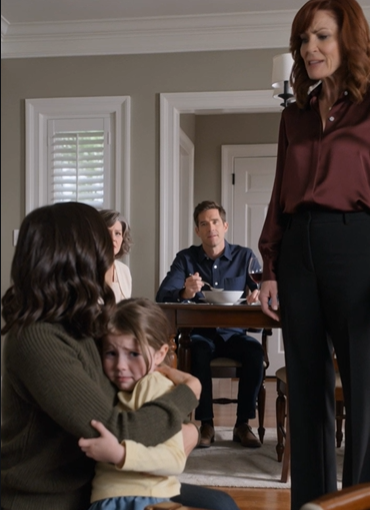
My sister-in-law struck my eight-year-old daughter over a dining-room chair, then pulled the chair away while Lennox was trying to stand and sent her onto the hardwood floor. My husband, Cass, watched his sister do it, told me, “Mara is just strict,” and went back to eating. I had spent eleven years smoothing over his family’s behavior because I thought keeping the peace protected my marriage and gave my daughter a larger family. That Sunday showed me what my silence had actually been protecting. I carried Lennox out while she cried against my shoulder and drove her to the emergency room. Hours later, a hospital social worker asked me a question that made every excuse I had accepted for eleven years suddenly feel impossible to repeat.
My name is Claire Vantress.
I was 37 years old, living outside Columbus, Ohio, and I had been married to Cass for eleven years.
When I first met him, his calmness felt like safety.
Cass almost never yelled.
He did not slam doors.
When arguments became uncomfortable, he lowered his voice and waited for them to disappear.
It took me years to understand that calm and courage are not the same thing.
Cass avoided conflict because conflict frightened him.
And the person he was most afraid to disappoint was his older sister, Mara.
Mara was four years older than Cass.
Their parents worked long shifts when they were children, so Mara cooked for him, walked him to school, checked his homework, and handled responsibilities no child should have been carrying.
Cass never forgot it.
“She basically raised me,” he told me early in our marriage.
I respected that history.
What I did not understand was that gratitude had become obedience.
During our first year of marriage, Mara rearranged our kitchen while Cass and I were away for a weekend.
I came home to find our dishes, pantry, coffee maker, and cooking supplies in different places.
When I objected, Cass laughed.
“That’s just Mara. She thinks she’s helping.”
That became the explanation for almost everything.
Mara criticized the paint in our bedroom.
She commented on how I folded towels.
She arrived without calling.
If I said she crossed a boundary, Cass reminded me how much she had sacrificed for him.
Three years after our wedding, Lennox was born.
At first, Mara seemed thrilled to be an aunt.
Then the corrections started.
Lennox held her spoon wrong.
She talked too loudly.
She did not say thank you quickly enough.
At four, Mara once took a toy from her hand because Lennox had reached for it before asking.
“Mara, give it back,” I said.
“She needs to learn.”
“She’s four.”
“That’s when you teach them.”
Cass was standing ten feet away.
He looked at his phone.
Later, he told me I was reading too much into it.
So I started choosing silence.
Sunday dinner at Cass’s parents’ house was a family tradition.
Every week at five.
The dining room had a long oak table with one chair nearest the kitchen that everyone silently understood belonged to Mara.
Nobody had assigned it to her.
Nobody had ever explained the rule.
Adults simply moved if she appeared beside them.
Lennox was eight.
To her, an empty chair was an empty chair.
That Sunday, we arrived about ten minutes late because she could not find one of her sneakers.
Most of the family was already seated.
Mara was still in the kitchen.
The chair nearest the kitchen was empty.
Lennox climbed into it.
I was three steps behind her carrying a casserole when Mara came through the doorway.
She stopped beside the table.
“That’s my seat.”
Lennox looked up. “Oh. Sorry.” She immediately put both hands on the table to stand. Mara crossed the room before Lennox was fully upright. Her open hand struck Lennox across the cheek. Before I could reach them, Mara grabbed the chair and pulled it away. Lennox fell onto the hardwood floor, landing hard on her hip and shoulder before the side of her head struck the lower edge of the table. She started crying. “I said I was moving,” she sobbed. Mara looked down at her. “Maybe now she’ll remember to listen.” I dropped beside Lennox and looked toward Cass. He was still sitting at the table. “She’s just strict, Claire,” he said. Then he picked up his fork. Diane, my mother-in-law, stood and said, “Please don’t make this into a scene.” I lifted Lennox into my arms and left. At the emergency room, doctors found a mild concussion, a sprained wrist, and deep bruising but no fracture or internal bleeding. While Lennox rested, a hospital social worker named Renee asked me to step into the hallway. She listened while I explained exactly what had happened. Then she said, “These injuries require a child-safety report.” She glanced toward Lennox’s room. “Do you want to make the police report yourself?”
I looked through the narrow window in the hospital door.
Lennox was asleep beneath a thin blanket.
Her temporary wrist brace looked enormous on her small arm.
For eleven years, whenever something happened with Cass’s family, I had asked myself the same question.
What response will create the least conflict?
That question had guided almost every compromise.
Every Sunday dinner I attended when I wanted to stay home.
Every comment from Mara I pretended not to hear.
Every conversation with Cass that ended with me apologizing for making him feel trapped between his wife and his sister.
Now my daughter was sleeping in an emergency room because the person everybody was afraid to confront had finally crossed a line that left medical evidence.
I looked at Renee.
“Yes.”
She nodded.
“I want to report it myself.”
Renee found us a small consultation room.
I called the police.
My voice surprised me.
It was calm.
I gave the dispatcher George and Diane Vantress’s address.
I gave Mara’s full name.
I explained that Mara had struck my eight-year-old daughter and pulled a chair away while Lennox was trying to stand.
I told them where Lennox had been treated.
A patrol officer came to the hospital about forty minutes later.
Another unit went to the Vantress house.
Officer Morales introduced himself, sat across from me, and asked me to start from the beginning.
I did.
No dramatic language.
No interpretation.
Just what happened.
Mara said the chair was hers.
Lennox apologized and began standing.
Mara slapped her.
Mara pulled away the chair.
Lennox fell.
Cass watched.
Mara said Lennox would learn her place.
Cass said Mara was strict.
Diane told me not to make a scene.
Officer Morales wrote everything down.
He asked who had been sitting at the table.
I named them.
George.
Diane.
Cass.
Mara.
Cass’s aunt Patricia.
His uncle Daniel.
And his cousin Tori.
Tori was 27 and only attended Sunday dinners occasionally.
She had been sitting two seats from Lennox.
Officer Morales asked whether I felt safe returning to my house that night.
That question stopped me.
I did not believe Cass would hit me.
I did not believe he would hit Lennox.
But my definition of safety had changed in the last six hours.
I had watched him choose his sister while his daughter cried on the floor.
“I don’t know,” I said.
Renee helped me book a hotel near the hospital.
I texted Cass.
Lennox has a concussion and a sprained wrist. We are staying somewhere else tonight.
His reply came within a minute.
Is this necessary?
Then another.
Police came to Mom and Dad’s. Claire, this is getting out of control.
Then:
Mara feels awful.
I stared at that one the longest.
Mara felt awful.
I wondered when anyone planned to ask how Lennox felt.
Renee noticed my expression.
“You don’t have to answer tonight.”
I put the phone away.
That sentence felt almost revolutionary.
I did not answer.
The police interviews happened that evening.
Later, I learned how differently everyone remembered the same four seconds.
George claimed he had been looking toward the kitchen.
Diane remembered Mara touching Lennox but could not say how hard.
Patricia said she heard the slap but did not see the actual contact.
Daniel said everything happened too quickly.
Cass acknowledged that Mara “swatted” Lennox but insisted the fall was accidental.
Mara said she had tapped Lennox on the cheek after being disrespected and moved the chair because she wanted it back.
Only Tori described the incident exactly as I had.
She told police she watched Mara slap Lennox before Lennox was fully out of the seat.
She watched Mara grab the chair.
She heard Lennox’s head strike the table.
And she heard Mara say:
“Maybe now she’ll learn her place.”
The next afternoon, Tori called me.
“I told them everything.”
“Thank you.”
“I should have stopped her.”
“You had seconds.”
“So did Cass.”
I did not answer.
Tori apologized.
“I’m sorry.”
“No. You’re right.”
She hesitated.
“There’s something I’ve been thinking about.”
“What?”
“I don’t know if it matters.”
She told me that before I met Cass, Mara had worked briefly at a daycare center.
The job ended suddenly.
The family explanation was that Mara had argued with a parent.
Tori remembered hearing adults whisper that there had been an incident involving a child.
“Did you see anything?”
“No.”
“Do you know what actually happened?”
“No.”
“Then we leave it alone.”
Tori seemed relieved.
I mentioned it to Officer Morales only as unverified information.
He told me investigators could check anything relevant themselves.
I did not need an old rumor.
Sunday was enough.
Still, Tori’s story made me replay years of smaller incidents.
Mara making a six-year-old nephew stand facing a hallway wall at a birthday party because he questioned her.
Mara shouting at a toddler for reaching toward a decorative dish.
Mara grabbing Lennox’s hand when she was four because she picked up a toy before asking.
Every incident had an explanation afterward.
She was stressed.
She was strict.
She cared about manners.
Children needed boundaries.
And every time, the adults around her had quietly taught her that she could go further next time.
I had participated in that pattern too.
That truth was painful.
I did not cause what Mara did.
But I had seen enough to know something was wrong long before that Sunday.
I kept attending anyway.
I kept accepting Cass’s explanations.
I told myself I was preserving family relationships for Lennox.
What I had actually preserved was Mara’s access.
The county prosecutor reviewed the police report, Tori’s statement, and the hospital documentation.
Mara was charged with misdemeanor assault involving a minor.
She was not hauled away in handcuffs.
Real life was less theatrical.
She received formal notice, retained an attorney, and was given a court date.
Diane acted as though I had arranged a public execution.
She left three voicemails the day the charge was filed.
“Claire, you’ve made your point.”
“Mara knows she went too far.”
“She could lose her job over this.”
Not once:
How is Lennox?
I blocked her.
George called Cass instead.
I learned that because Cass arrived at our house the morning after the hospital while I was packing clothes.
I had waited until he left for work.
I thought I would have an hour.
He came back early.
He stood in the bedroom doorway watching me fold Lennox’s pajamas into a suitcase.
“Where are you going?”
“I booked a hotel for a week.”
“You can’t just take her.”
“I’m not hiding her from you.”
“You filed a police report against my sister.”
“Yes.”
He looked exhausted.
“Mara made a mistake.”
I stopped folding.
“She hit our child.”
“She lost her temper.”
“She deliberately pulled the chair.”
“She didn’t intend for Lennox’s head to hit the table.”
“You keep reducing it.”
“I’m trying to be rational.”
“No. You’re trying to find the smallest possible version of what Mara did so you don’t have to challenge her.”
His face tightened.
“That isn’t fair.”
“What did you do when Lennox was on the floor?”
He looked away.
“Cass.”
“I froze.”
“You picked up your fork.”
He closed his eyes.
“I don’t know why I did that.”
“I do.”
He looked at me.
“You were more afraid of Mara being upset than you were afraid for your daughter.”
“That’s not true.”
“Then explain it.”
He could not.
He sat on the bed.
“I owe Mara everything.”
I kept packing.
“I know.”
“No, Claire. I mean it. When Mom and Dad were working, she fed me. She got me to school. She missed things because of me.”
“She was a child too.”
“I know.”
“She should never have had that responsibility.”
“I know.”
“But now Lennox is paying the debt.”
His head lifted.
“That isn’t what this is.”
“Isn’t it?”
I zipped the suitcase.
“For eleven years, any time Mara crossed a line, I was expected to absorb it because of what she did for you when you were children.”
“That’s not what I asked.”
“You didn’t have to ask. You defended the arrangement every time.”
He stood.
“I’m trying to hold my family together.”
I lifted the suitcase off the bed.
“You have a wife and daughter standing in front of you.”
He looked hurt.
“So now my parents and sister aren’t family?”
“I didn’t say that.”
“Then what are you saying?”
“I’m saying your daughter should not be the person sacrificed so nobody else gets uncomfortable.”
He followed me downstairs.
“Don’t leave.”
“Come with us.”
The words surprised both of us.
I stopped beside the front door.
“Come with us. Stay at the hotel. Tell your parents you need space. Tell Mara you won’t speak with her until the legal case is resolved.”
Cass froze.
“What about Mom and Dad?”
I almost laughed.
Not because anything was funny.
Because there was my answer.
I nodded.
“I’m leaving.”
“Claire.”
“You know where we are.”
Then I walked out.
Within three weeks, I rented a furnished townhouse twenty minutes away.
Nothing about it looked like the home Cass and I had spent eleven years building.
The carpet was beige.
The kitchen had old oak cabinets.
The upstairs hallway light flickered until the landlord replaced it.
Lennox loved it.
She chose the bedroom overlooking a maple tree.
The landlord let us paint one wall.
She picked yellow.
Our first dinner there was takeout eaten on the floor because the dining table had not been delivered.
Lennox opened her carton of noodles and asked:
“Is Aunt Mara coming here?”
“No.”
“Ever?”
“Not unless you are safe and there is a very different situation in the future.”
She thought about that.
“Dad?”
“Dad can see you.”
“Will she be there?”
“No.”
Lennox nodded and ate.
Her relief was quiet.
That made it worse.
I hired a family-law attorney.
Not because I had immediately decided to divorce Cass.
At that point, I needed information.
Temporary parenting arrangements.
The protective process.
What I could legally require regarding Mara’s presence.
What rights Cass had.
What rights Lennox had.
My attorney told me something important.
“Do not make permanent decisions solely because everyone around you is emotional.”
That included me.
So we created a temporary parenting plan.
Cass could see Lennox.
Mara could not attend visits.
Because Lennox told a counselor she did not yet feel safe alone with her father, the first visits happened at a supervised family center.
Cass hated that.
I could see it in his face.
I did not fix it for him.
Lennox began therapy with Dr. Hannah Lee, a child psychologist who worked with trauma and family violence.
I assumed the first sessions would center on Mara.
They did not.
Lennox talked about Cass.
One evening after therapy, she sat in the passenger seat twisting the strap of her backpack.
“Mom?”
“Yeah?”
“Does Dad love Aunt Mara more than me?”
My hands tightened around the steering wheel.
“No.”
“Then why didn’t he help me?”
There are moments when a parent wants to lie because the lie sounds kinder.
Old Claire would have protected Cass.
“He made a very bad choice,” I said.
“Why?”
“He was afraid to stand up to Aunt Mara.”
“Was he scared of her?”
“In a way.”
“More scared than I was?”
I swallowed.
“I think he forgot whose fear he was supposed to care about in that moment.”
Lennox stared out the window.
“Was it because I sat in the chair?”
“No.”
“If I moved faster, would she not have hit me?”
“No.”
“Are you sure?”
I pulled into a parking lot and stopped the car.
I turned toward her.
“Listen to me. You could have sat in that chair all night. You could have said no. You could have been rude. An adult still did not have the right to hit you or pull a chair away from you.”
She stared at me.
“Okay.”
We had that conversation again later.
And again.
Children do not process fear in one clean conversation.
They circle it.
They test whether the answer changes.
I made sure mine never did.
Mara’s attorney initially argued that the fall was accidental and the slap was an impulsive disciplinary action.
The prosecutor disagreed with the idea that an adult had authority to physically discipline someone else’s child at a dinner table.
Tori’s statement mattered.
So did the medical records.
So did the consistency of Lennox’s description.
Months later, Mara accepted a plea agreement.
She received probation.
Mandatory anger-management counseling.
And a protective order requiring her to remain away from Lennox and prohibiting direct contact for a defined period.
There were additional conditions if she violated it.
I attended the hearing.
Cass sat with his parents.
I sat alone.
Tori sat behind me.
Mara wore a navy blazer I had seen at family dinners.
She looked smaller in court.
For one second, I felt sorry for her.
Then I remembered Lennox asking whether sitting in a chair made the assault her fault.
The sympathy did not disappear.
It simply stopped being relevant.
A person can be complicated and still responsible.
When the judge confirmed the agreement, I did not feel victorious.
I felt relieved.
A line existed now.
A real one.
Not a boundary that depended on whether Cass felt guilty.
Not a request that Diane could dismiss.
Not a family rule Mara could reinterpret.
A legal line.
And for the first time, somebody outside the family would enforce it.
Diane called me from an unfamiliar number that evening.
I answered without thinking.
“You got what you wanted.”
I nearly hung up.
Instead, I asked, “What exactly do you think I wanted?”
“My daughter humiliated.”
“Your daughter assaulted my daughter.”
“It was one terrible moment.”
“That is what you said before the police report too.”
“She’s completed everything they asked.”
“Good.”
“You could at least acknowledge that.”
“I just did.”
Diane’s voice became sharper.
“You split this family apart.”
“No.”
I was surprised by how calm I sounded.
“Mara hit a child. Cass defended her. The rest of you protected the behavior. Those decisions split things apart.”
“We could have handled this privately.”
“What would private handling have looked like?”
Silence.
I continued.
“At dinner, your private handling was telling me not to make a scene.”
She had no answer.
I ended the call.
Cass was slower to understand than I wanted him to be.
During early supervised visits, he sometimes tried to explain Mara.
Her childhood.
Her sense of responsibility.
The pressure she felt.
The supervisor redirected him.
Dr. Lee redirected him.
Eventually, his own therapist redirected him.
Yes, he finally started therapy.
At first, I suspected he was doing it because his lawyer told him it would help with parenting time.
That might have been true.
Motives can evolve.
His language began changing.
Mara did not “lose control.”
She assaulted Lennox.
I did not “escalate a family dispute.”
I got medical help and made a report.
Cass did not “freeze.”
He failed to protect his daughter.
The distinction mattered.
Words are not magic.
But people who refuse accurate language rarely produce accurate accountability.
Then his behavior changed.
He stopped attending Sunday dinner.
For Cass, that was enormous.
Diane cried.
George called repeatedly.
Mara accused him of abandoning the person who had raised him.
Cass still stayed away.
He told his parents he would not discuss the criminal case with them.
He told Mara not to contact Lennox through other relatives.
When Diane tried sending a birthday card signed “Grandma, Grandpa and Aunt Mara,” Cass returned it himself.
He apologized to Tori for the way relatives had treated her after she gave police a truthful statement.
And during supervised visits, he stopped correcting Lennox.
One afternoon, Lennox told him:
“I thought you didn’t care about me.”
Cass cried.
The visit supervisor later told me he did not say, “Of course I cared.”
He did not explain.
He said:
“I understand why you thought that.”
Then:
“I should have gotten off that chair and helped you.”
Lennox talked about that session all evening.
“Dad said I was right.”
“He said your feelings made sense.”
“That’s the same thing.”
Close enough.
Their visits gradually moved out of the center.
Public parks first.
The library.
Ice cream.
Then longer afternoons.
Cass followed every condition.
Lennox stopped dreading visits.
That gave me genuine relief.
People around me began asking the obvious question.
If he was changing, would I go back?
My mother asked carefully.
“Cass seems to be doing the work.”
“He is.”
“So maybe, eventually…”
“No.”
She stopped.
I did not say no because I wanted to punish him.
That was the part some people struggled to understand.
I wanted Cass to become a better father.
I wanted Lennox to trust him again.
I hoped he built a healthier life.
None of that required me to remain married to him.
Five months after Sunday dinner, he came to the townhouse to pick Lennox up for the park.
She ran upstairs for her shoes.
Cass stood near the door with his hands in his coat pockets.
“Can we talk for two minutes?”
“Okay.”
He looked exhausted.
“I replay that dinner every day.”
I waited.
“I see Mara hit her.”
His voice shook.
“Then I see myself sitting there.”
I said nothing.
“I picked up my fork.”
“Yes.”
“I don’t understand how I did that.”
“I don’t either.”
“I think I do now.”
That got my attention.
Cass looked toward the stairs.
“When Mara got angry when we were kids, everybody adjusted. Mom. Dad. Me. Everything stopped until Mara was okay.”
I nodded.
“I spent my whole life believing the safest thing was to make sure she never felt betrayed by me.”
“And at dinner?”
“I did it automatically.”
He looked at me.
“I saw my daughter hurt, and my first instinct was still to control Mara’s reaction instead of protecting Lennox.”
I felt tears burn behind my eyes.
Not because the explanation excused anything.
Because it was finally honest.
Cass continued.
“That’s horrible.”
“Yes.”
“I’m sorry.”
“I believe you.”
His eyes lifted.
“You do?”
“Yes.”
He looked almost relieved.
Then I said:
“I filed for divorce last week.”
The relief vanished.
He did not argue.
Maybe he had known.
“You’ll get the paperwork through my attorney.”
“Okay.”
“Lennox knows we are not moving back. I haven’t discussed legal details with her.”
“Good.”
We stood there quietly.
Finally, Cass said:
“I don’t deserve another chance with you.”
I did not answer.
“I hope I deserve one with her someday.”
“You build that with her.”
“I know.”
Lennox came downstairs wearing mismatched socks.
“Dad, you ready?”
Cass wiped his face quickly.
“Yep.”
They left.
I closed the door.
Then I cried.
I cried because I had loved him.
I cried because the version of Cass standing in my entryway was closer to the husband I had needed than the man I had actually lived with.
I cried because he was learning.
And because learning late does not reverse damage.
There is a particular grief in seeing somebody finally become capable of the relationship after the relationship itself is over.
Our divorce was uncontested.
There was no dramatic courtroom war.
We divided property.
Agreed on finances.
Built a parenting schedule that expanded in step with Lennox’s comfort and therapist recommendations.
Cass never asked me to withdraw my account of what happened.
He never asked me to violate the protective order.
He stopped asking me to forgive Mara.
That mattered.
Over the following year, he rebuilt his relationship with Lennox through boring things.
Homework.
Soccer practice.
Ice cream.
Museum afternoons.
Calling when he said he would.
Showing up on time.
Listening when she said no.
I watched from a distance.
It made me happy for her.
It did not make me regret leaving.
Mara completed her court-ordered programs.
As far as I know, she complied fully with probation and the protective order.
Cass eventually spoke with her again.
He told me about one conversation months later during a custody exchange.
Mara had accused me of destroying the family.
Cass told her:
“Claire didn’t make me sit there. You didn’t make me sit there. I chose it.”
Mara apparently said he owed her loyalty after everything she had done for him.
Cass answered:
“I can be grateful for what you did when we were children and still refuse to sacrifice my daughter for it.”
I listened.
Then said, “That sounds hard.”
“It was.”
We did not discuss Mara further.
Her relationship with Cass was no longer mine to manage.
That freedom felt strange at first.
For years, I had spent emotional energy predicting Mara.
Would she be offended?
Would she criticize?
Would Cass defend her?
Would Diane smooth it over?
Once I stopped managing those outcomes, I had a surprising amount of mental space.
George and Diane remained angry with me for nearly a year.
They were not given unsupervised time with Lennox during that period because they kept describing the assault as an accident.
That was not a punishment.
I did not trust them to reinforce the truth she was working through in therapy.
Then Diane wrote me a letter.
Actual paper.
No guilt-laced voicemail.
No “family should forgive.”
She wrote:
Claire,
The sentence I regret most from that night is telling you not to make a scene.
I have thought about why I said it.
I was watching my granddaughter cry on the floor and I was more afraid that dinner would fall apart than I was willing to admit that Mara had done something terrible.
That is shameful.
I cannot change it.
I am sorry.
I do not expect you to trust me because I wrote this.
I only wanted to stop pretending I was innocent because I did not strike Lennox myself.
I showed the letter to Dr. Lee.
“Should I give it to Lennox?”
“How old is she emotionally around this topic right now?” she asked.
“Still eight sometimes.”
“Then the apology can wait.”
That answer relieved me.
Adults often want children to receive apologies because the adults need relief.
Lennox did not owe Diane that service.
I kept the letter.
Later, when Lennox was ready, she could decide.
Our townhouse gradually became a real home.
I bought furniture slowly.
A bookshelf.
A couch.
A round dining table.
The table was not symbolic when I bought it.
I just liked it.
Four chairs.
No head.
No end.
The first night we used it, Lennox came into the kitchen while I carried pasta to the table.
She stopped beside one chair.
“Where should I sit?”
“Wherever you want.”
She looked at me.
“Really?”
“Really.”
She picked the chair closest to the kitchen.
My throat tightened.
She noticed.
“Mom?”
“I’m fine.”
She sat.
Nothing happened.
No one corrected her.
No one gave her a look.
No one claimed the chair after she had already chosen it.
She ate spaghetti and told me about a boy at school who had somehow brought a frog into science class without the teacher noticing.
Ordinary life can feel enormous after fear.
Therapy continued.
Lennox stopped checking every room for Mara when we visited relatives.
She stopped asking me repeatedly whether someone unexpected might show up.
For months, scraping chair legs made her shoulders tighten.
Dr. Lee helped her understand why her body reacted before her mind did.
We never told her to “get over it.”
We let repetition teach her something new.
Chairs moved.
Nothing happened.
Adults raised their voices somewhere else.
Nobody touched her.
She said no to a hug.
People listened.
One year after the assault, Lennox asked if she could see Dr. Lee every other week instead of weekly.
Dr. Lee agreed.
Months later, it became monthly.
Nobody announced that she was healed.
There were simply fewer nightmares.
Fewer questions.
More days when Sunday was just Sunday.
I changed too.
I stopped using the word patient to describe the woman I had been in my marriage.
Sometimes I had been patient.
Sometimes I had been afraid.
Sometimes I had abandoned my own judgment because asserting it would have forced Cass to choose.
I had believed avoiding that choice was loving.
It was not.
I do not blame myself for Mara assaulting Lennox.
That belongs entirely to Mara.
But I do take responsibility for the earlier moments when my instincts told me that something was wrong and I accepted explanations because challenging them was inconvenient.
That lesson became one of my clearest parenting rules.
If Lennox says an adult makes her uncomfortable, I listen before explaining.
If she does not want to hug a relative, she does not owe one.
If a tradition conflicts with her safety, the tradition loses.
If an adult says, “That’s just how I am,” that is information, not immunity.
Cass learned similar things.
Eventually, after the protective order expired, he resumed limited contact with Mara.
Lennox remained separate.
Cass asked her once, through me and Dr. Lee, whether she ever wanted future contact.
She said no.
He accepted it.
Years earlier, he would have tried explaining why Mara deserved another chance.
Now he said:
“Okay.”
That one word showed more growth than any speech.
Cass and I became competent co-parents.
Not close friends.
Not enemies.
He once helped replace a fence panel at my house because Lennox’s dog kept escaping.
I once drove him home after an outpatient medical procedure.
We discussed school schedules.
Sports.
Dental appointments.
Normal things.
We could occupy the same room without pretending the marriage should return.
Forgiveness became possible once reconciliation stopped being treated as the price.
Three years after the assault, Lennox was eleven.
She had grown tall enough that I could no longer pick her up without regretting it immediately.
One Sunday, Cass dropped her home after lunch.
She carried a paper bag into the kitchen.
“What did your father send?”
“Cinnamon rolls.”
“He is attempting to bribe me.”
“He said you’d say that.”
She laughed.
Then she sat in the chair closest to the kitchen.
I poured milk.
“How was your day?”
“Good.”
“What did you guys do?”
“Mini golf. Dad lost.”
“Tragic.”
“He also took down that old family picture.”
I paused.
“What picture?”
“The one in his apartment with Aunt Mara.”
I set the milk down.
“Did you ask him to?”
“Yeah.”
“What did he say?”
“Okay.”
“That’s all?”
“Yep.”
“How did that feel?”
Lennox thought about it.
“Normal.”
That word almost made me cry.
Normal.
Not victory.
Not justice.
Normal.
A child expressing discomfort.
An adult listening.
Nobody demanding an argument.
Nobody asking her to understand somebody else’s childhood before her own feelings could matter.
That was safety.
People still sometimes ask whether calling the police was necessary.
Usually they soften it.
“Couldn’t you have handled it as a family?”
“Did Mara really need criminal charges over one terrible mistake?”
“Wouldn’t counseling have been enough?”
My answer never changes.
My eight-year-old daughter was intentionally struck by an adult.
That adult deliberately removed the chair beneath her while she was standing.
My daughter sustained a concussion, a sprained wrist, and bruising significant enough to require emergency treatment.
The family’s first response was to tell me not to make a scene.
I already knew what private accountability looked like in that family.
Nothing.
Calling police was not revenge.
It was the first time the consequence did not depend on whether Mara believed she had gone too far.
The medical documentation mattered.
Tori’s statement mattered.
The protective order mattered.
The required counseling mattered.
But something else mattered more.
Lennox saw me believe her pain was important enough to act on.
Years later, when we talked about that night again, I told her:
“You were never responsible for protecting adults from the consequences of what they did to you.”
She looked at me for a long moment.
Then said:
“Neither were you.”
Children have an uncomfortable ability to find the sentence you have spent years avoiding.
She was right.
Diane eventually apologized directly to Lennox when Lennox was old enough and chose to hear it.
George did too.
Their relationship became limited but real.
They learned not to bring Mara up.
They learned that access to a grandchild is built through trust, not genetics.
Mara never contacted Lennox.
Whether that was because she changed, because she feared legal consequences, or because she remained angry did not matter to me.
Distance was distance.
That was enough.
Cass remained in therapy for years.
He once told me he had finally understood something about Mara raising him.
“I treated gratitude like a lifelong surrender of judgment.”
I thought that was accurate.
“She did something important for you,” I said.
“Yes.”
“That doesn’t make everything she does afterward right.”
“I know.”
He smiled faintly.
“Took me forty years.”
“Some people never get there.”
That was true.
I respected the work he did.
I was still glad we divorced.
Both facts fit comfortably beside each other now.
My life became smaller after the Vantress family stopped dominating it.
Smaller calendar.
Smaller holiday gatherings.
Fewer obligatory dinners.
Far fewer people calling me unreasonable.
The strange thing was how much larger that smaller life felt.
Lennox had friends over.
Neighbors came for dinner.
My own sister visited more often.
Sometimes Cass joined us for an early meal when schedules overlapped.
Nobody sat at the head of anything.
There was no hierarchy encoded into furniture.
One Sunday when Lennox was twelve, she came home from soccer, dropped her bag by the door, and sat at the table while I finished dinner.
The chair dragged loudly across the floor.
That scraping sound used to make her freeze.
This time she did not even look down.
I did.
For a second, I was back in Diane’s dining room.
The oak table.
Mara’s face.
Cass’s fork.
My daughter on the floor.
Then Lennox called from the table:
“Mom, are we eating or are you staring at the potatoes all night?”
I laughed.
“Eating.”
I carried dinner over.
She had chosen the chair nearest the kitchen.
Again.
Maybe because it was closest to the food.
Exactly the reason she had chosen Mara’s chair years earlier.
I sat across from her.
There were only two of us that evening.
Two plates.
Two glasses.
Four available chairs.
“Can I have more chicken?”
“You haven’t eaten the chicken you have.”
“I’m planning ahead.”
“That is apparently genetic.”
She grinned.
The room was quiet.
But not the silence I had once called peace.
Nobody was swallowing fear.
Nobody was pretending not to see.
Nobody was staying still because one difficult person might become angry.
That is what took me eleven years to understand.
Peace is not the absence of conflict.
Sometimes conflict is exactly what safety requires.
Peace is knowing that when something is wrong, the people who love you will act.
Peace is a child sitting down at her own table without checking anybody’s face first.
Peace is knowing that no chair in the room matters more than she does.
That is the family I should have protected from the beginning.
It is the family I protect now.







