My Sister Blamed My Daughter at Her Birthday—Then Her Husband Asked Her to Repeat It
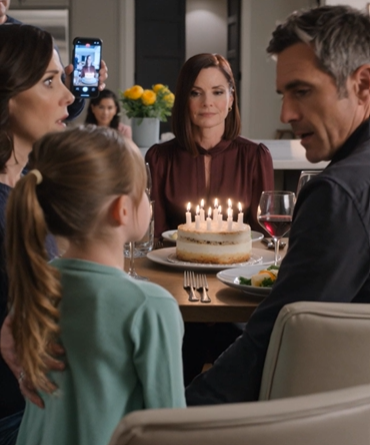
My sister Dana blew out the candles at her forty-first birthday dinner, looked directly at my ten-year-old daughter Lucy, and said, “I wish you had never been part of this family.” Thirteen adults heard her. My mother immediately called it stress. My aunt laughed nervously. Someone said Dana had too much wine. But Dana’s husband Noah did something stranger. He set his fork beside his plate and calmly said, “Say it again.” Dana did. Louder. I took Lucy home, thinking I had just witnessed an ugly family breakdown. Four blocks later, she told me, “Aunt Dana knows I told Uncle Noah.” That was when the birthday insult stopped being the real problem. Nine weeks earlier, Lucy had seen something in Dana’s kitchen involving her six-year-old cousin, and she had been trying to avoid that house ever since.
My name is Elena Reed. I’m 38, a pediatric occupational therapist, and I live in Evanston, Illinois, with my daughter Lucy.
Lucy is observant in a way that can be inconvenient for adults.
She notices when our neighbor changes cars.
She knows when I am pretending not to be worried.
She can walk into a room, look around once, and later tell you exactly where everyone was sitting.
For years, I considered that one of her best qualities.
I did not understand how frightening it could become when she noticed something an adult desperately wanted hidden.
Dana is my older sister by nineteen months.
Growing up, people constantly asked whether we were twins.
Dana hated that.
I loved it.
That probably says more about us than I understood at the time.
Dana liked order.
She remembered birthdays.
She hosted holidays.
She knew which cousin could not eat shellfish and which uncle took decaf after dinner.
If somebody needed a ride after surgery, Dana volunteered.
If there was a family gathering, Dana had already bought napkins before anyone else knew the date.
People trusted her because she was competent.
I trusted her too.
That included trusting her with Lucy.
Dana and Noah had a son, Eli, who was six.
Every other Friday for almost four years, Lucy slept at their house.
She and Eli watched movies, built forts in the living room, ate frozen fruit bars after dinner, and argued about which blanket belonged on the pullout couch.
Those sleepovers were part of the rhythm of our lives.
They gave Lucy time with her cousin.
They gave me one evening every two weeks when nobody needed anything from me.
Then, near the end of August, Lucy started finding reasons not to go.
At first she said she was tired.
Two weeks later, she wanted to finish a school project.
Then she complained that Eli had been “acting weird.”
I asked what that meant.
She shrugged.
“He just doesn’t want to make mistakes.”
I thought she meant games.
Homework.
Normal six-year-old things.
I did not push.
That is one of the decisions I still revisit.
By Dana’s birthday in October, Lucy had skipped three sleepovers and reluctantly attended two.
The party itself was completely ordinary.
That matters.
Dana was funny.
My mother complained about parking.
Eli ran around the dining table carrying two plastic dinosaurs until Noah caught him and lifted him into a chair.
He was wearing a thin gray sleeve over his left forearm.
I noticed it.
Dana said he had scraped himself.
I accepted that answer.
After dinner, my cousin Rachel dimmed the overhead lights and raised her phone to record the cake.
Forty-one candles glowed across the dining room.
We sang.
Dana laughed.
She closed her eyes.
Blew out the candles.
Then, while the smoke was still rising, she looked directly at Lucy.
“I wish you had never been part of this family.”
Nobody reacted for maybe two seconds.
Then I heard metal touch china.
Noah had placed his fork beside his plate.
Very carefully.
“Say it again,” he said.
Dana stared at him.
“What?”
“Say it again.”
His voice was calm.
Not shocked.
Not angry.
Calm.
Dana laughed once.
Then she looked back at my daughter.
“I said I wish Lucy had never been part of this family.”
My mother switched on the light.
Everything happened quickly after that.
My aunt said Dana was exhausted.
Someone else said she had been drinking.
Mom told me not to turn a terrible comment into “a whole situation.”
I stood.
“Lucy, get your coat.”
Dana said nothing.
Noah did not stop me.
As I passed him, he spoke without looking up.
“Call me tomorrow.”
I got Lucy into the car.
She sat completely still in the back seat.
Four blocks later, while we waited at a red light, she said:
“She knows I told Uncle Noah.”
My hands tightened around the steering wheel.
“Told him what?”
Lucy looked at me in the mirror.
And suddenly every Friday she had tried to avoid Dana’s house came back at once.
Lucy said it happened during a sleepover in August. She had gone downstairs after midnight to get a blue frozen fruit bar. When she reached the kitchen, Dana was at the sink with Eli. Eli was crying. Dana was holding his left wrist beneath running water because he had wet the bed. Lucy said the water was “the really hot side.” Dana looked up and saw her standing in the doorway. Nobody spoke.
The next morning, Dana made pancakes as though nothing had happened. Lucy told Noah several days later at Eli’s school fundraiser.
I pulled into a pharmacy parking lot because I could no longer safely drive.
“Why didn’t you tell me?”
Lucy started crying.
“I tried not to go back.”
That answer broke something in me.
The next morning, I called my mother. I expected horror. Instead, she said, “Lucy has always had a huge imagination.”
Then she asked the question that kept me awake for the next week.
“If Noah believed her, why didn’t he do something?”
I had no answer.
So I opened a notebook. I wrote down every sleepover Lucy had tried to avoid. I wrote down the gray sleeve on Eli’s arm. I wrote down Dana’s birthday statement word for word.
Then I wrote one final line beneath everything:
Why did Noah ask her to say it twice?
I did call Noah.
Not that morning.
I waited until Lucy was at school because I did not want her hearing another adult conversation about something she should never have been carrying.
He answered on the first ring.
“Elena.”
“You told me to call.”
“Yes.”
“Lucy told me what she saw.”
He went silent.
Not surprised.
That frightened me.
“You already knew.”
“She told me in August.”
“And you left her in that house.”
“I left my son in that house.”
His voice remained flat.
That made me angrier.
“You knew Dana hurt him.”
“I knew what Lucy said.”
“Do you believe her?”
“Yes.”
“Then what have you been doing?”
He inhaled slowly.
“Keeping Eli where I could see him.”
I stood up from my kitchen chair.
“That is not an answer.”
“It is the answer I can give you right now.”
“Noah, my daughter spent two months trying not to go to your house because she was scared of your wife.”
“I know.”
“You know?”
“I know now.”
“What was last night?”
Another silence.
Then:
“I need a few days.”
“No.”
“Elena.”
“No. You asked Dana to repeat that sentence in front of thirteen people. You knew exactly what you were doing.”
“I knew there was a phone recording the candles.”
There it was.
I felt my stomach turn.
“You used my daughter.”
“No.”
“You used what Dana said about my daughter.”
“I did.”
“That is not better.”
“I know.”
He sounded exhausted.
I wanted him to sound defensive.
I wanted him to give me somebody simple to hate.
Instead, he said:
“I’m sorry.”
Then:
“Please keep Lucy away from Dana.”
That was the only instruction I needed.
The family, meanwhile, had already begun its usual work.
Not consciously.
That is what took me years to understand.
Nobody sat around a table and agreed to protect Dana.
They simply made a series of individually comfortable choices.
Mom texted that Dana had apologized “in her heart” even if she was too embarrassed to call.
Aunt Marlene told me alcohol could make people say terrible things.
My cousin Rachel said she did not want to “take sides.”
By Sunday evening, the birthday comment had been converted into an unfortunate moment.
Nobody mentioned that Dana had said it twice.
Nobody mentioned Lucy.
Nobody asked why Noah had wanted the repetition.
The thing itself was becoming impolite to discuss.
That was how our family survived my father’s drinking when Dana and I were children.
Dad drank heavily until I was fourteen.
Then he quit.
No treatment.
No announcement.
No apology.
We simply woke up inside a new version of the family where discussing the old version was considered cruel.
Dana learned that system better than I did.
She understood that if you remained calm long enough, people became embarrassed by anyone who kept asking questions.
That week, Lucy’s school counselor called me.
Her name was Melissa Grant.
She told me Lucy had a scheduled wellness check-in.
Nothing unusual.
Fifteen minutes.
A feelings chart.
A conversation about school and home.
During that conversation, Lucy told her about Eli.
Melissa was a mandated reporter.
She had already made the report before calling me.
“I’m sorry,” she said.
“Why?”
“Because I know this can be frightening.”
“Thank you for doing your job.”
I meant it.
I also felt sick.
Within forty-eight hours, a child-welfare investigator visited Dana and Noah’s house.
I did not attend.
I did not coach Lucy.
I did not call relatives.
I gave the investigator the dates from my notebook and explained what Lucy had told me.
Dana’s response was polished.
She said Eli had burned his arm when he knocked a cup of hot tea from the counter in June.
There had been an urgent-care visit.
She had paperwork.
The injury had healed.
Noah confirmed there had been an injury but said he had not witnessed the event.
Eli was interviewed separately.
He said he knocked over tea.
Caseworkers know children can tell the truth.
They also know children can repeat explanations adults have given them.
But suspicion is not proof.
The initial report was closed without a substantiated finding.
My mother called the closure vindication.
She did not say Dana had done nothing wrong.
She said:
“Now can we please stop?”
Stop.
That was always the goal.
Not truth.
Stillness.
Dana texted me once.
I hope this was worth it.
I did not reply.
Lucy read beside me that evening.
After ten minutes, she looked up.
“Are they mad at me?”
“No.”
“Grandma is.”
I looked at her.
“Grandma is responsible for Grandma’s feelings.”
She stared at the page.
“Aunt Dana still did it.”
“Yes.”
It was the first time I said that without adding anything soft afterward.
No maybe.
No I wasn’t there.
No adults make mistakes.
“Yes.”
Lucy nodded.
Then she went back to reading.
I slept badly for weeks.
I kept returning to Noah.
If he believed Lucy, why had he waited?
What had he known before she spoke?
The answer arrived in November.
Noah filed for temporary primary custody.
His attorney requested the birthday video.
Rachel had recorded the candles.
When Noah asked her for the file, she panicked.
She deleted it.
She called me crying.
“I don’t want to be involved in a divorce.”
“You were already in the room.”
“That’s different.”
“No, Rachel. It isn’t.”
“I’m sorry.”
“When did you delete it?”
“This morning.”
“What phone do you have?”
She told me.
I asked whether she had emptied the recently deleted folder.
Silence.
“What?”
I explained.
The video was recovered that evening.
Noah’s attorney preserved a copy.
I watched it exactly once.
The phone was pointed toward the cake.
Dana’s face glowed above the candles.
She blew them out.
Smoke rose.
Her eyes moved toward Lucy.
Then came the sentence.
After Noah asked her to repeat it, the video caught something I had not remembered because I was looking at Lucy.
Dana’s first expression was not confusion.
It was recognition.
She understood why he was asking.
For half a second, they looked at each other like two people continuing a conversation nobody else knew had started.
Then she repeated herself.
That video mattered.
Not because saying something cruel automatically proved she had hurt Eli.
It did not.
But it documented hostility toward the child who had reported witnessing something inside Dana’s home.
It changed the context.
Noah came to my apartment the Sunday after Thanksgiving.
Lucy was at a friend’s house.
He sat at my kitchen table and left his coat on.
Then he placed a plain manila folder between us.
“You should have seen this months ago.”
Inside was a copy of an urgent-care note from June.
Eli had been treated for a burn on his left forearm.
The parent-reported explanation was a spilled hot drink.
The clinician noted that the injury pattern did not fully match that explanation and recommended follow-up if additional concerns arose.
I read the line twice.
“You had this?”
“I found a copy in Dana’s car in July.”
“Why didn’t you call anyone?”
“I called a lawyer.”
“When?”
“Two days after Lucy spoke to me.”
I stared at him.
“What did the lawyer say?”
“That one medical note, one child witness, and a six-year-old repeating his mother’s explanation might not be enough for emergency custody.”
“So you waited.”
His jaw tightened.
“I stayed.”
“That sounds like the same thing from where I’m sitting.”
He looked at me for the first time.
“I stopped traveling.”
I said nothing.
“I moved my work schedule. I slept down the hall from Eli. I started taking him to school myself. I documented every injury, every appointment, every time Dana lost her temper.”
“You stayed married.”
“Yes.”
“You ate dinner with her.”
“Yes.”
“You planned her birthday.”
“Yes.”
His voice broke on that one.
Only slightly.
“I picked up the cake.”
I looked away.
There are kinds of fear that look like passivity from the outside.
That does not mean every passive choice becomes acceptable.
Both things can be true.
“You should have told me Lucy had spoken to you.”
“Yes.”
“I sent her back to your house.”
His eyes closed.
“I know.”
“That is the part I cannot forgive.”
“I know.”
He did not ask me to.
That helped.
Then I asked:
“Why did you make Dana repeat it?”
Noah looked at his hands.
“Because my attorney had told me to stop arguing with her in private.”
I waited.
“If she was going to reveal something about Lucy, about Eli, about what she knew, it had to happen where other people could hear it.”
“You were waiting for her to lose control.”
“I was waiting for something that did not depend on my word against hers.”
“That could have taken years.”
“I know.”
“And Lucy happened to be the target.”
He looked sick.
“Yes.”
“You didn’t know?”
“No.”
I believed him.
Believing him did not make me less angry.
That winter, family court became a regular phrase in conversations I wished I had never needed.
I did not attend most hearings.
My role was Lucy.
Noah had an attorney.
Eli had professionals.
I had one job.
Make sure my daughter understood that telling the truth had not caused the family crisis.
Adults had caused the crisis.
Truth had revealed it.
The hardest part was my mother.
She stopped calling for almost a month.
Then she appeared at my apartment two weeks before Christmas.
She brought a tin of cookies.
I left it unopened.
“Can we talk?”
“Yes.”
She sat at my kitchen table.
The same place Noah had placed the medical note.
Mom looked smaller than usual.
“Dana says you are helping Noah take Eli.”
“I am not helping anybody take him.”
“You gave them the video.”
“Rachel gave them the video.”
“You pushed her.”
“I told her where deleted files go.”
Mom sighed.
“Elena.”
I waited.
“Your sister is terrified.”
“So is my daughter.”
“Lucy has you.”
“And Eli?”
Mom looked away.
I asked:
“Did you ever ask him what he needs?”
“He’s six.”
“That was not my question.”
She stood.
“This family is tearing itself apart.”
“No.”
My voice surprised both of us.
“This family spent years calling silence peace.”
Mom stared at me.
“I’m not doing it anymore.”
She picked up her coat.
At the door, she said:
“Your father would have hated this.”
My father had been dead six years.
That sentence once would have stopped me completely.
Instead, I said:
“Dad hated being confronted too.”
She left.
Lucy and I spent Christmas alone.
We made cinnamon rolls badly.
We watched three movies.
We called one of my friends in Wisconsin.
Lucy asked once whether Grandma was having everyone over.
“Yes.”
“Is Aunt Dana there?”
“Yes.”
She nodded.
Then:
“I’m glad I’m here.”
That was when I stopped pretending our separation was something I was doing to Lucy.
She felt safer outside the family room everyone insisted she was losing.
January brought the strangest event of the entire year.
Dana came to my apartment at 11:40 at night.
I saw her car from the window.
I turned on the recording function on my phone before opening the door.
I hated myself a little for doing it.
Then I remembered my daughter was upstairs.
Dana stood under the porch light wearing a wool coat I had helped her choose years earlier.
She looked exhausted.
“Can I come in?”
“No.”
Her face tightened.
“I’m not going to hurt anybody.”
“I didn’t say you were.”
“It’s freezing.”
“We can talk here.”
She exhaled.
Then she asked me for something I still cannot believe she expected me to give.
“I need you to clarify Lucy’s statement.”
“Clarify how?”
“Tell Noah’s attorney she has an imagination.”
I stared at her.
“She told the truth.”
“You don’t know that.”
“I believe her.”
Dana stepped closer.
“Elena, they could give Noah primary custody.”
“They might.”
“You’re okay with that?”
“I’m okay with Eli being safe.”
“He is safe.”
“Then the facts will support you.”
She laughed sharply.
“You sound like one of them.”
“One of who?”
“People who think one bad moment makes somebody a monster.”
I studied her face.
“Why did you say that about Lucy at your birthday?”
“I was drunk.”
“Why Lucy?”
“She had been acting strange around me.”
“Why?”
“You know why.”
“No. Tell me.”
Dana looked toward the street.
“Because she saw something and decided she understood it.”
My heart started beating faster.
“What did she see?”
Dana caught herself.
I watched it happen.
“She claims she saw something.”
“That isn’t what you said.”
She became angry.
“This is exactly what you do. You pick at words until everybody sounds guilty.”
“Why was she the one you wished out of the family?”
Dana crossed her arms.
“Because she should have stayed upstairs instead of sneaking down for that blue ice pop.”
Everything inside me stopped.
The color.
Blue.
Lucy had told me privately.
I had not included the color in my written timeline.
The school counselor had written only “frozen snack.”
Noah did not know the color.
The child-welfare summary Dana’s attorney received did not include it.
There were two people who knew that detail.
Lucy.
And the adult who saw her in the doorway.
Dana’s expression changed almost immediately.
She understood.
Neither of us spoke.
Then she said:
“You set me up.”
“No.”
My phone was still recording in my cardigan pocket.
“You came here.”
She turned and walked back to her car.
I closed the door.
My hands were shaking so badly I nearly dropped the phone.
Lucy’s voice came from the stairs.
“Mom?”
I looked up.
She was sitting halfway down in pajamas.
“Go back to bed.”
“Did she say I lied?”
“No.”
Lucy looked at me.
“Good.”
Then she went upstairs.
That recording did not magically settle everything.
Real evidence rarely works like television.
Dana’s attorney challenged context.
Dana said she had learned details through documents.
The attorneys compared those documents.
The color of the fruit bar was not there.
Investigators re-interviewed people.
The urgent-care note was reviewed again.
The birthday video established hostility toward Lucy after Lucy had already spoken to Noah.
Noah’s documentation showed behavioral changes in Eli over several months.
Lucy was interviewed by a trained child specialist.
I was not present.
I did not prepare her.
I told her one thing before we entered the building.
“You do not have to make anybody happy in that room.”
She nodded.
“I know.”
By spring, the family-court arrangement changed.
Noah received primary residential custody of Eli.
Dana’s contact became supervised while she entered a court-ordered parenting and mental-health program.
A separate criminal case ended with Dana accepting responsibility on a misdemeanor child-endangerment charge.
She received probation, treatment requirements, and no unsupervised contact with Eli until the court approved it.
Nobody celebrated.
Noah certainly did not.
He looked ten years older by the end.
Eli struggled in waves.
For several weeks he seemed lighter.
Then a small mistake—a spilled drink, a wet bed, a broken toy—could make him panic.
He started therapy.
Noah learned not to ask him repeatedly whether he was okay.
Sometimes the question itself frightened him.
Lucy saw him occasionally.
At first they only met at a park with Noah nearby.
The first time, Eli brought two blue frozen fruit bars from the concession stand.
Lucy looked at me.
I almost cried.
They sat on a bench and ate them without saying anything about the past.
Children understand symbolism long before adults admit they are using it.
My family split.
There is no gentler way to say that.
Some relatives believed Dana had done something wrong but thought the legal consequences were excessive.
Some believed the whole situation had been manipulated by Noah.
Some believed Lucy had been coached.
My mother believed a different version depending on the day.
She still tells people the family fell apart because I “couldn’t let a birthday comment go.”
At first, I corrected her.
Then I stopped.
Anyone willing to reduce a medical record, a child’s disclosure, a recorded admission, a court case, and months of evidence to one birthday comment was not confused.
They were committed.
That distinction gave me peace.
Rachel apologized for deleting the video.
I accepted.
We are not as close as we were.
She told me she panicked because she did not want to become responsible for the result.
I told her:
“You were never responsible for what the video showed.”
She cried.
“I know that now.”
Noah and I have a complicated relationship.
We are not friends in the ordinary sense.
I do not call him to chat.
We do not meet for coffee.
Sometimes he texts because Eli asked about Lucy.
Sometimes I ask whether a birthday party or family event will include Dana before deciding whether Lucy should attend.
That is the extent of it.
I believe Noah was afraid.
I believe he was trying to protect Eli.
I also believe he should have told me after Lucy disclosed what she saw.
Those statements do not cancel one another.
Forgiveness is not a requirement for recognizing somebody’s reasons.
Dana and I have not spoken privately since the night on my porch.
Through my mother, I know she completed treatment.
I know her supervised visits eventually became longer.
I know Eli still lives primarily with Noah.
I know Dana has apologized to him.
I do not know whether he accepted it.
That belongs to him.
She sent Lucy a letter once.
I gave Lucy the choice of whether to read it.
She did.
Dana wrote that she was sorry for what she said at the birthday party and sorry Lucy had been frightened in her home.
Lucy read it twice.
Then she asked:
“Did she say she’s sorry for hurting Eli?”
“No.”
“Then I don’t want to write back.”
I put the letter away.
She was eleven by then.
Still observant.
Still clearer than many adults I knew.
The hardest relationship to lose was my mother.
Not Dana.
That surprised me.
Dana had done something I could name.
Mom had done what she always did.
She minimized.
She redirected.
She asked why everyone could not calm down.
She treated the person naming harm as the person creating conflict.
That pattern reached backward through my entire childhood.
My father’s drinking.
Money problems.
Dana’s temper.
My own anxiety.
Nothing counted as real until it became impossible to hide.
Then, once everyone saw it, our job was to stop talking.
I could not return to that.
For almost a year, Mom and I barely spoke.
Then she called on Lucy’s birthday.
Not to demand an invitation.
Just to say happy birthday.
Lucy chose not to take the call.
Mom cried.
I did not make Lucy feel guilty.
That was new.
A year later, Lucy decided she wanted to see Grandma at a café.
Neutral place.
One hour.
I went with her.
Mom brought a small wrapped gift and kept both hands around her coffee cup.
For twenty minutes, everyone talked about school.
Then Mom looked at Lucy.
“I wish things had been different.”
Lucy asked:
“Which things?”
Mom froze.
I almost rescued her.
Old reflex.
I stopped myself.
Mom looked down.
“That I didn’t believe you fast enough.”
Lucy said:
“You didn’t believe me at all.”
Mom’s eyes filled.
“No.”
Lucy nodded.
“Okay.”
Not forgiveness.
Not rejection.
Just truth placed on the table.
That conversation did more than every family speech before it because nobody pretended the truth was impolite.
Afterward, Mom hugged Lucy only after asking.
Lucy said yes.
I noticed that too.
Small changes count.
My own guilt took longer.
For months, the six sleepover refusals replayed in my head.
Tired.
School project.
Eli is weird.
I want to stay home.
I remembered the night I reminded her Dana kept frozen fruit bars especially for her.
I used something she loved to push her toward a place her body was already telling her to avoid.
I hated that memory.
My therapist eventually asked me:
“What would you want Lucy to do with a mistake like yours?”
I knew the answer.
Learn from it.
Not build a home inside it.
So I did.
I changed one rule in our house.
A no about somebody’s home, car, touch, or supervision does not require a persuasive explanation.
Lucy can say:
“I don’t want to go.”
That is enough to begin the conversation.
Not necessarily enough to cancel every responsibility in her life.
But enough that I stop and listen before deciding.
I wish I had learned that rule before August.
I learned it anyway.
The birthday video still exists in the legal file.
I do not keep a copy on my phone.
I never want to watch it again.
What I remember most is still the sound.
Noah’s fork touching the plate.
A tiny sound.
Almost nothing.
In a family trained to ignore enormous things, that tiny sound became the first moment somebody refused to move past what had just been said.
For months, I thought that was the moment everything broke.
Now I think the breaking had happened much earlier.
The birthday table was simply where the crack finally became visible.
Lucy once asked whether Dana was a bad person.
I gave her a complicated answer about people being more than the worst thing they do.
Lucy listened patiently.
Then she said:
“She wasn’t sorry when nobody knew.”
I did not correct her.
Because sometimes children cut through the explanation adults build around behavior.
I still believe people can change.
I believe treatment matters.
I believe shame alone rarely improves anyone.
I believe Dana deserves the chance to become safer than she was.
I also believe Eli deserved adults who acted before her improvement was complete.
Those beliefs fit together.
That took me a long time to understand.
The family I grew up in treated compassion and accountability like opposites.
If you loved somebody, you softened the truth.
If you named the truth, you were cruel.
I no longer accept that.
Sometimes love sounds like:
I believe you.
Sometimes love sounds like:
You cannot be alone with him right now.
Sometimes love sounds like:
I will not tell the court my child imagined what she saw.
And sometimes love is a mother sitting in a pharmacy parking lot with both hands shaking on the steering wheel, telling her daughter something she should have said much sooner:
“You are not in trouble for telling me.”







