My Parents Sold Grandpa’s Ranch—Then Learned the Water Rights Were Mine
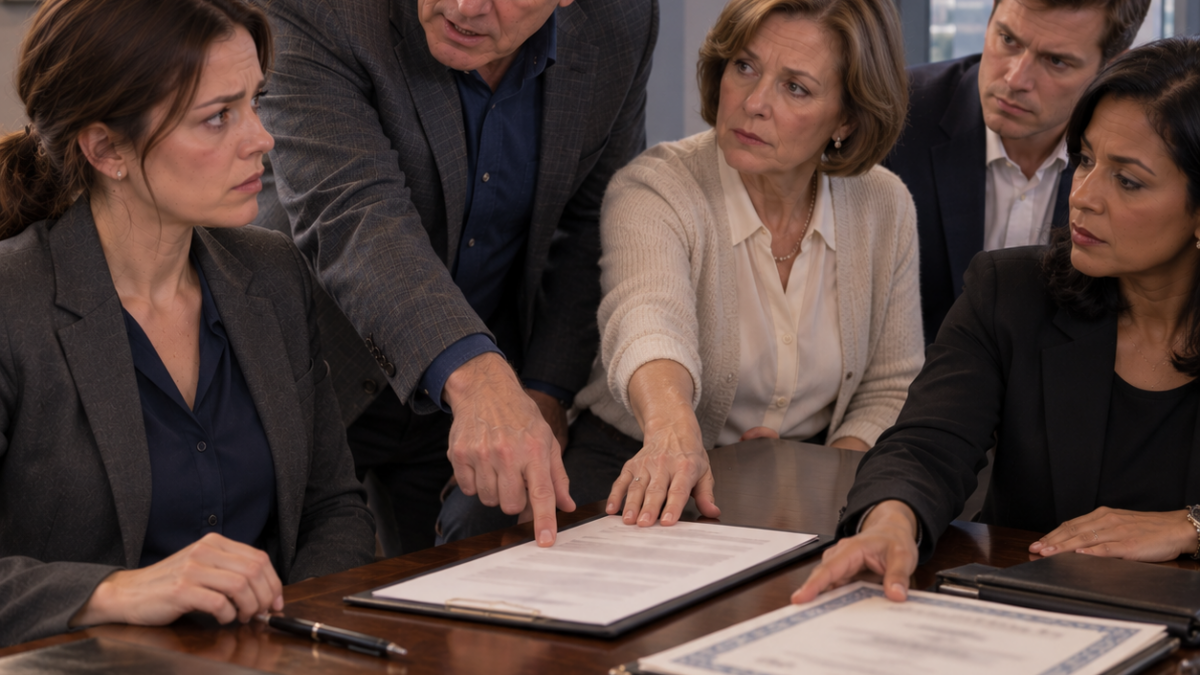
My father pointed at the signature line and told me to stop holding up the $1.25 million sale of my grandfather’s Colorado ranch. I was 34, sitting at a closing table with my parents, my younger brother Tyler, two attorneys, and a buyer who had apparently been promised something nobody had ever asked me to sell. Mom pushed the transfer form closer and said, “Erin, your brother is already counting on this money.” Then the buyer’s attorney put her hand over the document and stopped me from touching the pen. The ranch belonged to my parents. The 38 irrigation-company shares providing most of its water did not. Grandpa had transferred those to me five years earlier. And according to the buyer’s file, my mother had already told everyone I had agreed to sign them over.
The ranch sat outside Fort Morgan, Colorado.
Four hundred eighty acres of dry grass, cottonwoods, cattle fencing, and the irrigation ditches Grandpa Walter had spent half his life repairing.
I had spent nearly every summer there as a kid.
Tyler preferred town.
I liked following Grandpa while he checked gates and measured water.
Maybe that was why I became a hydrologic engineer.
When Grandpa got older, he transferred the ranch itself to my parents.
I knew that.
He kept living there until he died the previous winter.
What I didn’t know was that Mom and Dad began negotiating the sale less than six weeks after his funeral.
I found out when Mom called and said they needed me at a closing in Denver.
“For what?”
“Just some family paperwork.”
“What paperwork?”
“A water acknowledgment.”
That phrase should have stopped me.
Instead, I believed her.
Our family had spent decades calling complicated requests simple whenever the complication belonged to me.
When I arrived, Tyler was already there.
He ran a restaurant group that had expanded too fast and was carrying more debt than anyone liked discussing.
Dad had spent the last year helping him negotiate lenders.
Mom called it supporting an entrepreneur.
When I asked why family money always seemed to flow toward Tyler’s emergencies, she reminded me that I had a stable career.
Stable was our family word for available.
The buyer was Calder Peak Agricultural Holdings.
Their representative, Ben Lawson, explained that his company planned to keep part of the property in agricultural use while developing greenhouse operations on another section.
Then he thanked my parents for including the irrigation shares.
I looked at him.
“What irrigation shares?”
Dad’s jaw tightened.
“Erin.”
Ben stopped talking.
Mom slid a document toward me.
Thirty-eight shares in the Platte Valley Mutual Ditch Company.
My name appeared as transferor.
Calder Peak appeared as transferee.
I stared at the page.
Grandpa had given me those shares when I was twenty-nine.
I remembered signing the receipt at his attorney’s office.
I remembered Grandpa telling me land and water were different assets.
I remembered promising I’d keep the certificates somewhere safe.
Then life happened.
Work.
A promotion.
Moving to Denver.
Grandpa’s declining health.
The shares sat in a fireproof box in my apartment while I treated them like historical paperwork.
Dad leaned forward.
“The land sale was negotiated as a package.”
“Without asking me?”
“We assumed you’d cooperate.”
Tyler gave a frustrated laugh.
“Come on, Erin. You don’t farm.”
“That doesn’t make them yours.”
Mom’s voice went cold.
“You already have a house, retirement savings, and a career. Tyler is trying to keep sixty employees working.”
I looked at him.
“What do your restaurants have to do with Grandpa’s water shares?”
Nobody answered.
Dad tapped the paper.
“Sign it. We can sort out percentages afterward.”
For one humiliating second, I almost did.
That was my oldest family reflex.
Say yes now.
Feel angry later.
Then the buyer’s attorney, Nora Patel, reached across the table.
Not for me.
For the document.
She pulled it back.
“Mr. Blake, she shouldn’t sign anything until she understands what she’s conveying.”
Dad looked offended.
“She understands.”
Nora turned to me.
“Do you have separate counsel?”
“No.”
“Then I recommend you get some.”
Mom scoffed.
“This is a family transaction.”
Nora’s expression did not change.
“It’s also a property transaction.”
She opened another folder.
Inside was a title report for the water shares.
Owner:
Erin Blake.
Thirty-eight shares.
Transferred five years earlier.
Recorded and reflected on the ditch company’s ledger.
My parents had no ownership interest.
Ben looked uncomfortable.
“Our purchase price assumed these were included.”
I turned toward Mom.
“You told them I agreed?”
She adjusted her bracelet.
“We told them there wouldn’t be a problem.”
“That isn’t what I asked.”
Nora answered instead.
“The buyer received written confirmation.”
She pulled an email from the file.
Sender:
Linda Blake.
My mother.
Six weeks earlier.
The final sentence read:
Erin understands the family plan and has agreed to transfer all 38 shares at closing.
I looked at her.
“I never said that.”
Mom said she had only told the buyer what she believed would happen. Nora asked whether she had ever received my written consent. Mom said families did not usually need written consent for every conversation. Ben stopped her. His company had priced the transaction assuming the ranch came with the water. Without those shares, the property had a very different value and a very different development plan.
Then Nora opened the lender package.
That was when Tyler stopped looking annoyed and started looking nervous.
Calder Peak wasn’t the only party relying on my supposed agreement.
Three months earlier, Tyler’s restaurant company had obtained a $280,000 bridge loan.
The repayment plan referenced expected proceeds from the Blake ranch transaction.
Attached was a summary Tyler had provided his lender.
It described the ranch as a “family-controlled agricultural asset including associated irrigation interests.”
I looked at him.
“You used my water shares to support your loan?”
He shook his head.
“I used the expected family proceeds.”
“That isn’t what this says.”
Dad told me I was getting lost in wording.
Nora quietly slid one more page toward me.
It was a seller-side email written before the bridge loan closed.
Dad had asked the broker not to contact me directly about the irrigation schedule.
His reason was one sentence:
“Erin asks too many technical questions. We’ll get her signature at closing.”
I read it once.
Then again.
Technical questions.
That was apparently the danger.
I looked at Dad.
“You knew they needed the shares.”
He exhaled hard through his nose.
“Of course we knew.”
“You knew they were mine.”
“Yes.”
“And you deliberately kept the buyer from talking to me.”
“We didn’t want this turning into an engineering project.”
I stared at him.
“A property sale involving water rights became too technical for you?”
“Don’t twist my words.”
Nora closed the lender package.
Ben leaned back in his chair.
Nobody looked comfortable anymore.
Tyler rubbed his forehead.
“We are talking about thirty-eight pieces of paper.”
I turned toward him.
“You borrowed against them.”
“I borrowed against the closing.”
“Which depended on them.”
“Can we stop doing this?”
“Doing what?”
“Acting like I stole something from you.”
I almost laughed.
The strange part was that I had not arrived angry.
Confused, yes.
Uneasy.
Maybe even suspicious.
But not angry.
The anger came from listening to people explain why decisions made about my property were somehow less serious because they expected me to agree eventually.
Ben asked for a recess.
Nora recommended nobody sign anything.
My parents’ closing attorney agreed.
That was the first moment Dad seemed genuinely alarmed.
“What happens to the funds?”
The attorney answered.
“They stay in escrow.”
“For how long?”
“Until the parties determine whether the transaction can proceed.”
Dad looked at me.
That look had worked on me my entire life.
Not rage.
Disappointment.
As if my behavior had fallen below some standard only he understood.
“We’re going to lose this buyer.”
Nora corrected him.
“The buyer is here.”
Ben added:
“The buyer is not purchasing an asset it doesn’t receive.”
Mom’s eyes filled.
“You’re doing this over water you don’t even use.”
I looked at her.
That sentence clarified everything.
Ownership only mattered in our family when the owner needed something.
Tyler needed restaurant financing.
Mom and Dad needed closing proceeds.
Calder Peak needed water.
I apparently needed nothing.
Therefore, the asset was wasted on me.
“I am not signing today.”
Tyler pushed his chair back.
“Unbelievable.”
Mom whispered:
“Erin.”
I stood.
My legs felt weak.
Not because I doubted the decision.
Because saying no to my family still felt physically wrong.
Like stepping through a door marked alarm will sound.
Dad rose too.
“Sit down.”
Nora looked at him.
He stopped.
I picked up my bag.
“I’ll have a lawyer contact everyone.”
Tyler laughed bitterly.
“You already sound like a stranger.”
I looked at him.
“No. I sound like the owner.”
Then I left.
Outside, I made it to the parking garage before my hands started shaking.
I sat inside my car for almost twenty minutes.
My phone began lighting up.
Mom.
Dad.
Tyler.
Mom again.
Then Aunt Beth.
Then my cousin Natalie.
Family information traveled faster than floodwater.
I put the phone on silent.
The first person I called was not family.
It was Rachel Kim, a water-rights attorney I knew through a professional association.
We had served on a panel together two years earlier.
She answered during lunch.
I said:
“I think my family tried to include my ditch shares in a ranch sale without my permission.”
She paused.
“How many shares?”
“Thirty-eight.”
“Which company?”
“Platte Valley Mutual.”
Another pause.
“Don’t sign anything.”
“I didn’t.”
“Good.”
That word nearly made me cry.
Rachel could not represent me because her firm occasionally worked with Calder Peak.
Conflict issue.
But she gave me the name of someone who could.
Mei Parker.
I met Mei the next morning.
Her office had none of the polished intimidation of the closing room.
Two chairs.
One conference table.
A whiteboard covered with arrows.
She asked me to tell the story once.
Then she asked for documents.
Not feelings.
Not theories.
Documents.
I brought the certificates from my fireproof box.
The recorded transfer instrument.
Grandpa’s old attorney correspondence.
Emails Mom sent me about the closing.
Screenshots from the buyer’s packet Nora allowed me to photograph.
Mei spent nearly an hour reading.
Finally:
“The shares appear to be yours.”
“Appear?”
“I’m a lawyer. We don’t use certainty before we verify.”
I liked her immediately.
She explained the basic structure.
The ranch and the irrigation-company shares were separate property interests.
Grandpa had transferred the shares to me five years earlier.
The ditch company’s ledger reflected me as shareholder.
My parents later received the ranch surface.
Their deed did not include the shares.
Nothing in the documents I brought gave them authority to transfer my interest.
“Can they sell the ranch without me?”
“Yes.”
“Can the buyer walk away?”
“Depends on the contract.”
“Can they force me to sell the shares?”
“Not based on what I’ve seen.”
“Can Tyler’s lender come after them?”
“The lender may have claims against Tyler based on whatever representations he made. That does not magically make your shares collateral.”
That was the first clean air I had breathed since the closing.
Then she asked:
“Do you know what the shares are worth?”
“No.”
“Not even approximately?”
“Grandpa told me they mattered.”
“That isn’t a valuation.”
I smiled despite everything.
“You’re going to get along with my grandfather.”
“Then let’s find out.”
I hired an independent agricultural water broker and appraiser.
The process was not dramatic.
No one looked at a map and announced I was secretly a millionaire.
He reviewed comparable share sales.
Delivery history.
Ditch-company rules.
Priority.
Location.
Transfer restrictions.
Demand inside the service area.
The shares had value because they represented reliable access to irrigation water in a region where water could be more economically important than dry ground.
Three weeks later, the report estimated a market range between $2.4 million and $3.1 million if sold in a transaction compatible with company rules and local demand.
I called Mei.
“Is this real?”
“It is an appraisal.”
“That wasn’t my question.”
“It is real as an opinion of value. It is not cash. It is not guaranteed. The exact value depends on the buyer, use, restrictions, and transaction.”
That sounded like Grandpa.
Evidence before excitement.
I remembered being thirteen and following him along the ditch with a measuring rod.
He would tell me:
“Water looks simple until everyone wants the same gallon.”
I had thought he was teaching me irrigation.
Maybe he was teaching me family.
The appraisal made my parents more aggressive.
Mom learned the number somehow.
Probably Tyler.
Probably the broker.
Probably because secrets rarely survive legal disputes.
She called me from Dad’s phone because I had stopped answering hers.
“Three million dollars?”
“Potentially.”
“And you think you deserve all of that?”
The question stunned me.
“I didn’t set the value.”
“You know what I mean.”
“No. I don’t.”
“Grandpa would never have intentionally left you an asset worth more than the ranch.”
“Then why did he transfer it?”
“He couldn’t have understood what it would become.”
There it was.
The first attack on Grandpa instead of me.
Mei had warned me.
When ownership documents are strong, family disputes often move toward intent or capacity.
Two days later, my parents’ attorney sent a letter.
They claimed Grandpa had intended the shares to remain economically tied to the ranch and suggested I had misunderstood the transfer.
Not fraud.
Not yet.
Misunderstanding.
Mei requested the file from Grandpa’s former attorney.
His name was Harold Levin.
Retired now.
He still had archived records.
The file contained something I had forgotten.
Before the transfer, Grandpa had met Harold alone twice.
The third meeting included me.
Harold’s notes said Grandpa wanted the shares separated specifically because he believed my parents might eventually sell the ranch to support Tyler.
I sat very still while Mei read the sentence aloud.
“He predicted this?”
“Apparently.”
I felt sick.
Not vindicated.
Sick.
Grandpa had loved my parents.
Loved Tyler.
He also knew them.
That is a painful combination.
There was another note.
Client states Erin will likely be pressured to treat water as family property. Wants title clear and independent.
Mei pushed the page toward me.
“Your grandfather wasn’t confused about the separation.”
I stared at his words.
For years I had treated his gift casually because I assumed its significance was sentimental.
Something from Grandpa.
A certificate.
A line on a shareholder ledger.
He had been building a boundary for me before I knew I needed one.
That realization hurt more than my parents’ demand.
Grandpa had seen a future version of me sitting at a table while everyone explained why saying yes would prove I loved them.
He had tried to make my no easier.
I drove to the ranch the following weekend.
Not onto it.
My parents still owned it.
I parked on the public road near the fence.
The cottonwoods were turning yellow.
For the first time since Grandpa died, I let myself miss him without logistics getting in the way.
His funeral had been scheduling.
Travel.
Medical bills.
Food trays.
Cleaning the house.
Tyler couldn’t stay long because one of his restaurants was opening a patio expansion.
Mom was exhausted.
Dad couldn’t find Grandpa’s insurance information.
I handled everything.
Stable.
Available.
Now I stood outside a fence separating me from the place where he had taught me to check a headgate.
I wanted one conversation with him.
Just one.
Instead, Tyler’s truck pulled up behind me.
I almost laughed.
Of course.
He got out carrying two coffees.
My order was correct.
Oat milk.
One sugar.
“Can we talk?”
“You found me.”
“Mom said you might come out here.”
I took the coffee but didn’t drink it.
He leaned against his truck.
“You got the appraisal.”
“How do you know?”
“Dad told me.”
“Dad shouldn’t know.”
“He knows everything eventually.”
Apparently not who owned thirty-eight ditch shares.
Tyler stared at the fence.
“My lender is freaking out.”
“I assumed.”
“If the closing doesn’t happen, the bridge loan comes due in forty-five days.”
“What did you use the money for?”
He rubbed his face.
“Payroll. Vendor arrears. Equipment leases.”
“How much is left?”
“Not enough.”
“How many restaurants?”
“Four.”
“How many profitable?”
He glared at me.
“Two.”
Facts again.
“Then sell one.”
“It’s not that simple.”
“It never is when it’s yours.”
He looked at me.
“That is unfair.”
“So was promising my property.”
“I never promised your property.”
“Your lender package did.”
“I called them family assets.”
“They are not.”
Tyler walked toward me.
Not threatening.
Frustrated.
“You don’t understand what happens if I default.”
“Then explain it.”
“I could lose the Denver location.”
“Okay.”
“My guarantees could trigger.”
“Okay.”
“I could be personally wiped out.”
I nodded.
“That’s serious.”
He looked almost offended that I agreed.
Then:
“So help me.”
There it was.
Not:
I was wrong.
Not:
I should never have used your shares.
Help me.
“How?”
He reached into his truck and brought out a folder.
I almost laughed.
“What is that?”
“A proposal.”
Inside was a typed agreement.
He wanted twelve of my thirty-eight shares transferred to a new LLC.
In exchange, I would receive a 20 percent interest in his restaurant group.
I read the first page.
“No.”
“You haven’t finished.”
“I don’t need to.”
“You’d own part of the restaurants.”
“I don’t want part of your restaurants.”
“You’d still have twenty-six shares.”
“They are not poker chips.”
His face reddened.
“Do you have any idea how hard I’ve worked?”
“Yes.”
“No, you don’t. You got a scholarship. Then a corporate job. Then Grandpa handed you millions.”
I stared at him.
There it was.
The story he needed.
I had been handed something.
He had worked.
The years I spent studying engineering.
Field work.
Travel.
Professional licensing.
Night classes.
None of that mattered because stability erases its own history.
“What did Grandpa hand you?”
Tyler looked away.
I knew the answer.
Money.
Repeatedly.
Down payment for the first restaurant.
Loan for the second.
Personal guarantee for equipment.
Tyler called those investments.
My shares were apparently unfair advantage.
He shoved the folder back into his truck.
“I already told my investors I have access to family water assets.”
I went still.
“When?”
His jaw tightened.
“Don’t.”
“When did you tell them?”
“It was general language.”
“Before the ranch sale?”
“Yes.”
“So before anyone asked me.”
“We all assumed—”
“No.”
He stopped.
That word finally had weight.
“No, Tyler. You assumed. Dad assumed. Mom assumed. Your lender assumed because you told them. The buyer assumed because Mom told them. I didn’t.”
He kicked at gravel.
“You’re going to let me lose everything over technical ownership?”
I looked at him.
“Ownership isn’t technical when you need it.”
His expression hardened.
“You always do this.”
“What?”
“Make people sound worse.”
I almost answered.
Then I remembered Mei’s advice.
Do not debate reality with someone whose financial survival depends on redefining it.
I got into my car.
Tyler called after me.
“When Mom loses the house because of this, that’s on you.”
I shut the door.
I cried halfway back to Denver.
Not because I thought he was right.
Because some sentences know exactly where childhood lives inside you.
Mom loses the house.
Tyler loses the restaurants.
Dad loses retirement.
Family loses ranch.
Erin could prevent it.
All I had to do was transfer an asset worth millions that nobody asked for until after they had built obligations around it.
I called Mei from a rest stop.
“I need you to tell me something like a lawyer.”
“That sounds ominous.”
“If they lose money because I refuse, is that legally my fault?”
“No.”
“That was fast.”
“You asked legally.”
“What about practically?”
“Practically, your refusal may affect transactions they entered assuming your consent.”
“So I cause the collapse.”
“No. That’s not the same sentence.”
I closed my eyes.
She continued.
“They chose obligations before obtaining a right they needed. Your refusal exposes that choice. It does not create it.”
I wrote that down.
The buyer reappeared the following week.
Calder Peak still wanted the ranch.
But not at $1.25 million without water.
Their revised offer was $735,000 for the surface estate only, with an option to negotiate limited seasonal water access later.
Dad called the number insulting.
Ben explained the economics.
Dry land.
Different project.
Different value.
My parents rejected the offer.
Then the bridge-loan clock began to matter.
Not just Tyler’s.
My parents had taken a $310,000 home-equity and short-term bridge facility against their Denver house.
They expected the ranch sale to repay it.
I had not known that either.
Mom called.
“You can solve this.”
I sat at my kitchen counter.
“No.”
“You haven’t even heard what I’m asking.”
“You’re asking me to sell.”
“We would pay you.”
“How much?”
Silence.
“Mom?”
“One hundred fifty thousand now. More after Tyler stabilizes.”
I almost admired the confidence.
“For an asset appraised above two million?”
“It’s family money.”
“No. It’s my property.”
“Listen to yourself.”
“I am.”
“Your father and I gave you everything.”
There was the ledger of childhood.
Food.
Housing.
School supplies.
Apparently payable thirty years later in water shares.
“You were my parents.”
“And now we need you.”
“You needed my agreement before you borrowed.”
“We knew you’d help.”
“No. You knew I usually give in.”
She began crying.
I hated that crying still worked on me.
My body reacted before my brain.
Tight chest.
Shame.
Need to fix.
I gripped the counter.
Mom whispered:
“What happened to you?”
That question nearly broke me.
As if ownership had changed my personality.
As if the daughter she recognized was the one who surrendered.
“I hired a lawyer.”
“That isn’t what I mean.”
“I know.”
I ended the call.
A month passed.
The ranch remained under contract but unresolved.
Calder Peak extended once.
Tyler’s lender demanded additional collateral.
He could not provide it.
One restaurant closed.
Not all four.
The weakest location.
Twenty-three employees were affected, though some transferred to other stores.
Tyler told relatives I had cost people jobs.
I requested the lender records through counsel before responding to anyone.
The restaurant had been losing money for eleven months.
The bridge loan had delayed closure.
It had not caused the underlying problem.
Again:
Facts.
My parents’ attorney escalated.
This time they challenged Grandpa’s transfer directly.
They alleged undue influence.
Not because I had cared for him financially.
I hadn’t.
Because I was close to him and he trusted me.
The filing made ordinary love sound suspicious.
Summer visits.
Doctor drives.
Phone calls.
Helping him scan records.
I read it once.
Then closed the document.
Mei asked whether I wanted to fight.
“What happens if I don’t?”
“They may continue seeking to set aside the transfer.”
“So yes.”
She nodded.
“Yes.”
We filed for a declaratory judgment confirming ownership and responded to their claims.
No dramatic restraining order.
No immediate victory.
Litigation.
Deadlines.
Invoices.
Document requests.
Boring misery.
I began to understand why people settle even when they believe they’re right.
Truth is expensive to administer.
The first discovery request included years of my communication with Grandpa.
I hated handing it over.
Birthday messages.
Photos.
His complaints about doctors.
My complaints about project managers.
Recipes.
A message where he told me he’d left his hearing aids in the refrigerator.
Nothing looked sinister.
That was the point.
Life rarely does when viewed whole.
Then we received my parents’ communications.
That was where the story changed again.
I had known they understood the shares were mine at closing.
I did not know how early.
Four months before the sale contract, the broker emailed Mom:
Water certificates appear registered separately to Erin Blake. Should I contact her regarding inclusion?
Mom replied:
No. Robert and I will handle Erin.
Two weeks later, Dad wrote:
Do not circulate the water valuation to her yet. She’ll overanalyze and slow us down.
Then another:
Once the purchase agreement is firm, she’ll understand the family can’t reopen everything.
I stared at that sentence.
They had designed the sequence.
Not to steal the shares secretly.
To make saying no increasingly expensive.
Buyer selected.
Price negotiated.
Tyler financed.
Parents borrowed.
Closing scheduled.
Then me.
They had built a hallway with one door and expected me to walk through it because turning around would inconvenience everyone.
Mei kept reading.
There was one more message.
Mom to Tyler:
Erin won’t let your restaurants fail when she’s sitting there with everyone looking at her.
I stopped breathing normally.
That was the main reveal.
The closing room was not an accident.
It was leverage.
They believed social pressure would accomplish what legal authority could not.
Grandpa’s old attorney had predicted exactly that.
Erin will likely be pressured to treat water as family property.
I left Mei’s office and sat in my car.
For years, my family called me sensitive when I objected.
Now I had their strategy in writing.
My reaction had not created the pattern.
It had finally collided with documentation.
I stopped answering relatives individually.
Mei drafted one statement.
The irrigation shares had been legally transferred to me five years earlier.
I had not agreed to sell or pledge them.
Any claims otherwise were inaccurate.
I asked relatives not to contact my employer.
Three already had.
One aunt apologized.
Two never replied.
Mom called the statement humiliating.
I said:
“You told them I caused this.”
“You are causing it.”
“No. I’m correcting what you told them.”
She hung up.
Calder Peak eventually withdrew from the original transaction.
My parents blamed me.
The buyer blamed the unresolved seller representations.
The truth was both simpler and less satisfying.
The deal as negotiated could not close.
Months later, my parents listed the ranch again.
This time:
Surface estate only.
Irrigation shares expressly excluded.
The eventual buyer paid $710,000.
Less than Calder Peak’s package offer.
More than nothing.
The bridge loan still had to be repaid.
Legal fees consumed another piece.
My parents sold a vacation condo they had owned with friends to cover the remaining balance.
They did not become homeless.
No one ended up on the street.
The crisis had been real.
The catastrophe language had not.
Tyler’s restaurant group restructured.
Two locations survived.
One closed voluntarily.
One went through a negotiated surrender to the landlord.
He sold his house and moved into a townhouse.
Painful.
Not ruin.
Mom stopped calling me entirely.
Dad sent occasional emails.
Mostly procedural.
Then came mediation in the ownership case.
Nine months after the closing disaster, I sat across from my family again.
Not in a courtroom.
A conference center.
Separate rooms.
A retired judge moving between us.
My parents wanted me to transfer eight shares to them and reimburse part of their legal losses.
In exchange, they would dismiss the challenge.
I said no.
The mediator asked what I would accept.
“Recognition of ownership. Dismissal with prejudice. Each side handles its own remaining fees.”
He studied me.
“No money?”
“No.”
“No apology?”
“No.”
“You’re sure?”
“Yes.”
I wanted the asset dispute over.
Not emotional justice through contract language.
My parents rejected the proposal.
So we kept going.
Then Grandpa’s former attorney, Harold, gave his deposition.
He was seventy-eight.
Sharp.
Dry.
Unimpressed by everybody.
My parents’ lawyer asked whether Grandpa loved all his grandchildren.
“Yes.”
“Did he want the family ranch preserved?”
“At times.”
“Did he express concern that Erin was financially insecure?”
“No.”
“Then why transfer valuable irrigation shares to her?”
Harold looked at him.
“Because he owned them.”
The lawyer tried again.
“What was his motivation?”
Harold opened his notes.
“He believed Robert might sell the ranch eventually. He wanted the water interest separately controlled.”
“Why Erin?”
“He trusted her judgment.”
“Did Erin request the transfer?”
“No.”
“Suggest it?”
“No.”
“Prepare the deed?”
“No.”
“Attend your private meetings with him?”
“No.”
The deposition lasted two hours.
No theatrical confession.
Just questions collapsing against records.
Then Tyler was deposed.
His lender package appeared on screen.
Family-controlled agricultural asset including associated irrigation interests.
“Did Erin authorize you to describe her shares that way?”
“No.”
“Had you discussed the bridge loan with her?”
“No.”
“Did you tell the lender you did not own those shares?”
“I didn’t think the distinction mattered because the ranch sale was expected to close.”
The attorney repeated:
“Did you own them?”
“No.”
That word again.
Small.
Expensive.
Mom’s deposition hurt most.
She admitted knowing the shares were mine.
Admitted telling the buyer I would sign.
Admitted asking the broker to delay contacting me.
Her explanation never changed.
“I believed she would do the reasonable thing.”
“What made transfer reasonable?”
“The family needed the sale.”
“Did Erin need the sale?”
Mom looked irritated.
“She didn’t need the money.”
“Was that the question?”
Silence.
“No.”
The transcript made our family structure look obvious.
Need created authority.
Tyler needed money.
Parents needed repayment.
Buyer needed water.
Erin didn’t need anything.
Therefore Erin’s property became the flexible part.
Two weeks after Mom’s deposition, their attorney requested mediation again.
This time they accepted my original terms.
Ownership recognized.
Claims dismissed.
No transfer.
No money.
Each side absorbed remaining legal fees.
I signed.
Not at a family table.
At Mei’s office.
She checked every page.
Then handed me the pen.
“Your choice.”
I laughed.
“That’s surprisingly emotional for you.”
“Don’t get used to it.”
I signed.
The case ended.
The water shares remained mine.
Owning them did not turn my life into instant wealth.
That mattered.
I kept my engineering job.
The shares generated modest annual distributions and carried maintenance assessments.
I attended the ditch company’s annual meeting for the first time.
I was one of several dozen shareholders.
No one cared about my family drama.
They discussed gate repairs.
Sediment.
Delivery schedules.
Budget.
It was wonderfully boring.
I commissioned a long-term management plan.
Eventually, with company approval, I leased eight shares seasonally to a neighboring agricultural operator within the delivery system.
Market terms.
Written agreement.
Independent review.
The first lease payment arrived in my account.
I stared at it.
Not because it was huge.
Because nobody else had decided where it went before I did.
I used part of it to reimburse the savings I’d spent on legal fees.
Part went into investments.
Part paid for a trip.
A real vacation.
I went to Vancouver with my best friend and did not answer family emails for six days.
Tyler contacted me three months after settlement.
Not for money.
He asked to meet.
I nearly said no.
Then agreed to coffee.
He looked thinner.
Tired.
Less polished.
We sat outside a place near Union Station.
For ten minutes, we talked about nothing.
Then he said:
“I was angry at you for months.”
“I know.”
“I told everyone you chose water over family.”
“I know.”
“I don’t think that’s what happened anymore.”
That surprised me.
“What happened?”
He rubbed the cardboard sleeve on his coffee.
“I built a business that needed rescue. Dad kept rescuing it.”
I waited.
“I started assuming rescue was part of the business model.”
That was more self-awareness than I expected.
He continued.
“When the ranch sale came up, I counted money before it existed.”
“Yes.”
“Then I counted your shares like they were another family account.”
“Yes.”
“I knew they weren’t mine.”
That one mattered.
“Then why?”
“Because I thought you’d say yes.”
I almost laughed.
“The family motto.”
He looked confused.
“Nothing.”
He stared at the table.
“I was wrong.”
No but.
No speech about stress.
“Thank you.”
“I also hated that Grandpa gave them to you.”
There it was.
Better.
“I figured.”
“You always had this thing with him.”
“I spent time with him.”
“I know.”
“I didn’t stop you.”
“I know that too.”
He looked toward the station.
“I think I resented that you were good at the boring things.”
I smiled.
“Hydrology has finally been described as glamorous.”
He laughed.
For a second, he was my brother again.
Then he said:
“I can’t repay what all this cost you.”
“I didn’t ask.”
“I know.”
We did not reconcile completely.
We began.
Slowly.
Coffee.
A birthday text.
Dinner six months later.
No loans.
No property.
No requests disguised as affection.
Dad took longer.
His first honest email arrived almost a year after settlement.
Subject:
I owe you a sentence.
The body read:
I knew the water shares were yours. I believed I could create enough pressure that you would sign anyway.
I stared at it for several minutes.
Then continued.
I told myself it was necessary because Tyler needed help and because you were financially secure. That was not a reason to decide for you.
No apology yet.
Then:
I am sorry.
I called him.
He answered immediately.
Neither of us knew what to say.
Finally I asked:
“Why email?”
“Because every time I tried to say it out loud, I started explaining.”
That sounded like Dad.
We met at a diner halfway between Denver and where he and Mom had moved after selling the condo.
He looked older.
I probably did too.
“I thought being a father meant solving the family problem,” he said.
“You solved it with my property.”
“Yes.”
“You never asked whether I wanted to.”
“No.”
We sat with that.
Then he said:
“Your grandfather told me once that I treated your competence like a resource.”
I looked up.
“When?”
“Years ago.”
“And you ignored him.”
“Yes.”
I laughed.
Dad smiled sadly.
“Runs in the family.”
Mom never reached that point.
Not fully.
She sent birthday cards.
Holiday messages.
Occasional photographs.
She never again claimed the shares were hers.
But she continued believing I could have saved everyone more pain by agreeing.
Her last long email ended:
I accept that the water belongs to you. I still don’t understand why keeping it mattered more than helping us.
I began writing a response.
Then stopped.
Some disagreements are not caused by missing explanation.
They are caused by incompatible premises.
Mom believed love should make ownership flexible.
I believed love should make consent more important.
We were no longer arguing about water.
So I wrote:
I love you. I don’t agree with you. Both can be true.
She did not answer for three weeks.
Then she sent:
I suppose.
For Mom, that was growth.
The ranch itself changed hands.
The new owner used most of it for grazing and dryland agriculture.
Without my shares, the property looked different.
Not worthless.
Different.
I drove past once.
The gate had been repainted.
Grandpa’s old mailbox was gone.
I expected grief.
I felt some.
But less than I thought.
The ranch had never been Grandpa because Grandpa was not an asset.
That was another thing my family had confused.
Property carries memory.
It does not contain the person.
I still had his field notebook.
His cheap pocketknife.
A voicemail where he told me not to forget snow tires.
And thirty-eight ditch shares he had separated precisely because he understood how quickly memory can become leverage when money enters the room.
Three years after the failed closing, I attended another annual ditch meeting.
The agenda included a proposed repair assessment.
One shareholder complained loudly.
Another wanted a vote delayed.
The board president asked for comments.
I raised my hand.
Nobody stared at me like a daughter.
Nobody said Tyler needed something more.
Nobody asked whether I really needed the water.
I asked two technical questions about projected seepage loss.
The engineer answered.
We voted.
Afterward, an older rancher named Sam caught me near the door.
“You’re Walter Blake’s granddaughter.”
“Yes.”
“He used to ask too many questions too.”
I laughed.
“My father would agree.”
Sam looked confused.
“Walter said questions were cheaper than assumptions.”
That stopped me.
“Did he?”
“Constantly.”
I stood there holding my meeting packet.
The sentence felt almost too perfect.
Then Sam ruined the moment by complaining about the coffee.
Which somehow made it better.
Real life rarely gives you a clean ending.
My shares did not become a jackpot.
Tyler did not become a villain forever.
Dad did not repair thirty-four years of family dynamics with one email.
Mom did not suddenly understand consent because lawyers used the word often enough.
What changed was simpler.
My answer began counting.
No stopped meaning:
Convince Erin.
Pressure Erin.
Schedule the meeting anyway.
Borrow first.
Tell her later.
Make her look selfish.
No became information.
That changed every relationship I had.
At work, I stopped accepting projects simply because I was “the reliable one.”
With Tyler, I stopped treating his crisis as evidence that I had capacity.
With Dad, I learned that an apology can open a door without erasing what happened behind it.
With Mom, I learned that love does not require agreement.
And with Grandpa’s gift, I finally stopped asking whether I deserved it.
Ownership is not a prize for the most worthy child.
Grandpa transferred something he owned.
I accepted it.
That was enough.
The appraisal still sits in a folder.
Sometimes the market value goes up.
Sometimes comparable sales soften.
I no longer check every month.
The number was never the most important part.
The important document was the share ledger with my name.
For years, I had let my family turn my stability into communal property.
My time.
My money.
My patience.
My ability to solve problems.
The water was simply the first thing valuable enough to force me to notice.
I think about the closing sometimes.
Dad pointing.
Mom pushing the paper.
Tyler watching.
The pen waiting.
And Nora taking the document away long enough for me to make my own decision.
She did not save my property.
The title already did that.
She gave me ten seconds without pressure.
Sometimes that is all a person needs to hear their own answer.
Mine was no.
It cost my family money.
It cost me legal fees.
It damaged relationships.
It also stopped a pattern that had existed for most of my life.
Years later, if somebody asks what Grandpa really left me, I don’t say thirty-eight shares.
I say he left me evidence that my answer belonged to me before anyone knew what it was worth.







