My Parents Said They Were Broke During My Son’s Surgery—Then Bought My Sister an $84,000 SUV
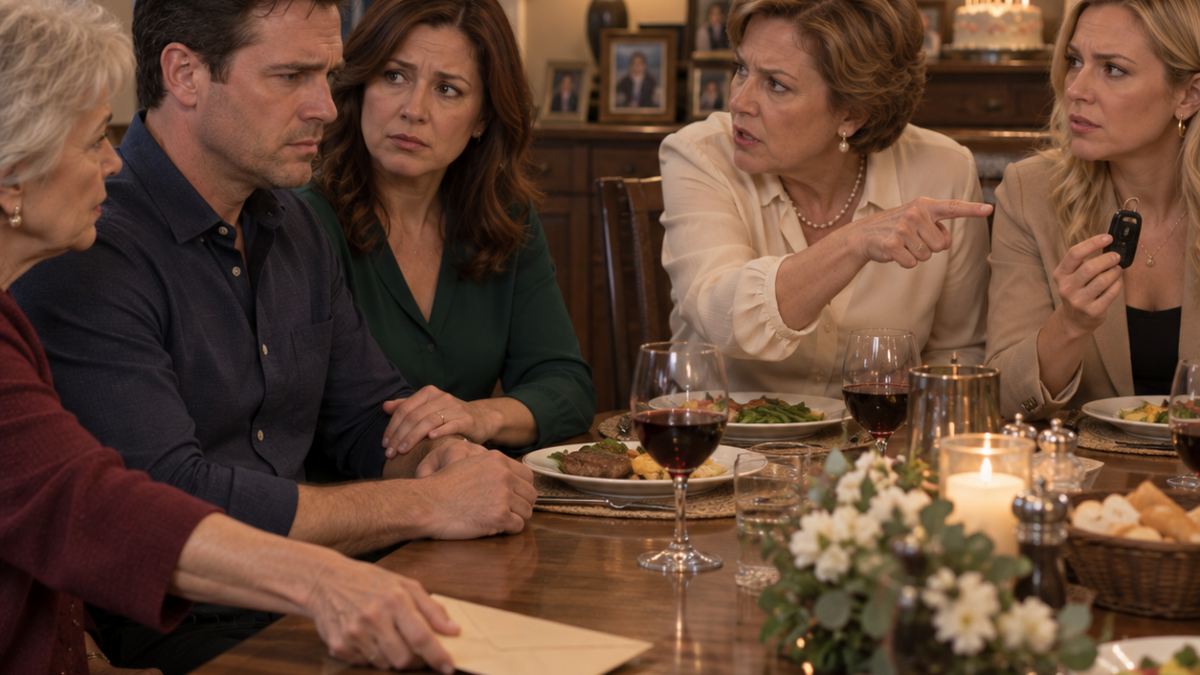
My parents told me they had no money when my 5-year-old son needed a $27,000 surgical deposit.
Five years later, my sister thanked them at dinner for an $84,000 luxury SUV.
I’m Michael Reed, 39, a structural engineer in Raleigh, North Carolina. My wife Natalie and I spent almost four years rebuilding our finances after our son Caleb’s heart surgery. We sold our first townhouse, emptied our emergency savings, and worked every extra hour we could get.
I never blamed my parents for not helping.
They told me they were living carefully in retirement.
Then my Aunt Grace quietly handed me an old envelope after dinner and said, “Michael, check the date before you ask your father another question.”
Caleb was five when a cardiologist found the defect.
He had been getting tired faster than usual, but we thought it was asthma until he collapsed during a school field day.
Within a week, we were sitting in a pediatric cardiac office listening to a surgeon explain a procedure neither Natalie nor I had ever heard of.
The surgery was necessary.
Insurance would cover most of it eventually, but between our deductible, specialist costs, and what the hospital required before scheduling, we needed roughly $27,000 almost immediately.
I had about $11,000 accessible.
Natalie and I could borrow some.
We were still short.
So I did something I hated doing.
I asked my parents.
My father, Dennis, invited me over alone.
He sat with me at the kitchen table and told me retirement had been more expensive than expected.
“We’re on a fixed income now,” he said. “I wish we could do more.”
I told him I wasn’t asking for a gift.
A loan would be enough.
I would sign whatever he wanted.
He shook his head.
“We just don’t have it.”
I believed him.
Why wouldn’t I?
Natalie and I figured it out ourselves.
Caleb got his surgery.
He recovered.
And then the bills kept coming.
We sold the townhouse twelve months later and moved into a two-bedroom rental.
I took consulting work after my regular job.
Natalie added weekend hours at the pediatric therapy center where she worked.
We survived.
By the time Caleb turned ten, we had finally bought another house.
Smaller than the first one.
But ours.
Last Saturday was Mom’s sixty-fifth birthday.
We drove to my parents’ house for dinner.
A white luxury SUV was parked beside Dad’s garage.
I assumed it belonged to a guest.
Then my younger sister Lauren walked outside holding a black key fob.
She hugged Mom.
“I still can’t believe you actually bought it.”
I stopped halfway up the driveway.
Natalie looked at me.
Lauren saw us and smiled.
“Early birthday present.”
She opened the driver’s door.
The interior still smelled new.
At dinner, I asked Dad what the SUV cost.
He tried to wave the question away.
Lauren answered for him.
“A little over eighty-four.”
Eighty-four thousand dollars.
Mom immediately became defensive.
“Lauren drives clients around all day. She needs something presentable.”
Lauren is thirty-four and sells residential real estate.
She also had a perfectly functional three-year-old crossover until last week.
I looked at Dad.
“You couldn’t lend us twenty-seven thousand when Caleb needed surgery.”
The table went quiet.
Dad put down his fork.
“That was five years ago.”
“Yes.”
“Our circumstances were different.”
“How?”
Mom cut in.
“Michael, don’t do this at my birthday.”
Natalie’s hand closed around mine beneath the table.
I looked across at Aunt Grace, Dad’s older sister.
She wasn’t watching me.
She was watching Dad.
That bothered me.
Then Lauren said, “I don’t know why you’re making my gift about you.”
I didn’t answer her.
I asked Dad another question.
“How long have you been helping Lauren financially?”
He looked at Mom.
Mom looked angry now.
“Parents help their children differently.”
That wasn’t an answer.
I stood up.
Natalie stood with me.
Dad said, “Sit down, Michael.”
I didn’t.
For five years, I had told myself there was nothing to forgive because my parents couldn’t give what they didn’t have.
I wasn’t ready to learn otherwise over birthday cake.
We said goodbye to Mom.
I hugged Aunt Grace.
When she hugged me back, she slipped something into the pocket of my jacket.
I didn’t look until Natalie and I reached the car.
It was a faded envelope from a financial institution I didn’t recognize.
My name was written across the front.
Inside was a photocopied account statement dated three weeks before Caleb’s surgery.
At the top:
REED FAMILY OPPORTUNITY TRUST — MICHAEL REED BENEFICIARY SHARE.
Balance:
$174,220.
I read the number three times.
Natalie whispered, “What is that?”
Before I could answer, Aunt Grace texted me.
Don’t call your parents yet.
Look at the distribution page.
I turned the statement over in the passenger seat. The first page showed the $174,220 balance. The second page showed activity during the next six months. Three months after Caleb’s surgery, $95,000 left my beneficiary share. The description said: BENEFICIARY-DIRECTED REALLOCATION — AUTHORIZATION ON FILE.
I had never authorized any reallocation. I had never even known the trust existed. Natalie took a photo of every page before we drove home.
Sunday morning, I called Aunt Grace. She told me my grandmother Evelyn had created separate opportunity trusts for Lauren and me before she died. The money could be used for education, housing, business opportunities, or medical needs involving us or our children.
My parents were family distribution advisers. A corporate trustee actually held the money.
“Why didn’t anyone tell me?” I asked.
Grace went quiet.
“Your father said you knew.”
She emailed me an old letter from the trust company asking Dad to confirm my mailing address. His handwritten response said all beneficiary communication should continue through the family address because Michael prefers Dennis to handle financial matters.
I had never said that either.
Then I called North River Trust Company. After verifying my identity, a trust officer named Rebecca Shaw confirmed my share still existed.
I asked where the $95,000 went.
She couldn’t tell me until compliance reviewed my identity dispute.
But she told me one thing.
The reallocation request included my written consent.
“Can you send me the signature page?”
Ten minutes later, it arrived.
The signature looked like mine.
I knew exactly where they had copied it from.
Six years earlier, Natalie and I had bought our first townhouse.
Dad had helped me review some of the closing paperwork because he had spent most of his career in commercial lending.
One of the pages required my full signature three times.
I still had a scanned closing packet in cloud storage.
I opened it.
Page forty-one.
There it was.
The exact signature.
Same angle.
Same oversized loop in the M.
Same small gap where the pen had briefly skipped before the final d.
I placed the trust authorization beside it on my laptop.
They were not similar.
They were identical images.
Someone had lifted my signature from an old property document and placed it onto a trust authorization.
Natalie stood behind me.
For a while, neither of us spoke.
Then she said, “Back everything up.”
I almost laughed.
I work with engineering drawings, not digital forensics, but Natalie has spent enough years married to me to know what happens when something structural fails.
You preserve the evidence before moving anything.
I downloaded the files.
Emailed copies to myself.
Saved another set to encrypted cloud storage.
Printed the trust statement, signature page, and Dad’s old communication instruction.
Then I called Rebecca again.
“I dispute the authorization.”
Her tone changed immediately.
Not alarmed.
Formal.
“Are you stating that the signature was used without your permission?”
“Yes.”
“Do you have a comparison sample?”
“Yes.”
She sent a secure upload link.
I submitted both documents.
Rebecca asked whether I had ever given my father or mother power of attorney over the trust.
“No.”
“Did you authorize them to redirect your beneficiary mail?”
“No.”
“Did you know the account existed?”
“No.”
There was a pause.
“I need to escalate this to compliance.”
“How long?”
“I can’t give you a timeline yet.”
“My son needed surgery five years ago.”
“I understand.”
“No. I mean the trust existed then. Medical expenses for my child were eligible, correct?”
She hesitated because she knew exactly where my question was going.
“Yes. Descendant medical expenses are among the permitted distribution purposes.”
I stood from my chair.
Natalie watched me.
“Did my parents ever submit a medical request for Caleb?”
“I can’t answer until the records review is complete.”
“Can you tell me whether anybody even asked?”
Another pause.
“I don’t see a medical distribution request associated with Caleb’s name.”
I sat back down.
That hurt worse than the SUV.
At least an expensive car is visible.
The trust was different.
Money had been sitting somewhere with my name on it while Natalie and I sat in a hospital financial office trying to figure out whether we could put surgery costs on two credit cards.
It would have been enough to cover the $27,000 deposit.
It would have been enough to keep our emergency fund intact.
Maybe enough to keep the townhouse.
Maybe enough that I wouldn’t have spent three years doing structural consulting after dinner while Natalie worked Saturdays.
I reminded myself of something before anger took over.
The surgery had happened.
Caleb was alive.
We had survived.
I did not know the full story yet.
Facts first.
Aunt Grace came to our house that afternoon.
She brought the original envelope.
I asked how she got it.
“Your grandmother gave me duplicate annual statements before she died.”
“Why?”
“Because she didn’t fully trust Dennis with paperwork.”
That was difficult to hear.
Dad and Grandma had always seemed close.
Grace noticed my face.
“She loved him. Trust and love are not the same thing.”
I asked why she had waited five years.
She looked ashamed.
“I didn’t connect the dates.”
Grandma Evelyn died six months after Caleb’s surgery.
Grace had been handling hospice arrangements, medical appointments, and estate details.
After Grandma died, Grace boxed the statements and stored them.
Two weeks earlier, she started clearing the closet where they had sat for years.
She found my 2019 statement.
Then she remembered the year Caleb got sick.
“I thought I was misremembering,” she said. “So I checked.”
“What did you check?”
“The trust schedule.”
She took another document from her bag.
Grandma had divided the original trust into two equal beneficiary shares when Lauren and I were in our twenties.
Each started with roughly $200,000.
Lauren had used part of hers for graduate school and a condo down payment.
I had apparently used less.
I looked at Grace.
“I never used any.”
“Your college tuition?”
“Scholarships and student loans.”
“Your house?”
“My savings and a loan.”
Grace frowned.
“What about the thirty-five-thousand-dollar first-home distribution?”
My body went cold again.
“What first-home distribution?”
She opened the schedule.
Seven years earlier, $35,000 had been distributed from my trust for FIRST RESIDENCE ASSISTANCE.
I had never received it.
My townhouse down payment had been $48,000.
Natalie and I had saved it ourselves.
“Where did that go?”
Grace didn’t know.
Now we had two disputed transactions.
$35,000.
$95,000.
$130,000.
Before Sunday ended, North River Trust locked all non-routine activity in my beneficiary share.
My parents were not allowed to submit new family-adviser instructions while compliance reviewed the file.
At 7:18 that night, Dad called.
I let it ring.
Then Mom.
Then Lauren.
Dad again.
A text arrived.
Call me before this gets out of control.
I stared at it.
For years, I had thought Dad was the calm one.
Mom could get emotional.
Lauren could get defensive.
Dad presented himself as rational.
He used phrases like don’t overreact and let’s look at the numbers.
So I replied with one sentence.
Which numbers?
He called immediately.
I answered.
“Michael.”
“What numbers, Dad?”
“What are you doing with North River?”
“I’m asking them about my trust.”
“You should have called me first.”
“I asked you for twenty-seven thousand dollars when Caleb needed surgery.”
“That isn’t the same thing.”
“Why?”
“Because the trust was not cash sitting around for whatever we wanted.”
“Medical care for my son was an eligible purpose.”
Silence.
I continued.
“Did you know there was one hundred seventy-four thousand dollars in my share?”
“Yes.”
The answer came so quickly that I stopped breathing for a second.
Dad knew.
Not vaguely.
Not maybe.
He knew.
“Then why did you tell me you had no way to help?”
“I told you your mother and I couldn’t lend you personal funds.”
“You told me there was no money.”
“I said we were living on retirement income.”
“Dad.”
“Michael, you’re rewriting a difficult conversation from five years ago.”
“No. I’m asking why you didn’t mention a trust specifically designed to help with medical needs.”
He exhaled hard.
“The trust was Grandma’s money.”
“It was my beneficiary share.”
“We were responsible for protecting it.”
“From heart surgery?”
“You had insurance.”
I looked at Natalie.
She heard that.
Her face changed.
I asked another question.
“What’s the ninety-five-thousand-dollar reallocation?”
Dad said nothing.
“Where did it go?”
“You need to let North River finish reviewing the records.”
“You already know.”
“Michael.”
“Where did it go?”
Mom’s voice appeared faintly in the background.
Then Dad said, “It was part of a family adjustment.”
“What does that mean?”
“Lauren needed help getting established.”
There it was.
Not the full answer.
Enough.
I ended the call before I said something I would regret.
Natalie walked into the kitchen.
She took a glass from the cabinet, filled it with water, and drank half.
Then she said, “They let us sell the house.”
I nodded.
“They watched us sell it.”
I nodded again.
Natalie had cried plenty during Caleb’s illness.
That night she didn’t.
Her anger was too controlled for tears.
“We asked them for a loan.”
“I know.”
“You said you’d pay interest.”
“I know.”
“They told us there was nothing.”
“I know.”
She put the glass down.
Then she went upstairs to check on Caleb.
That was when the problem stopped being about childhood favoritism.
If Dad had simply given Lauren more of his own money, I would have been hurt.
He could spend his money however he wanted.
The trust was different.
That money wasn’t his to emotionally allocate based on which child he thought deserved help.
Monday morning, North River’s compliance officer called me.
Her name was Angela Porter.
She asked permission to record the conversation.
I agreed.
She confirmed something Rebecca had not been able to tell me.
The $95,000 had been sent to an entity called LRG Residential Holdings LLC.
I knew the initials before she said anything else.
Lauren Reed Grant.
My sister’s company.
Angela continued.
The distribution request described the transfer as a beneficiary-directed reallocation from my share to Lauren’s share to support a first-business opportunity.
My supposed signed authorization was attached.
There was also an email from Dad stating:
Michael has agreed that Lauren’s immediate opportunity is a better use of family capital. He is financially stable and comfortable deferring his own share.
I almost admired the sentence.
Financially stable.
Three months earlier, I had been delivering engineering revisions at midnight for extra consulting income because our son’s hospital bills had swallowed our savings.
Comfortable deferring his own share.
I didn’t know I had a share.
“Where did the thirty-five thousand first-home distribution go?”
Angela had that answer too.
My parents had requested it seven years earlier.
The payee was not my title company.
It was a brokerage account controlled by Dennis and Carol Reed.
Six weeks later, $30,000 left that account and went toward the down payment on Lauren’s first condo.
The remaining money had been used for what the ledger called advisory expenses and taxes.
My mouth went dry.
“So both distributions benefited Lauren.”
“Based on the records currently available, substantially, yes.”
“Did she know?”
“We can’t determine knowledge from the transaction records.”
That distinction mattered.
I didn’t want to accuse Lauren of forgery if she had no idea where my parents got the money.
Angela asked for specimens of my real signature from several years.
I sent tax returns, engineering contracts, mortgage forms, and passport paperwork.
Then she asked if I recognized the email address used to confirm the $95,000 reallocation.
I didn’t.
It had my name in it.
Michael.Reed.Family@—
But it wasn’t mine.
The recovery email belonged to Dad.
The phone number belonged to Mom.
They had created an email account under my name.
That became the strongest contradiction in the file.
It also triggered North River’s internal legal department.
Angela told me the review would expand beyond my share.
I asked why.
“Because if family advisers created beneficiary contact information without authorization, we have to verify whether the same process affected any other accounts.”
“Lauren’s?”
“And potentially others.”
I had one demand.
“Do not involve Caleb.”
Angela sounded confused.
“I’m sorry?”
“My son’s medical information. My parents don’t get access. Nobody contacts his doctors. If you need proof of the surgery, I will provide it.”
“Understood.”
It was a small boundary.
It felt important.
Dad left six voicemails that week.
I listened to all of them.
In the first, he was angry.
In the second, rational.
In the third, disappointed.
By the fifth, he sounded scared.
“Michael, North River is treating this like fraud. That is not what happened. We made family decisions. You need to tell them you understand that.”
I saved the voicemail.
The sixth message came from Mom.
“You know your father would never steal from you.”
I wanted to call her and say that moving money without my knowledge was not transformed into something else because the person doing it was my father.
I didn’t.
Instead, I called an attorney.
Her name was Priya Desai.
She specialized in trust disputes.
Our first meeting lasted almost two hours.
I brought every document.
Priya’s advice surprised me.
“Don’t decide whether your parents are criminals.”
I looked at her.
“I’m not.”
“You are emotionally. Everyone does.”
She tapped the trust agreement.
“Our job is smaller. What authority did they have? What did they represent? What did you consent to? Where did the money go? What has to be corrected?”
That made sense.
Facts first.
Again.
Grandma would have approved.
Priya explained the trust structure.
North River was corporate trustee.
Dad and Mom were family advisers with power to recommend distributions.
They could not change beneficial ownership.
They could not sign for me.
They could not redirect my share to Lauren without my written consent.
The first-home distribution was even more problematic.
A first-home distribution had to be paid either directly to the beneficiary or to a closing entity for property the beneficiary owned.
Neither had happened.
“What’s the remedy?” I asked.
“Restoration.”
“From my parents?”
“Potentially. From recipients. From North River if administrative failures contributed. It’ll depend on the evidence and agreements.”
“What about Lauren?”
“We don’t know whether she knew.”
“Does it matter legally?”
“It can.”
“Morally?”
Priya smiled slightly.
“That part isn’t billable.”
I liked her.
North River sent the full preliminary accounting two weeks later.
It was worse than the original statement.
There were not two questionable transactions.
There were five.
The $35,000 first-home distribution.
The $95,000 reallocation.
A $12,500 “beneficiary family support” payment made to Mom and Dad’s household account.
A $9,800 “professional education” payment routed to Lauren’s brokerage licensing and marketing expenses.
A $6,200 distribution labeled “Michael Reed continuing education” that paid for a real-estate conference in Scottsdale.
I had never attended a real-estate conference in Scottsdale.
Lauren had.
Total disputed amount:
$158,500.
Some amounts had later been partially credited.
Investment gains complicated the numbers.
But the pattern was clear.
My beneficiary share had functioned like a secondary pool Dad and Mom could tap whenever Lauren needed something.
Then Priya found the email that changed my understanding of the entire family dynamic.
It was from Mom to Dad during the week Caleb was hospitalized.
North River had asked whether the family wanted to submit a medical distribution request after Dad mentioned Caleb’s diagnosis during another trust conversation.
Mom wrote:
Michael will manage. He always does. If we start using his share for medical bills, there won’t be enough flexibility to help Lauren with the Raleigh condo and business launch.
Dad replied:
Agreed. He has Natalie and a good salary. Lauren doesn’t have that kind of stability.
I read the exchange once.
Then again.
Then a third time.
That was the Main Reveal.
They hadn’t forgotten the trust.
They hadn’t misunderstood the rules.
They had discussed using it for Caleb.
Then deliberately decided not to because preserving my money for Lauren mattered more.
Michael will manage.
I had managed.
Natalie had managed.
We sold the house.
Worked nights.
Missed birthdays.
Took food to Caleb’s hospital room because cafeteria prices bothered us.
I had managed exactly the way they predicted.
My capability had become their justification for giving me less.
Priya let me sit with it.
Finally I asked, “Can they claim that was within their discretion?”
“Not the reallocation without your consent.”
“The medical decision?”
“They weren’t obligated to approve every permitted request.”
“I didn’t know enough to make a request.”
“That matters.”
She pointed at the communication records.
“They were also representing to North River that you knew about the trust and preferred communication through Dennis. You can challenge that.”
I went home.
Natalie read the email.
She didn’t speak for several minutes.
Then she said, “I want them away from Caleb.”
I understood.
“How long?”
“I don’t know.”
“Okay.”
That was our next decision.
We told my parents they could not contact Caleb directly while the trust dispute was active.
Mom reacted as though we had taken something from her.
“He’s our grandson.”
Natalie answered the email, not me.
Then you should understand why this matters.
No argument.
No essay.
That sentence.
Lauren called me the next day.
I almost didn’t answer.
Then I remembered we still didn’t know what she knew.
“Did you know?” I asked immediately.
“About what?”
“My trust.”
Silence.
“Lauren.”
“I knew Grandma had trusts.”
“Did you know ninety-five thousand came out of mine for your company?”
“No.”
Her answer was immediate.
I couldn’t tell if it was true.
“Did you know about thirty thousand from my first-home distribution going to your condo?”
Another pause.
“Dad said that was family money.”
“Did he tell you whose share?”
“No.”
“What about the real-estate conference?”
“I thought Mom paid.”
“She did. With my trust.”
Lauren said nothing.
Then her tone changed.
“You’re not blaming me for this.”
“I haven’t decided what I think yet.”
“That means yes.”
“It means I’m asking what you knew.”
“I knew Mom and Dad helped me.”
“How much?”
“I don’t know.”
“Ballpark.”
Lauren became defensive.
“I don’t keep a spreadsheet of everything my parents have done for me.”
Maybe she didn’t.
I did now.
Priya’s forensic accountant eventually estimated that, over nine years, my parents had given or directed approximately $286,000 toward Lauren from their personal funds and family trust structures combined.
The new SUV brought the number above $370,000.
There was nothing illegal about the personal gifts.
The trust money was different.
Lauren started crying.
“I didn’t ask them to take from you.”
“Did you ever ask where the money came from?”
“No.”
“Why?”
“Because they’re our parents.”
“So?”
“So I trusted them.”
I almost laughed.
That was exactly what I had done.
Different outcome.
Same mistake.
I told Lauren I wasn’t accusing her of creating the fake email or signature.
“But money that benefited you came from my share.”
“What do you want me to do?”
“I don’t know yet.”
For once, I didn’t solve someone else’s problem for them.
North River formally suspended Mom and Dad from family-adviser authority a month after the review began.
That was the first immediate consequence.
They could no longer recommend distributions for anyone.
Their access to online trust records was removed.
All beneficiary communication went directly to the beneficiaries.
Dad was furious.
He called Grace.
Grace told him she supported the suspension.
That created a second family conflict I stayed out of.
Then my parents made an offer.
Priya received it through their attorney.
They would reimburse the $27,000 surgical deposit we had needed five years earlier.
They would add $25,000 for “family reconciliation.”
In exchange, I would acknowledge that all historical trust transactions were good-faith family decisions and release them from personal claims.
Fifty-two thousand dollars.
For a release potentially covering more than $150,000 in disputed transactions and a fake authorization.
Priya slid the offer across her desk.
“Do you want my opinion?”
“No.”
She smiled.
“Good.”
I rejected it.
Dad called that night from another number.
“You’re trying to punish us.”
“No.”
“Then take the money.”
“This isn’t about getting the surgery deposit back.”
“What do you want?”
“The accounting corrected.”
“What else?”
“My share restored.”
“You don’t need that money.”
I closed my eyes.
There it was.
Again.
“You know what, Dad? You’re right.”
He went quiet.
“I don’t need it today.”
“Exactly.”
“That doesn’t make it yours.”
Silence.
I continued.
“You keep confusing my ability to survive without something with your right to give it away.”
He hung up.
That sentence ended more than the call.
It clarified the entire fight.
My parents had not considered themselves unfair.
They considered themselves efficient.
Michael is stable.
Lauren needs help.
Michael has Natalie.
Lauren is single.
Michael owns a house.
Lauren is building a career.
Michael will manage.
Lauren needs opportunity.
When every decision is made according to who will survive being shortchanged, the reliable person becomes a permanent donor.
I was done with that role.
The formal trust mediation happened three months after Mom’s birthday.
Dad and Mom attended with counsel.
Lauren came separately.
North River had two representatives.
Priya sat beside me.
Natalie chose not to attend.
She said she had spent enough hours of her life paying for decisions my parents made.
I understood.
The mediation was boring in the best possible way.
No shouting.
No dramatic speeches.
Documents.
Dates.
Wires.
Emails.
Signatures.
The copied mortgage signature.
The fake beneficiary email.
The medical discussion.
The distributions.
North River admitted its procedures had failed in several places.
It should have verified my beneficiary contact information directly once I reached a certain age.
It should have confirmed a large cross-beneficiary reallocation independently.
It should not have accepted a family-adviser certification as a substitute for my actual consent.
That mattered.
Responsibility was not only inside my family.
Dad’s position softened after North River acknowledged its failures.
He argued that the trust had always been treated as flexible family capital.
Priya opened Grandma’s trust document.
Separate beneficiary shares.
Written consent for reallocations.
Direct-benefit requirements.
There wasn’t much ambiguity.
Mom cried when the medical email was read aloud.
Not quietly.
She asked for a break.
We took one.
I went outside.
Lauren followed me.
For a minute, neither of us spoke.
Then she said, “I sold the SUV.”
I looked at her.
“What?”
“Yesterday.”
“Why?”
“I can’t drive it now.”
“That car came from Mom and Dad’s personal money.”
“I know.”
“You don’t owe me the car.”
“I know that too.”
“Then why sell it?”
She looked at the parking lot.
“Because I need cash.”
“For what?”
“To repay part of the trust.”
I didn’t answer.
Lauren continued.
“I didn’t know about the signatures. I didn’t know about Caleb’s medical request. But I knew they were helping me more than they helped you.”
That was the first thing she had said that felt completely honest.
“I liked it,” she said.
I looked at her.
“I liked being the one they rescued. I didn’t ask questions because I was afraid the answers would make the help harder to accept.”
I thought about the dinner.
The white SUV.
The way she had said I was making her gift about me.
“What are you offering?”
“Whatever money from your share can be traced directly to me, I’ll repay what I can.”
“You can’t restore one hundred fifty thousand overnight.”
“I know.”
“Do you understand this could take years?”
“Yes.”
“Why now?”
She looked at me.
“Because Caleb was five.”
That was enough.
We went back inside.
By the end of mediation, there was no perfect resolution.
There was a structure.
North River agreed to restore $28,000 to my share for administrative failures and lost growth.
My parents agreed to restore $86,000 from personal assets over two installments.
Lauren assumed responsibility for $36,000 tied most directly to her business and property benefits, payable over five years.
Other adjustments and credits brought the final corrected restoration to roughly $157,000.
The fake reallocation authorization was formally voided.
The first-home distribution was reclassified.
All false communications indicating I had delegated financial management to Dad were removed from the file.
Mom and Dad permanently relinquished family-adviser authority.
North River assigned an independent trust officer for both Lauren and me.
I signed the settlement.
That was my action.
It cost me something.
Signing meant I was not pursuing every possible claim.
There would be no public lawsuit.
No courtroom.
No opportunity to force Dad to answer questions under oath.
Priya believed litigation could potentially recover more.
I didn’t want more.
I wanted the system fixed.
The money restored.
Access removed.
The record corrected.
And my time back.
The first restoration payment arrived six weeks later.
I stared at the account balance.
Natalie stood beside me.
“What are you going to do with it?”
“Nothing.”
She smiled.
“Good.”
We left it invested.
A year earlier, I might have imagined using the money to recreate what we lost.
Buy a bigger house.
Replace the years of retirement contributions we skipped.
Take an expensive vacation.
None of that would recreate those years.
So we did something simpler.
We built a six-month emergency fund.
We increased Caleb’s education savings.
I reduced my consulting work.
That last one mattered most.
For almost five years, my nights had belonged partly to debt.
Now three evenings a week, I was home before six.
Caleb and I started building model bridges at the dining table.
He had no idea how poetic that felt to me.
One evening, while gluing tiny beams together, he asked:
“Are Grandma and Grandpa still mad?”
We had told him only that there was an adult financial disagreement.
“Probably.”
“At us?”
“At me, mostly.”
“Why?”
“Because I told them no about something.”
He considered this.
“Was it bad?”
“No.”
“Then okay.”
Children can make complicated family systems sound embarrassingly simple.
My relationship with my parents remained limited.
Mom tried first.
Six months after mediation, she asked to meet Natalie and me for coffee.
Natalie agreed only if we met without Caleb.
Mom arrived carrying no gifts.
That was probably intentional.
She apologized.
Not for everything.
At first, she said she was sorry we had “felt abandoned.”
Natalie stopped her.
“We weren’t describing a feeling.”
Mom looked at her.
Natalie continued.
“You knew there was money available for his medical care. You decided to preserve it for Lauren.”
Mom started to explain.
Then stopped.
“Yes.”
That was better.
She looked at me.
“We thought you’d recover financially.”
“We did.”
“I know.”
“That wasn’t the question.”
Mom nodded.
“I know that now.”
She explained what I already understood.
Lauren had always seemed fragile to her.
I seemed capable.
When we were teenagers, Lauren needed tutoring, reassurance, money, help with jobs.
I left for college, worked summers, saved.
Mom began treating capability as evidence that I needed less.
Then every successful year reinforced the pattern.
“I was proud of you,” she said.
“It didn’t feel like pride.”
“I know.”
“No, Mom. Sometimes it felt like I was being charged for being dependable.”
She cried then.
I let her.
I didn’t tell her she had done her best.
I didn’t know whether she had.
Dad took longer.
Almost a year.
He sent Caleb a birthday card.
We returned it unopened because the boundary still included direct contact.
Then he wrote me a letter.
Three pages.
The first page was mostly explanation.
The second was regret.
The third finally contained the sentence I needed.
I told myself that giving resources to Lauren was fair because you were more capable of recovering without them.
That was unfair to you, Natalie, and Caleb.
I read it twice.
Then put it away.
I did not call immediately.
An apology is not an emergency.
Two weeks later, I invited Dad to lunch.
He looked older.
Not dramatically.
Just less certain.
We talked about ordinary things first.
My work.
His golf league.
Caleb’s school.
Then Dad said, “I should’ve told you about the trust.”
“Yes.”
“I should’ve submitted the medical request.”
“Yes.”
“I should never have signed off on the reallocation.”
“You did more than sign off.”
He looked down.
“I know.”
“Who created the fake email?”
“Your mother.”
That hurt even though I already suspected it.
“Who copied my signature?”
Dad stared at his plate.
“I did.”
There it was.
No investigator.
No dramatic reveal.
Just my father in a diner telling me he had copied his son’s signature.
“Why?”
“Because I thought you’d agree if I explained it.”
“You didn’t explain it.”
“I know.”
“Then why sign first?”
He rubbed his forehead.
“Because Lauren needed the money before the condo closing.”
“That’s not an answer.”
“It is. It’s just a terrible one.”
I sat back.
He was right.
Sometimes the truth isn’t complicated enough to satisfy you.
My father wanted a transaction completed.
My consent was inconvenient.
He bypassed it.
That was all.
“I don’t trust you financially,” I said.
“I understand.”
“You won’t ever manage money for me or Caleb.”
“I understand.”
“You don’t get access just because we’re family.”
He nodded.
“I understand.”
That was the beginning of a different relationship.
Smaller.
More formal.
Probably healthier.
Lauren made every repayment on time.
After selling the SUV, she bought a used crossover in cash.
She joked once that it lacked heated rear seats.
Then immediately said, “I know. Read the room.”
I laughed.
That was progress.
Her real-estate business continued.
She didn’t collapse without Mom and Dad constantly underwriting it.
In fact, two years later, she earned more than she had during the years they supported her most heavily.
She told me something interesting.
“When they stopped rescuing me, I started turning down stupid expenses.”
Apparently necessity can be educational.
Grace remained the person I trusted most in the extended family.
I once asked why she waited until Mom’s birthday dinner to give me the old statement.
She shook her head.
“I didn’t.”
“What?”
“I brought it because I wanted to talk to Dennis privately afterward.”
“Then why give it to me?”
“Because I watched him lie at the table.”
She had heard Dad say our circumstances were different.
She had seen his face when I asked about financial help.
That was when she knew the statement belonged with me.
Small decision.
Huge consequence.
Three years after the dinner, North River terminated my trust according to its scheduled age provision.
The final distribution came directly to an account Natalie and I controlled.
No parents.
No advisers.
No hidden email addresses.
Rebecca Shaw, the first trust officer I had spoken to, called before processing it.
“Mr. Reed, I need verbal confirmation from you personally.”
I smiled.
“That’s new.”
“It is.”
“Good.”
She laughed slightly.
Then verified every detail.
When the funds arrived, I downloaded the final statement.
My name.
My address.
My account.
No disputed notes.
No fake authorizations.
No cross-beneficiary reallocations.
Boring.
Exactly what financial records should be.
The biggest change in our life was not the money.
By then I earned enough.
Natalie had been promoted.
Our mortgage was manageable.
Caleb was healthy.
The biggest change was that I stopped treating my capacity as an unlimited family resource.
When Lauren needed help moving offices, she asked.
I said yes.
When Mom asked whether I could pay for a large tree removal because Dad’s retirement budget was tight, I said no.
She said okay.
No speech.
No accusation.
She got two quotes and paid for it.
When Dad needed a ride after cataract surgery, I said yes.
I took a day off.
We got sandwiches afterward.
He paid.
Small things became clearer once money stopped carrying hidden meanings.
One summer, Caleb asked whether we could drive past our old townhouse.
I hadn’t been there since we sold it.
We were nearby after a baseball tournament.
So I did.
The place looked smaller than I remembered.
Different flowers.
New mailbox.
A bicycle leaning against the garage.
Caleb barely remembered living there.
“This was ours?”
“Yeah.”
“Why’d we move?”
I looked at Natalie.
She looked at me.
“Things were expensive when you were sick.”
He nodded.
Then asked if we could get ice cream.
That was it.
For years, selling that townhouse had symbolized everything my parents could have prevented.
Standing there, I realized Caleb didn’t carry the symbolism.
He had memories of our apartment.
Movie nights on the floor.
The cheap folding table we used before buying real furniture.
Natalie reading beside his bed after overtime shifts.
Me making pancakes on Sundays.
We lost things.
We also lived.
I stopped needing the past to have been different before I could appreciate the life that came after it.
That doesn’t mean I excused my parents.
Forgiveness and access are different.
Understanding and trust are different.
An apology and restored authority are very different.
Dad will never manage my finances again.
Mom will never have beneficiary access.
Neither of them will control anything connected to Caleb.
Those facts are permanent.
Our relationship exists inside them.
Sometimes that’s what reconciliation actually looks like.
Not returning to the old structure.
Building something smaller that doesn’t require anyone to pretend the old structure was safe.
Mom turned seventy last spring.
We went to dinner.
No luxury SUV waiting outside.
No secret account statements.
Lauren brought the cake.
Grace brought wine.
Caleb, now thirteen, spent most of the meal pretending he wasn’t listening while clearly listening to everything.
At one point Lauren complained about the cost of replacing her brakes.
Mom started to say, “Your father and I could—”
Then stopped.
Lauren noticed.
“I’ve got it.”
Mom smiled.
“Okay.”
The exchange lasted five seconds.
Nobody else at the table would have understood why I noticed.
I did.
Later, Grace caught me watching them.
She leaned closer.
“Better?”
“Different.”
“Different can be better.”
She was right.
After dinner, Dad walked with me to the parking lot.
He paused beside my car.
“You know, I still think about that night.”
“Which one?”
“Caleb’s surgery.”
I waited.
“I should’ve shown up at the hospital with the trust forms.”
“Yes.”
He nodded.
“I know.”
We stood there quietly.
There wasn’t anything else to say.
Some mistakes don’t need additional language after everyone finally agrees on what happened.
I drove home with Natalie and Caleb.
Nobody needed money.
Nobody asked me to solve anything.
Nobody’s crisis followed us into the car.
At home, I opened the fireproof box where I keep important records.
Our deed.
Insurance documents.
Caleb’s surgical report.
The final North River statement.
And the faded envelope Grace handed me at Mom’s sixty-fifth birthday.
I almost threw it away once.
Natalie told me not to.
“Why keep it?”
“Because one day you might forget what changed.”
She was right.
The envelope itself wasn’t important.
The number on the statement wasn’t even the most important thing.
$174,220.
For years, that number made me furious.
Now what I remember is the sentence underneath everything my parents did.
Michael will manage.
They were right.
I did manage.
I managed surgery.
Debt.
A house sale.
Extra work.
Marriage stress.
Rebuilding.
Then I managed something they hadn’t planned for.
I learned to stop making my ability to survive an argument for why other people were allowed to take more from me.
That was the part of the inheritance I actually needed.







