My Parents Called My Husband a Liability—Then His Name Appeared on Dad’s Biggest Deal
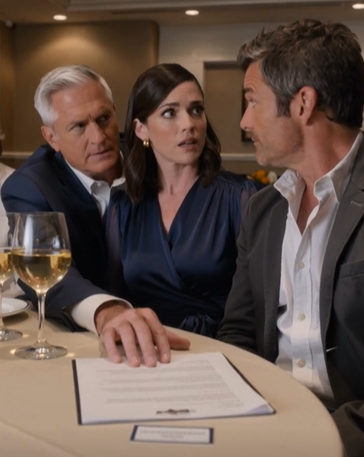
Two nights before my wedding, my father slid a six-page marital-property waiver across a steakhouse table and told my fiancé to sign it before he married me. Noah was 41, divorced, raising a ten-year-old daughter, drove an old Subaru, and rented a modest townhouse. To my parents, that made him a financial risk. I was 35, a procurement director in Charlotte, and they had spent months warning me that love had made me careless. Noah didn’t argue. He placed his lawyer’s card beside the papers and said their attorney could send anything legitimate there. My mother called that evasive. My father called it proof he had something to hide. Three days after the wedding, I walked into a bank to activate the card Noah had given me—and the teller quietly asked a manager to come over.
My name is Elise Warren.
At least, it was until that Saturday.
Now I’m Elise Grant.
My parents, Russell and Margaret Warren, had spent most of my adult life evaluating people the way other families compared restaurant menus.
Where did he go to school?
What neighborhood does she live in?
What does her father do?
Which club are they members of?
My father owns Warren Commercial Advisory, a boutique real-estate consulting firm in Charlotte.
My mother sits on charity committees, organizes fundraising dinners, and somehow knows what every house on three particular streets sold for.
Status was never openly called status in our family.
It was called stability.
Standards.
Being realistic.
Noah failed their test almost immediately.
He had been divorced for six years.
His daughter Ava was ten.
He drove an eight-year-old Subaru.
His townhouse was comfortable but ordinary.
When Dad asked what he did, Noah said he worked in logistics technology and private investments.
Dad apparently heard unemployed consultant.
Mom heard complicated baggage.
I heard the man who packed Ava’s lunch every morning, remembered exactly how I took my coffee, and never promised something he couldn’t deliver.
We had been together eighteen months when he proposed.
My parents reacted as though I had announced I was abandoning civilization.
Mom asked whether I was prepared to “raise another woman’s child.”
Dad wanted to know whether Noah had retirement savings.
I told both of them the same thing.
“I’m marrying him. I’m not hiring him.”
They did not laugh.
The dinner two nights before the wedding was supposed to be a peace offering.
Dad chose the restaurant.
Private room.
White tablecloth.
Noah sat beside me in a charcoal jacket and open-collar white shirt.
Dad waited until after appetizers.
Then he placed a document in front of us.
“Before Saturday, I want this resolved.”
I looked down.
Marital Asset Acknowledgment.
It stated that Noah would make no claim against assets I might someday receive from my parents.
I almost admired the arrogance.
There wasn’t some enormous Warren family fortune waiting for me.
Dad owned a successful business.
My parents lived comfortably.
That was it.
“You hired an attorney to write this?”
Dad’s expression stayed flat.
“We’re protecting you.”
Noah read the first page.
Then closed it.
“I’m not signing legal documents over dinner.”
Mom’s lips tightened.
“Why not?”
“Because I have counsel.”
He reached into his wallet and placed a plain business card beside the document.
“Have your attorney send it here.”
Dad stared at the card.
“If the language is harmless, why involve another lawyer?”
Noah smiled slightly.
“That question answers itself.”
Mom looked at me.
“Are you really comfortable with this?”
“With him having a lawyer?”
“With him refusing transparency.”
I felt Noah’s hand rest lightly beside mine.
He didn’t speak for me.
That mattered.
“I’m comfortable with my fiancé not signing paperwork my father dropped between the bread basket and the wine list.”
Dad leaned back.
“You’re making a mistake.”
I had heard those words before.
When I changed majors.
When I moved to Charlotte.
When I turned down a job Dad had arranged through a client.
This time they landed differently.
“Then it’ll be mine.”
The wedding happened anyway.
My parents attended.
Dad was polite.
Mom smiled in photographs.
Neither mentioned the document again.
Three days later, Noah handed me a debit card while we were unpacking wedding gifts.
“For household stuff,” he said.
I assumed he meant groceries, utilities, maybe furniture.
The card wouldn’t activate through the app, so I stopped at the bank during lunch.
The teller took my ID.
Typed.
Paused.
Typed again.
Then looked at me.
“One moment, Mrs. Grant.”
She disappeared behind a glass partition.
A man in a dark suit returned with her.
He introduced himself as a private-client manager.
He looked at my ID.
Then at the card.
“Mrs. Grant, before I activate this, I need to confirm you know what account your husband added you to.”
“I thought it was our household account.” The manager’s expression changed. “It can certainly function that way.” He asked whether I wanted him to display the available cash balance. I said yes. He turned the monitor just enough for me to see it. $46,870,412.19. I stared at the number. Then I asked him to check again. He did. Same number. The account belonged to HarborRoute Holdings, with Noah listed as managing member and me newly authorized after our marriage. I recognized HarborRoute. Not because Noah had explained it. Because my father had mentioned that name while talking about a waterfront logistics project his firm had been chasing for nearly a year. I left the bank with the card still inactive. When I reached home, I put it on the kitchen counter. “Noah, we need to talk.” He looked at the envelope and immediately understood. “You saw it.” Before he could explain, his phone rang. He almost ignored it. Then he saw the caller. “Owen?” Owen was one of Noah’s former business partners. I could hear only Noah’s side of the conversation. His face changed. After hanging up, he opened his email and turned the laptop toward me. Someone from Warren Commercial Advisory had contacted Owen asking whether Noah had hidden debts, investor problems, or a history of relying on other people’s money. The final line asked whether Noah’s “current marriage may be financially motivated.” The sender worked for my father.
I read the email twice.
Not because it was complicated.
Because I kept thinking I had misunderstood the sender.
Warren Commercial Advisory.
Dad’s company.
The message came from an associate named Patrick Lin, someone I had met at two Christmas parties.
Patrick’s email said he was “conducting informal background diligence on behalf of a concerned family member.”
I looked at Noah.
“Did Dad hire him to investigate you?”
“I don’t know.”
“Why would Patrick contact Owen?”
Noah closed the laptop halfway.
“I think you should ask your father.”
“No.”
My voice came out sharper than I intended.
“I’m asking you first.”
Noah nodded.
Fair.
He pulled out a chair.
I stayed standing.
“Before we talk about your father, I owe you an explanation.”
“Yes.”
The number in the bank account sat between us even though the screen was no longer visible.
Forty-six million dollars.
Actually, more than forty-six million.
The kind of number that makes every normal memory suddenly feel staged.
The Subaru.
The townhouse.
The grocery-store coffee.
The fact that Noah once spent three weeks comparing washing machines because he refused to pay six hundred dollars extra for features he didn’t need.
“How much money do you have?”
He inhaled.
“A lot.”
“That is not an answer.”
“Roughly sixty-two million across cash, market investments, and private holdings.”
I sat down.
The kitchen became very quiet.
“And you thought this wasn’t relevant before we got married?”
“I thought it was relevant.”
“Then why didn’t I know?”
His face changed.
Not defensive.
Ashamed.
That helped.
A little.
Eight years earlier, Noah and two partners had founded HarborRoute Systems.
They built logistics software that coordinated truck appointments, warehouse capacity, and freight movement for regional distribution networks.
Noah handled product and operations.
Owen handled engineering.
Their third partner, Lila Chen, handled sales and finance.
The business grew slowly for several years.
Then a major shipping consortium adopted their platform.
Two years later, a larger infrastructure technology company acquired most of HarborRoute.
Noah sold the majority of his stake.
He kept a small investment interest in the acquiring group and moved part of the proceeds into a holding company.
Over time, investments grew.
He occasionally advised companies.
He invested in several logistics and industrial projects.
That was what “private investments” meant.
“You let me think you were a consultant.”
“I am a consultant.”
“You let me think your townhouse was what you could afford.”
“My townhouse is what I wanted.”
“You let me worry about splitting the wedding costs.”
That one hit him.
“I should have handled that differently.”
“Yes.”
“I didn’t want to pay for everything and create a situation where your parents could say I was buying my way into your life.”
“Instead you created a situation where your wife discovers forty-six million dollars from a stranger at a bank.”
“Yes.”
He looked miserable.
“I see why that’s bad.”
“Good.”
I was angry.
Not because he was wealthy.
Because secrecy had entered our marriage before the marriage had even settled.
Noah had not lied when I asked what he did.
He had never pretended to struggle.
But there is a difference between technical honesty and relational honesty.
I told him that.
He did not argue.
“My first marriage changed after the acquisition.”
He said it carefully.
His ex-wife, Emily, had been with him before the company succeeded.
Money itself had not ended the marriage.
But the years after success changed everything around them.
Relatives asked for loans.
Friends pitched businesses.
People treated dinners like networking opportunities.
Emily began spending in ways they had not agreed on.
Noah became controlling in response.
She became secretive.
By the end, neither trusted the other.
After the divorce, dating became strange.
Some people recognized his name.
Others searched him.
One woman asked for an investment in her brother’s company on their third date.
Another started sending him luxury-home listings after six weeks.
“So you tested me.”
“No.”
“That’s what it feels like.”
“I was trying not to let money become the first fact.”
“That still means you decided which facts I was allowed to have.”
He nodded.
“I was wrong.”
That mattered too.
We spent almost three hours talking.
Not romantic.
Not cinematic.
Painfully practical.
I asked questions.
He answered.
How much debt?
None beyond a mortgage on one investment property.
What trusts?
What accounts?
What obligations to Ava?
What arrangements with his ex-wife?
What would happen if he died?
Why had he added me to the account without explaining it?
That last answer was simple.
He wanted to make household finances easier after marriage.
The card limit itself was modest.
The ridiculous balance behind it had never occurred to him as something I would see during activation.
“That is the most rich-person sentence you have ever said.”
He laughed despite himself.
Then stopped when he realized I was not entirely joking.
By midnight, we had agreed on something that should have happened before the wedding.
Full financial disclosure.
Not because I wanted control.
Because marriage without shared financial reality is stupid no matter how many zeros are involved.
The next morning, however, I called Dad.
He answered from the car.
“Hey, sweetheart.”
“Did Warren Advisory contact Noah’s old business partner?”
Silence.
Traffic hissed through his speaker.
“What?”
“Patrick Lin emailed Owen Price asking whether Noah has debt problems and whether our marriage is financially motivated.”
Dad’s tone changed.
“We made some discreet inquiries.”
“You used your company.”
“I used resources available to me.”
“Without telling me.”
“You weren’t listening.”
There it was.
The logic of control.
If I did not obey, he gained permission to bypass me.
“Who else did you contact?”
“People who know his industry.”
“Names.”
“Elise.”
“Names.”
He sighed.
Two former HarborRoute employees.
An attorney Noah had used years earlier.
A commercial developer Dad knew.
One person connected to a trade association.
I stared at the wall.
“How long have you been doing this?”
“Since you announced the engagement.”
My stomach turned.
Months.
My father had been running a private campaign while smiling at Noah during dinners.
“What were you trying to prove?”
“That you needed to slow down.”
“By proving he was poor?”
“That isn’t what this is about.”
“What is it about?”
“Stability.”
Always that word.
I almost told him.
The bank balance.
The company sale.
HarborRoute Holdings.
One sentence would have ended the argument.
Dad would have gone silent.
Mom would have recalculated Noah immediately.
That was exactly why I didn’t.
If I told them Noah had sixty-two million dollars and they suddenly approved of him, they would learn nothing except that their standards had been correct and their research had been incomplete.
So I asked one question instead.
“If Noah had no money at all, would contacting his former colleagues and implying he married me for financial support be acceptable?”
Dad hesitated.
That hesitation answered me.
“No.”
He finally said it.
“Then stop.”
“Elise—”
“No more calls.”
“No more inquiries.”
“No more talking about my marriage with business contacts.”
“If you’re right about him, you’ve still crossed a line.”
“And if you’re wrong, you’re damaging someone’s reputation because you don’t like my choice.”
Dad became cold.
“You’re overreacting.”
I hung up.
Mom called twenty minutes later.
She had already spoken to him.
“You embarrassed your father while he was driving.”
I almost laughed.
“He was investigating my husband through his company.”
“He is trying to protect you.”
“I am thirty-five.”
“Adults can still make terrible decisions.”
“So can parents.”
Silence.
Then she said:
“You’ve changed.”
“I got married.”
“That isn’t what I mean.”
I knew.
What she meant was that my no had stopped sounding temporary.
Over the next week, I learned Dad had done more than “inquire.”
A former HarborRoute finance director sent Noah a message asking why Russell Warren was telling people Noah had once required emergency investor support.
That claim came from a public filing Dad had misunderstood.
A company Noah invested in had taken bridge financing.
Dad had apparently converted that into:
Noah had money problems.
Another person had been told Noah’s modest townhouse indicated his business success had been exaggerated.
A trade-association acquaintance heard that Noah might be “between ventures.”
None of these statements alone was catastrophic.
Together they created a story.
A divorced man.
One child.
Ordinary house.
Old car.
Unclear job.
Maybe unstable.
Maybe looking for support.
A story built from assumptions and circulated by my own father.
Noah was less angry than I was.
That irritated me.
“You should be furious.”
“I am.”
“You don’t look furious.”
“I learned a long time ago that looking angry during a financial conversation makes certain people think they’ve won.”
That sounded like experience.
“What do you want to do?”
“Nothing impulsive.”
“I want Dad to correct it.”
“So do I.”
“Will you call these people?”
“No.”
“Why?”
“Because your father needs to correct his own statements.”
That was fair.
I sent Dad a written message.
Not emotional.
Not long.
I listed the contacts we knew about.
I asked him to stop all further inquiries and correct any unsupported statement he had personally made.
I also told him we would not attend family dinners until that happened.
He responded:
This is unnecessary.
I wrote:
Then correcting it should be easy.
He did nothing for four days.
On the fifth, Mom texted asking whether Noah and I would attend a fundraiser she was helping organize.
I said no.
She called.
“People are asking why you’re absent.”
“Tell them the truth.”
“What truth?”
“That you and Dad are having difficulty respecting my marriage.”
She gasped like I had suggested announcing a felony.
“We are not discussing family problems publicly.”
“Then don’t ask why I’m not helping you perform a normal family.”
She hung up.
Noah heard the last part.
“Remind me never to negotiate against you.”
“You already married me.”
“Poor due diligence.”
I laughed.
It was the first easy moment all week.
Then something stranger happened.
Dad’s business problem entered our house without either of us inviting it.
He had been pursuing a consulting role on Piedmont Gateway for almost a year.
I knew the project because he talked about it constantly.
A large mixed-use logistics development outside Charlotte.
Warehouse space.
Offices.
Retail.
Transportation connections.
If Warren Commercial Advisory won the strategic consulting role, Dad believed it would elevate the firm.
One evening, Noah came into the kitchen with his laptop.
“Do you know who’s financing Piedmont Gateway?”
“No.”
He turned the screen toward me.
A consortium of investment groups.
One name stood out.
Crescent Harbor Infrastructure Fund.
“Okay.”
“I’m an investor.”
I stared at him.
“How involved?”
“Limited partner. Small advisory committee.”
“How small?”
He smiled slightly.
“Enough that I know the people making decisions.”
My stomach sank.
“Does Dad know?”
“No.”
“Does anyone at his firm?”
“I doubt it.”
For one terrible second, revenge presented itself in a perfect shape.
One call.
One quiet comment.
Dad had been telling people Noah was financially unstable.
Noah could tell the project leaders Dad lacked judgment.
Done.
Noah shut the laptop.
“I’m not doing anything.”
I looked at him.
“Nothing?”
“I’m not calling anyone because your father insulted me.”
“He did more than insult you.”
“I know.”
“He contacted people professionally.”
“I know.”
“Aren’t you angry?”
“Yes.”
“Then why—”
“Because I’m not going to become the person he thinks money allows someone to become.”
That silenced me.
He continued.
“If someone asks me a direct question, I won’t lie.”
“But I’m not interfering with the selection process.”
I sat down.
“That is incredibly annoying.”
“Why?”
“Because being reasonable ruins several revenge fantasies.”
He smiled.
“Sorry.”
Two days later, Dad finally sent partial corrections.
Not apologies.
Short messages to three people.
He clarified that his concerns about Noah were personal, not based on verified financial information.
It was not enough.
But it was something.
I still kept distance.
Mom hated that.
Her response was to escalate socially.
She invited me to lunch at a private club.
I almost declined.
Then she said she wanted to apologize.
I went alone.
She hugged me.
Ordered sparkling water.
Asked about the wedding photographs.
For twenty minutes, she acted like my mother.
Then a man approached the table.
Blake Harrington.
I had dated him for six months when I was thirty.
Investment adviser.
Polished.
Never married.
My mother loved him more than I ever had.
“Elise?”
He looked genuinely surprised.
That was when I knew he had not understood what this lunch was.
Mom smiled too brightly.
“Blake was nearby.”
No.
Blake lived twenty minutes away.
He was not accidentally nearby.
We made awkward conversation for five minutes.
Then Mom started talking about “timing” and “second chances.”
Blake looked at her.
Then at me.
Realization hit him.
He stood.
“Margaret, I think I misunderstood why you invited me.”
I almost felt sorry for him.
He left.
I turned to Mom.
“You invited a man I dated to lunch ten days after my wedding.”
“You didn’t have to make it sound indecent.”
“What would make it sound better?”
“I wanted you to remember there are other kinds of lives available.”
I stood.
“I already chose mine.”
“Elise.”
“No.”
She reached for my wrist.
I stepped back.
“Do not do this again.”
Her face hardened.
“He has a child from another marriage.”
“Yes.”
“You are taking on someone else’s complications.”
“Ava is not a complication.”
Mom looked away.
That was when I stopped trying to persuade her.
“You won’t hear from me for a while.”
She stared at me.
“You’d cut off your mother over a man?”
“No.”
“I’m stepping back because you just tried to audition a replacement husband at lunch.”
Then I left.
That evening, Noah found me sitting on our bedroom floor against the bed.
Not crying.
Just tired.
Ava was with her mother that week.
The house felt too quiet.
Noah sat beside me.
“I’m sorry.”
“You didn’t invite Blake.”
“I know.”
“You didn’t hire Patrick.”
“I know.”
“You didn’t do any of this.”
“I know.”
I looked at him.
“Then stop apologizing.”
He nodded.
After a minute, he asked:
“Do you regret marrying me?”
“No.”
“Do you regret learning about the money?”
I thought.
“No.”
Then:
“I regret learning about it from the bank.”
“Fair.”
That issue had not disappeared simply because my parents were worse.
We met with Noah’s financial adviser the following week.
Then an estate attorney.
I learned exactly what Noah owned.
What was liquid.
What was invested.
What was set aside for Ava.
What his divorce settlement required.
What would happen if he died.
What I would inherit.
What I would not.
We also opened a normal joint household account containing a normal amount of money.
The private card went back into Noah’s safe.
“Forty-six million for groceries was excessive,” I said.
“Apparently.”
That process repaired the part of the marriage Noah had mishandled.
Accountability was not only for my parents.
Two weeks later, Mom appeared at our door.
She held an invitation.
Piedmont Gateway reception.
Dad’s firm had reached the final stage.
Investors and consultants would attend.
“We’d like you and Noah there.”
I stared at her.
“Why?”
Mom hesitated.
Then I saw the answer before she gave it.
“Your father heard Noah knows some people involved.”
I almost admired the speed of the pivot.
Three weeks earlier, Noah was a liability.
Now his connections were useful.
“Has Dad apologized to him?”
“He clarified the misunderstanding.”
“That’s not what I asked.”
“Elise, this project employs people.”
“Has he apologized?”
“No.”
“Have you apologized for lunch with Blake?”
Her face tightened.
“I said I was trying to protect you.”
“So no.”
She exhaled.
“We need to move forward.”
That phrase.
Move forward.
The favorite request of people who wanted consequences to become rude.
“I’ll talk to Noah.”
When I showed him the invitation, he read the host list.
“I know half these people.”
“Of course you do.”
He smiled.
“You’re getting judgmental about my secret rich-person life.”
“I’m adapting.”
Then he surprised me.
“We should go.”
“Why?”
“Not for your father.”
“Then why?”
“For you.”
I waited.
“You’ve spent weeks hiding facts because you’re afraid your parents will become worse if they know them.”
“That is not entirely inaccurate.”
“Stop managing their reaction.”
He was right.
We made rules.
No financial announcement.
No using Noah’s relationships to lobby for Dad.
No correcting anyone unless directly asked.
No lies.
We went.
Dad’s behavior changed the moment we arrived.
Not dramatically.
That would have been easier to mock.
He was simply warmer.
He shook Noah’s hand with both hands.
Introduced him as “my son-in-law, Noah Grant, a technology entrepreneur.”
Noah looked at me.
I saw it.
Entrepreneur.
At Easter dinner with family, Noah had been “doing consulting.”
At a business reception, he had become an entrepreneur.
Status had improved his vocabulary.
For the first half hour, nothing happened.
Then a tall man named Malcolm Pierce approached.
He was one of Crescent Harbor’s senior partners.
“Noah.”
He smiled broadly and hugged him.
Not a business handshake.
An old-friend hug.
Dad’s expression froze.
Malcolm asked about Ava.
Noah asked about Malcolm’s wife.
They discussed a port-automation company they had invested in together.
Another investor joined them.
Then another.
Noah introduced me.
Not as his wife standing beside money.
As Elise, procurement director at my company.
He told them what I actually did.
That mattered.
Dad listened.
At one point Malcolm said:
“You’re still impossible to get to investor dinners.”
Noah shrugged.
“I have better food at home.”
Malcolm laughed.
Dad did not.
Later, Dad cornered me near the bar.
“What exactly is Noah’s role with Crescent Harbor?”
“He invests.”
“How much?”
“I don’t know what answer would satisfy you.”
“Elise.”
“Ask him.”
Dad’s eyes narrowed.
“You knew he had money.”
“Yes.”
“How much?”
“I’m not discussing his finances.”
“You let us think he was struggling.”
That sentence almost made me smile.
“I let you?”
“You never corrected us.”
“You never asked a neutral question.”
Dad lowered his voice.
“This is childish.”
“No.”
“You looked at his car, townhouse, divorce, and job description and wrote the rest yourself.”
He looked away.
That should have been the lesson.
It wasn’t.
Mom made the bigger mistake.
She was speaking with Malcolm and a development executive named Irene Shaw.
I was close enough to hear part of it.
She said:
“With Noah in the family now, there’s obviously strong alignment between Russell’s firm and the capital side.”
I stopped moving.
Noah heard it too.
Mom continued.
“Russell has always had excellent relationships with the investment community.”
Irene glanced toward Noah.
Not impressed.
Curious.
Noah did not correct Mom publicly.
He waited until we were driving home.
“Did your mother just imply our marriage gives your father an investment relationship?”
“Yes.”
“I never endorsed him.”
“I know.”
“Does she?”
“She doesn’t care.”
That was too harsh.
Then I reconsidered.
Maybe not.
The next morning, Mom called.
“Your father thought the evening went well.”
“Good.”
“Malcolm really respects Noah.”
“Apparently.”
She hesitated.
Then:
“Would Noah be willing to make a quick call?”
“No.”
“You didn’t even ask.”
“I don’t need to.”
“It could help.”
“He told me before the reception he would not interfere.”
“This is family.”
“So was my wedding.”
Silence.
Then she said:
“After everything we’ve done for you.”
That sentence triggered something old in me.
Tuition help.
Wedding gifts.
Christmases.
Family vacations.
Real things.
Good things.
But support from the past does not create permanent ownership over another adult’s decisions.
“No.”
Mom became angry.
“Then what is the point of these relationships?”
I went quiet.
“Excuse me?”
“Connections.”
She corrected herself too late.
“If Noah knows the people involved and refuses to help family, what is the point?”
That sentence ended the call.
Not because I hung up dramatically.
Because I suddenly had nothing left to explain.
Later that afternoon, Mom accidentally copied me on an email chain.
I think she meant to forward a seating update.
Instead, I received six messages between Dad, Mom, and a senior associate at Warren Advisory.
I read them slowly.
Before the reception, Dad had instructed the associate to emphasize his “family alignment” with Noah when talking to Piedmont contacts.
One message said:
Noah has expressed confidence in Russell’s approach and sees Warren Advisory as a natural fit.
Noah had never said that.
Another:
The Grant relationship should reassure Crescent Harbor that we are aligned with their operational priorities.
Again, invented.
I printed the emails.
Noah read them at his desk.
He did not swear.
Did not threaten.
He simply looked disappointed.
“They’re using my name.”
“Yes.”
“Without asking.”
“Yes.”
“What do you want to do?”
“I don’t know.”
That was true.
Part of me wanted him to send the emails directly to Malcolm.
Expose everything.
Part of me wanted Dad’s project to disappear the same way he had tried to make my marriage disappear.
Then I imagined the employees at Warren Advisory.
Analysts.
Assistants.
People with mortgages.
People who had nothing to do with Dad investigating Noah.
Revenge can spread beyond the person you intend to punish.
“I don’t want you sabotaging the project.”
“I wasn’t going to.”
“I know.”
“I also won’t confirm something I never said.”
“That’s fair.”
Two days later, Crescent Harbor contacted him.
Not because we sent anything.
During due diligence, Warren Advisory had again referenced Noah’s supposed support.
Malcolm’s office wanted confirmation.
Noah took the call from our kitchen.
I stayed.
Malcolm asked directly whether Noah had evaluated Warren Advisory and whether he supported its selection.
Noah answered in less than thirty seconds.
“Russell is my father-in-law. I have never evaluated his firm, recommended it, or authorized anyone to imply I support its selection. I’m not participating in this decision.”
That was all.
No insult.
No warning.
No mention of the investigation.
No revenge speech.
Just truth.
Dad called that evening.
“What did Noah tell Malcolm?”
“The truth.”
“You are sabotaging me.”
“Did Noah force you to claim his endorsement?”
Silence.
“Did I?”
More silence.
“This project affects my employees.”
“I know.”
“Then why are you doing this?”
“I’m not doing anything.”
“You’re letting him damage me.”
“No.”
I felt strangely calm.
“I’m refusing to make him lie so your false statement remains useful.”
Mom grabbed the phone.
“You’re tearing this family apart over hurt feelings.”
That phrase clarified everything.
Their choices were protection.
Their exaggerations were strategy.
Their interference was concern.
My reaction was always the destructive part.
“I’ll come tomorrow.”
Mom went quiet.
“Why?”
“One last conversation.”
I arrived alone.
I carried two folders.
The first was Dad’s investigation packet.
I had asked him for it weeks earlier and he finally gave it to me after partial corrections.
Property printouts.
Divorce records.
Business searches.
Highlighted speculation.
The second folder contained the email chain using Noah’s name.
I placed them side by side on my parents’ dining table.
Dad looked tired.
Mom looked defensive.
I touched the first folder.
“This is what you created when you believed Noah had no money.”
Then the second.
“This is what you created once you believed he had influence.”
Dad said nothing.
I continued.
“When you thought he was financially weak, you tried to prove he was dangerous.”
“When you thought he might be useful, you invented his endorsement.”
“You did not change your values.”
“You changed your calculation.”
Dad stood.
“Everyone uses relationships in business.”
“Not everyone fabricates recommendations.”
“I never fabricated—”
I pushed the email toward him.
His own words were there.
He stopped.
Mom looked at me.
“What do you want?”
For weeks I had imagined that question.
An apology.
Public humiliation.
Dad forced to call every person he had spoken to.
Mom embarrassed in front of her committees.
Then I looked at them.
I was exhausted.
“I want distance.”
Mom blinked.
“What?”
“No more talking about my marriage to business contacts.”
“No more investigating Noah.”
“No using his name.”
“No asking him for access.”
“No introducing him by his investments or connections.”
“And I’m not attending family or business events with you until I decide I’m ready.”
Mom’s eyes filled.
“You would cut off your parents?”
“I asked you to stop.”
“You continued.”
Dad said:
“You’re acting very powerful now that you discovered your husband has money.”
That was the moment I finally told them.
Not because I wanted to impress them.
Because I wanted to know whether even now they could hear the point.
“The account attached to the card Noah gave me had $46.8 million in cash.”
Silence.
Mom blinked.
Dad slowly sat down.
“Cash?”
“Yes.”
“And that isn’t everything.”
I regretted the sentence immediately.
Dad’s expression changed.
“How much does he have?”
I laughed.
I could not help it.
Not joyfully.
Sadly.
“After all of this, that is still your question.”
Dad’s face reddened.
“I’m trying to understand.”
“No.”
“You’re trying to price him.”
Mom whispered:
“Why didn’t you tell us?”
“Because I wanted to know whether you could respect him when you thought there was nothing to gain.”
Neither answered.
I picked up my bag.
Mom stood.
“Elise, please.”
I looked at her.
“This number changes nothing.”
“He was the same man at that restaurant.”
“The same father to Ava.”
“The same person who treated me well.”
“You decided he had no value because he didn’t perform money the way you wanted.”
“And the second you suspected influence, you tried to use him.”
Mom started crying.
I hated it.
I still left.
The next morning, Warren Commercial Advisory received notice that it was no longer the preferred consulting candidate for Piedmont Gateway.
The project did not explain the decision in dramatic language.
Concerns had arisen during due diligence regarding representations about relationships and endorsements.
Another firm moved ahead.
Dad blamed Noah.
At first.
Then his own attorney apparently reviewed the email chain.
The blame became harder to maintain.
Warren Advisory did not collapse.
I did not want it to.
Dad had employees who deserved better than becoming collateral damage in our family conflict.
But he lost the largest opportunity his firm had pursued in years.
Two other prospective clients delayed discussions.
Not because Noah called them.
Because people in commercial real estate talk.
When credibility becomes part of a due-diligence question, other partners ask their own questions.
Mom faced a smaller social consequence.
One woman on a charity committee learned Margaret had used private family connections as part of business introductions.
Another heard about the attempt to set me up with Blake days after my wedding.
Nobody publicly attacked Mom.
They simply stopped including her in a few planning conversations.
For someone who had built half her identity around social access, silence was louder than criticism.
I took no pleasure in that.
That surprised me.
For months I had imagined satisfaction.
Instead I felt grief.
My parents were not monsters.
That would have been easier.
They were people who had spent so long equating status with safety that they stopped recognizing how controlling they had become.
Understanding that did not require me to stay close.
For six weeks, I barely spoke to them.
Noah never pushed me either way.
Ava asked once why Grandma Margaret had not come over.
I told her adults were working through a disagreement.
That was enough.
I refused to make a ten-year-old carry adult loyalty.
My marriage settled into something wonderfully less dramatic.
Noah and I created actual financial systems.
Joint household account.
Shared budget.
Written list of major holdings.
Quarterly conversation with his adviser.
It sounds absurdly formal until your spouse accidentally reveals tens of millions of dollars through a debit-card activation.
I told him that secrecy was not allowed to masquerade as modesty anymore.
He agreed.
He also asked me to sign nothing without my own attorney if I was uncomfortable.
That made me laugh.
“Dad would love that.”
“Your dad accidentally taught us one useful lesson.”
We also talked about Ava.
Noah had already funded her education trust.
Her mother and Noah shared expenses according to their divorce agreement.
I did not become financially responsible for her simply because we married.
But I wanted to know how our household worked.
Money became less mysterious.
That made it less powerful.
Two months after Piedmont Gateway, Dad texted.
Can we meet?
I ignored it.
Three days later:
I want to apologize without discussing the project.
That got my attention.
I agreed to coffee.
Public place.
Noah did not come.
Dad arrived first.
He looked older.
Not ruined.
Not broken.
Just less certain.
“I was wrong.”
I waited.
“I thought modesty meant lack of success.”
He said it slowly.
“I thought divorce meant instability.”
“I thought having a child from a prior marriage meant complications you should avoid.”
“I thought because Noah did not advertise his career, he had little to show for it.”
He looked at me.
“Then once I realized he had influence, I did the exact opposite.”
“Yes.”
“I treated him like access.”
“Yes.”
He nodded.
“That was worse.”
I had not expected him to say that.
“I also used business resources to investigate a personal concern.”
“Yes.”
“That was inappropriate.”
“Yes.”
No argument.
No negotiation.
It felt strange.
Dad continued.
“I lost Piedmont because I claimed something I could not substantiate.”
I said nothing.
“It would be easy to blame Noah.”
“Yes.”
“He answered a direct question.”
“Yes.”
Dad almost smiled.
“You’re not making this easier.”
“I spent thirty-five years making things easier.”
He looked down.
“Fair.”
Mom apologized separately.
Hers took longer.
She admitted the Blake lunch first.
Then what she had told friends.
Then the reception.
The hardest part for her was admitting she had changed her opinion of Noah after learning he was connected to people she respected.
“I didn’t know the amount.”
“That’s not the point.”
“I know.”
“Do you?”
She nodded.
“I cared that people important to me respected him.”
“And that made him more acceptable.”
“Yes.”
It hurt.
Honesty sometimes does.
I told both parents the same thing.
Their apologies were a beginning.
Not a reset.
No financial questions.
No requests for introductions.
No commentary about our home, cars, or what Noah should spend.
No discussing his divorce.
No treating Ava like evidence of baggage.
And absolutely no managing my marriage.
Dad accepted immediately.
Mom asked:
“What if we’re genuinely worried?”
“Then ask me one respectful question.”
“And if I say I’m fine, stop.”
She nodded.
Trust returned slowly.
That was deliberate.
I used to think forgiveness required speed.
Now I think speed often helps the person who hurt you more than the person deciding whether they feel safe.
Six months after Piedmont, my parents came to dinner.
Not a fundraiser.
Not a business reception.
Our house.
Ava was with us.
She wanted to make tacos.
Noah did most of the cooking while claiming Ava was head chef.
Dad asked Ava about school.
Mom asked whether she still played soccer.
Nobody asked Noah about investments.
Nobody mentioned Crescent Harbor.
After dinner, Dad helped Noah carry plates.
I heard him say:
“I should have learned more about you before deciding who you were.”
Noah answered:
“You can start now.”
That was it.
No dramatic reconciliation.
Two men loading a dishwasher.
I stood in the hallway and nearly cried.
A year after our wedding, Warren Commercial Advisory was still operating.
Smaller than Dad had hoped.
Healthier, according to him.
He brought in an outside adviser to review compliance around client representations.
That impressed me more than an apology.
Behavior is more expensive than words.
Mom stepped down from one charity committee and stayed active in two others.
Her social world became less important to our relationship because I stopped participating in it as a performance.
If she wanted to see me, she called me.
Not her assistant.
Not through an invitation.
Just:
Lunch?
Sometimes I said yes.
Sometimes no.
Noah remained wealthy.
That fact became boring faster than I expected.
We did not move into a mansion.
He replaced the Subaru eventually because it needed a transmission.
The new car was still practical.
I made fun of him.
“You have sixty million dollars and bought another Subaru.”
“It has excellent crash ratings.”
“Romance is alive.”
He laughed.
His money gave us options.
It did not make marriage effortless.
We still disagreed.
I still hated how he folded towels.
He still thought I over-planned vacations.
We had one serious argument about how much to spend renovating the kitchen.
That fight ended with both of us realizing we were arguing about cabinets while standing in a house we were lucky to have.
Money changes the scale of options.
It does not change the need for respect.
That was what my parents had missed.
They thought wealth was evidence.
Evidence that Noah was smart.
Safe.
Successful.
Worthy.
It was none of those things.
The strongest evidence I married the right person came during the moment he had the easiest opportunity to punish them.
He knew the people behind Dad’s biggest professional opportunity.
He could have made a call.
He didn’t.
He let Dad’s own statements enter due diligence.
Then when asked directly, Noah told the truth.
Nothing more.
That restraint told me more about him than the bank balance ever could.
My parents learned something too.
At least I think they did.
A year and a half after our wedding, Dad invited us to a small company anniversary dinner.
I hesitated.
Then agreed.
When we arrived, Dad introduced Noah to a new employee.
“This is my son-in-law, Noah.”
That was all.
No founder title.
No investment portfolio.
No famous contacts.
No explanation.
Just his name.
I looked at Dad.
He knew I noticed.
Later, he smiled.
“Better?”
“Much.”
On the drive home, Noah asked:
“Do you think they changed?”
“Some.”
“Enough?”
“For what?”
He thought.
“To trust them again.”
I looked out the window.
“Trust isn’t one thing.”
“I trust Dad to introduce you without turning you into a résumé.”
“I trust Mom more than I did last year.”
“I don’t trust either of them with every detail of our finances.”
“That seems healthy.”
“Exactly.”
There had been a time when I thought family closeness required unrestricted access.
It doesn’t.
Some people get the living room.
Some get the kitchen.
Some get the safe combination.
Different relationships earn different levels of access.
The debit card that started the wealth conversation is no longer in my wallet.
Noah moved most of the cash into a more sensible structure after his adviser nearly had a heart attack over how much sat liquid.
We joke about it now.
“Remember when you accidentally gave me access to forty-six million dollars for groceries?”
“I said household expenses.”
“That is a lot of paper towels.”
But beneath the joke is something serious.
He learned that withholding major financial facts can still damage trust even when the motive is understandable.
I learned that defending a spouse does not mean declaring them flawless.
I can believe Noah handled the money disclosure badly and still know my parents treated him unfairly.
Adult loyalty should not require surrendering judgment.
The same is true of forgiveness.
I forgave my parents.
Slowly.
I did not return to the old relationship.
The old relationship required my choices to pass review.
The old relationship let concern become investigation.
It let status become character.
It allowed my parents to interfere until I surrendered, then call surrender family harmony.
I no longer participate in that.
Last Christmas, Mom gave Ava a small silver necklace.
Before buying it, she called me.
“Is jewelry okay?”
I almost laughed.
She noticed.
“What?”
“You’re asking.”
“I’m learning.”
She was.
At dinner, Ava sat beside Mom and explained a school science project for fifteen uninterrupted minutes.
Mom listened.
Dad asked Noah whether he wanted more potatoes.
No one asked about private equity.
No one asked how much the new car cost.
No one compared neighborhoods.
It was almost aggressively normal.
That normalcy meant more to me than the moment at the bank.
More than Dad losing Piedmont.
More than revealing Noah’s money.
Because the point had never been to make my parents feel small.
It was to stop letting them make decisions about who deserved respect based on who appeared powerful.
They had looked at Noah before the wedding and seen a divorced single father in an old car.
That should have been enough information to know almost nothing about his character.
Instead they built a verdict.
Then, when new information suggested he had influence, they built another verdict just as quickly.
Poor became useful.
Complicated became connected.
Unacceptable became impressive.
The person had not changed.
Their calculation had.
That was the ugliest part.
And the most useful thing I ever learned from them.
Now when someone impresses me quickly, I ask myself what exactly impressed me.
When someone seems unimpressive, I ask what I actually know.
Job titles matter in certain contexts.
Money matters in certain contexts.
Reputation matters.
But none tells you whether someone keeps promises when there is no audience.
None tells you whether they will protect your dignity when retaliation would feel satisfying.
None tells you whether they can admit a mistake.
Noah could.
Eventually, so could my father.
My mother is still practicing.
So am I.
The $46.8 million in that account was the loudest fact in our story.
It was not the most important.
The most important fact was much quieter.
Before my parents knew the number, they showed me exactly how they treated someone they believed had nothing to offer them.
After they suspected influence, they showed me how quickly they could become respectful when respect seemed profitable.
I got to see both versions.
That knowledge changed the relationship permanently.
I am grateful for that now.
Not because I wanted distance.
Because clarity is better than approval you had to earn by presenting the right balance sheet.
I married Noah when my parents thought he had very little.
I stayed with him after learning he had more than I could imagine.
Neither decision was really about money.
The marriage survived because when hidden facts surfaced, we dealt with them.
Uncomfortably.
Specifically.
Without pretending good intentions erased consequences.
That is the standard I use with everyone now.
Including family.
Especially family.
A few months ago, Dad and I had coffee.
He mentioned Piedmont Gateway.
The project was nearly complete.
Another consulting firm had handled it.
I waited to see whether bitterness appeared.
Instead he said:
“I probably would have lost the work eventually anyway.”
“Why?”
“The proposal was built around access we didn’t have.”
I looked at him.
“That sounds familiar.”
He smiled.
“I walked into that one.”
“Yes.”
Then he became serious.
“I spent a lot of my career believing perception could create reality if you managed it well enough.”
“And?”
“It can create opportunity.”
He took a sip of coffee.
“But eventually somebody checks.”
I thought about the bank.
The private-client manager.
The number on the screen.
My father’s investigation folder.
The emails.
Noah’s single truthful answer during due diligence.
“Yes,” I said.
“Eventually somebody checks.”
Dad nodded.
For once, we were talking about more than business.
On our anniversary, Noah took me back to the same steakhouse where Dad had presented the waiver.
Different table.
No parents.
No legal documents.
He brought one thing.
A plain envelope.
I stared at it.
“If this is another debit card, I’m leaving.”
He laughed.
Inside were two tickets to Maine.
Ava was spending that week with her mother.
No business.
No investor event.
No family obligation.
Just us.
I looked at him.
“How much did these cost?”
He groaned.
“You really are your father’s daughter.”
I kicked him under the table.
Then laughed.
Maybe we never fully escape where we came from.
We just get better at deciding which parts come with us.
My parents gave me caution.
Sometimes too much.
Noah gave me evidence that quiet people can have complicated lives too.
Our marriage gave me something more useful than either.
The right to ask questions without being controlled by the answers.
And the confidence to choose a person before the room decided whether he looked valuable.
I would marry Noah again without knowing the number.
That is the part my parents finally understand.
And the part the money could never prove.







