My Mom Tried to Cut Me From Our Japan Trip—Then My Stepbrother Found Her Email
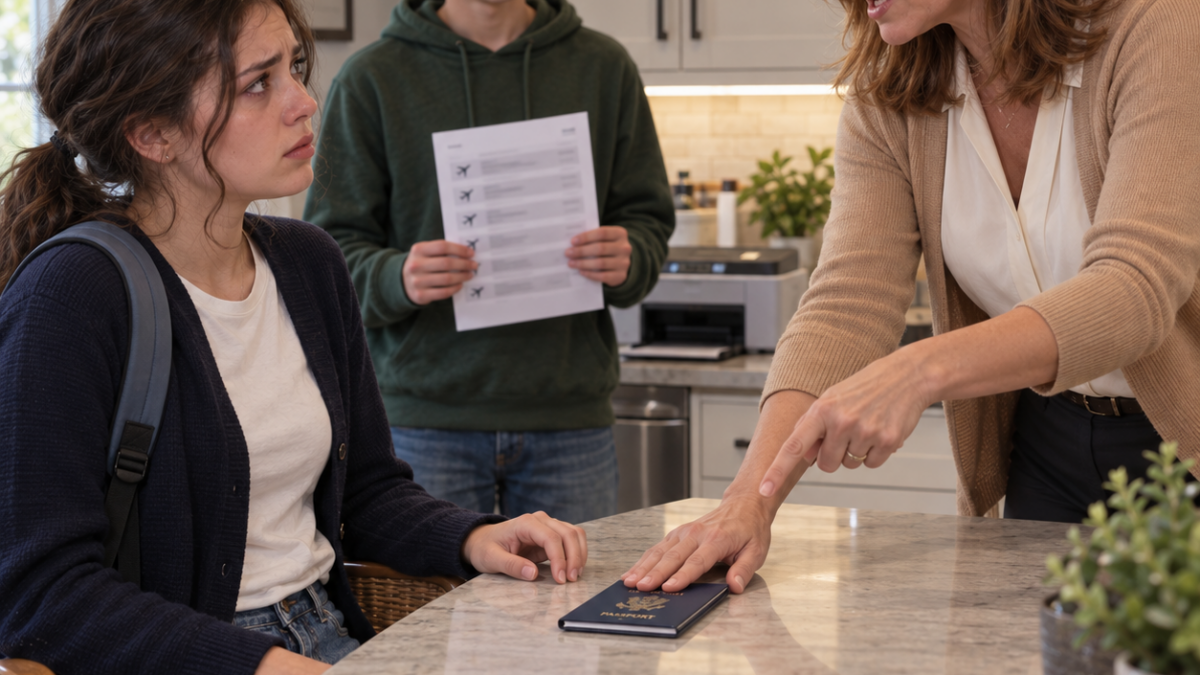
Two weeks before our blended family’s first trip to Japan, my mother slid my passport across the kitchen island and said, “You’re not going with us.” I was 17, and for three months I had planned the trip with my stepfather, David, and my stepbrothers, Noah and Eli. Mom said the airline had canceled my seat and there were no replacements. When I called the airline myself, all five tickets were still confirmed. The next day she claimed David’s mother suddenly needed me to stay in Ohio and help her. David’s mother was on a Caribbean cruise. By then, I knew these were not misunderstandings. Someone wanted me removed from the trip. I still did not understand why until Noah walked into the kitchen carrying a fresh itinerary Mom had left in the printer tray.
My name is Maya Bennett.
I lived outside Columbus, Ohio, with my mother, Laura, my stepfather, David Mercer, and David’s sons, Noah and Eli.
Laura married David when I was 15.
Noah was 14 then, and Eli was 12.
I expected the first year to be awkward.
It wasn’t.
That was almost the problem.
David treated me like a person instead of an obligation.
He asked about school and remembered my answers.
Noah discovered I played guitar and started asking me to teach him chords.
Eli liked science and somehow decided I was the person who should help him build a model bridge for a school competition.
They included me naturally.
My mother noticed.
At first, her reactions were small.
If David bought all three of us the same kind of headphones for Christmas, Mom would say he did not need to “overdo it” with me.
If Noah asked me to come to a basketball game, Mom would suddenly remember a chore I had not finished.
If Eli wanted my help with homework, she would tell him he should ask an adult.
I was 17, not seven.
Still, every time I tried to describe the pattern, Mom said I was being sensitive.
David believed her because he wanted the blended family to work.
Then he announced the Japan trip.
He had saved airline points for years and wanted our first major family vacation to be something all five of us would remember.
For three months, we planned together.
Noah and I made a list of restaurants in Tokyo.
Eli and I practiced basic Japanese greetings.
David let me compare hotels because I was better at finding rooms near train stations.
Mom participated, but differently.
She rarely disagreed in front of everyone.
Instead, she made small changes later.
A museum reservation would suddenly be for four.
A dinner confirmation would list four guests.
Once she told me a walking tour had an age restriction, even though the website clearly allowed teenagers.
Each time, David corrected the booking and assumed it was a mistake.
Two weeks before departure, Mom stopped pretending.
I came home from school and found my passport on the kitchen island.
She stood across from me with both palms pressed against the counter.
“You’re not going to Japan with us.”
I actually laughed because the sentence made so little sense.
“What?”
“The airline canceled one seat.”
“Whose?”
“Yours.”
“Why mine?”
“Because you’re the oldest child and the easiest person to leave behind.”
That hurt enough that I stopped smiling.
Mom told me the flight was oversold and there were no replacement seats at a reasonable price.
I called the airline from the kitchen.
The representative confirmed five active tickets.
Mom grabbed the phone from my hand and ended the call.
“You don’t need to interrogate people over every detail.”
“You said my ticket was canceled.”
“The system probably hasn’t updated.”
The following evening, she tried a different story.
David’s mother, Ruth, supposedly needed help after a medical procedure and would be staying at our house while everyone else traveled.
I texted Ruth.
She sent me a photograph from a cruise ship in the Caribbean and asked whether Laura had lost her mind.
When I showed Mom the picture, she said I had misunderstood what she meant.
I stopped arguing.
That frightened her more than arguing would have.
The next morning, Noah walked into the kitchen while Mom and I were getting ready for work and school.
He was holding three sheets of paper.
“Why does this say five passengers are confirmed?” he asked.
Mom’s face changed.
She reached for the pages.
Noah pulled them back.
At the top was the travel agency’s timestamp from eight minutes earlier.
“It printed when I sent my history paper,” Noah said. Mom’s voice sharpened. “That itinerary is outdated.” “No, it isn’t. Look at the time.” David came in from the garage and asked what was happening. Mom immediately said Noah was confusing an old reservation with the current booking. Noah turned over the second page. “This one is an amendment request.” I could not read the small print from where I stood. David took it from him. His expression went still. “Laura, why did you email the travel agency yesterday?” Mom folded her arms. “I was checking options.” “For what?” She did not answer. David looked down again. Then he looked at me. The third page was a response from the agency confirming they had received a request to reduce the reservation from five travelers to four. The request had been submitted from Mom’s email address. My name was the only traveler marked for removal. David read the page twice. Mom reached for it. He moved it out of her reach. “I didn’t authorize this,” he said. Nobody spoke. Then David looked at Mom and asked one question I had been asking myself for months. “Why are you trying so hard to keep Maya away from us?”
Mom’s answer was immediate.
“I’m not trying to keep her away.”
David held up the agency response.
“Then explain this.”
Laura looked at the page, then at Noah.
“You had no business printing my email.”
“It printed by itself,” he said.
“That’s not the point.”
“It is exactly the point,” David said. “Why did you ask them to remove Maya?”
Mom’s face tightened.
“Because the trip is expensive.”
David stared at her.
“The flights are on points. The hotels are already paid.”
“There are meals, trains, tickets, everything else.”
“You bought a new suitcase last week.”
“That has nothing to do with this.”
“Neither does Maya.”
I stood beside the island with my backpack still over one shoulder, wishing suddenly that I were anywhere else.
This was what always happened when Mom got caught doing something she could not explain cleanly.
The topic widened.
The tone changed.
Everybody else became unreasonable.
I looked at the passport on the counter.
“If money is the problem, I can pay for some of my meals,” I said.
David turned to me.
“No.”
“I have savings.”
“No, Maya.”
Mom gave a small shrug.
“See? Even she understands there are costs.”
David put the papers flat on the island.
“We planned a trip for five people. We are taking five people.”
Mom looked at him.
“So I get no say?”
“You get a say. You don’t get to secretly change the passenger list.”
Her mouth pressed into a line.
Noah looked at me.
Eli had come downstairs during the argument and now stood near the pantry, silent and confused.
David took a breath.
“We’re leaving in twelve days. From now on, any booking change goes into the shared travel folder before it happens. No exceptions.”
Mom laughed without humor.
“Are you putting me under supervision?”
“I’m making sure nobody accidentally loses a child from the itinerary.”
That ended the conversation.
At least in front of everyone.
Mom found me in the laundry room twenty minutes later.
I was moving clothes from the washer to the dryer.
She closed the door behind her.
“You’re happy now?”
I turned.
“What?”
“You made David think I’m some kind of liar.”
“You lied about the airline.”
“I was trying to solve a problem.”
“What problem?”
She crossed her arms.
“This trip was supposed to bring us together.”
“I’m part of us.”
Her eyes hardened.
“You know exactly what I mean.”
I honestly did not.
That may have made her angrier.
She stepped closer.
“David spends more time asking about your school than he asks about my work. Noah talks to you about everything. Eli follows you around. Every plan somehow becomes something you’re good at.”
I stared at her.
“I didn’t plan that.”
“No. Things just work out for you.”
The bitterness in her voice was so clear that I finally understood there was no travel problem.
There was a me problem.
“You want me to stay home because they like me?”
“I want one trip where I don’t feel like the outsider.”
“You married David.”
“That doesn’t mean this has been easy.”
“I never said it was.”
“You don’t have to say anything. You walk into a room and they light up.”
Her voice cracked slightly on the last words.
For a second, I almost felt sorry for her.
Then I remembered the airline lie.
The fake story about Ruth.
The repeated reservations for four.
“You could have told me you were struggling.”
“You’re seventeen. You wouldn’t understand.”
“Then stop punishing me for something you think I can’t understand.”
Her face changed.
She opened the door.
“Do whatever you want, Maya.”
Then she left.
I did not tell David about that conversation.
That was my first mistake after the evidence appeared.
I told myself I was protecting him from another fight.
Really, I was protecting Mom from the consequence of saying out loud what she had already admitted to me.
Twelve days later, all five of us drove to the airport.
David had booked a van because of the luggage.
When the driver opened the rear door, Mom said, “Four passengers and five bags.”
Noah corrected her before I could.
“Five passengers.”
Mom gave him a look.
The driver did not care.
He loaded the luggage.
At the airport, David kept all five passports together.
That detail would have embarrassed me a month earlier.
Now I was relieved.
We checked in without trouble.
Five boarding passes.
Five seats.
Five names.
No mystery.
While we waited at the gate, Mom sat beside David and barely spoke.
Noah bought snacks.
Eli asked me to quiz him on Japanese numbers.
For a few hours, the conflict became background noise.
On the plane, Noah and Eli took the seats beside me because we had arranged it months earlier.
Mom sat across the aisle with David.
I caught her watching us once while Eli tried to pronounce a phrase and Noah made fun of him.
Her expression was not anger exactly.
It was grief.
That confused me.
I had spent weeks assuming she wanted to hurt me.
Now I wondered whether she was scared.
Tokyo overwhelmed all of us in the best way.
The train system looked impossible until it did not.
Convenience stores somehow had better food than half the restaurants near my school.
Eli wanted to photograph every vending machine.
Noah wanted to try everything he had seen in travel videos.
David looked happier than I had seen him in months.
Mom looked determined to prove the trip was fine.
The first two days actually were.
Then the pattern returned.
On the third evening, we arrived at a small restaurant Noah and I had reserved months earlier.
The host checked the booking.
“Four guests?”
I looked at Mom.
David did too.
Mom said, “That must be another system issue.”
Noah pulled up the original confirmation on his phone.
Five.
The restaurant squeezed in an extra chair.
Nobody made a scene.
But at the hotel that night, David opened the shared folder.
The reservation had been changed two weeks earlier.
Laura’s email address appeared on the modification record.
She claimed she had been trying to adjust the time.
David said nothing for several seconds.
Then he asked:
“Why does adjusting the time remove Maya?”
Mom said she did not know.
This time, David did not argue.
He wrote an email to the travel agency requesting a full change log for every reservation linked to our itinerary.
Mom saw him send it.
Her face went pale.
The next morning, she was unusually attentive to me.
She asked whether I wanted coffee.
She asked which train we were taking.
She asked if I wanted to stop at a stationery store I had mentioned.
It did not feel warm.
It felt like someone cleaning a room before an inspection.
The agency responded while we were on a train to Kyoto.
David read the email silently.
Then he locked his phone and stared out the window for most of the ride.
I wanted to ask.
I did not.
That afternoon, we checked into a small hotel near the river.
David asked Mom to walk with him.
They were gone almost an hour.
Noah, Eli, and I sat in the lobby pretending to compare restaurant options.
Finally, David returned alone.
“Where’s Mom?” I asked.
“Upstairs.”
“What happened?”
He looked exhausted.
“We’ll talk tonight.”
That answer made the next three hours feel much longer.
We had a food-market tour already booked, so David took the three of us.
It was fun despite everything.
I bought a tiny ceramic cat for Ruth.
Eli tried grilled squid and immediately regretted it.
Noah bought spices he had no idea how to use.
For a little while, I forgot the hotel conversation waiting for us.
Then we returned.
Mom was sitting by the window in our family suite.
Her eyes were red.
David pulled a chair from the desk and sat across from her.
Noah and Eli took the small sofa.
I stayed standing.
David held his phone.
“The agency sent the complete change history.”
Mom looked down.
He continued.
“There were nine requests from Laura’s email over the past three months.”
My stomach tightened.
“Nine?”
David nodded.
“One request to cancel your airline seat.”
Mom said quietly, “I never completed it.”
“One request to remove you from the Tokyo hotel.”
“I was looking at room options.”
“Two restaurant changes.”
She said nothing.
“A canceled museum ticket. A request to refund your rail pass. A message asking whether a seventeen-year-old could stay alone in a different hotel.”
Noah swore under his breath.
David looked at him.
“Language.”
“Seriously?”
“I know.”
Then David looked at Mom again.
“The first request was dated three days after I announced the trip.”
I felt colder.
Three days.
This had not been a panic two weeks before departure.
It had been the plan almost from the beginning.
David read from the agency note.
“Traveler Maya Bennett may not be joining. Please advise whether the reservation can be reduced to four without affecting the package rate.”
Mom covered her face.
Eli asked:
“Why didn’t you want Maya there?”
He sounded younger than fourteen.
Mom dropped her hands.
“I did want her there.”
“No, you didn’t,” Noah said.
“Don’t speak to me like that.”
“Then don’t lie.”
David held up a hand.
“Noah.”
Noah stood anyway.
“She kept making us think Maya didn’t want to come to things at home too.”
Mom stared at him.
“What are you talking about?”
“The baseball game last year. You said she had homework.”
“I did have homework,” I said.
Noah looked at me.
“You told me later you didn’t even know we went.”
I remembered.
He was right.
Eli joined in.
“The pizza place too. You said Maya was sick.”
“I wasn’t sick.”
Mom’s face drained.
David turned toward me.
“Has this been happening before the trip?”
There are questions that open a door you have spent years leaning your body against.
I could have said no.
I almost did.
Then I remembered the laundry room.
I sat on the edge of the bed.
“Yes.”
Mom whispered my name.
I looked at David.
“The chores that appeared when you took the boys somewhere. The times she told them I had other plans. The dinner invitations I found out about afterward.”
David’s face changed slowly.
Not disbelief.
Recognition.
He started connecting memories.
I told him about a basketball game Mom claimed I was grounded from.
A movie night she told me had been canceled.
A science museum visit she said was just for David and his sons.
Noah interrupted.
“We asked for Maya to come.”
Mom began crying.
“I didn’t know how else to get any space.”
Nobody responded.
She looked at David.
“You don’t understand.”
“Then explain it.”
Her hands shook.
“I moved into this family and they already had each other.”
“You knew I had sons.”
“I know.”
“And Maya was part of your life.”
“I know.”
“Then what did you expect?”
Mom wiped her face.
“I thought we would become a family.”
“We did.”
“No.”
She looked toward me.
“You did.”
The room became completely still.
Mom continued before anyone could interrupt.
“You and the boys accepted her instantly. You asked her opinion. They wanted her at everything. She already knew how to fit with you before I did.”
David stared at her.
“She was fifteen.”
“I know how it sounds.”
“Do you?”
Mom’s voice rose.
“I felt like I married into a family where my own daughter belonged more than I did.”
“That is not Maya’s fault.”
“I know.”
“Then why did you keep punishing her?”
Mom looked at me.
Because of the tears, because she looked small and tired, part of me wanted to rescue her.
That instinct surprised me.
She was still my mother.
Even after everything, I wanted to make the room easier for her.
I did not.
“I thought if she wasn’t there all the time, I’d have room to become important too,” Mom said.
Noah looked disgusted.
“There was room.”
“I didn’t feel it.”
Eli’s voice was quiet.
“So you tried to make less room for Maya.”
Mom closed her eyes.
That was the main truth.
Not that she hated me.
Not that she wanted a vacation without me.
She had turned love into a competition.
Every time David or the boys chose me freely, she experienced it as proof that she was losing.
Instead of asking them for closeness, she tried to reduce mine.
David stood.
“I need a few minutes.”
He walked into the hall.
Mom looked at me.
“I am sorry.”
The words came too fast.
Too early.
I shook my head.
“No.”
Her face tightened.
“No?”
“You’re sorry because everyone knows now.”
“That’s not fair.”
“Maybe not.”
I stood.
“But I’m not ready to make you feel better.”
Noah and Eli left the room with me.
We went downstairs.
Nobody spoke until we reached the lobby.
Then Eli hugged me.
He was almost as tall as I was, which made the hug awkward.
“I’m sorry we didn’t notice.”
“You were twelve when this started.”
“I still should have.”
“No.”
Noah sat beside me.
“I noticed some stuff.”
I looked at him.
“I thought she just didn’t like you.”
“That’s comforting.”
He winced.
“Sorry.”
I laughed despite myself.
Then he said:
“I should have said something.”
“Maybe.”
He nodded.
I appreciated that he did not ask me to excuse him.
David joined us twenty minutes later.
He sat across from me.
“I owe you an apology.”
“You didn’t know.”
“I should have.”
That sounded familiar.
“Mom was good at making each thing look small.”
“I let her.”
He looked at the boys.
“Here’s what happens now.”
Noah leaned back.
David turned to me.
“First, you decide whether you want to stay on this trip.”
“I do.”
“Are you sure?”
“Yes.”
I had spent months planning it.
I had done nothing wrong.
I was not giving Japan to Mom as the reward for excluding me.
“Okay.”
David nodded.
“Then you stay.”
He looked at Noah and Eli.
“Second, nobody changes a reservation without the whole family seeing it.”
They nodded.
“Third, Laura does not make plans for Maya separately, speak for Maya, or decide whether Maya attends something.”
Then he said the part that changed the balance of the room.
“If Laura cannot follow that for the rest of the trip, Laura goes home early. Not Maya.”
My stomach dropped.
I had never heard David set a consequence with Mom.
Noah looked relieved.
Eli looked sad.
I looked at David.
“I don’t want to break up your marriage.”
“You aren’t.”
“But—”
“This is my marriage to manage.”
That sentence mattered.
For two years, Mom had made her insecurity my responsibility.
David was giving it back to the correct adults.
He continued.
“When we get home, Laura starts individual therapy. We also do family sessions if you are willing.”
I looked at him.
“Do I have to?”
“No.”
That answer mattered too.
“I’ll think about it.”
Mom came downstairs a few minutes later.
David explained the conditions.
She started to protest at the part about being sent home.
Then stopped.
“Fine.”
David shook his head.
“Not fine. Do you agree?”
Mom looked around the lobby.
“Yes.”
The rest of Japan was not magically healed.
It was awkward.
Very awkward.
For the next two days, Mom spoke to me like a coworker she had been ordered to cooperate with.
“Would you like to join us for breakfast?”
We were all going to breakfast.
“Do you want to come to the garden?”
It was on our shared itinerary.
Still, she asked.
I answered.
The behavior was stiff, but for the first time the burden was not on me to pretend everything was normal.
In Kyoto, Noah and I chose a small noodle place.
Mom did not change the reservation.
At a craft market, Eli wanted to buy a wooden puzzle and asked me which one looked hardest.
Mom watched us.
Her jaw tightened.
Then relaxed.
She did not interrupt.
That was progress measured in inches.
One afternoon, we visited a garden outside the city.
Mom and I ended up walking several steps behind the others.
She pointed toward a tea house.
“Do you want to go in?”
I almost said yes automatically.
Then I asked:
“Do you?”
She looked surprised.
“Yes.”
“Then okay.”
We drank tea together.
The conversation was terrible.
Weather.
School.
The trip.
Nothing important.
But she did not compete for attention.
I did not perform forgiveness.
We were simply two people sitting at the same table without trying to erase each other.
On our last full day, David asked another tourist to take a family photograph.
I stood between Noah and Eli.
Mom stood beside David.
Nobody arranged me toward the edge.
Nobody suggested a second photograph with “just the family.”
When I looked at the picture later, Mom was not smiling much.
I kept it anyway.
A photograph does not need to lie to be valuable.
Sometimes it records that people were trying.
Back in Ohio, therapy started the second week.
Mom tried to postpone the first appointment because of work.
David said no.
That argument happened privately, but she went.
Her therapist, Dr. Carver, specialized in anxiety and family systems.
Family therapy came a month later.
I agreed to attend after David promised I could stop whenever I wanted.
The first session was uncomfortable enough that I almost did.
Dr. Carver asked each of us to describe what we thought the problem was.
David said:
“Laura excluded Maya repeatedly because she felt threatened by her place in the family.”
Mom said:
“I handled insecurity badly.”
Noah said:
“Mom lied to keep Maya out of things.”
Eli said:
“I don’t trust plans anymore unless I see them myself.”
Then everyone looked at me.
“I think my mother wanted me smaller because she felt bigger when I was excluded.”
Mom flinched.
Dr. Carver did not soften it.
“Laura, what happens in you when Maya says that?”
Mom stared at the carpet.
“Shame.”
“Anything else?”
“Anger.”
“At Maya?”
“At myself.”
That was the first useful answer.
The therapy did not transform her quickly.
Some sessions were awful.
She defended details.
She said I made her sound cruel.
I told her I was describing what happened.
She accused David of taking my side.
Dr. Carver asked why she believed care had sides.
Mom once stormed out of a session.
She came back the following week.
That mattered.
Over time, the story underneath her jealousy became clearer.
Mom grew up with an older sister who was good at almost everything she struggled with.
Their parents compared them constantly.
Mom learned early that attention felt scarce.
When she married David, she wanted a clean new chapter.
Instead, she entered a family where the boys already adored their father and then quickly bonded with me.
She expected me to need her in the new marriage.
I did not.
That frightened her.
None of that excused what she did.
Dr. Carver said that explicitly.
“An origin explains a pattern. It does not make the pattern acceptable.”
Mom wrote that sentence down.
I noticed.
At home, the changes were small.
She stopped answering questions for me.
If David asked whether I wanted pizza, she did not say I preferred salad.
If Noah invited me somewhere, she did not invent homework.
If Eli asked for help with a project, she did not redirect him.
The first time she caught herself, we were at dinner.
Noah asked:
“Maya, want to come to the game Friday?”
Mom immediately said:
“She probably has—”
Then stopped.
She looked at me.
“Sorry. You answer.”
“I can go.”
Noah nodded.
That was it.
No apology speech.
No tears.
Just a corrected behavior.
I trusted that more.
Trust returned unevenly.
There were setbacks.
At Thanksgiving, Mom became tense when David and I cooked together because we had developed a routine before the marriage.
She went quiet and slammed one cabinet harder than necessary.
Old Maya would have made herself disappear from the kitchen.
Instead, I asked:
“Do you want to cook something with us?”
Mom looked startled.
Then suspicious.
Then she said:
“Yes. Stuffing.”
We made stuffing.
It was not symbolic while we were doing it.
It was onions and celery and too much sage.
But at dinner, Mom thanked me for helping.
No competition.
No correction.
Christmas was harder.
The boys gave me a guitar pedal I had wanted.
Mom’s expression tightened when I hugged them.
I saw it.
She saw me see it.
For a moment, the old tension returned.
Then Mom took a breath.
“That was a good gift,” she said.
Noah smiled.
“Yeah.”
Later, she told me:
“I hated how jealous I felt.”
I appreciated the honesty.
“What did you do with it?”
“Nothing.”
That was progress too.
By spring, I was applying to colleges.
Before therapy, Mom would have turned the process into a way to control distance.
I knew that.
She knew it too.
So when she asked which schools I preferred, I watched her carefully.
I mentioned an in-state university an hour away and two out-of-state options.
Mom said:
“What matters most to you?”
I almost laughed.
“Are you asking me?”
“Yes.”
“Program quality. Cost. Whether I like the campus.”
She nodded.
No argument.
A week later, she left a folder on my desk.
Not a decision.
Just financial-aid deadlines for all three schools.
At the top she wrote:
For you to decide.
I kept the note.
It was one of the first times her involvement felt like support rather than steering.
Noah and Eli changed too.
For months after Japan, they overcorrected.
They invited me to everything.
Literally everything.
Noah once asked whether I wanted to go with him to get a haircut.
“No.”
“Okay.”
“You don’t have to prove anything.”
He looked embarrassed.
“I know.”
Eli started checking with me privately whenever Mom planned something.
“Did you really say you’re busy Saturday?”
“Yes.”
“Oh. Okay.”
Slowly, they stopped expecting another lie around every corner.
David carried the most guilt.
He had trusted Mom’s explanations for two years.
He started replaying old events.
The missed baseball game.
The restaurant where I supposedly had homework.
The museum day.
Once, he apologized so many times that I finally stopped him.
“You didn’t create this.”
“I believed her.”
“She was your wife.”
“I should have asked you.”
“Yes.”
He nodded.
That was enough.
I did not need him to punish himself forever.
I needed him to behave differently.
He did.
He asked me directly.
He checked plans.
He stopped assuming Mom’s version represented everyone.
Most importantly, he corrected things in real time.
One Saturday, Mom told Eli:
“Maya probably doesn’t want to spend her whole day at your robotics competition.”
David said:
“Let Maya answer.”
No anger.
No public humiliation.
Just the new rule.
Mom looked at me.
“Do you want to go?”
“Yes.”
“Okay.”
It sounds absurdly simple.
Healthy families probably do this without thinking.
We had to learn it deliberately.
The most difficult conversation happened six months after Japan.
Mom asked me to have lunch with her alone.
I almost declined.
Then I agreed to a café near my school.
Public place.
My own ride.
Easy exit.
Those conditions made me feel safer.
Mom arrived early.
She had been crying before I got there.
That made me nervous because tears used to mean I was about to become responsible for her feelings.
She did not ask me to comfort her.
She said:
“I owe you an apology without David or Dr. Carver in the room.”
I waited.
“I tried to remove you from a family that wanted you.”
My throat tightened.
She continued.
“I told myself I was trying to make space for my marriage. But the truth is I was jealous of my own daughter.”
She looked down.
“That is humiliating to admit.”
I said nothing.
“I thought if David and the boys loved you easily, it meant they could see something missing in me.”
“They weren’t comparing us.”
“I know now.”
“You were.”
“Yes.”
She looked at me.
“I lied to them about you. I lied to you about them. I made you doubt whether you were wanted because I was afraid I wasn’t wanted enough.”
That was the apology I needed.
Not because it erased anything.
Because it named the mechanism.
Mom did not say she “made mistakes.”
She said what she had done.
“I’m sorry.”
I took a breath.
“I believe you.”
Her eyes filled.
“That doesn’t mean I trust you fully.”
“I know.”
“And I’m not going to pretend Japan fixed us.”
“I know.”
“But I want to keep trying.”
Mom nodded.
“So do I.”
We did not hug.
I was glad.
A hug would have made the moment look finished.
It was not.
The relationship after that lunch became less dramatic and more real.
We had good days.
Awkward days.
Days when Mom got insecure and said so before doing anything destructive.
Days when I assumed the worst and had to admit I was reacting to history instead of the current moment.
Repair required both.
Not equal responsibility for the original harm.
But responsibility for what we did next.
By the time I turned eighteen, I no longer checked every invitation for evidence I was being pushed out.
That was a bigger milestone than my birthday.
David hosted a small dinner at home.
No giant party.
No speech.
No public redemption arc.
Mom asked what cake I wanted.
I said lemon.
She ordered lemon.
When Noah’s friends arrived later, Mom introduced me simply:
“This is my daughter, Maya.”
No qualification.
No competitive joke.
No tight expression.
I noticed.
She noticed me noticing.
Neither of us said anything.
College decisions came in April.
I was accepted to the in-state university I liked best with enough aid to make it the sensible option.
It was seventy minutes from home.
Close enough to visit.
Far enough to breathe.
When I showed the letter at dinner, David stood and hugged me.
Noah and Eli started arguing about who got my room.
Mom looked at them.
“Her room stays her room.”
I stared at her.
She caught herself.
Then laughed.
“Unless Maya says otherwise.”
I smiled.
“I say otherwise eventually. Not yet.”
“Fair.”
That summer, we planned a short family trip to Washington, D.C. before I left for college.
Nothing international.
Nothing emotionally loaded.
One evening, Mom opened the shared itinerary on her laptop.
“Five train tickets,” she said.
Noah looked at me.
Eli looked at Mom.
Everyone understood the reference.
Mom raised both hands.
“I am not touching anything without witnesses.”
We laughed.
Even me.
Humor returned only after truth did.
The Washington trip was ordinary.
Museums.
Too much walking.
One bad restaurant.
No secret cancellations.
No disappearing reservations.
At one point, Mom and I disagreed about whether to spend another hour at a museum.
She wanted to leave.
I wanted to stay.
For a second, I felt the old fear.
If I disagreed, would she make me pay later?
Then Mom said:
“Okay. You stay with Noah. We’ll meet at the hotel at six.”
That was all.
I stayed.
Nothing happened.
That tiny event changed something in my body.
Disagreement no longer automatically meant exclusion.
When August came, we packed my dorm room into David’s SUV.
Mom helped label boxes.
Noah carried the heavy ones.
Eli tried to convince me I needed his gaming monitor.
I did not.
At the dorm, Mom stood near the window while I made the bed.
She looked around.
“You okay?”
“Yes.”
“Do you want us to leave?”
“Not yet.”
She smiled.
“Okay.”
Later, after the boys and David went downstairs for food, Mom handed me a small travel wallet.
Inside was my passport.
I looked at her.
“I found it in the safe when we were packing documents,” she said.
The old passport from Japan.
“I thought you should keep it yourself now.”
I ran my thumb over the cover.
A year earlier, she had placed that passport on the kitchen island while telling me I was not going.
Now she was handing it back without conditions.
“Thank you.”
She nodded.
Then she said something I did not expect.
“I’m glad you went.”
“To Japan?”
“Yes.”
“Even after everything?”
“Especially after everything.”
She looked toward the hallway.
“If you had stayed home, I might have kept telling myself I wasn’t doing anything serious.”
That was probably true.
I put the passport in my desk drawer.
Mom did not ask for a hug.
I gave her one anyway.
It was not forgiveness in one gesture.
It was just a hug.
When my family drove away, I stood at the dorm window and watched the SUV turn out of the lot.
I did not feel abandoned.
That was new.
Over the next year, Mom continued individual therapy.
The family sessions dropped from weekly to monthly, then to occasional check-ins when I came home.
She and David stayed married.
Not because everyone pretended Japan had been a misunderstanding.
Because Mom kept doing the work after the crisis stopped being immediate.
That mattered more than anything she said in Kyoto.
Noah and Eli still call me their sister.
No step in front of it unless paperwork requires precision.
David calls me his daughter sometimes.
Mom no longer corrects him.
The first time I heard him say it to someone after Japan, I watched her face.
She noticed.
Then smiled.
Not the tight smile from before.
A normal one.
I do not tell this story because my mother became a perfect person.
She did not.
Neither did I.
I tell it because for two years I assumed being excluded meant something was wrong with me.
Mom’s jealousy turned ordinary affection into evidence she thought she had to compete with.
The more the Mercers included me, the more she tried to remove me.
Once the pattern became visible, the real decision was not whether everyone loved each other.
It was whether we were willing to stop participating in a system where one person had to become smaller for another person to feel secure.
I stopped.
David stopped.
Noah and Eli stopped cooperating with excuses.
Eventually, Mom stopped too.
That is why the family survived.
Not because I forgave quickly.
Not because David gave a perfect speech.
Not because Japan magically brought us closer.
It survived because the person causing the harm finally became responsible for changing it, and the rest of us stopped absorbing the cost.
I still have the printed itinerary Noah found.
He gave it to me as a joke before I left for college.
On the back he wrote:
Five passengers. Check the timestamp.
I keep it inside an old notebook.
Not because I enjoy remembering the lie.
Because that page was the first thing in our house that made the truth impossible to smooth over.
Before that, every exclusion could be explained separately.
A chore.
A misunderstanding.
A canceled plan.
A sick relative.
A booking mistake.
One sheet of paper turned a pattern into evidence.
But the paper did not save me.
What saved me was what happened after.
Noah refused to hand it over.
David asked the next question.
I finally answered honestly.
And later, when Mom tried to make her jealousy my responsibility again, everyone stopped helping her do it.
That was the family lesson I carried into adulthood.
Love does not become safer when nobody talks about what is wrong.
Belonging is not real if someone can erase you whenever your presence makes them insecure.
And being included should never depend on making yourself less visible so somebody else can feel more important.
The first family trip I remember most clearly is not Japan anymore.
It is the ordinary train ride to Washington the next summer.
Five tickets.
Five names.
No secret changes.
Mom slept against the window.
Noah played a game on his phone.
Eli ate nearly an entire bag of pretzels.
David read.
I watched Ohio disappear outside the window and realized I was not checking whether anyone wanted me there.
I already knew.
For the first time, that knowledge felt normal.







