My Kids Asked for $550,000 From My Business Sale—Then a Lender Sent Me Papers I Never Approved
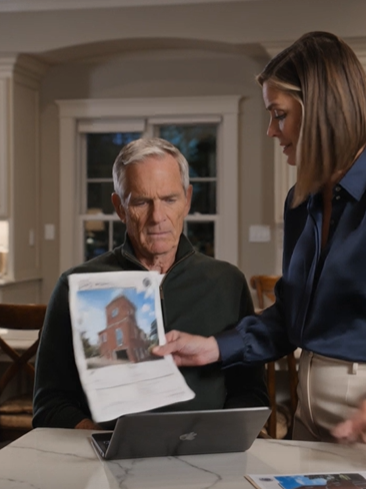
Forty-eight hours after I sold my HVAC supply company, my two adult children sat at my kitchen table asking me for $550,000.
Not someday.
Not in their inheritance.
Now.
My daughter Brooke slid a glossy proposal toward me first.
“I need two-twenty for the second showroom.”
My son Daniel placed another folder beside hers.
“Three-thirty gets the equipment company launched without outside investors.”
Then my son-in-law Mason leaned over the table and said, “We really need your answer today, Martin. The bank won’t wait forever.”
I was sixty-seven years old.
I had spent thirty-eight years building Lawson Mechanical Supply from a rented counter and one delivery van into a company employing twenty-six people around Columbus.
Selling it for $2.4 million sounded enormous until you remembered taxes, business debt, retirement, health insurance, and the inconvenient fact that I might live another twenty-five years.
My children were looking at the sale price.
I was looking at the number I actually had to live on.
“Why are we discussing a bank?” I asked.
Brooke exchanged a quick look with Mason.
“It’s just timing,” she said. “The building needs commitments from the future tenants.”
“What building?”
Daniel tapped his folder.
“The development where I’d put the equipment business.”
Brooke opened hers to a rendering of a renovated red-brick warehouse with tall windows.
“My showroom would be here.”
Daniel opened his packet.
Same warehouse.
Different page.
I looked from one folder to the other.
“So these aren’t separate locations.”
“They’re separate businesses,” Mason said.
“That wasn’t my question.”
Mason had been married to Brooke for twelve years. He bought neglected commercial properties, renovated them, and either sold or leased them.
Sometimes he made good money.
Sometimes he called me about “temporary liquidity.”
Brooke crossed her arms.
“Dad, you’ve always said you wanted us to build something of our own.”
“I do.”
“Then why does every conversation about money suddenly turn into a lecture?”
“Because you’re asking me for more than half a million dollars.”
Daniel shifted in his chair.
“It’s not like we’re asking you to give it away. You’d be investing in us.”
“In what, exactly?”
“My company.”
“Which doesn’t exist yet.”
His jaw tightened.
Brooke jumped in.
“My business does exist.”
It did.
She owned a successful interior-design showroom with four employees.
I had loaned her $45,000 when she opened it six years earlier.
She had repaid about half.
I had never pressed her about the rest.
Mason reached across the table and turned both proposal folders toward me.
“This gives everyone room to grow. Brooke gets a flagship location. Daniel gets warehouse space and a yard. You get equity exposure instead of just parking everything in bonds.”
“I’m not interested in turning my retirement into your development fund.”
Mason leaned back.
Nobody spoke for a few seconds.
Then Brooke said something that landed harder than she probably intended.
“Mom would have helped us.”
My wife Ellen had been dead three years.
There are sentences people use because they know you can’t argue with the person being quoted.
That was one of them.
I stood and carried my coffee to the sink.
“Your mother isn’t part of this conversation.”
Brooke looked down.
Daniel didn’t.
“Dad, come on. We’re not strangers. This money came from the company we grew up around.”
“You grew up around it. You didn’t build it.”
Daniel’s chair scraped slightly.
“That’s harsh.”
“It’s accurate.”
Mason exhaled through his nose.
“The lender needs a capital commitment before Monday. Nobody is asking you to wire anything tonight. Just confirm you’re in.”
That word bothered me.
Confirm.
Not consider.
Not decide.
Confirm.
My laptop was open at the far end of the table because I had been reviewing closing documents before they arrived.
It chimed.
New email.
The sender was Franklin Commercial Lending.
I almost ignored it.
Then I saw the subject line.
Capital Contribution Verification — Harbor Ridge Properties LLC.
Mason stopped talking.
I noticed that.
I opened the message.
The first sentence thanked me for my participation in the Harbor Ridge redevelopment financing.
I had never heard of Harbor Ridge Properties.
The second sentence asked me to verify my committed equity contribution.
$550,000.
Exactly the total Brooke and Daniel had asked me for.
I turned the laptop so all three of them could see it.
Nobody said anything.
I looked at Mason.
Then Brooke.
Then Daniel.
“Why does a bank I’ve never spoken to think I already committed my money?”
They left without answering me.
Mason said the lender had “jumped ahead.”
Brooke called it a paperwork misunderstanding.
Daniel told me I was making it sound worse than it was.
The next morning, I called Franklin Commercial Lending myself.
I gave the loan officer my name and explained that I had received a capital-verification request for a project I had never agreed to fund.
Her tone changed immediately.
She asked me to wait while she pulled the file.
When she came back, she said, “Mr. Lawson, our application lists you as a family equity investor for five hundred fifty thousand dollars.”
“Who listed me?”
“I can’t discuss another borrower’s private information beyond documents that specifically reference you.”
“Then show me those.”
An hour later, my attorney and I received a limited verification packet.
My name appeared on a capital schedule beside $550,000.
Attached behind it was a copy of the closing summary from the sale of my company.
I had never given Mason that document.
Then I saw the date on the loan application.
It had been submitted six weeks before my business sale closed.
Six weeks before Brooke and Daniel sat at my kitchen table pretending they had come separately to ask whether I might invest.
At the bottom of the lender’s verification page was one sentence:
Family investor has verbally committed proceeds from pending business sale.
I had never made that commitment to anyone.
My attorney, Rebecca Shaw, read the page twice.
Then she took off her glasses.
“Do not call your children yet.”
“That seems to be everyone’s favorite instruction lately.”
“I’m serious.”
Rebecca had handled the sale of Lawson Mechanical Supply and most of my business contracts for nearly fifteen years.
She was fifty-eight, direct, and almost impossible to impress.
That morning she looked less surprised than disappointed.
“Did Mason ever ask permission to use your closing documents?”
“No.”
“Did Brooke?”
“No.”
“Daniel?”
“No.”
“Did you ever verbally agree to invest in Harbor Ridge?”
“I didn’t know Harbor Ridge existed until last night.”
Rebecca nodded.
“Then the lender needs that in writing.”
She drafted a short letter while I sat across from her.
It said I had made no financial commitment to Harbor Ridge Properties LLC, had authorized nobody to represent otherwise, and would not permit my personal financial information or business-sale documentation to be used as evidence of available project capital.
Nothing dramatic.
No accusations.
Just a clear boundary in writing.
I signed it.
Rebecca sent it to the lender and copied Mason’s attorney.
Then she leaned back.
“Now we find out why they needed you before they asked you.”
That sentence followed me home.
To explain why it hurt as much as it did, I need to explain the company.
Lawson Mechanical Supply was not a technology startup.
Nobody ever wrote articles about us.
We sold commercial HVAC parts, controls, pumps, fittings, and enough emergency replacement motors to fill a warehouse.
My first location in 1988 was a narrow storefront behind a tire shop.
I was twenty-nine.
Ellen was pregnant with Brooke.
We had $18,000 in savings and a loan from my father that I repaid three years early because I hated owing family money.
For the first year, I delivered parts myself.
Ellen kept the books at night after Brooke went to sleep.
Daniel was born four years later.
By then we had one employee and a second delivery van.
When the kids were little, they spent Saturdays at the counter.
Brooke drew pictures on packing slips.
Daniel learned to operate the label printer before he learned long division.
That history became part of their argument later.
They had grown up in the business.
That was true.
But growing up inside a company and carrying responsibility for it are not the same thing.
Neither child wanted Lawson Mechanical as a career.
I never held that against them.
Brooke went into interior design.
Daniel studied business for two years, left college, and eventually became operations manager for a regional trucking company.
I was proud of both of them.
The problem was that Ellen and I had different definitions of help.
Mine usually involved a limit.
Hers involved a question.
“How much do they need?”
Brooke’s first showroom cost more than she expected.
I loaned her $45,000.
Ellen wanted to make it a gift.
I insisted on paperwork.
She called me rigid.
Then Daniel needed help after a divorce.
I covered six months of rent while he got back on his feet.
Ellen bought him furniture.
A year later, he needed a truck.
I co-signed.
When he missed payments, I covered two of them before telling him I would never do it again.
Ellen covered the third without telling me.
I learned that after she died.
Cancer took her in eleven months.
People talk about losing a spouse as if grief is one enormous thing.
For me it arrived as administrative discoveries.
Her coffee mug in the dishwasher.
A coat I could not donate.
Passwords written inside a notebook.
A recurring transfer to Daniel I did not recognize.
That was how I discovered Ellen had been quietly giving both children money for years.
Not hundreds of thousands.
Nothing criminal.
But enough.
A thousand here.
Two thousand there.
A credit-card payment for Brooke.
Property taxes for Daniel.
Emergency money that happened so regularly it stopped being emergency money.
I was angry at Ellen for about five minutes.
Then I missed her too much to stay angry.
She hated seeing the kids struggle.
I hated the way repeated rescue made struggle optional.
We had argued about it while she was alive.
Neither of us had completely won.
After her death, the calls shifted toward me.
I became the only remaining parent and, apparently, the final branch of the family bank.
Selling the company made everything louder.
The sale had been in progress for almost eight months.
A regional supplier wanted our customer base, warehouse, and contracts.
The headline number was $2.4 million.
After business liabilities, taxes, professional fees, and the amount I needed to reserve for contingencies, my personal net would be closer to $1.55 million.
That was still more money than I had ever had sitting in one place.
It was also my retirement.
Brooke and Daniel knew the gross number.
I had never given them the final net figure.
I also had never given them the closing summary.
That document had exact sale terms.
So how had it ended up in Mason’s lender file?
The first answer came from my business broker, Glen Patel.
Glen had represented me through the sale.
When I called and asked who had received preliminary valuation materials, he went quiet.
“Martin, your daughter asked for the summary in February.”
“What summary?”
“The preliminary range.”
“Why?”
“She said you wanted the family to understand the transaction.”
I gripped the phone harder.
“Did you send it?”
“Not the full package. I sent a one-page estimate because she was copied on an email from you months earlier about scheduling.”
I remembered that.
Brooke had helped coordinate a family dinner around one of the buyer meetings.
Her email had remained in an old thread.
Glen sounded embarrassed.
“I should have confirmed.”
“Yes.”
“I’m sorry.”
“What did the estimate show?”
“Potential gross proceeds. Timing. Nothing confidential beyond what she probably already knew.”
It was enough.
Brooke had a document showing my expected sale proceeds months before closing.
That explained how Mason’s lender knew there would be money.
It did not explain why the closing summary itself was attached.
Rebecca found that answer in the email headers of the verification packet.
The closing summary had been uploaded to the lender portal from Brooke’s business email address at 9:14 the morning after my sale closed.
The same morning she texted me:
Hope you’re taking it easy today. You earned it.
I stared at that message for a long time.
Then I remembered where the closing summary had been.
Printed on my desk during a family dinner the night of closing.
Brooke, Mason, Daniel, and the grandchildren had all come over.
I thought they were there to celebrate.
Brooke had brought a cake shaped like a little delivery truck.
Daniel gave me a framed photograph of the original storefront.
Mason poured bourbon.
For the first time in months, I had relaxed.
At some point I went outside to show my granddaughter the old delivery van I had kept.
The closing packet stayed on my desk.
I could not prove Brooke photographed it then.
But I did not need to guess for long.
She called two days after Rebecca’s letter reached Mason’s attorney.
“Dad, we need to talk.”
“About Harbor Ridge?”
A pause.
“Yes.”
“Come alone.”
“I’m not excluding Mason.”
“Then don’t come.”
She arrived alone.
No proposal folder.
No polished pitch.
She sat at the same kitchen table.
“You’re making this sound like we stole something.”
“You used my financial documents without asking.”
“I took a picture of one page.”
“So you did take it.”
Her eyes closed briefly.
“Yes.”
“Why?”
“Mason needed proof the family had capacity.”
“The family?”
“You.”
“No. Me.”
She rubbed her temples.
“Dad, we weren’t trying to trap you.”
“You told a bank I had committed money before asking me.”
“Mason said it was preliminary.”
“You uploaded my closing statement.”
“After the sale. Because they needed to verify funds existed.”
“Funds existing and funds being yours are different things.”
“I know.”
“Do you?”
Her eyes filled.
That almost worked on me.
Brooke had Ellen’s eyes.
Grief makes certain faces dangerous.
“Why did you need five hundred fifty thousand exactly?”
She looked toward the window.
“For the businesses.”
“Both?”
“Yes.”
“Why the same building?”
“Because Harbor Ridge is a good location.”
“For you or Mason?”
That landed.
She stood.
“This is why nobody can talk to you about money.”
“Because I ask where it goes?”
“Because every dollar comes with a courtroom cross-examination.”
“Then stop asking me for dollars.”
She grabbed her purse.
At the doorway she turned back.
“Mason has put two years into that property.”
There it was.
Not her showroom.
Not Daniel’s future company.
Mason’s property.
I said nothing.
Brooke left.
That afternoon, I searched public property records.
Harbor Ridge Properties LLC owned a 71,000-square-foot warehouse complex on the west side of Columbus.
Mason had bought it twenty-two months earlier.
The original plan was a mixed-use redevelopment with offices, showrooms, warehouse suites, and a restaurant pad.
The project had stalled.
Permits took longer than expected.
Construction costs rose.
One prospective tenant backed out.
A bridge loan was coming due.
None of that was secret once you knew where to look.
I called Rebecca.
“Harbor Ridge is Mason’s deal.”
“I assumed.”
“Did you know it’s under pressure?”
“I know its lender filed a mortgage extension last year.”
“Meaning?”
“Usually that somebody needed more time.”
I asked her to help me understand the project without crossing any legal lines.
She called a commercial real-estate attorney she trusted.
I called a former customer who happened to supply mechanical systems to several Mason projects.
Between public filings and industry conversation, a picture formed.
Mason did not need $550,000 to build Brooke a showroom and Daniel a company.
Harbor Ridge needed $550,000 in new sponsor equity to satisfy Franklin Commercial Lending’s refinance requirements.
Brooke’s showroom and Daniel’s proposed equipment company were part of the leasing plan.
Their rent would help make the project look viable.
But the money they asked me for would not sit in separate business accounts waiting for them to spend it.
Most of it would flow into Harbor Ridge at closing.
The “investments in my children” were, functionally, rescue capital for Mason’s property.
That was the significant reveal.
The separate proposals were separate mainly in presentation.
Different covers.
Different projections.
Different promises.
Same address.
Same lender.
Same funding gap.
Same red-brick warehouse.
I spread the two proposal folders across my dining table and read them again.
Brooke’s packet said she needed $220,000 for tenant improvements, inventory, and working capital.
Daniel’s said he needed $330,000 for equipment purchases, yard improvements, and startup costs.
But deeper in the budgets were “landlord construction contributions” and “leasehold offsets.”
When Rebecca’s accountant reviewed them, she estimated less than half of the total money would remain under Brooke or Daniel’s control.
The rest would effectively support the property.
Daniel called before I had decided what to do with that information.
“Brooke says you’re killing the deal.”
“I haven’t done anything.”
“You sent the lender a letter.”
“I corrected something false.”
“Mason said the bank was fine until you freaked out.”
“I did not commit $550,000.”
“We knew you hadn’t signed yet.”
“Then why tell them I had committed?”
He went quiet.
“Dad, everybody does preliminary capital schedules.”
“Not with my money.”
“It wasn’t final.”
“That isn’t helping.”
He exhaled hard.
“You’ve always said you want me to own something.”
“I do.”
“This is my chance.”
“Then why does your chance depend on me rescuing your brother-in-law’s building?”
“That’s not fair.”
“Answer the question.”
“It’s not rescuing anything.”
“Would the refinance close without my money?”
Silence.
That silence gave me more than the sales packet had.
“No,” I said. “It wouldn’t.”
Daniel’s voice changed.
“Okay, fine. They need the equity. So what? You’d own part of the project.”
“Was anyone planning to tell me that before I wired the money?”
“You were going to get documents.”
“After I said yes?”
“You’re twisting this.”
“No. I’m finally untwisting it.”
He said something then I had heard in different forms for years.
“You can afford it.”
That sentence does damage because it skips the question of whether something is right.
A person can afford a bad investment.
A person can afford an unfair gift.
A person can afford to be manipulated.
Ability is not obligation.
“I’m not investing in Harbor Ridge.”
Daniel went silent.
Then:
“So that’s it?”
“That’s it.”
“You’d let the whole project fail?”
“It isn’t my project.”
“It affects Brooke.”
“She made her decision.”
“It affects me.”
“You haven’t even formed your company.”
“You know what I mean.”
“I do.”
That was the problem.
I knew exactly what he meant.
Family should absorb consequences that land on family.
For years I had partly agreed.
When Ellen got sick, everyone came together.
When Daniel divorced, I helped.
When Brooke’s youngest needed surgery, nobody discussed who paid for the hotel near Cincinnati Children’s. I booked the rooms.
That was family.
But there is a difference between helping someone survive a problem and being drafted into someone else’s business risk without informed consent.
Mason called me that evening.
For the first time, he dropped the son-in-law voice.
No “Martin, hear me out.”
No soft sales language.
“You’re blowing up a nineteen-million-dollar redevelopment over a verification email.”
“No. Your financing depends on money I never promised.”
“It depends on family equity.”
“Then use your family’s equity.”
“You know Brooke doesn’t have that kind of liquidity.”
“Neither does Daniel.”
“You do.”
“And there it is.”
He paused.
Then he tried another angle.
“You’ll get preferred equity. Eight percent target return.”
“Target.”
“Yes.”
“Not guaranteed.”
“No investment is guaranteed.”
“Exactly.”
“So you understand the risk.”
“I understand the risk better now than when you called it Brooke’s showroom.”
That angered him.
“She is getting the best space in the project below market.”
“Because you need her lease.”
“That doesn’t mean it’s bad for her.”
“No.”
I kept my voice even.
“But good for Brooke and necessary for Mason are two different statements.”
He had no answer.
A week passed.
Franklin Commercial Lending formally removed my name from the capital schedule.
The refinance deadline remained.
Without my contribution, Mason needed replacement equity.
That was when the pressure stopped being polite.
Brooke came by on Sunday with my granddaughter Claire.
Claire was thirteen.
Brooke almost never brought her to money conversations.
That alone told me what kind of afternoon it would be.
We ate lunch.
Claire showed me a science project.
Then she went outside to throw a tennis ball for my dog.
Brooke watched through the window.
“If Harbor Ridge falls apart, we may have to move.”
I looked at her.
“Why?”
“Mason has personally guaranteed part of the bridge debt.”
That was new.
“How much?”
“I don’t know exactly.”
“Brooke.”
“Enough.”
“Does your house secure it?”
She looked down.
That answer terrified me.
“Does your house secure it?”
“Partially.”
I stood.
“You came into my kitchen asking me for two hundred twenty thousand dollars for a showroom while your home was tied to Mason’s loan?”
“We were going to explain everything.”
“When?”
“Dad—”
“When?”
She started crying.
This time I believed it.
“We thought the refinance would solve it.”
“And my money solves the refinance.”
“It gives everyone time.”
“That’s not what you told me.”
“I know.”
“Daniel knew?”
“Yes.”
That one hurt.
I had still been telling myself maybe Daniel only saw an opportunity.
Brooke wiped her face.
“We knew you’d say no if Mason came straight to you asking to save the building.”
“So you split the ask.”
“We structured it around real businesses.”
“That is a very polished way to say yes.”
“We weren’t trying to steal from you.”
“I never said steal.”
“You’re acting like we’re criminals.”
“I’m acting like three adults designed a conversation around what I would be least likely to refuse.”
She looked toward the yard where Claire was laughing with the dog.
“Mason is scared.”
“I believe that.”
“I’m scared.”
“I believe that too.”
“Then help us.”
That was the hardest moment.
Because I wanted to.
Even after everything.
She was my daughter.
Claire was my granddaughter.
My son-in-law had made a bad commercial bet, but I did not want their house disappearing because of it.
I could write the check.
I could stop the immediate problem.
And if I did, every lesson of the last ten years would remain exactly where it was.
Brooke would learn that withholding information was forgivable if the emergency became large enough.
Daniel would learn that promising money before asking me was a negotiation tactic.
Mason would learn that enough pressure turns “no” into “yes.”
And I would spend retirement waiting for the next crisis.
“I will help you protect your home,” I said.
Hope flashed across her face.
“Not Harbor Ridge.”
It disappeared.
“I’ll pay for an independent attorney to review the personal guarantee and help you understand your exposure. If there is a legitimate path to separating your house from the project, I’ll help with the legal cost.”
“That’s not what we need.”
“It is help.”
“We need capital.”
“No.”
She stared at me.
“You’d rather pay lawyers than help your own family?”
“I’d rather help you get out of a dangerous commitment than put half a million dollars deeper into it.”
“Mason won’t agree.”
“That is between you and Mason.”
She left angry.
But she took Rebecca’s referral.
That mattered later.
The next escalation came from Daniel.
His proposed equipment-rental company had been more fictional than I realized.
He had not resigned from his job.
He had not ordered equipment.
He had not formed the entity.
The “business plan” had been prepared by Mason’s commercial broker using projections from another equipment-rental tenant in Indiana.
Daniel had agreed to the idea because Harbor Ridge needed an industrial tenant.
In return, Mason had promised Daniel a reduced rent and a small ownership percentage if the project stabilized.
Daniel was not simply asking me to fund his dream.
The dream had been assembled to support the building.
I learned that from Daniel himself.
He came over alone.
No folders.
No Mason.
No Brooke.
He looked exhausted.
“I want to explain.”
“Go ahead.”
“Mason asked if I’d ever thought about running my own place.”
“When?”
“January.”
Three months before my business sale closed.
“He said Harbor Ridge needed a tenant that fit the yard space. I said equipment rental could work.”
“And the three-thirty?”
“He built the budget.”
“So you didn’t know what you needed.”
“Not exactly.”
“You asked me for three hundred thirty thousand dollars.”
“I thought it was real.”
“Was it?”
He stared at his hands.
“It could have been.”
That answer was sadder than a lie.
Daniel wanted to own something.
Mason gave him a ready-made version of ownership.
A company name.
A space.
A spreadsheet.
All it needed was my money.
“Did you know they were counting on my sale before asking me?”
“Yes.”
“Did you tell the lender I was committed?”
“No.”
“Did you know Mason had?”
“I knew he listed you as expected family capital.”
“That is not what I asked.”
Daniel closed his eyes.
“Yes.”
I nodded.
He looked at me.
“I’m sorry.”
It was the first apology.
Not “sorry you’re upset.”
Not “sorry this got confusing.”
Just sorry.
That mattered.
“Why didn’t you tell me?”
“Because Brooke said if we came at you with one giant request for Mason’s building, you’d shut it down.”
“She was right.”
“So we thought if you saw what each of us could build there…”
“You could get me emotionally committed before I understood where the money went.”
He winced.
“When you say it like that—”
“How else should I say it?”
He had no answer.
I asked him something I had not asked Brooke.
“If my company had not sold, what would Mason have done?”
Daniel looked away.
“Probably sell Harbor Ridge.”
“At a loss?”
“Yes.”
“So the project was already failing.”
“Not failing.”
“What word would you use?”
“Overleveraged.”
I laughed.
“Your brother-in-law taught you that word?”
“Yes.”
At least he smiled.
It lasted about one second.
Then he said, “Dad, I don’t think Mason is evil.”
“Neither do I.”
“He got too far in.”
“Yes.”
“He thought the refinance would fix it.”
“Yes.”
“And Brooke thought she could keep him from losing everything.”
“I understand.”
Daniel looked at me carefully.
“Then why does it feel like you don’t care?”
That question followed me for days.
Because I did care.
Boundary and indifference can look similar from the outside.
Both contain the word no.
The difference lives in what you are willing to do after saying it.
I paid the attorney reviewing Brooke’s guarantee.
I offered to help Daniel build a real business plan later if he still wanted one after the Harbor Ridge pressure disappeared.
I did not fund the refinance.
Mason hated that distinction.
Then Rebecca found the fact that turned the whole thing from family pressure into something I could not excuse as panic.
The sale closing summary attached to Mason’s lender file was not the only document referencing me.
There was also a sponsor narrative submitted with the refinance application.
It had been prepared nine weeks before my company sale closed.
Under “Additional Family Capital,” it stated:
Seller of Lawson Mechanical Supply expected to contribute proceeds upon completion of pending transaction.
No name.
But obviously me.
Attached to that narrative was an email from Mason to his broker.
Rebecca could show it to me because it had been included in the lender’s verification materials connected directly to my supposed contribution.
The email said:
Martin won’t commit until the business deal is done, but Brooke is confident once the cash is liquid he’ll support both kids. Structure the tenant asks separately. He responds better when he feels he’s backing them directly.
I read that sentence several times.
Structure the tenant asks separately.
There was the Main Reveal.
The separate requests had not simply evolved naturally.
They were deliberately designed.
Not because Brooke and Daniel independently came to me with simultaneous opportunities.
Because Mason and Brooke had discussed how I made decisions.
They knew I would reject a request to put $550,000 into Mason’s troubled property.
They believed I might approve $220,000 for Brooke and $330,000 for Daniel.
Same total.
Different emotional packaging.
I was not merely the expected investor.
My personality was part of the financing strategy.
That changed my decision from temporary hesitation to permanent refusal.
I called Rebecca.
“Send Franklin whatever they need to establish I have no involvement.”
“Already done.”
“Send Mason’s counsel notice that nobody may represent me as a source of project capital.”
“I can do that.”
“And I want my estate plan reviewed.”
She paused.
“Because you’re angry?”
“No.”
“Good answer.”
“I’m not disinheriting anyone.”
Another pause.
“Also a good answer.”
I was not interested in revenge.
But Ellen and I had built our estate plan when we assumed the kids would be in their forties or fifties when both of us were gone.
The documents left everything outright and equally.
After the last month, outright no longer felt responsible.
Rebecca brought in an estate-planning lawyer.
We created a revocable trust.
I remained in complete control while alive.
At my death, Brooke and Daniel would still inherit equally.
But large distributions would be managed by an independent trustee for several years rather than arriving as immediate lump sums.
Educational funds for the grandchildren were separated.
No son-in-law.
No future daughter-in-law.
No spouse of either child would control those funds.
I also updated my financial power of attorney.
My sister Margaret and a professional fiduciary would act jointly if I became incapacitated.
Neither child.
Not because I believed Brooke or Daniel would rob me.
Because no adult child should be placed in a position where their own financial crisis competes with a parent’s interests.
That was the lesson I had learned.
I also set aside $150,000 for something I had been thinking about since selling Lawson Mechanical.
A skilled-trades scholarship fund through Columbus State Community College.
Ellen would have liked that.
Young people training in HVAC, electrical, plumbing, and building controls could apply for tuition assistance and tool grants.
That money would never become Harbor Ridge capital.
When Brooke learned about the estate changes, she stopped speaking to me.
I knew because Claire’s birthday came and I received only a text from my granddaughter.
Love you Grandpa. Mom says things are weird right now.
I replied:
Adults make things weird. You didn’t.
Love you too.
Daniel kept calling.
Sometimes about the conflict.
Sometimes about baseball.
I noticed that the calls became better when money was not part of them.
Mason did not call at all.
Franklin gave him thirty days to replace the $550,000 equity gap.
He found about $180,000 from another investor.
Not enough.
The refinance failed.
Harbor Ridge did not disappear overnight.
This is where real consequences differ from movie consequences.
Nobody came with chains and locked the gate.
Mason negotiated.
Extended.
Sold two other small properties.
Cut the redevelopment scope.
Then, finally, six months after the kitchen meeting, he sold Harbor Ridge to a larger development group.
At a loss.
A painful one.
But not a life-ending one.
Brooke and Mason kept their house.
The independent lawyer I paid helped them negotiate the release of part of Mason’s personal guarantee as part of the property sale.
Brooke never thanked me for that directly.
She did not have to.
Her second showroom never happened.
She kept the first one.
For a while, she blamed me for making her “miss the window.”
Then interest rates rose again and two competing design showrooms in the area closed.
She later admitted, through Daniel, that expanding might have been a mistake anyway.
Daniel did not start the equipment company.
He stayed at the trucking firm.
Nine months later, he called me on a Saturday.
“Can I come over?”
“What do you need?”
He laughed awkwardly.
“That question is kind of the problem.”
“Fair.”
He came over with no folder.
We sat on the back deck.
“I got offered regional operations director.”
“That’s good.”
“It’s more travel.”
“Do you want it?”
“I think so.”
“Then why are you asking me?”
He looked embarrassed.
“I’m not asking you what to do. I’m asking how you decided when to take risks with the company.”
That was different.
So we talked.
For two hours.
No money.
No guarantees.
No capital schedules.
Just advice.
When he left, I stood in the driveway longer than necessary.
It felt like the first time in years my son had come to me because I knew something instead of because I owned something.
Brooke took longer.
Almost a year.
The reconciliation, if you can call it that, happened at Claire’s school concert.
Brooke and I ended up sitting beside each other because the auditorium was packed.
We said hello.
Then nothing for twenty minutes.
At intermission, she finally spoke.
“Mason says you probably saved us from losing the house.”
I looked at her.
“That doesn’t sound like Mason.”
“He’s had a humbling year.”
“I imagine.”
“So have I.”
We watched people move through the aisle.
Then she said, “I’m still angry.”
“I know.”
“You could have helped Harbor Ridge.”
“Yes.”
“You chose not to.”
“Yes.”
She turned toward me.
“I hated you for that.”
I waited.
“But I also know we lied about what the money was really for.”
That was enough to make me look at her.
“We told ourselves the businesses made it true.”
“They could have been real businesses.”
“I know.”
“But they weren’t the reason for the timing.”
“No.”
She swallowed.
“I’m sorry.”
There it was.
A year late.
Still useful.
“I accept that.”
“That doesn’t mean you forgive me?”
“I didn’t say that.”
She almost smiled.
“You’re impossible.”
“So was your mother.”
That made her laugh.
Then cry.
Quietly.
We sat there until the auditorium lights flickered.
Before we went back inside, she said, “Mom would have helped us.”
“I know.”
“You think she would have been wrong?”
I thought about Ellen.
Her instinct to rescue.
My instinct to restrict.
The arguments we had repeated for decades.
“Sometimes.”
Brooke nodded.
“Me too.”
That was probably the closest either of us came to resolving the ghost in the room.
Two years have passed since I sold the company.
I still live in the same house.
For a while, I thought I should sell it because the kitchen table reminded me of that first demand.
Then I realized I was giving one bad conversation too much ownership of a piece of furniture.
I refinished the table instead.
Sanded it down.
New stain.
Daniel helped.
Brooke picked the color.
Mason did not.
That is not a joke.
It is just where things stand.
Mason and I are civil.
We will probably never be close again.
I do not think he is evil.
I think he became terrified of losing a project, then convinced himself family money was a resource rather than a choice.
That is dangerous enough without turning him into a villain.
Harbor Ridge is finished now.
The new owners completed it.
There is a coffee roaster where Brooke’s showroom would have been.
A building-controls company leases part of Daniel’s proposed warehouse space.
I drove past once.
Only once.
It looked good.
That surprised me.
I thought I would feel cheated.
Instead I felt relieved that somebody with enough capital had finally done the project properly.
The scholarship fund matters more to me.
Every spring, I meet the students receiving tool grants.
The first year, one young woman named Kiara used hers to buy gauges, hand tools, and a meter for an HVAC apprenticeship.
She told me she had been borrowing equipment from coworkers because she could not afford her own.
I knew exactly what those tools meant.
Not charity.
Access.
There is a difference.
Help should create more independence when possible.
That became my rule.
My children still inherit from me.
I did not rewrite my will in anger and leave everything to strangers.
But money is no longer the only way I measure what I leave them.
Brooke’s business is steady.
Daniel took the regional job.
Claire is applying to colleges.
My grandson Noah works summers for an electrical contractor and complains constantly about crawling through attics.
I tell him complaining is part of the trade.
He says I’m old.
Both things are true.
Sometimes Brooke asks for advice now.
She does not ask me to write checks.
Daniel has borrowed my truck twice and returned it with a full tank, which I consider major character development.
Rebecca still laughs when I tell her that.
As for the sale money, I invested most of it boringly.
Very boringly.
Treasuries.
Index funds.
A municipal bond ladder that would make Mason fall asleep in under ninety seconds.
That is exactly how I like my retirement money.
I spent some too.
I took Ellen’s sister Margaret to Alaska because Ellen had always wanted to go and never got there.
I bought a fishing boat that is objectively unnecessary.
I replaced the kitchen windows.
None of those decisions required a capital schedule.
The original Franklin Commercial Lending email is still in a folder on my computer.
I kept it because Rebecca told me to retain the file.
Every once in a while, I see the subject line when I search for something else.
Capital Contribution Verification.
It makes me think about how close I came.
Not to losing $550,000.
I never actually agreed to send it.
What I almost lost was the ability to distinguish helping my family from financing their fear.
That distinction is harder than it sounds.
If Brooke had come to me and said:
Mason’s project is in trouble. Our house may be exposed. We are scared. Will you help us understand our options?
I would have helped immediately.
I did help eventually.
If Daniel had said:
I want to own a business someday, but right now this opportunity exists mostly because Mason needs a tenant.
I would have respected the honesty.
Maybe we would have built something later.
What made me say no was not simply the amount.
It was the architecture around the ask.
Two proposals.
Two children.
Two dreams.
One building.
One lender.
One exact funding gap.
And a bank that believed I had already said yes.
My children thought the best way to secure my help was to reduce my ability to make a fully informed choice.
That was the part I could not reward.
I spent thirty-eight years making business decisions.
Some were good.
Some were terrible.
I hired the wrong warehouse manager once and spent eighteen months cleaning up inventory errors.
I bought too much copper tubing before a price collapse and stared at those racks like they had personally insulted me.
I opened a branch in Dayton that lasted three years and cost me more money than I admit when people ask.
Failure is survivable.
Bad investments are survivable.
What destroys trust is removing someone else’s right to decide what risk belongs to them.
That was what the kitchen meeting taught me.
My kids did not need me to be a bank.
They needed me to remain their father.
And fathers are allowed to say no.







