My Husband Divorced Me in Secret—Then Asked Me to Sign Away Our Condo
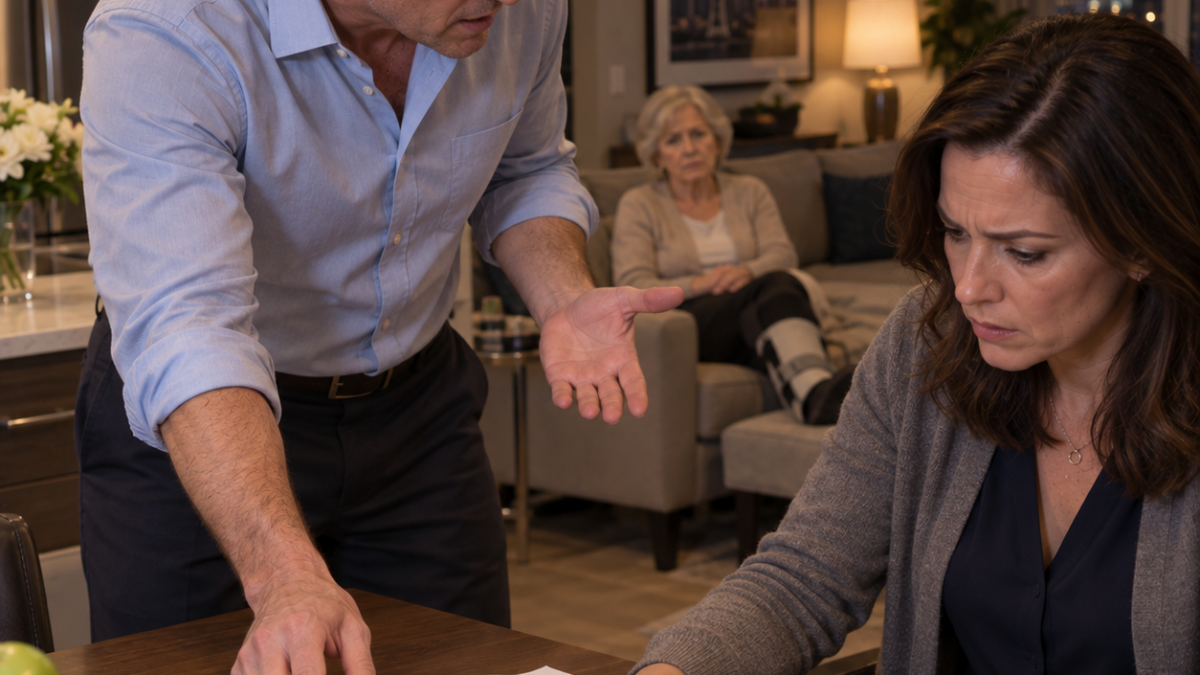
My husband slid a mortgage packet across our kitchen table and said, “Sign it tonight, Megan. The bank won’t hold the rate forever.”
His mother was watching television ten feet away.
I was forty-one years old, nine years married, and I had spent most of the previous six months helping Carol recover from knee-replacement surgery in the condo Aaron and I owned together in Seattle.
I expected a refinance form.
What I found near the back was a limited power of attorney giving Aaron authority to market our condo, sign certain title documents for me, and direct the closing proceeds.
I stopped reading.
“This lets you sell the condo.”
Aaron barely looked up from his phone.
“It lets me handle the paperwork if we refinance or decide to sell.”
“Those are different things.”
“It’s standard language.”
Carol called from the couch, “Megan, sweetheart, Aaron handles property contracts all day. You can trust him.”
I looked at her.
Her pill organizer was on the side table in my handwriting.
Morning.
Noon.
Night.
I had driven her to physical therapy that afternoon.
Aaron had missed the appointment because of work.
Again.
I turned another page.
The proceeds section referenced an entity called Pierce Property Holdings LLC.
“What’s this?”
Aaron’s expression changed for half a second.
Then he smiled.
“An account structure my attorney recommended.”
“Why would proceeds from our home go to an LLC?”
“They wouldn’t unless we needed it.”
“Then remove the clause.”
“Megan.”
“No.”
He leaned back.
“You do this with everything. You’re a treasury manager, so every family decision becomes an audit.”
“I’m being asked to sign away authority over a home I own.”
“You’re being dramatic.”
That sentence ended the conversation.
I closed the packet and put it beside my plate.
“Then I’m not signing tonight.”
Aaron stared at me.
Carol turned the television volume up.
The next morning, Aaron kissed my cheek before work.
He asked whether I could pick up Carol’s prescription on my way home.
I said yes.
Then I drove to the county courthouse to finish paperwork for my father’s estate.
My father, Thomas Avery, had died three weeks earlier.
We had been estranged for most of my adult life.
He founded Meridian Cold Logistics when I was in high school, built it into a large regional temperature-controlled distribution company, and became wealthy enough that business magazines occasionally wrote about him.
None of that repaired our relationship.
When his estate attorney called after his death, I expected a few documents, maybe a property sale, maybe another complicated conversation with a man who was no longer alive to participate in it.
Instead, the attorney told me I was his only legally recognized child and likely heir.
We still didn’t know exactly what the estate was worth.
Most of it was private-company equity, industrial property, receivables, and debt.
That morning I was signing a probate affidavit when the clerk stopped me.
“You marked married.”
“I am.”
She looked at her monitor again.
Then at me.
“Ms. Ellis, the court record shows your marriage was dissolved sixty-three days ago.”
My pen stopped against the page.
“I’m sorry?”
She turned the screen slightly.
There it was.
Aaron Pierce versus Megan Ellis.
Final decree of dissolution.
Entered sixty-three days earlier.
I stared at Aaron’s name.
Then at mine.
The man who had kissed me goodbye that morning had legally stopped being my husband two months earlier.
For sixty-three days, we had slept in the same bedroom.
Paid the same mortgage.
Shared the same groceries.
I had taken his mother to medical appointments.
Covered household expenses when his deposits ran short.
Signed a birthday card to his sister from “Aaron and Megan.”
And the entire time, according to the State of Washington, I was already divorced.
The clerk asked if I wanted a certified copy.
“Yes.”
My father’s estate attorney, Daniel Cho, was sitting beside me.
He said quietly, “Do not call Aaron yet.”
“I wasn’t going to.”
“Good.”
The clerk printed the decree.
Then she pulled the case history.
Aaron had filed months earlier.
The docket listed multiple service attempts.
One finally succeeded at our condo.
I looked at the proof-of-service entry.
The papers had been accepted by an adult member of the household.
There was a name beside the signature.
Carol Pierce.
Aaron’s mother.
The woman whose prescription I was supposed to pick up on my way home.
I asked the clerk for the full case file. Aaron’s petition said we had been living separately for eighteen months. We had not. It said reconciliation was impossible. Three weeks earlier, he had booked a cabin for our anniversary. It said he had difficulty locating me for service. My name was still on the condo, utilities, insurance, and homeowners’ association records.
Then I reached the service affidavit. Carol had accepted the divorce papers at our condo on a Tuesday afternoon. I checked my calendar. That was the same Tuesday I had driven her to physical therapy, waited beside her for ninety minutes, brought her home, made dinner, and organized her medications for the week. She had never mentioned the papers. Neither had Aaron.
The case contained another attachment. Aaron had submitted a declaration describing me as a “nonresident former spouse” and stating that the condo would likely be sold after dissolution. No property division had actually been completed. But one sentence near the bottom stopped me.
Petitioner expects respondent to execute necessary sale and title documents voluntarily.
I photographed the page.
The “mortgage packet” Aaron had put in front of me the night before was no longer confusing.
He had already divorced me.
Now he needed me to sign the paperwork that would make the next part easier.
Daniel closed the file.
“We need a family-law attorney.”
“I have one.”
“You have a family-law attorney?”
“No. I mean I know who I’m calling.”
Her name was Leah Sutton.
She had handled my coworker’s ugly divorce two years earlier and had the reputation of being almost aggressively calm.
I called from the courthouse lobby.
She asked three questions.
“Are you safe?”
“Yes.”
“Do you have access to your home?”
“Yes.”
“Have you signed anything since the decree?”
“No.”
“Good. Don’t.”
I told her about the power of attorney.
She asked me to email photographs.
Then she said, “You may have several issues here. Service. Representations made to the court. Undivided property. Possibly dissipation of marital assets. We don’t guess yet.”
“What about the divorce itself?”
“We’ll decide what relief to request after reviewing the record.”
“I don’t want to be married to him.”
That came out faster than I expected.
Leah was quiet.
“You learned you were divorced an hour ago.”
“I know.”
“And you’re already sure?”
“He filed twice.”
Another pause.
“Fair.”
She told me not to move money, destroy records, access Aaron’s private accounts, or confront Carol alone about service.
Preserve what I could legally access.
That was familiar territory.
I had worked in treasury for thirteen years.
Cash positions.
Credit facilities.
Debt covenants.
Bank permissions.
People think treasury is mostly money.
It is mostly permission.
Who can move it.
Who can pledge it.
Who can sign.
Who can see.
Aaron had spent months assuming I would not ask those questions at home.
I stopped at Carol’s pharmacy exactly as promised.
Then I drove back to the condo.
She was on the couch when I entered.
“Did you get the refill?”
“Yes.”
“Thank goodness.”
I placed the bag beside her.
She smiled.
“Such a good daughter.”
The sentence almost made me physically ill.
I took off my coat.
“Where’s Aaron?”
“Work.”
“Okay.”
She went back to television.
I watched her for a moment.
This woman had accepted papers ending my marriage.
Then she had let me wash her compression stockings that evening.
I wanted to ask how.
Instead I went to the bedroom.
The refinance packet was gone.
That told me Aaron had noticed I refused to sign and removed it.
I checked our shared household files.
Mortgage statements.
Insurance.
Tax documents.
The deed.
Nothing dramatic.
Then I logged into our joint brokerage account.
Aaron and I maintained separate retirement accounts and individual checking, but years earlier we had opened one investment account together.
It held money from bonuses, tax refunds, and proceeds from stock plans.
The balance looked low.
Very low.
I pulled twelve months of statements.
Nine months earlier, the account held just over $260,000.
Now it held $71,000.
Some of that had gone toward legitimate expenses.
A bathroom renovation.
Property taxes.
A vehicle purchase.
Then I found three transfers totaling $145,000.
Recipient:
Pierce Property Holdings LLC.
I sat down.
The same entity named in the power of attorney.
I searched Washington business records.
Pierce Property Holdings had been formed eight months earlier.
Aaron was a manager.
So was a woman named Jenna Miles.
I knew Jenna.
Not personally.
She worked with Aaron at Cascadia Development Services.
Senior project analyst.
Her name appeared in stories from work often enough.
Jenna caught the contractor error.
Jenna fixed the schedule.
Jenna has the lender call.
I stared at her name on the LLC record.
I did not decide they were having an affair.
That would have been emotionally convenient.
I had already learned that assumptions are expensive.
I sent the record and statements to Leah.
Her response came ten minutes later.
Do not contact either of them.
I wrote:
I know.
She responded:
Everyone says that right before contacting them.
I put the phone down.
Aaron came home around eight.
He looked at Carol’s prescription bag.
“Thanks, babe.”
Babe.
My ex-husband.
“How was probate?”
“Paperwork.”
“Any numbers yet?”
“Not final.”
“Your dad had real estate, right?”
“Some.”
“Company shares?”
“Yes.”
“How much?”
“I don’t know.”
That was technically true.
Daniel had given me preliminary ranges.
Nothing final.
Aaron opened the refrigerator.
“We should probably talk to somebody who understands private companies.”
“I have Daniel.”
“Estate lawyers don’t run companies.”
“Neither do construction project directors.”
He turned around.
“Okay.”
I had never spoken to him that way.
He noticed.
“You still mad about the refinance packet?”
“I didn’t like the power of attorney.”
“It was a draft.”
“Then remove it.”
He took out a beer.
“You’re being weird.”
I almost said, You divorced me.
Instead:
“I’m tired.”
He walked over.
For one second, the familiar version of him returned.
He touched my shoulder.
“Come here.”
I stepped back.
Aaron frowned.
“What?”
“I said I’m tired.”
He studied me.
Then shrugged.
“Fine.”
He slept beside me that night.
I didn’t.
The next morning, I took two days off work.
I copied every financial record I had lawful access to.
Joint bank statements.
Brokerage statements.
Mortgage records.
Insurance policies.
HOA records.
Renovation invoices.
Tax returns.
I did not open Aaron’s work laptop.
I did not guess passwords.
I did not install anything.
I did not need to.
The existing paper trail was enough to keep me occupied.
Our HOA records were especially useful.
Aaron had told the divorce court we had been living separately.
But he had voted in association matters using our unit number.
His vehicle accessed our garage most nights.
Packages arrived in his name.
A maintenance email from four months earlier read:
Please prioritize the elevator. My wife is helping my mother after surgery and the stairs are becoming a problem.
Apparently I had existed whenever the elevator broke.
I disappeared only for service of process.
Leah filed a notice in the family case.
She did not immediately ask the judge to erase the dissolution.
Instead, she sought relief regarding service, unresolved property, and the declarations Aaron had made about our living arrangements.
She also sent preservation demands.
The condo.
The brokerage account.
Pierce Property Holdings.
Any planned sale.
That last one produced an immediate result.
A title company contacted us.
They had an open preliminary file for our condo.
I had never opened it.
Aaron had.
There was no executed sale contract yet.
But the title company had received ownership documents, a draft closing instruction, and a request for information about whether Aaron could sign for me using a limited power of attorney.
The timing was obvious.
That was why the refinance packet suddenly appeared.
He had already started preparing for a sale.
He needed my signature to make the title side easier.
The draft proceeds instruction listed Pierce Property Holdings as the account for a large portion of expected net equity.
Leah called me.
“Now we have a real problem.”
“We didn’t before?”
“We had several. This one has numbers.”
“How much?”
“Projected net proceeds were around three hundred eighty thousand after mortgage payoff and transaction costs.”
“And he wanted it sent to his LLC.”
“A substantial portion.”
“How substantial?”
“Three hundred twenty.”
I stared at the wall.
“What was I supposed to get?”
“The draft doesn’t say.”
That number changed something.
Until then, part of me kept looking for an explanation where Aaron’s behavior was cowardly but not predatory.
Maybe he wanted a quick divorce.
Maybe he was afraid of conflict.
Maybe his lawyer had structured something badly.
Three hundred twenty thousand dollars of joint home equity flowing into his separate LLC was harder to soften.
Formal discovery began.
Aaron hired counsel.
Carol moved back to her own apartment two days after Leah’s filing.
She left while I was at work.
No note.
No call.
The pill organizer disappeared with her.
That hurt more than I expected.
For six months, I had treated her recovery like a shared family responsibility.
The second accountability arrived, she vanished.
Daniel called the following week.
“We have a preliminary estate inventory.”
“How bad?”
He laughed.
“You are the only person I’ve ever heard ask that question about an inheritance.”
“How complicated?”
“That is better wording.”
Thomas Avery had owned forty-two percent of Meridian Cold Logistics.
He also owned interests in five industrial properties, two private-credit notes, and a minority stake in a packaging company.
Against that were secured loans, guarantees, tax obligations, and a pending contract claim.
Preliminary net valuation:
About $86 million.
I did not feel rich.
I felt nauseated.
Daniel kept talking.
“Private shares aren’t cash. Property values move. Some of this may take more than a year to transfer.”
“I understand.”
“Your father left no valid final will.”
“That sounds like him.”
“But the company operating agreement and beneficiary designations cover much of the major ownership. We still have probate for the rest.”
“And Aaron?”
Daniel paused.
“The inheritance itself would generally begin as separate property. The fact that your marriage ended before your father died makes governance, distributions, and later tracing cleaner.”
“So the secret divorce helped me.”
“I would not phrase it that way in front of Leah.”
“I’m not planning to.”
“The larger issue is that he may still litigate. People litigate over far less.”
I looked at the certified decree on my desk.
Aaron had spent months removing me.
He just had no idea what would arrive after he succeeded.
Meridian filed a routine ownership disclosure several days later.
That was how Aaron learned.
He came home early.
By then, Leah and I had agreed I should move to a short-term apartment while the condo dispute was pending.
I was packing books.
Aaron stood in the bedroom doorway.
“Eighty-six million?”
I kept packing.
“That number isn’t final.”
“Megan.”
I put another book in the box.
“Say something.”
“What would you like?”
“You inherited eighty-six million dollars.”
“I inherited a complicated estate with a preliminary net valuation.”
He laughed once.
“You sound like Daniel.”
“That is because Daniel understands it.”
Aaron walked into the room.
“Why didn’t you tell me?”
I looked at him.
“Why didn’t you tell me we were divorced?”
His face stopped moving.
There it was.
No more pretending.
“You know.”
“Yes.”
“How long?”
“Long enough.”
He sat on the edge of the bed.
“Megan, I can explain.”
“I have the court file.”
“That doesn’t explain everything.”
“It explains a lot.”
“My attorney said the cleanest way to protect both of us from project liability was to separate legally.”
“That is your first explanation?”
“It’s true.”
“You told the court we lived apart.”
“Legally—”
“No. Physically.”
He looked away.
“You told the court you had trouble locating me.”
“I tried service.”
“At the condo where we both lived.”
“It got complicated.”
“Carol accepted the papers.”
His jaw tightened.
“Leave my mother out of this.”
“I drove your mother to physical therapy the day she accepted paperwork ending my marriage.”
“She didn’t understand what it was.”
“She signed a document labeled summons and petition for dissolution.”
“She was on medication.”
“And then hid it for months.”
Aaron stood.
“Fine. I handled it badly.”
I laughed.
“Badly.”
“Yes.”
“You filed twice.”
“I wanted out.”
That was the first clean truth.
The room became quiet.
I nodded.
“Okay.”
He looked surprised.
“That’s it?”
“What do you want me to do?”
“I don’t know.”
“Beg?”
“I didn’t say that.”
“Because according to your petition, reconciliation was impossible.”
“Megan.”
“Was that true?”
“At the time.”
“You slept beside me the night the decree became final.”
His face changed.
“I didn’t know how to tell you.”
“So you didn’t.”
“I was trying to get the property sorted first.”
There it was.
“Which property?”
He stared at me.
“The condo.”
“The one you wanted me to authorize you to sell.”
“Yes.”
“The one where your draft closing instructions sent three hundred twenty thousand dollars to Pierce Property Holdings.”
Now his face truly changed.
“How did you get that?”
“My lawyer.”
“That file wasn’t final.”
“Neither was my consent.”
“It was investment capital.”
“For what?”
He folded his arms.
“A redevelopment opportunity.”
“With Jenna Miles.”
“She’s my business partner.”
“Are you sleeping with her?”
“No.”
The answer came quickly.
I believed him.
That surprised me.
“Does she know I didn’t know about the divorce?”
He hesitated.
That was more interesting.
“What did you tell her?”
“That we were separated.”
“We weren’t.”
“I was emotionally separated.”
I stared at him.
“That is not a title status.”
“You know what I mean.”
“No. I’m done knowing what people mean.”
That was the sentence that finally made him angry.
“You think because your father died rich, you’re suddenly better than everyone?”
“My father being rich has nothing to do with this.”
“It has everything to do with this. A week ago you were arguing about a condo. Now you can buy the building.”
“And the condo is still mine too.”
He threw up his hands.
“This is insane.”
“No. It’s accounting.”
He laughed bitterly.
“You always reduce everything to numbers.”
“You filed a divorce without telling me and tried to route our home equity into an LLC.”
“Because I was trying to build something.”
“With marital money.”
“Money I earned too.”
“Yes. Too.”
He stared at me.
I picked up another book.
“Your lawyer can talk to Leah.”
“So you’re just done?”
“You already finished the marriage.”
That night I slept at a hotel.
The next morning, Aaron’s attorney proposed mediation.
Leah said not yet.
“We still don’t know enough.”
Discovery answered the LLC question first.
Pierce Property Holdings was not a shell with nothing behind it.
Aaron and Jenna had created it to invest in a small office-to-residential conversion in Bellevue.
They each owned half.
The project was real.
So was the capital call.
Aaron had already contributed $145,000 from our joint brokerage account.
Another $320,000 was due if they wanted to close on their share of the acquisition.
The timing lined up perfectly with the condo sale.
Jenna’s attorney produced emails because she wanted no part of our family dispute.
She also gave a sworn statement.
Aaron told her we had separated more than a year earlier.
He said the divorce was underway openly.
He said we were selling the condo by mutual agreement.
She knew the property was jointly owned.
She did not know I had never been told the divorce was final.
She did not know I had not agreed to the sale.
Jenna was not my friend.
She also was not the mastermind I might have preferred.
She was a business partner who believed Aaron’s version.
Then Leah received Aaron’s project emails.
Most were ordinary.
Budgets.
Contractor estimates.
Closing timelines.
Capital calls.
One chain was not.
The subject was:
Pierce liquidity timing.
Aaron wrote that his divorce status was complete but “Megan is still cooperative on household and title matters.”
Another email said he expected the condo sale to generate sufficient proceeds for his remaining capital obligation.
Jenna asked whether my share had been resolved.
Aaron responded that property allocation would “be handled afterward.”
Then came the line that became impossible to explain away.
He wrote that once I signed the limited power of attorney, the sale could proceed without forcing “an emotional property argument before closing.”
That was the Main Reveal.
The secret divorce had not been only about leaving me.
The continued marriage performance had not been cowardice alone.
Aaron needed cooperation from the person he had secretly turned into his ex-wife.
My signature.
My credit.
My household contributions.
My care for his mother.
My willingness to believe we were still functioning as a family.
He planned to settle the property argument after the condo proceeds had already funded his investment.
The order was deliberate.
Divorce first.
Keep living normally.
Get signature.
Sell condo.
Fund project.
Fight about allocation later.
Leah read the email across from me.
“Do you want to challenge the dissolution itself?”
“No.”
“You may have arguments.”
“I don’t want him back as my husband on paper for five minutes.”
“Fair.”
“I want the property resolved.”
“Then that is what we ask for.”
She sought relief relating to the default process and requested that the court address property that had never been divided.
The judge entered temporary restrictions on sale or transfer of the condo and disputed investment funds.
Aaron could work.
I could work.
Nobody’s personal accounts were frozen.
The world kept spinning.
Aaron’s project did not.
Without the condo proceeds, he could not meet the remaining capital call.
Jenna brought in a replacement investor.
Aaron’s ownership percentage was diluted.
He blamed me.
In a message sent through lawyers, he said my litigation had cost him a major opportunity.
Leah asked if I wanted to respond.
“No.”
“What would you say?”
“That a business plan requiring someone else’s undisclosed signature is not properly capitalized.”
She smiled.
“I am putting that in my personal notes.”
Carol called me for the first time in six weeks.
I almost did not answer.
“Megan?”
“Hi, Carol.”
Her voice sounded smaller.
“I need to explain.”
“You can.”
“Aaron said you knew.”
“Knew what?”
“That he had filed.”
“I didn’t.”
“He said the two of you were handling it privately.”
“I wasn’t.”
Carol started crying.
I waited.
“He said he needed me to take the papers because you were at work and that you’d already agreed to separate.”
“Why didn’t you mention them when I drove you to therapy?”
“He told me not to make things harder.”
“For who?”
Silence.
“Aaron.”
At least she said it.
“And after the divorce became final?”
“He said he was waiting until the condo was settled.”
“You knew I didn’t know.”
“I suspected.”
“You let me take care of you.”
That one broke her voice.
“I know.”
“No, Carol. I don’t think you do.”
“I didn’t know he wanted the condo money for a project.”
“That isn’t the part I’m talking about.”
“I’m sorry.”
I believed she was sorry.
That did not repair it.
She asked if I would ever forgive her.
“I don’t know.”
“Do you hate me?”
“No.”
“Then there’s hope.”
That sounded like something Aaron would say.
“I didn’t say that.”
She became quiet.
Before hanging up, she said, “You were better to me than I deserved.”
I did not answer.
Probate kept moving.
My father’s estate became a second full-time job.
The headline number attracted attention.
Reporters.
Distant relatives.
People who claimed to know my father.
A man I had never met emailed Daniel saying Thomas had promised him a percentage of Meridian.
A former girlfriend filed a creditor claim.
Two charities produced old pledge letters.
The business itself was healthy but heavily capital intensive.
Cold-storage facilities use enormous amounts of power.
Equipment fails.
Refrigeration systems need upgrades.
One property had a refinancing due the following year.
I could not simply inherit shares and declare myself an expert.
Meridian’s board asked whether I wanted a management role.
“No.”
That surprised them.
“I want a board seat once counsel confirms ownership. I want training. I want audit and finance access. I do not want to run refrigeration warehouses.”
One director smiled.
“That may be the smartest thing an heir has ever said in this room.”
I took a leave from my treasury job instead of quitting.
I completed corporate-governance training.
Visited Meridian facilities.
Learned the difference between ammonia refrigeration systems and the kind used in smaller commercial buildings.
Asked embarrassingly basic questions.
The people who knew answers gave them.
My father had been good at asking questions.
I learned that from his executive assistant, Nora.
She brought me a box from his office.
Inside were photographs.
Old tax returns.
A cracked watch.
And a folder containing school papers I had not seen in thirty years.
My eighth-grade report card.
My college acceptance letter.
A newspaper clipping from when I made vice president of the student council.
He had kept all of it.
Nora said, “He talked about calling you every year.”
“He didn’t.”
“He was afraid you’d refuse.”
I closed the box.
“That sounds like him.”
“Proud?”
“No. Waiting for the perfect time until there wasn’t any.”
That pattern had started to feel familiar.
My father waited to repair our relationship.
Aaron waited to tell me we were divorced.
Carol waited to admit she hid the papers.
Everyone seemed convinced difficult truths became easier if you postponed them.
They don’t.
They gather interest.
The family-property hearing came four months after I discovered the decree.
Aaron and I sat across a courtroom from each other.
He looked tired.
So did I.
The court did not treat his bad behavior like a lottery ticket for me.
That mattered.
The condo had equity.
The joint brokerage account had remaining assets.
We had retirement accounts accumulated during the marriage.
There were household contributions.
There was the $145,000 transferred to Pierce Property Holdings.
There were separate funds each of us had brought in.
My mother had contributed $80,000 toward our original down payment years earlier and had written clearly that it was a gift to me.
The judge considered documentation.
Not outrage.
Aaron’s earlier representations about separation and service made his credibility worse.
The joint-money transfer made the accounting harder.
But the final result was not annihilation.
The condo was ordered sold rather than given entirely to either of us.
My separate down-payment contribution was credited.
Aaron was charged for part of the marital funds transferred to his LLC without disclosure.
Other property was divided.
When everything was netted, I received the larger share of the condo proceeds.
Aaron kept his diluted LLC interest.
He kept his retirement account subject to the final equalization calculation.
My inheritance was not part of the marital distribution.
The court did not give him one dollar of Meridian.
Aaron did not appeal.
He asked to meet once after judgment.
I almost declined.
Then Leah said, “Closure is overrated, but sometimes information is useful.”
We met at a small noodle restaurant in Capitol Hill where we had eaten on our third date.
Aaron was already seated.
Two bowls were on the table.
“No cilantro in yours,” he said.
“You remembered.”
“I remember everything.”
That was probably true.
People can remember what you like and still hurt you.
Those facts are not mutually exclusive.
He looked thinner.
The business-development confidence was gone.
“I’m not appealing.”
“I heard.”
“I can’t afford another year of this.”
“Okay.”
“Jenna bought down most of my position in Bellevue.”
“I’m sorry.”
He laughed bitterly.
“No, you’re not.”
“I’m sorry the project got damaged. I’m not sorry I stopped you using condo equity without my informed consent.”
He looked at the bowl.
“Fair.”
That word from him almost made me suspicious.
After a long silence, he said, “I really didn’t know about your father’s money.”
“I know.”
“If I had…”
He stopped.
I waited.
He looked at me.
“If you had known what?”
He did not answer.
He did not need to.
“If you’d known,” I said, “you wouldn’t have divorced me.”
His face gave me the answer.
Not because he loved me more.
Because the cost-benefit analysis would have changed.
That hurt less than I thought it would.
By then, I had months of practice seeing him accurately.
He rubbed his hands together.
“Do you think any of our marriage was real?”
“Yes.”
That surprised him.
“You do?”
“Yes.”
“The first apartment. Your gallbladder surgery. The road trip to Vancouver. Your mother’s Christmas dinners. Those things were real.”
He looked down.
“When did it stop?”
“I don’t know.”
“Neither do I.”
That may have been the most honest thing he ever said.
He pushed an envelope toward me.
Inside was the final condo key.
“Carol still had some things there. They’re gone.”
“Thank you.”
He hesitated.
“She asks about you.”
“I’m sure.”
“She misses you.”
“That doesn’t change what happened.”
“No.”
He looked at me.
“Do you miss me?”
Sometimes.
But that was not the same as wanting him back.
“I miss who I thought we were.”
Aaron nodded slowly.
“I deserve that.”
“I’m not interested in deciding what you deserve.”
He leaned back.
“You sound different.”
“I read more paperwork now.”
That made him smile.
A real one.
For a second, he looked like the man I married.
Then the second passed.
I left first.
Eight months after discovering the divorce, Meridian’s ownership transfer was substantially complete.
The final estate value was lower than the first estimate.
Debt.
Taxes.
A commercial-property claim.
Market changes.
It was still more money than I could spend responsibly in several lifetimes.
I retained professional management.
Joined Meridian’s board.
Focused on audit, treasury, risk, and capital allocation.
Things I actually understood.
I did not become CEO.
I did not buy a yacht.
I did not fire anyone Aaron knew.
I sold the condo.
That surprised people.
After fighting so hard over it, they assumed I would keep it as proof I had won.
I had not fought for the condo.
I had fought for my right to decide what happened to property that belonged partly to me.
Once I had that right, I decided I did not want to live there.
I bought a townhouse closer to my mother.
Smaller than the condo.
More expensive than necessary.
It had a tiny courtyard.
I planted rosemary because my father hated rosemary.
I have no idea why that felt satisfying.
Carol wrote me a letter at Christmas.
Not a text.
A paper letter.
She apologized again.
This time she did not explain Aaron.
She did not say she was confused.
She did not mention medication.
She wrote:
You trusted me in your home. I used that trust to protect my son from a conversation he should have had himself.
That sentence was different.
I answered.
Thank you for saying it plainly.
Nothing more.
We are not family now.
Maybe someday we will be two women who once loved the same complicated man in different ways.
That is enough.
I returned to the courthouse almost a year after the clerk first told me I was divorced.
Daniel had the final estate acknowledgment.
Same building.
Different floor.
The clerk asked me to verify basic information.
Name.
Address.
Tax information.
Marital status.
I checked:
Divorced.
Emergency contact.
For nine years, that line had been Aaron.
I wrote my mother.
The clerk reviewed the page.
“Everything looks correct.”
I signed.
The pen did not shake.
That was the only dramatic difference.
When I walked outside, Daniel asked whether it felt strange.
“Yes.”
“Good strange?”
“No.”
“Bad?”
“No.”
“Very informative.”
I looked back at the courthouse.
Aaron had believed ending our marriage secretly gave him control.
In one narrow sense, it gave him the opposite.
The decree created a date.
A line.
Before.
After.
Before that date, we had a marriage and unfinished property.
After that date, my father died.
After that date, the estate opened.
After that date, Aaron became someone with no automatic place in my future.
Money did not save me.
The clerk did not save me.
My father’s company did not save me.
Documents simply made visible what people had already chosen.
Aaron chose secrecy.
Carol chose silence.
My father chose delay.
And eventually I chose something too.
No more signatures for decisions I had not made.







