My Grandparents Left Me $31.5 Million—Then My Parents Tried to Claim the Estate
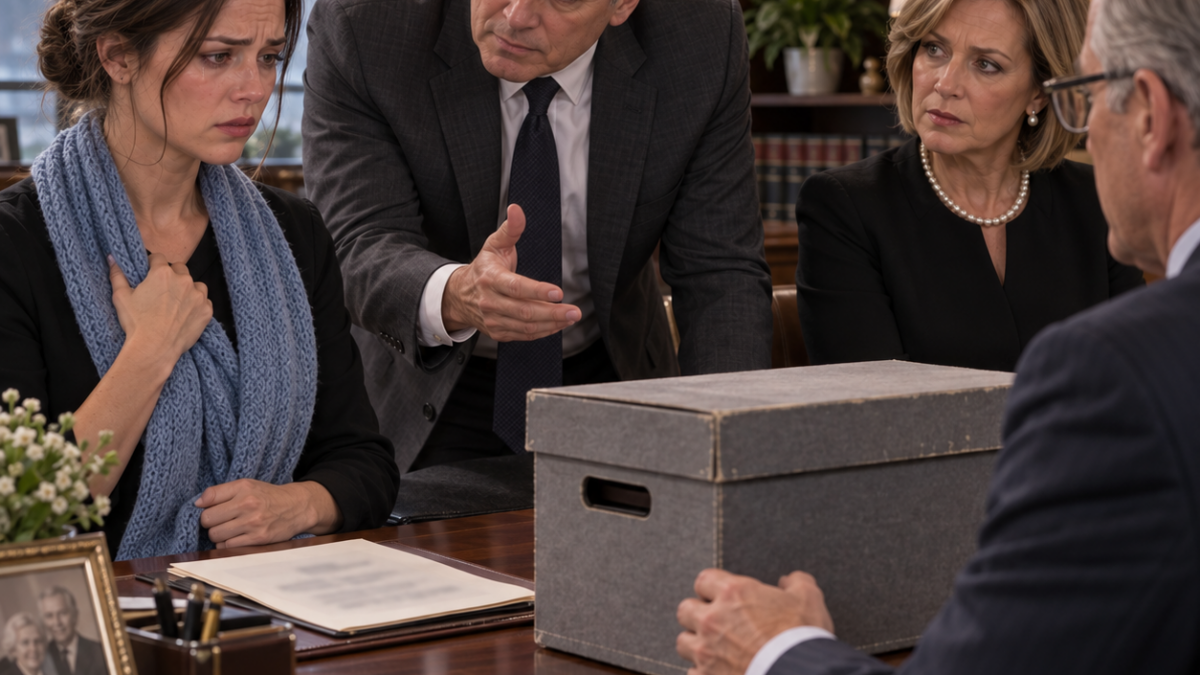
My grandparents left their entire $31.5 million estate to me, and before their attorney finished reading the will, my father called it “family property” and told me he would take control of it. I was 29, a public-school counselor in Tacoma earning less than $60,000 a year, and until that afternoon my parents had treated me like the least successful person in the family. My mother immediately started discussing the waterfront house. My brother asked when he could sell part of my grandfather’s transportation company. Then my father reminded me that my apartment was in a building his company controlled. I thought the inheritance had created the fight. Two days later, the estate attorney showed me a banker’s box and said, “Hadley, this started years before the will.”
My grandparents were Walter and Laya Monroe.
Most people in Gig Harbor knew Walter because of Summit Freight, the regional transportation company he started with two trucks in the 1960s.
What people did not know was how much he and my grandmother eventually owned.
They lived comfortably, but never extravagantly.
Walter still changed his own oil until arthritis made it impractical.
Laya clipped grocery coupons even after the coupons stopped mattering.
Their waterfront Craftsman house was beautiful, but nothing inside it looked selected to prove wealth.
That was probably why I loved going there.
Nothing required a performance.
My parents were different.
My father, Gregory Monroe, spent most of his adult life trying to prove he was more sophisticated than the business Walter built.
He invested in development deals, boutique funds, and companies that sounded impressive at dinner.
My mother, Serena, cared about appearances with a discipline I almost respected.
She could turn a charity luncheon into a competitive sport.
My brother Cole, three years older than me, inherited both instincts.
At 32, he had launched three startups and was already discussing the fourth.
I became a school counselor.
That decision confused everybody.
“You went through graduate school for this?” Serena once asked.
“Yes.”
“To sit with teenagers all day?”
“Mostly.”
She smiled the way people smile when they have decided not to argue with somebody beneath the argument.
Walter and Laya never did that.
They came to my graduation.
They remembered the names of students I mentioned.
When I complained about a teenager who kept missing school because he was working nights to help his mother, Walter asked what kind of job the boy wanted one day.
Laya mailed him a used laptop through the school and never told him where it came from.
They understood quiet help.
At their funeral, my parents were already discussing assets.
Serena wanted to know whether the harbor house should be listed before “the market softened.”
Gregory asked the funeral director whether storage could be arranged for antiques.
Cole told one of our cousins that Summit’s equipment alone had to be worth millions.
I sat in the corner holding a blue scarf Laya had knitted for me years earlier.
I remember thinking grief must feel different when you loved the person more than what they owned.
The will reading took place the following morning in attorney Aaron Feldman’s office.
Gregory sat in the center chair.
Serena beside him.
Cole leaned forward with his elbows on his knees.
Aaron read through several routine provisions.
Then he stopped.
“I hereby leave the residue of my estate, including my controlling ownership interest in Summit Freight Holdings, real property, investment accounts, and personal property, to my granddaughter, Hadley Monroe.”
Nobody moved.
Aaron continued.
“The current estimated gross estate value is approximately thirty-one million five hundred thousand dollars.”
Cole stood.
“What?”
Serena looked at me.
Not at Aaron.
At me.
“There’s been a mistake.”
I could barely speak.
“I didn’t know.”
Gregory’s expression changed faster than I had ever seen.
Shock became calculation.
“Hadley,” he said, “obviously this still belongs to the family.”
Aaron interrupted.
“No. Legally, it belongs to the beneficiary subject to estate administration.”
Gregory ignored him.
“We’ll establish a management structure. You can take distributions, but the company and properties need experienced control.”
“You mean yours?”
“Don’t be defensive.”
Cole laughed once.
“You don’t even know how Summit works.”
“That may be true.”
I looked at Aaron.
“But Grandpa apparently knew who he wanted.”
The room became very quiet.
In the parking lot, Gregory caught up with me.
“Don’t make this difficult.”
“I haven’t done anything.”
“You’ll sign management authority over to me. We’ll give you an income stream.”
Serena touched my arm.
“This is too much responsibility for you, sweetheart.”
Cole stood behind them.
For the first time in years, all three of them were looking directly at me.
Not because they finally saw me.
Because they saw what had landed in my name.
I pulled my arm away.
“I need time.”
Gregory’s voice dropped.
“Take tonight.”
Then he added, “Remember, your apartment is still in the Monroe Property Group building. Don’t create problems you don’t need.”
I stared at him.
He smiled without warmth.
“Family should handle family matters privately.”
The next morning, the building manager emailed me.
My month-to-month tenancy would not be renewed after the legally required notice period.
Gregory had not made me homeless overnight.
He had simply demonstrated how quickly he was willing to use whatever leverage he still controlled.
That afternoon, Aaron called.
“Come to the harbor house.”
“Why?”
“Because before you decide what to do with the estate, there are records Walter and Laya specifically instructed me to show you.”
I drove through rain to Gig Harbor.
Aaron was waiting in Walter’s study.
Beside him sat an old gray banker’s box.
He placed his hand on the lid.
“Hadley, your grandparents spent years lending money to your father, your mother, and Cole.”
“How much?”
Aaron looked at me.
“Before you decide whether to give them control of anything, you need to know how much they already owe the estate.”
Aaron opened the banker’s box. The first folder contained signed promissory notes from my father. The second contained loans to companies connected to Cole. The third held documents involving Serena.
“What am I looking at?”
“Outstanding family obligations.”
“How much?”
Aaron slid a summary toward me.
The total was $4.28 million.
I stared at him.
“That can’t be right.”
“It is.”
Gregory personally owed $2.64 million across four loans. Cole’s companies owed another $1.12 million. The remaining balance involved advances Serena had requested for property purchases and investment losses.
None had been formally forgiven.
Several were years overdue.
“Why didn’t Grandpa collect?”
“He kept extending them.”
Aaron turned to another folder.
“Laya stopped agreeing.”
Inside were copies of two proposed property-transfer documents. Both would have moved ownership of the harbor house into an entity controlled by Gregory and Serena. Neither had been signed.
“Your mother presented these to Laya while Walter was ill.”
My stomach tightened.
Then Aaron placed one sealed envelope on top of the documents.
Laya’s handwriting covered the front.
If Gregory contests our will, Hadley must read this before responding.
I touched the envelope.
“What’s in it?”
Aaron shook his head.
“Something they knew you might need if your family ever claimed this inheritance should have been theirs.”
I opened the envelope carefully.
Inside were three pages in Laya’s handwriting and a flash drive.
The letter began simply.
Hadley,
If your father is challenging the will, then the part of him we hoped would change did not change in time.
I stopped.
Aaron let me read in silence.
Laya explained that she and Walter had spent more than a decade trying to help Gregory stabilize his finances.
They paid off a business line after one development collapsed.
They refinanced another loan when he personally guaranteed a speculative property deal.
They funded Cole’s first company because Gregory promised it would teach him responsibility.
When that failed, they financed a second.
Then a third.
Each time, Gregory used the same language.
Temporary.
Bridge.
Family.
Opportunity.
Walter kept hoping the next check would be the last one.
Laya eventually stopped believing that.
She wrote:
Your grandfather’s weakness was not generosity. It was believing generosity could teach gratitude to people who experienced it only as access.
I read that line twice.
Aaron watched me.
“There’s more.”
The flash drive contained a video recorded six months earlier.
Walter and Laya sat at their dining-room table.
Walter looked thin.
Laya looked tired.
Neither looked confused.
“We are recording this because Gregory will likely say we were manipulated,” Walter said.
Laya continued.
“No one manipulated us into leaving the estate to Hadley.”
Walter looked directly at the camera.
“We chose her because she was the only person in our immediate family who never treated our death like a business event.”
I covered my mouth.
He went on.
“Hadley asked us whether we were sleeping. Gregory asked whether we had updated the property valuations.”
Laya gave a sad little smile.
“Cole asked three times whether Summit had a succession plan.”
Walter said, “Hadley asked whether Miguel would still have housing when we were gone.”
Miguel Alvarez had managed the property for fifteen years.
He lived in a small cottage at the edge of the acreage.
I had not even remembered asking.
Apparently they had.
The video continued for twenty-three minutes.
They discussed the loans.
The property-transfer attempts.
The repeated pressure.
They explained that their estate plan had been reviewed independently.
Two physicians had recently documented their capacity.
A second attorney had reviewed the will.
Walter had insisted.
“If Gregory fights,” he said, “we want Hadley to have facts, not family stories.”
When the video ended, I sat motionless.
Aaron removed his glasses.
“I witnessed the execution of the will. So did another attorney and two independent witnesses.”
“Can Dad still contest?”
“Anyone with standing can file a petition.”
“Can he win?”
Aaron chose his words carefully.
“The existence of a challenge and the strength of a challenge are different things.”
That was the first sentence in weeks that made me breathe easier.
I stayed at the harbor house that night.
Not because I wanted to claim it dramatically.
Because my apartment had become uncertain and Aaron advised me to avoid unnecessary contact with Gregory until the estate administration stabilized.
Miguel made soup.
June Porter, Laya’s longtime housekeeper, left clean sheets in the upstairs bedroom I had used as a child.
The house smelled like cedar, coffee, and lemon polish.
I stood in the kitchen wondering how something worth millions could still feel so ordinary.
That was when June handed me another folder.
“I was told to give this to you only if your father started saying your grandmother was confused.”
“What is it?”
“Copies.”
Copies of what?
Loan requests.
Emails.
Calendar notes.
Several letters from Gregory.
One stood out.
Dad,
I need the $600,000 bridge by Friday. The lender will close the project if we miss the deadline. I know you’re worried about the previous note, but once the sale goes through everything can be reconciled.
Another from two years later:
We should stop pretending these are formal loans between strangers. Eventually the assets come back into the family anyway.
I felt sick.
That sentence explained everything.
Eventually the assets come back into the family anyway.
Gregory had spent years treating Walter and Laya’s money as a delayed inheritance.
Their actual choices were inconveniences.
June sat across from me.
“Mrs. Monroe hated that sentence.”
“I can see why.”
“She printed it.”
“Grandma printed everything.”
June smiled.
“She trusted paper more than promises.”
The following morning, Marcus Shaw arrived.
He had been Walter’s financial adviser for twenty-two years.
With him came Evelyn Park, Summit Freight’s chief operating officer and Walter’s longtime business partner.
They did not treat me like a new billionaire.
They treated me like someone who needed orientation.
Marcus showed me the estate structure.
Approximately $8.7 million in marketable investments.
The harbor property and a smaller Port Orchard cottage.
Walter’s controlling interest in Summit Freight.
A portfolio of commercial real estate.
Several private notes.
Cash reserves.
Vehicles.
Personal property.
The gross value was approximately $31.5 million.
The net value would be lower after taxes, administration, and other obligations.
That distinction reassured me.
Real money looked less like a treasure chest and more like forty pages of schedules.
Then Evelyn explained Summit.
The company employed 116 people.
Drivers.
Dispatchers.
Mechanics.
Office staff.
Warehouse crews.
Walter owned controlling voting shares.
His death did not mean I could walk in and start ordering trucks around.
Thank God.
“I don’t know how to run a freight company,” I said.
Evelyn nodded.
“That is already the smartest thing anybody in your family has said about Summit this week.”
I laughed despite myself.
“What did Cole say?”
“He told two managers he expected a strategic review once your grandfather’s shares transferred.”
My stomach tightened.
“He doesn’t own anything.”
“I know.”
“Did he?”
Evelyn looked tired.
“I’m not sure he has ever fully distinguished expectation from authority.”
That afternoon, Gregory filed the will contest.
Aaron called while I was still at the dining table with Marcus.
“He’s alleging lack of capacity and undue influence.”
“Undue influence by me?”
“Yes.”
“I saw them twice a month.”
“That does not equal undue influence.”
“What happens now?”
“We answer.”
That was the legal version.
The emotional version arrived thirty minutes later.
Serena went online.
She did not accuse me directly of forgery or theft.
She was more sophisticated than that.
She posted a long message about “elder vulnerability,” “family separation,” and “the heartbreaking reality of influence near the end of life.”
No name.
Everyone knew.
Cole posted something shorter.
Truth has a way of coming out.
By evening, two relatives had texted me asking whether Laya had “really understood the will.”
The next morning, Summit received calls from three clients.
Were ownership issues going to disrupt operations?
Evelyn was furious.
I panicked.
“If clients leave because of me—”
“Stop.”
She put both palms on Walter’s desk.
“They are calling because Gregory is talking.”
“Same result.”
“No.”
She looked at me.
“Do not take responsibility for the cost of somebody else’s attack.”
As a school counselor, I had said versions of that sentence to teenagers.
Hearing it aimed at me was uncomfortable.
Aaron responded to the petition.
The physicians who evaluated Walter and Laya preserved their records.
The independent attorney who reviewed the will agreed to provide testimony if necessary.
The witnesses to execution were available.
The video was authenticated.
The legal side was strong.
The family side became uglier.
Gregory sent me an email.
We can still fix this privately.
Transfer Summit voting authority and the primary investment portfolio into a family management entity.
Keep the house and ten million.
No litigation.
No public damage.
I forwarded it to Aaron.
He replied:
Do not answer.
Cole texted separately.
You are going to burn thirty years of family relationships over paperwork.
I almost answered.
Then I remembered Laya.
Facts, not family stories.
I saved it.
Two days later, Miguel found the first missing items.
Three small paintings.
A silver service.
Walter’s antique pocket watch.
The estate inventory showed all of them.
June remembered seeing Gregory and Cole carrying boxes after the funeral reception.
The house had exterior security cameras.
Walter installed them after a package theft.
Miguel checked the archive.
There they were.
Gregory loading two framed pieces into his vehicle.
Cole carrying a box.
Serena wrapping silver in a shawl.
I stared at the footage.
“What do we do?”
Aaron answered.
“We ask for the property back in writing.”
“That’s it?”
“For now.”
I expected outrage.
Legal work was often much less satisfying.
A formal demand went out.
Cole returned the box the following day.
Inside were the pocket watch and several smaller items.
Gregory returned the paintings through his attorney.
Serena claimed she thought the silver was hers because Laya had “always intended” to give it to her.
The inventory and estate documents disagreed.
She returned that too.
No police raid.
No dramatic arrest.
Just objects coming back because somebody had preserved the record.
That pattern repeated throughout the entire case.
Evidence was more useful than outrage.
The first mediation occurred six weeks after the will contest began.
Gregory entered with two attorneys.
Serena had separate counsel.
Cole had his own.
I remember looking at the three legal teams and thinking how much money entitlement could generate when converted into billable hours.
Aaron sat beside me.
So did an independent probate mediator.
Nobody from Summit attended.
That was intentional.
The company was not a family bargaining chip.
Gregory began by saying he wanted fairness.
Aaron responded with the loan schedule.
$4.28 million.
Gregory’s attorney asked whether the notes were enforceable.
Aaron had copies of every signed agreement.
Some contained extensions.
Some were secured.
All had documentation.
Gregory’s face hardened.
“These were family arrangements.”
The mediator asked, “Were they gifts?”
“No.”
“Then what were they?”
Gregory looked at the table.
“Loans.”
It was the first useful word of the day.
Cole argued that his startup debts should not be treated personally because the money went to companies.
Marcus had already separated personal guarantees from corporate obligations.
Some were not collectible from Cole personally.
Others were.
We did not inflate the number.
Again, accuracy mattered more than drama.
Serena claimed the proposed property transfers were routine estate planning.
The attorney who prepared the drafts testified in writing that Serena contacted him, not Laya.
He refused to proceed without speaking directly with the owners.
Laya later told him she had never requested the transfer.
That issue ended quickly.
Then Gregory attacked me.
Not legally.
Personally.
“She is a school counselor.”
The mediator looked confused.
“Yes?”
“She has no experience with wealth.”
Aaron said, “Ms. Monroe has retained professional management.”
“She has no business running Summit.”
“She is not running Summit.”
“She is controlling it.”
“Through governance rights Walter deliberately transferred.”
Gregory looked at me.
“You see? You don’t even understand what you inherited.”
For one second, I was twelve again.
Small.
Useful only when agreeable.
Then I remembered Evelyn’s first sentence about Summit.
Knowing you do not know is useful.
“I understand enough to hire people who do.”
Gregory laughed.
“That is your plan?”
“Yes.”
It was.
Evelyn remained chief operating officer.
The existing executive team stayed.
We added an independent board member with transportation experience.
I attended meetings.
I asked questions.
I did not pretend to know logistics because I owned shares.
That turned out to be a better governance strategy than inheritance-based confidence.
The first mediation ended without settlement.
The second happened two months later.
By then, the family’s financial situation had started unraveling for reasons that had nothing to do with me.
Gregory had counted expected inheritance proceeds in several private financial plans.
Not legally pledged.
Expected.
One lender declined to extend a business note after realizing the estate was contested and Gregory did not control the assets.
Cole’s next fundraising round stalled because investors learned his claimed “family transportation partnership” did not exist.
Serena’s friends stopped asking about her plans for the harbor house.
That seemed to upset her more than anything.
The family began blaming me for consequences created by assumptions they had made before the will was read.
Gregory called Aaron.
“Hadley is destroying our finances.”
Aaron’s reply became one of my favorite sentences.
“Hadley did not sign your loan documents.”
I wrote it in Laya’s journal.
By the third month, the estate’s evidence production was complete.
That was when the biggest recontextualization surfaced.
Walter had not merely loaned Gregory money.
Two years before his death, he had tried to create a formal repayment plan.
Gregory agreed in writing to repay $22,000 per month and pledge part of his interest in a commercial property as security.
He made three payments.
Then stopped.
A later email to Walter said:
There is no practical reason to move money back and forth when Cole and I will eventually inherit these assets anyway.
Walter replied:
That assumption is exactly why the estate plan is changing.
I read the email in Aaron’s office.
“What date is this?”
He told me.
Eighteen months before Walter died.
My father knew.
Not the exact will language.
But he knew his parents were reconsidering the inheritance because of his behavior.
His shock at the will reading had been real.
His claim that the decision appeared from nowhere was not.
That became the main turning point for me.
Until then, a small part of me wondered whether Gregory genuinely believed Walter and Laya had been manipulated.
Maybe grief made him suspicious.
Maybe being disinherited felt impossible enough that his brain needed another explanation.
The email removed that comfort.
Walter had warned him.
Gregory continued borrowing anyway.
Then expected to manage the estate once Walter died.
The inheritance had not created his entitlement.
It exposed it.
The third mediation began differently.
Gregory’s attorney asked to speak privately with Aaron before everyone sat down.
Then the mediator separated us into rooms.
For six hours, offers moved back and forth.
I had three priorities.
The will remained intact.
All claims to Summit governance ended.
Every family debt received an honest accounting.
I did not insist on squeezing every dollar possible from my parents.
Some loans were old.
Some collateral had lost value.
Litigation could continue for years.
Aaron and Marcus helped me build a settlement that was firm without turning the rest of my twenties into a revenge project.
Gregory and Serena would withdraw the will contest with prejudice.
They would formally disclaim any management authority over Summit, the estate properties, and the Monroe Foundation assets.
Gregory would transfer his interest in a small commercial property to the estate as partial repayment of outstanding loans.
The estate would restructure the remaining collectible balance into a five-year note at a reasonable interest rate.
Certain older unsecured amounts would be compromised as part of the settlement.
Serena would relinquish any claim to personal property she had previously asserted.
Cole would acknowledge his valid company obligations and transfer a portion of his interest in one surviving venture to settle the guaranteed portion.
In exchange, the estate would release disputed older claims and everyone would bear their own legal fees.
There was also a mutual non-disparagement provision limited to knowingly false factual statements.
Not “nobody may criticize Hadley.”
That would have been absurd.
Simply: do not lie about incapacity, theft, or ownership.
Gregory rejected it.
Then his attorney asked to speak to him privately.
Forty minutes later, they returned.
“What happens if we don’t sign?” Gregory asked.
Aaron did not threaten.
“The probate matter proceeds.”
“And the loans?”
“The estate preserves its rights.”
Gregory looked at me.
“You would sue your own father.”
I took a breath.
“No.”
He frowned.
“The estate would enforce documented obligations if necessary.”
“That’s the same thing.”
“It feels different from where I’m sitting.”
Serena started crying.
“This family is finished.”
I looked at her.
“The family was already functioning like an investment account.”
She stared at me.
“That is not fair.”
“No.”
I shook my head.
“It wasn’t.”
We did not sign that day.
I went home to the harbor house and sat on Laya’s porch with her scarf around my shoulders.
The water was gray.
A ferry moved in the distance.
Miguel brought tea.
“Bad meeting?”
“Long.”
“Same thing sometimes.”
I laughed.
Then I said, “I could give them more.”
“You could.”
“Would Grandpa?”
Miguel considered that.
“Mr. Walter gave them more for twenty years.”
That was the answer.
I did not need to continue a failed experiment simply because generosity looked virtuous.
The settlement was signed nine days later.
No triumphant courtroom.
No public humiliation.
Gregory signed in Aaron’s office.
Serena signed after reading every page twice.
Cole signed separately.
The will contest ended.
The estate moved forward.
I remember expecting relief to feel dramatic.
Instead, I slept for eleven hours.
That was it.
My body had been waiting longer than I realized.
The probate process still took months.
Large estates do not transform into personal checking accounts after one signature.
Assets had to be valued.
Taxes calculated.
Titles transferred.
Governance documents updated.
Personal property inventoried.
Summit shares formally distributed.
The complexity was oddly reassuring.
It prevented me from making emotional decisions with money that had taken my grandparents sixty years to build.
I appointed Marcus and an outside investment firm to manage the liquid portfolio.
I joined Summit’s board but refused the chairmanship.
Evelyn remained COO.
Six months later, the board elected an experienced independent chair.
Gregory told one relative that I had “given away control to strangers.”
What I had actually done was separate ownership from expertise.
Walter would have understood.
My first major decision at Summit involved drivers.
Walter had always maintained an informal profit-sharing bonus.
The program was inconsistent.
Evelyn and I worked with the board to formalize it.
Employees who stayed at least three years received participation based on company performance.
Healthcare contributions increased for lower-paid workers.
A training fund paid for commercial certifications and mechanic apprenticeships.
None of that came from a sudden burst of billionaire generosity.
The financial models showed Summit could afford it without compromising reserves.
That mattered.
Sustainable help is different from emotional spending.
I had learned that from watching Walter fail with Gregory.
The Monroe Foundation came later.
Laya left notes about what she wanted.
Vocational education.
Emergency housing.
School counseling.
Practical things.
We initially funded it with $4 million, not twelve.
Marcus told me to start smaller.
“Foundations can waste money too.”
I smiled.
“Grandma would like you.”
“She hired me.”
Our first scholarship cohort had seven students.
One wanted to become a diesel mechanic.
One studied nursing.
Two entered electrical apprenticeships.
Another was a single mother finishing an accounting certificate.
I met them at a community-college conference room.
Nobody knew or cared that I had recently inherited millions.
Good.
I introduced myself as Hadley from the Monroe Foundation.
One student asked whether I was related to Walter.
“He was my grandfather.”
“He helped my dad once.”
“How?”
“Gave him work after he got out of treatment.”
I had never heard that story.
That happened often.
Walter and Laya had spent decades helping people without creating an audience.
Every story made the inheritance feel less like money and more like unfinished responsibility.
I stayed at my school.
People expected me to quit.
Gregory certainly did.
Even Aaron asked whether I planned to take extended leave.
I did take three weeks during the worst of the probate fight.
Then I returned.
My office still had the same blue chair with the cracked vinyl arm.
The same basket of granola bars.
The same motivational poster I hated but never replaced.
On my second day back, a sophomore named Emma sat across from me.
Her parents wanted her to work in the family restaurant instead of applying to college.
“They say I owe them.”
That sentence went through me.
“What do you think?”
“I think they sacrificed everything.”
“That isn’t what I asked.”
She looked down.
“I want to go.”
We spent forty minutes talking about financial aid, boundaries, gratitude, and the difference between appreciation and surrender.
After she left, I sat alone.
For the first time, I understood why Walter and Laya might have trusted me.
Not because I was morally superior.
Because my work had taught me to ask a question my family rarely asked.
What does the person affected actually want?
Money cannot answer that.
Power cannot answer it.
You have to listen.
Gregory contacted me three months after settlement.
Not for money.
That surprised me.
He asked to meet at a café in Tacoma.
I agreed because the settlement prohibited nothing about personal contact.
He looked older.
He had sold one of his investment properties to meet the settlement terms.
His suit was still expensive.
His confidence was not.
“I’m angry with you,” he said.
“Okay.”
That startled him.
“You’re not going to defend yourself?”
“Against your feeling?”
He looked down.
“No.”
We sat quietly.
Then he said, “I thought Summit would be mine.”
“I know.”
“My whole life.”
“I know.”
“Dad let me believe it.”
That was partly true.
Walter had not disinherited him until later.
But expectation had hardened into ownership long before anything was signed.
“Did Grandpa ever promise it?”
Gregory looked away.
“Not directly.”
“Then who promised it?”
He rubbed his thumb against the coffee cup.
“I did.”
That answer was better than any apology he could have given me.
He continued.
“I told myself I was borrowing against what I would eventually receive.”
“I read the emails.”
His jaw tightened.
“I figured you did.”
“You kept borrowing after he warned you.”
“Yes.”
“Why?”
He smiled without humor.
“Because I thought he would come around.”
I understood that more than I wanted to.
I had spent half my childhood believing Gregory would eventually come around too.
Different object.
Same habit.
“What do you want from me?” I asked.
He looked at me.
“I don’t know.”
That was honest.
We finished coffee.
He paid for his own.
A year earlier, that detail would have meant nothing.
Now I noticed everything.
Serena was different.
She sent an email six months after settlement applying for a seat on the Monroe Foundation’s community advisory board.
I thought it was a joke.
It wasn’t.
Her letter said her years of fundraising made her qualified.
She did have experience.
The application went through the same committee process as everyone else.
The committee declined.
I recused myself.
Serena called.
“You couldn’t even give me that?”
“I didn’t vote.”
“You own the foundation.”
“No.”
I sighed.
“It has a board.”
“You could have influenced them.”
“I could have.”
“And?”
“I didn’t.”
She hung up.
That was the last direct conversation we had for almost a year.
Cole surprised me more.
His startup eventually failed.
Not because I caused investors to flee.
Because the business ran out of cash.
He took a job at a logistics-software company.
An employee.
Salary.
Manager.
Quarterly reviews.
He hated it.
Then apparently got good at it.
One afternoon he emailed me.
Subject:
Grandpa was right.
The message contained one paragraph.
I thought owning something made you important. Turns out knowing how the thing works is harder. I’m sorry I talked about Summit like it was already mine.
I read it twice.
Then replied:
Thank you.
We did not become close.
We did become civil.
That was enough.
The harbor house became mine formally after probate closed.
For almost a year, I slept in the guest bedroom.
I could not make myself take Walter and Laya’s room.
Then June asked why.
“It feels wrong.”
“They’re not coming back for it.”
“I know.”
“Mrs. Laya would call this wasted sunlight.”
That sounded exactly like her.
So I moved into the bedroom.
I kept Laya’s knitting basket beside the reading chair.
Walter’s mystery novel stayed on the shelf.
I did not turn the house into a museum.
Museums are for things that have stopped living.
I replaced a leaking faucet.
Painted one bedroom.
Installed better insulation.
Hosted foundation meetings at the dining table.
Life entered slowly.
The apartment Gregory had threatened me with disappeared from my story almost immediately.
I moved my belongings out well before the lease ended.
The building manager apologized.
He had been following instructions from ownership.
I did not blame him.
Gregory later sold his interest in that building.
I never found out whether my nonrenewal affected the decision.
It stopped mattering.
One year after the funeral, Aaron delivered a final estate binder.
Probate was closed.
He placed it on Walter’s desk.
“Congratulations.”
“That feels like the wrong word.”
“It usually does.”
I looked at the binder.
“Is everything really finished?”
“The estate administration, yes.”
“The family?”
Aaron smiled.
“I’m a probate attorney, Hadley. I know my limits.”
We drank coffee on the porch.
Before he left, he handed me one final document.
Not legal.
A photocopy of the first page of Walter’s 1962 business ledger.
Two trucks.
One route.
A loan balance that looked tiny now.
At the bottom, Walter had written:
Build something that can survive your ego.
I laughed.
“I wish Dad had seen this.”
“He did.”
“What?”
Aaron smiled.
“Walter framed a copy in Gregory’s first office.”
Of course he had.
Warnings are rarely absent.
People simply stop seeing the ones that interfere with the story they prefer.
Two years later, Summit Freight had its strongest year in a decade.
I did not take credit.
Fuel prices cooperated.
A major contract renewed.
The executive team improved route planning.
Several competitors had supply problems.
Business outcomes are complicated.
Still, I was proud of one number.
Employee turnover dropped sharply after we expanded profit sharing and training benefits.
Evelyn showed me the report.
“Walter would like this.”
“Laya would ask what it cost.”
Evelyn laughed.
“Also true.”
The foundation grew carefully.
Nine scholarships became fourteen.
Then twenty-one.
We helped fund an apprenticeship lab at the community college.
Not a flashy glass building.
A practical workshop with welding booths, diagnostic equipment, and simulation tools.
At the opening, one donor asked whether we wanted the Monroe name larger on the wall.
“No.”
“How large?”
“Smaller.”
He thought I was joking.
I wasn’t.
Walter’s name already lived on enough things.
The work mattered more.
I turned thirty-two in the harbor house.
June baked Laya’s cinnamon cake.
Miguel brought tomatoes from the garden.
Aaron gave me a rare book.
Evelyn gave me an old photograph of Walter beside his first truck.
Cole sent flowers.
Gregory sent a card.
Serena sent nothing.
The dinner had nine people.
No one discussed the estate.
That may have been my favorite gift.
After everyone left, I walked through the garden wearing Laya’s blue scarf.
The roses were nearly done for the year.
I sat on the bench beside the water and opened her journal.
The last written page ended halfway down.
Nothing dramatic.
A grocery list.
A note to call June.
A reminder about Walter’s medication.
A sentence:
Hadley visits Saturday. Make cinnamon rolls.
I cried harder over that line than I had over the will.
That was what I had wanted.
Not $31.5 million.
A Saturday.
Cinnamon rolls.
Somebody expecting me.
Money had merely made everyone else reveal what they believed those Saturdays were worth.
I began writing in the blank pages after hers.
Not because I thought I deserved to continue Laya’s journal.
Because she had left room.
My first entry was short.
I thought inheriting their estate meant I had to become the person who could protect everything they built.
I was wrong.
I only had to become the person who knew what should not be surrendered.
That distinction still guides me.
I did not destroy my family.
I stopped subsidizing their assumptions.
I did not take Summit away from Gregory.
It was never his.
I did not make Cole’s startup fail.
I stopped letting a future inheritance function as his business plan.
I did not humiliate Serena.
I refused to turn Laya’s foundation into another room where Serena’s status mattered more than the work.
The consequences felt personal because family had blurred ownership, expectation, and love for years.
Facts separated them again.
That was painful.
It was also freedom.
I still work three days a week as a school counselor.
People find that strange.
Maybe it is.
Marcus once calculated that my salary represented less than one day of annual investment fluctuation.
I told him never to say that to me again.
The work is not valuable because of the paycheck.
Neither was Laya’s cinnamon cake.
Value has more than one measurement.
A few months ago, Emma—the student whose parents wanted her to stay in the family restaurant—emailed me.
She was finishing her first year of college.
She wrote:
My parents are proud now, but even if they weren’t, I think I would still be okay.
I printed that email.
It sits in the blue folder now.
Not with the estate documents.
With the things that are true.
Walter’s first ledger page.
Laya’s letter.
My father’s settlement acknowledgment.
Cole’s email.
Emma’s message.
The folder is not evidence anymore.
It is perspective.
My family once believed $31.5 million was the center of this story.
For a while, I did too.
It wasn’t.
The center was consent.
My grandparents were allowed to decide what happened to what they built.
I was allowed to accept what they left.
Gregory was responsible for the debts he signed.
Cole was responsible for the risks he took.
Serena was responsible for the claims she made.
And I was responsible for deciding which parts of their chaos I would carry forward.
I chose very little of it.
The inheritance did not make me powerful.
It made the boundaries visible.
That turned out to be enough.







