My Future Daughter-in-Law Scheduled an Appraisal on My House—Then Asked When I Was Moving Out
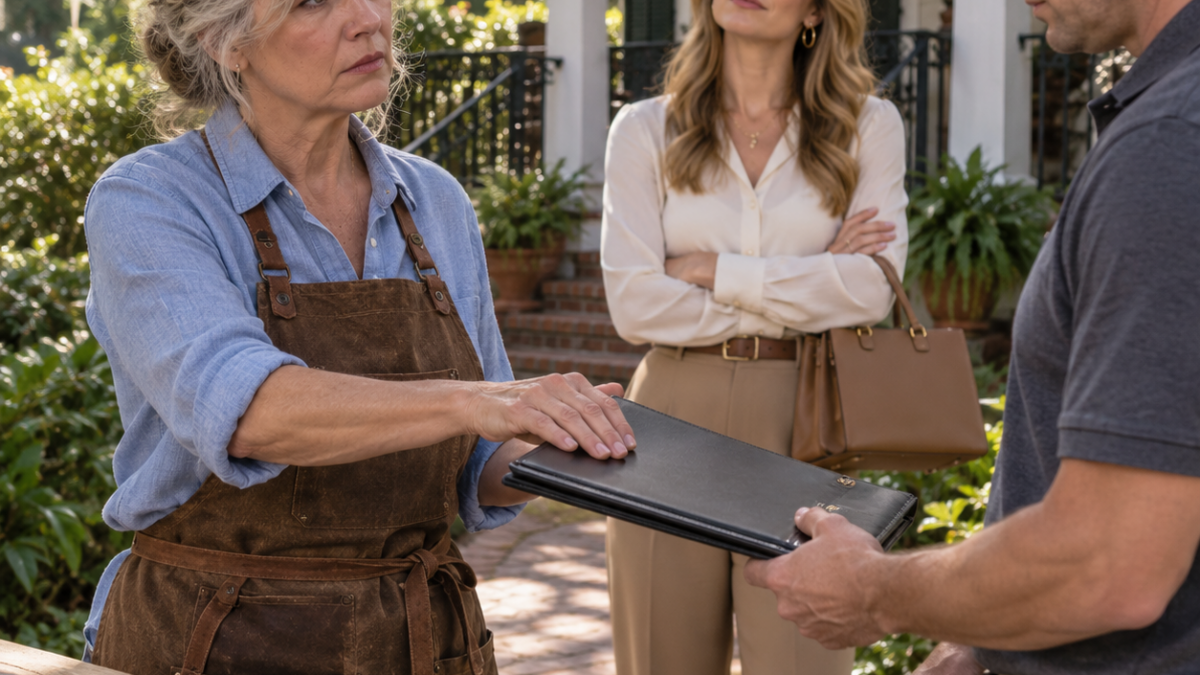
My future daughter-in-law sent a real-estate appraiser to my Savannah house without asking me, then explained that once I moved into a “more manageable senior community,” she and my son could use my home as the down payment on their future. I was sixty-three, healthy, still running my antique-frame restoration studio, and had never offered them the property. My son Caleb called it a misunderstanding. His fiancée Brooke called it practical planning. Two days later, a mortgage broker emailed me asking me to confirm an “anticipated family gift” worth $780,000. Attached was a financing worksheet containing photographs of my house and a projected renovation budget. One line stopped me cold: CURRENT OWNER TO VACATE AFTER WEDDING. Someone had built an entire financial plan around my surrendering a home I had never agreed to leave.
My name is Nora Whitfield.
I had lived in that house in Savannah’s Ardsley Park neighborhood for thirty-one years.
My husband, David, and I bought it when Caleb was four.
It was an old stucco-and-brick place with uneven heart-pine floors, two stubborn fireplaces, a screened porch, and a live oak whose roots had lifted one section of the front walk.
Nothing about it was fashionable when we bought it.
We loved it anyway.
David repaired the porch himself.
I restored the original wooden window frames one at a time.
When our kitchen ceiling collapsed after a plumbing leak, we spent three weekends eating takeout on folding chairs while learning far more about plaster than either of us wanted to know.
David died eight years before Brooke entered our lives.
By then, Caleb was living in Atlanta and working as a commercial architect.
I stayed in Savannah.
I ran a small conservation studio behind the house where museums, galleries, and private collectors sent damaged antique frames.
It was precise work.
Slow work.
Good work.
I had no intention of retiring simply because my hair had turned silver.
Brooke apparently thought differently.
She was thirty-two, worked in luxury real-estate marketing, and had a talent for discussing other people’s property as if ownership were merely a temporary administrative inconvenience.
The first time she mentioned my house after getting engaged to Caleb, she said, “This place would photograph beautifully once it was opened up.”
I assumed she meant for a magazine.
Then she pointed toward the wall between my dining room and kitchen.
“If that came down, you could see all the way to the garden.”
“I like the wall.”
She laughed.
“Of course you do. You’ve lived with it forever.”
That should have bothered me more than it did.
Over the following six weeks, small assumptions multiplied.
Brooke stored two boxes of wedding favors in my guest room.
Then four.
Then bridesmaid dresses appeared in the study.
A stack of tile samples arrived addressed to Caleb.
One Sunday, Brooke brought me brochures from three assisted-living communities outside Savannah.
Not nursing homes.
Beautiful independent-living places with pools, gardens, and wine tastings.
That was apparently supposed to make the suggestion less offensive.
“You’d have people around all the time,” she said.
“I already have people around.”
“But you’re alone here.”
“I’m alone when I choose to be.”
Caleb stared into his coffee.
Brooke continued.
“You wouldn’t have to worry about maintenance.”
“I don’t worry about maintenance.”
“Well, eventually you will.”
I looked at my son.
He gave me the smile he had used since childhood whenever he wanted two disagreeing adults to stop talking.
“She’s just thinking ahead, Mom.”
“For me?”
“For everybody.”
That answer stayed with me.
Then, on a Tuesday morning, a man carrying a laser measuring device walked through my side gate while I was sanding a nineteenth-century gilt frame in the workshop.
He introduced himself as an appraiser.
I thought he had the wrong address.
He did not.
His work order listed my property.
Requested by Brooke Harlan.
Purpose:
Residential financing assessment.
I removed my gloves.
“Did Brooke tell you she owns this house?”
He looked uncomfortable.
“She represented that the property would be transferred within the family.”
“It will not.”
He closed his tablet.
“I apologize.”
“You have nothing to apologize for.”
He left.
Brooke called twenty minutes later.
“You embarrassed him.”
“I informed him who owns my house.”
“He drove all the way from Hilton Head.”
“That sounds like something you should apologize to him for.”
She became quiet.
Then she said, “Caleb told me you’d probably leave the house to him anyway.”
“Probably is not a deed.”
“Nora, we’re trying to plan a marriage.”
“Then plan one using things you own.”
She hung up.
That evening, Caleb called and asked me not to “turn one stupid appointment into a family crisis.”
I told him we would discuss it in person.
We never got that far.
Thursday morning, an email arrived from a mortgage broker in Atlanta.
He thanked me for helping Caleb and Brooke structure their future home financing.
I had never spoken to him.
Attached was a preliminary worksheet.
My address appeared at the top.
Estimated equity:
$780,000.
Planned family contribution:
100%.
Projected renovation financing:
$425,000.
Then I saw the occupancy note.
CURRENT OWNER TO VACATE AFTER WEDDING.
I called the broker.
He became very careful the moment I told him I had never agreed to transfer the property.
Before we ended the call, he said something that made me sit down.
“Ms. Whitfield, I think you should see the full planning file they provided us.”
The broker emailed the file while I was still on the phone. The first pages were ordinary renovation estimates. Then I reached a document titled FAMILY ASSET ASSUMPTIONS. My house appeared first. Under source of equity, someone had written: Gift from Nora Whitfield following relocation. No signature appeared beneath it. Nothing had been legally transferred. That almost made it worse. They had treated my agreement as a future formality.
The second page listed the wedding expenses Caleb and Brooke expected family members to absorb. My name appeared beside $25,000. I had offered them $12,000.
The final page contained a note from Caleb. Mom will resist if this sounds permanent. Frame the move around upkeep, safety, and being closer to people her age.
I read it twice.
My son had not merely failed to stop Brooke. He had helped design the argument.
Then I noticed another attachment. It was not about the house. The filename read: WHITFIELD FAMILY — EXPECTED INHERITANCE PROFILE.
I had never discussed my finances with Brooke. Caleb did not know the full value of my estate either.
The broker said, “I didn’t prepare that document. They brought it to us.”
I opened the first page.
Most of the numbers were wrong.
One line, however, was close enough to make me uneasy.
Estimated investment assets: $20M+.
Someone had been looking.
My first instinct was not anger.
It was inventory.
That is what thirty-eight years of restoration work does to a person.
When something valuable is damaged, you do not immediately attack the damaged area.
You stabilize.
You identify what moved.
You determine what belongs there and what was added later.
Only then do you decide how much intervention is necessary.
I printed the file.
Then I called my attorney.
Her name was Janet Kim.
Janet had handled the sale of David’s company shares after his death and had helped me simplify an estate plan that had become too complicated for a household of one.
She practiced trusts and estates from a brick office near Forsyth Park and wore reading glasses on a chain that she constantly misplaced while they were hanging around her neck.
When I explained what happened, she became quiet.
“Did you sign anything for Caleb?”
“No.”
“Power of attorney?”
“No.”
“Property transfer?”
“No.”
“Gift letter?”
“No.”
“Good.”
She paused.
“Bring the file.”
I was in her office an hour later.
Janet reviewed the mortgage packet.
Her conclusion was less dramatic than my emotions wanted.
“They have not transferred your house.”
“I know.”
“They have not legally committed your assets.”
“I know.”
“What they have done is represented an expectation to a lender.”
“Without asking me.”
“Yes.”
“Is that fraud?”
“Not necessarily from what I’m seeing. They appear to be describing a proposed gift rather than submitting a signed gift letter.”
She tapped the page.
“It is inappropriate and misleading. But let’s not make legal claims larger than the evidence.”
That was one reason I trusted her.
She never used a bigger word when a smaller accurate one would do.
“What about this?”
I showed her the inheritance profile.
She read the first page.
“Where did they get these numbers?”
“That’s what I want to know.”
The estimate listed my house.
A commercial building David and I had once owned.
An investment account.
A family trust.
Some numbers were outdated.
One asset had been sold a decade earlier.
But the investment estimate was close.
Too close for a random internet search.
Janet turned to me.
“Who knows about the Whitfield trust?”
“You. Marcus.”
Marcus Bell was my financial adviser.
“Caleb knows there is a trust?”
“He knows David created estate structures. He does not know the current value.”
“Any documents ever stored at home?”
“Yes.”
“Where?”
“My study.”
The study Brooke had been using for wedding storage.
I felt physically cold.
Janet saw it.
“Do not assume she read them.”
“I’m not assuming.”
“Good.”
“But I’m changing the lock.”
“That I support.”
We reviewed my current estate plan.
The financial reality of my life had never matched the way I lived.
David had co-founded a company that built navigation and sensor equipment for commercial shipping terminals.
He sold most of his interest five years before he died.
After taxes and years of conservative investing, the assets under my control were worth about $24.6 million.
Most was held in diversified investments through the Whitfield Family Trust.
The house was separate and owned outright.
I drew a comfortable income.
My restoration studio supported itself.
I had never told Caleb the full number because I did not want his career decisions organized around a future inheritance.
He knew I was secure.
That should have been enough.
Until Brooke, it had been.
“Do you want to remove him as beneficiary?” Janet asked.
“No.”
She looked at me over her glasses.
“Not even temporarily?”
“No.”
“I’m asking because people often make estate decisions while furious and regret them later.”
“I’m not turning my will into punishment.”
That answer surprised me with how certain it felt.
Caleb was still my son.
The issue was not whether I would leave him anything.
The issue was whether he could treat that possibility as current ownership.
“What do you want changed?”
“I don’t want him serving alone as successor trustee anymore.”
“That is reasonable.”
I named a trust company as administrative co-trustee after my death.
Caleb would remain a beneficiary, but future distributions beyond set amounts would follow the trust terms and independent oversight.
I also changed the person holding emergency financial authority if I became incapacitated.
It had been Caleb.
Now it would be Janet jointly with the trust company.
“That is more significant than changing a beneficiary,” Janet said.
“I know.”
“Why?”
“Because I no longer trust him to separate what is mine from what he expects to become his.”
We signed nothing that day.
Janet made me wait forty-eight hours.
Another reason I trusted her.
I went home.
Then I did something embarrassingly simple.
I checked the study.
Brooke’s boxes occupied half the room.
Wedding favors.
Place cards.
Candles.
A garment bag.
Two binders labeled VENDORS and DESIGN.
My locked filing cabinet had faint scratches near the keyhole.
Old scratches or new?
I had no idea.
I photographed them anyway.
Then I texted Caleb.
Please collect all wedding materials from my house by Saturday at noon.
His reply came three minutes later.
Mom, seriously?
Yes.
Where are we supposed to put it?
Storage facility.
That’s expensive.
So is assuming access to someone else’s property.
He called.
I did not answer.
Saturday morning, he came alone.
That mattered.
He carried boxes from the study to his SUV while I worked in the studio.
After the fourth trip, he stopped in the doorway.
“Can we talk?”
I put down a small brush.
“Yes.”
He looked older than thirty-six.
Tired.
Embarrassed.
“I know the appraiser was wrong.”
“The appraiser did exactly what Brooke hired him to do.”
“Fine. Brooke was wrong.”
“What about the mortgage file?”
His eyes dropped.
“The broker called us.”
“I know.”
“He said you were upset.”
“I was surprised he thought I had promised him my house.”
Caleb rubbed the back of his neck.
“It was planning.”
“No. Planning is asking what you own and what you can afford.”
“We never submitted a gift letter.”
“You told a mortgage professional I would resist if this sounded permanent.”
He closed his eyes.
“I shouldn’t have written that.”
“Why did you?”
“Because you would resist.”
I stared at him.
He realized how that sounded.
“That isn’t what I meant.”
“It is exactly what you meant.”
Caleb sat on the workbench stool.
“Brooke thinks you’re isolated here.”
“Brooke has known me fourteen months.”
“She sees you maintaining this huge house alone.”
“My house is twenty-six hundred square feet.”
“For one person.”
“I am not a casserole in a refrigerator. I do not have to occupy every square foot at all times.”
Despite himself, he smiled.
It disappeared quickly.
“She thought if we moved here, you could have something easier.”
“What did you think?”
He was quiet.
“Caleb.”
“I thought eventually the house would come to me.”
There it was.
“I probably would have left it to you.”
He looked up.
“Would have?”
“I don’t know what I will do now.”
His face tightened.
“So Brooke ruined my inheritance.”
“No.”
I kept my voice level.
“You just referred to my house as your inheritance while I am sitting inside it.”
He looked ashamed.
“Mom.”
“No. Listen.”
I pulled a chair over and sat across from him.
“When your father died, you asked me if I was going to sell this place.”
“I remember.”
“I told you I wasn’t ready.”
“You weren’t.”
“Eight years later, I am still not ready. I may never be.”
He nodded.
“Then why did you build a financing plan that required me to leave?”
He stared at his hands.
“Because Brooke wanted to know what our options were.”
“And telling her no was not one of your options?”
Another silence.
That one hurt.
I asked about the inheritance profile.
His reaction changed.
“What profile?”
I watched him.
“The document estimating my assets.”
“I haven’t seen that.”
“Brooke brought it to the broker.”
His face went blank.
“You’re sure?”
“Yes.”
That was the first time I saw genuine alarm.
“Where would she get that?”
“I was hoping you could tell me.”
He stood.
“Can I see it?”
I handed him a copy.
Caleb read the first page slowly.
“These numbers are ridiculous.”
“Some of them.”
He reached the investment estimate.
Then stopped.
“Is this true?”
“That is not the question.”
He looked at me.
“Mom, do you have twenty million dollars?”
“That is still not the question.”
He lowered the page.
“I didn’t know.”
“I know.”
He sat again.
“How much do you have?”
“Enough.”
He laughed once.
Not because it was funny.
“Brooke has been telling me you’re house-rich and cash-poor.”
“Based on what?”
“She said older homeowners often are.”
“I’m sixty-three.”
“I know.”
“Does Brooke think I’m ninety?”
“No.”
“Then why is she researching my finances?”
Caleb had no answer.
He took the copy with my permission and left.
At 4:15 that afternoon, Brooke called.
I expected outrage.
Her voice was controlled.
“Nora, Caleb showed me the file.”
“Good.”
“He says you think I created it.”
“Did you?”
“I pulled publicly available information.”
“Twenty million dollars is not publicly available.”
“I estimated.”
“From what?”
She hesitated.
Then:
“Your lifestyle doesn’t make sense.”
I nearly laughed.
“My lifestyle?”
“You don’t have a mortgage. Your studio barely charges market rates. You travel when you want. You donated to the preservation society. You helped Caleb with graduate school.”
“That tells you twenty million?”
“I work around wealth.”
“No. You work around property marketing.”
Her tone sharpened.
“I don’t understand why this is being treated like some moral crime.”
“It isn’t a crime.”
“Exactly.”
“It is, however, invasive.”
“We’re getting married.”
“You are marrying Caleb.”
“And his family matters.”
“So does mine.”
“That’s what I mean.”
“No, Brooke. You mean my assets matter.”
Silence.
Then she said:
“This is why people should be transparent before marriage.”
“About their own finances.”
“Nora.”
“My finances are not part of your prenuptial disclosure.”
She hung up.
That should have ended the discussion.
It did not.
Two days later, Caleb called and said Brooke wanted an apology.
“For what?”
“For implying she’s after your money.”
“I said she researched it.”
“She feels judged.”
“I feel appraised.”
He did not appreciate that.
The wedding was five weeks away.
I had already committed $12,000 as my wedding gift.
$5,000 had gone toward the photographer and music deposits.
The rest was still in my account.
I did not withdraw the existing commitment.
I did tell Caleb there would be no additional wedding money.
He sounded relieved.
“I wasn’t asking.”
“The planning file says twenty-five thousand from me.”
He became quiet.
“That was Brooke’s estimate.”
“She seems to estimate a great deal.”
A week later came the rehearsal dinner.
Not the formal rehearsal.
A smaller gathering Brooke’s parents arranged because relatives from Atlanta and Charleston were in town early.
They chose a seafood restaurant near River Street.
I almost declined.
Then Caleb asked me personally.
“I want you there.”
So I went.
Brooke was polite for the first forty minutes.
Her mother, Diane Harlan, was not.
Diane had the polished confidence of someone who believed volume and certainty were interchangeable with manners.
She asked about my studio.
Then my house.
Then she said:
“Brooke showed us photographs. Such a charming old place.”
“It is.”
“Though I can see why you’d want something simpler now.”
I put down my water glass.
“I don’t.”
She smiled.
“Well, not today.”
Brooke looked at her mother.
“Mom.”
Diane waved a hand.
“Everybody downsizes eventually.”
Caleb said quietly, “Can we not?”
Diane continued.
“My mother resisted assisted living too. Six months later she had more friends than she’d had in twenty years.”
“I’m glad she liked it.”
“You would too.”
“I’m not shopping.”
Brooke’s father suddenly became very interested in his plate.
Then Brooke said:
“Nora, nobody is trying to force you.”
I looked at her.
“You sent an appraiser to my house.”
Her face tightened.
“That was exploratory.”
“You sent a lender a plan stating I would vacate.”
“We already apologized.”
“No. Caleb apologized for writing one note. You told me you were being practical.”
Several people at the table went quiet.
Brooke lowered her voice.
“Do we really need to do this here?”
“No.”
I picked up my fork.
“Then stop planning my move.”
That should have been the end.
Diane said:
“I just don’t understand why one woman needs a property that valuable when a young couple is trying to build a family.”
Caleb looked up sharply.
“Diane.”
I smiled slightly.
There it was.
Not safety.
Not loneliness.
Not stairs.
Allocation.
Who deserved the house more.
“I need it because I live there.”
Diane looked offended by the simplicity of the answer.
Brooke pushed back her chair.
“You’re acting like we’re trying to steal from you.”
“I’m acting like the owner.”
“That house will be Caleb’s eventually.”
Caleb whispered, “Brooke.”
She turned toward him.
“What? Everyone knows it.”
I looked at my son.
He did not agree with her.
He also did not correct her.
Not immediately.
That old hesitation.
That old instinct to keep peace by letting the stronger personality finish.
I stood.
“Thank you for dinner.”
Caleb rose.
“Mom.”
“I’m going home.”
Brooke laughed sharply.
“Of course. Walk out instead of having an adult conversation.”
I looked at her.
“An adult conversation starts after someone accepts the word no.”
Then I left.
The following morning, Caleb arrived at my house at eight.
Alone again.
He looked terrible.
“I ended the rehearsal dinner after you left.”
“I’m sorry.”
“No, you’re not.”
“You’re right.”
He sat on the porch.
For several minutes, we listened to traffic on Victory Drive in the distance.
Then he said:
“Is it true?”
“What?”
“The money.”
I considered lying by omission.
Then decided the secrecy had begun doing more harm than good.
“Your father’s company sale produced more than you realized.”
“How much?”
“Current investable assets are about twenty-four and a half million.”
Caleb stared straight ahead.
“Jesus.”
“I also own this house and my studio property.”
“You never told me.”
“No.”
“Why?”
“Because I wanted your adulthood to belong to you.”
He looked at me.
“That sounds noble when you say it like that.”
“It was also fear.”
“Of what?”
“That money would become the loudest fact in our relationship.”
He gave a humorless laugh.
“It just did.”
“Yes.”
We sat quietly.
Then Caleb said:
“Brooke will lose her mind.”
That sentence told me more than he intended.
“You think so?”
He looked at me.
Then looked away.
“I don’t know.”
I did.
By noon, Brooke knew.
Caleb told her because they were getting married and he felt he could not hide information that now directly affected their conflict.
I agreed with the first part.
I disagreed that my assets directly affected their marriage.
At 1:18, Brooke texted me.
Can we come by?
I replied:
4:00. Janet Kim will be present.
Brooke did not like that.
Why your lawyer?
Because we are discussing my property and estate expectations.
No response.
Janet arrived at 3:45.
We sat at the dining table.
The wall Brooke wanted removed remained exactly where it had been for decades.
Caleb and Brooke arrived on time.
Brooke wore a white linen suit and an expression of determined calm.
For ten minutes, she behaved perfectly.
She apologized for the appraiser.
She said the mortgage file had been “premature.”
She insisted the inheritance research was simply part of “understanding the family picture.”
Then she asked Janet:
“Caleb is still the primary beneficiary, correct?”
Janet looked at me.
I answered.
“My estate plan is private.”
Brooke blinked.
“But you just told Caleb the value.”
“I told my son what I chose to tell him.”
“We’re about to be married.”
“Yes.”
She looked between us.
“So you expect me to enter a marriage without understanding his eventual financial position?”
Janet spoke for the first time.
“Future inheritances are not present marital assets.”
Brooke’s jaw tightened.
“I understand the law.”
“Good.”
I folded my hands.
“The house is not being transferred.”
Brooke nodded too quickly.
“Fine.”
“There will be no assisted-living move.”
“Fine.”
“No financing plan should reference my assets.”
“Fine.”
“And the remaining seven thousand dollars I had intended as a wedding gift will be paid only toward existing vendor commitments if Caleb asks. There will be no increase.”
That was when the mask slipped.
“Seven?”
“Yes.”
“You have twenty-four million dollars.”
Caleb closed his eyes.
“Brooke.”
She turned toward him.
“No. I’m sorry, but this is absurd.”
Her voice rose.
“We’ve been budgeting around family support because that is what families at this level do.”
“At this level?” I asked.
She ignored me.
“You let us struggle with mortgage preapproval while sitting on twenty-four million dollars?”
Caleb stared at her.
“We have not been struggling.”
“We can’t buy the kind of house we planned.”
“The kind of house you planned,” he said.
She looked at him as if he had switched languages.
Brooke turned back to me.
“You could gift us the Savannah property and never notice the difference financially.”
“That does not make it yours.”
“You don’t even need to sell it. Put it in a family entity. We renovate, you keep a suite, everybody wins.”
“I do not want a suite in my own house.”
She threw both hands up.
“Then buy another place. Buy ten places.”
There it was.
The money had not softened her desire for the house.
It had expanded the list.
Caleb stood.
“Stop.”
Brooke stared at him.
“You stop. Your mother has spent over a year pretending to be some modest widow while we’re planning our future with normal constraints.”
I looked at her.
“I was not pretending.”
“You let us think you needed this house.”
“I do need my house.”
“You don’t need anything!”
The room became silent.
Even Brooke seemed to hear what she had said.
I did not answer immediately.
Then I said:
“That sentence is why this conversation is over.”
Brooke pushed back from the table.
“What does that mean?”
“It means my having resources does not cancel my right to keep what belongs to me.”
“You are hoarding money your son will eventually inherit.”
Caleb went pale.
“Brooke.”
She kept going.
“We’re trying to start a family. You’re sixty-three.”
Janet slowly removed her glasses.
Brooke pointed toward the windows.
“This house alone could transform our life.”
I said:
“It already transformed mine.”
She stopped.
I looked around the dining room.
“At four, Caleb learned to tie his shoes by that fireplace.”
My voice stayed steady.
“David and I stood in this room when we found out his company had its first profitable quarter. I sat on this floor the night the hospital called to say my husband had died.”
Caleb looked down.
“I do not have to justify keeping it. But if you require a reason, that is enough.”
Brooke crossed her arms.
“So that’s it?”
“Yes.”
“You won’t help us.”
“I offered twelve thousand dollars for your wedding.”
She laughed.
“On twenty-four million.”
Caleb looked at her.
Not angry.
Not yet.
Just stunned.
“Do you hear yourself?”
She turned.
“Oh, please. You were thinking the same thing.”
“No.”
“Yes, you were. You thought this house would be yours.”
He flinched.
Because she was right about that part.
Brooke continued.
“You’re just embarrassed she caught us planning too early.”
That was the moment something changed in him.
He stopped looking between us.
Stopped trying to translate.
Stopped making everyone less uncomfortable.
He looked only at Brooke.
“Planning too early?”
She realized too late what she had said.
“I didn’t mean—”
“You mean the house was always part of the plan.”
“Eventually.”
“And the money?”
“We didn’t know about the money.”
“Would it have mattered?”
Brooke said nothing.
Caleb’s voice became quiet.
“If Mom had twelve thousand dollars in savings instead of twenty-four million, would you still want to marry me?”
Her face hardened.
“That is insulting.”
“Answer.”
“I’m not participating in some ridiculous loyalty test.”
“Answer.”
She grabbed her purse.
“This is exactly what your mother wanted.”
I almost objected.
Caleb did first.
“No.”
He sounded tired.
“My mother wanted us to leave her house alone.”
Brooke stared.
Then walked out.
The front door slammed.
Caleb did not follow.
I wanted to feel vindicated.
Instead, I felt sick.
My son sat down and covered his face with both hands.
Janet stood.
“I’m going to leave you two alone.”
After she left, Caleb and I sat in silence.
Finally he said:
“I helped do this.”
“Yes.”
“You knew that before today.”
“Yes.”
“Why didn’t you tell me to leave her?”
“Because you’re thirty-six.”
He almost smiled.
It vanished.
“I thought you were being stubborn.”
“I was.”
He looked up.
“What?”
“I was being stubborn about my own house.”
He laughed weakly.
“That’s allowed.”
“Yes.”
He leaned back.
“I really did assume it would be mine.”
“I know.”
“I’m sorry.”
That apology mattered.
Not because it repaired everything.
Because he did not say, I’m sorry Brooke went too far.
He apologized for his part.
The wedding was postponed the following day.
Brooke refused to cancel it immediately.
She told Caleb they were exhausted and needed space.
Caleb moved into a furnished apartment near his office in Atlanta.
For two weeks, they attended counseling separately and once together.
I knew little about it.
I did not ask.
Then Caleb called.
“The wedding is off.”
I sat down in the workshop.
“I’m sorry.”
“I know you mean that.”
“I do.”
He exhaled.
“She said she could not marry into a family where the assets were locked away like we were strangers.”
“What did you say?”
“That they are your assets.”
I closed my eyes.
“That was apparently the wrong answer.”
It was not the only reason they broke up.
That mattered.
Brooke and Caleb had been arguing for months about where to live, how much to spend, whether he should leave architecture and join her father’s development company, and when to have children.
My house had become the symbol for a larger problem.
Brooke viewed marriage as consolidation.
Caleb had mistaken avoiding conflict for compromise.
Neither pattern had started with me.
The canceled wedding simply exposed them.
The existing vendor contracts cost money.
The venue kept a deposit.
The photographer retained a cancellation fee.
My $5,000 already paid was gone.
I did not demand it back.
I had made the gift willingly.
The remaining $7,000 stayed mine.
Caleb and Brooke divided other contractual losses through their attorneys.
No lawsuit.
No dramatic financial destruction.
Just expensive consequences for an event that did not happen.
Brooke sent one email to me afterward.
It was longer than I expected.
She accused me of hiding information, controlling Caleb through uncertainty, and enjoying the collapse of their engagement.
I read it once.
Then sent it to Janet.
Not because I planned legal action.
Because I no longer wanted to answer accusations directly.
Janet advised no response.
I followed that advice.
The next month was quieter than my life had been in a year.
The bridesmaid dresses were gone.
The tile samples were gone.
No contractors appeared.
Thursday family dinners stopped because I did not restart them.
That surprised Caleb.
Three weeks after the breakup, he called on Thursday afternoon.
“Are you cooking?”
“No.”
A pause.
“Oh.”
“I’m going to a gallery opening.”
“Right.”
Another pause.
“Do you want company?”
I thought about it.
“Yes.”
He drove down from Atlanta.
We went together.
Afterward, we ate tacos at a little place on Bull Street.
No tablecloth.
No expectations.
He told me therapy had forced him to notice how often he agreed with whoever was most upset just to end a conflict.
“I did it with Dad too,” he said.
“You did.”
“You knew?”
“Your father knew.”
He smiled.
“Of course he did.”
“I used to tell him you would either become a diplomat or marry someone terrifying.”
Caleb laughed so loudly the couple beside us looked over.
“That is not helpful.”
“It is accurate.”
He became serious.
“I treated you like the safe person to disappoint.”
That sentence stayed with me.
“Because I knew you wouldn’t leave,” he added.
“I almost did.”
“I know.”
We did not fix thirty-six years in one dinner.
We started a different habit.
Caleb asked before storing things at my house.
He returned the emergency key because I had changed the locks anyway.
Three months later, I gave him a new one.
Not because he was my son.
Because trust had begun growing back.
My estate plan remained changed.
I did not restore him as sole successor trustee.
When I told him, he was quiet.
Then said:
“That makes sense.”
“Does it hurt?”
“Yes.”
“I’m sorry.”
“Don’t be.”
He looked at me.
“I need to know there are things I don’t automatically get just because I’m your son.”
That was more maturity than any inheritance document could create.
The $24.6 million remained mostly where it had been.
Invested.
Boringly.
Marcus would have been proud of that adjective.
I did make one change.
For years, I had used investment income mostly to support my lifestyle, conservation work, and quiet donations.
After everything with Brooke, I created a formal charitable fund.
Not because wealthy people need foundations.
Most do not.
I wanted a structure for something David and I had talked about before he died.
Craft preservation.
There were young people who wanted to learn gilding, wood restoration, decorative plaster, and conservation carpentry but could not afford years of low-paid apprenticeship.
I committed $3 million to an endowed training fund administered through an existing Savannah preservation nonprofit.
No building with my name.
No gala.
No giant plaque.
The first cohort included twelve apprentices.
One was a twenty-four-year-old woman named Jada Freeman who had been restoring thrift-store furniture in her apartment and teaching herself from library books.
The first time she came into my studio, she held a rabbit-skin-glue pot like it was laboratory equipment.
“It smells terrible,” she said.
“It does.”
“You work with this every day?”
“You stop noticing.”
“I hope not.”
I liked her immediately.
Teaching apprentices changed my studio.
For years, the work had been solitary.
Suddenly there were questions.
Music.
Half-drunk coffee cups.
Arguments about whether a nineteenth-century repair should be preserved as part of an object’s history or removed because it was badly executed.
The place felt alive again.
Caleb visited one weekend and stood in the doorway watching Jada repair a carved corner.
“You seem happy.”
“I am.”
He looked around.
“Dad would like this.”
“Yes.”
He nodded.
Then said:
“I fixed the back gutter.”
I stared.
“What?”
“The one by the studio. It was pulling away.”
“When?”
“This morning.”
“Why didn’t you tell me?”
“Because you would say you could hire someone.”
“I can.”
“I know.”
I smiled.
“Thank you.”
That was what care looked like when it was not attached to ownership.
Caleb did not say:
I fixed your gutter, so someday this should be mine.
He simply fixed a gutter.
One year after the canceled wedding, he began dating again.
Slowly.
He did not introduce me to anyone for almost six months.
When he finally brought a woman named Rachel to Savannah, I made myself notice one thing.
Not her job.
Not her clothes.
Not whether she complimented the house.
I noticed what happened when I said no.
Rachel asked whether she could see my workshop.
I said:
“Not today. I have two fragile pieces drying.”
She answered:
“Another time.”
That was all.
I almost laughed at how relieved I felt.
No persuasion.
No joke about being protective.
No assumption.
Just another time.
I did not decide she was wonderful because of one sentence.
But I noticed.
Brooke disappeared from our lives except for occasional mentions from mutual acquaintances.
She moved to Charlotte and continued working in real-estate marketing.
As far as I know, she did well.
I did not need her ruined.
That is a strange thing revenge stories often get wrong.
Once somebody no longer has access to your house, your money, or your daily peace, their success stops being particularly relevant.
The real aftermath involved me.
I had spent decades believing independence meant never requiring anyone.
David’s death intensified that.
I handled the estate.
The studio.
Repairs.
Taxes.
Loneliness.
Everything.
Brooke interpreted that as a problem to solve.
Caleb interpreted it as evidence I would eventually become tired and hand things over.
Neither asked whether I liked my life.
I did.
Mostly.
But their pressure made me ask a useful question.
Was I keeping everything exactly the same because I wanted it that way, or because changing anything felt like surrender?
So I changed things on my terms.
I converted the upstairs guest room into a reading room.
Brooke would have hated that.
It reduced resale flexibility.
I did not care.
I repaired the screened porch.
Replaced the old electrical panel.
Added discreet handrails near the back steps, not because I was being pushed into old age but because falling would be stupid at any age.
I hired someone to handle the yard twice a month.
Not because I could not.
Because I no longer wanted to spend Saturday mornings fighting azalea roots.
That distinction became important.
Accepting help is not the same as surrendering control.
Downsizing would not have been failure if I wanted it.
Assisted living would not be humiliation if I someday chose it.
The problem had never been the option.
The problem was someone else deciding the timeline because my property improved theirs.
Two years after the canceled wedding, Caleb and I revisited the estate conversation.
This time, I initiated it.
Janet joined us.
I showed Caleb the structure.
A significant portion of my estate would pass into a trust for him.
The house would not automatically become his.
Instead, the trust document directed the trustee to offer him the option to purchase it from the estate at an independently appraised value if I still owned it when I died.
If he declined, the house could be sold.
A percentage of the proceeds would fund the preservation endowment.
Caleb read the provision slowly.
“You’re making me buy the house?”
“If you want it.”
He nodded.
“That’s fair.”
“You don’t sound offended.”
“I’m not.”
He smiled slightly.
“Three years ago, I would have been.”
Janet asked whether he understood why an independent trustee would oversee major distributions.
“Yes.”
“Any questions?”
“One.”
He looked at me.
“Are you planning to die anytime soon?”
“No.”
“Good.”
Janet rolled her eyes.
I laughed.
That conversation brought me more peace than hiding the fortune ever had.
Secrecy had served a purpose when Caleb was young.
By his late thirties, clarity served a better one.
He knew I was wealthy.
He also knew wealth did not make me communal property.
Those facts could coexist.
On my sixty-sixth birthday, I held a small dinner on the porch.
Martha came.
Marcus came with his wife.
Janet arrived late and brought a cake that leaned slightly to one side.
Jada and two other apprentices came after closing the studio.
Caleb drove down from Atlanta.
Rachel came with him.
No one brought floor plans.
That sounds like a joke.
It was not entirely one.
After dinner, Caleb handed me a flat package.
Inside was a framed photograph of the house taken in 1996.
David stood on a ladder repairing the porch screen.
I was below him holding a hammer.
Four-year-old Caleb was sitting on the front steps wearing a plastic construction helmet.
I had forgotten the picture existed.
“Where did you find this?”
“Aunt Martha.”
Martha smiled.
“Your husband mailed me copies of everything.”
I looked at the photograph for a long time.
Caleb touched the edge of the frame.
“Do you remember what Dad said when I told him the house would be mine one day?”
I laughed softly.
“No.”
“He said, ‘Only if your mother gets tired of it first.’”
That sounded exactly like David.
“Smart man.”
“I wish I’d remembered.”
I leaned against my chair.
“You remembered eventually.”
We hung the photograph in the hallway.
It still hangs there.
The original appraiser’s worksheet is in a file cabinet in Janet’s office.
I kept one copy.
Not because I expect another fight.
Because I learned to preserve important records.
On the page, beneath the photograph of my house, the note still says:
CURRENT OWNER TO VACATE AFTER WEDDING.
The wedding never happened.
The owner did not vacate.
But those are not the parts I consider victories.
My victory was smaller.
I stopped allowing other people’s plans to create urgency inside me.
Brooke wanted a house.
Caleb wanted peace.
The mortgage broker wanted complete paperwork.
The wedding planner wanted deposits.
Every person had an objective.
For a while, I was the only one expected to turn my life into the solution.
I declined.
The world kept moving.
Caleb survived.
Brooke survived.
The lenders survived.
The wedding vendors survived.
And I remained exactly where I wanted to be.
Last Thursday, I closed the studio early.
That used to be family-dinner night.
For thirty years, Thursdays revolved around Caleb.
First school.
Then college calls.
Then visits.
Then dinners.
After the engagement collapsed, I stopped treating Thursdays like a standing obligation.
Now I sometimes work.
Sometimes I go to a lecture.
Sometimes I sit on the porch with tea and do absolutely nothing useful.
That particular Thursday, I watered the ferns and read for almost two hours.
Around six, Caleb texted.
Dinner Sunday?
I replied:
Maybe. What are you making?
Three dots appeared.
Then:
I was hoping you were making it.
I smiled.
No.
Another pause.
Then:
Fine. I’ll cook. Rachel says she’ll bring dessert.
I wrote:
Now you’re learning.
Sunday, he made roast chicken.
It was slightly dry.
I ate it anyway.
Halfway through dinner, he looked toward the wall between my dining room and kitchen.
“Brooke really wanted to knock that down.”
“I remember.”
He shook his head.
“I like the wall.”
“So do I.”
Rachel looked between us.
“I feel like I’m missing a story.”
Caleb laughed.
“You are.”
I lifted my glass.
“And that is perfectly fine.”
Some stories do not need to become everybody’s property either.







