My Family Volunteered Me for Five Kids—Then a Day Camp Called My Name
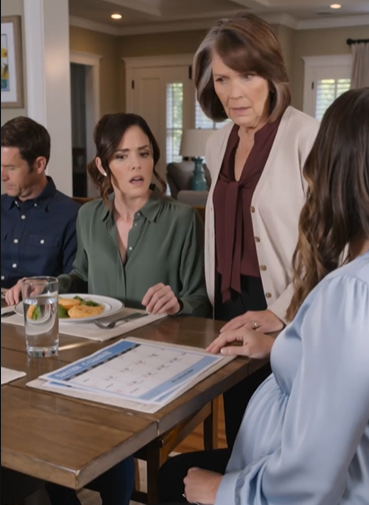
My mother announced at my brother’s baby shower that I would cover three weekdays of childcare after his fifth child arrived because I “work from home anyway.” I was 31, single, childfree, and managing a full-time healthcare software team from Denver—not sitting around waiting for an assignment. When I said no, my sister-in-law Jenna laughed and said I had “nothing else depending on me.” My brother Ryan stayed quiet while Mom slid a printed summer calendar across the table with my name already written into Monday, Wednesday, and Friday. I left before the argument got uglier. The next afternoon, a director from the kids’ day camp called asking why I had not arrived for pickup. Then she mentioned the emergency-contact information Ryan had submitted weeks earlier.
My name is Natalie Brooks.
Ryan is four years older than me.
He and Jenna already had four children when they announced number five: nine-year-old Emma, seven-year-old Caleb, five-year-old Sophie, and two-year-old Miles.
I love those kids.
That fact had become dangerously convenient for everyone except me.
For years, I was the person family members called when normal childcare plans failed.
Emma had a fever?
Call Natalie.
Caleb’s school closed because of a broken water line?
Natalie works from home.
Jenna had an appointment?
Natalie doesn’t have children, so her schedule is flexible.
Nobody said it cruelly at first.
They said it practically.
That almost made it harder to challenge.
I am a project manager for a healthcare software company.
Three days a week I work from my condo.
My mother, Patricia, translated “works from home” into “available.”
Once, I missed half of a client presentation because Ryan dropped Caleb at my building after his daycare closed early.
He texted from the parking lot:
Emergency. You’re a lifesaver.
I had never agreed.
But Caleb was six and standing downstairs with a backpack.
So I took him.
Mom later said, “See? Family finds a way.”
The way was usually me.
The baby shower was at my parents’ house in Lakewood on a Sunday afternoon.
After Ryan and Jenna announced the pregnancy, everyone celebrated.
Mom cried.
Dad opened champagne.
My aunt started discussing baby names.
Then Mom disappeared into the kitchen and returned carrying a calendar she had printed.
“We need to get organized early this time,” she said.
She placed it on the dining table.
Monday.
Wednesday.
Friday.
My name filled the same three columns for almost four months.
I stared at it.
“What is this?”
“Your days with the kids,” Mom said.
I thought she was joking.
“I don’t have days with the kids.”
Jenna touched her stomach.
“I’ll need help during the pregnancy, and after the baby comes.”
“Then you and Ryan need to arrange childcare.”
Mom frowned.
“You’re home three days a week.”
“I’m working three days a week.”
Ryan finally looked up.
“Natalie, nobody’s asking you to quit your job.”
“You’re assigning me three children during my job.”
“Four sometimes,” Jenna corrected. “Miles will probably stay with me until the delivery.”
I looked at her.
She smiled as though that made the demand reasonable.
“No.”
Mom blinked.
“What do you mean, no?”
“I mean I’m not doing this.”
Jenna laughed once.
“You don’t have a family of your own. What exactly are you protecting?”
The room became quiet.
I looked at Ryan.
He stared at the calendar instead of me.
That was the part that hurt most.
Not Jenna.
Not Mom.
Ryan knew how many times I had rearranged my life for his children.
He knew.
And he still said nothing.
I picked up my purse.
Mom followed me toward the door.
“You’re making this much bigger than it is.”
“No. You made a four-month childcare schedule without asking me.”
“You love the kids.”
“I do.”
“Then why are you acting like helping them is some punishment?”
I opened the door.
“Because loving them is not the same thing as being available on command.”
I left.
The next day, at 4:37 p.m., my phone rang while I was still on a work call.
A woman introduced herself as Elena Martinez, director of Westbridge Summer Center.
“Ms. Brooks, we have Emma, Caleb, and Sophie here. Ryan listed you for Monday pickup. Are you delayed?”
I went completely still.
“I did not agree to pick them up.”
There was a pause.
Then Elena’s voice changed.
“Could you come in and speak with me before we release the children to anyone?”
I drove there after work.
The kids were safe in the activity room.
Elena met me at the front desk carrying a registration packet.
She turned one page toward me.
Under Authorized Recurring Pickup, my name appeared beside Monday, Wednesday, and Friday through the end of August.
I stared at the dates. “That is not my schedule.” Elena nodded. “I was afraid you might say that.” She pointed to the emergency-contact section. My phone number and home address were listed correctly. A box beside my name said recurring caregiver. “I never approved this.” “Your brother submitted the registration.” “When?” “Three weeks ago.” Three weeks ago meant Ryan had listed me before the baby shower. Before Mom put the calendar on the table. Before anyone had supposedly “asked” me for help. Elena opened the center’s contact history. “There’s another issue.” She showed me two older entries connected to Emma and Caleb. My name had been used as a primary local emergency contact the previous summer too. I remembered both calls. One for Emma’s fever. One when Caleb needed early pickup. Ryan had told me each situation was unexpected. Apparently my involvement was not. Elena slid a printed authorization summary into a clear sleeve. “Your brother indicated that you had already agreed to regular family care.” I looked through the glass door at my niece and nephews. Then I looked back at the paper. “Can you remove me?” “Yes.” She paused. “But because the children were dropped off today under a care plan you say you never accepted, I need a written statement from you before I change the file.”
Elena took me into a small office next to reception.
There was nothing dramatic about it.
No police waiting.
No social worker.
Just a desk, two chairs, a printer, and a stack of camp forms.
That almost made it worse.
My family had turned something serious into paperwork because paperwork was what happens when people make assumptions about children’s care.
Elena opened a blank statement form.
“Write only what you know,” she said. “You do not need to explain your entire family situation.”
I nodded.
I wrote:
I, Natalie Brooks, did not agree verbally or in writing to provide recurring Monday, Wednesday, or Friday pickup or childcare for Emma, Caleb, or Sophie Brooks during the summer program.
I have previously helped with individual childcare situations, but those occasions were temporary and separately arranged.
I did not consent to be listed as a recurring caregiver.
I signed my name.
Then I stopped.
“Do I need to take them today?”
“No.”
That answer surprised me.
Elena continued.
“Their parents remain legally responsible. We have already contacted both of them.”
“Ryan is at work.”
“He answered.”
My phone buzzed.
Ryan.
I ignored it.
Then Jenna.
Then Mom.
Elena glanced at the screen lighting up.
“You are allowed to leave.”
The sentence felt strange.
Of course I was allowed to leave.
They were not my children.
And yet I had spent so many years acting as though a crisis erased my right to choose that I needed a stranger to remind me.
“What happens to the kids?”
“The center remains open until six. Their parents need to arrange pickup.”
“What if they don’t?”
“We follow our normal late-pickup policy. If nobody with legal authority retrieves them, there are additional procedures.”
She did not need to explain.
I looked through the window again.
Emma was reading.
Caleb was building something with plastic blocks.
Sophie was coloring at a table.
They were safe.
That mattered.
I was not abandoning children in danger.
I was refusing to turn somebody else’s poor planning into my permanent obligation.
I thanked Elena and left.
Ryan called before I reached my car.
I answered.
“What are you doing?” he demanded.
“I’m leaving.”
“You’re at the center?”
“Yes.”
“Then take the kids.”
“No.”
There was silence.
“Natalie.”
“Pick up your children.”
“I’m forty minutes away.”
“Then leave now.”
“I’m working.”
“So am I.”
“That is different.”
I almost laughed.
“How?”
“I have to be in the office.”
“And I have to do my job too.”
“You work from home.”
“Not today.”
“You know what I mean.”
I did.
That was the problem.
Home was not real work.
My time was not real time.
My commitments were not real commitments.
Not compared with his.
“Ryan, you listed me as recurring childcare three weeks ago.”
“We needed an emergency contact.”
“That is not what the form says.”
“Mom said you’d come around.”
There it was.
Mom.
“I said no yesterday.”
“You were angry.”
“No is still no when I’m angry.”
He exhaled.
“Jenna has an appointment.”
“Then you should have arranged care with somebody who agreed.”
“Jesus, Natalie. They’re your niece and nephews.”
“And they’re your children.”
He hung up.
I sat in my car without starting it.
My hands were shaking.
Five minutes later, Emma texted from the child-safe watch her parents had bought her.
Are you mad at us?
That nearly destroyed me.
I answered immediately.
Never at you. Grownups are sorting out schedules. I love you.
Three dots appeared.
Love you too.
I closed my eyes.
This was the part my family counted on.
They knew I loved the kids.
They knew I would absorb almost anything to keep the children from feeling unwanted.
They had built an entire childcare strategy around that knowledge.
Ryan arrived before six.
He did not speak to me because I was already gone.
Elena emailed me later confirming my name had been removed from recurring pickup.
She also wrote that the center needed Ryan and Jenna to submit a revised care plan before the children returned Wednesday.
I forwarded that email to myself.
Then I created a folder on my laptop.
FAMILY CARE AUTHORIZATION.
For the first time, I started keeping records.
My best friend, Hannah, came over that night.
We had met in college.
She was an elementary-school counselor and had spent years watching families make complicated decisions around children.
I showed her the registration page.
She read it twice.
“You didn’t know?”
“No.”
“How long have they been listing you?”
“At least last summer.”
Hannah leaned back.
“Natalie, have you ever filled out one of the school emergency forms yourself?”
“No.”
“Any daycare forms?”
“No.”
“Doctors?”
“I’m not a guardian.”
“I know.”
She tapped the paper.
“I would contact every place the children regularly attend and make sure you know how you’re listed.”
“That feels extreme.”
“So did a four-month calendar you never agreed to.”
Fair.
The next morning, I called Emma and Caleb’s elementary school.
I introduced myself and explained that I wanted to verify whether I was listed as an emergency contact.
The office administrator paused.
“Yes. You’re the first local alternate after both parents.”
“When was I added?”
“Three years ago.”
Three years.
I sat down.
“Did I sign anything?”
“No. Parents designate emergency contacts.”
That was legal and normal.
Parents choose contacts.
The problem was not that Ryan had broken into some secret system.
The problem was that he had never told me I was the person the school was expected to call.
I remembered the emergencies differently now.
Emma’s fever.
Caleb vomiting after lunch.
A snow closure when buses stopped running.
Every time, Ryan acted as though he had thought of me in the moment.
He had not.
He had institutionalized me as backup.
I asked the school to note that I was not available as a routine emergency contact without prior confirmation.
The administrator said she could not edit the parent’s form based solely on my request but would document my statement and contact Ryan for an updated list.
I called Sophie’s preschool.
Same result.
My name.
First alternate.
Then the pediatric dental office.
Emergency contact.
Then the soccer program.
Authorized pickup.
I sat at my kitchen table surrounded by notes.
My family had not only expected help.
They had built me into their systems.
That was the main thing I finally understood.
My life had become infrastructure.
The moment something failed, people expected Natalie to activate.
Nobody asked whether the infrastructure had plans of its own.
At noon, Mom called.
I answered because I wanted one conversation.
“What have you been doing?” she asked.
“Checking where Ryan has listed me as childcare.”
“You called the school?”
“Yes.”
“Do you have any idea how embarrassing that was?”
I blinked.
“For whom?”
“Ryan had to explain that his own sister suddenly refuses to be an emergency contact.”
“I never agreed to be one.”
“You have always helped.”
“That is not consent forever.”
Mom made an impatient sound.
“This language you’re using is ridiculous. Consent. Authorization. They’re family.”
“Those words exist for families too.”
“You are making Ryan and Jenna look irresponsible.”
“No. I’m describing what they did.”
“You could have handled this privately.”
“I tried privately yesterday.”
“You stormed out.”
“Because Jenna told me my life was empty enough to become their childcare plan.”
“She did not say empty.”
“She said I have no family of my own.”
“Well…”
Mom stopped herself.
I waited.
“What?”
“You don’t.”
The words were quiet.
Not intentionally cruel.
That made them clearer.
I looked around my condo.
My desk.
My plants.
The half-finished book on the coffee table.
The suitcase in my closet from a trip I had postponed twice because somebody needed childcare.
My life.
“I have a life, Mom.”
“I didn’t say you didn’t.”
“You just explained why everyone thinks it can be assigned away.”
“That is not fair.”
“I agree.”
She became angry.
“You’re twisting everything.”
“No. I’m finally writing it down.”
I ended the call.
That afternoon, I received a message from Dad.
Your mother is upset. Can you please stop calling places and making this a bigger issue?
I replied:
Ryan needs to remove me from any childcare or pickup list I did not knowingly accept. Once that happens, there is no issue.
Dad did not answer.
Two hours later, Hannah sent me a message.
Check the family group.
I had muted the Brooks family chat months earlier because it mostly consisted of photos, political jokes from an uncle, and Mom asking who was bringing food to things.
Ryan had written:
Natalie left the kids stranded at camp because she’s angry about the new baby.
Jenna added:
Apparently having no children makes some people resentful of those who do.
Mom wrote:
We’re heartbroken she’s taking this out on the kids.
I read the messages slowly.
The old version of me would have called everyone individually.
Explained.
Defended.
Begged them to understand I loved the children.
Instead, I posted one message.
For clarity: I was assigned recurring childcare without being asked. I said no in person Sunday. Ryan had already listed me as a recurring pickup contact before that conversation. The center required him and Jenna to provide a revised plan after I confirmed I had not agreed.
Then I attached a photograph.
Not the children.
Not private medical information.
The recurring-pickup page with their details covered and my Monday/Wednesday/Friday schedule visible.
I added:
I love the kids. I will not discuss them further in a group chat.
Then I muted it.
Hannah called five minutes later.
“You realize your aunt Linda just deleted her comment?”
“What comment?”
“She had called you selfish.”
“Good timing.”
“What does it feel like?”
I thought about it.
“Terrible.”
“Good.”
I laughed.
“Why good?”
“Because you think boundaries are supposed to feel satisfying immediately. Sometimes they feel terrible because you’re breaking a system that trained you to feel guilty.”
She was annoyingly good at her job.
The family narrative shifted over the next several days.
Not completely.
Some relatives sided with Ryan.
One uncle told me children were everyone’s responsibility.
I asked whether he had volunteered for Monday, Wednesday, and Friday.
He stopped responding.
My cousin Beth messaged privately.
Mom did something similar to me after my twins were born. She told Aunt Denise I had agreed to host Easter. I hadn’t.
Another cousin wrote:
Patricia volunteered me to drive Grandma to appointments last year before asking me.
The pattern widened.
Mom did not invent people’s responsibilities out of cruelty.
I think she genuinely believed that family obligations were things she could distribute.
The person who resisted became selfish.
The person who complied became “dependable.”
I had been dependable for most of my adult life.
That label had cost me more than I realized.
Westbridge Summer Center asked for a meeting before Ryan and Jenna could restore the kids’ normal enrollment.
Elena invited both parents.
Because my name was central to the dispute, she asked whether I wanted to attend.
I said yes.
Not alone.
Hannah came with me and sat quietly.
The center’s family-services coordinator, Denise Walker, joined us.
Ryan and Jenna arrived ten minutes late.
Mom came too.
I had not known she was invited.
She was not.
Ryan had brought her.
Elena looked at the three of them.
“This meeting is for the children’s legal guardians.”
Mom opened her mouth.
Ryan said, “She helps with childcare.”
I almost laughed.
Elena remained professional.
“If Mrs. Brooks is not a legal guardian, she can wait outside unless all parties agree to her participation.”
Ryan looked at me.
I said nothing.
Mom stared.
“So Hannah can stay?”
“Hannah is here as Natalie’s support person because Natalie is participating as the individual whose consent is disputed.”
Mom looked insulted by the phrase.
Consent disputed.
I understood why.
It made the situation sound exactly as serious as it was.
Ryan finally said Mom could stay.
I agreed because I wanted her to hear the same explanation I did.
Denise began.
“The children were not in danger at Westbridge. I want that clear.”
Jenna nodded quickly.
“Exactly.”
Denise continued.
“The concern is that the family’s registered care plan named an adult as a recurring caregiver who says she never accepted that role.”
Ryan leaned forward.
“It was a misunderstanding.”
Elena opened the file.
“Your registration states Natalie Brooks would provide pickup three days per week.”
“We thought she would.”
“That is different from confirmation.”
Mom said, “Natalie has always taken them.”
I turned toward her.
“No.”
“You have.”
“I have babysat them.”
“That is what I said.”
“No. You said always.”
Denise intervened.
“Let’s separate prior help from current authorization.”
She looked at Ryan.
“Did Natalie explicitly agree to the summer schedule before you submitted this form?”
Ryan hesitated.
Jenna answered.
“We knew she would help.”
“That is not what I asked.”
Jenna’s face tightened.
Ryan finally said:
“No.”
Denise wrote something down.
Mom whispered, “This is absurd.”
Hannah shifted beside me but remained silent.
Elena then showed the emergency-contact history.
My name had appeared on multiple registrations.
Ryan acknowledged adding it.
“Because she’s family.”
Denise nodded.
“Family members can absolutely be emergency contacts. But best practice is to confirm they know they are listed and are willing to respond.”
Ryan looked at me.
“You always responded.”
That sentence exposed the whole structure.
I responded, therefore they assumed I would always respond.
“No one told me I was first alternate.”
Ryan frowned.
“What difference does that make? You would have come.”
“Exactly.”
My voice sounded calmer than I felt.
“You didn’t need me to agree because you were sure I would feel too guilty to refuse.”
Nobody answered.
Denise moved the discussion toward solutions.
Ryan and Jenna needed to submit a revised pickup list.
Each recurring caregiver had to be confirmed.
Westbridge would require direct acknowledgment from any non-parent listed for recurring pickup for the remainder of the summer.
My name would be removed.
I asked to remain listed only as an aunt with no pickup authority.
Ryan looked shocked.
“What if something happens?”
“Then call your emergency contact.”
“You are my emergency contact.”
“I’m not anymore.”
Jenna started crying.
Not dramatically.
She looked exhausted.
“You know how hard this is for us.”
“I do.”
“We have four children and another coming.”
“Yes.”
“We don’t have anyone else local who can do what you do.”
There it was.
Not nobody else who loved them.
Nobody else who would provide the labor.
Denise slid a page of local childcare resources across the table.
After-school programs.
Licensed in-home providers.
Summer transportation.
Temporary nanny agencies.
Jenna stared at the sheet.
“These cost money.”
“Yes,” Denise said.
Ryan gave me a look I will never forget.
As if the existence of a market price for my unpaid labor was somehow my fault.
Mom said:
“Natalie, surely you can do one day.”
“No.”
“What about emergencies?”
“Specific emergency. Specific request. I decide then.”
“That isn’t how family works.”
Hannah finally spoke.
“It can be.”
Mom looked at her.
“You don’t know this family.”
Hannah smiled politely.
“I know Natalie.”
That shut down the conversation faster than anything I could have said.
The center updated the file that afternoon.
No recurring pickup.
No default emergency response.
No authority for anyone else to promise my time.
Blue ink on white paper.
That was the most effective family boundary I had ever created.
Then Ryan made good on his threat to tell relatives I had abandoned the children.
He called Dad’s sister.
Jenna told people at church I had “withdrawn from the family” because I disliked their pregnancy.
Mom told an aunt that I had become obsessed with technicalities.
I did not chase every lie.
I responded only when the story reached somewhere it could damage my actual reputation.
At work, for example.
Ryan had once called my office directly during an emergency.
My manager Priya knew the children existed.
When I requested two hours off for the Westbridge meeting, she asked whether things were okay.
I told her enough.
Not every detail.
She listened.
Then said:
“I wondered.”
“What?”
“You have taken nine unplanned family-care absences in eighteen months.”
I stared at her.
“Nine?”
She turned her monitor toward me.
Not disciplinary.
Just attendance records.
Dentist emergency.
School closure.
Child fever.
Jenna’s prenatal appointment when her sitter canceled.
Caleb’s broken arm.
Nine.
I remembered each one individually.
Seeing them as a list changed them.
“You’ve always made up the time,” Priya said.
“So this hasn’t been a problem?”
“Not yet.”
Not yet.
That phrase stayed with me.
“You are being considered for the implementation lead position in October.”
I knew about the role.
More responsibility.
Some travel.
A substantial raise.
I had not applied because Ryan and Jenna’s baby was due in September and, without consciously deciding it, I had assumed my life would become less flexible.
Priya asked:
“Do you want the role?”
“I thought they were hiring externally.”
“They are taking internal applications too.”
I stared at her.
“What does this have to do with the absences?”
“Nothing if you can perform the job.”
Then she smiled.
“But I am asking whether you have been making career decisions around emergencies that don’t belong to you.”
That was a harder question.
I went home and opened the application.
I submitted it that night.
My family’s childcare crisis did not magically disappear.
They hired a college student named Rebecca for Monday afternoons.
Ryan negotiated remote work on Wednesdays.
Jenna’s mother agreed to help some Fridays after they actually asked her instead of assuming.
They paid for extended-day pickup twice a week.
It cost money.
They reduced other expenses.
Ryan canceled a golf membership.
Jenna delayed replacing a living-room sectional.
Normal choices.
Nobody became homeless.
Nobody lost a job.
The children remained loved.
The thing that disappeared was the fiction that my time had no value because there was no spouse or child using it first.
Mom struggled with that longer than anyone.
She showed up at my condo one Saturday morning.
I did not invite her inside.
That had become one of my boundaries too.
No surprise visits.
She held the printed calendar from the baby shower.
I recognized the colored blocks.
Monday.
Wednesday.
Friday.
My name.
“I found this in my bag.”
“Okay.”
She looked embarrassed.
“I made it before talking to you.”
“I know.”
“I thought I was helping Ryan.”
“I know.”
“I didn’t think of it as taking something from you.”
“That’s the problem.”
Her eyes filled.
“I still don’t understand why you wouldn’t want to help.”
“I do help.”
“You know what I mean.”
“Yes.”
I took the calendar.
“I don’t want to be assigned.”
Mom looked down.
“When you were little, everybody helped everybody.”
“Did Grandma assign you three days a week without asking?”
“No.”
“Did Uncle David schedule you around your job?”
“No.”
“Then that isn’t what this is.”
Mom wiped her eyes.
“You always seemed less burdened.”
There it was again.
Less burdened.
“I’m not an empty slot on a calendar.”
“I know.”
“Do you?”
She looked at the paper.
“I’m starting to.”
Then she said something that surprised me.
“When Jenna got pregnant again, I panicked.”
“Why?”
“Because they already seemed overwhelmed.”
“So you solved it with my week.”
Mom gave a sad little laugh.
“When you say it like that…”
“That is what happened.”
She nodded.
“I’m sorry.”
I accepted the apology.
I did not give her a Monday.
That distinction became very important to me.
An apology is not a purchase.
You do not owe someone renewed access because they finally understand why you closed the door.
The baby arrived in September.
A healthy boy named Owen.
Ryan sent me a photograph from the hospital.
For hours, I did not know what to do.
I loved him immediately.
That annoyed me.
Not the baby.
The emotional complication.
It would have been easier if boundaries erased love.
They do not.
I wrote:
He’s beautiful. Congratulations.
Ryan replied:
Thanks.
Nothing else.
Two weeks later, Jenna texted.
Would you like to come meet Owen Sunday afternoon? Just visit. No babysitting request.
I read the message twice.
Just visit.
That was new.
I said yes.
Hannah waited at a coffee shop nearby because I still did not entirely trust the situation.
Ryan’s house looked exactly like a house with five children and a newborn should look.
Laundry everywhere.
Bottles on the counter.
Crayons under the coffee table.
Emma ran to hug me.
Caleb shouted from upstairs.
Sophie asked if I had brought markers.
Miles stared at me as though he vaguely remembered that I existed.
Jenna was sitting on the couch holding Owen.
She looked exhausted.
“Do you want to hold him?”
Want.
Not:
Take him.
Not:
Can you keep him while I shower?
Want.
“Yes.”
She handed him to me.
Owen weighed almost nothing.
His face was red and serious.
I sat with him against my chest.
For ten minutes, nobody gave me an assignment.
That should not have felt revolutionary.
It did.
Emma climbed onto the other end of the couch.
“Are you still our aunt?”
My heart cracked.
“Always.”
“Even though you’re not emergency pickup?”
I laughed.
“Especially then.”
She looked confused.
“That doesn’t make sense.”
“It will when you’re older.”
Jenna was quiet.
Then she said:
“She heard us arguing.”
Of course she had.
Children hear far more than adults admit.
“I’m sorry,” Jenna said.
I looked at her.
“For what?”
Her eyes filled.
“For saying you had nothing to protect because you didn’t have a family.”
I waited.
“That was cruel.”
“Yes.”
“And for treating you like childcare instead of asking.”
“Yes.”
She nodded.
“I’m not asking you to say it’s okay.”
“Good.”
A tiny smile appeared.
“I’m learning.”
I believed her.
Not because she cried.
Because she had invited me over without attaching a task.
That was evidence.
Ryan took longer.
He avoided being alone with me during that first visit.
Two months later, he asked to meet for coffee.
I almost declined.
Then agreed.
He arrived early.
That was unusual.
He had a notebook on the table.
I stared at it.
“What is that?”
“Our childcare budget.”
I laughed before I could stop myself.
He did too.
Then became serious.
“We were spending almost eleven hundred a month after you stepped back.”
“Okay.”
“I’m not telling you because I want money.”
“Good start.”
“I’m telling you because I finally understand what we were asking.”
I waited.
He turned the notebook.
Rebecca.
Extended care.
Occasional sitter.
Transportation.
The numbers were ordinary.
The total was not.
“You were saving us somewhere between eight hundred and fifteen hundred a month depending on the week,” he said.
“Plus time.”
“Yes.”
“Plus work interruptions.”
“Yes.”
He looked embarrassed.
“I never calculated it because it was you.”
That sentence landed.
“Meaning?”
“Family help didn’t feel like something I was consuming.”
I nodded.
“Until it stopped.”
“Exactly.”
He took a breath.
“I also thought working from home meant your day could bend.”
“So did Mom.”
“I know.”
“Do you still?”
“No.”
I believed that too.
Then he said:
“I’m sorry I stayed quiet at the shower.”
That mattered more than the budget.
“You knew the calendar was wrong.”
“Yes.”
“Why didn’t you say anything?”
“Because it solved my problem.”
Direct.
Painful.
Useful.
“I knew you would say no if we asked for three days. Mom had already printed it. Jenna was stressed. I thought if everybody acted like it was normal, you’d give in.”
I looked at him.
“You deliberately used pressure.”
“Yes.”
He stared into his coffee.
“I hate admitting that.”
“You should.”
He nodded.
“No argument.”
That was the brother I wanted back.
Not perfect.
Honest.
“What happens now?” he asked.
“I don’t know.”
“Can we be normal again?”
“No.”
His face fell.
Then I added:
“We can build a different normal.”
“What does that look like?”
“You ask.”
“For babysitting.”
“For anything that uses my time.”
“And if you say no?”
“It means no.”
“No explanation?”
“Sometimes I’ll give one.”
He almost smiled.
“Terrifying.”
“You’ll survive.”
He did.
The implementation-lead interviews happened that same month.
I applied.
I got the role.
It required one trip every six weeks.
Before, I would have calculated each trip against school calendars and Jenna’s needs.
This time, I put the travel dates in my own calendar.
Ryan saw one when he asked whether I could attend Emma’s school play.
“I’ll be in Seattle.”
“Okay.”
No guilt.
No suggestion I change the trip.
Just okay.
I made the next play.
That became the new pattern.
I stopped treating every missed family event as proof I was selfish.
They stopped treating every availability gap as betrayal.
Not perfectly.
Mom slipped sometimes.
At Thanksgiving, she asked:
“You’re free next Thursday, right?”
I said:
“Ask the actual question.”
She sighed.
“Would you be willing to watch Owen for two hours while Ryan and Jenna take the older kids to a school event?”
“No.”
Mom looked disappointed.
Then she said:
“Okay.”
That single okay meant more than the apology at my condo.
Behavior is where understanding becomes real.
I still babysat.
That may surprise people.
I took Emma and Sophie to a museum one Saturday because I wanted to.
I kept Caleb overnight when Ryan and Jenna attended a wedding.
They asked six weeks in advance.
I said yes.
Miles spent one afternoon with me while Owen had a pediatric appointment.
Again, they asked.
Again, I chose.
The children did not lose their aunt.
They gained one who no longer secretly resented being used.
That improved our relationship.
When I was with them, I was actually present.
Not checking work messages while wondering why my brother’s crisis had become mine.
Not counting hours.
Not swallowing anger.
Just aunt time.
The Westbridge file remained closed.
My name stayed listed only as a relative.
When the center renewed enrollment the following summer, Elena emailed me separately.
Ryan has provided updated contacts. You are not listed for pickup. No action needed.
I stared at the message.
No action needed.
Those might have been the most beautiful three words of the year.
Dad apologized much later.
He had spent most of the conflict trying to disappear inside silence.
That was his role in our family.
Mom organized.
Ryan demanded.
Dad waited for the storm to pass.
One Sunday, he came to my condo with a small toolbox because I had mentioned a loose cabinet hinge.
I almost told him I could fix it myself.
Then I let him.
While he worked, he said:
“I should have said something at the shower.”
“Yes.”
“I knew you looked trapped.”
“Yes.”
“I thought your mother would calm down later.”
“She didn’t.”
“I know.”
He tightened the hinge.
“I keep telling myself staying quiet prevents things from getting worse.”
“It prevents things from getting uncomfortable for you.”
He looked at me.
“That’s worse.”
“Yes.”
He nodded.
“I’m sorry.”
I accepted that too.
I did not need a perfect family confession.
I needed people to stop repeating the behavior.
Six months after Owen’s birth, Ryan and Jenna hosted a birthday party for Caleb.
At one point, Jenna’s sister asked whether anyone could stay late to help with cleanup.
Mom looked toward me automatically.
I saw it.
She saw me see it.
Then she turned to Ryan.
“You two should hire the teenagers next door. They’re always looking for money.”
I almost laughed.
Mom caught my expression.
“What?”
“Nothing.”
“I’m learning.”
“You are.”
The teenagers earned forty dollars.
I ate cake and left at seven.
That was a good night.
The family group chat changed too.
People became oddly formal for a while.
Would anyone be available?
Is anyone willing?
Does somebody want to?
The language sounded almost corporate.
Hannah thought it was hilarious.
“Congratulations,” she said. “You introduced consent to the Brooks family.”
“It’s not a startup.”
“Give it time.”
Eventually, the wording became normal.
Relatives learned that asking did not guarantee yes.
More importantly, they learned no was not an attack.
Aunt Linda declined Thanksgiving dessert duty one year.
Mom said:
“No problem.”
I nearly dropped a plate.
Systems change strangely.
One boundary exposes another.
People realize options existed the whole time.
A year after the baby shower, I bought a two-bedroom townhouse.
Not because I needed to prove my life was full.
Because I wanted an office with a door and a small patio.
Ryan helped me move a couch.
He did not bring the children.
He had arranged a sitter.
That detail made me smile.
“What?”
“Nothing.”
“You’re doing the face.”
“What face?”
“The one where you think you’ve won.”
“I did win.”
He looked alarmed.
I laughed.
“Not against you.”
“Then what?”
“Against the part of me that thought I had to say yes to stay loved.”
He became quiet.
“That part was stupid.”
“Careful.”
“Sorry.”
Then he carried the couch upstairs.
That night, after everyone left, I sat on the floor eating noodles out of a takeout container.
My phone buzzed.
Emma.
She had her own phone now.
Can I come over Saturday and see your new place?
I wrote:
Ask your parents first.
She replied two minutes later.
They said yes. Can I?
I smiled.
Yes.
Specific request.
Specific date.
Specific answer.
That was the entire thing I had been fighting for.
Not distance.
Choice.
Emma came Saturday.
Just Emma.
No surprise siblings.
We went to a bookstore.
Made pizza.
Watched a movie.
At bedtime, she asked:
“Why did everybody fight last year?”
I could have given her a simple answer.
Adults were stressed.
Misunderstanding.
Schedules.
Instead, I tried to be honest without asking a ten-year-old to carry adult conflict.
“Your parents needed more help than they had arranged.”
“Okay.”
“They assumed I would help without asking me.”
“Because you always did?”
“Yes.”
She thought about it.
“Was that bad?”
“Helping wasn’t bad.”
“What was?”
“Not asking.”
Emma nodded.
“Mom asks Rebecca now.”
“Yes.”
“And she pays her.”
“Yes.”
“She should pay you.”
I laughed.
“I don’t want to be their nanny.”
“Good. Rebecca makes us clean up.”
“That sounds excellent.”
She rolled her eyes.
Kids adapt.
Adults make identity out of patterns.
Children mostly want to know what the rules are.
The new rule was simple.
Aunt Natalie loved them.
Aunt Natalie was not default childcare.
Both things could be true.
My relationship with Mom remained the most complicated.
She never fully understood why the community-center paperwork bothered me as much as it did.
To her, forms were secondary.
Intentions mattered more.
“We knew you would never let anything happen to them,” she told me once.
“I wouldn’t.”
“So you understand what I mean.”
“No.”
I put down my coffee.
“You knew I would protect the children even if I was angry at you. You used that certainty to avoid getting my agreement.”
Mom became quiet.
“That sounds calculated.”
“It doesn’t have to be calculated to be manipulative.”
She hated that word.
I rarely used it.
But sometimes the accurate word is uncomfortable.
“You thought the children would force me to say yes.”
“Yes.”
She whispered it.
That was the final piece I needed.
Not an evil plan.
A shortcut.
Mom believed my love for the children was a lever.
She pulled it because it had always worked.
“I’m sorry,” she said.
“I know.”
“Do you forgive me?”
I thought about the question.
“Yes.”
Her face changed with relief.
Then I added:
“That doesn’t mean you get to volunteer me again.”
“I know.”
That was forgiveness in its adult form.
No erased boundaries.
No return to the old system.
Just less anger around the truth.
Two years later, Ryan announced something at Sunday dinner.
Not another baby.
A promotion.
Everyone cheered.
Then he said the new role involved travel.
Jenna rolled her eyes.
“We’re going to need to reorganize everything.”
Mom looked at me.
Old reflex.
Then stopped herself.
Ryan noticed.
He laughed.
“Don’t even think about it, Mom.”
Everybody laughed.
Even me.
Then Ryan said:
“We already priced after-school care.”
That one sentence carried two years of growth.
No crisis.
No hidden calendar.
No assumption.
A plan.
After dinner, Jenna handed me Owen, now a toddler, while she put on his jacket.
Then she immediately stopped.
“Sorry. Can you hold him for one minute?”
I smiled.
“Yes.”
She rolled her eyes at herself.
“I’m never going to live that down.”
“Probably not.”
Owen grabbed my necklace.
I untangled his fingers.
The scene would have looked ordinary to anyone else.
To me, it was the whole story.
Someone asking.
Me answering.
No hidden invoice attached.
No invisible job description.
No punishment if the answer changed.
I never became less loving.
I became less available by default.
Those are not the same thing.
For years, my family praised me for being dependable while quietly making dependence on me part of their plans.
Once I stepped out of that role, they had to do something uncomfortable.
They had to build plans that worked even when I said no.
And I had to learn something uncomfortable too.
Being needed is not the same as belonging.
I had confused those feelings for years.
Needed felt urgent.
Phones ringing.
Kids arriving.
Problems that only I could solve.
Belonging was quieter.
Emma asking to visit because she wanted to see me.
Ryan helping move a couch without bringing a request.
Dad fixing a hinge.
Mom accepting no.
Jenna inviting me to hold a baby instead of assigning him to me.
Those things felt smaller.
They were actually the family I had wanted all along.
The printed summer calendar stayed in a folder in my desk.
Monday.
Wednesday.
Friday.
My name filling months I had never offered.
I kept it for the same reason I kept Elena’s authorization summary.
Not to stay angry.
To remember how easy it was for other people to interpret my silence as consent.
I am louder now.
Not louder in volume.
Clearer.
Do I want to?
Am I available?
Did anyone ask?
What will saying yes cost?
Would I still say yes if nobody became angry when I said no?
Those questions changed my life.
They also changed my family.
Nobody had to collapse.
Nobody had to become the villain forever.
But the version of our family that required me to keep disappearing into everyone else’s emergencies did have to end.
I am grateful it did.
Because I love my niece and nephews.
I love my brother.
I even love my mother.
And now, for the first time, loving them no longer requires pretending my own life is empty space waiting to be assigned.







