My Family Made Me Serve at My Sister’s Restaurant—Then an Investor Asked for Me
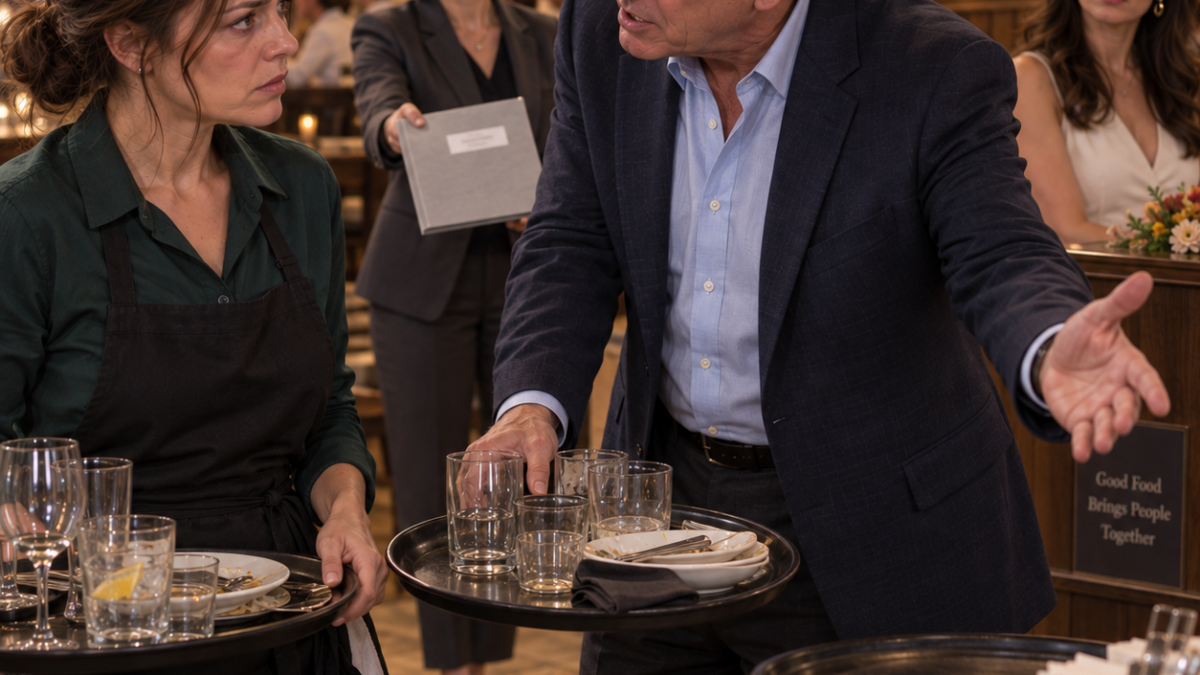
At my sister’s restaurant opening, my parents turned the 90 minutes of setup help I had promised into an unpaid service shift for 50 guests. I was 33, an independent restaurant-operations consultant in Austin, yet Dad spent the night joking that my spreadsheets mattered less than “real restaurant experience” while using financial work I had created to impress investors. My sister Sophia saw me clearing plates and said nothing. When I finally asked for ten minutes off my feet, Dad laughed and told me not to get precious. I set down the tray and left. In the parking lot, the lead investor’s assistant caught up with me carrying a sealed operations packet. She said, “Marcus asked me to make sure you saw this before Monday.”
My name is Elena Vargas.
For eight years, I worked inside restaurant operations before starting my own consulting practice.
I was not a chef.
I was not an influencer.
I was the person owners called when a dining room looked full but the bank account kept shrinking.
I reviewed purchasing, staffing, menu margins, vendor contracts, scheduling, and cash flow.
The work rarely produced glamorous photographs.
It prevented restaurants from dying quietly six months after their opening parties.
My older sister, Sophia, wanted something more visible.
She had spent years in event management before deciding to open a modern neighborhood restaurant in Austin called Vargas Table.
Six weeks before opening, she came to my apartment carrying coffee and a laptop.
“I need your eyes on this.”
That mattered.
Sophia and I had always been close in the way sisters can be close while still occupying completely different roles inside a family.
She was the charismatic one.
Dad’s favorite storytelling partner.
Mom’s shopping companion.
I was the one people called when numbers stopped behaving.
Sophia showed me her operating model.
Projected monthly sales: $150,000.
Food cost: 28%.
Labor: 24%.
Healthy profit.
On paper.
Then I compared her recipes with current supplier quotes.
Food cost was closer to 36%.
Her staffing schedule assumed managers would cover dozens of empty hours indefinitely.
By the time I corrected those two assumptions, the projected monthly profit had nearly disappeared.
I spent fourteen hours rebuilding the model.
For free.
On the first page, I wrote:
PRELIMINARY SCENARIO — NOT VALIDATED FOR INVESTMENT.
I told Sophia exactly what still needed verification.
Final supplier pricing.
Final menu.
Signed staffing commitments.
She thanked me.
A week later, I saw photographs from an investor presentation.
My charts were on the screen.
The warning was gone.
Dad’s name appeared beneath them.
I called Sophia.
She said Dad had “cleaned up” the slides because investors did not need all my technical disclaimers.
I sent her an email that night.
I wrote that the model was preliminary.
I had not agreed to become the restaurant’s operating adviser.
My name could not be used to imply otherwise.
Sophia replied:
Understood.
I saved that email.
Two days before opening night, Mom called.
Could I help set up for ninety minutes?
Of course.
I brought the green dress I planned to change into once guests arrived.
I never put it on.
Dad had canceled the temporary event staff because he thought “family could handle one evening.”
By seven o’clock, I was carrying appetizers.
By seven-thirty, I was clearing plates.
At eight, I was washing glasses because the dishwasher was buried.
Sophia was greeting investors.
Dad was telling stories about the restaurant business he had owned twenty years earlier.
Mom kept pointing out tables that needed attention.
I finally carried a tray of dirty glasses toward the service station and said, “Can somebody take this for ten minutes? I haven’t sat down since four.”
Dad lifted his drink.
“You’re the efficiency expert. Be efficient.”
Two guests laughed.
Sophia looked toward me.
Then looked away.
Something in me went very still.
I put the tray down.
Untied the apron.
Walked outside.
That was when Claire Monroe, assistant to lead investor Marcus Reed, came through the entrance carrying a sealed gray packet.
“Elena?”
“Yes.”
She looked surprised to see the apron in my hand.
“Marcus asked me to make sure you saw this before Monday.”
She gave me the packet.
“He said the final funding release depends on everyone confirming their roles.”
I opened it beneath the parking-lot light.
My name appeared on the first page.
Operating Adviser — 12-Month Engagement.
Status:
Confirmed.
I read the line twice. “I never confirmed this.” Claire’s expression changed. “You’re listed as one of the operating controls for the second funding release.” “How much?” “Two hundred forty thousand dollars.” I turned another page. The attached budget looked familiar. Then I saw the food-cost percentage. Twenty-eight percent. The number I had already corrected. My staffing revisions were gone too. Claire pointed toward the certification page. “The owners signed this morning.” Dad’s signature was at the bottom. Beside it was another line authorizing a $72,000 founder advisory fee payable to him over the first year. My own compensation line showed zero. The packet did not merely say I had helped. It promised that I would oversee purchasing, review weekly labor, and certify monthly operating reports for twelve months. Claire watched my face. “Did you sign a separate engagement agreement?” “No.” “Did Marcus know that?” “I don’t know.” I pulled out my phone. Claire stopped me before I dialed. “If the representation is wrong, don’t argue with your family first.” She handed me Marcus Reed’s card. “Send him the original version of your analysis, whatever limitations you gave Sophia, and anything showing whether you accepted this role.” Then she added quietly: “Let the documents speak before anybody has time to rewrite the story.”
I stood beside my car for several minutes after Claire went inside.
Through the restaurant windows, I could see Dad laughing with two investors.
Sophia was posing for photographs beside the bar.
Mom had apparently found somebody else to carry the glasses.
That detail almost made me laugh.
The restaurant had not collapsed because I put down one tray.
I opened the gray packet again.
The funding structure was straightforward.
Marcus Reed’s investment group had committed $600,000.
The first $360,000 had already gone into construction, kitchen equipment, deposits, pre-opening payroll, and initial inventory.
The remaining $240,000 was scheduled for release Monday.
But not automatically.
The second stage required final verification that several operational controls were in place.
One of those controls was me.
Not my spreadsheet.
Me.
The language said I would serve as an independent operating adviser for twelve months and certify monthly reporting.
I could feel my pulse in my neck.
What bothered me most was how plausible the lie looked.
I had helped.
I had analyzed the menu.
I had reviewed labor.
I had been at the restaurant repeatedly during the previous six weeks.
Someone looking from outside could easily believe the arrangement had simply become formal.
That was exactly what made it dangerous.
I called Marcus.
He answered after five rings.
“Elena?”
“Yes.”
“I thought you might call.”
I looked toward the restaurant.
“Did Claire tell you something?”
“She told me you seemed surprised by the packet.”
“That’s because I’ve never seen it.”
Marcus became quiet.
“Are you calling as Vargas Table’s operating adviser?”
“No.”
The word felt enormous.
“That’s the correction.”
His voice changed immediately.
Professional.
Precise.
“Tell me what you agreed to.”
“I agreed to review Sophia’s preliminary operating model as a favor.”
“Paid?”
“No.”
“Scope?”
“One preliminary scenario. Food cost. Labor structure. Some menu recommendations.”
“Ongoing reporting?”
“No.”
“Purchasing controls?”
“No.”
“Monthly certification?”
“No.”
“Did you authorize Frank or Sophia to represent otherwise?”
“No.”
Marcus paused.
“Did you prepare the model attached to the final certification?”
“I prepared an earlier version.”
“What changed?”
“The warning disappeared. My food-cost correction disappeared. My staffing correction disappeared.”
He asked for numbers.
I gave them.
Original model they showed investors: 28% food cost.
My corrected current estimate: approximately 36%.
Projected sales: $150,000 monthly.
Difference: roughly $12,000 a month before other issues.
Labor assumptions were understated by another roughly $10,000 to $11,000 depending on schedule coverage.
Marcus did not react emotionally.
That reassured me.
“Do you have the original file?”
“Yes.”
“Your email limiting your role?”
“Yes.”
“Sophia’s acknowledgment?”
“Yes.”
“Send everything.”
“I don’t want this turned into a family fight.”
“It isn’t my job to referee your family.”
His tone was blunt.
“My job is to determine whether information material to our investment is accurate.”
“Understood.”
“If your documents support what you’re saying, Monday’s release may be delayed while we verify.”
I closed my eyes.
There it was.
The consequence.
Not revenge.
Not punishment.
Verification.
Marcus continued.
“Do not alter shared files. Do not delete anything. Send originals.”
“I won’t touch their system.”
“Good.”
I forwarded the preliminary model.
My email to Sophia.
Her reply.
Supplier quotes she had originally sent me.
The opening staffing plan.
Then I added one short statement.
I have not accepted the twelve-month operating-adviser role described in the final certification, and I cannot validate the operating assumptions attributed to me in the attached funding packet.
I copied Sophia and Dad because I did not want them hearing about it secondhand.
Then I pressed send.
My hands started shaking afterward.
Not before.
That was something I noticed.
Doing the right professional thing had been clear.
Living with the family consequence was harder.
I drove home.
My green dress was still in its garment bag on the back seat.
I carried it upstairs.
When I took off the blouse I had worn under the apron, there was a dried streak of sauce near one sleeve.
I washed my hands twice because I could still smell sanitizer and wine.
My phone stayed silent for twenty-three minutes.
Then Mom texted.
Where did you put the clean champagne glasses?
I told her.
Under the service counter.
Her response:
Your father is upset. You embarrassed him.
Not:
Are you okay?
Not:
Why did you leave?
Not:
We’re sorry.
I put the phone down.
Ten minutes later, Dad called.
I let it go to voicemail.
His message lasted nineteen seconds.
“Elena, get back here. Whatever point you’re making, you’ve made it. Sophia’s opening is not the night for this.”
I listened twice.
He still thought the issue was the tray.
Then Sophia called.
I answered.
“Elena.”
Her voice was strained.
“Did you email Marcus?”
“Yes.”
“Why?”
“Because the packet says I accepted a role I never accepted.”
“Dad thought you were helping.”
“I am helping. Fourteen hours of preliminary consulting was help.”
“Can we not do this tonight?”
“You signed the certification.”
There was silence.
“I signed what Dad gave me.”
“Did you read it?”
“I skimmed it.”
“That document says I’m responsible for your operating controls for twelve months.”
“I assumed Dad had talked to you.”
“You have my email saying I wasn’t taking an ongoing role.”
“I know.”
Her voice dropped.
“I know, okay?”
That hurt more than I expected.
She knew.
Maybe she had hoped Dad would handle me.
Maybe she assumed once money was on the line I would agree.
Maybe she never thought the promise would reach me before Monday.
“Why didn’t you ask me?”
“I was drowning.”
“That isn’t an answer.”
“I needed the second funding stage.”
“So you let Dad use my name.”
“I thought we could work it out.”
“After the money arrived.”
Sophia started crying.
“Elena, please.”
I loved my sister.
That complicated everything.
I remembered her sitting at my apartment six weeks earlier, nervous and excited, asking for help because she trusted me.
I remembered staying up until one in the morning rebuilding her model.
I wanted the restaurant to succeed.
I still did.
But wanting her business to survive did not obligate me to make a false document true after the fact.
“I can’t tell Marcus I accepted something I didn’t.”
“Then accept it now.”
There it was.
The request under every family favor.
Change your future so nobody has to answer for what they promised.
“No.”
Silence.
Then Dad took her phone.
“You will regret this.”
His voice was lower now.
No guests to entertain.
No joke.
“What exactly am I supposed to regret?”
“Choosing outsiders over your family.”
“I’m choosing accuracy.”
“You think investors care about you?”
“That isn’t relevant.”
“It will be when your sister loses the restaurant.”
That sentence landed where he intended.
I let it.
Then I said:
“If the restaurant needs a false statement about me to survive, the problem existed before my email.”
He hung up.
At 9:18, Marcus emailed.
Second-stage funding was temporarily placed on administrative hold pending Monday review.
Not canceled.
Held.
Sophia called again.
I did not answer.
At 10:46, she texted:
Payroll starts next week.
I knew.
Her opening inventory invoices were also due.
The second tranche mattered.
That was why the representation mattered.
I barely slept.
Saturday morning, I reviewed everything again.
Not to build a case against my family.
To make sure I had not misunderstood anything.
The preliminary file had my warning in large text.
Sophia had acknowledged it.
The final model used older assumptions.
The final certification listed me as confirmed.
Dad had signed.
Sophia had signed.
Then I noticed something I had missed in the parking lot.
Dad’s advisory fee.
$72,000 over twelve months.
$24,000 had already been advanced from the first funding stage.
The rest depended on continued advisory work.
I stared at the line.
Dad had found a way to price his own experience.
Mine had been assigned for free.
That changed the emotional part of the story for me.
Until then, I could almost believe Dad’s behavior came from old-fashioned family thinking.
We help each other.
Nobody invoices a sister.
Everybody pitches in.
But he had an invoice.
He had deliverables.
He had compensation.
He understood perfectly well that professional responsibility had monetary value.
He simply believed mine was available because I was his daughter.
Monday’s meeting was scheduled for ten.
Sophia wanted it in the private dining room.
I requested the main dining area before service.
I wanted a neutral table.
Not Dad’s office.
Not Sophia’s back room.
Marcus arrived with his investment partner, Priya Shah.
Claire brought the funding packet.
Sophia looked exhausted.
Mom sat beside her.
Dad looked furious.
I placed my laptop in front of me.
Dad began before Marcus finished sitting.
“Elena got offended at the opening because I made a joke.”
I said nothing.
He continued.
“This entire thing is emotional.”
Marcus opened the packet.
“We are not here about a joke.”
Dad leaned back.
“We’re here because my daughter is making one sentence into a crisis.”
“We’re here because the final certification identifies an operating adviser who says she never accepted the role.”
“She’s family.”
Marcus looked at him.
“I don’t know what that means in a financing agreement.”
Dad’s mouth tightened.
“We don’t send contracts to our daughters every time they help.”
I opened my laptop.
“You wrote a twelve-month professional obligation into an investment certification.”
Dad waved one hand.
“You were already doing the work.”
“I did one preliminary review.”
“You came to meetings.”
“Two.”
“You revised the menu.”
“I recommended removing three items.”
“You’re splitting hairs.”
“No.”
I turned the laptop toward Marcus and Priya.
“This is my email from six weeks ago.”
I read it.
I am not engaged as ongoing operating adviser. The attached model is preliminary and should not be presented as validated for financing until final supplier terms, staffing commitments, and menu assumptions are confirmed.
Then Sophia’s reply.
Understood.
Nobody spoke for several seconds.
Marcus looked at Sophia.
“You received this?”
“Yes.”
“Before the final certification?”
“Yes.”
“Why did you sign a packet identifying Elena as confirmed?”
Sophia looked toward Dad.
Because of course she did.
Dad answered.
“We had it covered.”
“By whom?”
“If Elena didn’t continue, I would.”
Marcus looked at the operating-adviser duties.
“Are you currently engaged to certify monthly operating reports?”
“No, but I ran a restaurant for fifteen years.”
“Twenty years ago,” I said.
Dad turned.
“This is exactly your problem.”
“What?”
“You treat experience like it expires.”
“No. I treat current prices like current prices.”
Priya asked me to walk through the model.
So I did.
No speeches.
No family history.
Numbers.
Projected monthly sales: $150,000.
Original food cost: 28%.
Current supplier-based estimate: 36%.
Difference: approximately $12,000 per month.
Original labor budget assumed managers would cover roughly fifty-four open hours across overlapping positions.
Once properly staffed, payroll rose around $10,500 monthly.
The model that showed an $18,000 operating profit became a modest loss under the current assumptions.
I made one point repeatedly.
“These are projections. They are not guaranteed outcomes. The purpose is to test whether the underlying assumptions are supportable.”
Dad said he could negotiate supplier prices down.
Marcus asked for signed pricing.
Dad had none.
He said restaurant business depended on relationships.
Priya asked which suppliers had committed to lower prices.
Dad named two.
Sophia quietly corrected him.
“Neither gave us that rate.”
Dad looked at her.
“They will.”
“When?”
“Once volume starts.”
Sophia shook her head.
“We don’t have that in writing.”
That was the first time she contradicted him in the meeting.
He did not like it.
Then we reviewed labor.
Dad said owners worked gaps.
Priya asked:
“For how long?”
Dad answered:
“As long as necessary.”
Sophia rubbed her forehead.
“I can’t cover fifty-four hours every week.”
Dad turned.
“You don’t know that yet.”
“Yes, I do.”
The room changed.
This was no longer me against Dad.
The numbers were forcing everyone to choose whether they wanted the story or the business.
Marcus moved to Dad’s advisory agreement.
“Mr. Vargas, your compensation is seventy-two thousand dollars?”
Dad’s posture shifted.
“Yes.”
“For vendor negotiations, operating supervision, investor communication, and opening support.”
“Yes.”
“Twenty-four thousand advanced?”
“Yes.”
“Which procurement deliverables are complete?”
Dad named conversations.
Marcus asked for signed vendor agreements.
There were fewer than expected.
Priya asked for written operating reports.
There were none.
Dad became defensive.
“I have been in that building every day.”
Marcus nodded.
“I am not questioning attendance.”
That sentence was devastating precisely because it was polite.
He turned to me.
“Were you offered compensation for the twelve-month role?”
“No.”
“Did you request any?”
“No.”
“Are you willing to accept the role now?”
Sophia looked at me.
Mom looked at me.
Dad did not.
I knew what everyone wanted.
If I said yes, the representation could become true going forward.
Marcus might still require revised numbers, but one problem would disappear.
Sophia’s chances of receiving the $240,000 would improve.
Dad could tell himself the dispute had been theatrical.
Mom could call it a misunderstanding.
I could rescue the restaurant.
I could also spend the next twelve months responsible for a business I did not own because my family had already promised my labor.
“No.”
Sophia closed her eyes.
Dad stared at me.
Marcus asked:
“To be clear, you are declining any ongoing advisory role?”
“Yes.”
“Why?”
“Because I did not choose it.”
Nothing more.
I did not need to justify my calendar.
Marcus nodded.
“Understood.”
Mom finally spoke.
“Couldn’t everyone compromise?”
I looked at her.
“What would I compromise?”
She hesitated.
“Maybe a few months.”
“You’re offering my time again.”
Her mouth closed.
That was the moment I think she finally heard herself.
Marcus ended the meeting after another hour.
The $240,000 remained on hold.
His group would review the certification, revised financial model, and conditions for the remaining commitment.
Sophia asked what she could do.
“Provide accurate documents,” Marcus said.
“Then we evaluate the business that actually exists.”
Dad called it a betrayal.
Marcus ignored the word.
Nine days later, the decision arrived.
The second $240,000 would not be released under the existing agreement.
The notice cited material inconsistencies in the final operating certification and unsupported assumptions in the funding package.
The first $360,000 remained invested.
Nobody seized the restaurant.
Nobody demanded the doors close.
But Sophia had built her launch plan around money that was no longer coming.
She called me.
“I have to cut forty percent of the plan.”
“I’m sorry.”
“Are you?”
“Yes.”
She sounded surprised.
“I don’t want you to fail.”
“It feels like you do.”
“I wanted you to know what was true before you spent more.”
“That doesn’t help payroll.”
“No.”
We sat in silence.
Then she asked:
“What would you do?”
That question scared me.
If I answered, was I sliding back into unpaid responsibility?
I said:
“Are you asking as my sister or as a business owner?”
“What difference does that make?”
“A lot.”
She was quiet.
“Business owner.”
“Then hire me.”
She almost laughed.
“You’re serious.”
“Yes.”
“I just lost two hundred forty thousand dollars.”
“Then you probably shouldn’t hire a consultant you can’t afford.”
Another silence.
Then she said:
“Can I buy two hours?”
That was different.
Specific.
Paid.
Limited.
I sent my standard engagement letter.
She signed it.
Paid the deposit.
Then we met.
For two hours.
Not fourteen.
Not until everything was fixed.
Two.
We rebuilt the immediate plan.
Postpone the patio renovation.
Delay nonessential kitchen upgrades.
Open five nights instead of seven.
Reduce initial inventory.
Use actual menu pricing.
Hire only the positions required for the scaled schedule.
Those changes removed roughly $144,000 from near-term cash needs.
A $96,000 gap remained.
Sophia needed replacement capital.
Dad wanted to fill it.
That created another problem.
His advisory agreement had become part of the investor review.
The outside counsel retained by the ownership group determined that a portion of his advance had been tied to deliverables not completed under the agreement.
His lawyers disagreed initially.
Then the records were reviewed.
Eventually Dad agreed to return the $24,000 advance.
The remaining $48,000 in future advisory compensation was canceled.
He could stay an owner.
He could not remain the person approving payments tied to his own work.
That condition came from the restructuring counsel, not me.
Dad told everyone I had engineered it.
I had not.
Evidence had.
Sophia needed the remaining $96,000.
Dad did not have it liquid.
For years, he had talked about the lake cabin as proof that he understood wealth better than his daughters did.
It had been purchased after he sold his restaurant.
He had kept it even after he and Mom stopped using it regularly.
To supply new capital, he sold it.
That became the story he told relatives.
“Elena cost me my cabin.”
The truth was less satisfying.
Dad signed a representation that was inaccurate.
The second investor tranche disappeared.
The restaurant still needed money.
He decided to provide it.
The cabin was how he chose to fund that decision.
Those distinctions mattered.
At my parents’ kitchen table, he tried to erase them.
I had come over because Sophia wanted help explaining the revised capitalization schedule.
I explained the returned advisory advance.
The additional capital.
The ownership restructuring.
Then I closed my laptop.
Dad looked at Mom.
“I’m selling property because she couldn’t take a joke.”
Sophia set down her pen.
“No.”
Dad looked at her.
“No what?”
“We lost the funding because you signed something that wasn’t true.”
His face changed.
“You told me Elena was helping.”
“She was.”
“So what are you saying?”
“That helping wasn’t the same as agreeing to a year.”
Dad stared at her.
Sophia continued.
“She told me in writing.”
Mom whispered:
“Sophia.”
The warning tone.
The old family instinct.
Stop before Dad gets angry.
Sophia heard it too.
She kept going.
“I let him explain it away because his version was easier.”
She looked at me.
“That part is mine.”
Then back at Dad.
“But you don’t get to make the cabin her bill.”
Dad looked toward me as if waiting for a smile.
I had wanted him held accountable.
I will not pretend otherwise.
But seeing Sophia finally understand what happened did not feel victorious.
It felt sad.
She had trusted Dad because he had once successfully run a restaurant.
She built part of her confidence around his certainty.
Now she was discovering that certainty and accuracy were not the same thing.
Vargas Table opened three weeks later on the reduced schedule.
Five nights.
Smaller menu.
No finished patio.
No expensive decorative wine wall Dad had wanted near the entrance.
The first month lost money.
Approximately $6,000.
But the report said it lost $6,000.
No adjusted story.
No optimistic category.
Actual sales.
Actual labor.
Actual food cost.
Month two improved.
Month three reached roughly break-even before owner distributions.
Sophia sent me the reports.
At first, I worried every email was the beginning of another unpaid emergency.
It wasn’t.
She simply copied me because our limited engagement included one follow-up review.
At the end of that scope, I sent my final memo.
Then stopped.
She did not ask for more.
That restraint repaired something.
Dad did not adjust as quickly.
He forwarded the first loss statement with two words.
Happy now?
I responded once.
I’m glad Sophia has accurate information.
Then I stopped answering financial reports sent as emotional weapons.
His authority inside the restaurant changed too.
Under the restructuring agreement, an outside bookkeeper issued monthly owner reports.
Sophia controlled day-to-day operations within an approved budget.
Dad became a passive investor.
He could ask questions.
He could not authorize spending.
He could not change forecasts.
He could not represent staffing commitments for other people.
The first owner review I attended after opening was almost surreal.
Dad arrived early and sat at the head of the long table.
That was where he had always sat.
Sophia arrived with the agenda.
She placed the operating report in front of herself and opened the meeting.
Halfway through a staffing discussion, Dad interrupted.
“In my restaurant we always—”
Sophia held up one hand.
“Let me finish the labor section first.”
Dad stopped.
He looked at me.
I did nothing.
That became the consequence I remembered more vividly than the cabin.
For most of my life, Dad’s confidence had ended conversations.
Now he had to wait while his daughter finished one.
The restaurant slowly stabilized.
Sophia became better at asking questions she did not already know the answer to.
She stopped treating a busy dining room as automatic proof of success.
She tracked waste.
Labor.
Vendor changes.
Table turns.
Discounts.
Actual contribution margins.
She cut two menu items she loved because the numbers never worked.
Dad hated that.
Sophia did it anyway.
Four months after opening, she emailed my business address.
Not my personal number.
Subject:
Paid menu-margin review request.
The email contained current data.
Supplier invoices.
Sales mix.
Payroll.
She asked whether I had availability.
She asked for my rate.
I stared at that email longer than necessary.
Then I sent my normal terms.
No family discount.
No implied ongoing role.
One menu review.
One written recommendation package.
One follow-up meeting.
Sophia signed.
Paid in full.
We worked together.
Professionally.
It felt strange.
Then good.
At the meeting, she disagreed with one recommendation.
Instead of saying:
Dad thinks—
She said:
“I disagree because this dish drives beverage sales.”
Then she showed me the data.
She was right.
I revised the recommendation.
That may have been the moment I understood our relationship could survive.
Not because she apologized enough.
Because she learned how to work with me without turning sisterhood into ownership.
The personal repair came later.
One Tuesday night, she asked me to dinner after the restaurant closed.
No laptop.
No spreadsheets.
We sat at the bar.
Sophia poured sparkling water for both of us.
“I’m sorry about opening night.”
I waited.
“For what part?”
She nodded.
Fair question.
“For letting Dad turn your help into labor.”
I said nothing.
“For using your analysis after you told me it was preliminary.”
Still nothing.
“For signing that certification without reading it carefully.”
Her eyes filled.
“And for looking away when you asked for ten minutes.”
That was the one that hurt.
I stared at the empty dining room.
“I saw you.”
“I know.”
“You looked at me.”
“I know.”
“Why didn’t you help?”
Sophia wiped her cheek.
“Because if I admitted Dad was treating you badly, I would have had to challenge him in front of the investors.”
“Yes.”
“And I was scared he would turn on me too.”
I looked at her.
“Did he?”
“Eventually.”
We both laughed once.
It was not funny.
But it was true.
“I’m sorry,” she said again.
I believed her.
That did not erase the opening.
It did not need to.
“I appreciate it.”
She nodded.
No hug.
No request for instant forgiveness.
We finished our drinks.
Mom changed more quietly.
For months, she avoided discussing the restaurant with me.
Then one Friday she called.
“I’m hosting dinner next week. Could you come early and arrange flowers?”
I checked my calendar.
I had nothing.
No client.
No appointment.
No excuse.
I wanted to finish a novel.
Old me would have invented work.
New me tried honesty.
“I’ll come for dinner. I’m not available for setup.”
Mom paused.
“Are you busy?”
“I have plans.”
“What plans?”
“I’m reading.”
Silence.
I waited for guilt.
Instead, she said:
“Okay.”
A small word.
A large change.
I came at seven.
The flowers were already on the table.
Nobody died.
Nobody called me selfish.
Mom had arranged them herself.
Dad never gave me the apology Sophia did.
His change was more limited.
At family meals, when someone asked about my work, he stopped making jokes about spreadsheets.
Once, my uncle asked Dad whether he thought I was “still angry over the restaurant thing.”
Dad looked at me.
Then said:
“Elena was right about the numbers.”
That was the closest he came.
I did not reward it by pretending we were repaired.
Our relationship became smaller.
Polite.
Functional.
I stopped sharing professional information he could reinterpret.
He stopped asking me to solve business problems for free.
That boundary was enough.
His canceled advisory fee stayed canceled.
The other restaurant partnership he had expected to join also disappeared.
Not because I called those people.
I did not.
They requested references relating to his work on Vargas Table.
The ownership group authorized release of relevant business records.
The prospective partners reviewed them.
Then declined to engage him.
Dad forwarded me their email.
No message.
Just the refusal.
I did not respond.
Sometimes consequences need no commentary.
My own consulting practice grew during that year.
The paying proposal I had postponed on opening night became a long-term client.
That client referred another.
Then another.
I hired a part-time analyst.
For the first time, I found myself turning down work.
Not because I was exhausted.
Because I could.
That distinction mattered.
I also started wearing the green dress.
For months, it stayed in my closet as if it belonged to the version of opening night that never happened.
Then a client invited me to an anniversary dinner.
I put it on.
At the restaurant, nobody handed me an apron.
Nobody asked me to clear glasses.
People asked what I was working on.
Then listened to the answer.
I came home after midnight and hung the dress over a chair.
It was just a dress again.
That felt like recovery.
A year after Vargas Table opened, Sophia invited me to its anniversary dinner.
I asked one question.
“Am I a guest?”
She laughed.
“Yes.”
“No emergency consulting?”
“No.”
“No staffing?”
“No.”
“No one is going to ask me where the clean glasses are?”
“If they do, I will personally remove them.”
I went.
The restaurant was full.
Not fifty opening-night friends and investors.
Paying customers.
The patio had finally been completed from actual operating cash.
The menu was smaller than Sophia originally dreamed.
Better too.
Food cost had settled around 31%.
Labor was controlled without relying on managers to work impossible schedules.
The restaurant was not an overnight empire.
It was a functioning business.
I respected that more.
Sophia gave a short toast.
She thanked the staff.
The kitchen.
The investors.
The managers.
Then she looked at me.
“My sister gave me the first honest spreadsheet I didn’t want to believe.”
People laughed.
I did too.
Sophia continued.
“She also taught me that help only counts as help when the person giving it gets to decide what they’re giving.”
Dad looked down at his glass.
Mom looked at me.
I felt my throat tighten.
Sophia did not turn the toast into public confession.
She did not expose Dad.
She simply named the lesson.
That was enough.
After dinner, Marcus Reed came over.
“I heard you finally charge your sister.”
“I do.”
“Good.”
Claire was with him.
She smiled.
“Still carrying mystery packets in parking lots?” I asked.
“Only for highly dramatic consultants.”
I laughed.
Marcus looked toward the dining room.
“You know, the restaurant probably would have failed under the original plan.”
“That’s impossible to know.”
“Fair.”
He nodded.
“Let me rephrase. We would not have released the second stage if we had seen accurate numbers and no operating adviser.”
“That I believe.”
“Which means your correction did not destroy the original deal.”
“No.”
“It revealed the deal they actually had.”
That sentence stayed with me.
For months, Dad had described me as the person who cost Sophia $240,000.
The cleaner truth was that the $240,000 had been conditioned on facts that were not true.
Once corrected, the money was never really theirs.
Facts do not steal.
They clarify.
At home that night, I opened the digital folder where I had kept the original files.
Preliminary model.
Supplier quotes.
Sophia’s “Understood.”
The certification.
Marcus’s hold notice.
The revised operating reports.
I thought about deleting everything.
Then I did not.
I archived the folder.
Not because I expected another fight.
Because documentation had protected every relationship that eventually became honest.
Without the email, Dad could have called my memory emotional.
Without the original model, he could have argued over percentages.
Without the certification, the promise in my name could have been reduced to “family helping family.”
Records did not make me less loving.
They kept love from being used as an excuse to distort reality.
That lesson changed more than business.
When Mom asked for help now, she asked.
When Sophia wanted consulting, she booked it.
When Dad wanted my opinion, he sometimes began with:
“Professional or family?”
I usually said family.
Professional cost more.
He never found that joke funny.
I did.
I also changed the way I offered things.
No vague:
Whatever you need.
No:
I’ll help.
I learned to say:
I can give you two hours Saturday.
I can review one document.
I can come for dinner, not setup.
I can listen, but I cannot solve this.
Specific help turned out to be kinder than unlimited help followed by resentment.
I wish I had learned that before opening night.
But I no longer punish myself for learning late.
Family patterns survive precisely because they feel normal until the cost becomes impossible to ignore.
Mine needed a wet apron, a tray groove in my hand, and a document promising away a year of my professional life before I stopped translating exploitation into closeness.
That is not flattering.
It is true.
My relationship with Sophia is good now.
Different.
Better.
She still calls me when something goes wrong at the restaurant.
But the calls sound like this:
“Can I vent for five minutes?”
Or:
“Are you available for paid work next week?”
Sometimes I say no.
She survives.
Sometimes I say yes.
I no longer resent the yes.
Dad and I may never become close.
I used to believe every family story needed reconciliation.
Now I think accuracy matters more.
He is my father.
I love him.
I do not trust him with my professional consent.
All three statements can coexist.
Mom stopped assuming my free evening meant availability.
That may sound small.
It changed my life.
A few months after the anniversary, she called and asked whether I wanted to attend a cousin’s engagement dinner.
“Just attend?”
She laughed awkwardly.
“Yes, Elena. Just attend.”
“I’m suspicious.”
“You’ve made your point.”
“No. I’ve made a boundary.”
She sighed.
“Fine. Boundary.”
I went.
I sat through the entire meal.
When the server cleared our plates, I stayed seated.
That was the strangest part.
For years, if a family event looked understaffed, I automatically rose.
Stack plates.
Refill water.
Help in the kitchen.
Useful daughters notice.
Useful daughters move.
That night, I let the restaurant staff do their jobs.
Nobody looked at me strangely.
The emergency had existed entirely inside my head.
I had been trained so well I no longer needed anyone to ask.
That was the deeper pattern opening night exposed.
Dad’s certification was extreme.
But it worked because it was built on hundreds of smaller assumptions I had accepted.
Elena will fix it.
Elena understands.
Elena won’t mind.
Elena can spare the time.
Elena is good at this.
Elena is family.
Each sentence sounded complimentary.
Together, they erased choice.
I no longer let compliments do that.
The green dress hangs in my closet still.
The gray packet is gone.
Claire took the original back for the investment file.
I kept a scanned copy.
Sometimes I think about the exact second she said:
“Let the documents speak before anybody has time to rewrite the story.”
At the time, I thought she meant the financing.
She did.
But the advice reached much farther.
Families rewrite stories too.
They call unpaid work helping.
They call assumptions understanding.
They call disrespect humor.
They call boundaries selfishness.
They call consequences betrayal.
Records cannot fix every relationship.
Neither can confrontation.
But clarity gives you a place to stand while people decide what version they want to tell.
I know mine.
I agreed to ninety minutes of setup.
I was turned into free event staff.
I prepared a preliminary analysis.
It was presented without its limitations.
I explicitly declined an ongoing role.
A document later claimed I had accepted one.
I corrected that representation.
The investor made an independent decision.
Sophia rebuilt the restaurant around accurate information.
Dad lost authority he should never have exercised over my professional commitments.
I did not destroy Vargas Table.
I stopped being the invisible structure holding up a plan I had never agreed to support.
The restaurant is still there.
So am I.
The difference is that now, when someone needs my work, they ask before putting my name on it.







