My Family Forgot Five Birthdays—Then Bought My Sister a Brand-New SUV
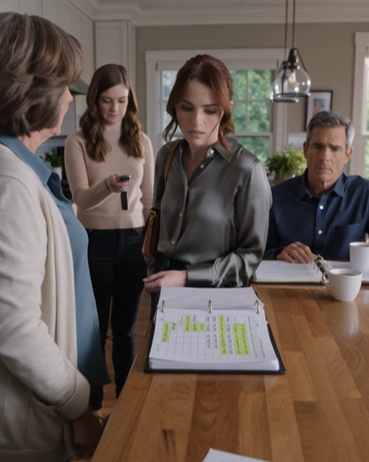
My parents forgot my birthday for the fifth year in a row, then three days later posted photographs of my younger sister standing beside a brand-new SUV with a giant silver bow on the hood. I was 29, worked full-time as an operations manager in Minneapolis, and had quietly sent my parents $700 every month for three and a half years because they kept telling me household expenses were tight. I had also covered repairs, insurance gaps, and my sister Ava’s apartment deposit. Nobody called me on my birthday. Nobody even texted. But the morning after I canceled the next $700 transfer, Mom suddenly needed me at the house “to fix a payment problem.” I went. Then I noticed Dad’s household budget binder open on the kitchen table.
My name is Leah Morgan.
For most of my life, my family described me with three words.
Responsible.
Practical.
Independent.
I used to hear those words as praise.
Eventually, I realized they were instructions.
Responsible meant Leah will handle it.
Practical meant Leah will not ask for much.
Independent meant Leah does not need to be taken care of.
My younger sister, Ava, was different.
She was four years younger than me, funny, social, impulsive, and somehow always in the middle of a crisis.
When she was short on rent, my parents helped.
When she changed jobs, they paid her moving expenses.
When she needed a deposit for a new apartment, Mom called me.
“Your sister is going through a transition,” she said.
I sent $1,600.
Ava texted me three heart emojis and, “You’re the best.”
Two weeks later, she posted photographs from a weekend trip to Nashville.
I said nothing.
Silence had become my specialty.
At 25, my parents forgot my birthday completely.
At 11:30 that night, I bought myself a slice of chocolate cake from a grocery store and ate it at my kitchen counter.
Four days later, Dad asked whether I could cover part of their homeowners-insurance premium until his consulting payment cleared.
I sent the money.
At 26, nobody remembered until two days later.
Mom called, apologized for being busy, then spent twenty minutes telling me about Ava’s new job.
At 27, Dad phoned the morning after my birthday.
I thought he was calling late.
Instead, he needed the password to the utilities portal.
At 28, there was no call at all.
Two weeks earlier, my parents had paid for Ava and a friend to spend a weekend at a lake resort because she had been “under so much pressure.”
I told myself birthdays were childish.
Adults had responsibilities.
People forgot dates.
Then I turned 29.
Nothing.
Not from Mom.
Not from Dad.
Not from Ava.
Three days later, Ava posted the SUV.
Metallic blue.
New.
Silver bow.
Mom and Dad stood behind her smiling.
The caption said:
Best parents ever.
I stared at the photograph for a long time.
Then I noticed the small cardboard sign Mom was holding.
YOU DESERVE IT.
That was the part that hurt.
Not the car.
Not the bow.
Those three words.
I closed the app and opened my bank account.
For forty-two months, I had transferred $700 to my parents on the first Friday of every month.
It started when Dad’s consulting work slowed down.
“Three months,” Mom had said.
“Just until things level out.”
Three months became three and a half years.
I also paid their internet for nearly two years because the account was still attached to my card.
I covered one insurance deductible.
A furnace repair.
A property-tax shortfall.
Ava’s apartment deposit.
I never kept a formal total.
That night, I canceled the recurring transfer.
Then I removed my card from the household internet account.
I emailed Dad every password I managed and told him those accounts were his responsibility going forward.
No accusation.
No birthday speech.
No mention of Ava’s car.
The following morning, Mom called twice.
I did not answer.
Dad emailed:
Did something happen with the transfer?
Still no birthday.
At noon, Ava sent:
Mom says you canceled stuff. What’s going on?
I ignored that too.
The next morning, Mom called from Dad’s phone.
“Leah, come over after work. Something is wrong with the household payments.”
I almost said no.
Then I realized I wanted to see the house while I was no longer solving it.
Ava’s new SUV was parked in the driveway when I arrived.
Mom met me in the kitchen.
Dad was sitting at the table.
Ava leaned against the counter with the new key fob in her hand.
Mom pushed a utility statement toward me.
“This needs to be fixed before Friday.”
I did not touch it.
“You can pay it online.”
Dad frowned.
“We thought your transfer would be there.”
“I canceled it.”
Ava rolled her eyes.
“Seriously? This is because of the car?”
I looked at her.
“No.”
Mom folded her arms.
“Then what is it?”
Before I answered, I noticed Dad’s household budget binder lying open beside his coffee.
At the bottom of the page, my name appeared beside a number I knew by heart:
$700.
Directly beneath my name was another line. Ava vehicle reserve — $700. I looked at Dad. “How long has this been on here?” He reached for the binder. I put my hand on the page first. Mom said, “That’s just internal budgeting.” I took a photograph before closing the binder. At home, I enlarged the image. The same two lines repeated across eighteen monthly columns. My $700 transfer came in. Another $700 was moved into a separate vehicle-savings category. Not every dollar was literally mine. But while my money covered ordinary household expenses, their money was being set aside for Ava. I called my cousin Nadia, who had helped Dad organize tax papers the previous spring. She became quiet when I described the sheet. “I’ve seen that binder,” she said. “Your transfer has been listed as regular household income for years.” “Did you know about the car fund?” “Not at first.” Then she added, “Leah, there’s something you need to ask them.” “What?” “Ask why the vehicle reserve started the exact same month your parents told you the $700 support would only be temporary.”
I barely slept.
Not because the spreadsheet proved my parents had stolen from me.
They had not.
I had voluntarily transferred the money.
They were free to allocate their own income however they wanted.
That distinction mattered.
The part that kept me awake was simpler.
They had told me the household needed temporary help.
Then they treated my temporary help as permanent income and used the breathing room it created to build something for Ava.
For eighteen months.
The car had not appeared suddenly.
It had been a plan.
And I had unknowingly been part of the plan.
The next morning, I opened a spreadsheet of my own.
Forty-two transfers at $700 came to $29,400.
Then I added the internet charges.
$2,184.
The insurance deductible.
$1,250.
Furnace repair.
$1,930.
Ava’s apartment deposit.
$1,600.
A property-tax shortfall.
$1,896.
Smaller transfers I had forgotten added another $1,340.
Total:
$39,600.
I stared at the number.
Almost forty thousand dollars.
I was not wealthy.
I earned good money, but I had a mortgage-sized student-loan balance until I was 26.
I rented a one-bedroom apartment because it let me save.
I packed lunches.
I drove an eight-year-old car.
My family often praised how sensible I was.
Now I understood why my sensibility had been so convenient.
I was funding their margin.
At 9:15, Dad called.
I answered.
“Leah.”
“Hi.”
“You photographed my budget.”
“Yes.”
“That was private.”
“So were my bank transfers until you built them into your household income.”
He became quiet.
“What exactly are you implying?”
“I’m asking a question.”
I opened the photo.
“Why did the Ava vehicle reserve begin the same month you told me the $700 would only last three months?”
Dad did not answer immediately.
Then:
“You’re trying to connect things that aren’t connected.”
“Are they?”
“We saved our money separately.”
“While I paid $700 of your regular expenses every month.”
“That was help you offered.”
“No. Mom asked.”
“You agreed.”
“Yes.”
“And we appreciated it.”
“Did you?”
He sounded offended.
“Of course.”
“Name my birthday.”
Silence.
I had not planned to ask.
The words came out before I could stop them.
Dad said:
“Leah.”
“What date?”
“September…”
He stopped.
My birthday was in June.
I closed my eyes.
“That’s what I thought.”
“This conversation is becoming childish.”
“Five forgotten birthdays are childish?”
“You’re twenty-nine.”
“I know exactly how old I am. That seems to be the part everyone else struggles with.”
Dad exhaled hard.
“I’m not doing this over the phone.”
“Good.”
“Come over tonight.”
“No.”
“We need to talk like adults.”
“I’m talking like one now.”
“Then stop being dramatic.”
That word ended the call for me.
“Goodbye, Dad.”
I hung up.
At work that day, I made three mistakes in a shipping forecast I normally could have completed half-asleep.
My manager, Priya Shah, noticed.
“Go home.”
“I’m fine.”
“That is never said by anybody who is fine.”
I laughed despite myself.
Priya had known me for six years.
We worked for a medical-supply distributor headquartered in Minneapolis.
My job was not glamorous.
I coordinated vendors, inventory forecasts, and the complicated chain of small decisions that kept hospitals from discovering too late that something essential had not arrived.
I liked systems.
Systems told the truth.
If inventory was short, you did not call it sensitive.
If a shipment missed a deadline, you could not solve it by insisting everyone misunderstood.
There was a number.
A cause.
A consequence.
Family was harder.
I went home early.
Then I did something unrelated to my parents.
I drove to an old warehouse studio in Northeast Minneapolis.
For eight months, I had been taking evening furniture-design classes there.
Nobody in my family knew.
That was partly because I had not told them.
It was also because nobody asked what I did after work unless they needed something.
Furniture design had begun as an experiment.
I liked fabric.
Wood.
Joinery.
The way a chair had to be beautiful and still support an actual human body.
My instructor, Naomi Perez, was reviewing student prototypes when I arrived.
She looked at me.
“You’re early.”
“Work went badly.”
“Family?”
“How do you know?”
“You sand aggressively when it’s family.”
I looked at the armrest in my hand.
She was right.
My latest project was a low walnut chair with an upholstered seat and an open rectangular frame through the back.
Naomi walked around it.
“Are you submitting this?”
“To what?”
“The North Loop Independent Design Market.”
I laughed.
“No.”
“Why?”
“Because people who do that are designers.”
She stared at me.
“What do you think you are doing in my studio?”
“Taking a class.”
“You designed this chair.”
“With your help.”
“Every designer gets help.”
She pointed toward two smaller pieces behind me.
“And those.”
I had made a bench and a side table using the same visual idea.
Solid planes separated by deliberate empty spaces.
Naomi had started calling the pieces my “open-frame problem.”
“You have five weeks,” she said.
“For what?”
“To build two more pieces and submit a five-piece collection.”
“I have a job.”
“So does everybody.”
“I’m not ready.”
Naomi looked at me for a long moment.
“Who taught you that being competent means waiting until nobody can criticize you?”
That question followed me home.
The next morning, Mom appeared at my apartment.
I saw her through the peephole.
For a moment, I considered pretending I was not there.
Then I opened the door.
She was holding a manila envelope.
“Can I come in?”
“No.”
Her expression tightened.
“Leah.”
“We can talk here.”
The hallway was empty.
Mom glanced toward the elevator.
“This is ridiculous.”
“Then keep it short.”
She held out the envelope.
Inside were printouts.
Utilities.
Insurance.
Household subscriptions.
A list of expenses.
“The $700 has been part of our budget for years.”
“That is exactly the problem.”
“You knew your father’s consulting income changed.”
“And I helped.”
“You can’t just stop overnight.”
“Yes, I can.”
“What about notice?”
“What notice did I get before my financial help became permanent?”
Mom’s mouth tightened.
“Nobody forced you.”
“You’re right.”
That was the sentence that finally made everything simple.
“You’re completely right. Nobody forced me. So I’m stopping.”
She looked stunned.
“You know what I mean.”
“I do.”
“No, you don’t. Your father and I have responsibilities.”
“So do I.”
“Ava has a car payment now.”
I almost laughed.
“There it is.”
“What?”
“You came to my apartment with your household bills and mentioned Ava’s new car before asking how I am.”
“Because you are making the car into some symbol.”
“It became a symbol the second you put a bow on it three days after forgetting your daughter’s birthday.”
Mom’s face changed.
“We did not intentionally forget.”
“For five years?”
“We have a lot going on.”
“So do I.”
“You never make a fuss about birthdays.”
“Because making a fuss about being forgotten is humiliating.”
She looked away.
Then she said something I remembered for a long time.
“Ava needs more reassurance than you do.”
I stared at her.
“What does that mean?”
“You have always been fine.”
“Fine.”
“Stable. Capable. You don’t fall apart when something goes wrong.”
“So you decided I don’t require care.”
“That isn’t what I said.”
“It’s exactly what you said.”
Mom became defensive.
“You are twisting this.”
“No. I think I’ve spent years untwisting it for you.”
I handed the envelope back.
“I’m not restarting the transfer.”
“What about the internet?”
“Dad has the login.”
“And the insurance portal?”
“Also Dad.”
“Your father hates online accounts.”
“Then he can learn.”
Mom’s eyes filled.
The old version of me would have softened.
I did not enjoy seeing her cry.
But I finally understood that discomfort was not an emergency.
She wiped her face.
“So this is punishment.”
“No.”
“Then what do you call it?”
“Returning your bills to you.”
She stared at me.
“What about us?”
I almost invited her inside.
Tea.
A longer conversation.
An apology I could help her construct.
Then I remembered the spreadsheet.
My monthly transfer on one line.
Ava’s vehicle reserve on the next.
“For now, I need distance.”
Mom left.
My knees shook after the elevator closed.
Boundaries did not feel powerful.
They felt awful.
Then they felt quiet.
I went back inside and submitted my design-market application.
Five weeks later, I had built two additional pieces.
A narrow console table.
A small lounge chair with a woven back.
Naomi helped me photograph all five.
The collection needed a name.
I considered several pretentious ones.
Eventually, I chose Open Frame.
The curator, Grant Ellis, emailed me four days later.
Accepted.
I read the message three times.
Then I called Naomi.
She screamed loudly enough that I had to pull the phone away.
My family did not know.
That became important.
For once, an accomplishment existed before anybody in my family could minimize it, borrow it, compare it, or convert it into proof of something about Ava.
Two weeks after acceptance, Ava called from a number I had not blocked.
I almost ignored it.
Then answered.
“Hi.”
“Can we meet?”
“Why?”
“Because Mom is miserable and Dad is furious.”
“That sounds like a reason for them to call.”
“They have.”
“I’m not ready.”
Ava sighed.
“Can we just get coffee?”
I agreed to a café near my office.
Public.
One hour.
My own exit.
Ava arrived ten minutes late.
The SUV was parked outside.
She put the key fob on the table.
I noticed.
She noticed me noticing.
“Can we not do the car thing?”
“I didn’t say anything.”
“You were looking at the key.”
“It’s a key.”
She rolled her eyes.
“Mom says you’re cutting everybody off because of my birthday gift.”
“No.”
“Then why?”
“Do you know my birthday?”
Ava’s expression froze.
I waited.
She tried June.
That was progress over Dad.
“What date?”
She looked away.
I nodded.
“Okay.”
“Leah, come on.”
“Five years.”
“I’m sorry.”
“You didn’t even know what you were apologizing for until last week.”
“That doesn’t mean I don’t love you.”
I looked at her.
“I’m tired of hearing that sentence used to explain behavior that communicates the opposite.”
She sat back.
“So what do you want? For Mom and Dad to take the car back?”
“No.”
“Then what?”
“I want nothing.”
“That’s not realistic.”
“It’s extremely realistic.”
I took out the photograph of Dad’s budget page.
Ava looked at it.
“What is that?”
“Did you know our parents were saving $700 a month for your car?”
“No.”
“Did you know I was sending them $700 a month for household expenses?”
Her eyes moved back to the page.
“No.”
“They started the same month.”
Ava became defensive.
“That doesn’t mean your money bought my car.”
“I know.”
“Then why are you acting like it did?”
“Because my support made room for their savings.”
“That is not my fault.”
“I didn’t say it was.”
“But you’re treating me like I did something.”
“I’m treating you like somebody who benefited from a system you never bothered to understand.”
Her face hardened.
“Wow.”
“What?”
“You really think you’re better than us now.”
“No.”
I looked at the key.
“I think I was convenient.”
For a few seconds, neither of us spoke.
Then Ava surprised me.
“I didn’t know.”
I believed her.
That did not make her innocent of everything.
But it mattered.
Then she said:
“Mom told me about your furniture thing.”
I stared at her.
“How?”
“She saw something on your page.”
I had posted one studio photograph after the acceptance.
No family reference.
Just the collection title and event date.
Ava leaned forward.
“My brokerage is staging two luxury condos next month.”
There it was.
The turn.
“I showed your chair to my creative director.”
I said nothing.
“She loves it.”
“Ava.”
“She wants to know if we could borrow a few pieces for the campaign. You’d get exposure.”
I almost laughed.
“You came here because you want my furniture.”
“That is not the only reason.”
“But it is a reason.”
“I’m trying to support you.”
“By using my work for your job.”
“That’s how collaborations work.”
“Did you ask before showing my work to your manager?”
Her face changed.
“No.”
“Then tell her I’m unavailable.”
“Leah.”
“No.”
“She already built the mood board.”
“Then correct it.”
“You’re making this personal.”
“It is personal.”
Ava stood.
“You’ve always been like this.”
“Like what?”
“Rigid.”
I looked at her.
“The family liked me flexible.”
She left.
I sat at the table after she was gone.
For the first time, I understood something clearly.
The pattern was not only money.
It was access.
My family had built a version of me who was available.
Available to pay.
Available to fix.
Available to remember passwords.
Available to lend professional skills.
Available to absorb disappointment without changing the relationship.
Once I stopped being available automatically, everyone experienced it as aggression.
That realization became more useful than anger.
The design market approached.
Grant arranged a short profile with a local design magazine.
The interviewer, Hannah Lee, asked why I had called the collection Open Frame.
I could have given a safe answer about geometry.
Instead, I said:
“I became interested in how absence can carry structure. Sometimes the open part of an object is what lets you understand everything around it.”
She asked whether that idea came from architecture.
“Partly.”
“Anything personal?”
I hesitated.
Then answered carefully.
“I’ve spent a lot of my life filling gaps for other people. When I stopped, I learned the gaps had been telling me something.”
I named nobody.
The article went online Tuesday.
By Wednesday, Mom emailed.
People are asking if the article is about us.
I responded:
I did not identify anyone.
Her reply came immediately.
You didn’t have to.
I stared at that sentence.
Then wrote:
That sounds like information worth thinking about.
She did not answer.
Dad finally asked to meet.
I suggested a neutral café.
He arrived with the budget binder.
That surprised me.
He placed it on the table.
“I owe you an explanation.”
“Yes.”
He opened the page I had photographed.
“The $700 transfer was never literally moved into Ava’s car account.”
“I know.”
“We were using your support for utilities and insurance.”
“I know.”
“That meant we had roughly the same amount of our own income available to save.”
“I know that too.”
Dad looked frustrated.
“Then what are we arguing about?”
“Why did you ask me for temporary help if you had enough margin to save $700 every month for Ava?”
He looked down.
That was the question.
The real one.
Finally, he said:
“Because we didn’t think of your support as temporary anymore.”
There it was.
“How did you think of it?”
“As something you were comfortable doing.”
“Why?”
“You never complained.”
I almost laughed.
“You said three months.”
“I know.”
“Did you ever ask whether I wanted to continue?”
“No.”
“Why not?”
Dad rubbed his forehead.
“Because things were working.”
“For you.”
“Yes.”
That honesty was painful and useful.
“And the car?”
He looked out the café window.
“Ava had a difficult few years.”
“So did I.”
“She struggled more visibly.”
“What does that mean?”
“She changed jobs twice. The apartment situation. Her credit. She needed something that made her feel like she was moving forward.”
“A new SUV.”
“We thought it would help.”
“And me?”
Dad looked at me.
“You were doing well.”
“So the reward for doing well was being ignored and paying part of everybody else’s expenses.”
“That isn’t how we saw it.”
“It is how it functioned.”
He did not argue.
Then I asked:
“Why five birthdays?”
Dad looked miserable.
“No good reason.”
“Mom said I don’t need reassurance.”
“She’s wrong.”
“Did you agree with her?”
“For a long time, yes.”
That hurt more than I expected.
“Why?”
“Because you always handled things.”
I sat back.
“Do you hear yourself?”
“Yes.”
Dad closed the binder.
“I do now.”
The main reveal was not that my parents had stolen from me.
They had not.
It was not that Ava secretly manipulated them.
She had not.
It was more ordinary.
They had built their financial plan around the daughter least likely to protest and their emotional plan around the daughter most likely to.
My competence had become a resource.
Ava’s instability had become a reason for investment.
Once those roles existed, everything reinforced them.
If I succeeded, I needed less.
If she struggled, she deserved more.
If I helped, it proved I was capable.
If she needed help, it proved she was vulnerable.
Nobody ever asked whether the system itself was fair.
Until I stopped participating.
Dad asked:
“What do you want us to do?”
“Live without my $700.”
“We can.”
“Good.”
“I mean besides that.”
I thought about it.
“I don’t want repayment.”
He looked surprised.
“I don’t want the car returned.”
“Your mother thinks we should sell it.”
“That’s your financial decision.”
“What do you want from us emotionally?”
That question was harder.
“I don’t know yet.”
He nodded slowly.
“That’s fair.”
“And I’m not coming to family dinners for a while.”
His face fell.
“Okay.”
“You don’t get to make me feel guilty for that.”
“I won’t.”
“Mom might.”
“I’ll handle Mom.”
I almost smiled.
“That would be new.”
He accepted it.
That was the first evidence of change.
Not the apology.
Not the binder.
Accepting a consequence without negotiating it down.
My parents did not collapse without me.
That mattered.
The missing $700 hurt.
So did taking over the accounts I had managed.
Dad started doing occasional consulting work again.
Mom canceled two memberships and changed their cable and phone plans.
They delayed replacing the roof for a year and financed part of it later.
Normal things.
Adult things.
The new SUV became harder.
Ava could afford the payment herself, but not comfortably alongside her rent and student loans.
My parents had planned to cover part of the insurance for the first year.
Without my contribution to their household, they stopped.
Ava kept the car for three months.
Then she sold it and bought a three-year-old hatchback.
Nobody forced her.
She simply looked at the numbers.
When Nadia told me, I felt no satisfaction.
I also did not feel guilty.
Ava was driving.
My parents were housed.
Nothing had been destroyed.
The subsidy had ended.
That was different.
The North Loop design market opened on a Friday evening.
My five pieces occupied a small space along one brick wall.
Naomi helped me adjust the lighting.
Grant changed the placement of the console table twice.
Priya arrived directly from work and brought flowers.
Nadia came with her husband.
I had four guest passes.
Naomi had one.
Priya had one.
Nadia had one.
The fourth went to Carlos, a coworker who had covered several late shifts when I needed studio time.
My parents asked about tickets.
I sent them the public purchase link.
Mom replied:
You used all your guest passes?
Yes.
On friends?
On people who supported the work.
She did not respond for several hours.
Then:
Understood.
That one word mattered.
They bought tickets.
So did Ava.
I did not know whether they would actually come.
Ten minutes before the doors opened, Naomi checked my shirt collar like I was twelve.
“You’re fussing.”
“I’m standing still.”
“Internally.”
Grant came over.
“Two local boutique owners want to speak with you after the first walkthrough.”
My stomach dropped.
“About what?”
“Furniture, Leah. Try to keep up.”
The room filled.
People sat in the chair.
Touched the wood.
Asked questions about upholstery.
A hotel designer photographed the console.
A couple asked whether the bench could be built six inches longer.
For forty minutes, I forgot my family existed.
Then I saw them.
Near the back.
Mom.
Dad.
Ava.
No bow.
No car keys displayed on the table.
Just three people looking at things I had made.
Mom had her hand over her mouth.
Dad examined one of the joinery details.
Ava was reading the collection card.
I felt nervous.
Then something surprising happened.
The feeling passed.
Their reaction mattered.
But it was not controlling the room.
Naomi had already seen me.
Priya had seen me.
Grant had selected the work.
Strangers were asking prices.
My family was finally seeing something that already existed.
That distinction changed everything.
After the showcase presentation, Grant brought over a hotel design director named Celeste Ward.
She wanted to discuss adapting two pieces for a small boutique-hotel renovation.
We exchanged information.
When I finished, Mom was standing several feet away.
She waited until Celeste left.
That was new.
“You made all of these?”
“Yes.”
Mom touched the edge of the walnut chair but did not sit.
“They’re beautiful.”
“Thank you.”
“I didn’t know.”
“You didn’t ask.”
She nodded.
“You’re right.”
Dad joined us.
“I’m proud of you.”
I accepted the sentence.
I did not use it to erase five birthdays.
Both things could exist.
“Thank you.”
Ava approached last.
Her expression was harder to read.
“Congratulations.”
“Thanks.”
She looked at the chair.
“My creative director would have loved this.”
“I know.”
A small smile appeared.
“That was rude.”
“What?”
“Trying to use your work before even congratulating you.”
“Yes.”
She nodded.
“I see that now.”
That was all.
No reconciliation under gallery lighting.
No family hug.
I preferred it that way.
The next morning, a local design site posted photographs from the event.
One picture showed me with Naomi, Priya, and Grant.
My parents were not in it.
Neither was Ava.
That was not revenge.
Those were the people standing beside me when the work was being built.
Support is a verb.
That photograph simply reflected it.
Ava asked to meet again two weeks later.
This time she arrived early.
She drove the hatchback.
I noticed.
She laughed.
“Yes, I sold the SUV.”
“You didn’t have to.”
“I know.”
She wrapped both hands around her coffee.
“It was stupid for my budget.”
I said nothing.
“Dad showed me the binder.”
“Okay.”
“I didn’t know.”
“I believe you.”
“That doesn’t make me innocent.”
I looked at her.
She had learned something.
“I liked being the one they worried about,” she said.
That was unexpectedly honest.
“Why?”
“Because worrying looked like love.”
I understood.
She continued.
“You never seemed to need them.”
“I did.”
“I know now.”
Ava looked down.
“When I got the car, I didn’t ask how they could suddenly afford it after complaining about money for years.”
“No.”
“I didn’t want to.”
That mattered too.
“I knew if I asked too many questions, I might have to feel guilty.”
I let the silence stay.
She continued.
“And when you cut everybody off, I was furious because the system stopped benefiting me.”
“Yes.”
Tears appeared in her eyes.
“I’m sorry.”
I believed that too.
“What happens now?” she asked.
“I don’t know.”
“Can we try to be sisters?”
“Not the old way.”
“What does that mean?”
“No money requests.”
She nodded.
“No professional favors through you.”
Another nod.
“If you want to know about my life, ask before you need something.”
Her face tightened.
“Fair.”
“And don’t turn remembering my birthday into a performance.”
She almost laughed.
“Also fair.”
We left separately.
No hug.
Progress does not always need physical proof.
My parents took longer.
Mom emailed occasionally.
She had a habit of writing too much.
Three paragraphs about weather.
Two paragraphs about Dad.
Then one careful sentence asking how the hotel project was progressing.
I answered when I wanted.
Sometimes immediately.
Sometimes days later.
She stopped asking why.
Dad mailed me a handwritten letter.
It was four pages.
He apologized specifically.
For forgetting birthdays.
For allowing the $700 transfer to become expected.
For comparing my stability with Ava’s struggles and deciding that fairness meant giving her more.
One line stayed with me.
We treated your strength as though it reduced our responsibility to care for you.
That was the first description of the problem that felt accurate.
I wrote back:
I received this. Thank you for understanding the difference.
Nothing more.
He did not push.
Six months after the first design market, Celeste’s hotel renovation installed two versions of my Open Frame chair and a custom bench.
The order was not enough to quit my job.
It was enough to prove the work could exist outside class.
Another small interiors shop asked to carry the side table.
I reduced my work schedule to four days a week and rented a corner in Naomi’s studio.
Priya teased me.
“You finally have a second job.”
“I thought hobbies were supposed to be relaxing.”
“You selected furniture design.”
She had a point.
My thirtieth birthday arrived the following June.
I woke before my alarm.
At 7:04, Naomi texted.
Happy birthday. Studio rule: no sanding today.
At 7:12, Priya sent a ridiculous animated cake.
At 7:31, Nadia called.
I answered because she knew the actual date.
At 8:06, Ava texted.
Happy birthday, Leah. No giant speech. I remembered.
I smiled.
At 8:42, Mom wrote:
Happy birthday. I hope today is yours and nobody asks you to fix anything.
Dad messaged at nine.
Happy 30th. Proud of you. No requests attached.
I did not answer immediately.
That was another change.
A ringing phone was no longer a command.
I made coffee.
Went to the studio.
Worked on a dining chair I had been redesigning for three weeks.
At noon, I sent three short thank-you messages.
That evening, I had dinner with Naomi, Priya, Nadia, Grant, and two other friends.
No surprise SUV.
No expensive trip.
No spectacle.
Priya bought a small cake.
Naomi complained that the icing was badly proportioned.
Grant told her nobody normal evaluates cake structurally.
I laughed until my face hurt.
For the first time in years, my birthday did not feel like evidence.
It was simply my birthday.
My parents were not there.
Ava was not there.
That was okay.
Six weeks later, I agreed to have lunch with all three of them.
Public restaurant.
No financial requests.
No forced reunion.
Mom brought no gift.
Dad brought no binder.
Ava arrived on time.
That might have been the biggest surprise.
We talked about ordinary things.
Dad’s consulting project.
Mom’s garden.
Ava’s job.
My furniture orders.
Nobody asked me for money.
When the check came, Dad reached for it.
Then stopped.
“Separate?”
I smiled.
“Yes.”
Four checks.
Four adults.
It was almost absurdly normal.
I left the restaurant feeling neither healed nor wounded.
Just lighter.
The SUV photograph still existed online.
I never asked Ava to delete it.
The budget page remained saved on my laptop.
I never showed it publicly.
I did not need strangers to convict my family.
The records had served their purpose.
They made the pattern visible enough that I could stop arguing with myself.
That was what changed my life.
Not the car.
Not the missed birthday.
Not even the $39,600.
It was seeing my place in their system clearly.
I had been the dependable daughter, so dependence on me became invisible.
Ava had been the struggling daughter, so investment in her became automatic.
My parents called that balance.
It was not.
Once I stopped financing it, everyone had to build something more honest.
Dad returned to work.
Mom reduced expenses.
Ava learned what her lifestyle actually cost.
I learned that being capable did not obligate me to absorb every gap.
My creative work grew because I finally redirected time and money toward something I wanted.
Nobody was ruined.
That matters to me.
I did not win because somebody else lost.
I won because my life stopped requiring my family to lose before I was allowed to choose myself.
A year after the SUV post, I visited my parents’ house for Dad’s birthday.
The household budget binder was still on the same shelf.
I noticed it when I went into the kitchen.
Dad noticed me noticing.
He took it down.
Opened the newest page.
No line with my name.
No family-support transfer.
No Ava reserve.
Just income.
Bills.
Savings.
Ordinary numbers belonging to the people who lived there.
Dad tapped the page.
“We finally learned to budget without imaginary income.”
I looked at him.
“Was I imaginary?”
He winced.
“That came out wrong.”
I laughed.
For once, he laughed too.
Mom came into the kitchen carrying plates.
“What’s funny?”
“Dad called me imaginary.”
“I did not.”
Ava shouted from the dining room.
“Sounds accurate. Leah only appears when someone needs a spreadsheet.”
There was a moment when the old pattern could have returned.
Then Ava added:
“Which is why nobody is asking her for one.”
I looked at her.
She smiled.
Something in me relaxed.
Not because everything was fixed.
Because they were finally able to see the pattern while it was happening.
That is what accountability eventually looked like in our family.
Less dramatic than the original hurt.
More useful.
I never restarted the $700 transfer.
I never went back to managing their accounts.
I help sometimes.
Birthdays.
Emergencies.
Things I choose.
The difference is that help now has an ending.
A reason.
A yes I actually mean.
And sometimes a no.
Nobody loves the no.
They survive it.
So do I.
The photograph of Ava beside the blue SUV once felt like proof that I mattered less.
Now, when I think about it, I see something else.
A receipt.
Not for money.
For a role I had outgrown.
That photograph showed me the exact moment my family expected me to keep funding a system that did not even remember to call.
I stopped.
They had to adjust.
So did I.
And somewhere between canceling one $700 transfer and building my first chair for a hotel lobby, I learned something my family had accidentally trained out of me.
Being dependable does not mean being endlessly available.
Being independent does not mean you deserve less care.
And being loved in theory is not enough when every practical choice tells you where you actually rank.
I still love my family.
That is no longer the same as financing them.
I still care about Ava.
That is no longer the same as being her backup plan.
I still answer Mom’s calls.
Not every one.
I still help Dad with technology.
Only when he asks politely.
And every June, I buy myself a small chocolate cake.
Not because I expect them to forget.
They have not forgotten again.
I buy it because the woman who sat alone at 25 deserved one.
She kept making herself useful because she thought usefulness would eventually become love.
I know better now.
Love can include help.
But when help is the price of staying visible, something is wrong.
The best thing I ever did for my family was stop paying that price.







