My Family Banned My Daughter From My Sister’s Gala—Then the Grant File Opened
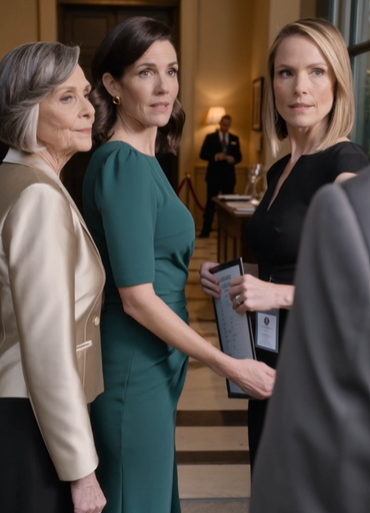
Five hours before my sister’s $1.8 million charity gala, my mother texted me and told me not to bring my seven-year-old daughter because “Brooke needs one night without a scene.” Mia had never caused a scene. At a donor luncheon the year before, microphone feedback had overwhelmed her and she had quietly asked me to take her outside. My family turned that moment into proof that she was difficult. This time, our dresses were already hanging in the hotel closet, our names had been confirmed on the guest list for weeks, and Mia was drawing a congratulations card for the aunt she adored. Then I discovered our seats had been reassigned to corporate sponsors. I still might have stayed away—except I had a professional obligation at the gala my sister apparently did not understand.
My name is Natalie Reed.
I’m thirty-eight, divorced, and I live in Denver with my daughter, Mia.
For most of my adult life, my older sister Brooke has been the person my parents describe first.
Brooke is polished.
Social.
Photogenic.
The kind of person who remembers donors’ spouses, board members’ favorite restaurants, and exactly where to stand when someone important is taking a picture.
She chaired fundraising for CityBridge Arts Network, a nonprofit that ran after-school arts programs across several Denver neighborhoods.
My parents loved telling people what she did.
My mother, Elaine, called Brooke “the one who brings people together.”
Nobody ever seemed interested in explaining what I did.
I had spent fifteen years in procurement technology, helped build and sell a software company, and later joined the board of Westhaven Community Foundation.
Six months earlier, the trustees elected me chair.
Mom knew.
I sent her the announcement.
She replied with a photograph from one of Brooke’s donor dinners.
I stopped trying after that.
CityBridge had applied to Westhaven for a three-year, $1.8 million grant.
The money would expand neighborhood art classes, pay instructors, and renovate two rented program spaces.
Because Brooke was my sister, I disclosed the relationship immediately and removed myself from scoring the application.
An independent committee handled the evaluation.
My role at the gala was supposed to be administrative.
If the committee cleared the final conditions, I would announce that the grant could be released.
If it didn’t, I would explain what remained unresolved.
Brooke knew Westhaven was reviewing the grant.
She apparently never bothered to understand my role.
That afternoon, Mia was sitting cross-legged on the hotel bed drawing a gold necklace on Brooke’s card when Mom’s message arrived.
Don’t come tonight.
Brooke needs a smooth event, and Mia gets overwhelmed at these things.
I read it twice.
Then Dad added:
Please don’t make us involve event staff.
Mia looked up.
“Are we leaving soon?”
I turned my phone face down.
“Plans changed a little.”
Her face fell.
“I can be quiet this time.”
That sentence hurt more than my mother’s message.
“You don’t have to earn an invitation by being quiet.”
She stared at the marker in her hand.
I called the gala office.
The coordinator sounded confused.
“Your family seats were released this morning.”
“By whom?”
“Brooke Lawson.”
My sister.
“What about my foundation credential?”
A pause.
“That’s still active. You’re listed through Westhaven.”
I called Daniel Cho, Westhaven’s executive director.
He already knew something was wrong.
“Natalie, compliance sent another question about the sponsor materials.”
“What question?”
“I’d rather show you.”
I looked at Mia.
I could have stayed in the hotel.
But Westhaven had a responsibility independent of my family’s behavior.
So we crossed the street to the museum shortly before six.
Daniel had arranged a quiet education room where Mia could draw if she wanted a break.
We entered through the side registration entrance.
Mom saw us first.
Her expression hardened immediately.
“I told you Mia isn’t welcome tonight.”
Mia’s fingers tightened around mine.
Before I could answer, Brooke stepped over holding the printed guest list.
“Those family seats are gone, Natalie.”
She tapped two names near the top.
“They went to sponsors who actually help this event.”
I felt my face get hot.
Mia moved closer against my side.
Then Daniel appeared behind the registration desk carrying a dark blue compliance folder.
He looked at Brooke.
Then at me.
“Natalie, compliance needs you now.”
Daniel opened the folder on a quiet table beside the registration area. The first page was a sponsor packet distributed that afternoon. Westhaven’s name appeared beside a large “confirmed lead grant” banner. Our $1.8 million had never been confirmed. The application was still conditional. Daniel showed me three matching-gift forms from companies that had pledged money after being told Westhaven’s grant was secured. Together, they totaled $320,000. Then he showed me an email from Brooke asking CityBridge staff to route every Westhaven question directly through her. She had sent it nine days earlier. I looked toward the ballroom doors. Brooke was still standing beside Mom. “Did CityBridge’s executive director approve this?” “Not that we can find.” Daniel turned another page. A revised grant budget had arrived two weeks earlier. One vendor line had grown to $284,000. The company name meant nothing to me. Blue Lantern Productions LLC. Beside it, the review team had written: Ownership disclosure incomplete. I asked Daniel what that meant. “We requested beneficial ownership information twice.” “And?” He closed the folder halfway. “Brooke answered every other question.” I looked at the vendor name again. Daniel lowered his voice. “This is the only one she kept avoiding.”
I knew enough about grants to understand what Daniel was not saying.
A missing ownership disclosure did not automatically mean fraud.
It could be administrative sloppiness.
A vendor could have restructured.
Someone might have uploaded the wrong attachment.
There were reasonable explanations.
The problem was everything surrounding it.
The premature public claim.
The matching pledges tied to that claim.
The communication rerouting.
And now a large vendor contract that had somehow become the only question Brooke refused to answer.
“Do we have to announce tonight?”
Daniel nodded.
“The event program says Westhaven will present the grant status at seven-fifteen.”
“Can we cancel?”
“We can.”
I looked toward the ballroom.
Through the glass doors, I could see guests moving beneath suspended lights.
Brooke had spent almost a year building toward this night.
Corporate sponsors.
Local philanthropists.
Board members.
Photographers.
My parents had treated it like a family coronation.
If Westhaven disappeared from the program without explanation after CityBridge had publicly told donors the grant was confirmed, that would create a different kind of confusion.
“What does the committee recommend?”
Daniel opened his tablet.
“The independent grants committee met at four.”
I had not participated.
That had been deliberate.
“The vote was unanimous.”
My stomach tightened.
“To approve?”
“No.”
He looked at me.
“To withhold release until the financial questions are resolved.”
I closed my eyes briefly.
There it was.
Not my decision.
Not my revenge.
Not something created by Mom’s message.
The professional process had reached the same problem before my family tried to keep Mia out.
That mattered.
“Then we state that.”
Daniel nodded.
“Nothing more.”
“Nothing more.”
I asked him to remove any language that could sound punitive.
No deceptive.
No improper.
No accusation about motives.
Just facts.
The grant had not been awarded.
Certain financial and disclosure conditions remained unresolved.
Release was not authorized.
CityBridge could respond through the normal process.
That was it.
Before we entered the ballroom, I crouched beside Mia.
“You don’t have to stay for my work part.”
She looked through the doors.
“Is Aunt Brooke mad?”
“Probably.”
“Because of me?”
“No.”
I said it immediately.
“This is not about you.”
She studied my face.
“Then why did Grandma say I shouldn’t come?”
There are questions you want to answer perfectly as a parent.
Usually you get five seconds.
“Grandma made a bad choice because she was worried about Aunt Brooke’s event.”
“Did I do something bad?”
“No.”
“That’s the important part.”
Mia nodded.
Daniel’s staff member showed us the education room.
Paint.
Paper.
Books.
A low table.
Two museum educators.
Mia chose to stay there during the formal announcement.
“I’ll come get you after.”
“Okay.”
She held out Brooke’s congratulations card.
“Should I give this to her?”
My throat tightened.
“You can decide later.”
She put it back in my purse.
That tiny action hurt.
Not because the card mattered.
Because a seven-year-old was learning that love and access were not always mutual.
I walked into the ballroom alone.
Brooke saw me immediately.
Her expression changed from public smile to private fury.
Mom was beside her.
Dad stood near one of the sponsor tables.
Brooke reached me first.
“What did Daniel show you?”
“Grant materials.”
She lowered her voice.
“You had no reason to involve yourself.”
“I’m not scoring your application.”
“You know what I mean.”
“No.”
I really didn’t.
She stepped closer.
“This is my event.”
“The grant is Westhaven’s.”
Mom joined us.
“Natalie, please.”
I looked at her.
Five hours earlier she had been willing to involve event security to keep me and Mia out.
Now her tone was suddenly gentle.
“Tonight is important to Brooke.”
“I know.”
“Then don’t make a professional issue out of a family misunderstanding.”
That sentence almost made me laugh.
“The professional issue existed before your text.”
Brooke’s face tightened.
“What issue?”
“You know what compliance has been asking.”
She looked away.
That was enough.
“Who owns Blue Lantern Productions?”
Silence.
Mom looked confused.
“What is she talking about?”
Brooke spoke quickly.
“A vendor.”
“Who owns it?”
“Natalie, this is not the place.”
“Then answer tomorrow.”
She folded her arms.
“It’s a legitimate production company.”
“That wasn’t my question.”
Mom looked between us.
“Brooke?”
My sister’s eyes flashed.
“Kyle has an interest.”
There it was.
Not full ownership yet.
An interest.
Her husband.
The same Kyle who had spent six months talking about how expensive nonprofit production work was.
The same Kyle whose company, Lumen Stageworks, had produced Brooke’s last two major events.
I had never heard of Blue Lantern.
“Is Blue Lantern Lumen?”
Brooke looked toward the ballroom.
Not at me.
“Kyle reorganized some entities last year.”
I felt sick.
“You certified no related-party vendors.”
“It isn’t that simple.”
“It is exactly that simple on the disclosure form.”
Mom said:
“This can be corrected.”
Brooke grabbed onto that immediately.
“Exactly.”
I looked at her.
“Compliance asked twice.”
“I was getting the documents together.”
“Then why announce the grant?”
Her voice dropped.
“Because it was going to happen.”
That sentence changed how I understood everything.
Not just the gala.
The entire application.
Brooke had treated review as a formality.
Westhaven was supposed to approve.
Matching donors were supposed to follow.
Her board seat was supposed to come next.
Any question was merely an obstacle to the result she had already announced.
“Brooke.”
I kept my voice low.
“You told sponsors money was confirmed before the conditions cleared.”
“We needed momentum.”
“You used Westhaven’s name.”
“The money was practically approved.”
“No.”
She looked at me with genuine frustration.
“You are chair.”
And finally, there it was.
Not ignorance.
Expectation.
She thought I could make the outcome match the announcement.
Maybe that was why my seats had been removed.
Maybe she did understand my role after all.
Not professionally.
Familially.
Natalie fixes things.
Natalie smooths things.
Natalie does not embarrass Mom.
Natalie does not ruin Brooke’s night.
I suddenly understood why the exclusion happened hours before the gala instead of weeks earlier.
Brooke needed me close enough to remain available.
Just not visible as family.
“You thought I’d sign off.”
Her expression told me.
Mom stepped in.
“Natalie, whatever paperwork is incomplete can be fixed Monday.”
“The announcement is in twelve minutes.”
“Then say something general.”
“No.”
Brooke stared at me.
“You would humiliate me over documentation?”
“No.”
“The committee voted to withhold release.”
For the first time, she went pale.
“What?”
“The independent committee.”
“You let them vote without telling me?”
“That is how independent review works.”
“This is my organization.”
“No.”
I shook my head.
“You chair fundraising.”
“CityBridge belongs to its mission and board, not you.”
Her face hardened.
“You always do this.”
“Do what?”
“Wait until I have something good and find a way to make it about rules.”
That accusation was so old I almost knew the next sentence before she said it.
“You’ve always been jealous because Mom and Dad were proud of me.”
There it was.
Childhood arriving at a grant review.
I could have answered.
I didn’t.
Daniel appeared at the edge of the ballroom.
Two minutes.
I looked at Brooke.
“Send compliance the ownership documents.”
Then I walked away.
At seven-fifteen, CityBridge’s executive director, Priya Shah, stepped onto the stage.
That was another important detail.
Brooke was not the executive director.
She was not the CEO.
She chaired fundraising.
Priya had spent fifteen years building community programs long before my sister joined the board.
She introduced Daniel first.
Then me.
“Natalie Reed, chair of Westhaven Community Foundation, will present the status of Westhaven’s three-year funding review.”
Across the room, Dad looked startled.
Mom looked worse.
Apparently, they really had not understood what “chair” meant.
I reached the lectern.
The room was quiet.
There were maybe two hundred guests.
My hands felt cold.
I thought about Mia in the education room.
Then about the promotional board at registration.
I read exactly what had been approved.
“Westhaven Community Foundation has not released or formally awarded the proposed $1.8 million grant to CityBridge Arts Network.”
A visible shift moved through the room.
“Final review identified unresolved disclosure, matching-fund, and budget questions that require clarification before any release can occur.”
Someone at a sponsor table leaned toward another guest.
“The independent committee has therefore withheld authorization at this time.”
I took one breath.
“CityBridge may respond through Westhaven’s standard review process.”
Nothing about Brooke.
Nothing about Kyle.
Nothing about Mom.
Then:
“We also want to correct promotional material describing Westhaven’s funding as confirmed. That description is inaccurate.”
That was the sentence that mattered publicly.
Because guests had donated based on it.
I stepped away.
No applause.
No dramatic gasp.
Just the sound of a room recalculating.
Brooke approached the microphone before Priya could stop her.
“There appears to be a procedural delay.”
Her smile looked painful.
“Nothing about tonight’s mission has changed.”
That part was true.
Then she made a mistake.
“This review became complicated because of an unfortunate family disagreement.”
I stopped.
Priya looked at me.
Daniel did too.
Brooke had just publicly suggested the grant issue came from personal conflict.
That required correction.
I returned to the microphone.
“The financial questions were documented before today.”
I kept my voice even.
“My family relationship was disclosed months ago, and I did not participate in application scoring.”
Then I stepped away again.
No argument.
No public airing of Mom’s message.
No mention of Mia.
Brooke still looked like I had slapped her.
I left the ballroom.
Mia was making a purple paper bird.
“Done?”
“Done.”
“Fries?”
“Absolutely.”
We left.
That was the action I had chosen.
Professional truth inside.
Personal distance outside.
The consequences began before dessert.
The first corporate sponsor paused its $120,000 matching commitment.
Another asked Priya for written confirmation of what had been represented during solicitation.
A third sponsor wanted to know whether its pledge depended on Westhaven’s award.
Those were not my calls.
They were natural reactions.
I turned off my phone.
Mia and I ate fries in the hotel restaurant.
She asked whether Brooke liked her card.
“I didn’t give it to her.”
“Why?”
“Tonight wasn’t a good time.”
She looked disappointed.
Then:
“Can I keep it?”
“Of course.”
She folded it carefully and put it in her backpack.
My mother called fourteen times that night.
Brooke called eleven.
Dad called twice.
Priya called once.
I answered Priya.
She sounded exhausted.
“I’m sorry.”
“For what?”
“For the guest-list issue.”
“You didn’t do it.”
“I should have known.”
“You had a gala to run.”
“Natalie, your sister told our events manager that you’d decided Mia couldn’t attend.”
I closed my eyes.
There it was.
Another rewritten choice.
“She said that?”
“Yes.”
“She also said the family seats should go to sponsors because you preferred to attend only in your Westhaven role.”
I looked toward the bed.
Mia was asleep.
Brooke had not merely uninvited us.
She had told staff it was my decision.
“Preserve that email.”
Priya became quiet.
“I already did.”
She knew.
The next morning, Westhaven’s grants team received the ownership documentation it had been requesting.
Blue Lantern Productions LLC was wholly owned by Kyle Lawson.
Brooke’s husband.
Not an “interest.”
Not a distant connection.
His company.
The proposed contract was $284,000 over three years.
The application certification Brooke had signed stated that no board member, officer, committee chair, or immediate family member held a financial interest in a proposed vendor.
Her signature was on the line beneath it.
That was Main Reveal one.
Main Reveal two arrived three days later.
CityBridge’s audit committee requested internal email records.
Priya voluntarily supplied them.
Brooke had not only known the grant remained conditional.
She had written to Kyle two weeks before the gala:
Once we announce Westhaven publicly, they won’t want the embarrassment of backing away.
That sentence became the center of everything.
She had expected social pressure to replace compliance.
The email continued:
Natalie won’t embarrass Mom in front of donors.
I stared at those words for a long time.
There I was.
Not sister.
Not foundation chair.
Not person.
Leverage.
Brooke had built her grant strategy partly around my habit of keeping family peace.
Mom’s gala message made sense now too.
Mia was not the real risk.
I was.
Brooke wanted me available professionally but controllable personally.
Keeping Mia out made it easier to frame my absence from the family table as my own choice.
Replacing our seats with sponsors made Brooke look more successful.
And if questions arose, everyone expected me to smooth them over rather than publicly contradict her.
I had spent years teaching them that expectation.
Not intentionally.
But I had.
When Brooke needed introductions after joining CityBridge, I made them.
When Mom asked me to review a donor database, I did it.
When Dad wanted advice on software contracts, I helped.
I rarely said no.
Then I wondered why no one seemed aware that yes was optional.
CityBridge’s board suspended Brooke’s fundraising authority pending review.
Kyle’s contract was frozen.
The matching pledges remained paused.
Brooke called me from Dad’s phone because I had stopped answering hers.
I picked up before I checked the number.
“Natalie.”
I almost hung up.
“Wait.”
Her voice sounded smaller.
“Please.”
I stayed silent.
“You got what you wanted.”
“No.”
“You humiliated me in front of every donor I know.”
“You told those donors Westhaven money was confirmed.”
“You could have handled it privately.”
“The public claim required a public correction.”
“You always have an answer.”
“No.”
“I have dates.”
She started crying.
I felt terrible.
That did not make me wrong.
“Kyle is losing the contract.”
“The board is reviewing it.”
“Same thing.”
“It isn’t.”
“His company committed to equipment.”
“That was his business decision.”
“He did it because we expected the contract.”
“Before it was approved.”
Silence.
Then she said:
“Mom and Dad helped us with the deposit.”
I leaned back.
Of course.
“How much?”
“That isn’t your business.”
“You called me.”
She exhaled.
“Forty thousand.”
My parents had put money into Kyle’s production expansion based on a contract that depended partly on grant funds not yet approved.
The family had financially committed itself to Brooke’s version of reality.
That explained Mom’s panic.
It did not justify anything.
Brooke’s voice sharpened.
“You can fix this.”
“No.”
“You’re chair.”
“I cannot override an independent review because you’re my sister.”
“But you can influence it.”
That sentence ended my remaining uncertainty.
She still had not understood.
“Brooke, do not ask me again.”
She hung up.
Mom came to Denver two days later.
Not to my house.
She waited in the lobby of my office building.
Security called upstairs.
I almost sent her away.
Then I agreed to ten minutes in a conference room.
She sat across from me holding her purse in both hands.
“You’ve made your point.”
“No.”
She looked irritated.
“Natalie.”
“This was never a point.”
“Brooke has lost her committee authority.”
“CityBridge did that.”
“Kyle has bills.”
“I didn’t sign his contracts.”
“Your father and I gave them money.”
“That was your choice.”
She stared at me.
“How can you be this cold?”
That word.
Cold.
The same word people use when a woman stops making herself financially or emotionally convenient.
“You told my daughter she was embarrassing.”
Mom’s face changed.
“I did not say that.”
I took out my phone.
The text was still there.
Brooke needs one night without a scene.
“Mia read enough of your expression to tell me she could be quiet.”
Mom looked down.
“She had trouble last year.”
“She asked to leave a loud room.”
“She disrupted the table.”
“No.”
I spoke slowly.
“The microphone squealed.”
“She covered her ears.”
“She asked me to go outside.”
“You grabbed my wrist and told me to make her sit still.”
Mom looked away.
I continued.
“Brooke said people were watching.”
“And now, one year later, you excluded her so Brooke could have prettier photographs.”
“That is unfair.”
“Then why were our seats reassigned to sponsors?”
Silence.
That was answer enough.
Mom tried another route.
“Brooke is your sister.”
“Mia is my daughter.”
“I love Mia.”
“Then stop describing her normal needs as defects.”
She began to cry.
I hated it.
Still.
I waited.
Finally she said:
“What do you want us to do?”
That question mattered.
“Nothing about the grant.”
She looked surprised.
“You and Dad stay out of it.”
“Brooke answers the board.”
“Kyle answers the vendor questions.”
“Westhaven handles its own process.”
“What about us?”
I looked at her.
“No visits with Mia until you can explain what you did without blaming her.”
Mom looked wounded.
“You’re keeping my granddaughter from me?”
“I’m protecting her from learning that inclusion depends on being convenient.”
“That is dramatic.”
“No.”
“It’s specific.”
She left angry.
I cried after she left.
Boundaries do not feel powerful when you love the person on the other side.
Sometimes they feel awful.
The board review took seven weeks.
I participated only where my chair role required procedural oversight.
I remained recused from judging CityBridge’s merits.
Westhaven hired outside counsel to verify that the process was independent.
I wanted that.
Not because I doubted the committee.
Because Brooke had already begun suggesting the review was personal.
If the decision could not survive scrutiny without my emotions, then it should not survive.
The final CityBridge findings were straightforward.
Brooke had failed to disclose Kyle’s ownership of Blue Lantern.
She had described non-binding matching letters as secured commitments.
She had authorized promotional material stating Westhaven’s grant was confirmed.
She had attempted to centralize foundation communication through herself rather than the executive director and finance team.
The revised budget also shifted $91,000 away from neighborhood instruction and into event production, marketing, and donor programming.
That last item bothered me most.
The application’s entire argument was about expanding classes for kids.
Somewhere between approval drafts and gala planning, instructors became less important than staging.
CityBridge’s board acted.
Brooke resigned as fundraising chair before the board could vote on removal.
Kyle’s three-year contract was canceled.
CityBridge paid his company only for legitimate work already delivered.
The $1.8 million application was withdrawn rather than denied.
Priya asked whether the organization could apply again in the future.
Daniel told her yes.
New application.
Clean disclosures.
Board-approved budget.
Independent process.
That was important.
The neighborhood kids were not Brooke.
The nonprofit’s teachers were not Kyle.
Accountability did not require destroying the whole organization.
My parents did not see it that way.
Dad called after Brooke resigned.
“Your sister has spent four years building that network.”
“I know.”
“She’s finished.”
“No.”
“She lost one role.”
“You know what I mean.”
“I actually don’t.”
Dad became angry.
“People are talking.”
“That happens when a public fundraising claim turns out to be inaccurate.”
“You could have protected her.”
There it was again.
“What does protecting Brooke mean to you?”
Silence.
“Lying?”
“I didn’t say that.”
“Releasing money with unresolved disclosures?”
“No.”
“Pretending the vendor wasn’t Kyle?”
“Enough.”
Dad said it the way he had my whole childhood.
Enough meant:
The conversation has reached something I don’t want to hear.
I did not stop.
“Dad, you were willing to let Mia think she was the family problem because it made Brooke’s event easier.”
“That is not fair.”
“It is exactly what happened.”
He hung up.
A week later, the family made one final attempt to transfer the consequences back to me.
Brooke emailed a proposed statement.
She wanted me to sign it personally, not as Westhaven chair.
It said the grant announcement had “become confused with an unrelated family disagreement” and that Brooke had never intended to misrepresent Westhaven’s position.
I read it once.
Then sent one reply.
I won’t sign this.
Ten minutes later, Mom called.
“Why?”
“Because it isn’t true.”
“You don’t have to change the review.”
“Then what does the statement accomplish?”
“It gives Brooke context.”
“No.”
“It gives Brooke an excuse.”
Mom’s voice hardened.
“You’ve already won.”
That sentence told me everything.
To her, this was still a contest between sisters.
Not governance.
Not truth.
Not a child being excluded.
A contest.
“I wasn’t trying to win.”
“Of course you were.”
“You walked into that gala knowing what would happen.”
“I walked in because I was scheduled to perform a professional duty.”
“You could have stayed away.”
“And let Brooke tell donors $1.8 million was approved?”
Mom said nothing.
Then she made the request I had somehow expected without expecting it.
“Kyle’s company absorbed significant cancellation costs.”
I waited.
“Your father and I helped with part of it.”
“Okay.”
“They still have a gap.”
“How much?”
“About ninety-seven thousand.”
“No.”
“You don’t even know what I was going to ask.”
“Yes, I do.”
Mom became indignant.
“It could be a loan.”
“No.”
“You can afford it.”
I closed my eyes.
There it was.
The family equation.
Natalie can afford it.
Therefore Natalie should erase the consequence.
“No.”
“Brooke is your sister.”
“Yes.”
“And Mia is my daughter.”
Silence.
“The two things are not connected.”
“They became connected when you used my daughter’s supposed behavior to manage me around Brooke’s gala.”
Mom started crying.
I did not change my answer.
That was my final decision.
No money.
No statement.
No interference.
No reopening access to Mia because people were uncomfortable with consequences.
For three months, I barely saw my parents.
Brooke and I had no contact.
Dad sent birthday gifts for Mia through the mail.
I returned the first package because it included a note saying:
Grandma and Grandpa hope Mom lets us see you soon.
I told Dad directly:
Do not put her in the middle.
The second gift arrived with only:
Happy Birthday, Mia. We love you.
I gave it to her.
A boundary can be precise.
It does not have to become total destruction.
CityBridge stabilized faster than my family did.
Priya reorganized fundraising oversight.
Vendor conflicts required independent procurement review.
Matching commitments had to be verified by finance before appearing in sponsor materials.
Board members received governance training.
Brooke hated that I knew any of this.
I knew because Westhaven received formal updates as a potential future funder.
Nine months after the gala, CityBridge submitted a new application.
Not $1.8 million.
$950,000 for one year.
Narrower program.
No gala costs.
No Kyle.
Verified matching support.
I recused myself completely.
The independent committee approved it.
Daniel told me only after the vote.
I cried at my desk.
Not because Westhaven had vindicated anyone.
Because the work survived.
Children still got classes.
Teachers still got paid.
The organization became more honest.
That was a better ending than collapse.
Brooke learned about the new grant publicly.
She emailed me that night.
One sentence.
So they get the money after everything you did to me.
I did not answer.
She still thought the grant belonged to her.
Four months later, another email arrived.
Longer.
I almost deleted it.
Instead I read.
She did not apologize immediately.
She explained that losing the fundraising role had forced her to take a development job at a smaller organization where she had no family network and no authority over procurement.
Her new boss required conflict disclosures for everything.
She wrote:
I used to think those rules were for people who couldn’t be trusted. Now I understand they exist because people trust themselves too much.
That line made me keep reading.
Then:
I told myself I was protecting the gala when I removed you and Mia. I was actually protecting the version of the night I wanted everyone to see.
Better.
Then:
What Mom said about Mia was wrong. What I said last year was wrong. She was a child asking for quiet, and I treated her like an inconvenience because I was worried donors would judge me.
I stopped.
Read it again.
There.
Specific.
No passive voice.
No:
I’m sorry you were hurt.
No:
Things got out of hand.
She named it.
Brooke continued.
I also knew Westhaven had questions before the gala. I thought if enough donors believed the grant was final, the foundation would be under pressure to release it. I expected you to help because you always helped.
That was the hardest sentence.
Also the most honest.
She ended:
I don’t expect you to answer. If Mia ever wants the card back that she made, I’d like to see it someday. Not now. Only if she wants.
I printed the email.
Not because I had forgiven her.
Because for the first time, it sounded like an apology that might deserve consideration later.
I did not reply that night.
Three weeks later, I wrote:
Thank you for saying exactly what you did.
Nothing else.
That was enough.
Mom took longer.
Almost a year after the gala, Mia and I were in Denver at a Saturday arts workshop funded through CityBridge’s new program.
I had not chosen the site.
The universe does not need to arrange perfect symbolism for lessons to matter.
It was simply the closest Saturday workshop with open registration.
Mia chose a table near the door.
Nobody questioned it.
She wore soft noise-reducing earplugs when the room became loud.
Nobody called attention to them.
The instructor asked if she wanted blue or green paint.
Mia chose both.
That was the level of drama.
Near the end, I saw Mom standing outside through the glass.
I froze.
She did not come in.
She waited.
I stepped outside.
“What are you doing here?”
“Brooke told me about the program.”
I crossed my arms.
Mom looked older than she had a year earlier.
Not dramatically.
Just tired.
“I wanted to apologize.”
“I’m listening.”
She looked through the glass at Mia.
Then back at me.
“I made Brooke’s event more important than whether Mia felt wanted.”
I said nothing.
“I told myself she was sensitive.”
“I told myself you were making things harder by accommodating her.”
She swallowed.
“What I should have seen was that she asked for one quiet break at lunch.”
“Yes.”
“I made that into a character flaw.”
“Yes.”
Her eyes filled.
“And then I waited until you had traveled to Denver to tell you not to bring her.”
“Yes.”
“I was cruel.”
That word mattered because I had never used it with her.
She chose it herself.
“I’m sorry.”
I believed her.
Believing an apology is not the same as knowing what access should follow.
“I’m not ready to go back to normal.”
Mom nodded.
“I don’t think normal was very good.”
That surprised me.
“No.”
“It wasn’t.”
We stood quietly.
Then she asked:
“Can I write to Mia?”
“Not yet.”
Her face fell.
She still nodded.
“Okay.”
That was progress.
Six weeks later, I let Mom send a card.
No guilt.
No request to visit.
Just:
I’m sorry I made you feel like being comfortable was something you had to earn. You didn’t do anything wrong.
Mia read it.
Then asked:
“Can Grandma come to my school art show?”
I made myself ask the question that mattered.
“Do you want her there?”
“Yes.”
So Mom came.
She sat near the aisle.
Mia wore her earplugs during the loud part.
Mom said nothing about them.
Afterward, she hugged Mia only after Mia stepped toward her first.
Small things.
Enormous things.
Dad apologized later.
More awkwardly.
He admitted he had gone along with Mom because “Brooke had so much riding on the gala.”
I asked:
“What did Mia have riding on it?”
He looked confused.
Then understood.
“Whether she felt like family.”
“Yes.”
He closed his eyes.
“I’m sorry.”
We rebuilt slowly.
Brooke even saw Mia again eventually.
Not at a gala.
Not at a fundraiser.
A park.
Forty-five minutes.
No donors.
No board members.
No photographers.
Brooke brought nothing but herself.
Mia still had the congratulations card in a drawer at home.
I did not remind her.
Three months later, while cleaning her room, she found it.
“Do you think Aunt Brooke still wants this?”
“I don’t know.”
“Can I ask her?”
“Yes.”
Mia mailed it.
Brooke sent me a photograph after it arrived.
The card was taped above her desk.
No caption.
No speech.
Just the photograph.
I cried.
Not because everything had been repaired.
It hadn’t.
Some trust never returns to its original shape.
But there was something honest in a card made before the worst night of our relationship finding a place after the apology.
I still chair Westhaven.
My family finally understands what that means.
Not that I control grant money.
Almost the opposite.
It means I’m responsible for making sure relationships do not control it.
That gala taught me the same thing about my personal life.
Love should not be allowed to override process either.
Family does not get to skip disclosure.
Family does not get automatic access.
Family does not get to call a child embarrassing and then demand closeness because they miss her.
And being able to fix someone’s consequence does not mean you should.
That last lesson was the hardest for me.
I could have given Brooke $97,000.
I could have called the cancellation costs a loan.
I could have asked Westhaven staff to find a softer path.
I could have signed the statement.
I could have told Mom her apology was enough after one conversation.
All of those things would have reduced discomfort quickly.
None would have repaired what caused it.
Instead, Brooke paid for the commitments she made.
My parents sat with distance.
Mia learned that adults could disappoint her without becoming her responsibility.
CityBridge fixed its governance.
The programs survived.
And I learned that keeping peace is not the same as preserving something worth keeping.
A year and a half after the original gala, Westhaven attended CityBridge’s annual community showcase.
Smaller event.
No champagne wall.
No giant sponsor display.
Mostly parents, children, instructors, and folding tables covered in paint.
Priya introduced me to the new fundraising chair.
Brooke was not there.
That was okay.
Mia was.
She had entered a collage in one of the youth exhibits.
A volunteer taped it to the wall beside fourteen others.
No special placement.
No need.
Mia stepped back.
Then adjusted one corner herself.
“It’s crooked.”
“I can tell you’re my daughter.”
She rolled her eyes.
Across the room, Mom and Dad had arrived.
They stayed near the back.
No assumption that they would sit with us.
I waved.
They waved back.
Mia saw them.
“Can they come over?”
“Your choice.”
She nodded.
I called them over.
Mom hugged her.
Dad asked about the collage.
Mia explained every piece.
He listened.
Nothing dramatic happened.
That may be the part I value most now.
Nobody had to prove belonging.
Nobody had to perform gratitude.
Nobody got moved because a sponsor mattered more.
Nobody told Mia to be quieter.
There was simply room.
On the drive home, she asked:
“Was Aunt Brooke’s old gala like this?”
“No.”
“Was it fancier?”
“Much.”
“Was it better?”
I looked at her in the rearview mirror.
“No.”
She thought about that.
“Because people got weird about money?”
I laughed.
“That was part of it.”
She nodded like she had solved something.
Then looked out the window.
I thought about the first message Mom sent.
Brooke needs one night without a scene.
The irony is that Mia had never been the source of the scene.
She was simply the person with the least power, so everyone assumed removing her would make the room easier.
I spent too many years doing a more adult version of the same thing to myself.
If my needs complicated the room, I reduced them.
If my success made Brooke uncomfortable, I understated it.
If Mom wanted peace, I swallowed the argument.
If someone needed money, access, advice, or rescue, I made myself available because saying no felt more disruptive than giving.
The gala changed that.
Not because I finally had power.
I had power long before that night.
I just stopped using it exclusively to protect everyone else from discomfort.
Westhaven did not save me.
A folder did not save me.
The $1.8 million did not make my family respect me.
What changed was much smaller.
I stopped rewriting other people’s choices into kinder versions so I could stay close to them.
Brooke excluded my daughter.
Mom supported it.
Dad went along.
Brooke misrepresented a grant.
Kyle’s company benefited from an undisclosed contract.
Those were facts.
Once I let the facts remain facts, everyone had to decide what kind of person they wanted to be next.
Some decisions were bad.
Some improved.
Some took a year.
That is where our family is now.
Not perfect.
Not destroyed.
More accurate.
And after years of being told that keeping the family picture intact mattered more than what happened outside the frame, accuracy feels like peace.







