My Daughter-in-Law Said “Just Keep Giving Us Money”—So I Finally Checked the Numbers
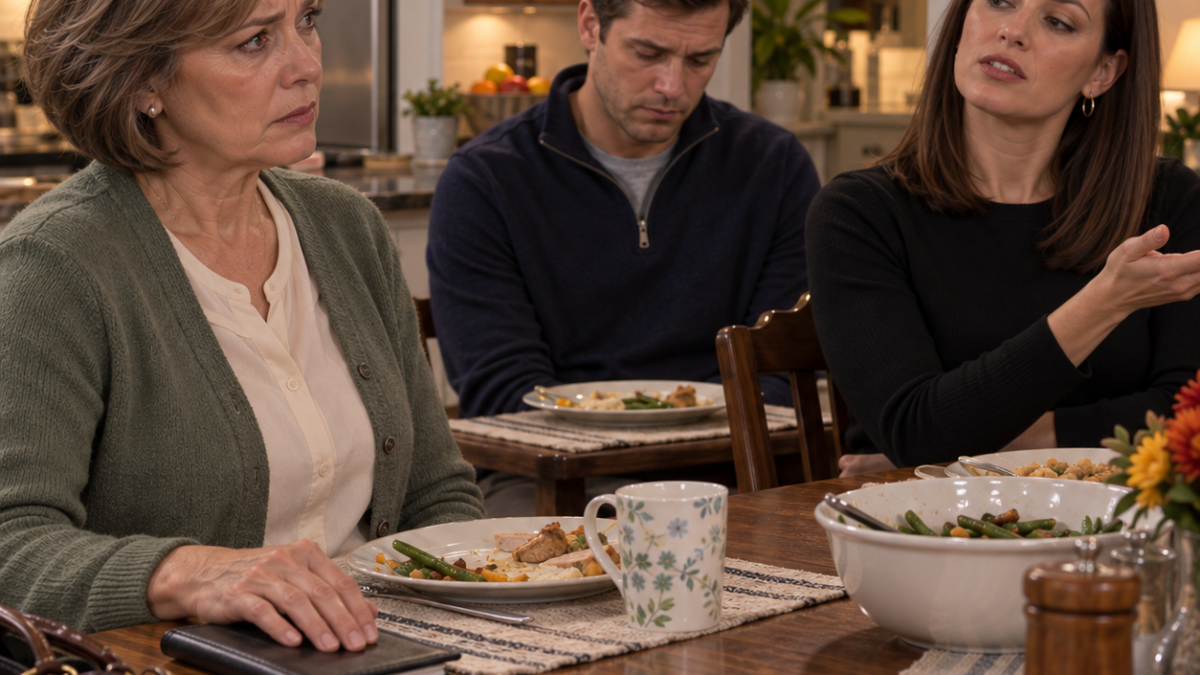
My daughter-in-law looked across my own kitchen table and told me, “We don’t need your advice. Just keep helping with the bills.” My 32-year-old son sat beside her and said nothing. I was 64, retired from the tailoring shop I had spent three decades building outside Cleveland, and for years I had treated helping Ethan, Sienna, and my six-year-old grandson Leo as something mothers simply did. I paid bills when their budget ran short, covered insurance, spent Wednesdays doing their laundry, and solved the little emergencies they were too busy to handle. I kept telling myself generosity held our family together. Then Sienna threatened to limit my time with Leo if I stopped being useful. That night, I opened three years of bank records and finally calculated what keeping their comfortable life intact had actually cost me.
My name is Martha Hayes.
For thirty-four years, I ran a tailoring and alterations shop outside Cleveland, Ohio.
It was never glamorous.
I hemmed wedding dresses, repaired suit jackets, shortened school uniforms, replaced zippers, and learned that people will tell a seamstress almost anything while standing in front of a mirror.
The shop paid my mortgage.
It paid Ethan’s school expenses after my husband, Daniel, died when Ethan was twelve.
And when I finally sold the business at 62, it left me with enough savings to live comfortably without depending on my son.
I thought retirement would mean gardening, reading, and finally finishing the ceramic classes I had postponed for twenty years.
Instead, I somehow became the unpaid support department for Ethan’s household.
It began innocently.
Ethan changed software companies three years earlier.
His new position paid better, but there was a six-week gap between jobs.
He called me embarrassed.
“Mom, could you help us for a couple months until everything settles?”
Of course I could.
I started sending $825 a month into their household account.
Then Sienna’s car-insurance premium jumped, and I offered to cover that too.
They promised both arrangements were temporary.
Temporary became routine.
Wednesday became my day at their rented Lakewood townhouse.
I drove across town after breakfast, picked up dry cleaning, washed sheets and towels, reorganized the pantry, and usually stayed until Leo came home from school.
I loved those afternoons with him.
That made the rest easier to ignore.
Sienna worked for a digital advertising agency and liked things done a particular way.
At first, I interpreted her criticism as stress.
Then criticism became the default language she used with me.
I bought Leo a winter coat.
“The color shows dirt.”
I replaced a cracked storage container.
“We’re trying to reduce plastic.”
I mentioned that their basement dehumidifier sounded wrong.
“Martha, houses work differently now than when you were raising children.”
Ethan almost always reacted the same way.
A small uncomfortable smile.
A change of subject.
Silence.
One Tuesday morning, Ethan and Sienna stopped by my house before work.
I had made eggs and toast.
Sienna picked up the loaf of farmers-market sourdough from my counter and frowned.
“You really need to stop buying this stuff.”
I looked up from the stove.
“Why?”
“It goes stale in two days.”
“It’s my bread.”
She laughed as if I had missed the point.
“I’m saying if you want to do something useful, you could focus on the things that actually help us instead of spending money on little hobbies.”
Ethan poured coffee.
He heard every word.
I waited.
Nothing.
I turned off the stove, wrapped the loaf, and put it in my pantry.
Two nights later, I had dinner at their townhouse.
Sienna noticed the small checkbook inside my purse when I paid a local contractor for repairing Leo’s broken bedroom window.
She smiled.
“My coworkers would die if they knew you still wrote physical checks.”
Ethan gave a weak laugh.
“She likes doing things the old-fashioned way.”
I looked at him.
“Your car insurance is paid from that old-fashioned checking account.”
His smile disappeared.
Sienna took a sip of wine.
“That’s different.”
“How?”
“Because that’s actually helpful.”
Then she leaned back.
“We don’t need advice about our spending or the house or insurance or anything else. We know how we want to live.”
I waited.
She continued.
“If you want to help, just keep helping with the bills.”
Ethan stared at his plate.
I asked, “Is that how you feel too?”
He rubbed his forehead.
“Mom, can we not turn dinner into a whole thing?”
That answer was enough.
The following Wednesday, I stayed home.
At 10:03 a.m., Ethan texted.
Are you running late? Sienna’s dry cleaning is by the door and we need laundry done before noon.
I answered:
I have plans today. You’ll need to handle it yourselves.
An hour later he called.
I let it go to voicemail.
That evening, Sienna sent a group message to both of us.
Martha, if you want to remain part of this family, you need to stop criticizing the way we live. We don’t need your outdated advice. Just continue helping financially and stop creating drama whenever we expect you to follow through. If you want regular time with Leo, you also need to respect how Ethan and I run our household.
I read it three times.
Then I walked upstairs to the small office where I had kept decades of business records.
I pulled out the folder labeled ETHAN — HOUSEHOLD SUPPORT.
And for the first time, I stopped thinking like his mother and started reading the numbers like the business owner I had once been.
The first page contained the message Ethan had sent when he changed jobs three years earlier. “Six months, Mom. Just until we’re steady.” I opened my bank records. The $825 monthly transfer had continued for thirty-six months. The car insurance averaged another $276 a month. I found utility payments, a furnace repair, two emergency credit-card payments, and several smaller transfers I had forgotten. The total was $45,084. That did not include groceries I bought on Wednesdays, dry cleaning, gas, or hundreds of hours of unpaid work. I printed Sienna’s message and placed it beside Ethan’s original promise. Six months. Three years. Temporary help on one side. “Just continue helping financially” on the other. Then I opened the automatic-transfer settings. The next $825 payment was scheduled for Friday. Below it sat the insurance payment due the following week. For several minutes, I simply looked at the screen. I was not angry. That surprised me. I felt the same calm I used to feel at my cutting table when expensive fabric had been measured twice and the next step could not be undone. My cursor moved over the first transfer. For the first time, I asked myself one question: If my money disappeared from this relationship, what exactly would be left?
I canceled the transfer.
Then the insurance payment.
After that, I closed the support account I had created specifically for household emergencies and moved the remaining balance back into my personal savings.
I did not touch Ethan and Sienna’s money.
I did not interfere with their accounts.
I simply stopped placing mine underneath theirs.
The next morning, I called the insurance company.
I explained that I would no longer be the payor for Ethan and Sienna’s second vehicle.
The policy itself was in their names.
They could keep it active by supplying their own payment method.
The representative sent them notice.
That mattered to me.
I was not trying to create a dangerous lapse in coverage.
I wanted responsibility transferred to the adults who owned the car.
Then I removed Wednesdays from my calendar.
I sat at the kitchen table with a pen.
For years, Wednesday had simply meant Ethan.
Now the entire day was blank.
At first, the blank space made me nervous.
That surprised me too.
I had spent decades working.
Then, after retirement, I had converted that same instinct into service for my son.
An empty day felt almost irresponsible.
So I finally called the Cleveland Community Arts Center.
A woman named Patrice answered.
“I’d like to register for the ceramics course.”
“Beginner?”
“I’ve taken a few classes.”
“How long ago?”
I thought about it.
“Nineteen years.”
Patrice laughed.
“We’ll call you an optimistic beginner.”
I registered.
The first consequence of my decision was not Ethan’s panic.
It was clay under my fingernails.
Wednesday morning, instead of driving toward Lakewood, I drove downtown.
The ceramics studio smelled like damp earth and kiln heat.
There were twelve people in the class.
Most were over fifty.
One man named Arthur had been a carpenter.
Another woman, Celeste, was a retired school librarian who had somehow produced a perfect bowl during the first hour and spent the rest of class pretending it was an accident.
My first vase leaned left.
I loved it.
At 9:48, Ethan texted.
Mom, Sienna says you didn’t come again.
At 10:12:
We have laundry everywhere and Leo’s school uniform needs washing.
At 10:41:
Are you mad?
I waited until lunch.
Then replied:
I’m not coming on Wednesdays anymore. You’ll need to organize your household differently.
His response came immediately.
Because of one argument?
I wrote:
Because it was never supposed to be permanent.
He called.
I did not answer during class.
That afternoon, I listened to the voicemail.
“Mom, I know Sienna can be blunt. But just disappearing from our routine creates problems for us. Can we talk?”
There was something interesting about his wording.
Our routine.
Not your help.
Not your time.
Our routine.
My labor had become part of their infrastructure.
I called him back that evening.
“I’m not disappearing.”
“It feels like it.”
“I’m at home.”
“Mom.”
“Ethan, you and Sienna are thirty-two and thirty-one. Laundry is not an emergency.”
“I know.”
“Then handle it.”
“Sienna has client meetings.”
“And you have a washing machine.”
He sighed.
“This is exactly what she means. You always turn things into advice.”
“No.”
I sat in my armchair.
“I’m telling you I’m no longer doing the task.”
“Why are you being like this?”
I looked around my quiet living room.
“Like what?”
“Difficult.”
There it was.
Not cruel enough to sound shocking.
Just familiar.
I ended the conversation.
“Goodnight, Ethan.”
The financial impact took longer.
Friday’s $825 did not arrive.
Their own account covered the first few bills anyway.
The insurance company emailed them about updating payment information.
Ethan assumed it was a technical problem.
He texted.
Did you change something with insurance?
I answered:
Yes. You are now responsible for the premium.
He called within two minutes.
“Mom, you can’t just do that without talking to me.”
“I just did talk to you.”
“It’s four hundred dollars.”
“Then budget four hundred dollars.”
“It’s $276.”
“Even better.”
He went silent.
“Is this about Sienna?”
“It’s about me.”
“What does that mean?”
“It means I am not funding your household anymore.”
He sounded genuinely stunned.
“All of it?”
“Yes.”
“Why?”
That question almost made me sad.
“Because your wife explicitly told me that my opinion is unwelcome but my money is expected.”
“She was angry.”
“You were there.”
“I didn’t agree with everything she said.”
“You didn’t disagree either.”
“Mom, I’m caught in the middle.”
“No. You keep standing in the middle because it lets you avoid choosing a position.”
“That’s not fair.”
“Neither was expecting me to pay indefinitely because you didn’t want an uncomfortable conversation.”
He hung up.
For four days, nobody contacted me.
Then Sienna emailed.
Not called.
Emailed.
The subject was FAMILY RESPONSIBILITIES.
The message read like a complaint to human resources.
She accused me of withdrawing agreed support without reasonable notice.
She said Ethan’s career required him to focus on work.
She said Leo’s stability should matter more than my feelings.
Then came the part that confirmed everything.
Your financial contribution has been part of our planning for years. Removing it suddenly is irresponsible and could materially affect our household.
I read that sentence twice.
Part of our planning.
My gift had become income in their minds.
I forwarded the email to myself, printed it, and placed it in the folder.
Not because I needed evidence for court.
Because I needed evidence for myself.
People can make you doubt boundaries when they phrase entitlement confidently enough.
I wanted a record of why I had finally stopped.
The first real crisis happened about ten days later.
Ethan called me from his car.
“Mom.”
His voice was different.
No irritation.
Panic.
“What happened?”
“Our checking account is overdrawn.”
“That’s unfortunate.”
“Several payments hit at once.”
“What payments?”
“Rent. The car. A credit card. Utilities.”
“Did you review the balance first?”
“Mom, please.”
I waited.
“The insurance payment is due too.”
“Then you need to decide what gets paid first.”
“We thought the support transfer would come.”
“I told you it wouldn’t.”
“Sienna thought you’d calm down.”
That sentence answered more than he intended.
“This is not anger.”
“Then what is it?”
“A budget adjustment.”
“You’re enjoying this.”
“No.”
And I meant it.
Hearing my son panic did not make me happy.
It hurt.
The instinct to fix it was immediate.
I knew exactly how much money I could transfer.
I knew which credit card should be paid first.
I knew they could pause two subscription services, move an upcoming furniture purchase, and avoid overdraft fees by calling the bank before settlement.
For thirty years, my brain had turned family problems into action lists.
I almost started giving him one.
Then I stopped.
“You and Sienna need to sit down tonight and list every bill.”
“Can’t you just send the transfer this month? We’ll figure it out after.”
“No.”
“Mom.”
“No.”
He went quiet.
“What am I supposed to do?”
“Figure out what you can afford.”
I heard a bitter laugh.
“So now you’re teaching us a lesson.”
“No, Ethan. I’m refusing to keep preventing one.”
He ended the call.
That night, I cried.
I want to be honest about that.
Boundaries are often described as empowering.
Sometimes they are.
Sometimes you sit at the edge of your bed wondering whether making your adult child uncomfortable means you failed as a mother.
Daniel had died when Ethan was twelve.
For twenty years, I had carried a private promise that Ethan would never feel abandoned again.
I had confused that promise with preventing him from struggling.
When he needed rent at twenty-three, I paid it.
When his first car died, I bought him another used one.
When he and Sienna married, I paid for most of the reception.
When Leo was born, I opened a college account.
Then help expanded into routine.
I had never asked where the line should be.
Sienna simply discovered there wasn’t one.
The following morning, Brenda came over.
She had lived three doors down for eighteen years and knew enough about my family to recognize when I was lying.
“You look awful,” she said.
“Thank you.”
“You’re welcome.”
I made coffee.
Then told her everything.
When I finished, she asked:
“Do Ethan and Sienna earn enough to pay their basic bills?”
“Yes.”
That question mattered.
Ethan earned around $108,000.
Sienna earned a little over $80,000 including bonuses.
They were not poor.
They were overcommitted.
Their townhouse rent was high.
They leased two late-model vehicles.
They had expensive furniture on financing plans.
Sienna ordered meal kits, subscribed to multiple fitness services, and liked weekend trips.
None of those things were immoral.
But they had built a $190,000 lifestyle that somehow required a retired seamstress to keep adding money.
Brenda took a sip of coffee.
“Then they don’t have an income problem.”
“What do they have?”
“A reality problem.”
I laughed despite myself.
She leaned forward.
“You did not create the overdraft.”
“No.”
“You stopped preventing it.”
That became another sentence I kept.
A week later, Ethan showed up at my door alone.
I almost did not let him in.
Then I saw his face.
He looked exhausted.
“Is Leo okay?”
“Yes.”
“Then come in.”
He sat at my kitchen table.
The same table where Sienna had criticized my bread.
“I need to talk to you.”
“Okay.”
He put a folded spreadsheet on the table.
That surprised me.
“I made a budget.”
I looked at it.
The numbers were messy but honest.
Income.
Rent.
Cars.
Insurance.
Debt.
Food.
Subscriptions.
Childcare.
He had highlighted a number at the bottom.
Negative $1,740.
“That’s monthly?”
“Yes.”
“Before my help?”
“After it stopped.”
I nodded.
“You were spending more than you earned.”
“Yes.”
“Why?”
His face tightened.
“I don’t know.”
“You do.”
He rubbed his hands together.
“We got used to everything.”
“That sounds closer.”
“Sienna assumed her bonuses would keep growing. I assumed my next promotion would happen sooner. Your money filled the gap.”
“Did you know how much I was giving you?”
“Not really.”
“I calculated it.”
He looked up.
“Forty-five thousand eighty-four dollars.”
His face changed.
“Over three years.”
“I didn’t know.”
“You never asked.”
“No.”
We sat quietly.
Then Ethan said:
“Sienna thinks you’re trying to control us.”
“If I wanted control, I would keep paying and attach conditions.”
He looked at me.
“What do you want?”
“Nothing.”
“That can’t be true.”
“It is.”
I stood and brought the sourdough loaf from the counter.
I cut two slices.
“I want you to run your own household.”
He stared at the bread.
“Is that the loaf she complained about?”
“No. That one is long gone.”
He almost smiled.
Then became serious.
“Can you help me with the budget?”
I paused.
There was the line.
Advice.
Not money.
I sat down.
“If you actually want advice.”
“I do.”
“Then I’ll help once.”
He nodded.
We spent two hours going through the spreadsheet.
I did not tell him what to do.
I asked questions.
Could they afford both vehicles?
No.
What was the balance on the furniture plan?
$7,800.
How many subscription services?
Eleven.
Eleven.
I thought he had made a mistake.
He had not.
Could they afford the townhouse if they cut discretionary spending?
Barely.
Could they build savings there?
Not realistically.
Then the biggest number.
Credit cards.
$18,600.
I looked at him.
“How long?”
“A while.”
“Did Sienna know?”
“Yes.”
“Did you?”
“Yes.”
“Did either of you tell me?”
“No.”
“Why?”
Ethan looked embarrassed.
“Because we assumed the monthly support would keep coming.”
That was the main reveal for me.
Not the total.
The assumption.
My son had not been temporarily accepting help.
He had mentally converted me into permanent household revenue.
“Do you understand why I stopped?”
“Yes.”
“Does Sienna?”
His silence answered.
I closed the spreadsheet.
“Then that is her work to do.”
Before leaving, Ethan asked:
“What about Leo?”
My chest tightened.
“What about him?”
“Sienna thinks you’re using access to him as leverage.”
“I never said I wouldn’t see Leo.”
“She said you ignored the dinner ultimatum.”
“The ultimatum said I needed to keep contributing if I wanted regular access.”
Ethan looked down.
“That was wrong.”
“Yes.”
“I told her that.”
“When?”
“After the overdraft.”
“Not when she sent it?”
“No.”
That honesty hurt, but I preferred it to excuses.
“I love Leo,” I said. “I am not buying access to him.”
“You shouldn’t have to.”
“Then we agree.”
He left.
Sienna did not call.
Instead, I heard about their changes through Ethan.
They sold the second car rather than keep paying the lease and insurance.
Ethan began commuting by train three days a week.
Sienna canceled the meal service and several subscriptions.
They returned a financed dining set that had not yet been delivered.
They negotiated a payment plan on one credit card and transferred another balance to a lower-interest product after speaking with a nonprofit credit counselor.
None of this was glamorous.
It was adult life.
Their marriage became tense.
I did not celebrate that.
Ethan admitted later that money had been easier to ignore when I kept covering gaps.
Without my transfers, every disagreement became visible.
Sienna blamed him for not earning more.
He blamed her spending.
Eventually, their financial counselor told them something neither wanted to hear.
Their problem was not one person.
It was a household system built around future income, credit, and external support.
That included me.
I had participated too.
That mattered.
It would have been easy to tell the story as though Sienna exploited me while I was perfectly innocent.
I was not.
I had agreed to transfers long after the temporary need passed.
I continued Wednesday chores after I started resenting them.
I paid bills without asking questions.
Every time I quietly prevented a consequence, I helped make their lifestyle look sustainable.
Generosity without boundaries can become camouflage.
I had helped hide the math.
Three months after I stopped the payments, Ethan and Sienna moved.
Their townhouse lease was approaching renewal.
Instead of accepting another rent increase, they found a smaller duplex twenty minutes farther west.
Two bedrooms.
One bathroom.
No quartz island.
No attached garage.
Leo thought the small backyard was fantastic.
Children are useful that way.
Adults mourn status.
Kids see grass.
Ethan sent me a photograph of Leo holding a soccer ball in the yard.
He did not ask for money.
I stared at that photo for a long time.
Then replied:
Tell him Grandma loves the yard.
Leo called me that evening.
“Grandma, Dad says we’re poor now.”
I nearly choked.
“Did he?”
Ethan shouted from somewhere in the background.
“I did not say that.”
Leo laughed.
I asked:
“Do you have food?”
“Yes.”
“A house?”
“Yes.”
“Your toys?”
“Most of them.”
“Then you’re learning about budgets, not poverty.”
He considered this.
“Can I still have pancakes at your house?”
“Absolutely.”
“What about the expensive syrup?”
“Maple syrup is non-negotiable.”
That weekend, Ethan brought Leo over.
Sienna did not come.
I did not ask why.
Leo ran into my garden.
For the first time in months, I felt uncomplicated happiness around my family.
Nobody mentioned bills.
Nobody brought laundry.
Nobody left dry cleaning beside my door.
We made pancakes.
Leo helped water the roses.
When Ethan came to pick him up, he lingered.
“Sienna wants to meet eventually.”
“Eventually is fine.”
“She wants to explain.”
“Does she want to apologize?”
He hesitated.
“Both, I think.”
“Explanation without accountability isn’t useful to me.”
“I know.”
That was another change.
Six months after the original message, Sienna asked if she could come to my house alone.
I agreed.
No Ethan.
No Leo.
Just us.
She arrived in jeans and a plain sweater.
No designer tote.
I noticed that and immediately disliked myself for noticing.
Her clothes were not the issue.
She sat at the kitchen table.
For a while, neither of us spoke.
Then she said:
“I was awful to you.”
Direct.
No preface.
I waited.
“I treated your help like it was our money.”
“Yes.”
“I treated your time like it belonged to us.”
“Yes.”
“And I used Leo.”
My throat tightened.
“Yes.”
She looked down.
“That is the part I’m most ashamed of.”
I did not rescue her from the shame.
She continued.
“I told myself you were controlling because you always had suggestions.”
“Sometimes I probably had too many.”
She almost smiled.
“Probably.”
“Still doesn’t make the rest okay.”
“No.”
She folded her hands.
“When you stopped paying, I thought you were punishing us.”
“I know.”
“Then the credit counselor asked us to list every source of household income.”
She looked at me.
“We put your transfer on the list.”
I said nothing.
“He asked whether it was employment income.”
She shook her head.
“Then he asked whether it was guaranteed contractual income.”
“No.”
“Then he asked why we had built fixed expenses around money that was neither.”
That sounded like an excellent counselor.
“What did you say?”
“Nothing.”
She breathed out.
“I realized we had designed our whole life around your inability to say no.”
That sentence hurt.
It was also true.
“I’m sorry.”
“Thank you.”
“I don’t expect you to start helping again.”
“I won’t.”
She nodded.
“I know.”
That mattered.
Then I asked the question I had been waiting six months to ask.
“Do I get to be Leo’s grandmother if I never pay another bill?”
Her eyes filled immediately.
“Yes.”
“Even if I never do your laundry again?”
A small embarrassed laugh escaped her.
“Yes.”
“Even if I disagree with you?”
“Yes.”
I leaned back.
“Then maybe we have somewhere to start.”
We did not become best friends.
I did not want that.
Respect was enough.
Sienna stopped dropping by without asking.
She stopped sending lists.
When I offered advice, I learned to ask first.
“Do you want my opinion?”
Sometimes she said no.
And I accepted that.
Ethan became more capable in ways that were almost funny.
He learned laundry.
He learned how insurance deductibles worked.
He learned that different cleaners require different amounts of detergent.
He learned to cook four dinners that did not involve frozen pizza.
One afternoon, Brenda saw him at the grocery store comparing unit prices.
She called me from the parking lot.
“Your son is reading price-per-ounce labels.”
“I’m very proud.”
“You should frame this day.”
I laughed.
My own life expanded too.
The ceramics class became a permanent part of my week.
Arthur and I became friends.
Just friends.
Despite Brenda’s relentless theories.
I made bowls.
Vases.
One truly terrible sculpture that Leo said looked like a melted chicken.
He was right.
I donated several pieces to the community center fundraiser.
Then Patrice asked whether I would help teach a Saturday beginner workshop.
“My teaching qualifications consist of owning a tailoring shop.”
“You know how to explain things without making people feel stupid.”
That might have been one of the nicest compliments anyone had given me.
I agreed.
Saturday workshops became one of my favorite things.
People arrived nervous.
Retirees.
Widows.
A teacher on sabbatical.
A man recovering from surgery.
Nobody cared whether the bowl was perfect.
We were learning something we did not need to monetize.
That was new for me.
For most of my life, usefulness had been tied to output.
Tailoring.
Motherhood.
Money.
Chores.
Now I could make an uneven blue vase because I liked making it.
A year after everything started, Leo had his seventh birthday.
Ethan and Sienna hosted it at a public park.
Simple.
Pizza.
Cupcakes.
A rented shelter.
Children running everywhere.
I arrived with one present.
A beginner gardening kit.
Sienna hugged me.
Not dramatically.
Just normally.
At one point, I saw her struggling to carry a cooler.
Old instinct rose immediately.
Fix it.
I stood.
Then stopped.
Ethan was already walking toward her.
He picked it up.
They handled it.
That tiny moment meant more than it should have.
I sat back down.
Arthur, who had come because Leo liked him, noticed.
“You okay?”
“Yes.”
“You have that look.”
“What look?”
“The one people get when they discover not being needed isn’t the same as not being loved.”
I stared at him.
“That was annoyingly perceptive.”
“I’m retired. I have time.”
I laughed.
He handed me lemonade.
Six months later, my water heater failed.
I discovered it on a Friday morning when the shower turned cold.
For years, my first instinct would have been to call no one.
Handle it myself.
Competence had been my identity.
Instead, I called Ethan.
“Do you know a plumber?”
He sounded delighted.
“I do.”
“That is all I asked.”
“I know.”
He gave me the number.
An hour later he appeared at my house anyway.
“I said I needed a number.”
“I know.”
“Then why are you here?”
“I thought you might want company while you wait.”
That was different.
No emergency money.
No chore request.
No invisible transaction.
Just company.
I made coffee.
We sat at the kitchen table.
Ethan looked toward the pantry.
“Do you still buy that sourdough?”
“Yes.”
“Can I have some?”
“No.”
He laughed.
I gave him two slices.
The plumber arrived.
Ethan stayed until the repair was done.
Before leaving, he said:
“I’m sorry I sat there that morning.”
“What morning?”
“When Sienna told you to focus on being useful.”
I remembered.
“Why are you apologizing now?”
“Because I used to think staying quiet meant I wasn’t taking sides.”
I waited.
“It was taking a side.”
“Yes.”
“I know that now.”
That apology mattered more to me than the financial ones.
Money had been the visible problem.
Silence had been the deeper one.
I had spent years interpreting Ethan’s passivity as gentleness.
Sometimes it was fear.
Sometimes laziness.
Sometimes convenience.
He had allowed Sienna to speak for the household because confronting her was harder than letting me absorb the discomfort.
That was his responsibility.
He finally understood it.
Our relationship never returned to what it had been before.
I consider that a success.
The old relationship required me to solve too much.
The new one has limits.
Ethan does not know the balance of my investment accounts.
Sienna does not know how much I have in savings.
I contribute to Leo’s college account because I choose to.
The account is in my name and earmarked for his education.
I do not pay their rent.
I do not pay their insurance.
I do not maintain an emergency buffer for two healthy working adults.
If I buy groceries when Leo visits, those are my groceries.
If I cook, it is because I want to cook.
Wednesday belongs to me.
Sometimes pottery.
Sometimes gardening.
Sometimes absolutely nothing.
The first time I deliberately spent an entire Wednesday reading a novel on my porch, I felt guilty until lunchtime.
Then I realized there was nobody to report my productivity to.
Retirement finally became retirement.
Ethan and Sienna stabilized financially.
Not instantly.
It took nearly two years to pay down their credit-card debt.
They stayed in the smaller duplex.
Eventually, they bought a modest three-bedroom house in Parma Heights.
Not the stylish place Sienna once imagined.
But theirs.
They saved the down payment themselves.
When Ethan called to tell me their offer had been accepted, his voice shook.
“Mom, we did it.”
“You did.”
“Without you.”
I smiled.
“Exactly.”
He hesitated.
“That sounded insulting.”
“It wasn’t.”
“I know.”
When they moved, I helped for exactly four hours.
Then my back hurt.
I went home.
Nobody handed me a chore list.
Sienna ordered pizza and thanked me.
Progress can look very ordinary.
My ceramics improved.
One of my larger pieces was accepted into a community gallery show.
Nothing famous.
A local exhibition.
I stood beside the asymmetrical blue-and-white vessel on opening night while strangers looked at it thoughtfully.
Brenda walked over.
“That thing used to be a lump of mud.”
“Everything starts somewhere.”
She hooked her arm through mine.
“So did boundaries.”
I groaned.
“Please don’t become philosophical.”
“Too late.”
Across the room, Ethan, Sienna, and Leo arrived.
Leo ran toward me.
“Grandma!”
He hugged my waist.
Ethan handed me flowers.
Sienna looked at the sculpture.
“It’s beautiful.”
“Thank you.”
She tilted her head.
“I don’t understand it.”
“Even better.”
She laughed.
We stood together for a photograph.
I looked at it later.
Nobody appeared wealthy.
Nobody looked impressive.
Just four adults and a child in a community gallery.
But there was something in my face I noticed immediately.
I was not leaning toward anyone.
For years, every family photograph showed me slightly turned toward Ethan.
Ready.
Attentive.
Available.
In this one, I stood straight.
Not distant.
Not cold.
Simply balanced.
That was what changed.
I did not cut my family off forever.
I cut off the arrangement that made love indistinguishable from service.
When the arrangement disappeared, some relationships had to learn how to exist without it.
Ethan did.
Eventually Sienna did too.
If they had not, I would still have been okay.
That is important.
A boundary is not a trick for forcing people to treat you better.
It is a decision about what you will participate in even if they never change.
For months, Sienna believed I would give in.
For a while, Ethan did too.
I did not stop the money so they would appreciate me.
I stopped because continuing would have taught all of us the same lesson again.
Their comfort mattered.
My dignity did not.
I was finished teaching that lesson.
On a Sunday morning almost three years after Sienna sent that group text, I stood at my stove cooking eggs.
The farmers-market sourdough sat on the counter.
Leo was at the kitchen island drawing.
Ethan and Sienna were coming over later.
Not because they needed anything.
Just lunch.
My phone buzzed.
A message from Sienna.
Do you want us to bring anything?
I looked at it for a moment.
Three years earlier, she had told me to keep giving money and stop giving advice.
Now she was asking what she could contribute.
I wrote:
Bring dessert.
She replied:
Done.
Leo looked up from his drawing.
“Grandma?”
“Yes?”
“Dad says you used to do all their laundry.”
I looked at him.
“Your father talks too much.”
“Why did you stop?”
“Because he learned how.”
Leo considered this.
“Was he bad at it?”
“Terrible.”
He laughed.
I put the bread in the toaster.
Outside, my garden was full.
Roses.
Tulips.
Herbs.
The ceramic vase from my first class sat crookedly on the windowsill.
I had kept it even after I learned to make better ones.
It reminded me that imperfect beginnings are still beginnings.
The same was true of our family.
I used to believe love meant being useful enough that people would always keep a place for me.
Now I know better.
Love that requires payment is not security.
Help that cannot be withdrawn is not a gift.
And family support that only flows in one direction eventually becomes dependency, resentment, or both.
I still help people.
Probably always will.
That part of me did not need to die for my boundaries to survive.
I just ask different questions now.
Was I asked?
Can I afford it?
Do I want to?
Is the help solving a temporary problem or maintaining a permanent one?
Will saying yes create resentment?
And most importantly:
Would this relationship still exist if I said no?
That question changed everything.
When I finally answered it honestly, I was afraid I might lose my son.
Instead, I gave him the opportunity to become one.
And I gave myself permission to stop being everyone’s emergency account.
That turned out to be worth far more than the $45,084 I had spent trying to keep the old arrangement alive.







