My Brother Said His Kids Deserved My Beach House—Then a Title Alert Hit My Phone
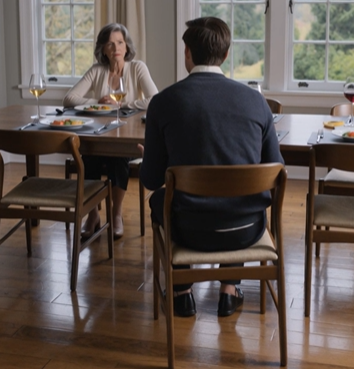
At Easter brunch, my older brother told our parents the Oregon beach house Grandpa left for my exclusive use should really belong to him because he had three children and I had none. I was 32, a structural engineer in Portland, and I had spent six years repairing that cedar house while Ryan mostly treated it like a free vacation rental. I told him no. Mom called me selfish. Ryan called the property “wasted” on a single man. I thought the argument ended when I walked out. Eleven days later, a coastal real-estate broker I knew called during a client meeting and asked whether I had changed my mind about the house. Someone had submitted documents claiming authority to transfer my interest and prepare the property for sale. The signature looked like mine. The email had come from my brother.
My name is Leo Mercer.
The house sits outside Manzanita, Oregon, on a narrow bluff where wind comes off the Pacific hard enough to shake the older windows in winter.
Grandpa Walter bought it in 1978.
Back then it was a small cedar cottage with two bedrooms, a stone fireplace, and a deck that leaned slightly toward the ocean.
By the time I was a teenager, it had become the place where Grandpa and I spent most summer weekends.
He taught me how to replace rotten deck boards.
How to find water intrusion before it became expensive.
How to stop pretending a crooked wall was “probably fine.”
I eventually became a structural engineer.
Grandpa liked to claim the beach house deserved some of the credit.
My brother Ryan never cared about any of that.
Ryan is thirty-five.
He and his wife, Natalie, have three children.
I love those kids.
The problem is that Ryan has spent years treating parenthood like a transferable ownership interest in everybody else’s life.
If he needs the larger guest room, he gets it because he has kids.
If vacation dates conflict, his matter more because school schedules are complicated.
If Mom and Dad have extra money, Ryan believes it should naturally flow toward the household with three children.
Most of the time, I let it go.
The house was different.
Grandpa did not leave it to “the family.”
He created the Alder Point Trust and named me as the sole beneficiary with exclusive management and occupancy rights.
An independent attorney served as trustee.
The arrangement was unusual, but Grandpa had reasons.
He had watched relatives fight over property before.
He wanted one person responsible for the place.
That person was me.
For six years, I paid for repairs, taxes, insurance contributions, and improvements.
I replaced part of the deck.
Reinforced a retaining wall.
Updated the electrical panel.
Repaired storm damage.
Ryan occasionally brought his family for a weekend.
He never offered to pay for anything beyond groceries.
That never bothered me.
What happened at Easter did.
We were at my parents’ house outside Portland.
Mom had made ham.
Dad was carving it.
Ryan waited until everyone was seated before raising his glass.
“I’ve been thinking about Grandpa’s place.”
I immediately knew I was not going to enjoy the next sentence.
“What about it?”
Ryan leaned back.
“The kids love the coast.”
“So do I.”
“That’s not what I mean.”
Natalie looked down at her plate.
Mom suddenly became very interested in arranging serving spoons.
Ryan continued.
“You’re there maybe two weekends a month.”
“More in summer.”
“Still.”
He gave a little shrug.
“You don’t have kids, Leo.”
There it was.
I put down my fork.
“And?”
“The house should be used.”
“It is.”
“By one person.”
Dad stopped carving.
Ryan leaned forward.
“Think about the legacy. Grandpa built that place for family. My kids could actually grow up there.”
“He put it in a trust for me.”
“Because you were the one helping him at the end.”
“Yes.”
“That doesn’t mean he intended you to hoard it forever.”
I stared at him.
“Hoard my own house?”
Mom finally spoke.
“Leo, nobody is saying you did anything wrong.”
That sentence has never once preceded something pleasant.
She continued.
“We’re only asking whether the property might serve the family better another way.”
I looked at Ryan.
“You want me to give you the house.”
He smiled as though I had finally understood something simple.
“I think you should transfer the beneficial interest.”
I laughed.
Ryan did not.
Then I realized he had actually researched the terminology.
“You’re serious.”
“Completely.”
“No.”
His expression changed.
“Just no?”
“Yes.”
“You won’t even discuss it?”
“We just did.”
Ryan leaned toward me.
“You know what your problem is?”
“I suspect you’re about to tell me.”
“You’ve built this whole life where nobody depends on you, and now you think that means you never owe anyone anything.”
Dad said quietly, “Ryan.”
Ryan ignored him.
“You have your firm. Your Portland condo. The beach house. What exactly are you saving all of it for?”
I stood.
“The fact that you have children does not convert my property into yours.”
Mom looked horrified.
“You don’t have to make it sound so cold.”
“It is a property question.”
“No,” Ryan said.
“It’s a family question.”
I looked at him.
“Then here is the family answer.”
“No.”
I left before dessert.
Eleven days later, Marcus Bell called me.
Marcus handled high-end coastal properties and had helped me get contractor referrals near Manzanita.
His voice was careful.
“Leo, weird question.”
“Okay.”
“Did you authorize someone to contact our office about Alder Point?”
My hand stopped over a set of engineering drawings.
“No.”
He went quiet.
Then:
“Did you authorize a transfer of your beneficial interest yesterday?”
“No.” Marcus lowered his voice. “Someone emailed a signed assignment and a power-of-attorney document.” My stomach tightened. “Who?” “The contact name was Ryan Mercer.” I stood up from my desk. Marcus explained that Ryan had asked his office to prepare a future listing package and claimed I was transferring control because I planned to relocate permanently. “I’m not relocating.” “I know.” “What did he send?” “A document with your signature.” “I didn’t sign anything.” “That’s why I called.” Marcus said the signature did not match the specimen on an older consulting agreement I had signed in his office. The supposed power of attorney also contained language that looked inconsistent with the trust structure. I asked him to send nothing back to Ryan and preserve every email. Then I called Elena Park, the attorney who had taken over administration of Grandpa’s trust. She asked me to forward Marcus’s files. Twenty-three minutes later, she called. “Leo, do not contact your brother yet.” “Why?” “Because the document he submitted cannot do what he thinks it does.” I looked through my office window at the rain. “What does that mean?” “It means Walter anticipated pressure around this property.” A pause. “There’s a provision in the trust you need to see before you call anyone.”
Elena asked me to come to her office the next morning.
I barely slept.
Not because I was afraid Ryan could actually sell the house overnight.
Elena had already assured me he could not.
What kept me awake was the signature.
My name.
Written by somebody else.
That bothered me in a way the Easter argument had not.
Ryan demanding the property was entitlement.
Forging my authorization was erasure.
He was no longer trying to convince me.
He was trying to replace my decision.
At nine the next morning, Elena placed Grandpa’s trust agreement in front of me.
It was thicker than I remembered.
I had read it after his death, but grief makes terrible legal memory.
Most of what I retained was simple.
Alder Point stayed in trust.
I had exclusive occupancy and management rights.
The trust covered part of major structural maintenance from a reserve Grandpa had funded.
I paid routine costs and anything beyond the reserve.
I could eventually direct a sale, but only through the trustee.
Ryan knew enough to know the property was in trust.
Apparently, he had not known the rest.
Elena opened to Article Seven.
“Your grandfather added this after a dispute with his own brother.”
“What dispute?”
“Family timberland.”
I had heard fragments.
Grandpa’s brother Richard once tried to force a sale of property the two had inherited.
They barely spoke afterward.
Elena pointed to a paragraph.
“The trust interest is nonassignable without written approval from the trustee.”
“So my signature alone would not transfer anything.”
“Correct.”
“Even if it were real?”
“Correct.”
I leaned back.
“Then what was Ryan doing?”
“My guess?”
“Yes.”
“He misunderstood what a beneficial interest is.”
“That sounds like Ryan.”
Elena almost smiled.
“The more important provision is here.”
She pointed farther down.
Any attempted unauthorized assignment, encumbrance, pledge, or conveyance by a third party claiming through a beneficiary triggered mandatory review.
Not a magical punishment clause.
Not a trap.
A review.
During that review, the trustee could suspend non-beneficiary access to the property, reject pending requests, notify title services, and require future transactions to use enhanced identity verification.
I read it twice.
“Grandpa really expected this.”
“He expected conflict.”
“Did he expect Ryan?”
Elena closed the file.
“He did not name anyone.”
That somehow made it sadder.
He had simply lived long enough to know what inherited property could do to relatives.
“What happens now?”
“That depends on what you want.”
I knew immediately what I did not want.
“I’m not giving him the house.”
“That part is easy.”
“I don’t want him contacting brokers.”
“We can address that.”
“I don’t want Mom arranging some other family campaign around the trust.”
“Your mother has no legal authority here.”
“I know.”
I rubbed my forehead.
“I also don’t want to spend the next year treating this like war.”
Elena nodded.
“Then we do the least dramatic thing that fully protects you.”
That sentence became the plan.
First, Elena formally rejected the forged assignment.
Second, Marcus’s firm preserved Ryan’s emails and documents.
Third, the trust notified the relevant title insurer and county fraud-alert system that no transfer or assignment was authorized.
Fourth, non-beneficiary guest access to Alder Point was temporarily suspended during review.
That included Ryan.
It also included my parents.
Not forever.
But for now.
I asked Elena whether that was necessary.
“No,” she said.
“Then why recommend it?”
“Because this is not just a paperwork problem.”
“What is it?”
“Someone inside your family decided your permission was an obstacle.”
That was hard to argue with.
I approved the suspension.
Then I drove to Manzanita.
The weather was terrible.
The beach was nearly empty.
I stood inside Grandpa’s kitchen drinking bad coffee while rain hit the windows.
On the wall beside the pantry hung an old photograph.
Grandpa at maybe forty-five.
My grandmother Evelyn beside him.
Dad as a teenager.
Uncle Richard.
All smiling in front of the house.
Families look simple in photographs.
Property records are more honest.
The next day, Ryan called.
I did not answer.
Then Mom.
Then Dad.
I answered Dad.
“Leo.”
His voice was unusually serious.
“Did Ryan try to file something against the trust?”
“Yes.”
Dad exhaled.
“Your mother just told me.”
“How does she know?”
“Ryan called her.”
I waited.
Dad continued.
“He says it was only a draft.”
“Marcus received a signed assignment and power of attorney.”
“He says you had discussed giving him control.”
“We discussed him demanding the house.”
Silence.
“Did he forge your signature?”
“Yes.”
Dad swore quietly.
My father almost never swears.
That told me where he stood.
“I’m sorry.”
“You didn’t do it.”
“No.”
His voice became heavier.
“But I sat there at Easter and let that conversation continue long after it should have ended.”
“That’s different.”
“Still.”
We were both quiet.
Then Dad said:
“Your grandfather would have thrown him out of the house himself.”
I looked toward the fireplace.
“Probably.”
“What are you doing?”
“Elena is handling it.”
“Good.”
“Access is suspended while the trust reviews everything.”
Dad understood immediately.
“Ours too?”
“For now.”
Another pause.
“That’s fair.”
That surprised me.
Mom did not think it was fair.
Her first voicemail lasted four minutes.
By the second minute, she was crying.
By the third, I had apparently “weaponized Grandpa’s memory.”
I deleted nothing.
Her second message was shorter.
Leo, whatever Ryan did, the children should not lose their family beach house.
That sentence made me sit up.
Their family beach house.
Not mine.
Not Grandpa’s trust property.
The family beach house.
Language had already shifted.
That was how Ryan had gotten so confident.
He had been telling himself ownership was a technicality.
Mom had been helping.
I called her.
She answered immediately.
“Finally.”
“Mom.”
“You cannot punish children for an adult disagreement.”
“I’m not punishing the kids.”
“They love that house.”
“So do I.”
“You know what I mean.”
“I actually don’t.”
She sighed sharply.
“Ryan has three children.”
“Yes.”
“You have nobody depending on you.”
“Correct.”
“So what is the house doing for you?”
I closed my eyes.
It was Easter again.
Same equation.
Children equal need.
No children equal excess.
“Mom, I’m going to say this once.”
“Fine.”
“My life does not become less legitimate because I don’t have children.”
“I never said that.”
“You keep saying versions of it.”
“That’s unfair.”
“No.”
I kept my voice calm.
“What is unfair is acting as though everything I own is waiting for a more deserving person with children.”
She went silent.
Then:
“Ryan would use the house more.”
“That’s irrelevant.”
“You always were stubborn.”
“Good.”
She hung up.
That hurt more than Dad’s call helped.
I stayed at the coast through Sunday.
When I returned to Portland, Elena had another update.
Ryan had responded through an attorney.
That was good.
It meant someone had finally told him to stop improvising law.
His lawyer claimed Ryan believed I had verbally agreed to explore a transfer.
Elena asked me directly.
“Did you?”
“No.”
“Did you ever tell him he could sign anything for you?”
“No.”
“Did you ever give him a power of attorney?”
“No.”
“Did you ever authorize him to contact Marcus?”
“No.”
She nodded.
“Then we answer that.”
No threats.
No dramatic lawsuit yet.
Just facts.
Ryan’s attorney also said the signature had been placed on the form by someone acting at Ryan’s direction because he believed he had authorization.
That sentence did not help him.
Elena’s expression changed when she read it.
“Do they realize what they just admitted?”
“Apparently not.”
She drafted the response.
I asked if we needed to pursue criminal charges.
Her answer was careful.
“That is not something you use as negotiation leverage.”
I appreciated that.
“If evidence indicates a crime, the appropriate authorities determine what happens.”
“So what do I control?”
“Your property rights.”
That became my focus.
Not revenge.
Control.
The trust’s property review continued.
The attempted assignment was formally rejected.
Ryan’s access remained suspended.
A fraud alert was recorded so future submissions involving Alder Point would receive additional scrutiny.
Then Elena showed me something I had forgotten existed.
A separate reserve inside the trust.
Grandpa had funded it with the sale of another small parcel years before his death.
It was not a second beach house.
It was not secret millions.
It was $186,000 invested conservatively for long-term maintenance and preservation.
I had known there was a reserve.
I had not realized how specific Grandpa’s instructions were.
The money could be used for structural preservation, erosion mitigation, habitat protection, and educational partnerships connected to the coastal property.
It could not fund personal vacations.
It could not support a beneficiary’s unrelated expenses.
It could not be distributed to relatives.
Grandpa had not merely left me a house.
He had left a plan for keeping the land intact.
I sat with that for a long time.
Ryan wanted the property because he imagined what it could provide his family.
Short-term rental income.
A place for the kids.
An appreciating coastal asset.
Grandpa had wanted something almost opposite.
Continuity.
Preservation.
Responsibility.
I thought about the years we spent replacing boards and clearing invasive plants near the bluff.
The old notebooks where Grandpa recorded storm damage.
His obsession with not overbuilding the property.
Suddenly the trust language made sense.
He had not chosen me because I was single.
He had not chosen me because I was the favorite.
He chose the person who already treated the place as something to maintain rather than something to extract value from.
That was the Main Reveal for me.
The house was never a trophy.
It was a responsibility Grandpa believed I would understand.
That changed my next decision.
For years, a marine science professor from Portland State had occasionally asked whether students could access the back edge of the property for coastal erosion observations.
I had always said maybe.
Now I called her.
We discussed a limited seasonal field-use agreement.
Nothing commercial.
No ownership change.
No public access across the house itself.
Just supervised access to part of the bluff and dune area for small student groups.
Elena reviewed everything.
The trustee approved it as consistent with Grandpa’s preservation instructions.
For the first time, I felt like I was doing something with the property that had nothing to do with Ryan.
That mattered.
My brother, however, was not finished.
Three weeks after the Easter brunch, I drove to my parents’ house because Dad asked me to meet privately.
Mom was out.
Dad sat in his study.
He had printed copies of Ryan’s emails.
“How did you get these?”
“Ryan forwarded some to your mother.”
I stared at him.
“Why?”
“He wanted her to pressure you.”
Dad looked exhausted.
“There’s something you need to know.”
I waited.
“Ryan is in financial trouble.”
“How much?”
“I don’t know.”
“That sounds like you do.”
Dad rubbed his face.
“He refinanced their house two years ago.”
I knew that.
“What else?”
“Credit cards.”
“Business debt?”
“Yes.”
Ryan owned a small design-and-build company focused on residential remodels.
From the outside it looked successful.
New truck.
Nice house.
Trips.
Professional family photos twice a year.
Apparently appearance and cash flow had diverged.
“How bad?”
“Bad enough that he asked us for money.”
“Did you give him any?”
“Your mother did.”
I leaned back.
“How much?”
“Twenty thousand.”
I closed my eyes.
“When?”
“January.”
That was before Easter.
Ryan’s demand for the beach house was not philosophical.
It was financial.
He had talked about legacy and children because saying “I need an asset” would have sounded different.
Dad continued.
“I think he wanted to use the house to stabilize things.”
“As collateral?”
“Maybe.”
“Sell it?”
“Maybe.”
I felt sick.
“Did Mom know?”
Dad’s silence told me.
“She knew.”
“Yes.”
“And she still asked me to give him the house.”
“Yes.”
That changed my relationship with her more than anything Ryan had done.
Ryan was desperate.
That did not excuse forgery.
But desperation was at least comprehensible.
Mom had known why he wanted it.
She dressed his financial crisis as family morality and asked me to solve it without telling me the truth.
“Why didn’t you say anything at Easter?”
Dad looked ashamed.
“I didn’t know how bad it was then.”
“But you knew he had asked for money.”
“Yes.”
“Why let him frame it as being about the kids?”
Dad looked toward the window.
“Because your mother asked me not to embarrass him.”
I laughed once.
“So embarrassing me was easier.”
His face tightened.
“That’s fair.”
I stood.
“Dad, I need some distance.”
“I understand.”
“From both of them.”
“Yes.”
“And the kids are not part of this.”
“I know.”
“I don’t want anybody telling them Uncle Leo is taking something from them.”
Dad nodded.
“I’ll make sure of that.”
That mattered.
Ryan’s children had done nothing wrong.
They did not need to inherit a property dispute as a loyalty test.
A week later, I received a certified letter from Ryan’s attorney.
He withdrew any claim that I had authorized the assignment.
He also formally demanded mediation regarding “family access expectations.”
I laughed when I read that phrase.
Elena did not.
“We can mediate access if you want.”
“Do I have to?”
“No.”
“Then no.”
She nodded.
“What do you want instead?”
“I want him to acknowledge in writing that he has no ownership interest.”
“Reasonable.”
“I want him to reimburse the legal costs directly caused by the forged documents.”
“Also reasonable to demand.”
“And I want no contact with brokers, title companies, or the trustee about this property.”
Elena drafted the proposal.
Ryan refused the legal fees at first.
Then his own attorney apparently explained the alternative.
Two weeks later, he agreed.
Not to everything.
But enough.
He signed a formal acknowledgment that he had no present ownership or beneficial interest in Alder Point.
He withdrew the forged assignment.
He agreed not to contact third parties claiming authority over the trust.
He reimbursed $6,400 of my legal expenses over six months.
The trustee kept his access suspended for one year, after which I could choose whether to invite him personally.
The document did not say he was evil.
It did not destroy his life.
It did something more useful.
It made the boundary measurable.
He could not pretend later that everybody had misunderstood.
The signature at the bottom was his own.
Our parents reacted differently.
Dad called me.
“I think this is probably the best outcome.”
“I think so.”
Mom did not speak to me for two months.
She told relatives I had “legally frozen Ryan out of Grandpa’s legacy.”
Aunt Martha called me after hearing that.
“Did you?”
“He never had an ownership interest.”
“That’s what I thought.”
“Mom knows that.”
Martha sighed.
“She’s worried about Ryan.”
“So am I.”
That was true.
Financial desperation can make people do stupid things.
It does not make the behavior harmless.
I told Martha the minimum necessary.
Ryan tried to submit unauthorized documents.
The trust rejected them.
He had signed an agreement acknowledging no ownership claim.
I did not share his debts.
That was his private problem.
Martha said:
“Your mother is telling people you care more about property than family.”
I looked around my Portland office.
Engineering drawings covered one wall.
A framed photograph of Grandpa stood on the shelf.
“I care enough about family not to let fraud become normal.”
Martha was quiet.
Then:
“That’s probably the sentence she doesn’t want to hear.”
Maybe.
Summer arrived.
The first university field group came to Alder Point in June.
Six students.
One professor.
They spent a day measuring dune movement and photographing vegetation.
I mostly stayed out of their way.
At sunset, I sat on the deck with coffee and listened to them talk about erosion patterns.
Grandpa would have loved it.
Not because students were there.
Because they cared about the land itself.
That was when Mom called.
I almost ignored it.
Then answered.
“Hi.”
Her voice was careful.
“Are you at the coast?”
“Yes.”
“Your father said students are there.”
“A university field group.”
“So strangers can use the property but Ryan’s children can’t?”
I closed my eyes.
“Mom.”
“I’m asking.”
“No.”
“You’re comparing supervised educational access to an adult who forged documents.”
“They are his children.”
“They are welcome when I invite them.”
“Without their parents?”
“That depends.”
She became quiet.
Then:
“Do you hate your brother?”
“No.”
“Then why are you doing this?”
“Because not hating someone does not require giving them access.”
She started crying.
I hated that.
I still did not change the answer.
“Mom, I know Ryan is struggling.”
She stopped.
“Dad told you.”
“Yes.”
“He had no right.”
“That is between you and Dad.”
She exhaled shakily.
“You don’t understand what it feels like to watch your child fail.”
I looked through the windows toward the ocean.
“No.”
“I understand what it feels like to be asked to lose something so he doesn’t have to.”
Silence.
“That’s not what I wanted.”
“It is what you asked.”
“I wanted family to help.”
“Then ask me for help honestly.”
She did not respond.
I continued.
“If Ryan had called and said, ‘I’m in trouble. Can you help me build a plan?’ maybe I would have.”
“You would?”
“I’ve helped him before.”
That was true.
Five years earlier, I lent Ryan $15,000 for equipment during the early days of his company.
He repaid $5,000.
Then stopped.
I never pushed.
Mom knew that.
“But nobody asked me for advice.”
I continued.
“You asked me for a million-dollar asset.”
Her voice dropped.
“When you say it like that—”
“That’s exactly what it is.”
Another long silence.
Then she said:
“I’m sorry.”
I was not expecting it.
“For what?”
“For making your life sound less important because you don’t have children.”
My eyes closed.
That wound was older than Easter.
“Thank you.”
“I still wish you and Ryan could fix things.”
“So do I.”
“Will you call him?”
“No.”
She was quiet.
“That’s fair.”
That was the beginning of repairing things with Mom.
Not complete forgiveness.
Not pretending she had only been worried.
Just one truthful sentence.
A month later, Ryan’s company closed.
Not because of me.
No client scandal.
No public humiliation.
Cash flow.
Debt.
A large project had gone badly.
He sold the expensive truck.
He and Natalie listed their house and moved into a smaller rental for a year.
Dad helped with childcare.
Mom helped with school pickups.
I did not offer money.
That was difficult.
I thought about it more than once.
But help offered from guilt would have put us right back into the same system.
Ryan needed to ask if he wanted something from me.
He did not.
Not then.
The one-year access suspension ended the following spring.
Elena emailed me.
The trust review was closed.
No further suspicious filings had occurred.
Enhanced verification would remain in place permanently.
Ryan’s formal restriction expired.
That did not mean automatic access returned.
That decision belonged to me.
Two weeks later, he called.
First time in nearly a year.
“Hey.”
“Hey.”
Awkward.
“I heard the trust thing is over.”
“The review is.”
“Okay.”
Silence.
Then:
“I owe you an apology.”
I waited.
“I don’t mean for Easter.”
“You owe me one for Easter too.”
He almost laughed.
“Fair.”
Then he continued.
“I knew you had said no.”
“Yes.”
“I convinced myself that because I needed the house more, the answer should not matter.”
I said nothing.
“I also knew the document wasn’t authorized.”
That was the sentence.
No passive voice.
No misunderstanding.
He knew.
“Why did you do it?”
Ryan breathed out.
“I was drowning.”
“You could have called me.”
“I was ashamed.”
“So stealing control of my property felt less shameful?”
“No.”
He paused.
“It felt like a shortcut.”
I leaned back.
“That is one hell of a shortcut.”
“I know.”
“What were you going to do with the house?”
Another pause.
“Refinance if possible.”
“You couldn’t.”
“I know that now.”
“And if not?”
“Push for a sale.”
My stomach tightened even though I had already suspected it.
“It wasn’t about the kids.”
“Not really.”
I appreciated the honesty.
“I used them because Mom always responds to that.”
There it was.
He had learned the family language too.
Children as moral leverage.
“Do Natalie and the kids know?”
“Natalie knows enough.”
“The kids think Grandpa’s house is just unavailable for family visits right now.”
“Good.”
“I never told them you took anything away.”
That mattered.
“Thank you.”
Ryan was quiet.
Then:
“I’m not asking for access.”
I waited.
“I just wanted to say I was wrong.”
That was all.
No request.
No money.
No beach weekend.
We ended the call after twelve minutes.
Three months later, I invited his kids to the house with Dad.
Not Ryan.
Dad drove them.
We spent a weekend walking the beach, fixing a loose deck railing, and letting the youngest collect enough driftwood to create a structural hazard in the yard.
Ryan did not complain.
At the end of summer, I invited him too.
One day only.
No overnight.
Natalie came.
The kids ran directly toward the beach.
Ryan stood on the deck.
He looked at the house for a long time.
“You did a lot.”
“Over six years.”
“I know.”
He touched the repaired railing.
“I really did treat this like you had just been handed a free asset.”
“Grandpa handed me responsibility with expensive ocean views.”
Ryan laughed.
“Sounds less fun that way.”
“It is less fun during storm season.”
We stood there awkwardly.
Then he said:
“I’m sorry I called it wasted on you.”
I looked toward the water.
“That one stayed with me.”
“I know.”
“Having kids does not make your life more legitimate than mine.”
“I know that now.”
“Do you?”
“Yes.”
He looked at me.
“My kids are the most important people in my life.”
“I know.”
“That doesn’t mean they are supposed to be the most important people in yours.”
That was probably the closest Ryan had ever come to understanding the whole problem.
I nodded.
“Exactly.”
The relationship did not reset.
I did not hand him keys.
He did not regain independent access.
If Ryan visits Alder Point, it is because I invite him.
The distinction matters.
Grandpa’s reserve continues paying part of preservation projects.
The university uses the bluff a few times each summer.
I still spend ridiculous Saturdays repairing cedar siding in weather no reasonable person would choose.
The house remains mine to manage under the trust.
Eventually, under the terms Grandpa created, I can direct what happens after me.
I have not decided.
Maybe I will have children one day.
Maybe I will not.
Maybe the house eventually goes to a conservation organization.
Maybe one of Ryan’s children grows up loving it for the same reasons I did and proves capable of caring for it.
The answer is not due yet.
That may be the most important thing I learned.
Other people’s urgency does not create an obligation for me to surrender a decision before I am ready.
Ryan had been drowning financially.
Mom was frightened for him.
His children needed stability.
All true.
None of those truths gave them ownership of my consent.
Last Easter, our family tried brunch again.
Different house.
Aunt Martha hosted.
Ryan brought rolls.
Natalie brought fruit.
Mom brought enough deviled eggs to alarm public-health officials.
Dad poured coffee.
Nobody made speeches about legacy.
Halfway through lunch, Ryan’s oldest daughter asked whether we could spend a weekend at the coast in June.
The table became quiet.
Not because anyone was afraid.
Everyone was waiting to see what I would say.
Ryan immediately told her:
“Uncle Leo decides when people use the beach house.”
No tension.
No sarcasm.
Just fact.
I looked at her.
“What weekend?”
She named one.
I checked my calendar.
“That should work.”
She smiled.
“Can Dad come?”
I looked at Ryan.
He did not speak for her.
He waited.
I smiled.
“Yes.”
One weekend.
My invitation.
My decision.
Family.
All three could exist at the same time.
It had taken us years to learn that.
After brunch, Dad and I washed dishes.
He asked:
“You happy with how things turned out?”
I thought about the question.
“No.”
He looked surprised.
“I wish none of it happened.”
“Fair.”
“But I’m happy I stopped pretending a boundary was cruel just because somebody disliked it.”
Dad nodded.
“Walter would agree.”
I looked toward the backyard.
Ryan was helping one of the kids fix the chain on a small bicycle.
Mom stood nearby.
Nobody was asking me to hand him a deed.
That alone felt like progress.
Grandpa used to say structures rarely fail at the point where you first notice damage.
By the time a beam cracks, the problem may have been developing for years.
Water.
Movement.
Neglected connections.
Loads traveling somewhere they were never designed to go.
Families are not buildings.
But sometimes the principle holds.
Ryan’s forged document was the crack everyone finally noticed.
The real problem had been building for years.
His needs outranked my boundaries.
His children outranked my plans.
Mom’s fear outranked my consent.
And I kept absorbing the load because I thought being the stable one meant I was supposed to.
I know better now.
Stability does not mean volunteering to be structural support for everyone else’s bad decisions.
Sometimes the safest thing you can do is finally say:
This weight does not belong here.
Then move it before the whole structure teaches everyone to live with the damage.







