My Brother Grabbed My Toddler at Mom’s Birthday—Then the Photographer Called Me
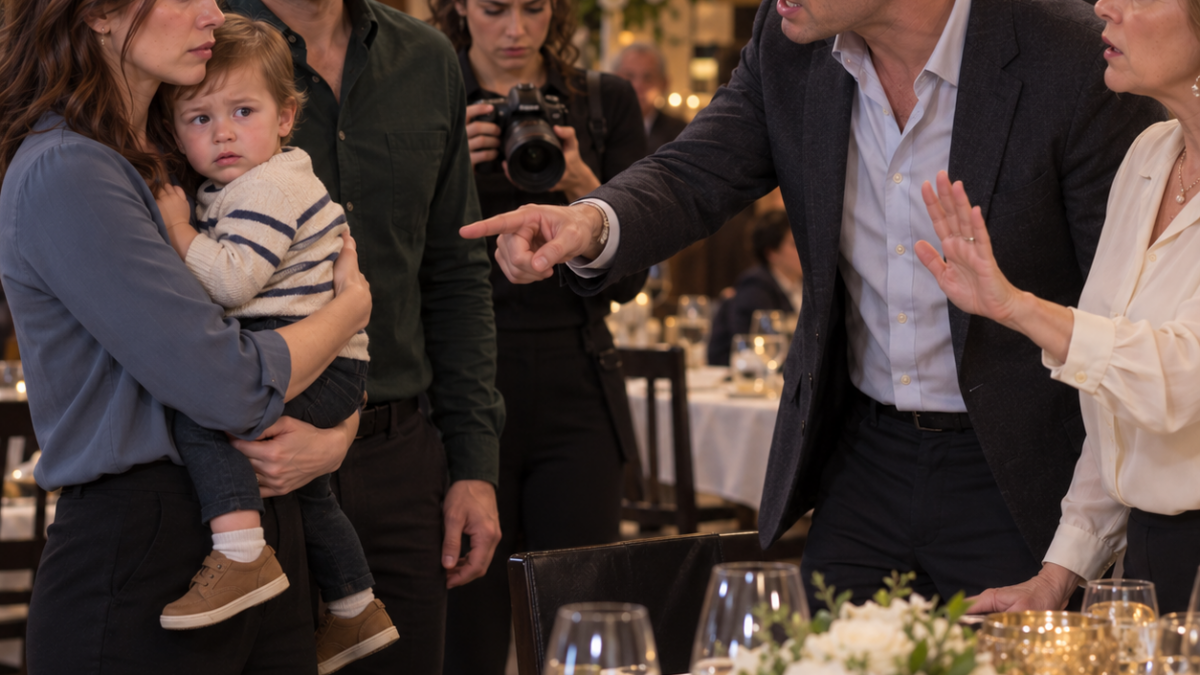
My brother grabbed my 16-month-old son’s wrist hard enough to leave red finger marks, then my mother told me I owed him an apology for embarrassing him at her birthday.
I’m Rachel Hayes, 33, a speech-language pathologist in Columbus, Ohio. My husband, Daniel, and I left the party with our crying toddler, Milo, while half my family insisted Grant had only been “teaching him boundaries.”
The next morning, Mom created a family group chat asking Daniel and me to apologize for overreacting.
Then the photographer she hired for her 60th birthday called me.
“Rachel,” she said, “I was shooting in burst mode when it happened.”
She paused.
“I think you need to see these before anyone tells you a different story.”
Mom had wanted her sixtieth birthday to look perfect.
She rented a private room at a neighborhood restaurant, ordered a three-tier cake she absolutely did not need, hired a photographer named Kayla Price, and gave everyone a dress code.
“Nice casual,” she called it.
Dad wore a blazer.
My older brother Grant wore a blazer too, mostly because Grant liked any situation where he could look more important than necessary.
Daniel and I brought Milo in a tiny button-down shirt that lasted nineteen minutes before he smeared mashed potato across the front.
For most of dinner, everything was normal.
Milo sat in a high chair beside me.
He ate pieces of dinner roll, dropped half of them, flirted with Aunt June, and repeatedly tried to steal Daniel’s fork.
After dessert was announced, one of the servers rolled a small cart beside our table.
There were cupcakes on the lower shelf.
Milo saw frosting.
His entire body leaned toward it.
Before I could move the cart or redirect him, Grant reached across me, caught Milo by the wrist, and pulled his hand sharply backward.
“No.”
Milo froze.
Then his face folded and he started crying.
Not the irritated cry he made when someone took a toy.
The frightened one.
I stood immediately.
“Let go of him.”
Grant released Milo and leaned back.
“Relax. He was grabbing food.”
Daniel was already out of his chair.
He stepped between Grant and the high chair.
“You don’t put your hands on my son.”
Grant laughed.
“I barely touched him.”
Milo was reaching for me now.
I lifted him out of the high chair.
Three red finger marks were already visible around his wrist.
Mom looked over.
For one second, I expected her to say something to Grant.
Instead she looked at me.
“Rachel, please don’t turn this into a scene.”
I actually thought I had misheard her.
“He grabbed Milo.”
“He stopped him from taking a cupcake.”
“He’s sixteen months old.”
Grant shook his head.
“And that’s exactly when children learn they can’t grab everything they want.”
Daniel’s voice went very quiet.
“You’re done touching him.”
Grant stood.
Dad stood too, but not between Grant and us.
He moved toward Daniel.
“Everybody calm down.”
That told me everything about where this was going.
Not What happened?
Not Is Milo okay?
Calm down.
Meaning us.
Milo was still crying into my shoulder.
I picked up his diaper bag.
Daniel grabbed our coats.
Mom followed me toward the door.
“You’re really leaving before cake?”
I looked at her.
“Your grandson is crying.”
“He’s fine.”
She hadn’t even looked at his wrist.
At least I thought she hadn’t.
That detail mattered later.
We left.
At home, Daniel photographed Milo’s wrist before the redness faded.
By bedtime, he was acting normally again.
I told myself that was enough.
Then my phone started.
Mom:
I’m heartbroken that my birthday ended this way.
Dad:
Grant feels humiliated.
Grant:
Your husband had no right to threaten me.
Nobody asked about Milo.
The next morning, Mom created a group chat with Dad, Grant, Aunt June, my cousin Melissa, Daniel, and me.
She wrote:
I think everyone needs to take responsibility for how things escalated. Grant should probably have let Rachel handle Milo, but Daniel’s behavior was intimidating, and Rachel leaving made the evening very uncomfortable. An apology from both sides would let us move forward.
Daniel read it over my shoulder.
“What apology does Grant owe?”
I waited.
Nothing.
Grant sent a thumbs-up emoji.
Mom replied:
Thank you for being willing to move on.
That was apparently his contribution.
Then she wrote:
Rachel?
I stared at the screen.
Before I answered, an unknown number called.
It was Kayla, the birthday photographer.
She sounded nervous.
“I hope this isn’t inappropriate,” she said. “Your mom asked me not to send any photos from the dessert part of the party.”
My stomach tightened.
“Why?”
“She said there had been an awkward family moment.”
There was a pause.
“But I was shooting when your brother reached across the table.”
I sat down.
Kayla continued.
“My camera caught more than I realized.”
Kayla sent me twelve photographs from a three-second burst. The first showed Milo reaching toward the cupcake cart. The second showed Grant’s hand closing around his wrist. The next two showed Milo’s arm pulled backward while his whole body twisted toward me.
Then came the photo that made my stomach drop. Mom was looking directly at Milo’s wrist. She could see the red marks. In the next frame, she was already turning toward me with one hand raised in that familiar calm-down gesture.
She had seen exactly what happened before telling me not to make a scene.
Kayla said Mom called her at 8:04 the next morning. “She specifically asked me to delete anything where Grant looked angry.”
I asked whether Kayla had.
“No. I never delete client files before delivery.”
Then she said someone else had contacted her about the photographs. My cousin Melissa.
Melissa has a five-year-old daughter named Sophie. I hadn’t spoken to her since the party.
“Why would Melissa want them?”
Kayla hesitated.
“She told me Grant did something similar around Sophie last summer.”
I stopped breathing for a second.
“What happened?”
“I don’t know. She wouldn’t tell me.”
Kayla gave me permission to share the photos with my pediatrician or attorney if necessary.
Then she added one last thing.
“Rachel, Melissa said your mom already knows about what happened to Sophie.”
I called Melissa.
She answered on the first ring.
Neither of us said hello.
“Tell me.”
Her breath caught.
“Rachel—”
“Tell me what happened with Sophie.”
Melissa was my cousin on Dad’s side.
Growing up, we were close enough to share clothes and secrets but not close enough to survive adulthood without effort.
She lived forty minutes away, worked as a dental office manager, had Sophie at thirty-one, and usually attended family gatherings only when Aunt June guilted her into it.
I suddenly understood why.
“It was at your parents’ Fourth of July cookout,” she said.
That had been nine months earlier.
Daniel and I hadn’t attended because Milo had an ear infection.
Melissa told me Sophie had been playing with a plastic bubble wand near Grant’s chair.
Some soap solution splashed onto his pants.
Grant took the wand from her and told her to sit down.
Sophie laughed because she thought he was teasing.
Grant grabbed her upper arm and guided her forcefully into a patio chair.
Not enough to require medical treatment.
Enough to leave faint marks Melissa noticed during bath time that evening.
“I asked Mom about it the next day,” Melissa said.
“You asked my mom?”
“She saw it.”
Of course she did.
“What did she say?”
Melissa went quiet.
“She told me Grant had been stressed because he was up for a promotion. She said Sophie had been running wild all afternoon. Then she asked me not to make a family issue out of it.”
My chest felt tight.
“Did Grant apologize?”
“He said he was preventing her from falling into the grill.”
“Was she near the grill?”
“No.”
“Did anyone else see it?”
“My husband did.”
“What did he say?”
“Kevin told Grant not to touch her again.”
That sounded painfully familiar.
Melissa continued.
“Your dad pulled Kevin aside later and told him Grant doesn’t respond well to being challenged in front of people.”
I closed my eyes.
“So you stopped coming around.”
“Mostly.”
“Why didn’t you tell me?”
That question came out sharper than I intended.
Melissa didn’t defend herself.
“I should have.”
I waited.
“I told myself it wasn’t my job to create a war in your family.”
“He’s my brother.”
“I know.”
“My son was around him.”
“I know.”
Her voice cracked.
“I’m sorry.”
That mattered because it was the first apology anybody had offered me since the party.
Not from Grant.
Not Mom.
Not Dad.
Melissa.
The person who had stayed quiet.
Daniel was in the living room with Milo while I spoke.
When I finished, I walked in and sat beside him.
He was building a tower from foam blocks.
Milo knocked it down and laughed.
Daniel looked at me.
“How bad?”
I told him.
He stopped rebuilding.
“What do you want to do?”
“I don’t know.”
That was true.
Part of me wanted to call Mom immediately.
Another part wanted to send the photographs into the group chat and ask everyone how much pressure they thought sixteen-month-old wrists were supposed to handle.
Daniel waited.
He had a habit of letting me find my own answer instead of filling silence.
“I want Milo checked.”
“Okay.”
“And I don’t want Grant around him.”
“Okay.”
“Not for Easter. Not at Mom’s house. Not anywhere.”
“Okay.”
Then I said the harder part.
“If my parents insist Grant has to be included, they don’t get Milo either.”
Daniel looked at me carefully.
“Are you sure?”
“No.”
He nodded.
That was the right answer.
Not certainty.
A decision.
We called Milo’s pediatrician.
Dr. Patel fit us in that afternoon.
By then, most of the redness had faded.
I felt ridiculous walking into the exam room holding photographs of marks that were barely visible on his actual skin.
Then Dr. Patel looked at the burst photos.
She became very still.
She examined his wrist gently.
Milo tried to steal her stethoscope.
She let him hold it.
Then she asked exactly what happened.
I explained.
When I repeated Grant’s claim that he was teaching boundaries, she shook her head.
“A child this age can learn redirection and routine. He cannot process an adult gripping him as a moral lesson.”
She documented mild soft-tissue tenderness.
No serious injury.
That relieved me.
Then she said something else.
“The fact that he is physically okay does not mean you need to normalize the behavior.”
I cried in the parking lot.
Not dramatically.
Just a few angry tears I wiped away with a drive-through napkin.
Daniel sat beside me.
“You okay?”
“No.”
“Good.”
I looked at him.
He shrugged.
“You’d be weird if you were.”
That made me laugh.
It helped.
I sent Mom one message that evening.
Milo was evaluated today. He is okay. Grant will not have physical contact with him again. We will not attend family events where Grant is present for now. Please do not ask us to apologize for leaving.
Mom called immediately.
I declined it.
She called again.
Then Dad.
Then Grant.
I put the phone on Do Not Disturb.
The group chat exploded without me.
Aunt June later sent screenshots.
Mom:
Rachel is taking this too far.
Grant:
She’s creating medical drama over nothing.
Dad:
Everyone needs time to cool down.
Melissa:
It wasn’t nothing.
That changed the conversation.
Mom replied:
Melissa, please don’t bring old situations into this.
Melissa:
Why? Because you asked me not to mention it last time?
Then silence.
I stared at that screenshot.
Mom had not denied it.
The next morning, Aunt June called.
Mom’s older sister had been the one person in my childhood who could make Mom visibly nervous without raising her voice.
June was sixty-six, retired from public-school administration, and believed every family problem should begin with coffee and accurate dates.
“I need to ask you something,” she said.
“Okay.”
“Did Linda tell you about Grant’s soccer issue?”
“What soccer issue?”
June swore softly.
That was unusual enough to make me sit down.
Grant had volunteered as an assistant coach for a community soccer program almost two years earlier.
I vaguely remembered Mom bragging about it.
She liked telling people he was “giving back.”
According to June, he stopped halfway through the season.
Mom told everyone his sales travel schedule had become too demanding.
That wasn’t the real reason.
One of Melissa’s neighbors had a child in the program.
Two parents complained that Grant had physically repositioned children too aggressively during drills.
The first complaint involved him grabbing a child’s jersey and moving him backward.
The second involved Grant holding a boy by both shoulders while scolding him after a foul.
Neither child was seriously hurt.
But the league director met with Grant.
He was required to sign a conduct agreement stating he would not physically discipline, restrain, or reposition players except in an immediate safety situation.
Two weeks later, another parent complained.
Grant was removed from volunteer coaching.
“Mom knew?”
“Linda and Thomas both knew.”
“How?”
“They went to the meeting.”
My stomach dropped.
“What meeting?”
“The final one.”
June had known because she was still a school principal at the time, and Mom called asking whether the league could legally keep Grant from volunteering.
“What did you tell her?”
“That private youth organizations can set conduct standards and that she needed to stop asking me to fix her son’s consequences.”
I stared at the kitchen wall.
“Why didn’t you tell me?”
June sighed.
“Because I thought it was over.”
“He was still around every child in this family.”
“I know.”
“Mom asked him to babysit Milo twice.”
“I know.”
My voice rose.
“Everybody keeps saying they know.”
June did not defend herself.
“You’re right.”
That stopped me.
She continued.
“I should have said something. So should Melissa. So should your parents. Silence made this safer for the adults and less safe for the children.”
That was the Main Reveal.
Mom and Dad had not simply watched Grant grab Milo’s wrist and misunderstood what they saw.
They knew he had already been formally warned by an outside organization about physical boundaries with children.
They had attended the meeting.
They knew he had been removed.
Then they spent two years describing him as great with kids.
Mom had asked me to leave Milo with him.
Dad had joked that Grant would “toughen him up.”
When the birthday incident happened, they weren’t surprised by something unimaginable.
They recognized something they had already decided to minimize.
I felt sick.
Daniel listened while I told him.
He didn’t say anything until I finished.
Then he asked:
“Do you want proof?”
“What?”
“The soccer thing. Do you want proof before we do anything else?”
Yes.
Absolutely yes.
Facts first.
June connected us with Kevin, Melissa’s husband.
Kevin had served on the soccer club’s facilities committee during Grant’s volunteer season.
He didn’t have personnel records.
But he had saved the parent handbook and meeting minutes showing that a volunteer conduct review occurred.
More importantly, Melissa found an email Mom had forwarded to her after the Fourth of July incident.
The message was from eighteen months earlier.
Mom had written:
We have already dealt with concerns about Grant being too firm with kids. Please don’t turn another misunderstanding into a permanent family label.
Another misunderstanding.
Another.
I read that word five times.
Daniel looked over my shoulder.
“There it is.”
The next step was not dramatic.
We met with an attorney.
Not because we wanted to sue Grant.
Because I wanted to understand what I could safely communicate to relatives with children without turning a family safety issue into a public accusation war.
Her name was Megan Cho.
She reviewed the party photographs, pediatrician documentation, Mom’s messages, Melissa’s account, and the email referencing earlier concerns.
Her advice was simple.
“Share facts you personally know or clearly attribute to the person who knows them.”
No labels.
No diagnosing Grant.
No social media campaign.
No calls to his employer.
No exaggeration.
“Your goal is safety, correct?”
“Yes.”
“Then write like it.”
So Daniel and I did.
We sent one email to the seven relatives who regularly attended gatherings with young children.
It said Grant had grabbed Milo’s wrist at Mom’s birthday after Milo reached toward food.
It said Milo had been medically evaluated and was okay.
It said Grant described his action as discipline and had not apologized.
It said Melissa had separately informed us of a prior physical-boundary concern involving her daughter.
It said Aunt June had informed us of an earlier youth-sports conduct issue that Mom and Dad knew about.
We attached no photographs.
We offered them privately to anyone who needed verification.
Then I wrote:
We are not asking anyone to end a relationship with Grant. We are letting parents decide what level of contact they consider appropriate for their own children.
I stared at the email for ten minutes.
Then sent it.
Mom called within six minutes.
I answered this time.
“What have you done?”
Her voice was shaking.
“I told parents what happened.”
“You are destroying your brother’s reputation.”
“No.”
“People are canceling Easter.”
“That is their decision.”
“You dragged up something from years ago that was handled.”
“The soccer issue?”
Silence.
“You knew.”
“Rachel—”
“You knew.”
“He was too strict as a coach.”
“He was removed.”
“Because parents complained.”
“That’s generally why conduct rules exist.”
“You don’t understand the politics of youth sports.”
I nearly laughed.
“Mom, stop.”
She went quiet.
“You knew he had already been warned about physically handling children, and then you asked me to apologize after he grabbed Milo.”
“He did not hurt Milo.”
“You don’t get to define the boundary by whether he caused a serious injury.”
“I am your mother.”
“And I am Milo’s.”
Silence.
For years, Mom had used family hierarchy like gravity.
She was Mom.
Grant was my older brother.
Dad deserved respect.
Aunt June should not interfere.
Children listened.
Younger siblings adjusted.
But my role had changed.
I was someone’s mother now.
Her authority did not outrank my responsibility.
“I need you to understand something,” I said.
“If Grant is at your house, Milo won’t be.”
She started crying.
“Then you’re taking my grandson away.”
“No. I’m giving you a choice about your home. You’re giving me information about whether it is safe for my son.”
“That sounds like a threat.”
“It’s a boundary.”
Mom hung up.
Easter moved.
That became the first practical consequence.
Mom had hosted Easter for twenty-seven years.
This time, half the cousins with children declined.
Aunt June invited everyone to her house instead.
Mom called it a competing Easter.
June called it lunch.
We went.
Grant did not.
Mom and Dad did not.
Melissa came with Sophie.
So did three other cousins.
Nobody discussed Grant during the meal.
The children hunted plastic eggs in June’s backyard.
Milo found one, sat down in the grass, and spent five minutes trying to open it with his teeth.
At one point Melissa stood beside me near the patio.
“I’m sorry.”
“You already said that.”
“I know.”
She watched Sophie running after bubbles.
“I keep thinking if I’d told you last year, maybe the birthday never happens.”
“Maybe.”
She looked at me.
I could have told her it wasn’t her fault.
That would have been easy.
It also would have been incomplete.
“You should have told me.”
“I know.”
“But you’re telling me now.”
She nodded.
“That has to count for something.”
“It does.”
Accountability without permanent exile.
I was learning that too.
Grant’s response came the following week.
A certified letter.
Daniel brought it in from the mailbox and placed it on the counter.
The return address belonged to a small law firm.
My stomach dropped before I opened it.
The letter accused me of making misleading statements that damaged Grant’s standing in the family.
It demanded that I stop distributing photographs and “unverified historical allegations.”
It requested a written retraction.
For ten minutes, I was thirteen again.
Grant angry upstairs.
Mom asking me to apologize because he was older.
Dad saying we all had to live together.
My whole body wanted to make the tension stop.
Daniel watched me reading.
“Don’t answer tonight.”
“I wasn’t going to.”
“You were absolutely going to.”
He knew me.
Megan Cho reviewed the letter the next morning.
She was unimpressed.
“You sent a private factual communication to relatives with children.”
“Yes.”
“You identified what you personally observed.”
“Yes.”
“You attributed Melissa and June’s information to them.”
“Yes.”
“Did you contact his employer?”
“No.”
“Post publicly?”
“No.”
“Contact clients?”
“No.”
“Threaten him?”
“No.”
She nodded.
“Then we respond briefly.”
Her letter stated we would not retract truthful statements.
It offered to preserve all original photographs, messages, medical documentation, and witness accounts if Grant intended to pursue a formal claim.
It also requested that he communicate through counsel rather than directly contacting us.
Grant never filed anything.
But he did one worse thing from the family’s perspective.
He sent a long email to everyone.
In it, he described himself as the only adult willing to discipline children in a family that had become “afraid of standards.”
He said Milo was already becoming spoiled.
He said Melissa encouraged Sophie’s dramatic behavior.
He said the soccer organization had removed him because “modern parents can’t tolerate firmness.”
I read the email twice.
Then stopped being angry.
He had confirmed the pattern himself.
He didn’t believe the incidents were accidents.
He believed they were justified.
That distinction changed several relatives’ decisions.
My cousin Ben replied:
Thanks for clarifying. You will not supervise our boys.
Lacy wrote:
Same for our children.
Melissa said nothing.
She didn’t need to.
Mom replied to everyone:
This is getting cruel. Please remember Grant is family.
Aunt June answered:
So are the children.
That became the last message in the thread.
For a while.
Two weeks later, Dad came to our house alone.
He texted first.
That mattered.
Daniel stayed home but took Milo upstairs so Dad and I could talk privately.
Dad sat at my kitchen table.
The same table where I had reviewed Kayla’s photographs.
For most of my life, Dad’s conflict strategy had been disappearance.
Mom explained.
Grant dominated.
Dad waited until everyone was tired.
Then he suggested we forget it.
That afternoon, he looked exhausted before we started.
“Your mother is falling apart.”
“I’m sorry.”
“She hasn’t seen Milo in six weeks.”
“She can.”
Dad looked up.
“Without Grant.”
“Yes.”
“She thinks you’re making her choose between her children.”
“No.”
“She says—”
“I know what she says. What do you think?”
Dad stared at his hands.
“I think Grant should apologize.”
“That’s not what I asked.”
He sighed.
“I think he was wrong.”
“And the soccer issue?”
Another silence.
“You knew.”
“Yes.”
“Why didn’t you tell me?”
Dad rubbed his forehead.
“At the time, they made it sound worse than it was.”
“Who is they?”
“The parents.”
“The league?”
“Yes.”
“And after Melissa’s daughter?”
He looked at me.
“Linda handled that.”
“That doesn’t answer me.”
“I knew there had been an argument.”
“You knew Grant grabbed her.”
Dad closed his eyes.
“Yes.”
I felt something in me settle.
Not because the answer was good.
Because the ambiguity was gone.
“Then why did you ask him to babysit Milo?”
Dad looked genuinely ashamed.
“I didn’t think he would do anything to a baby.”
There it was.
The family safety standard.
Not He respects boundaries.
Not He learned from what happened.
Not We trust him.
We didn’t think it would happen to your child.
“How many warnings was he supposed to get?”
Dad had no answer.
I continued.
“The soccer club warned him.”
“Rachel—”
“Melissa warned you.”
He nodded.
“And now Milo.”
“Yes.”
“So why is Mom’s priority still whether Grant feels embarrassed?”
Dad looked toward the stairs.
“I don’t know.”
That was the most honest thing he said.
Before leaving, he asked whether he could see Milo.
I called Daniel downstairs.
We agreed.
Dad sat on the living-room floor while Milo drove a toy truck over his shoe.
When Dad left, he kissed the top of Milo’s head.
Then he looked at me.
“I’m sorry I looked away.”
Not enough.
But real.
Mom took longer.
Summer came.
We stopped going to events at her house.
That meant missing two birthdays, a barbecue, and Dad’s retirement dinner.
I hated missing the retirement dinner.
Dad called personally and said Grant would attend.
He understood if we didn’t.
That was different from demanding we come.
I sent a gift.
Dad thanked me.
No guilt.
Mom called the next day and said my empty seat had ruined pictures.
I told her I was done discussing photographs.
The irony escaped her.
Then, in August, Mom called unexpectedly.
Her voice was different.
No crying.
No accusation.
“Can I come over?”
“Is Grant with you?”
“No.”
“Then yes.”
She arrived carrying a bakery box.
Not a peace offering casserole.
Progress.
We sat on the patio while Daniel took Milo to the park.
Mom folded her hands.
“I talked to the soccer director.”
I stared at her.
“Why?”
“I wanted to hear it from him.”
“You were at the meeting.”
“I heard Grant’s version at the meeting.”
That distinction surprised me.
“What did the director say?”
Mom swallowed.
“He said there were three separate parent complaints.”
I knew that.
“He said they tried coaching Grant about his tone first.”
I didn’t know that.
“He said the conduct agreement came after the second complaint.”
“Yes.”
“And then Grant argued with the third parent instead of acknowledging the issue.”
Mom looked down.
“I kept remembering it as one difficult parent.”
“Because Grant told you that?”
“Because I wanted to.”
That was the first crack.
Mom continued.
“Then I called Melissa.”
“What did she say?”
“That I made her feel like protecting Sophie was disloyal.”
I waited.
“She was right.”
Mom’s eyes filled.
This time, she did not use the tears as punctuation.
She wiped them and kept talking.
“I thought I was keeping this family together.”
“You were keeping Grant comfortable.”
She flinched.
“Yes.”
The word hung there.
I had wanted her to say it for months.
When it arrived, it didn’t feel victorious.
Just sad.
“I called Kayla too.”
“The photographer?”
Mom nodded.
“I apologized for asking her to delete pictures.”
That mattered more than I expected.
“Did you know she hadn’t?”
“Yes.”
“Were you angry?”
“At first.”
“And now?”
“I’m glad.”
I looked at her.
She looked older than she had at the birthday party.
“I saw the marks, Rachel.”
“I know.”
“I saw them before you left.”
“I know that too.”
“I wanted the party back.”
That sentence almost broke me.
Not because it was cruel.
Because it was honest.
Mom had seen her grandson hurt and still spent those first seconds wanting the room to return to normal.
The birthday.
The cake.
The photographs.
The family image.
She hadn’t wanted Milo harmed.
She had simply wanted the consequence of acknowledging harm even less.
“I’m sorry,” she said.
I believed her.
That didn’t make the boundary disappear.
Mom began visiting Milo alone.
At first, Daniel or I stayed in the room.
After several months of her respecting every condition without complaint, visits became more relaxed.
She stopped bringing up Grant.
She stopped carrying messages for him.
If he was going to be at an event, she told us in advance.
That was what changed behavior looked like.
Boring.
Consistent.
Not dramatic.
Grant remained the unresolved piece.
He skipped Thanksgiving at Aunt June’s because he said the family had become hostile.
Mom and Dad attended.
For the first time in my life, Mom spent a holiday without her son because of a boundary he refused to accept.
She survived.
Grant survived too.
At Christmas, he sent Milo a large gift through Dad.
We returned it unopened.
Dad did not argue.
In January, Grant finally emailed me directly through Megan, our attorney.
It was not an apology.
Not exactly.
He wrote that he understood he should not have physically redirected Milo.
He said he still believed my reaction had been excessive.
He said he was willing to agree not to discipline or physically correct our child if we would “move forward.”
I read it once.
Then forwarded it to Daniel.
Daniel replied:
He still thinks the issue is permission.
That was exactly right.
Grant’s offer was basically:
Tell me which children I am not allowed to physically control.
Our boundary was broader.
You don’t get access to Milo until you understand why you never had that authority.
So we declined contact.
No speech.
No debate.
Another year passed.
Life became quieter.
Milo turned three.
He became obsessed with garbage trucks.
Daniel built him a cardboard recycling center that occupied half our living room for six weeks.
Mom attended his birthday.
Dad attended.
Grant did not.
Nobody mentioned him.
That alone felt impossible compared to the year before.
Then Melissa called me.
“Grant contacted Kevin.”
My stomach tightened.
“What now?”
“He apologized.”
I sat down.
“For what?”
“For Sophie.”
Apparently Grant had begun seeing a counselor after his relationship with his girlfriend ended.
I knew nothing about the breakup.
Melissa said his girlfriend had wanted children someday and the family conflict forced conversations neither of them could avoid.
Grant finally started talking about why he reacted so strongly when children ignored him.
Their childhood explained more than I expected.
Dad had been emotionally distant and conflict-avoidant.
Mom relied heavily on Grant as the older child.
When we were young, she told him to “keep Rachel in line.”
She praised him for being responsible.
He confused responsibility with authority.
As adults, Mom continued rewarding the same behavior.
That explained Grant.
It didn’t excuse him.
Melissa said the apology was specific.
He named what he did.
He did not say if Sophie had listened.
He did not blame Melissa.
He accepted that Kevin and Melissa might never allow him close to Sophie.
“That’s different,” I said.
“That’s what I thought.”
Two months later, my attorney received another message.
This one was shorter.
Grant asked whether he could write to me.
Not email directly.
A letter.
I said yes.
The envelope arrived three days later.
I waited until Milo was asleep.
Grant’s handwriting looked exactly like it had on birthday cards when we were children.
Rachel,
I have spent most of the last year angry that everyone treated me like I was unsafe around kids. I finally had to admit the common person in all those situations was me.
At Mom’s birthday, Milo reached for food. I grabbed him because I thought adults were supposed to make children obey immediately. That was not my decision to make.
When you reacted, I cared more about being challenged than about why your son was crying.
I did the same thing with Sophie.
I did versions of it while coaching.
I told myself I was firm.
I was controlling.
I am sorry.
I don’t expect access to Milo because I apologized. I understand that is your decision.
Grant.
I cried.
Daniel read it after me.
“What do you think?”
“I don’t know.”
“That’s allowed.”
We waited.
Three months.
Grant did not pressure us.
Mom did not pressure us.
Dad did not deliver speeches about forgiveness.
That absence of pressure mattered more than the letter.
Eventually, I agreed to meet Grant.
Public park.
No Milo.
Daniel came with me.
Grant looked nervous.
I had almost never seen my older brother nervous.
For thirty-eight years, confidence had been his armor.
He started with:
“I’m not going to ask about Milo.”
“Okay.”
“I want you to know that first.”
Then we talked.
Not about whether I had overreacted.
That debate was over.
We talked about why he always thought being challenged meant being disrespected.
Why Mom had praised him for controlling rooms.
Why Dad’s silence had let Grant believe nobody disagreed.
Why I had spent most of childhood surrendering rather than arguing with him.
At one point Grant said:
“I thought everybody moved out of my way because I was right.”
I almost laughed.
“Why do you think they moved?”
“Because it was easier.”
“Yes.”
He looked down.
“I know that now.”
We met twice more before I let him see Milo.
The first visit lasted twenty minutes.
Aunt June’s backyard.
Daniel and I were both there.
Grant stayed six feet away at first like someone had drawn a chalk circle around Milo.
It would have been funny if the history weren’t so heavy.
Milo did not remember him.
That was probably a gift.
He handed Grant a toy dump truck.
Grant looked at me before taking it.
I nodded.
Small thing.
Huge meaning.
Permission.
Afterward, Grant left before anyone asked him to.
No attempt to prove he had changed by demanding more access.
That was different too.
We did not return to the old family.
Thank God.
The old family valued appearance over discomfort.
Age over boundaries.
Peace over accuracy.
The new version was smaller and less automatic.
Grant was not alone with Milo.
That remained true.
Mom did not host every holiday.
Aunt June hosted some.
We hosted others.
Melissa said no whenever she wanted.
Dad learned to speak before everyone else solved the problem for him.
Not always.
Enough.
The strangest change was Grant.
Once he stopped being treated as the automatic authority in every room, he became quieter.
At family dinners, when a child fussed, he looked toward the parents instead of intervening.
The first time I saw it, one of Ben’s boys knocked over a cup of lemonade.
Grant instinctively turned.
Then stopped.
Ben cleaned it up.
Nobody died.
Grant later caught me noticing.
He said:
“I’m learning.”
“Good.”
That was enough.
On Mom’s sixty-second birthday, she asked what kind of party we should have.
Aunt June said:
“One without a photographer.”
Everybody laughed.
Even Mom.
We ate at her house.
No dress code.
No three-tier cake.
Kayla was invited as a guest this time.
She came.
At one point, she asked if I still had the birthday photographs from two years earlier.
“Yes.”
“Do you look at them?”
“Not anymore.”
I had needed them when everyone was rewriting the event.
Once nobody disputed what happened, they became ordinary files.
Evidence has a strange life.
At first it feels like power.
Later, if things improve, it becomes storage.
I keep the twelve photographs in a folder with the pediatrician note, Mom’s old messages, and Grant’s letter.
I hope I never need them again.
Milo will probably never remember the birthday where this started.
He won’t remember the cupcake cart.
The red marks.
The drive home.
The group chat.
The photographer.
He will remember the family he grows up around afterward.
That matters more.
When he says no, adults listen.
When somebody needs to move his body, they tell him why if there is time.
Nobody claims family rank gives them ownership over him.
Mom asks before posting his picture.
Dad doesn’t joke about “toughening him up.”
Grant doesn’t discipline him.
Daniel and I are not required to apologize when we protect him.
Those are the real consequences of that night.
Not Grant losing family events.
Not Mom losing control of holidays.
Not the lawyer letter.
Not even the apology.
The real consequence was that a pattern stopped moving into the next generation.
Last summer, Mom hosted a cookout.
Grant came.
Melissa and Sophie came too.
So did Aunt June.
Milo was almost four.
At dessert, someone set a plate of cupcakes on the patio table.
I noticed them immediately.
Of course I did.
Trauma has a sense of humor.
Milo ran toward the table.
Before I could say anything, he stopped.
Looked at me.
“Can I have one?”
“Yes. After you finish your fruit.”
He groaned dramatically.
Grant was standing three feet away.
For half a second, our eyes met.
Then he stepped backward and went to help Dad with the grill.
No comment.
No lesson.
No authority performance.
Just space.
Milo ate three strawberries.
Then got his cupcake.
Blue frosting.
Everywhere.
Mom laughed.
Melissa handed me a napkin.
Grant looked over once and smiled.
Nobody grabbed anybody.
Nobody asked me to calm down.
Nobody protected an adult from the consequences of making a child feel unsafe.
It was completely ordinary.
That was what I had wanted all along.
Not revenge.
Not a destroyed brother.
Not a family permanently divided into teams.
I wanted ordinary safety.
It took photographs, medical documentation, uncomfortable conversations, legal advice, missed holidays, and almost two years of boundaries to get something that should have existed without negotiation.
But it existed now.
I used to think family peace meant keeping everybody in the same room.
I don’t anymore.
Sometimes peace means somebody isn’t invited.
Sometimes it means leaving early.
Sometimes it means saying the uncomfortable thing before everyone finishes dessert.
Sometimes it means giving someone another chance only after they stop demanding one.
And sometimes it looks like a toddler eating a cupcake while every adult in the yard understands exactly whose body belongs to whom.







