I Told My Family I Lost $7 Million—Their Next Move Exposed Everything
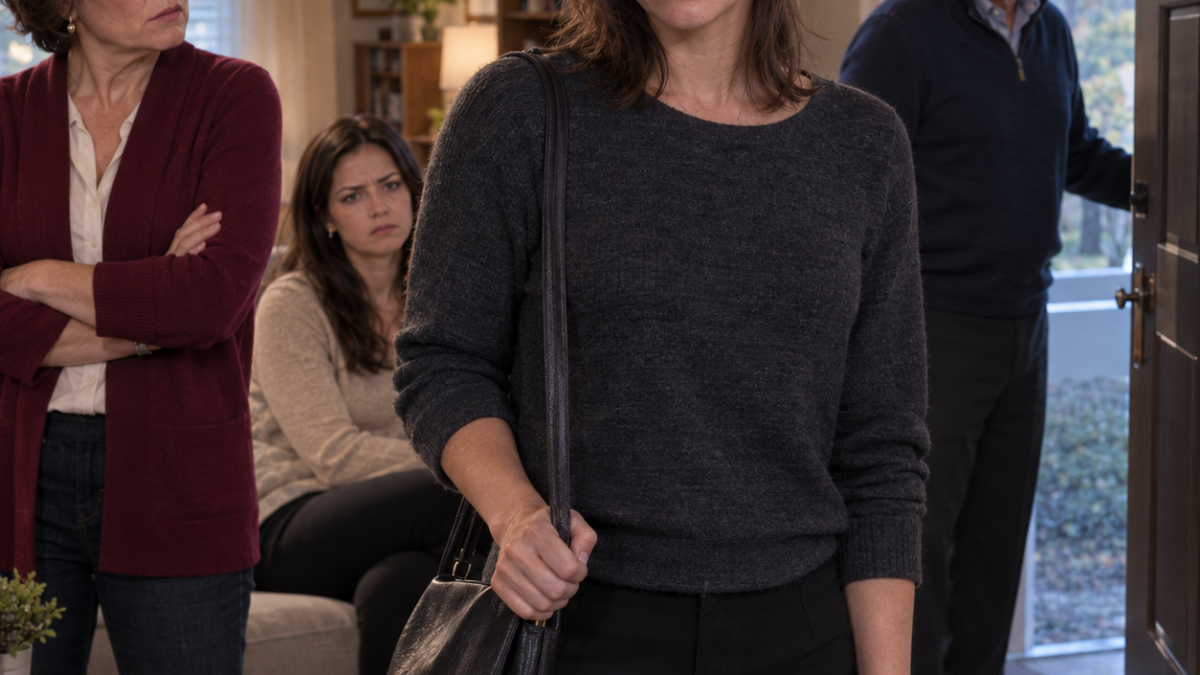
Two weeks after selling my company for $7 million, I told my family I had lost every dollar in a reckless investment and still owed another $500,000. It was a lie suggested by Lucy, the attorney who had watched me quietly pay relatives’ tuition, medical bills, car repairs, and emergencies for years. I expected panic, questions, maybe anger. What I did not expect was my mother calling me an idiot, my father saying I had disgraced the family, and my younger sister Milena admitting she had been counting on me to buy her an apartment. Then Dad physically walked me out of their house. I thought Lucy’s test had already given me the answer. A week later, my cousin Danielle sent me screenshots proving my family had been planning for my money long before I supposedly lost it.
My name is Sharon Blake.
I was 34 when I sold Northline Marketing, the company I had started twelve years earlier from a borrowed desk in a shared office in Chicago.
I was 22 when I founded it.
I had just finished college, had almost no money, and knew enough about marketing to understand that most small businesses were paying agencies for reports they could not actually use.
My grandmother Vera believed in the idea before I did.
She had built her own money through a small chain of bookkeeping offices and later sold them.
When I showed her my first business plan, she read all twenty-seven pages without interrupting.
Then she wrote me a check.
It was not a loan.
She refused repayment.
“I would rather watch you use it while I’m alive than watch everybody fight over it when I’m dead,” she said.
That money became my first software subscription, my first contractor payments, and several months of rent.
Northline survived.
Then it grew.
Not quickly.
There was no overnight success.
There were years when I slept three or four hours, ate dinner over a laptop, and canceled plans because a client campaign had collapsed or payroll was due.
By my early thirties, we had offices in three cities, more than eighty employees, and clients I once would have been terrified to pitch.
My body eventually sent me a bill.
I stopped sleeping normally.
I developed headaches that lasted days.
My stomach hurt constantly.
My doctor called it a chronic stress response.
I called it Tuesday.
At 33, I started considering a sale.
At 34, I accepted an offer.
After taxes, fees, and obligations, my clean proceeds were approximately $7 million.
The morning I signed the final documents, I sat alone in the parking garage for nearly forty minutes.
I expected to feel victorious.
Mostly, I felt tired.
But I had a plan.
Invest most of the money conservatively.
Live on a fraction of the returns.
Recover physically.
And help my family.
My parents had spent years saying they wanted a larger house with fewer stairs.
Milena, my 30-year-old sister, complained constantly about renting.
I planned to buy my parents a comfortable home outright and give Milena enough for a substantial down payment on an apartment.
Helping them was normal for me.
When Milena’s transmission failed, I paid for it.
When Dad needed a medical procedure before an insurance dispute was resolved, I covered it.
I paid a cousin’s final semester of tuition.
Another cousin’s emergency dental work.
Nobody called these gifts.
They were just situations Sharon fixed.
Before buying anything, I called Lucy Morgan.
Lucy had been Northline’s attorney almost from the beginning.
She was 41, brutally practical, and almost impossible to surprise.
I explained the investments.
Then the house.
Then Milena’s apartment.
Lucy became quiet.
“Don’t buy anything yet.”
I laughed.
“I’m not asking whether I can afford it.”
“I know.”
“Then what are you saying?”
“I want you to do something first.”
Her voice made me stop smiling.
“Go to your parents’ house. Tell them the company sold.”
“They already know it was being sold.”
“Then tell them the sale closed.”
“Okay.”
“After that, tell them you invested the money in cryptocurrency, it collapsed, and you lost all seven million.”
I thought she was joking.
She was not.
“Tell them you also owe five hundred thousand dollars.”
“Lucy.”
“Do it once.”
“You want me to lie to my family.”
“I want you to see them when they believe you have nothing left to give them.”
That night, I barely slept.
The next afternoon, I drove to my parents’ house.
Milena was already there.
I told them the sale had closed.
Mom exhaled with visible relief.
Milena actually clapped.
Then I told them the rest.
I said I had lost everything.
I said I owed $500,000.
I asked whether I could stay with them temporarily while I figured out what to do.
Mom stood.
“You idiot.”
Dad stared at me.
“You had seven million dollars and managed to destroy it?”
Milena’s face hardened.
“I was counting on you to help me buy an apartment.”
I started crying.
Not because the money was gone.
It wasn’t.
Because none of them asked whether I was okay.
Dad called me a disgrace.
Milena said she would not give me a cent.
Then she pointed toward the hallway.
“Just leave.”
Dad grabbed my arm and escorted me to the front door.
The door closed behind me.
I stood there staring at the ceramic house number Mom had hung crooked years earlier.
I drove home.
That evening Lucy came over and listened while I told her everything.
When I finished, she said quietly, “They didn’t lose a daughter today. They thought they lost their financial plan.”
I wanted to tell her she was wrong.
A week later, my cousin Danielle texted me.
I have something you need to see.
Then she sent a screenshot.
At the top was the name of a family group chat I had never known existed.
The first message I saw was from Milena. She had written, “I always knew Sharon would blow the money eventually.” My mother’s message came next. “If Sharon contacts any of you asking for money, please do not help her. She is deeply in debt and needs to learn consequences.” Then came the replies. Aunts. Uncles. Cousins whose tuition and medical bills I had paid. “Understood.” “Absolutely.” “She needs to grow up.” Danielle had not responded. “That chat existed before the company sale,” she told me. “They’ve been talking about your money for years.” Six days later, Mom called. Her voice was unusually calm. “We need you to come over Tuesday. It concerns Grandma Vera’s foundation.” I told her I was not interested. “If you don’t come voluntarily,” she said, “we’ll find another way to handle it.” I called Lucy immediately. “They’re moving faster than I expected,” she said. “What do I do?” “Go. I’ll park nearby. If the conversation becomes what I think it will, text me one letter.” Tuesday afternoon, Dad was already waiting at the dining table when I arrived. A thick folder sat in front of him. Mom took the chair beside him. Milena stood in the doorway. Dad pushed the folder across the table toward me. “Sign these,” he said.
I did not touch the folder.
“What am I signing?”
Mom folded her hands.
“Your resignation from the Vera Blake Community Foundation board.”
I looked at her.
“Why?”
Dad tapped the folder.
“You have health problems.”
“My doctor says I need less stress.”
“Exactly.”
“That does not make me incompetent.”
Mom continued as though I had not spoken.
“You sold your company, lost seven million dollars almost immediately, and now owe half a million.”
I let the silence sit there.
Milena crossed her arms.
“You obviously shouldn’t be making decisions about charitable assets right now.”
I turned toward her.
“How long has this paperwork been prepared?”
Her eyes moved to Mom.
That was my answer.
Dad slid the folder closer.
“Signing voluntarily is better for everyone.”
“And if I don’t?”
Mom’s expression changed.
Not angry.
Cold.
“Then we petition to remove you.”
“On what grounds?”
“Financial recklessness. Your medical history. Impaired judgment.”
I stared at her.
“My tension headaches?”
“Chronic stress response,” Dad corrected. “Your medical records use that language.”
The fact that he knew the phrase made my skin crawl.
“How did you get my medical records?”
“We have enough documentation,” Mom said.
“That wasn’t my question.”
Nobody answered.
Dad leaned forward.
“Sharon, think about your reputation. If this becomes public, you will be the founder who sold a successful company and then immediately gambled away the proceeds.”
“It would be humiliating,” Milena added.
I looked at the folder.
They believed the story completely.
More importantly, they had weaponized it within days.
That meant Lucy had been right about something else.
They were not merely disappointed in me.
They needed me removed from a position where I could see something.
I took out my phone beneath the edge of the table.
One letter.
K.
Send.
Dad kept talking.
“This is the clean solution.”
The front door opened less than two minutes later.
Mom stood.
“What was that?”
Lucy appeared in the dining-room doorway.
Gray suit.
Leather bag.
Calm face.
My parents had known her for nearly a decade.
Mom looked instantly suspicious.
“Why is she here?”
Lucy set her bag on the empty chair beside me.
“I’m here as Sharon’s attorney.”
“This is a family matter,” Dad said.
“It stopped being only a family matter when you threatened legal proceedings to remove my client from a charitable board.”
Milena uncrossed her arms.
Lucy pulled out a second folder.
Hers was thicker.
“I also represent Sharon in her capacity as a trustee of the Vera Blake Community Foundation.”
Dad’s expression changed.
“You don’t represent the foundation.”
“No.”
Lucy opened the folder.
“But Sharon, as a trustee, was entitled to request an independent review of foundation transactions.”
Dad stood.
“What review?”
“The one she authorized last week.”
That was technically true.
Lucy had called me the day after Danielle sent the group-chat screenshots.
She asked one question.
“When is the last time you personally reviewed the foundation’s full ledger?”
I admitted I never had.
Grandma had put me on the board shortly before she died.
I attended quarterly meetings, reviewed grant recommendations, and signed basic governance documents.
Dad handled finances.
Mom handled operations.
Milena had eventually become development director.
I assumed the annual accountant reports meant everything was fine.
Lucy did not assume.
She arranged for an independent forensic accountant to review five years of transactions.
I thought she was being excessive.
Until she called two days before the meeting.
“I found what your family is afraid you’ll see.”
I asked what.
She refused to explain over the phone.
“Let them move first.”
Now I understood why.
Lucy placed several transaction schedules on the table.
“Over five years, $218,000 was transferred from foundation accounts through a series of entities and ultimately into accounts not associated with any approved charitable program.”
Dad went completely still.
Mom’s hand moved toward her mouth.
Milena whispered, “What?”
Lucy continued.
“The transfers were divided into smaller amounts and coded under several descriptions. Community outreach. Program consulting. Regional development. Event administration.”
Mom found her voice.
“Those were legitimate expenses.”
“Then documentation should be easy.”
“There is documentation.”
“Yes.”
Lucy turned another page.
“That is the problem.”
Dad stepped toward her.
“What are you implying?”
“I’m not implying anything.”
She pointed at a line.
“This vendor invoice claims payment for educational consulting in Illinois.”
Another.
“The vendor’s registered address is a mailbox service.”
Another.
“The listed company has no employees and was dissolved eighteen months before one of these invoices was supposedly issued.”
Nobody spoke.
Lucy looked at Dad.
“The funds then moved through an offshore account.”
Mom shook her head.
“No.”
“It is in the banking records.”
“You can’t obtain private banking records.”
“We obtained records available through foundation accounts and lawful financial tracing performed by the forensic accountant. If further records are needed, that happens through formal process.”
Dad’s face had turned red.
“You had no authority to start some witch hunt.”
I spoke for the first time in several minutes.
“I’m a trustee.”
“You barely participate.”
“Apparently I should have participated more.”
His face tightened.
Lucy looked toward the folder my parents had prepared.
“You were about to threaten my client with incompetency proceedings unless she resigned.”
“That has nothing to do with foundation expenses.”
“It has everything to do with them if the threatened removal was intended to prevent scrutiny.”
Mom stared at me.
“Sharon, stop this.”
I almost laughed.
“Stop what?”
“Destroying this family over accounting questions.”
“You threw me out last week because you thought I was broke.”
“That was emotional.”
“Dad physically put me outside.”
“He was upset.”
“Milena told me I was useless because I couldn’t buy her an apartment.”
Milena looked away.
Mom’s voice softened.
“Everybody said things they didn’t mean.”
Lucy interrupted.
“That may be relevant to you emotionally. It is not relevant to the accounting.”
She slid three envelopes onto the table.
“These contain proposed voluntary resignations from foundation positions and a preservation agreement requiring no deletion or alteration of financial records.”
Dad laughed.
“You think we’re going to sign those?”
“No.”
Lucy sounded almost pleasant.
“I think you will review them with independent counsel.”
“And if we refuse?”
“Then Sharon can seek emergency judicial relief preserving foundation assets while the audit continues. Depending on what the completed forensic review establishes, there may also be mandatory reporting obligations.”
Dad stared at her.
“Are you threatening to report us?”
“I am telling you the process.”
Mom turned to me.
“You would do that to your parents?”
I looked at her.
“You were prepared to tell a court I was mentally unstable to remove me from Grandma’s foundation.”
“We thought you lost everything.”
“And that made fraud acceptable?”
She stopped.
Milena suddenly started crying.
Not quietly.
“What happens to my salary?”
Lucy looked at her.
“Your foundation salary?”
“Yes.”
“Your compensation will be reviewed like every other expense.”
“But that’s my income.”
The sentence exposed more than she intended.
Grandma had created the foundation to fund community health initiatives, education programs, and small-business grants.
Milena was talking about it like a family payroll account.
I looked at her.
“You told me to leave your house because you thought I had no money.”
“I was angry.”
“And now you want me to protect your salary.”
“I work there.”
“What do you do?”
Her crying stopped for a second.
“Development.”
“What did you develop last quarter?”
“That isn’t fair.”
It was the first time I had ever asked.
That fact embarrassed me.
Lucy closed the audit folder.
“This discussion is over for today.”
Dad pointed toward her.
“You are not coming into my house and giving orders.”
“No.”
Lucy stood.
“I’m leaving your house and giving legal advice to my client.”
I picked up my purse.
Mom stepped around the table.
“Sharon, wait.”
I stopped.
For one second, I saw the familiar version of her.
The woman who called me when she needed help choosing Dad’s Medicare plan.
The mother whose roof repair I had paid without being asked twice.
Then I remembered the front door closing behind me.
“I didn’t lose the seven million,” I said.
Nobody moved.
Mom blinked.
“What?”
“The money is invested exactly where I intended it to be.”
Milena stared at me.
“You lied?”
“Yes.”
Dad’s face transformed.
“You tested us?”
“Yes.”
“That is sick.”
“Maybe.”
I looked at him.
“But the test lasted less than an hour. You threw me out before dinner.”
Mom reached toward me.
“Sharon, if the money is safe, then this changes everything.”
That sentence settled the remaining doubt in me.
I stepped back.
“No. It changes nothing.”
“It changes your situation.”
“Exactly.”
I opened the door.
“My situation was the only thing you cared about.”
Lucy followed me outside.
We walked half a block to her car.
I did not cry.
Not until I sat down.
Then everything arrived at once.
Lucy waited.
No legal language.
No strategy.
Just waited.
Eventually, I said, “What happens now?”
“Now we separate two problems.”
“What two problems?”
“Your family and the foundation.”
She started the car but did not drive.
“The family problem is yours. I can’t litigate people into loving you correctly.”
I nodded.
“The foundation problem is solvable.”
“How bad is it?”
“Bad enough that we keep digging.”
The next three weeks were ugly.
My parents hired separate counsel.
Milena hired her own attorney after Lucy advised that their interests might not align.
That was when the stories began changing.
Dad claimed the transfers funded legitimate consulting.
Mom said she knew almost nothing about the finances.
Milena said she believed her salary and benefits had been approved properly.
The forensic accountant found more documentation.
Some expenses were legitimate.
That mattered.
I did not want an inflated case.
We separated questionable transfers from normal operations.
The final unsupported total remained close to $218,000.
Some money had paid personal expenses indirectly.
A vehicle lease.
Travel unrelated to foundation work.
A consulting company connected to one of Dad’s old business acquaintances.
Transfers moved through an offshore account, then partially returned through another entity.
The pattern looked deliberate.
My parents eventually stopped fighting the resignations.
Not because Lucy magically defeated them.
Because their own lawyers reviewed the records and advised them that staying in control while an independent audit continued was indefensible.
They signed temporary suspension agreements first.
Then permanent resignations.
Milena resigned from her paid position.
The foundation’s bank access was restricted.
An independent interim director was appointed.
The matter was referred through the proper regulatory channels.
Restitution became part of the legal resolution.
The details took months.
Nothing happened in one dramatic afternoon.
That was reality.
I did not attend my parents’ final signing appointment.
Lucy did.
Afterward she called.
“It’s done.”
“How did they look?”
“Does it matter?”
I thought about it.
“No.”
“Good answer.”
The extended family reacted exactly as badly as expected.
Once people learned my seven million was intact, apologies started arriving.
The timing was insulting.
One cousin wrote:
I never would have agreed with your mother if I knew the crypto story wasn’t true.
I stared at the message.
As if believing I was actually broke would have made abandoning me reasonable.
Another said she felt pressured by the group chat.
An uncle claimed he never saw the messages until later.
I had screenshots.
He had replied within nine minutes.
I stopped reading.
Danielle remained the exception.
She never asked for money.
She never explained herself endlessly.
She said:
“I should have told you about that chat sooner.”
“Yes.”
“I’m sorry.”
“Thank you.”
That was enough.
Trust did not require a speech.
It required behavior afterward.
She stayed consistent.
A month after the resignations, I put my Chicago condo on the market.
My doctor had been telling me to change something for nearly a year.
Less work.
More sleep.
Warmer weather.
Regular meals.
Every appointment ended with the same question.
“What are you actually willing to change?”
For a long time, the answer had been nothing.
Now Northline was gone.
My family no longer controlled my schedule through emergencies.
The foundation had professional management.
For the first time since I was 22, there was no reason to stay.
I looked at coastal cities.
Not glamorous resort towns.
Places where I could walk outside in January without wanting to fight the weather.
I eventually bought a modest house near the water in Carlsbad, California.
Three bedrooms.
A small office.
A patio facing west.
Expensive by normal standards.
Cheap relative to what I could have bought.
Lucy hated my furniture.
She said my living room looked like a tasteful waiting area.
I told her she was welcome to buy me a couch.
She did not.
Moving felt less dramatic than I expected.
I packed books.
Artwork.
A few things from Grandma.
I donated half my office clothes.
I sold the condo.
Then I drove west.
The first morning in California, I woke at 5:12 out of habit.
No alarm.
My body assumed something was wrong.
I checked my phone.
Nothing.
No employee crisis.
No parent emergency.
No Milena requesting money.
No client email.
I lay there in silence for almost an hour.
At first, it was uncomfortable.
I had built my identity around usefulness.
When nobody needed me, I did not know what to do with myself.
Recovery turned out to be a skill.
I started walking every morning.
Not because I was training for anything.
Because my doctor told me movement might help my nervous system.
I ate breakfast at a table instead of over a keyboard.
I stopped drinking coffee after noon.
The headaches slowly became less frequent.
My stomach improved.
Sleep took longer.
For months, I still woke up convinced I had forgotten something.
The investments were intentionally boring.
Government bonds.
High-quality fixed income.
Broad diversified funds.
Cash reserves.
Nothing resembling the fake crypto disaster I had described to my family.
After years of betting my health on a business, boring felt luxurious.
The foundation took longer to repair.
I appointed Marcus Reed as executive director after a formal search.
He had worked at Northline for six years, first in operations and later as chief of staff.
He was the most organized human being I knew.
Before accepting, he said one thing.
“I don’t want this job because I’m loyal to you.”
“Good.”
“I want governance authority.”
“You’ll have it.”
“I want independent board members.”
“Agreed.”
“And if you start treating Grandma’s foundation like your personal project, I’m resigning.”
I smiled.
“Perfect.”
We rebuilt the board.
A retired nonprofit CFO.
A community-college administrator.
A pediatrician who ran a neighborhood clinic.
Two independent community members.
Me.
Nobody from my immediate family.
Grandma’s original purpose returned.
Education.
Community health.
Small grants for people starting businesses without access to family wealth.
That final category became personal for me.
At the first meeting where we approved an entrepreneurship grant, I thought about being 22 with Grandma’s check in my hand.
She never asked for control.
Never demanded equity.
Never told me what kind of founder I had to become.
She said:
“Build something worthwhile.”
That was all.
I wanted the foundation to feel like that.
A door opening.
Not a leash.
My parents tried to contact me constantly during the first six months.
Calls.
Emails.
Letters.
They came to my Chicago building before the condo sold.
The concierge had instructions not to send them up.
Mom waited once at a café she knew I liked.
I saw her through the window before entering.
I turned around.
That was not revenge.
I simply did not want the conversation.
Milena was worse.
Her messages alternated between rage and self-pity.
Lucy destroyed our family.
You humiliated me.
I lost my job because of you.
How am I supposed to pay rent?
Then:
If you still care at all, can you at least help with my car?
I blocked her.
Danielle told me later that Milena sold the SUV.
She moved into a cheaper apartment.
She found a regular marketing job.
Those facts did not make me happy.
They made me realize how low our expectations for her had been.
She was capable of supporting herself.
We had simply built a family system where she never had to try while I was available.
My parents downsized too.
Without foundation money supplementing their lifestyle, their old house no longer made sense.
Dad found an administrative role at a local company.
Mom worked part-time in a medical office.
They stopped hosting the large family parties.
Some relatives treated that like tragedy.
I did not.
Working was not punishment.
Living within your means was not punishment.
Those were normal adult things.
A full year passed.
Then two.
My life became quiet enough that I began noticing how loud it had been before.
The strangest part was Saturdays.
For twelve years, Saturday had meant catching up.
Payroll.
Client reviews.
Family errands.
Emergency phone calls.
Now I could make coffee, walk outside, and have nowhere to be.
At first, that emptiness made me anxious.
Eventually, it became my favorite part of the week.
Lucy visited twice a year.
The first time, she stood on my patio staring at the ocean.
“For somebody who lost seven million dollars in cryptocurrency, you recovered impressively.”
I laughed hard enough to scare a neighbor’s dog.
The lie had become darkly funny with distance.
I asked her once whether she regretted suggesting it.
“No.”
“Not even a little?”
“I regret that it hurt you.”
“That sounds like lawyer language.”
“It is.”
She looked at me.
“But without it, would you have bought your parents that house?”
“Yes.”
“Milena the apartment?”
“Yes.”
“Would you have audited the foundation?”
“No.”
“Then I’m comfortable with my advice.”
I hated that she was right.
Another year passed.
Danielle called one afternoon.
“Your dad is in the hospital.”
My body reacted before my mind did.
Heart racing.
Hands cold.
Old programming.
“What happened?”
“Cardiac issue. He needs surgery.”
Two years earlier, I would have opened my banking app before asking anything else.
Instead, I said, “Does he have insurance?”
“Yes.”
“Is Mom with him?”
“Yes.”
“Do they have what they need?”
“As far as I know.”
I took a breath.
“I hope the surgery goes well.”
Danielle did not guilt me.
That was why I trusted her.
“I’ll update you.”
Three days later, Mom emailed.
I almost deleted it.
Then I saw the subject.
Dad’s surgery went well.
I opened it.
There was no request for money.
No accusation.
No emergency invoice.
Just six short paragraphs.
At the end, she wrote:
We failed you long before you lied about losing the money.
When we believed the money was gone, we treated you as though your value disappeared with it.
There is no excuse for that.
I understand why you needed to know.
Dad asked about you before surgery.
You do not have to answer this.
I read the email several times.
The apology did not repair anything instantly.
But it was specific.
No “if.”
No “misunderstanding.”
No demand.
A week later, I replied.
I’m glad Dad is recovering.
I appreciate what you wrote.
I am not ready to rebuild our old relationship.
I also don’t believe the old relationship should be rebuilt.
If forgiveness happens, it will not restore access automatically.
Mom replied the next morning.
I understand.
Take care of yourself.
Four words in the middle mattered most.
I understand.
Dad wrote months later.
A real letter.
His handwriting had become shakier.
He described the afternoon he pushed me out of the house.
He said it replayed in his head more than the audit, more than losing control of the foundation.
Then he wrote something I had already suspected.
When you told us the seven million was gone, I did not see my daughter in trouble.
I saw the future I had assumed you would provide for us disappearing.
I am ashamed of that.
I kept the letter.
It took me three weeks to answer.
I wrote:
I read this.
I’m glad you were honest.
I hope your recovery continues.
That was all I could offer.
He did not ask for more.
Milena never reached that point.
Her version remained that Lucy manipulated me, I overreacted, and everyone had suffered because I could not forgive one bad afternoon.
One bad afternoon.
The group chat.
The prepared incompetency petition.
The foundation transfers.
Years of financial expectation.
All compressed into an afternoon because that version hurt less.
I stopped correcting her.
People are allowed to keep stories that protect them.
I am allowed not to live inside those stories.
By the third year, the number $7 million had lost its emotional power.
The investments grew slowly.
I donated more than I expected.
I traveled occasionally.
I bought a better sofa after Lucy threatened to choose one herself.
Money became ordinary.
A tool.
Not proof that I had won.
Not my identity.
Not my family’s retirement strategy.
The foundation mattered more.
Marcus expanded Vera’s education grants and created a small entrepreneurship program for founders who lacked access to family capital.
We kept the grants modest.
Enough for prototypes.
Licenses.
First inventory.
Professional services.
The sort of expenses that can stop a good idea before it starts.
On the third anniversary of the foundation’s restructuring, Marcus convinced me to attend a small event for recipients.
I did not want to speak.
Public speaking felt suspiciously similar to work.
He promised five minutes.
Afterward, a young woman named Talia approached me.
She had received one of our grants to launch a design studio.
“My parents told me I was wasting my degree,” she said.
I smiled.
“Families enjoy forecasting.”
She laughed.
Then her expression became serious.
“The grant changed everything.”
“How?”
“It wasn’t only the money.”
I waited.
“It was the first time somebody looked at my plan and said, ‘This makes sense. Try.’”
For several seconds, I could not answer.
I thought about Grandma.
Twenty-two-year-old me.
Twenty-seven pages of a business plan.
A check written without conditions.
That gift had moved through my life in ways neither of us could have predicted.
Company.
Sale.
Family.
Betrayal.
Foundation.
Now Talia.
Grandma’s money had finally returned to its original language.
Possibility.
That evening, I went home and sat on the patio until the sun disappeared.
My phone remained inside.
I had no emergency waiting.
No person demanding rescue.
For years, I thought financial freedom meant having enough money that I would never need anyone.
I was wrong.
Real freedom was being able to help without becoming responsible for another adult’s life.
To love someone without purchasing access to them.
To forgive without restoring the conditions that allowed them to hurt you.
To leave when staying required turning yourself into a resource instead of a person.
I still think about the test sometimes.
The fake crypto loss.
The fake debt.
The real tears.
Was it manipulative?
Yes.
Would I recommend testing people constantly?
Absolutely not.
But Lucy had watched something I could not see because I was inside it.
My family’s affection had become entangled with expectation.
The moment they believed the money was gone, the structure became visible.
What protected me afterward was not revenge.
It was evidence.
A cousin who showed me the group chat.
A lawyer who asked the right question.
A forensic accountant who followed numbers instead of explanations.
Governance rules Grandma had put in place.
And eventually, my own willingness to stop rescuing people who had confused rescue with love.
I do not speak with most of my extended family now.
That sounds sadder than it feels.
Danielle calls every few weeks.
Never for money.
Usually to complain about work or send me pictures of terrible restaurant food.
Mom emails occasionally.
Dad sends holiday cards.
We have not become a close family again.
Maybe we never will.
That is not failure.
Some relationships become healthier when they become smaller.
Lucy remains my attorney, although these days our meetings usually involve dinner and less paperwork.
Marcus runs the foundation better than I ever could.
My doctor sees me twice a year now instead of constantly.
The headaches are rare.
I sleep seven hours most nights.
Some mornings I walk along the beach.
Not because I am trying to optimize anything.
I spent twelve years optimizing everything.
Now I walk because the ocean is there.
I once thought Grandma’s first check gave me the means to build my life.
It did.
But what she really gave me was a model.
Support without ownership.
Help without humiliation.
Belief without a bill attached.
It took losing the version of my family I thought I had to understand how rare that was.
And how necessary.
I sold one company.
I kept the money.
I lost several relationships.
I recovered a foundation.
More importantly, I stopped measuring love by how much I could provide before someone decided I was worth keeping around.
That was the part no investment account could have bought for me.
Grandma gave me the money to build my first life.
The rest of them accidentally forced me to build the second one.
This time, I knew exactly who it belonged to.







